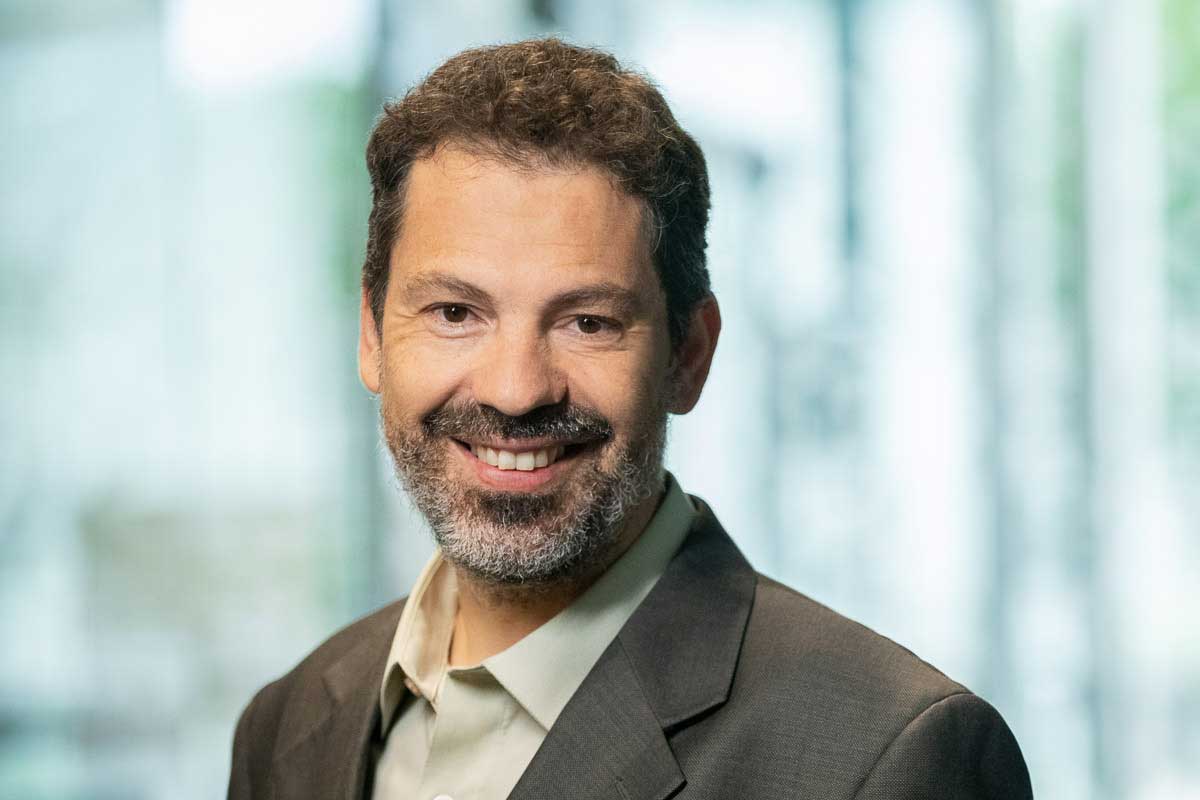
Arnd HartmannsView profile
Associate Professor
Arnd Hartmanns is an associate professor in the Formal Methods and Tools group at the University of Twente, Faculty of Electrical Engineering, Mathematics and Computer Science (EEMCS). Previously, he was a postdoc at both the University of Twente and Saarland University's Dependable Systems and Software group, where he also completed his Ph.D. in computer science in 2015. He has led multiple research projects including the NWO VIDI project 'Trustworthy Analysis of Stochastic Timed Systems (TruSTy)', the Interreg North Sea project 'STORM_SAFE', and coordinates the MSCA RISE project 'MISSION'. His primary research interests focus on modeling tools and formalisms for stochastic timed and hybrid systems, particularly the Modest framework. Hartmanns has been a strong advocate for reproducibility in Computer Science research through artifact evaluation initiatives, tool competitions like QComp, and standardized benchmark sets. His work bridges theoretical foundations with practical applications across various domains including network-on-chip systems, power grids, and space communication infrastructure. He has made significant contributions to probabilistic model checking, statistical verification techniques, and formal methods for system analysis. Hartmanns serves on numerous program committees, particularly focusing on artifact evaluation for conferences like TACAS, QEST, and FORMATS. His leadership in establishing reproducibility standards has influenced the formal methods community significantly. The trends in his recent publications show a strong emphasis on verified implementations of verification algorithms, statistical model checking techniques that go beyond standard approaches, and applications of formal methods to increasingly complex real-world systems. Scientific Recognition 2016 Best Dissertation Award by the GI/ITG Technical Committee for 'Measurement, Modelling and Evaluation of Computing Systems' Hartmanns has supervised numerous Master's and PhD students through his research projects, though specific names aren't listed in the provided information. His grant portfolio includes several major projects funded by NWO (VENI, VIDI, Open Competition) and European programs (MSCA RISE, Interreg North Sea). He is actively involved in developing educational materials for formal methods and has contributed to establishing benchmark sets that are now standard in the field. His work on the Modest modeling language and toolset has created an important infrastructure for quantitative verification research. The integration of formal verification with machine learning techniques, particularly in strategy learning and decision tree generation, represents one of his more recent research directions that connects formal methods with emerging AI approaches.