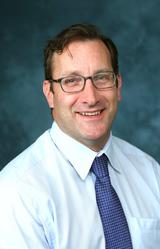
Seth Hayden is an Associate Professor in the Department of Counseling at Wake Forest University, where he has served since 2014. He coordinates the Clinical Mental Health Counseling program and serves as the Associate Online Program Director. Education: PhD in Counselor Education, University of Virginia MS in Counseling, University of Memphis BA in Psychology, University of Memphis BS in Education, University of Memphis His research focuses on the career and mental health needs of military service members, veterans, and their families, emphasizing integrated clinical supervision models that enhance counselors' ability to formulate interventions. Recent work explores connections between executive processing and career development, and the impact of stress on military spouses transitioning to civilian life. Hayden has received notable awards including the American Institute of Bisexuality Grant (2021), Wake Forest University ACE Fellow (2019-2021), and multiple NCDA awards. He has served as Associate Editor for The Career Development Quarterly and past-president of the National Career Development Association. He maintains active professional service, including editorial roles for journals like Journal of Military and Government Counseling , and provides counseling services through Centerstone Military Services and Veterans Helping Veterans Heal. His expertise spans career development theory, military transition, and integrated counseling models.
Christina Kehl Cramer, MD, is an Associate Professor at Wake Forest University School of Medicine with dual appointments in the Department of Radiation Oncology and Department of Neurological Surgery. She practices at the Atrium Health Wake Forest Baptist Comprehensive Cancer Center in Winston-Salem, NC, where she specializes in brain tumor treatment and stereotactic radiosurgery. Her clinical focus includes Brain Cancer, Gamma Knife procedures, and Spine Tumors. Dr. Cramer completed her medical degree at Brown University's Warren Alpert School of Medicine (2011), followed by an Internal Medicine internship at University of Chicago Medical Center (2012), and a Radiation Oncology residency at Duke University School of Medicine (2016). She holds triple board certifications from the American Board of Radiology in Radiology, Radiation Oncology, and Diagnostic Radiology. Her research program focuses on three primary areas: Brain Metastases, Glioblastoma, and Low-Grade Glioma. She investigates stereotactic radiosurgery techniques, radiation-immune therapy interactions, and socioeconomic factors in neuro-oncology outcomes. Recent publications demonstrate strong emphasis on Gamma Knife applications, brain metastasis velocity modeling, and quality-of-life considerations in radiation therapy. Dr. Cramer leads clinical initiatives within the Brain Tumor Specialty Team and Pediatric Brain Tumor Program. She maintains active collaborations through Wake Forest's Comprehensive Cancer Center and sees patients at multiple clinical locations throughout Winston-Salem.
Dr. Yanyan Li is an Assistant Professor in the School of Food and Agriculture at the University of Maine , affiliated with the Maine Agricultural and Forest Experiment Station . Her research focuses on diet-derived bioactives, particularly isothiocyanates from cruciferous vegetables, and their role in disease prevention and management. Education: PhD in Nutrition and Food Science, Ohio State University (2011) Research Areas: Anti-cancer properties, anti-inflammatory mechanisms, molecular biology of dietary components, gastrointestinal disease prevention, public health, and human nutrition. Funding: Supported by the Maine Agricultural and Forest Experiment Station through the Hatch project ME022303. Teaching: Balances 50% time between teaching courses on human nutrition/metabolism and technical presentations. Contact: Located at 5782 Winslow Hall, Orono, ME 04469. Phone: 207-581-3134 | Email: yanyan.li@maine.edu
James D. Forester is an Associate Professor in the Department of Fisheries, Wildlife, and Conservation Biology at the University of Minnesota's College of Food, Agricultural and Natural Resource Sciences. His research focuses on quantitative landscape ecology and mechanistic models of animal movement, particularly examining how large mammalian herbivores and carnivores respond to resource heterogeneity and environmental changes. Education: Ph.D. from the University of Wisconsin-Madison Teaching: Courses include FW 3108: Field Methods in Research and Conservation of Vertebrate Populations and FW 5603W: Habitats and Regulation of Wildlife , emphasizing GIS and quantitative analysis. His lab develops models to understand spatio-temporal processes affecting wildlife distribution and abundance, with applications to climate change and land-use impacts. Recent work explores predator-prey dynamics, invasive species, and disease transmission using advanced telemetry and computational tools. Key publication trends include studies on animal movement ecology , landscape heterogeneity , invasive species , and disease dynamics . His students and collaborators contribute to research on moose, black bears, raccoons, and Brazilian rodents. Scientific awards include recognition as an Institute on the Environment Fellow . Lab members include Ph.D. candidates, postdocs, and alumni, with ongoing projects involving GIS, ecological modeling, and wildlife telemetry.
Carla Klehm is an Assistant Professor of Archaeology at the University of Arkansas, serving as Assistant Director of the Center for Advanced Spatial Technologies (CAST) and faculty in the Department of Anthropology within the College of Arts & Sciences. She directs international, multidisciplinary projects funded by NSF, NEH, NGS, and Wenner-Gren, focusing on archaeological applications of remote sensing and spatial technologies. Her position at CAST involves project design and management of geomatics applications for archaeology and digital humanities, including directing the NSF-funded Spatial Archaeometry Research Collaborations program and the NEH-funded Spatial Archaeology Residential and Online Institute. Dr. Klehm earned her PhD in Anthropology (Archaeology) from the University of Texas at Austin in 2013, following an MA from the same institution in 2009 and dual BA degrees in Anthropology (Honors) and History from Northwestern University in 2006. Her educational background provided the foundation for her interdisciplinary approach to archaeological research. Her research interests center on how remote sensing and scientific methods can address questions about human societies, particularly regarding inequality, long-distance trade, and human-environmental relationships. She directs projects spanning from southern Africa's early polities and Bronze Age European fortress networks to East Africa's megalithic monuments. Her work incorporates geospatial applications including geophysics, UAV-based sensors, satellite remote sensing, and digital storytelling. She also co-leads an ethics initiative to improve health, safety, and wellness in field research, collaborating with local museums and communities while incorporating indigenous perspectives. Analysis of Dr. Klehm's publication record reveals a consistent focus on spatial archaeometry, African archaeology (particularly Botswana and East Africa), bead analysis, and field safety protocols. Her work demonstrates increasing integration of advanced technologies with traditional archaeological methods, showing particular innovation in adapting methodologies during pandemic constraints. The publications span prestigious journals including Nature, Proceedings of the National Academy of Sciences, and Current Anthropology, reflecting both disciplinary depth and interdisciplinary reach. 2022-Present: Academic Board Member, Institute for Field Research 2020-2021: AIA National Lecturer, Archaeological Institute of America 2010: Peyton Wright Memorial Award, Department of Anthropology, University of Texas at Austin Dr. Klehm has secured over $1.3 million in external funding as PI or co-PI from major organizations including NSF, NEH, NGS, and Wenner-Gren. She currently supervises two postdocs and has served on multiple graduate committees for emerging African scholars. Her teaching includes undergraduate and graduate courses at four different universities, with upcoming courses including ANTH 1033: Introduction to Archaeology and ANTH 3903: Special Topics, African Archaeology. Through the Center for Advanced Spatial Technologies, Dr. Klehm maintains an active research portfolio in spatial archaeometry and bead analysis involving coordination of dozens of students, professionals, and community members from multiple countries. Her SPARC program provides critical infrastructure for spatial archaeometry research, while her Digital Storytelling on African Urbanisms project creates innovative approaches to presenting archaeological narratives.
Chad King is a Professor in the Department of Biology at the University of Central Oklahoma, where he has served since 2023. He also acts as Assistant Director of the Selman Living Laboratory since 2024. Previously, he held roles as Assistant Chair (2022-24), Associate Professor (2019-present), and Assistant Professor (2013-18) at UCO, with teaching experience at the University of Missouri (2012) and University of Central Missouri (2002-09). Education: B.S. in Biology (1990) from Wayne State College, M.S. in Biology (1994) from University of South Dakota, and Ph.D. in Forestry (2013) from University of Missouri. King's research focuses on forest ecology, dendrochronology, fire history, and conservation biology. His work examines forest age structures, disturbance dynamics, and environmental impacts across Oklahoma and Missouri, with applications to urban naturalist practices and biodiversity monitoring. His publications span topics including river flow decline analysis, tick population surveillance, avian biodiversity assessment, and historical fire regime reconstruction. While no formal awards are listed, his contributions include technical reports for conservation agencies and collaborative studies in ecological journals.
A. Stuart Grandy is a Professor in the Department of Natural Resources and the Environment at the University of New Hampshire. His research explores the interactions between soil organisms and their environment, focusing on nutrient cycling, soil organic matter dynamics, trace gas emissions, and ecosystem productivity across agricultural, forest, and mountain ecosystems in the Northeast, Midwest, and West United States. Education: Ph.D. in Ecology and Soil Sciences from Michigan State University, M.S. from the University of Maine, and B.S. from The Evergreen State College. At the intersection of soil ecology and biogeochemistry, Grandy’s work investigates how plant-soil feedbacks regulate organic matter formation, with a particular emphasis on decomposer communities and nitrogen cycling in agricultural systems. His team employs molecular, chemical, and microbiological techniques to improve soil management practices and enhance ecological sustainability. Research trends reveal a focus on agricultural resilience, soil carbon dynamics, microbial community responses to environmental changes, and optimizing soil enzyme assays. His publications span topics like crop rotation impacts on nitrogen cycling, microbial pathways in soil organic matter formation, and soil health indicators such as permanganate oxidizable carbon. Grandy teaches courses including Environmental Soil Chemistry , Approach to Research , and Professional Perspective . His lab combines fundamental research with applied solutions to address challenges in ecosystem management and soil health.
Alison Rasper, MD is an Assistant Professor of Urology specializing in the Reconstructive Division with a focus on Male Urology at the University of Kentucky College of Medicine. She is affiliated with the Department of Urology and maintains her clinical practice at the Medical Science Building (MS276B). Dr. Rasper completed her medical education at the University of Cincinnati College of Medicine, residency at Geisinger Medical Center, and fellowship at Wake Forest University, Bowman Gray School of Medicine. She holds board certification from the American Board of Urology. Her research focuses on reconstructive urology with expertise in penile transplantation, Peyronie's disease, urological prosthetics, and prostate cancer survivorship. Her work challenges existing paradigms in the field while advancing surgical techniques and patient outcomes. She has published extensively on topics ranging from immunological responses to quality improvement in urological care. Analysis of her publications reveals a consistent focus on improving outcomes for patients with complex urological conditions, particularly through innovative approaches to reconstructive procedures and challenging established beliefs in male urological care. Board Certification: American Board of Urology Dr. Rasper actively contributes to advancing reconstructive urology through her clinical practice, research, and academic appointments. Her collaborative approach addresses complex urological conditions while focusing on comprehensive patient care pathways and quality improvement initiatives.
Mark Welford is Professor and Head of the Department of Geography at the University of Northern Iowa's College of Social & Behavioral Sciences, where he also directs the Environmental Resource Management program. He teaches core courses including World Geography and Biogeography while leading international education through twelve study abroad programs across Ecuador, Europe, and Asia. His academic credentials include: PhD in Geography, University of Illinois at Urbana-Champaign (1993) MS in Geography, University of Idaho (1988) BS in Geography, Coventry University, U.K. (1986) Welford's research integrates conservation biogeography of Andean cloud forests, historic hurricane frequency analysis, and spatial epidemiology. His recent work examines pandemic dynamics in Arctic regions and hurricane evacuation behaviors during public health crises, employing geographical methodologies to address complex environmental health challenges. Publication analysis reveals dominant trends in pandemic geography and disaster management, with significant focus on Arctic health systems, hurricane-pandemic interactions, and community resilience. His work consistently applies spatial analysis to understand health disparities and risk perception across diverse populations from indigenous Arctic communities to U.S. coastal residents. No scientific awards were mentioned in the source material. Welford has secured substantial research funding as Co-PI on critical projects including: National Science Foundation RAPID grants totaling $386,087 for COVITA (2020-2022) studying Arctic pandemic dynamics $78,821 NSF grant on hurricane evacuations during COVID-19 (2020-2021) $129,664 Georgia Sea Grant project reconstructing 260 years of hurricane impacts (2012-2013) He has directed twelve international study trips, mentoring students across five continents while building collaborative frameworks for global environmental research. Welford leads an international research consortium with Dr. Anuza Petrov and Dr. Surya Tiwari, producing high-impact publications in journals like The Lancet and Nature Medicine. This team specializes in spatiotemporal pandemic modeling and disaster response strategies, with ongoing projects examining indigenous health sovereignty and climate-health interactions in vulnerable regions.
Lahnna Catalino is an Associate Professor in the Psychology Department at Scripps College. Her research focuses on positive emotions, mental health, and strategies for pursuing happiness through surveys, experience-sampling methods, and laboratory studies. She teaches courses such as Introduction to Psychology, Positive Psychology, and Social Psychology. Education: B.A. from McDaniel College, M.A. from Wake Forest University, Ph.D. from the University of North Carolina at Chapel Hill Her research explores how positive emotions influence health behaviors, meditation adherence, and psychosocial resources. Publications emphasize psychometric validation, micro-interventions for happiness, and the interplay between emotions and health outcomes. Though no specific awards or grants are listed, her work contributes to the field of positive psychology through empirical studies and theoretical frameworks like the broaden-and-build theory.
Scott McArt is an Associate Professor in the Department of Entomology at Cornell University, affiliated with the College of Agriculture and Life Sciences (CALS). His research focuses on the ecology of plant-pollinator interactions in natural and managed systems. McArt's research interests span Ecotoxicology , Disease Ecology , Community Ecology , and Chemical Ecology . His lab investigates how pesticides, pathogens, and habitat changes impact honey bees and native pollinators, emphasizing stakeholder collaboration and regulatory science. Recent research trends highlight his work on Pollinator disease transmission Pesticide detoxification mechanisms Ecological impacts of habitat fragmentation Comparative foraging behaviors Microbial dynamics in plant-pollinator networks Scientific Awards Cornell CALS Outstanding Accomplishments in Extension/Outreach (Pollinator Health Team, 2017) McArt maintains a 60/40 research/extension appointment, engaging with beekeepers, farmers, and regulatory agencies. His lab manages the Dyce Lab for honey bee studies and the Cornell Chemical Ecology Core Facility. He teaches courses like ENTOM 9900: Doctoral Level Thesis Research and ENTOM 4990: Undergraduate Research in Entomology .
Garrett Benisch is a Lecturer at Pratt Institute's School of Continuing & Professional Studies, with expertise spanning sustainable design, material innovation, and social impact projects. His work bridges industrial design with ecological responsibility. Co-founder of Sum Studio Project Manager for Research at Pratt Institute Research Accelerator Adjunct Professor in Communications Design department Garrett's research focuses on: Material innovation using waste streams (biosolids, algae, fruit peels) Environmental sustainability through design solutions Community development in East Africa Interdisciplinary approaches combining art, science, and social activism Low-tool manufacturing techniques Temporal installations exploring ecological processes His notable projects include the award-winning Sum Waste pen made from human sewage, algae-based edible straws, and community infrastructure developments in Rwanda and Congo. Garrett emphasizes design as a tool for maintaining positive societal momentum.
Jonathan B Ida, MD, serves as Associate Professor of Otolaryngology (Pediatric Otolaryngology) at Northwestern University's Feinberg School of Medicine. He practices at Ann & Robert H. Lurie Children's Hospital of Chicago with additional affiliations at Northwestern Memorial Hospital and Northwestern Medicine Lake Forest Hospital. Education: BS, The University of Arizona (1999) BA, The University of Arizona (1999) MD, Case Western Reserve University (2004) MA, Case Western Reserve University (2004) MBA, National Louis University (2020) Completed surgical training at Tulane University Medical Center Hospital (Internship 2005, Residency 2009) and Pediatric Otolaryngology fellowship at Cincinnati Children's Hospital Medical Center (2011). Board certified by the American Board of Otolaryngology-Head and Neck Surgery. Research Focus: Specializes in pediatric airway disorders including subglottic stenosis management and reconstruction, voice pathology (vocal cord paralysis, nodules, papillomatosis), and pediatric stroboscopy. Integrates health services research methodologies to advance quality improvement and patient safety in otolaryngology. Professional Leadership: Voice Committee, American Academy of Otolaryngology Head & Neck Surgery (2012-2014) Member, American College of Surgeons (2006-present) Member, The Triological Society (2006-present) Member, American Academy of Otolaryngology Head & Neck Surgery (2005-present) Affiliated with Stanley Manne Children's Research Institute, focusing on translational pediatric research.
Tord D Alden, MD is an Associate Professor in the Department of Neurological Surgery at Northwestern University's Feinberg School of Medicine, specializing in Pediatric Neurological Surgery. He practices clinically at Ann & Robert H. Lurie Children's Hospital of Chicago and maintains affiliations with Northwestern Medicine Central DuPage Hospital, Northwestern Medicine Lake Forest Hospital, and Northwestern Memorial Hospital. Education: MA: University of California, Berkeley (1991) MD: Rush Medical College (1995) Intern: Hospital of the University of Pennsylvania, Surgery (1996) Resident: University of Virginia Hospitals, Neurological Surgery (2000) Fellow: Saint Louis Children's Hospital, Pediatrics Neurosurgery (2001) Fellow: Auckland Hospital, Neurosurgery (2002) Dr. Alden's research focuses on complex pediatric neurological conditions including epilepsy mechanisms, Chiari malformation with syringomyelia, brain/spinal cord tumors, hydrocephalus management, and vascular disorders. His work emphasizes surgical innovation in skull base and spinal procedures, with particular attention to outcomes in craniovertebral junction anomalies and cerebrospinal fluid dynamics. Recent studies investigate immune contributions to pediatric epilepsy and health disparities in CNS tumor care. Analysis of his 2022-2025 publications reveals dominant themes in minimally invasive techniques (endoscopic endonasal approaches), collaborative multi-center research through the Park-Reeves Syringomyelia Research Consortium, and translational studies addressing surgical complications and health equity. His work spans clinical outcomes, surgical innovation, and quality improvement in neurosurgical documentation systems. Dr. Alden participates in the Northwestern University Clinical and Translational Sciences Institute (NUCATS) and contributes to multidisciplinary teams managing complex genetic disorders like mucopolysaccharidoses and skeletal dysplasias, often requiring integrated neurosurgical, orthopedic, and genetic expertise.
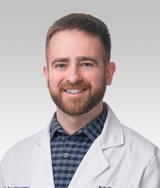
Kyle J Beuoy serves as a Clinical Assistant Professor in the Department of Family and Community Medicine at Northwestern University's Feinberg School of Medicine, contributing to clinical education and patient care within Northwestern Medicine's network, including sites referenced in faculty directories such as Humboldt Park, Lake Forest, and Delnor. His professional focus centers on comprehensive family healthcare delivery across diverse community settings, emphasizing evidence-based primary care, preventive medicine, and longitudinal patient management. This aligns with the department's mission to address population health through community-integrated clinical practice and medical education.