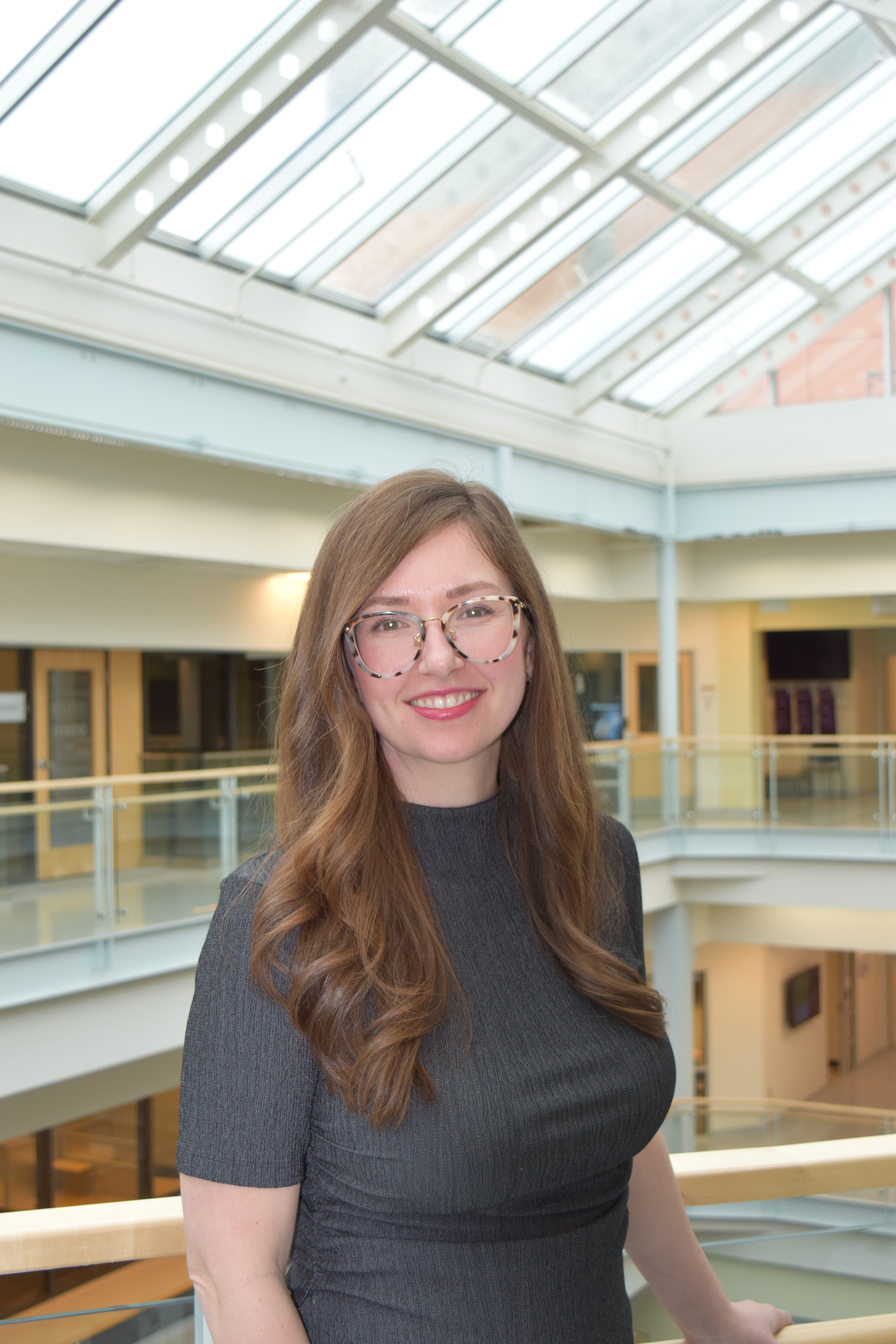
Anette Mikes is an Associate Professor of Accounting at the University of Oxford’s Saïd Business School and a Hertford College Fellow. She specializes in risk management, corporate governance, and sustainability, with a focus on the intersection of ethics and organizational control systems. Her research explores how risk frameworks shape corporate decision-making, particularly in climate change and decarbonization contexts. Education: PhD in Accounting from the London School of Economics (2005) Pre-doctoral work in the City of London (2006–2007) studying Chief Risk Officer roles Research Interests: Behavioral approaches to risk management Management control systems for sustainability Ethics in corporate governance Decarbonization strategies in heavy industries Her 2012 Harvard Business Review article (with Robert Kaplan) on risk frameworks remains influential, while her documentary on the Kursk submarine disaster highlights crisis management failures. Awards: 2025 Honorary Doctorate from Uppsala University 2017 ACA Prize for Risk Management Contributions 2014 Global Risk Forum Film Award Key Contributions: Co-developed Harvard’s Risk Management executive program Leads research on ‘Values at Risk’ and corporate purpose Published widely on climate risk governance and ethical leadership Her recent work emphasizes decarbonization strategies and moral accountability in business, bridging accounting practices with environmental and ethical imperatives.
Virginia Leavell serves as Assistant Professor in Organisational Theory and Information Systems at Cambridge Judge Business School, University of Cambridge. Her research investigates how organisations anticipate technological change through digital prediction systems, AI, and infrastructure transformation, drawing on her decade-long background in political organising for non-profits and labour groups across the US and Thailand. Her academic credentials include: BA in Interdisciplinary Studies, Georgetown University MA in Sociology, University of California Santa Barbara PhD in Technology Management, University of California Santa Barbara Leavell's scholarly work centers on organisational anticipation of technological futures, employing ethnographic and social network analysis methods to examine digital transformation in critical infrastructure contexts. She explores how predictive technologies reshape organisational structures and actions before technological change fully materializes, with particular focus on water systems, urban planning, and labor industries where digital twins and simulation technologies create new governance challenges. Analysis of her 2017-2024 publications reveals consistent examination of prediction performativity across sectors, demonstrating how digital models influence physical realities in infrastructure management. Her research trajectory shows increasing emphasis on sociomaterial dimensions of anticipatory organising, with recent work interrogating the equalization of human and technological agency in digital transformation processes. No scientific awards were specified in source materials. Leavell actively contributes to the Organisational Theory and Information Systems subject group at Cambridge Judge Business School, which engages cross-disciplinary leadership themes. Information regarding student advising and research grants remains unspecified in available documentation.
Myriam Dunn Cavelty serves as Deputy Head of Research and Teaching at the Center for Security Studies (CSS) at ETH Zurich, where she leads significant academic initiatives in cybersecurity and digital governance. She holds formal affiliations as an associate researcher at the Center for Advanced Security Theory at the University of Copenhagen, and has held prestigious visiting positions at Brown University, the University of Darmstadt (as a Mercator Fellow), and the Central European University. Her research expertise centers on how digital technologies influence political behavior and societal values, with particular attention to governance arrangements for digital technologies and their embedding in social, political, and economic processes. Her scholarly contributions span cybersecurity politics, cyber warfare, critical infrastructure protection, and strategic foresight, reflecting an interdisciplinary approach that bridges political science, international relations, and technology studies. Dunn Cavelty's publication record demonstrates remarkable consistency and impact, with works spanning from 2008 to the present. Her research shows an evolution from early analyses of cyber-threat construction to contemporary examinations of AI in security contexts and the political dimensions of cybersecurity governance. Her work consistently addresses the intersection of technological capabilities and political constraints, examining how states and other actors navigate security challenges in the digital domain. Mercator Fellow at the University of Darmstadt Editor-in-Chief of Contemporary Security Policy Advisory work for governments, international institutions, and corporations As an academic leader, she has advised numerous doctoral students and supervised research projects examining the political dimensions of cybersecurity. Her work with the Center for Security Studies involves directing research programs that connect academic inquiry with policy relevance, particularly in the areas of risk analysis and strategic foresight. She has established herself as a leading voice in European cybersecurity scholarship, with particular expertise in the Swiss context and broader European security frameworks.
Prof. Dr. Evi Hartmann holds the Chair of Business Administration, especially Supply Chain Management at Friedrich-Alexander University Erlangen-Nuremberg (FAU) within the Department of Business, Economics, and Social Sciences. She is actively involved in multiple research focus areas including sustainability, energy markets and energy system analysis, and insurance and risk. Her academic leadership extends across interdisciplinary collaborations with engineering, mathematics, and industry partners. Dr. Hartmann studied industrial engineering at the University of Karlsruhe (TH), received her doctorate in 2002 from the Institute of Technology and Management at the Technical University of Berlin, and completed her habilitation in business administration in 2008. Prior to her academic career, she worked as a consultant at AT Kearney from 1998 to 2005, followed by a junior professorship for 'Purchasing and Supply Management' at the Supply Chain Management Institute at the European Business School. Her research program focuses on supply chain management, purchasing, and strategic foresight, with particular emphasis on application-oriented approaches that bridge theory and practice. Current research trajectories include supply chain resilience in crisis situations (including pandemic response), digital transformation through Industry 4.0 technologies, sustainable and low-carbon supply chains, and the integration of strategic foresight methodologies in logistics decision-making. Her work frequently employs Delphi studies, bibliometric analyses, and multi-tier case studies to examine complex supply chain phenomena. Analysis of her recent publications reveals a strong trend toward interdisciplinary research that combines supply chain management with digital transformation, sustainability, and crisis response. Her work increasingly examines the intersection of technology adoption (particularly Industry 4.0), organizational culture, and supply chain resilience across multiple industries including automotive, food, and maritime logistics. Prof. Hartmann is recognized as the author of two academic bestsellers in her field, though specific awards are not detailed in available materials. Her research has been published in top-tier journals including IEEE Transactions on Engineering Management, International Journal of Production Research, and Journal of Cleaner Production. Her research program demonstrates extensive industry collaboration, with numerous projects involving real-world implementations and close partnerships with companies. She leads research initiatives examining the practical implications of digital transformation, sustainability challenges, and resilience strategies in supply chain operations. Current projects include studies on digital ecosystems, physical internet applications, and the future of freight forwarding technologies. Prof. Hartmann participates in several research networks including the Energy Campus Nuremberg (EnCN) and collaborates with the Department of Mathematics on gas networks and markets research. She is also involved with the Nuremberg Energy Region (Energieregion Nürnberg eV) and contributes to interdisciplinary research centers focused on sustainable development and digital transformation in supply chains.
Leigh Spanner is an Assistant Professor in the Department of Political Science at Saint Mary’s University (Faculty of Arts). She holds a PhD from the University of Alberta and previously served as a postdoctoral fellow at Mount Saint Vincent University. Her research focuses on feminist-informed analyses of Canadian national security, military policies, and veteran life, emphasizing gender, global security, and the intersections of intimate life with state structures. Education: PhD in Political Science, University of Alberta (2019) MA in Political Science, Memorial University of Newfoundland (2013) BA (Hons) in Political Science and Public Administration, University of Ottawa (2008) Research Interests: Dr. Spanner explores how gender, inequality, and political economy shape military families, veteran transitions, and security policies. She examines the role of households and caregiving in sustaining global security frameworks, with a focus on Canadian Armed Forces and Veterans Affairs Canada policies. Grants & Collaborations: Her monograph on military families was funded by SSHRC. She collaborates with DND MINDS Collaborative Network and previously with the Defence Security Foresight Group. Recent work includes policy contracts with Veterans Affairs Canada. Labs/Networks: Active member of military culture research networks, including the DND MINDS Collaborative Network.
Ian Ewart is an Associate Professor at the University of Reading's School of the Built Environment, serving as Head of Construction and Engineering Management and Research Group Lead for Organisation, People and Technology. He chairs the Research Ethics Committee since 2016 and supervises undergraduate/postgraduate dissertations. His academic journey spans engineering and anthropology: DPhil Social and Cultural Anthropology, University of Oxford, St Hugh's College (2007-2012) MSc Material Anthropology and Museum Ethnography, University of Oxford, St Hugh's College (2006-2007) BA (Hons) Archaeology and Anthropology, University of Oxford, Harris Manchester College (2003-2006) Diploma in Management Studies, University of the West of England (1990-1994) BEng (Hons) Mechanical Engineering, Staffordshire University (1983-1987) Ewart's research integrates ethnographic methods with digital technology studies, examining human-technology interactions in construction and domestic settings. His work bridges engineering practice and social anthropology, focusing on skill transmission, sustainable design, and multisensory experiences in virtual environments. Publications from 2025-2013 reveal a dominant trajectory in digital twins for socio-ecological sustainability, VR-based occupant behavior prediction, and HBIM for heritage conservation. The corpus demonstrates consistent cross-disciplinary innovation, merging archaeological reconstructions with healthcare applications while maintaining anthropological rigor. Key recognition: ESRC Future Research Leader fellowship (2013) for Designing Healthy Homes project He supervises PhD candidates like Afolabi Dania (Nigerian sustainable construction) and Joanna Hull (Heritage BIM), leveraging ESRC funding for ethnography-VR health studies. His grants emphasize participatory design and real-world impact assessment in built environments. Leaders the Organisation, People and Technology research group, developing multisensory Roman town reconstructions with sound/smell integration to advance archaeological and architectural experience modeling.
Steven W. Popper is a Professor of Policy Analysis at the RAND School of Public Policy and an Adjunct Senior Economist at the RAND Corporation. He also serves as Distinguished Professor of Decision Sciences at Tecnológico de Monterrey’s School of Government and Public Transformation, reflecting his international academic engagement. His work bridges economics, science and technology policy, and strategic decision-making under uncertainty. Research Interests: Popper's expertise lies in decision-making under deep uncertainty (DMDU), robust decision making (RDM), assumption-based planning, and science, technology, and innovation policy. He has made seminal contributions to long-term policy analysis, particularly through his co-authorship of Shaping the Next One Hundred Years (2003). His research addresses complex systems in economic development, international relations, and environmental planning. Publication Trends: His recent work applies RDM methodologies to diverse domains such as U.S.-China economic competition, Israeli defense and energy policy, transportation planning, and future technologies. His publications often involve scenario analysis, foresight, and adaptive strategies for policy resilience in uncertain futures. Scientific Awards and Leadership: Founding officer and current Finance Chair, Society for Decision Making under Deep Uncertainty Past Chair, Industrial Science and Technology Section, American Association for the Advancement of Science Consultant to the World Bank, OECD, and multiple national governments Advising and Grants: While specific advisees are not listed, Popper has led numerous high-impact research projects funded by U.S. federal agencies and international bodies. His role as Associate Director of the Science and Technology Policy Institute (1996–2001) involved providing analytic support to the White House Office of Science and Technology Policy, indicating extensive grant-funded research leadership. Labs and Teams: Popper is affiliated with RAND’s research teams focused on policy analysis, innovation, and strategic foresight. He collaborates with interdisciplinary teams applying modeling and simulation tools to public policy challenges, particularly through the Robust Decision Making framework.
Professor Eero Vaara, currently at Saïd Business School, University of Oxford, is a globally recognized expert in organizational theory, strategic change, and institutional dynamics. With 39 publications in Financial Times top 50 journals between 2008-2022, his work explores historical perspectives, discursive processes, and paradoxes in organizational transformations. Affiliation: Saïd Business School, University of Oxford Research Focus: Strategic change, institutional work, narrative theory, and historical embeddedness Eero’s research bridges macro-institutional and micro-practice approaches, emphasizing how unmaterialized decisions, discursive struggles, and temporal dynamics shape organizational trajectories. His work spans multinational corporations, public sector governance, and extreme contexts, with a growing interest in historical analysis and critical discourse studies. His recent publications highlight themes such as strategy-as-practice , national identity , and temporal intentionality . Articles like Near-histories and strategy emergence and Discursive legitimation demonstrate his interdisciplinary approach combining institutional theory, paradox theory, and narrative analysis. Scientific Awards: Academy of Management fellowship Ranked 11th most published management scholar in FT top 50 journals (2008-2022) Eero’s collaborative research style and resilience in the publication process have led to influential contributions in strategic management and organizational studies. His colleague Eric Zhao notes that his work “opens up new ways of thinking about organizations, strategy, and change,” reflecting Oxford Saïd’s commitment to research excellence.
Sarah Pink is a leading Professor at Monash University , holding a joint appointment across the Faculty of Art, Design and Architecture and the Faculty of Information Technology . She serves as Director of the FUTURES Hub and Emerging Technologies Research Lab , focusing on human futures in digital and net zero transitions. PhD in Social Anthropology, University of Kent Honorary Doctorates from Malmö and Halmstad Universities Fellow, Academy of the Social Sciences in Australia Her research spans design anthropology, emerging technologies, automated decision making, and future mobilities . Recent work examines: AI ethics in clean energy Smart homes for seniors Automated mobility futures Selected 2025 article trends show focus on technological ethics, urban data systems, and human-machine interaction across 6 subfields including automated decision making and sensory design. Major awards: CIOB Award for Best International Paper (2016) Asia Pacific Eldercare Innovation Gold (2021) Good Design Awards (2023) As research director for Monash Grid Innovation Hub and Human-Centred Computing , she leads projects funded by Australian Research Council, EU, and national research councils across five countries. Her lab engages 20 active projects and 20+ industry partners globally.
Prof. Dr. Gunther Hellmann is a Professor of Political Science at Goethe University Frankfurt, specializing in German and European foreign policy. He serves as a Principal Investigator, Board Member, and Research Field Coordinator at the Cluster of Excellence 'Normative Orders,' and has held leadership roles such as President of the World International Studies Committee (2017–2021) and Dean of the Department of Social Sciences (2004–2005). His academic contributions include co-editorship of the Journal of International Relations (ZIB) and a visiting professorship at Johns Hopkins University’s SAIS Bologna Center. Affiliations: Goethe University Frankfurt, Cluster of Excellence 'Normative Orders,' World International Studies Committee, Aspen Institute Berlin, Transatlantic Academy Education: Political Science, History, and Philosophy at Freiburg, Munich, and Washington, D.C. Research Interests: Hellmann focuses on international relations theory, foreign policy analysis, German and European foreign policy, security and peace policy, and the transformation of global and regional orders. His work emphasizes the interplay between normative expectations and practical diplomacy, with a particular interest in transatlantic relations, strategic dilemmas, and praxis theory. Publications: His recent works examine global order challenges, pragmatism in foreign policy, and the evolution of international practices. Articles from 2024 address normative expectations, economic interdependence, and post-reunification German foreign policy. Earlier works (2022–2020) analyze praxis theory, securitization, and the relevance of theoretical political science to real-world issues. Teaching: He supervises theses and exams in international relations, requiring topics related to foreign policy theory, German/EU policy, and security studies. Students must attend his colloquium and submit detailed outlines.
Francesco Rosati is an Associate Professor at the Department of Management Engineering, Technical University of Denmark (DTU), affiliated with the Centre for Technology Entrepreneurship. His work focuses on the intersection of entrepreneurship, innovation, and sustainable development, particularly addressing the UN Sustainable Development Goals (SDGs). He holds academic qualifications in management and engineering and has mentored numerous Danish and international startups. Rosati has been recognized with the Tietgen Award 2020 for early-career contributions to business-oriented social sciences. Research interests include corporate sustainability management, business model innovation for sustainability, and organizational silos analysis. His work spans multiple sectors, including healthcare and construction industries. Rosati teaches courses on strategy, entrepreneurship, and sustainability at both Master’s and executive education levels, and actively participates in global conferences. Key projects include accelerating SDG-aligned entrepreneurship education, circular business model innovation in construction, and building climate resilience for vegetable farmers in Ghana. His research has been published in journals like Business Strategy and the Environment , Journal of Cleaner Production , and Organization and Environment . Rosati has supervised several PhD students exploring topics such as entrepreneurial resilience, SDG reporting, and business model innovation. His work emphasizes bridging management and engineering disciplines to address global sustainability challenges.
Professor David Sarpong is a leading academic in Strategy and Organisation at Aston Business School, part of Aston University's College of Business and Social Sciences. He currently serves as Head of the Marketing and Entrepreneurship Department and Director of Research for the Marketing and Strategy Subject Group. His research focuses on strategy-as-practice, relationalism, innovation management, and temporality in organizational processes. He holds adjunct roles at KNUST Business School and Bristol Business School, and is actively involved in professional organizations like EURAM and CABS. His work employs qualitative methods including ethnographic interviews and microstoria approaches. Professional Activities: He serves as Editor-in-Chief of the Journal of Strategy and Leadership, and on editorial boards for Technology Analysis & Strategic Management and European Management Journal. His external roles include UK Country Representative for EURAM and Board Membership at The Milestones Trust. He has held prior academic leadership positions at Brunel University London and visiting roles at HSE Moscow and University of KwaZulu-Natal. Research Interests: Prioritizes cross-level management problems using Heideggerian-Wittgensteinian frameworks. Key themes include second-order technology management, business tournament rituals, strategic foresight, and discursive practices in European cosmopolitan marketplaces. Methodologically innovative in combining narratives, digital datasets, and performative routines analysis. Collaborations: Active in global research networks with scholars across Africa, Europe, and Asia. Recent work addresses mining-industry partnerships, gender dynamics in extractive economies, and ethical dimensions of corporate governance. His research outputs number over 110 publications in top journals like Technovation and Journal of Business Research. Awards/Affiliations: Recognized through editorial leadership roles and visiting professorships. His research has policy implications for sustainable development, innovation ecosystems, and organizational resilience in global contexts.
Aafke Fraaije is a postdoctoral researcher at the Section Ethics & Philosophy of Technology , Faculty of Technology, Policy and Management , Delft University of Technology. Her work bridges art, ethics, and technology through interdisciplinary approaches to citizen engagement and responsible innovation. Institution: Delft University of Technology School: Faculty of Technology, Policy and Management Department: Section Ethics & Philosophy of Technology Academic Rank: Research Fellow Research Interests : Ethics of human-nature-technology relationships Art-based methods for public engagement with technology Participatory futuring in smart city development Inclusive approaches to technology governance Communication frameworks in clinical and engineering contexts Critical analysis of responsible research and innovation (RRI) Recent Research Trends : Her publications focus on using artistic practices (dance, theatre) to explore ethical implications of smart city technologies, developing frameworks for responsible innovation, and analyzing communication dynamics in high-stakes environments like surgery and robotics. Key themes include citizen participation in technological development, interdisciplinary methodologies, and ethical accountability across sectors.
Dr Ulla McKnight is an Assistant Professor in Sociology (Sociology and Criminology) at the University of Sussex, School of Law, Politics and Sociology. Her interdisciplinary research focuses on racialised and gendered health inequalities, particularly in reproductive and sexual health for ethnic minority and migrant women in the UK. Her educational background includes a PhD in Sociology from Goldsmiths, University of London (2016), an MA in Postcolonial Studies (Goldsmiths, 2006), a BFA in Photography (San Francisco Art Institute, 2001), and a Postgraduate Certificate in Learning and Teaching in Higher Education (Goldsmiths, 2018). Dr McKnight’s research lies at the intersection of Science and Technology Studies (STS), Black Feminist Hauntology, and participatory methodologies. She investigates how crises such as antimicrobial resistance (AMR), environmental collapse, and political inequity shape health futures. A key contribution is her conceptualisation of the HIV diaspora , which captures the transnational care experiences of people living with HIV in high-resource settings. Her work critically examines the entanglements of race, infectious disease, and political uncertainty using speculative and sensory methods. Her recent publications and research projects reveal a strong focus on maternal morbidity, speculative futures in sexual health, and the social justice dimensions of AMR. She employs arts-based and collaborative methods to explore the 'unsayable' in healthcare experiences. Nominated for Education Awards 2024 Nominated for Education Awards 2025 Dr McKnight is actively involved in supervising student research and has taught courses such as 'Doing Social Research', 'Health across the Lifecourse', and 'Sociology Research Proposal'. She is a Co-Investigator on the AHRC-funded project 'Reproductive Borders and Bordering Reproduction' and collaborates with the Wellcome Trust-funded project 'Inequalities and Tackling Antimicrobial Resistance in Sexual Health'. She has also secured a grant from the National Institute for Health Research for an arts-based workshop on 'unsayable' experiences. She is actively engaged in academic and public discourse through invited talks, conference presentations, and peer review for journals including Sociology of Health and Illness and Journal of the International AIDS Society .
Holger Straßheim is Professor of Political Sociology at Bielefeld University, affiliated with the Faculty of Sociology, Department 4 – Politics and Society. He also holds leadership roles as co-director of the Institute for Interdisciplinary Studies of Science (ISOS) and the Institute for World Society Studies, and is an elected member of the university’s Senate. He coordinates the MA program in Political Communication and serves on multiple examination and ethics committees. University: Bielefeld University School: Faculty of Sociology Department: Department 4 – Politics and Society Research Institutes: ISOS, Institute for World Society Studies Administrative Roles: Program Coordinator MA Political Communication, Member of BA/MA Examination Boards, Habilitation Committee His research centers on the interplay between science and politics, particularly the role of expertise and evidence in public policy. Key areas include behavioral public policy, climate and consumer policy, Arctic geopolitics, and the temporal dimensions of governance. He investigates how knowledge is produced, legitimized, and used in policy-making across transnational contexts. The most recent publications reflect a strong focus on evidence cultures, ethical expertise in crises, and the global spread of behavioral governance. These works analyze how expert advice functions under uncertainty, the paradoxes of evidence-based policy, and the institutionalization of ethical guidance during emergencies like the COVID-19 pandemic. The research often employs comparative and interdisciplinary methods, engaging with science and technology studies, political sociology, and policy analysis. Best Dissertation Award, University of Tübingen (2011) Visiting Fellow, Harvard Kennedy School (2014) Visiting Research Fellow, Collège d’études mondiales, Paris (2018) Visiting Research Fellow, University of Bologna (2022) Straßheim has supervised and advised in various research projects and PhD initiatives, particularly through his leadership in DFG and ESRC-funded programs. He has secured significant third-party funding, including projects on Arctic knowledge co-production and ethics in crisis governance. He is actively involved in academic service, reviewing for major journals and research councils, and shaping policy discourse through editorial roles in Critical Policy Studies and the Advances in Critical Policy Analysis book series. He leads the Straßheim Research Group, fostering interdisciplinary collaboration on science-policy interfaces. He is a key figure in research networks such as the Science and Democracy Network (Harvard) and the International Arctic Science Committee. His work bridges academic inquiry with real-world policy challenges, emphasizing democratic accountability, epistemic pluralism, and the ethical dimensions of expertise.