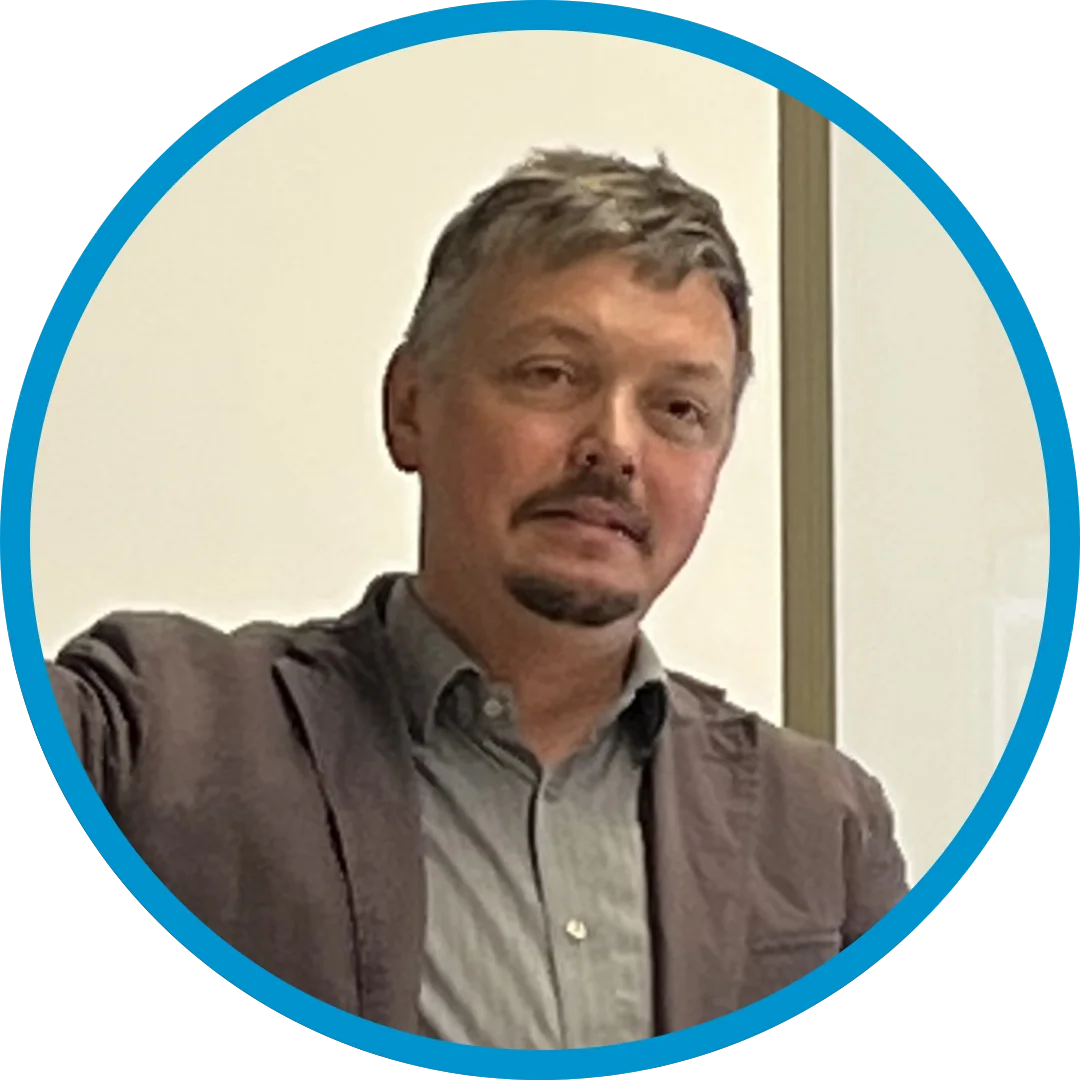
Oleksandr Kapranov is an Associate Professor of English at NLA University College's Teacher Education program. His work intersects discourse analysis, climate change communication, and English language teaching (ELT), with a focus on sustainable development education and intercultural communication. Research areas include political speeches (e.g., Keir Starmer, Rishi Sunak), corporate disclosures (Bank of England, Vedanta Resources), and media framing (Greenpeace branches, King Charles III). Key pedagogical interests: digital competence, beginner EFL training, and discourse markers in academic writing. His recent publications analyze climate change discourse through syntactic structures, metonymy, modality, and evidentiality, emphasizing institutional and political narratives. While no formal awards are listed, his work spans interdisciplinary collaborations with NGOs, governments, and universities.
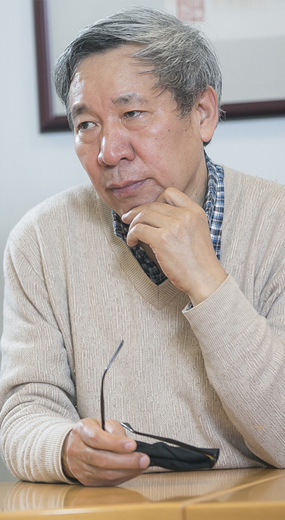
Prof. Yan Lianke (born 1958) is a renowned contemporary Chinese writer and academic. He currently holds the IAS Sin Wai Kin Professor of Chinese Culture at Hong Kong University of Science and Technology and serves as Professor at the School of Liberal Arts of Renmin University of China. His work spans novels, short stories, and literary theory, often exploring political, historical, and social themes through a critical lens. Education: BA in Political Education (Henan University, 1985), MA in Literature (PLA Academy of Art, 1991) Awards: Lu Xun Literature Prizes, Franz Kafka Prize, Newman Prize, and international recognition for his humanistic and socially conscious writing Yan’s research and writing focus on the intersection of literature, memory, and truth-telling in authoritarian contexts. His theoretical work, such as the 2020 lecture On Memory , critiques the erasure of personal and collective recollection in modern China. His novels, including Four Books and Dreams of Ding Village , are celebrated for their allegorical depth and spiritual realism. Scientific awards and honors include: 2014 Franz Kafka Prize (first Chinese recipient) 2017 Dream of the Red Chamber Award 2021 Newman Prize for Chinese Literature 2022 Lee Hochul Prize for Peace 2024 Nebula Award for Contribution to Global Chinese Literature Yan’s teaching and creative writing programs at HKUST and Renmin University emphasize the ethical role of literature in documenting human experiences and challenging historical amnesia. His work has been translated into over 30 languages, with more than 150 foreign publications.
Professor Stephen Chan is a faculty member at SOAS University of London in the Department of Politics and International Studies (POL) . With a focus on African political thought and international relations, his work critically examines postcolonialism, decoloniality, and global governance. Key research themes include: Decolonizing international relations theory Sino-African political dynamics Election observation and democratic processes Non-Western cosmopolitanism Comparative diplomatic practices His recent publications analyze the ideological ambiguity of decoloniality (2023), pluralist visions for global security (2017), and the legacy of African liberation movements (2021). He has advised multiple theses on topics ranging from parliamentary governance in Kenya/Zimbabwe to China-Africa media interactions. Notably: Critiqued the misuse of 'decoloniality' as ideological rhetoric (2023) Authored a poetic autobiography of political engagement (2022) Traced Africa's intellectual history of freedom (2021) Examined Zimbabwean elections (2017) Explored non-Western modernity (2018)
Magnus Dahlstedt is Professor of Social Work at Linköping University's Department of Culture and Society (IKOS) since 2019, previously holding the same position at ISV (Institution for Social and Welfare Studies) from 2015-2019. He has been responsible for the research environment and doctoral education in Social Work at Linköping University from 2016 to 2023. His academic journey began with a PhD in Ethnicity from Linköping University in 2005, followed by becoming a docent (associate professor) in 2009 and a biträdande professor (associate professor) in 2014 before achieving full professorship in 2015. Dahlstedt's research centers on citizenship formation in contemporary society shaped by welfare policy transformations and international migration. His work examines how citizenship is concretely formed in segregated urban environments, focusing particularly on the gap between formal rights and substantive living conditions. He investigates social pedagogical efforts across public policy, education, and the non-profit sector, with special attention to vulnerable groups including young people with foreign backgrounds in urban peripheries. His methodological approach is interdisciplinary, grounded in critical power analysis, discourse analysis, and ideological critique, often involving cross-disciplinary research collaborations. His recent publications reveal consistent thematic focus on migration, social inclusion, and urban segregation, with particular emphasis on how sports can serve as tools for social purposes in marginalized communities. The research shows increasing attention to longitudinal studies of migrants' trajectories and the role of different educational contexts (high school, folk high schools, study associations) in integration processes. Dahlstedt's work demonstrates strong policy relevance, with findings frequently presented in government agency reports and informing public debate on segregation and inclusion. Researcher at Center for Community Strategies Research (2018-2021) Member of Mimerrådet, National Program for Folk Education Research (since 2014) Department Head at Remeso, Linköping University (2012-2015) Dahlstedt actively contributes to public discourse through media appearances, public lectures, and alternative writing projects including the anthology 'Brandtal' (2023) and 'Hårdare kan ingen vara' (2023), while preparing 'En professors dagbok' for publication in fall 2024. His research is funded by multiple agencies including Vetenskapsrådet, Norrköping Research and Development Fund, and the Swedish Crime Prevention Council.
Amitav Acharya is UNESCO Chair in Transnational Challenges and Governance and Distinguished Professor at American University's School of International Service. He holds honorary positions at Rhodes University, University of Pretoria, and Nankai University, with previous appointments at Harvard, Oxford, and Tsinghua University. Research focuses on: Global international relations and world order transitions US-China relations and Asian regionalism Non-Western international relations theory United Nations and global governance Publications demonstrate extensive contributions to IR theory with works translated into multiple languages. Honors include: Three-time ISA Distinguished Scholar Award recipient American University Scholar-Teacher of the Year (2020) First non-Western President of International Studies Association (2014-2015)
Stephen Spector is a Professor of English at Stony Brook University since 1972, with a PhD from Yale University (1973). His work bridges medieval literature, religious studies, and language history. He has held visiting positions at the Hebrew University (Jerusalem, 1996–97) and fellowships at the National Humanities Center and Wesleyan University. His research focuses on medieval English literature, particularly mystery plays and biblical texts, alongside modern topics like Christian Zionism and the Ethiopian Jewish rescue operation (Operation Solomon). He has authored influential books such as Evangelicals and Israel (2009), which won the London Book Festival Prize, and Operation Solomon (2005), honored with the JDC-Herbert Katzki Award. Education: B.A. in English and Psychology from Penn State University (1968), M.Phil. and Ph.D. from Yale University (1973). He has taught courses ranging from the history of the English language to medieval literature and the Bible as literature. Research highlights include pioneering studies on anti-Semitism in medieval mystery plays, textual editing of the N-Town Play, and modern analyses of religious-political intersections. His recent work explores biblical prophecy’s influence on US foreign policy and contemporary grammar usage guides. Awards include the Van Courtlandt Elliott Prize (1980) for medieval scholarship, National Endowment for the Humanities grants, and SUNY Research Foundation fellowships. He has also contributed op-eds on topics like Sarah Palin’s religious influences and Israel-Evangelical relations. Grants and fellowships span decades, including directing NEH summer seminars on Jewish presence in early English literature (1993, 1996). His work often integrates historical methodologies with contemporary cultural analysis. Labs/Teams: Not explicitly listed, but his research collaborations are evident in co-edited volumes like The Olde Daunce (1991) and contributions to interdisciplinary projects like the Early English Text Society.
Mustafa Kirca serves as Associate Professor of English and Comparative Literature at Çankaya University in Ankara, Turkey, where he is affiliated with the Department of Translation and Interpreting Studies. His academic profile demonstrates extensive engagement with contemporary literary theory, postcolonial studies, and comparative literature, with particular focus on the Turkish context. Kirca's research interests span postmodernist fiction, postcolonial theory, literary translation, gender studies, and cultural identity. His scholarly work consistently examines the intersections between literature, philosophy, and cultural politics, with special attention to how global literary phenomena are received and transformed in Turkish intellectual contexts. He has made significant contributions to understanding the relationship between translation studies and comparative literature, advocating for border-crossing approaches that challenge traditional disciplinary boundaries. Analysis of Kirca's publications reveals consistent engagement with postcolonial narrative strategies, particularly textual decolonization approaches that challenge Eurocentric discourses. His work frequently examines how contemporary authors like Murakami, Rushdie, and Carter negotiate cultural hybridity and identity formation. A notable thread throughout his scholarship is the examination of how literary texts engage with philosophical concepts, from Kierkegaardian existentialism to postmodern historiography, often through the lens of translation and cross-cultural reception. Kirca has co-edited several significant scholarly collections including Iris Murdoch and Her Work: Critical Essays (2010), B/Orders Unbound: Marginality, Ethnicity and Identity in Literatures (2017), and Multicultural Narratives: Traces and Perspectives (2018), demonstrating his collaborative scholarly approach and broad intellectual interests. His editorial work has created important platforms for interdisciplinary dialogue in literary and cultural studies. As an active academic, Kirca has contributed to numerous conferences on Language, Literature and Culture, with particular emphasis on how contemporary literature engages with themes of fear, identity, and cultural transformation in the post-millennial era. His work demonstrates consistent scholarly productivity with publications spanning from 2009 to the present, including the forthcoming 2025 work on Murakami's Killing Commendatore .
David Der-Wei Wang serves as Edward C. Henderson Professor of Chinese Literature and Comparative Literature at Harvard University, holding dual appointments in the Department of East Asian Languages and Civilizations. He directs the CCK Foundation Inter-University Center for Sinological Studies and holds prestigious Academician positions at both Academia Sinica and the American Academy of Arts and Sciences. His distinguished career includes prior faculty roles at National Taiwan University (1982-1986) and Columbia University (1990-2004), with continuous Harvard affiliation since 1986. His academic credentials include: B.A. in Foreign Languages and Literature, National Taiwan University M.A. in Comparative Literature, University of Wisconsin-Madison (1978) Ph.D. in Comparative Literature, University of Wisconsin-Madison (1982) Wang's research pioneers interdisciplinary approaches to Modern and Contemporary Chinese/Sinophone Literature, Late Qing fiction, and colonial Taiwanese studies. His work critically examines historical trauma , cultural identity formation , and transnational literary networks , particularly through the lens of political upheaval and diasporic experiences. Special attention is given to mid-20th century Chinese intellectuals navigating ideological crises, with methodologies blending comparative literary theory and historical analysis. His eight major publications (1997-2020) reveal consistent thematic evolution toward global frameworks for Chinese literary studies. Early works like Fin-de-Siècle Splendor established foundations in Late Qing modernities, while later volumes including A New Literary History of Modern China and Why Fiction Matters expand into transnational Sinophone networks and contemporary sociopolitical relevance. The corpus demonstrates increasing emphasis on diasporic perspectives and decolonizing methodologies across Chinese literary historiography. Wang's scholarly recognition includes: Academician, Academia Sinica Academician, American Academy of Arts and Sciences Changjiang Scholar Award (2008) Humanitas Visiting Professorship at CRASSH, Cambridge (2013-14) As Director of the CCK Foundation Inter-University Center for Sinological Studies, Wang coordinates international research initiatives connecting North American and Taiwanese institutions. This leadership role facilitates collaborative projects in digital humanities and comparative Sinology, supporting emerging scholars through cross-institutional fellowships and academic exchanges focused on reimagining Chinese studies through global perspectives.
Adrien Carbonnet serves as Associate Professor at KU Leuven's Faculty of Arts, where he concurrently holds leadership positions as Head of Japanese Studies and Director of the Centre for Korean Studies. He maintains an external affiliation as Fellow of the Institut Français de Recherche sur l’Asie de l’Est (INALCO/Université de Paris/CNRS). His academic profile centers on East Asian diplomatic history with specialized focus on Belgium's historical engagements with Korea and Japan during the imperial era. Carbonnet's research investigates 19th-20th century international relations in East Asia, particularly Belgian-Korean diplomatic history culminating in the 1901 treaty, Japan-Belgium relations during the Russo-Japanese War, and Korean minority experiences in Japan. His current sabbatical project (2024-2025) at the University of Tokyo's Center for Korean Studies aims to produce a monograph on Belgium-Korean relations during imperialism (1876-1919). He also actively translates works by Korean-Japanese writer Kin Kakuei and examines disease perception in early 20th century Korea through Belgian diplomatic archives. Analysis of his recent publications reveals consistent emphasis on archival-driven diplomatic history, with recurring themes of European imperial influence in Korea, cross-cultural disease perception, and contemporary implications for inter-Korean relations. His work bridges historical scholarship with current diplomatic practices, frequently contextualizing modern Korean affairs through historical precedents while maintaining rigorous archival methodology. Carbonnet's research portfolio includes significant grants: a 2024-2025 sabbatical monograph project on Belgium-Korea imperialism relations, the ongoing 2019-2025 study of Nippon Victor's role in global jazz history (as Co-promotor), and the concluded 2007-2024 Kansai University cooperation agreement. He contributes to academic governance as senior member of the Faculty of Arts Council and the POC Taal- en regiostudies committee. As academic leader, Carbonnet directs the Centre for Korean Studies while heading the Japanese Studies unit, overseeing curriculum development for Korean language programs (reading, writing, grammar, conversation) and modern Japanese courses. His teaching extends to specialized seminars on East Asian international relations history, directly informing his research on Belgian diplomatic engagements in the region.
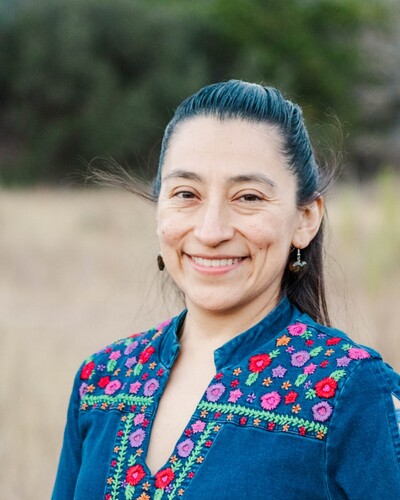
Dr. Martha Sidury Christiansen is a Professor of Applied Linguistics/TESOL at the University of Texas at San Antonio , where she serves in the College of Education and Human Development . She is the Principal Investigator of Project RESPETO , a NSF-funded initiative exploring racial equity in engineering education. Her work spans sociolinguistics, digital literacies, and raciolinguistic analysis, with a focus on transnational multilingual communities. Born in Veracruz, Mexico Ph.D. in Foreign/Second Language Education (Ohio State University, 2013) M.A. in English Composition (Indiana University, 2007) B.A. in English Language Teaching (Universidad Veracruzana, 2002) Her research examines how transnational youth navigate digital spaces through multiliteracies , challenges Western academic writing norms via Mexican decolonial methodologies , and investigates raciolinguistic intersections in identity formation. The 15 most recent publications reveal a strong focus on digital communication , transnationalism , and critical pedagogy across journals like TESOL Quarterly and Language@Internet . 2023-2025: Expanding raciolinguistic frameworks in digital contexts 2021-2022: Analyzing multimodal identity construction 2019-2020: Exploring Mexican bilinguals' online language use She has received multiple honors including ACUE Fellow (2023), Fulbright Scholar (2017), and Faculty Leadership Fellow (2021-2022). Her presentations at conferences like ICOLLITE and DDVM Lab highlight her expertise in critical sociolinguistic awareness and digital discourse analysis . Dr. Christiansen actively consults for nonprofits on linguistic equity and multilingual education .
Przemysław Kordos is a Professor at the University of Warsaw , affiliated with the Faculty of Liberal Arts , where he serves as Coordinator for the Development of the Modern Greek Philology Program . He holds two PhDs in Humanities (2007, 2019) and was awarded the Loukis Papaphilippou Seat of Advancement in Modern Greek scholarship. Education: MA in Ethnology and Cultural Anthropology (University of Warsaw, 2001) MS in Sociology (University of Warsaw, 2002) PhD in Humanities (University of Warsaw, 2007) Second PhD in Humanities (University of Warsaw, 2019) His research interests span: Contemporary Modern Greek and Cypriot literature Polish-Greek cultural relations (philhellenism) Social and ethnographic issues in Greece and Cyprus Travel literature analysis Fantasy literature's cultural implications His scientific work reveals a focus on linguistic assimilation in foreign language learning (via fMRI studies), historical parallels between Polish and Greek independence movements, and critical analyses of Cypriot folk culture's politicization. Key scientific awards include: Loukis Papaphilippou Seat (University of Warsaw) Internships at EKPA and IKY (Greece) Scholarships at IMXA (Greece) and MUNI (Czech Republic) His academic contributions include cataloging 60+ Polish travel accounts to Greece, analyzing the shift from travel literature to tourism discourse, and examining the Hellene-Romios dichotomy's role in modern Greek identity construction.
Hong Huaqing is a Professor and doctoral supervisor at the Corpus Research Institute of Shanghai International Studies University. He holds roles as honorary director of the Chinese Corpus Linguistics Research Association and international expert at Peking University's Education Development Center. Formerly, he worked at Nanyang Technological University (Singapore) in roles such as researcher at the Learning Research and Development Center and director of the e-Learning Center of the Lee Kong Chian School of Medicine. His research spans machine translation, natural language processing, corpus linguistics, and educational technology. He supervises master's and doctoral students, co-supervises postdoctoral researchers, and focuses on smart education driven by big data analysis and innovative learning ecosystems. Research emphasizes corpus-based methods applied to language education, including computational frameworks for student engagement, wearable sensors in learning analytics, and cross-linguistic rhetoric studies. His work bridges technological innovation (e.g., AI-driven tutorial systems) with pedagogical practice, addressing challenges in non-English language education and teacher training.
Georgios Neokleous is a Professor of English in the Department of Teacher Education at the Norwegian University of Science and Technology (NTNU), within the Faculty of Social and Educational Sciences. He holds a PhD in Education from Saint Louis University (2014), focusing on home language use in EAL classrooms. His career began as an EFL/ESL teacher, with extensive experience across Europe and the U.S., and he has developed specialized courses for diverse learner groups. Neokleous’ research emphasizes multilingualism, translanguaging pedagogy, and inclusive literacy practices in linguistically diverse classrooms. Education: PhD in Education, Saint Louis University, 2014 Masters and Bachelor’s degrees (implied, not explicitly stated) Research Interests: Neokleous explores the integration of students’ home languages in EAL settings, translanguaging as a pedagogical tool, and assessment strategies in multilingual environments. His work bridges theory and practice, addressing challenges in teacher education and classroom diversity. Recent trends in his publications highlight cross-national comparisons (e.g., Norway-Cyprus studies), innovative teaching methodologies, and the role of technology in modern classrooms. Advising & Grants: Supervises students at BA, MA, and PhD levels. Collaborates with international researchers like Anna Krulatz and Sviatlana Karpava. Active in organizing academic events, including TESOL International and ECER conferences. Labs/Teams: Engaged in collaborative research groups focused on multilingual education, such as the ‘Learning and Teaching English in the Multilingual Classroom’ initiative. His work often intersects with institutions like the University of Cyprus and Multilingual Matters publishing.
Satoshi Miyazaki is a Professor at Waseda University's Graduate School of Japanese Applied Linguistics and affiliated with the Faculty of International Research and Education . With a Ph.D. from Monash University, his work bridges Japanese language education, second language acquisition, and cross-cultural communication. Education Background: Doctor of Philosophy (Japanese Applied Linguistics) - Monash University (1997) Graduate School of Japanese Applied Linguistics - Waseda University (1982) Research Interests focus on Japanese language pedagogy, natural acquisition mechanisms, and interactional strategies for non-native learners. His innovative use of Eye Mark Recorders (EMR) and Event-Related Potentials (ERP) has advanced understanding of cognitive processes in language learning. Recent Articles (2011-2001) reveal trends in Japanese language education reform, cross-cultural learning challenges, and technology-enhanced teaching methods. Key themes include correctional language programs for foreign inmates, immersion environments, and brain processing studies using advanced neuro-linguistic techniques. Research Projects have received continuous funding from Japan Society for the Promotion of Science, including prison language education programs, foreign care worker competence frameworks, and EMR-based lecture comprehension analysis. His work extends to international collaborations with institutions in Australia, the U.S., and Europe.
Prof. Dr. Christopher Markiewicz is a leading scholar in Ottoman and Islamic Studies at Ghent University's Department of Languages and Cultures (affiliated with the Department of History). He previously held positions as Associate Professor at University of Birmingham and Junior Research Fellow at Exeter College, University of Oxford. His research centers on the political, social, and intellectual history of the Ottoman Empire (15th-17th centuries), with special emphasis on state formation, diplomatic cultures, and the interplay between Islamic law and governance. Education PhD in Near Eastern Languages & Civilizations, University of Chicago (2015) Magna cum laude dissertation award from Middle East Studies Association (2016) His scholarship explores the transition from medieval Islamic political fragmentation to early modern imperial consolidation , focusing on how Persian émigrés shaped Ottoman sovereignty and diplomatic practices. Current research investigates pious endowments (waqf) through an ERC Starting Grant (2023-2028) , analyzing their role in Ottoman state-building. Scientific contributions include: Winner of Malcolm H. Kerr Dissertation Award (2016) Principal Investigator for Islamic Endowments project Series Editor for The Ottoman Empire and the World (I.B. Tauris) Trustee of EJW Gibb Memorial Trust Member of British Institute at Ankara committees His 2023-2024 teaching includes courses on Middle East politics and global historical developments. Publications reveal evolving research from waqf taxation controversies to diplomatic gift-giving protocols, with consistent focus on cross-cultural exchange and historiographical evolution.