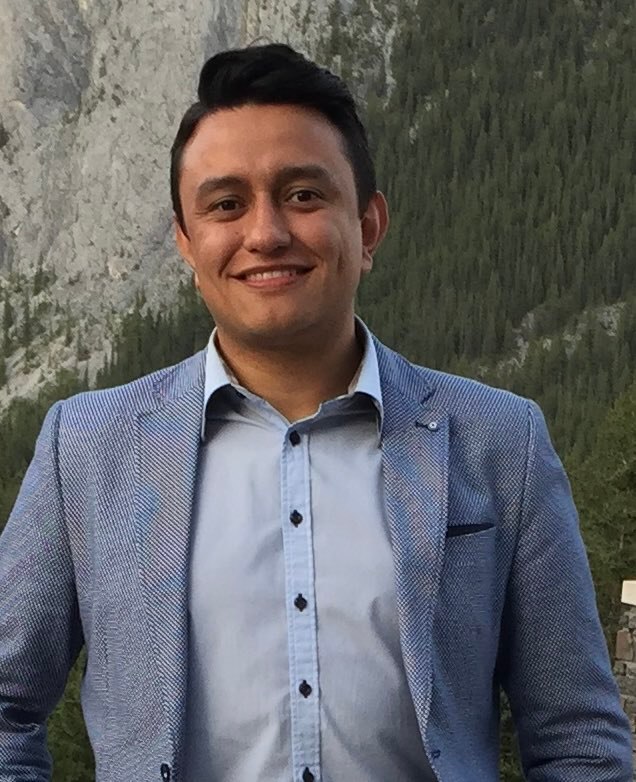
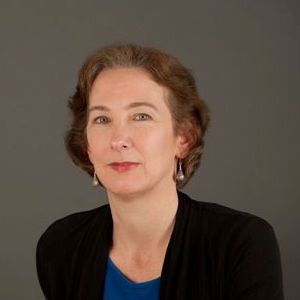
Prof. Dr. Sakibe Nalan BÜYÜKKANTARCIOĞLU is a Professor at Çankaya University, Faculty of Arts and Sciences, Department of Translation and Interpreting Studies (English). She previously served as Professor (2007–2019), Associate Professor (2000–2007), and Assistant Professor (1997–2000) at Hacettepe University, Department of English Linguistics. PhD in English Linguistics (Hacettepe University, 1991) MA in English Language Teaching (Middle East Technical University, 1985) BA in English Teaching (Istanbul University, 1978) Her research spans Linguistics, Cognitive Linguistics, Discourse Analysis, Psycholinguistics, Sociolinguistics, Translation Studies , with a focus on figurative language, interjections, political discourse, and endangered languages. She received the European Language Award (2011) and has supervised numerous PhD and MA theses, including work on Turkish idioms, gender representation, and language awareness. A prolific editor and conference participant, she has contributed to interdisciplinary projects and publications on Turkish sociolinguistics.
Bülent AKAT is a full-time Lecturer (Dr) at Çankaya University , Faculty of Arts and Sciences, Department of Translation and Interpreting Studies (English), where he has taught since 2007. His career is anchored in literary and cultural translation studies, with a particular focus on English-Turkish translation. Education: Dr Akat earned his Bachelor of Arts (1982–1986) from Boğaziçi University, Faculty of Arts and Sciences, Department of Western Languages and Literatures. He then completed a Master of Arts (1986–1994) at Boğaziçi University’s Institute of Social Sciences in English Language Teaching. Finally, he obtained his PhD (1994–2000) from Hacettepe University’s Institute of Social Sciences in American Culture and Literature. Research Interests: His scholarly work spans translation of children’s literature , idiom translation , subtitling and dubbing , culture-bound elements , and neologism translation . He often employs comparative methodologies, drawing on theorists such as Jan Pedersen, Mona Baker, and Teresa Tomaszkiewicz to evaluate strategies of domestication, foreignization, and receptor-oriented translation. Academic Output: Between 2018 and 2025 Dr Akat (co-)authored nine journal articles, two conference papers, and five books. Recurring themes include the translation of Dr Seuss’s neologisms, idiomatic renderings in TV dubbing, Oscar Wilde’s drama in Turkish, and Can Yücel’s interpretation of The Great Gatsby . His publications appear in leading Turkish and international indexes, notably TR Dizin , Mediterranean Journal of Humanities , and RumeliDE . Teaching & Supervision: Dr Akat has supervised twelve master’s theses at Çankaya University’s Institute of Social Sciences, concentrating on English literature and cultural studies. Representative topics include gender in Virginia Woolf, colonialism in Defoe, existentialism in Fowles, and Gothic elements in Wilde. Labs & Projects: No dedicated laboratory or externally funded projects are listed in the provided data.
Tijana Gajić is a researcher at Singidunum University in Belgrade, Serbia. She holds a Ph.D. in Philology (2020), an MA in English Language and Literature (2009), and a BA in the same field (2007) from the University of Belgrade. Her work focuses on the intersection of language education, digital tools, and critical pedagogy. Doctoral Studies: Philology , University of Belgrade (2017-2020) Master Studies: English Language and Literature , University of Belgrade (2008-2009) Bachelor Studies: English Language and Literature , University of Belgrade (2003-2007) Dr. Gajić’s research explores the impact of digital technologies on language acquisition, critical thinking development, and the sociopolitical dimensions of English language learning. She has published extensively on mobile applications like Duolingo, HelloTalk, and WordUp, analyzing their efficacy in modern pedagogy. Her recent publications (2024-2025) examine digital tools’ influence on language education, critical pedagogy in Serbian classrooms, and AI-driven language learning innovations. Earlier works (2020-2016) established her expertise in tandem learning, vocabulary enhancement via apps, and affective factors in language acquisition. Notable collaborations include partnerships with researchers like N. Maenza , A. Gagić , and J. Nikolić . While no specific grants or awards are mentioned, her involvement in conferences such as Sinteza and ELTA Serbia underscores her active role in advancing language education. Her 2022 book, Nastava stranih jezika i razvoj kritičkog mišljenja u eri neoliberalizma , synthesizes her critical pedagogy framework. Current projects likely continue her focus on digital transformation in language teaching.
Emma Trentman is an Associate Professor of Arabic at the University of New Mexico (UNM) and Director of the Language Learning Center. Her research focuses on Applied Linguistics, particularly on language learning during study abroad programs, virtual exchange, and the impact of language ideologies on multilingual approaches. Research Interests: Multilingualism, Language Ideologies, Study Abroad Programs, Intercultural Communication, Arabic Language Education, and Curriculum Development. Key Publications: Co-editor of Language Learning in Study Abroad: The Multilingual Turn (2021), with works featured in The Modern Language Journal , Foreign Language Annals , and Critical Multilingualism Studies . Teaching: Offers Arabic language courses and the Languages Capstone class, integrating critical perspectives into language pedagogy. Editorial Work: Co-editor for Critical Multilingualism Studies Journal , advocating for plurilingual practices in education. Publications: Explores topics such as translanguaging, sociolinguistic competence, and decolonizing language learning frameworks across diverse contexts (Egypt, Tanzania, China). Advocacy: Engages in critical discussions on equity, identity, and sociocultural dimensions in language education.
National Institute of Oriental Languages and CivilizationsFrance
Georges Kostakiotis is a Senior Lecturer at the National Institute for Oriental Languages and Civilisations (INALCO) in Paris, France, specializing in Modern Greek language and literature. His academic appointment falls under CNU Section 15, covering Arabic, Chinese, Japanese, Hebrew and other languages and literature. He serves as Head of the TEMPO course for Modern Greek and teaches across multiple levels from L1 through L3, including text study, written and oral practice of Greek, Modern Greek thematic courses, specialized Greek text corpora, and technical translation at M1 and M2 levels. Dr. Kostakiotis's research focuses on the intersection of language pedagogy and literary studies. He investigates teaching oral communication from both practical and theoretical perspectives, examining how literary texts function as effective pedagogical tools in foreign language classrooms. His work develops specialized strategies for teaching Greek to Latin-speaking audiences, leveraging linguistic connections while addressing acquisition challenges. Additionally, he explores literary representations of politics and urban worlds, situating Greek literature within broader European and Balkan contexts through the CREE (Centre de Recherches Euro-Méditerranéennes et Euro-asiatiques) research center. Analysis of Dr. Kostakiotis's publication record from 2009-2024 reveals consistent scholarly engagement with Greek literature's relationship to Balkan cultures and historical contexts. His work demonstrates particular interest in how Greek literature addresses themes of foreignness, crisis, and identity through comparative analysis with other Balkan literary traditions. His research spans pedagogical approaches to language teaching, literary analysis of Greek texts, historical examinations of Greek literature, and cultural studies of Greek communities in the Balkans. Dr. Kostakiotis has been instrumental in organizing numerous academic events that bridge language pedagogy and literary scholarship. He has coordinated multiple conferences and study days focused on language teaching methodology, including sessions on oral communication techniques, vocabulary acquisition strategies, and assessment approaches. In the realm of literature and cultural studies, he has organized scholarly gatherings examining Greek-Romanian relations, Phanariote history, women's perspectives in Greek literature, and urban studies with particular attention to cities like Thessaloniki and Alexandria. His collaborative work, including co-edited volumes on Greek-Romanian relations, demonstrates his commitment to fostering academic dialogue across national and disciplinary boundaries.
Leigh Oakes is Professor of French and Linguistics in the Department of Modern Languages and Cultures within the School of Languages, Linguistics and Film at Queen Mary University of London. He has held progressive academic positions at the institution since 2000, advancing from Lecturer to his current professorship. His international academic background includes a PhD from the University of Melbourne and research at Stockholm University's Centre for Research on Bilingualism. His educational qualifications include a PhD (2001) and BA (Hons) (1996), both from the University of Melbourne. Oakes specializes in language policy and planning, with particular focus on language and national identity in France, Quebec, and Sweden. His research has expanded into linguistic justice debates in political theory, advocating for normative and interdisciplinary approaches to language policy. Oakes' publication trends reveal a consistent focus on ethical dimensions of language policy, with increasing emphasis on pluricentric justice and linguistic integration since 2016. His work bridges sociolinguistics and political philosophy, demonstrating strong interdisciplinary connections between language attitudes, national identity construction, and policy implementation across Francophone contexts. The 2018 co-authored monograph 'Normative Language Policy' represents a significant theoretical contribution to the field. 2008 Pierre Savard Prize for 'Language, Citizenship and Identity in Quebec' Leverhulme Trust Research Project Grant for 'The Ethics of Linguistic Integration' project Co-editor-in-chief of Sociolinguistica: European Journal of Sociolinguistics Co-editor of Multilingual Matters book series Member of editorial boards for Language Policy and Modern Languages Open Oakes actively supervises PhD candidates in sociolinguistic topics, with current research focusing on linguistic integration in Quebec and adaptation among mobile French speakers. His major Leverhulme-funded project 'The Ethics of Linguistic Integration' examines moral implications of language requirements for immigrants across England, Quebec, and Wales. He serves on several international academic committees including the Association internationale des études québécoises and the British Association of Canadian Studies. He leads the interdisciplinary 'Ethics of Linguistic Integration' research team, which combines expertise from applied linguistics, sociolinguistics, and political theory to investigate language integration policies. His work connects with broader university initiatives through Queen Mary's research highways in social justice and global challenges.
Loreta Vilkienė is a Professor at the Department of Lithuanian Studies, Vilnius University, since October 2020, and served as its Head from 2018–2023. She has been affiliated with Vilnius University since 2007, initially as an Associate Professor, and has lectured since 2001. Her academic background includes a PhD in Humanities (2000) and a qualification as a philologist and teacher of Lithuanian (1986), both from Vilnius University. Education: PhD in Humanities, Vilnius University (2000) Philologist and Teacher of Lithuanian, Vilnius University (1986) Research Interests: Applied linguistics (foreign language teaching/assessment, language attrition, partial acquisition) and sociolinguistics (linguistic attitudes, diaspora language dynamics, language-identity links). Her work focuses on multilingualism, heritage language maintenance, and sociolinguistic transitions in post-Soviet contexts. Article Trends: Recent publications analyze language attitudes in Lithuania, lexical proficiency in native speakers, diaspora language policies in Kazakhstan and Russia, and sociolinguistic impacts on identity. Her studies integrate quantitative methods (e.g., vocabulary size estimation) and qualitative discourse analysis. Scientific Awards: Recipient of the 2006 Lietuvos Science Award (applied sciences) for collaborative work on Lithuanian language pedagogy. Grants & Projects: Managed EU-funded projects like ARQUS (2020) and international diaspora language studies (2020–2022). Active in UNESCO-related language preservation initiatives and digital outreach platforms. Outreach: Delivered public lectures on diaspora identity, contributed to podcasts, and authored 15+ peer-reviewed articles. Co-developed teaching tools like the Po truputį Lithuanian language series.
Lucie DE CARVALHO is a Lecturer in British Civilization at the University of Lille, Faculty of Languages, Culture and Societies, Department of English Studies. She is affiliated with ULR 4074 - Center for Studies in Civilizations, Languages and Foreign Literature. Graduated from ENS Cachan Specializes in British Civilization Based at University of Lille (BO.529) Dr. DE CARVALHO's research focuses on contemporary British politics, political discourse studies, British energy policies (particularly nuclear and renewable energy), neoliberalism, historiography of science, and climate governance. Her work demonstrates a consistent engagement with the intersection of political power, energy policy, and media representation in the British context. She has developed a particular expertise in analyzing how the UK state manages controversial technologies like nuclear power within neoliberal frameworks. Her publication record shows a consistent output spanning from 2014 to 2024, with recent work examining twenty-first century UK broadcasting ecology, teaching British history to French students, and contemporary nuclear power policies. The analysis of her articles reveals a strong thematic continuity centered on British governance, energy policy, and the complexities of neoliberal state intervention. Her research employs interdisciplinary approaches drawing from political science, media studies, and science and technology studies. Member of the SAES (Society of Anglicists in Higher Education) Member of CRECIB (Centre for Research on British Civilization) Associate member of the Research Center in British Civilization (CREC) Institute of the Anglophone World, Sorbonne Nouvelle University – Paris 3 Member of the UK Political Studies Association Member of the European Association for the Study of Science and Technology (EASST) Member of UACES Dr. DE CARVALHO has demonstrated sustained research activity across multiple domains related to British studies, with particular emphasis on energy policy and political discourse. Her work bridges academic research with pedagogical practice, as evidenced by publications on teaching British history to French undergraduate students and language learning through television series.
Oleksandr Kapranov is an Associate Professor of English at NLA University College's Teacher Education program. His work intersects discourse analysis, climate change communication, and English language teaching (ELT), with a focus on sustainable development education and intercultural communication. Research areas include political speeches (e.g., Keir Starmer, Rishi Sunak), corporate disclosures (Bank of England, Vedanta Resources), and media framing (Greenpeace branches, King Charles III). Key pedagogical interests: digital competence, beginner EFL training, and discourse markers in academic writing. His recent publications analyze climate change discourse through syntactic structures, metonymy, modality, and evidentiality, emphasizing institutional and political narratives. While no formal awards are listed, his work spans interdisciplinary collaborations with NGOs, governments, and universities.
Dr Sean Fear is a Lecturer in International History at the School of History, University of Leeds , specializing in Vietnamese history, the Cold War, and U.S. foreign relations. He advises the Independence Palace Museum in Ho Chi Minh City on a landmark exhibition about South Vietnam's political and cultural history (1967–1975), a project funded by Leeds' Faculty of Arts and supported by design firm Thincdesign. Fear’s research focuses on domestic politics and foreign diplomacy during the Vietnam War, drawing on Vietnamese-language archives and oral histories. Education: PhD (Cornell University), BA (University of Toronto) Visiting Roles: Visiting Professor at Fulbright University (2022–23) Fellowships: Dartmouth College, NYU Cold War Center, McGill University His forthcoming book (Harvard UP) analyzes the collapse of South Vietnam’s legitimacy, leveraging underutilized Vietnamese sources. Fear collaborates internationally with institutions like the British Library and the Social Sciences and Humanities Research Council of Canada. He supervises MA/PhD students on topics including decolonization, Cold War geopolitics, and post-war memory. Key Projects: Independence Palace Museum exhibit (since 2019) Research on Vietnamese state-building and U.S. influence Contributions to Cambridge History of the Vietnam War (AAP-award winning) Awards: His work earned two Association of American Publishers awards for the Cambridge History collaboration. Grants include Leeds' Research Innovation Service funding to finalize the museum exhibit’s physical design.
Prof. Dr. Gülşen Eryiğit is a Professor at Istanbul Technical University within the Faculty of Computer and Informatics , Department of Artificial Intelligence and Data Engineering . She founded and directs the ITU Natural Language Processing Group , Turkey's leading team in Turkish-language NLP, and serves as Senior Action Editor for ACL RR , Director of ITU TÖMER (Turkish Language Teaching Center), and Co-Chair of the EU UniDive Cost Action WG3. Education: PhD in Computer Engineering from ITU (2007), MSc and BSc from ITU and Marmara University Research: Focuses on Natural Language Processing for Turkish, including dependency parsing , coreference resolution , multiword expressions , and language education technology Her recent work involves multilingual transfer learning , LLM applications for Turkish text simplification, and gamification for morphology education. She has received prestigious awards like the Siemens Excellence Award and TÜBİTAK's Above Threshold Award . Her research has produced 65+ publications and 29+ projects funded by EU, TÜBİTAK, and industry partners. Scientific Awards: Siemens Excellence Award (2007) Above Threshold Award (TÜBİTAK, 2015) Certificate of Appreciation (EU 7th Framework, 2012) Thank You Plaque (ITU, 2017) The ITU NLP Group under her leadership has developed Turkey's first licensed NLP software exported internationally. She collaborates with European institutions through COST actions and participates in ACL, CoNLL, and LREC conferences. Her lab focuses on language technology for Turkish , including sign language processing and social media normalization.
Rafał Jończyk is an Assistant Professor at the Department of Pragmatics, Faculty of English, Adam Mickiewicz University in Poznań, Poland, where he conducts research at the intersection of psycholinguistics, affective neuroscience, and bilingualism. His work primarily investigates how emotional processing differs between native and second languages using neurophysiological methods, particularly EEG. With a Ph.D. in English Linguistics from Poznań (2015) and postdoctoral experience at Pennsylvania State University, he has established himself as a leading researcher in bilingual emotional processing. His research interests span Affective Neuroscience , Experimental Pragmatics , Psycholinguistics , Bilingualism and Emotion , and the Neurophysiology of Creativity . His methodology heavily relies on EEG to examine language processing, with particular focus on emotional language comprehension and production in bilingual contexts. His work has demonstrated how bilinguals process emotional content differently in their native versus second languages, revealing reduced sensitivity to negative content in the second language. Jończyk's research program has evolved from early work on hemispheric specialization for emotional words to sophisticated EEG studies of emotional anticipation and metaphor processing in bilinguals. His most recent work explores hyperscanning methodologies to study real-time bilingual communication and the neural correlates of creative thinking in bilingual contexts. His publications show a clear progression from foundational studies of emotional word processing to increasingly complex investigations of emotional communication in naturalistic contexts. Cognitive Neuroscience Society Post-doctoral Fellows Award (2018) START scholarship for most talented young Polish scientists (2018) Scholarship from the Minister of Science and Higher Education (2020) Travel Grant Award for International Symposium on Bilingualism (2013) As Principal Investigator, Jończyk leads two major National Science Center projects examining psychophysiological correlates of affective language processing in bilinguals (2016-2018) and neurophysiological correlates of emotional speech production in bilingualism (2021-2025). He also participates in multiple international collaborations including NSF-funded research on divergent thinking in engineering education. His editorial roles include Topic Editor for Brain Sciences and Associate Editor for Applied Psycholinguistics, reflecting his standing in the field. He teaches courses in Psycholinguistics, Emotions in Social Communication, and Creativity and Language at the university level.
Dr. Nienke Smit is an Assistant Professor in the Department of Education at Utrecht University's Faculty of Social and Behavioural Sciences. Her research focuses on scaffolding processes, adaptive teaching, and classroom observational research from a complex dynamic systems perspective. Specializes in teacher-student interaction Expert in adaptive instruction and observational methods Collaborates with Data Science department Develops tools for classroom observation Research interests include language learning and teaching , judgment and decision-making in education , and professional development of teachers . She leads projects like Eye Get It (joint attention in classrooms) and a replication study on adaptive instruction effectiveness. Her work applies dynamic systems theory to second language development and foreign language pedagogy. Recent publications address translanguaging in multilingual classrooms, replication studies , and process-oriented research . She teaches at Utrecht's Graduate School of Teaching and works on initiatives to reduce teacher shortages through improved training programs.
José Eduardo Villalobos Graillet is an Assistant Professor of Spanish at Idaho State University , specializing in Modern Peninsular Literature and Culture with a focus on visual culture (film and television) . He previously held a position as Spanish Instructor at Wilfrid Laurier University in the Department of Languages and Literatures. Research Areas : Spanish Film Studies, Spanish Medieval Literature, Latin American and Caribbean Studies, Teaching Spanish as a Foreign Language, Visual Culture, and Critical Pedagogy. His scholarly work examines film and television adaptations of 'La Celestina' , analyzing censorship dynamics across Francoist Spain, the Democratic Transition, and contemporary Spain. He also contributes to Spanish pedagogy , developing technological tools like Lang-8 for written expression and culturally immersive teaching units on topics such as winter festivals and Caribbean music. His publications span both critical academic analysis and methodological innovations for language instruction. Key Themes in Publications : Adaptation fidelity, political censorship, intercultural pedagogy, and the role of digital platforms in language learning.
Professor Shoon Murray is a distinguished faculty member at American University's School of International Service, specializing in American foreign policy and civil-military relations. Holding a PhD in political science from Yale University, she teaches foundational courses including Analysis of US Foreign Policy (SISU-230) and Foreign Policy: Theory and Decision Making (SIS-689). Education: PhD in Political Science, Yale University Research Focus: Dr. Murray's scholarship critically examines war powers, decision-making theory, and the interplay between public opinion, media, and foreign policy formation. Her work analyzes how political leaders navigate security crises, congressional-authority tensions in military actions, and institutional shifts in diplomatic practices amid global power diffusion. She investigates enduring phenomena like the “rally ‘round the flag’” effect while documenting the post-9/11 militarization of U.S. strategic approaches. Publication Trends: Recent research centers on the evolution of the 2001 AUMF, combatant commanders' diplomatic roles, and State Department-DoD institutional competition. Her scholarship reveals how military actors increasingly shape foreign policy narratives while traditional diplomatic channels erode, with implications for democratic accountability and strategic coherence in counterterrorism operations.