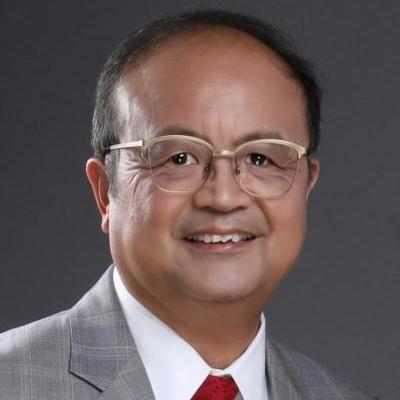
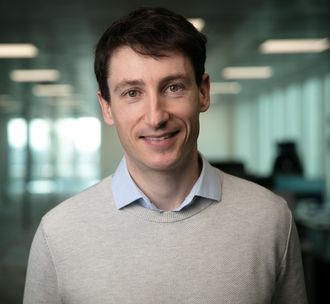
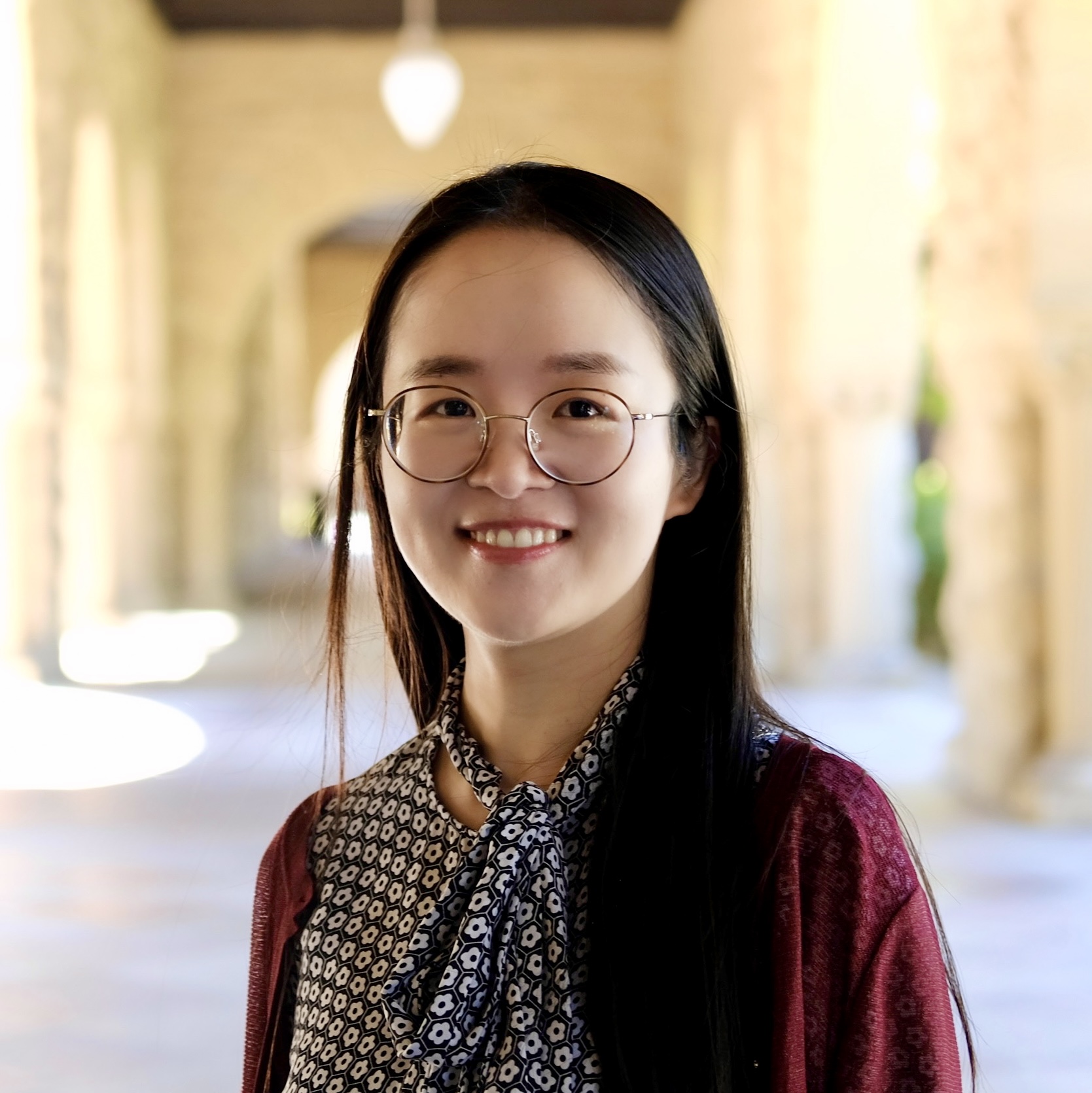
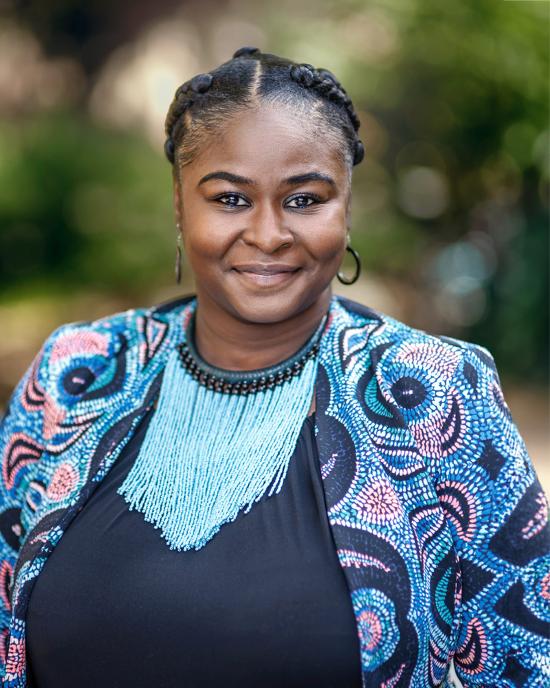
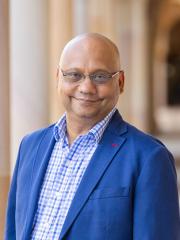
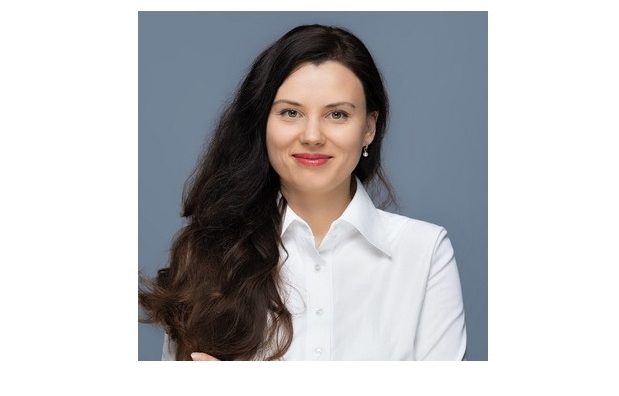
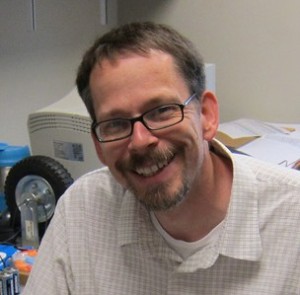
Professor Clinton Fookes is a faculty member at the Queensland University of Technology (QUT) within the School of Electrical Engineering & Robotics . His research focuses on leveraging computer vision and artificial intelligence to develop automated systems that understand, anticipate, and interact with human behaviors, with applications in medical diagnostics, autonomous vehicles, defense, and industrial efficiency . Research areas include AI adaptability, multimodal biosignal analysis, and human-machine interaction Collaborates with CSIRO Data61, Defence Science and Technology Group, Orica, Airbus, and Sentient Vision Systems Develops systems for human action detection, infrastructure monitoring, and stress response prediction His work addresses critical challenges in AI deployment, such as environmental adaptability and reducing diagnostic errors in medical and autonomous systems. Recent publications highlight trends in self-supervised learning, zero-shot knowledge transfer, multimodal integration , and 3D reconstruction for healthcare , while exploring ethical AI use in sectors like mining and defense . Professor Fookes emphasizes interdisciplinary collaboration, bridging engineering, medicine, and social sciences to advance AI systems capable of real-world impact. His research agenda includes improving AI memory capabilities and explainability for safer, more reliable automation.
Christos Makris is an Associate Professor in the Department of Computer Engineering and Informatics at the University of Patras, Greece. His academic career spans over two decades with significant contributions to computer science, particularly in data structures, algorithms, and information systems. He maintains active research collaborations and supervises graduate students in his areas of expertise. Dr. Makris's research spans several key areas in computer science with a strong focus on efficient data organization and processing. His work encompasses Data Structures , Information Retrieval , Data Mining , String Management and Processing Algorithms , Computational Geometry , Internet Technologies , Bioinformatics , and Multimedia Databases . His interdisciplinary approach bridges theoretical computer science with practical applications across various domains including web technologies, bioinformatics, and emergency response systems. Analysis of Dr. Makris's publication record reveals a consistent research trajectory focused on efficient algorithms for information management. His work demonstrates evolution from foundational data structure research in the 1990s to more applied work in web technologies, social media analysis, and machine learning applications in recent years. A notable pattern is his ability to adapt core algorithmic techniques to emerging application domains while maintaining theoretical rigor. Dr. Makris maintains an impressive scholarly record with over 3,000 citations, an h-index of 29, and an i10-index of 71 according to Google Scholar metrics. These indicators reflect the significant impact of his research within the computer science community. As an active faculty member, Dr. Makris maintains regular office hours on Tuesdays from 18:00-20:00 and Thursdays from 12:00-14:00. He is accessible via email at makri@ceid.upatras.gr or makri@upatras.gr for academic inquiries and student supervision.
Ming-Jun Lai is a Professor in the Department of Mathematics at the University of Georgia. His career spans decades, focusing on multivariate splines, sparse solutions of linear systems, wavelet theory, and their applications in numerical analysis and machine learning. Education: Lai received his Ph.D. from Texas A&M University and completed postdoctoral training at the University of Utah. He has supervised 22 Ph.D. students and two current Ph.D. candidates. Multivariate Splines: Applied to scattered data fitting, numerical PDE solutions, image enhancement, and surface design. Sparse Solutions: Used in compressed sensing, low-rank matrix recovery, and graph clustering. Wavelet Theory: Construction of biorthogonal and tight wavelet frames for image edge detection. Optimal Transport: Numerical solutions for Monge-Ampère equations. Research Trends (2025–2023): Recent work includes interpolating space curves with geometric continuity, spherical spline smoothing, and applications in machine learning, particularly graph clustering and optimal control in biological systems. Scientific Awards: UGA Research Medal (2002) McCay Award (2013) Advisees: Lai has mentored 24 Ph.D. students, including Zhaiming Shen (2024), Jinsil Lee (2023), and current students Valerio Palamra and Ye Tian. Laboratory & Collaborations: He collaborates with institutions like Georgia Tech, UCLA, and Zhejiang University, applying splines in aerospace engineering and biomedical imaging.
Johannes Brandstetter is an Associate Professor at the Institute for Machine Learning at Johannes Kepler University Linz (JKU) where he leads the "AI for data-driven simulations" research group. He is also Co-founder and Chief Scientist at Emmi AI, bridging academic research with industrial applications in AI-driven physics simulation. Brandstetter earned his PhD after working at CERN's CMS experiment on Higgs boson physics. In 2018, he transitioned to machine learning, joining Sepp Hochreiter's research group in Linz. From 2021-2023, he worked at the Amsterdam Machine Learning Lab under Max Welling and Microsoft Research, developing expertise in Geometric Deep Learning and neural surrogates for partial differential equations. He returned to JKU in October 2023 to establish his own research group. His research spans Machine Learning, Deep Learning, and Physics-Informed Machine Learning with focus areas including Neural PDE solvers, Computational Fluid Dynamics, and Climate Modeling. Brandstetter believes AI is poised to revolutionize industrial-scale simulations, potentially saving thousands of compute hours across engineering domains. His work integrates computer vision, numerical simulation, and engineering components to advance data-driven approaches. Recent publications reveal a strong trend toward foundation models for scientific applications, particularly in atmospheric modeling (Aurora), geometric deep learning, and neural surrogates for complex physical systems. His interdisciplinary work spans computer vision, climate science, computational physics, and engineering, demonstrating the versatility of his research approach. Principal Investigator for "AlKa-DL: Alpine karst spring discharge prediction" (FWF-funded, 2024-2027) Principal Investigator for Cluster of Excellence "Bilateral Artificial Intelligence" (FWF-funded, 2024-2029) Co-PI for "Fast, efficient and flexible CFD simulation through generative AI" (FFG-funded, 2025-2026) As an educator and researcher, Brandstetter actively engages with the scientific community through invited talks at major conferences including presentations on "Closing the Gap Between Scientific Foundation Models and Real-World Applications" (March 2025) and "Scientific Machine Learning for Science and Engineering" (February 2025).
Evan Davies is a Professor in the Civil and Environmental Engineering Department at the University of Alberta's Faculty of Engineering. He has been a Full Professor since July 2021, following his promotion from Associate Professor (2015-2021) and Assistant Professor (2009-2015) positions at the same institution. Education: Ph.D. (Civil and Environmental Engineering), The University of Western Ontario, London, Ontario (2003-2007) M.E.S. (Environment and Resource Studies), The University of Waterloo, Waterloo, Ontario with field research in China and India (2001-2003) B.A.Sc. (Systems Design Engineering), The University of Waterloo, Waterloo, Ontario, including a year-long exchange at Technical University of Hamburg-Harburg, Germany (1995-2001) Evan Davies' primary research focuses on water resources planning and management, systems thinking and modeling, and sustainable development. His work develops and applies hydrological, water use, and water quality models to understand complex feedbacks among water availability, use, and quality within their social, economic, and environmental contexts. His research spans municipal to global spatial scales and daily to decadal time scales, aiming to provide decision-makers with tools to compare structural, management, and policy alternatives for sustainable water planning. His recent projects include global and regional-scale modeling of water security and the water-energy-food nexus, irrigation reservoir management, municipal water demand projections, flood risk management, and chloramine dissipation in stormwater pipes. Recent research trends show a strong focus on: Integrated assessment modeling of water-energy-food systems Climate change impacts on water resources Machine learning applications in hydrology Water security under decarbonization scenarios Flood risk assessment and management Sustainable urban water systems Scientific Awards: Faculty of Engineering Graduate Teaching Award, University of Alberta (2020-2021) Faculty of Engineering Undergraduate Teaching Award, University of Alberta (2018-2019) Doctoral Fellowship (CGS), Natural Sciences and Engineering Research Council (2005-2007) University of Western Ontario Graduate Tuition Scholarship (2005-2007) Ontario Graduate Scholarship in Science and Technology (2004-2005) Masters/Doctoral Fellowship (PGS A/B), Natural Sciences and Engineering Research Council (2002-2004) Davies has supervised numerous graduate students working on projects related to water resources planning and management. His research has been supported by various grants, including funding from the Natural Sciences and Engineering Research Council. He collaborates extensively with researchers at the Joint Global Change Research Institute (JGCRI) in College Park, MD, and with government agencies and industry partners on water management projects across Canada, particularly in Alberta's Bow River basin. Davies leads a research group focused on water resources systems modeling, which employs system dynamics, optimization techniques, and machine learning approaches to address complex water management challenges. His team collaborates with decision-makers and stakeholders to ensure research outcomes are directly applicable to real-world water management problems.
Gordon Fletcher serves as Associate Dean: Research and Innovation at Salford Business School, University of Salford, where he leads the development of the School's research presence and profile while guiding bidding activities, staff development, and impact initiatives. With extensive experience since 2002 teaching programming, digital transformation, and information systems, Fletcher employs a hands-on, interactive pedagogical approach. University: University of Salford School: Salford Business School Academic Rank: Professor Research Focus: Digital business, culture, and practice Fletcher's research explores digital transformation through multiple lenses including conflict within online finance communities, virtual game economies, and digital grieving practices. His scholarly work connects theoretical frameworks with practical applications in business environments, particularly examining how organizations navigate digital change while maintaining strategic coherence. His recent publications (2022-2025) demonstrate a consistent focus on practical frameworks for digital transformation, with particular attention to organizational readiness, leadership approaches, and strategic implementation. The recurring themes across his work include visualization techniques for strategic planning, responsive business model design, and the cultural dimensions of digital adoption. Awards and Professional Recognition: Emerald Literati Award (2017) for Outstanding Paper Claudio Ciborra Award for most provocative paper (2011) Vice-Chancellor's Distinguished Teaching Award (2014) Fellow of the Higher Education Academy (2012) Fellow of the Royal Society for the Arts (2011) Chartered Manager designation (2015) Fletcher actively supervises doctoral research in digital transformation topics and has contributed to multiple Knowledge Transfer Partnerships with organizations including the Greater Manchester Chamber of Commerce. His professional service includes committee roles with the International Federation of Information Processing and editorial responsibilities for major information systems conferences.
Xiaomeng Jin serves as an Assistant Professor in the Department of Environmental Sciences at Rutgers, The State University of New Jersey, where she leads research on atmospheric chemistry and air pollution dynamics. Her work bridges observational science with computational modeling to address critical environmental challenges. Her academic background includes: PhD in Earth and Environmental Sciences, Columbia University (2020) NOAA Climate and Global Change Postdoctoral Fellowship, University of California, Berkeley Dr. Jin's research focuses on atmospheric chemical processes driving surface ozone and fine particulate matter formation, utilizing satellite remote sensing, in-situ measurements, and advanced computer models. Her investigations span urban to global scales, examining pollution sources, transformation mechanisms, and environmental health impacts. This interdisciplinary work integrates atmospheric physics, chemistry, and environmental policy frameworks to develop actionable air quality solutions. Her distinguished recognition includes: NOAA Climate and Global Change Postdoctoral Fellowship Dr. Jin actively mentors emerging scientists through her research group, recently welcoming six new members including graduate students Siyi Wang, Yu Tian, Jiaqi Shen, Chitral Samala, Zaina Merchant, and Charlotte Orton. She maintains an active recruitment pipeline, announcing a postdoctoral position in atmospheric chemistry in March 2023 to expand her team's analytical capabilities. Her laboratory employs cutting-edge observational networks and modeling systems to investigate pollution-climate interactions, with ongoing projects examining biomass burning emissions, urban pollution dynamics, and satellite data integration for real-time air quality forecasting.
Nyeema Harris is the Knobloch Family Associate Professor of Wildlife and Land Conservation at the Yale School of the Environment (YSE), part of Yale University. She focuses on wildlife conservation, urban ecology, and the socio-ecological dimensions of human-wildlife interactions. Her work examines how urbanization impacts predator behavior, diets, and biodiversity, while advocating for inclusive sustainability approaches that address equity and justice in environmental scholarship. Education includes a PhD from North Carolina State University, an MS from The University of Montana, and a BS from Virginia Polytechnic Institute and State University. These degrees span wildlife science and conservation biology. Her research interests emphasize urban carnivore ecology, community-based conservation strategies, and systemic racism’s ecological consequences. She integrates spatial modeling with social equity frameworks, as seen in her publications on textured species range maps and critiques of environmental landscapes of fear. Publications highlight trends in urban wildlife adaptation, interdisciplinary methods, and ethical considerations in conservation. Key themes include dietary shifts in predators due to environmental changes, the role of historical data in species forecasting, and mitigating health risks linked to urbanization and gentrification. Dr. Harris actively advises doctoral students and is involved in initiatives like SNAPSHOT USA and Michigan ZoomIN, leveraging citizen science for ecological monitoring. She has not been noted for specific scientific awards in the provided texts. Her office is located in Kroon Hall, Room 223, at 195 Prospect Street, New Haven, CT. She contributes to environmental justice discourse and has been featured in news articles discussing her work on African carnivore range loss, urban rodent control, and systemic racism in urban ecosystems.
Professor Ashish Sinha is a leading academic in Marketing at the UQ Business School, holding concurrent roles as Visiting Professor at the Indian School of Business and Research Fellow at the Hong Kong Polytechnic University. His career spans senior leadership in academia (e.g., Academic Dean of Executive Education at ISB, Interim Dean at UTS Business School) and industry (Vice President at IRI, Chicago). His research bridges theory and practice, focusing on digital transformation, AI-driven strategies, ESG impact analysis, and marketing analytics. He has pioneered frameworks for retail optimization, category management, and B2B innovation adoption, with over 30 journal articles in top-tier outlets like Journal of Marketing and Marketing Science . Research Impacts: Sinha’s work has transformed executive education programs (e.g., ISB’s #38-ranked custom programs) and driven research excellence at UTS. He is a serial entrepreneur, having founded two analytics firms acquired for their practical impact. His $240M Food Agility CRC participation highlights his role in agribusiness innovation. Awards include the Davidson Award and twice runner-up for the Gary Lilien Practice Award for applied marketing science. Key Research Themes: AI in Marketing, Digital Transformation, ESG Strategies, Consumer Sentiment Analysis Leadership Roles: Academic Dean (ISB), ADR (UTS), Head of Marketing (UNSW) Industry Experience: Analytics leadership at IRI, strategic consulting across sectors Grants/Partnerships: CI in Food Agility CRC ($240M), multiple ERA-recognized research collaborations. Advises on AI ethics, sustainable marketing, and global business strategy.
Dr. Assela Pathirana is a Professor at the IHE Delft Institute for Water Education, specializing in water infrastructure asset management (WIAM), climate resilience of Small Island Developing States (SIDS), and sustainable urban water systems. His work bridges academia, policy, and practice, focusing on digitalization, data-driven decision-making, and nature-based solutions. Key roles include Chief Technical Advisor for the Maldives’ water systems and leadership of a MOOC on SIDS climate adaptation. He holds a BSc (First Class Honours) from the University of Peradeniya and advanced degrees from the University of Tokyo, specializing in hydrology and water resources engineering. Education: Bachelor of Science in Civil Engineering (First Class Honours), University of Peradeniya, Sri Lanka Master’s and Doctoral Degrees in Civil Engineering (Hydrology and Water Resources), University of Tokyo, Japan Research Interests: Dr. Pathirana’s work emphasizes climate resilience, SIDS adaptation, urban flood risk management, and sustainable infrastructure. He develops decision-support tools for flood forecasting, evaluates land-use changes in Jakarta, and promotes equity in water rationing systems. His interdisciplinary approach integrates hydrological modeling, open-source software development, and policy analysis. Advising & Capacity Building: He leads training-of-trainers programs and capacity-building initiatives, enhancing postgraduate education in technical disciplines. His efforts focus on didactics and pedagogy, ensuring graduates gain both theoretical knowledge and practical expertise. Key Projects: Developed the WIAM curriculum at IHE Delft MOOC on SIDS climate adaptation and water security Consultancy for the Maldives’ Ministry of Environment and UNDP Labs & Collaborations: Engages in cross-disciplinary teams addressing urban water challenges, including sponge cities in China and flexible adaptation planning in Melbourne and Pune. His work with UNESCO-ICHARM and UNU underscores global water security and disaster risk reduction.
Katažyna Bogdzevič is a Professor at Mykolas Romeris University (MRU) Law School, specializing in Private International Law , European Law , Human Rights , and Environmental Law . She leads the MRU Human Rights LAB and contributes to the Environmental Management Research LAB, focusing on legal frameworks for ecosystem services, climate change mitigation, and stakeholder engagement. Key Research Themes: Integration of Private International Law with Environmental Law , analysis of legal conflicts in nature-based solutions, and name rights under international human rights conventions. Policy Engagement: Serves as advisor to Lithuania's Minister of Justice Ewelina Dobrowolska , emphasizing knowledge transfer to legislative and judicial practices. Email: roffice@mruni.eu
Dr Olatunji Johnson is a Lecturer in Statistics at The University of Manchester's Department of Mathematics. His research focuses on spatial and spatio-temporal statistics applied to global public health challenges, including tropical diseases like malaria and neglected tropical diseases (NTDs). He holds a PhD in Statistics and Epidemiology and has developed influential geostatistical methods and R packages (SDALGCP and MBGapp) for disease mapping and surveillance. Education: PhD in Statistics and Epidemiology (supervised by Prof. Peter Diggle). Research interests include model-based geostatistics, real-time health surveillance, and hybrid machine learning approaches for spatial data analysis. He is actively seeking PhD students interested in spatial statistics applications. Key Collaborations: Worked on projects in Kenya, Cameroon, Uganda, and Ethiopia, focusing on helminth control, air pollution impacts, and disease burden analyses. Part of the Statistical Advisory Unit and contributes to the UN Sustainable Development Goals through his work on health equity and disease elimination. Notable Projects: Developed methodologies for efficient survey design in NTD programs, air quality studies in African cities, and spatiotemporal modelling of pandemic risks. His work bridges statistical innovation with actionable public health policy.
Angelica Lim is an Assistant Professor of Professional Practice and Rajan Family Scholar in the School of Computing Science at Simon Fraser University. Her research focuses on Human Robot Interaction, Affective Computing, and Multimodal Perception with applications in healthcare and developmental robotics. She holds a PhD in Informatics from Kyoto University (2014), an M.Sc. from Kyoto University (2012), and a B.Sc. in Computing Science from SFU (2008). Her work bridges robotics and human-centered AI through projects like the ROSIE Lab, exploring emotion-aware systems, socially assistive robots, and VR programs for aging populations. Key contributions include benchmarking emotional speech recognition (BERSting), developing embodied emotion models for robots, and co-designing healthcare technologies with patient partners. Recent publications emphasize ethical AI, multimodal perception systems, and human-robot collaboration in dynamic environments. Teaching includes courses on software engineering, artificial intelligence, and introductory computer science. Her research has been applied in dementia care through VR programs, robotic companionship for older adults, and emotion-aware human-robot communication systems. Current initiatives focus on inclusive HRI design and sim2real methodologies for underrepresented data in affective computing.
Dr. Tim Oates is a Professor in the Department of Computer Science and Electrical Engineering at the University of Maryland, Baltimore County . His research spans machine learning, artificial intelligence, and brain-machine interfaces, with a focus on weakly supervised methods, human-in-the-loop reinforcement learning, and grounded policy development for robotics. Ph.D., Computer Science, University of Massachusetts, Amherst, 2000 M.S., Computer Science, University of Massachusetts, Amherst, 1997 B.S., Computer Science and Electrical Engineering, 1989 Current research threads include: Developing non-invasive brain injury severity assessment via medical time series Modeling human brain development through computational frameworks Designing algorithms for autonomous robotic learning Recent publications highlight AI security mechanisms (backdoor detection via tensor decomposition, matrix factorization) Medical applications (3D artery reconstruction, skin lesion diagnosis, EEG denoising) Neuro-symbolic integration (holographic representations, language-guided reinforcement learning) Mathematical reasoning (schema-based problem solving, subitizing algorithms) Contact: oates@cs.umbc.edu | Office: 336 Information Technology and Engineering (ITE) Building
Luigi Marattin is an Associate Professor in the Department of Economics at the University of Bologna. He holds a BA from the University of Ferrara (2001), a Master's from the University of Warwick (2002), and a Ph.D. in Economics from the University of Siena (2007). He was a Fulbright Scholar in New York (2005) and served as Economic Advisor to the Italian Prime Minister from 2014 to 2018. Currently on leave since March 2018. His research focuses on fiscal policy, public finance, and macroeconomics, with emphasis on sovereign debt, fiscal consolidations, and monetary union dynamics. Notable areas include the impact of fiscal rules in banking unions, pandemic fiscal responses, and municipal fiscal distress. His work bridges theoretical models (e.g., duopoly adjustments, delegation theory) with applied analyses of European integration and Italian economic policy. Marattin’s publications span over two decades, with recent contributions exploring post-pandemic fiscal strategies and sovereign bail-outs. He engages in policy debates through media interviews and political commentary, advocating for evidence-based economic frameworks. No scientific awards are explicitly listed, though his advisory roles highlight practical policy influence. His academic advising includes contributions to national economic policymaking, though formal student-mentor relationships are not detailed here. Grants and funding specifics are not documented in the provided materials.