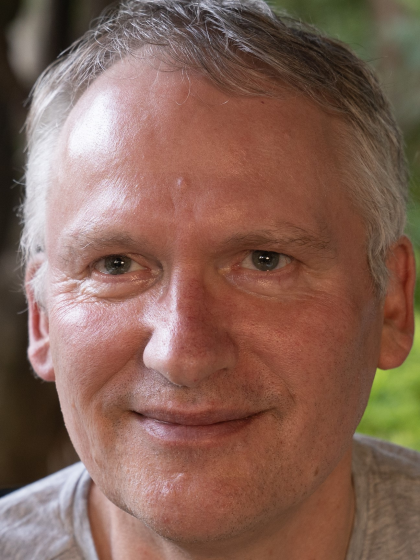
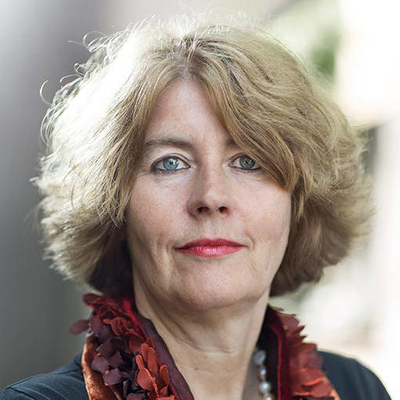
Lisa Haushofer is an Assistant Professor at the University of Amsterdam's Faculty of Humanities, Department of History. Her work bridges the histories of medicine, science, and food, focusing on the commercial, colonial, and ecological dimensions of nutritional culture. Fields of Interest: History of Medicine, History of Science, Food History, Nutrition History She authored the book Wonder Foods: The Science and Commerce of Nutrition (2022), which explores the intersection of nutritional science and global food systems in the 19th and early 20th centuries. Contact: lisa.haushofer@uva.nl . Follow her on Twitter and Bluesky for updates.
Pieter Desmet serves as Professor of Design for Experience at Delft University of Technology's Faculty of Industrial Design Engineering, specifically within the Department of Human-Centered Design. He directs the Delft Institute of Positive Design, focusing on advancing knowledge for designing human flourishing. His research centers on emotional design mechanisms, particularly how product design evokes emotions and contributes to individual and community well-being. Key interests include Positive Design frameworks, mood-regulation interventions, AI-emotion alignment, and multisensory experiences in packaging and museum contexts. Recent work explores liminal spaces in exhibits, autoethnography ethics, and group mood dynamics in workplaces. Analysis of his 275+ publications reveals consistent focus on emotional design theory with expanding applications in AI, healthcare, and sustainability. His work bridges academic research with practical design tools for emotional well-being. No scientific awards are documented in the provided materials. Desmet actively supervises doctoral candidates (evidenced by PhD thesis datasets) and secures research grants through institutional collaborations. His leadership in organizing major conferences like IASDR 2023 and Design & Emotion events demonstrates significant academic influence. He leads the Delft Institute of Positive Design research group, which investigates user experience aspects through interdisciplinary projects integrating psychology, design, and technology.
Prof. Han Olff is a Professor of Community and Conservation Ecology at the University of Groningen's Faculty of Science and Engineering, within the Groningen Institute for Evolutionary Life Sciences. He leads research on ecosystem structure, species interactions, and theoretical ecology, with fieldwork in savannas, salt marshes, and coastal systems. His work bridges theory and conservation, advising organizations like WWF and ARK Nature. Education: PhD (Cum Laude) in Biology from the University of Groningen (1992), MSc in Biology (1988). Research Interests: Focuses on plant-herbivore-predator interactions, ecosystem engineering, and the impact of human activities on biodiversity. Key themes include savanna ecology, food web dynamics, and restoration ecology. Awards: Gold Medal from Teyler Museum (2006) and PIONIER Award (2002). Active in grants like the EU Horizon 2020 AfricanBioServices project. Teaching: Coordinates courses in Conservation Biology, Ecological Research Skills, and Advanced Population Ecology. Leadership: Directed the Centre for Ecological and Evolutionary Studies (2011–2015) and chairs the National Research Agenda's 'Green Route'. Fieldwork: Organizes expeditions to the Serengeti-Mara, Banc d'Arguin, and Bijagos Archipelago to study human-wildlife interactions and ecosystem dynamics.
Prof. Douglas Sheil is a Chairholder in Forest Ecology and Forest Management at Wageningen University & Research. He holds a MA in Natural Sciences from Cambridge and an MSc in Forestry from Oxford. His career includes roles at the University of Oxford, CIFOR (Indonesia), the Institute for Tropical Forest Conservation in Uganda, and the Norwegian University of Life Sciences (NMBU). His research focuses on tropical forest ecology, biodiversity conservation, and human-forest interactions, with over 200 publications. He co-authored the influential textbook Tropical Rain Forests: Ecology, Diversity, and Conservation (2010). Awards include the Biotropica Prize (2004) and the Queen’s Award for Forestry (2015). Education: MA (Natural Sciences, Cambridge), MSc (Forestry, Oxford) Key Roles: Director of Institute for Tropical Forest Conservation (2008–2012), Professor at NMBU (2013–2020) Research Interests: Tropical forest dynamics, climate change impacts, conservation strategies, and the socio-ecological dimensions of forest management. His work spans field studies in Africa, Southeast Asia, and Oceania, emphasizing interdisciplinary approaches to address deforestation, biodiversity loss, and sustainable land use. Recent Trends in Articles: Focus on mycorrhizal networks, oil palm impacts, lightning disturbance, and mammal population responses to human activity. He explores mechanisms linking forest structure to ecosystem services, such as carbon sequestration and water regulation, often integrating remote sensing and global datasets. Awards: Biotropica Prize, Queen’s Award for Forestry Grants/Projects: Studies on lightning effects in African forests, camera trap mammal surveys, and policy analyses for vegetable oil sustainability. Labs/Teams: Leads interdisciplinary groups at Wageningen, collaborating with CIFOR and international networks. Active in IUCN committees to translate science into conservation policy.
Prof. Hannah Dugdale is an Associate Professor at the Faculty of Science and Engineering , University of Groningen, leading the Dugdale group - Evolutionary Medicine . Her research bridges evolutionary genetics, animal behavior, and microbiome ecology, focusing on wild vertebrate populations. University: University of Groningen School: Faculty of Science and Engineering Academic Rank: Associate Professor Research Interests: Telomere dynamics and aging Gut microbiome evolution Cooperative breeding mechanisms Environmental stress impacts Population genetics Behavioral ecology Article Trends: Her recent work examines telomere length as a biomarker for survival, gut microbiome effects on fitness, and climate/predation impacts on avian populations. Studies often employ long-term ecological datasets and genomic analyses. Grants & Projects: Involved in 14 funded projects, including environmental buffering hypotheses and microbiome research. Collaborates extensively with Prof. Terry Burke (University of Sheffield) and Prof. Jan Komdeur (University of Groningen). Labs & Teams: Leads the Dugdale group in Evolutionary Medicine, collaborating with international teams on vertebrate population studies. Research spans fieldwork, genetic analysis, and ecological modeling.
Conny Almekinders is an Assistant Professor in the Department of Knowledge Technology and Innovation at Wageningen University & Research, focusing on seed systems, agricultural development, and participatory research approaches. His work bridges plant genetics, socioeconomics, and institutional dynamics to enhance crop seed systems globally. Key areas include potato and cassava seed systems, gender-responsive agricultural practices, and disease management strategies in developing countries. Research emphasizes seed degeneration, stakeholder collaboration in breeding programs, and policy analysis for resilient seed systems. He has co-supervised 25 PhD projects, including studies on decentralized seed multiplication in Kenya, hybrid potato breeding models, and community-driven development in Ethiopia. Notable contributions include developing diagnostic tools for root/tuber seed systems and evaluating farmer willingness-to-pay for quality planting materials in Southeast Asia. Almekinders has published over 168 peer-reviewed articles, datasets, and reports addressing seed systems' technical and social dimensions. His projects often involve international collaborations, such as the CRRIsP initiative on climate-resilient potato innovations and the RTB Seed System Toolbox. He actively participates in lectures and workshops promoting inclusive seed system transformation.
Floor Haalboom serves as Assistant Professor in the Department of Public Health at Erasmus MC, Erasmus University Rotterdam, specializing in the historical and sociocultural dimensions of medicine and public health within Dutch contexts. Her interdisciplinary work bridges medical humanities, social history, and contemporary health policy. Her research portfolio reveals concentrated expertise in: Historical evolution of disease concepts (particularly diabetes) Ethnic disparities in neonatal outcomes Environmental impacts of agricultural systems Medieval literary history intersecting with modern scholarship Historical plant utilization in Dutch society Recent publications demonstrate methodological versatility across historical analysis, epidemiological research, and critical policy examination, with strong emphasis on 20th-century Dutch healthcare developments. Her 2024 work on diabetes conceptual history in Social History of Medicine exemplifies her signature approach of contextualizing medical phenomena within broader societal transformations. Dr. Haalboom actively engages public discourse through media contributions such as "Deze uitvinding gaf de bio-industrie vleugels" (2022), translating academic insights for broader audiences while maintaining rigorous scholarly standards across her 16 research outputs.
Arjen Wals is a Personal Professor at Wageningen University & Research , specializing in Education for Sustainable Development (ESD) and transdisciplinary sustainability research. His work bridges academia, policy, and community action, focusing on transformative learning, climate change adaptation, and systemic societal challenges. Research interests include: Relational education and outdoor pedagogies Transdisciplinary knowledge co-creation Decolonization of sustainability education Role of AI (e.g., ChatGPT) in educational practices Whole school approaches to sustainability Key Projects: Supervising PhD research on regenerative farming, nature-based education, and business models for sustainability Leading initiatives like the 'Whole School Approach' to integrate sustainability across educational systems Co-designing river co-learning arenas for multi-stakeholder environmental governance Media Contributions: Regularly provides expert commentary on sustainability education, climate policy, and societal transitions in Dutch and international media. Advising: Mentor to 18 PhD candidates exploring themes like wild pedagogies, food systems governance, and climate resilience.
Dr. Janna Coomans is an Assistant Professor in the Department of History and Art History at Utrecht University, specializing in Medieval History with a focus on urban health, environment, and social dynamics. Her research explores premodern cities' responses to public health challenges, disaster resilience, and community formation. She holds a PhD from the Amsterdam School of Historical Studies (2021 cum laude) and has held postdoctoral positions in ERC-funded projects like 'Healthscaping Urban Europe'. Her expertise spans social history, urban history, and medieval public health, with particular attention to the Low Countries. She leads the VENI-funded '(In)flammable Cities' project (2020) examining fire risks and urban transformation. Awards include the Praemium Erasmianum Dissertation Prize (2020) and Pro Civitate Dissertation Prize (2019). Her research integrates material culture analysis with archival sources, addressing topics like medieval sanitation, disease control, and urban infrastructure. She has contributed to interdisciplinary projects on pandemic responses, environmental governance, and spatial strategies in late medieval cities. Grants: NWO VENI grant (2020), ERC postdoctoral fellowship (2018-2021) Media engagements: Featured in NTR documentaries, podcasts on medieval hygiene, and pandemic history analyses Labs/Teams: Member of the Research Institute for History and Art History, affiliated with Pathways to Sustainability and Institutions for Open Societies research programs
Birgit Meyer is a Professor of Religious Studies at Utrecht University, affiliated with the Department of Philosophy and Religious Studies. Her work focuses on material religion, postcolonial criticism, and the intersection of religion with media and globalization. She leads the research program 'Religious Matters in an Entangled World,' exploring how religion manifests through tangible forms in diverse societies. Education: Trained in cultural anthropology at Bremen University and the University of Amsterdam, she held previous roles at VU Amsterdam and Utrecht University since 2011. Key academic contributions include studies on Ghanaian Pentecostalism, missionary legacies, and religious visual culture. Research interests emphasize material and sensory dimensions of religion, including religious heritage in museums, media, and urban spaces. Awards include the Spinoza Prize (2015) and the Stewart Hoover Mentorship Award (2023). She has advised numerous PhD candidates and leads interdisciplinary teams in global collaborations. Her work bridges empirical research and theoretical reflection, addressing contemporary challenges in religious coexistence and secularization. Current projects include unpacking colonial missionary collections and studying religious plurality in urban Africa.
Peter van Dam is a Professor in the Department of History at the University of Amsterdam , affiliated with the Faculty of Humanities . His work bridges Dutch History and global themes like Fair Trade , Environmental Ethics , and Postcolonial Globalization . Research Interests : Dutch history; entanglement of environmental, religious, and economic ethics; sustainable consumption debates; fair trade movements; and the evolution of consumer society. Publications : Over 25 articles and books focusing on 20th-century Dutch and Low Countries history, with recent works (2021–2025) analyzing sustainability, fair trade ethics, and consumer activism. Contact : phvandam@uva.nl | LinkedIn | BlueSky
Jeffrey Harvey is an Endowed Professor in the Department of Ecology & Evolution at the Faculty of Science, Vrije Universiteit Amsterdam. His research focuses on parasitoid biology, hyperparasitoid interactions, and climate change impacts on insect communities. He contributes to UN Sustainable Development Goals related to sustainable agriculture and food security. Recent work explores spider life history strategies, pest management under climate change, and hyperparasitoid development dynamics. Education details are not explicitly provided, but his extensive publications (107 articles) and datasets (23) indicate advanced academic training in entomology and ecological sciences. Research collaborations span international institutions, with active projects investigating climate warming effects on trophic level interactions. His work has been cited across platforms like Mendeley and Bluesky, reflecting significant academic impact. Supervised four PhD theses, though specific student names aren't listed here. Key research themes include parasitoid wasp ecology, insect pest management, and behavioral adaptations under environmental stressors.
Boelie Elzen is an External employee at Wageningen University, affiliated with the OT Team Agriculture & Society and the Agricultural Biosystems Engineering department. Holding a dr.ir. degree, he functions as a Researcher with expertise in agricultural innovation systems and sustainability transitions. His research focuses on: Innovation Systems in Agriculture Environmental Impact Assessment Sustainability Transitions Agricultural Policy Mixed Cropping Systems Agroecology Recent publications (2022-2025) demonstrate interdisciplinary work spanning computer science history and agricultural innovation, with emphasis on mixed cropping, AKIS frameworks, and EU agroecology strategies that bridge social sciences and agronomy. Elzen has led significant projects including: EU-TU-18037 PLAID (2017-2019) Internationale workshop Systeeminnovaties (2010) Toolkit M&E voor projectleiders (2010) Leren van praktijkinitiatieven (2009) These initiatives address system innovations in agriculture through monitoring tools and practical learning frameworks. He actively contributes to the OT Team Agriculture & Society and Agricultural Biosystems Engineering, driving research on sustainable agricultural transitions.
Jens Andersson is a Researcher at the Plant Production Systems department (PE&RC), focusing on sustainable agricultural practices and food security in smallholder farming systems across Africa. His work emphasizes the application of agronomic technologies, such as mobile-based decision support tools, to enhance productivity and resilience in farming communities. He holds a doctoral degree (dr.) and an engineering degree (ir.) from an unspecified institution, reflecting his academic background in agricultural sciences and engineering. His research interests include agricultural development, food security, sustainable intensification, and the analysis of farming systems. He explores how legume integration and conservation agriculture can address yield gaps and promote equitable resource management. Additionally, he investigates the challenges of scaling digital agronomy solutions and the socio-economic factors influencing technology adoption among smallholder farmers. Jens has not been mentioned to have received any scientific awards or fellowships in the provided texts. His recent publications highlight critical analyses of farm size impacts on economic development, gender dynamics in agricultural investments, and the failure to scale digital agronomy solutions in developing countries. He also examines farmer perceptions of livestock intensification and the historical trajectory of Zimbabwe's agricultural policies. As a co-promotor, Jens has advised multiple PhD candidates, including R. Pawar, H. Nyirahabimana, M. Kilakila, and T. Delaune. He is involved in grants such as the Sustainable intensification of soybean production in Ghana and Tanzania, and the Food Systems Transformation in Southern Africa for One Health (FoSTA-Health) project, where he collaborates as a co-PI. His contributions to projects like Farming Systems Analytics and Conservation Agriculture targeting tools underscore his commitment to bridging research and development practices. Jens is affiliated with the Plant Production Systems group (PE&RC), contributing to interdisciplinary teams researching farming systems analytics and agricultural development strategies. His work integrates socio-economic dimensions with agronomic science, addressing systemic barriers in technology adoption and policy design for marginalized farming communities.
Dr. Simona Negro is an Associate Professor at the Copernicus Institute of Sustainable Development within Utrecht University's Faculty of Geosciences , specializing in Innovation Systems . Her work bridges technological, social, and policy dimensions of sustainability transitions. Key domains: Energy, Protein, and Circular Economy transitions Multidisciplinary approach: Systems Theory, Innovation Policy, and Behavioral Dynamics Recent research focuses on systemic barriers to circularity in Dutch sectors and animal-free chemical safety assessment via the VHP4Safety project . She co-organizes major events like the International Sustainability Transitions Conference and chairs EU-SPRI meetings. Notable awards: 2008 Best paper TFSC award 2011 & 2014 Emerald Citations of Excellence