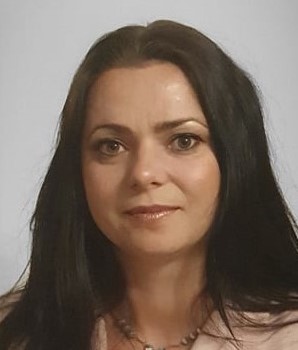
Marsha SiefertView profile
Associate Professor
Marsha Siefert is an Associate Professor in the Department of Historical Studies at Central European University (CEU) in Budapest, Hungary, where she is also affiliated with the Doctoral School of History. Her research spans cultural and communications history, with a focus on media industries, public diplomacy, and labor under state socialism from the 19th century to the present. PhD, Communication – University of Pennsylvania Ph.D. (Nostrification), Literature – University of Szeged MA, Communication – University of Pennsylvania MA, Folklore – Indiana University BS with Distinction, Music (Piano/English) – Indiana University Her research interests center on the intersections of media, culture, and politics. She explores how cinematic and musical forms have been used as tools of cultural diplomacy, particularly during the Cold War. Her work delves into Soviet cinematic co-productions, labor history in Eastern Europe, and the role of informal communication in wartime and repressive regimes. She also investigates the historical dynamics of sound recording, film biographies, and the capitalization of culture. Her recent publications reflect a strong trend in Cold War cultural history, especially in cinematic diplomacy and transnational media flows. Articles analyze Soviet films as instruments of soft power, the role of music in underground resistance, and the transnational dimensions of labor and reconstruction in socialist Europe. Her editorial work on labor in state-socialist Europe underscores a commitment to inclusive historical narratives. Bridgebuilder's Award, Muhlenberg College (1995) Association of American Publishers Award (1991) Mellon Fellowship, Harry Ransom Center (2008) Kennan Institute Grant (2013) Inaugural Fellow, NYU Center for Ballet and the Arts (2016) Humanities Grant with Susan Zimmermann (2015–2017) WORCK COST Action Committee Member (2020–2024) Marsha Siefert has supervised 92 MA theses and 11 PhD students to completion, advising on topics ranging from Soviet cinema to Yugoslav nuclear programs and labor discipline. She has secured multiple research grants and collaborates internationally with institutions such as the Leibniz Institute for Contemporary History (IfZ), Oxford University, and NYU. She is a Research Associate with the Democracy in History project at CEU’s Democracy Institute and a partner in the INFOCOM project on informal communication in Nazi Europe. She is actively involved in research teams and workshops, including the INFOCOM project and the Experimental Humanities Workshop. Her ongoing projects include studies on Soviet ballet films, 19th-century telegraph diplomacy, and Cold War music networks.