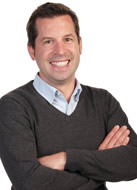
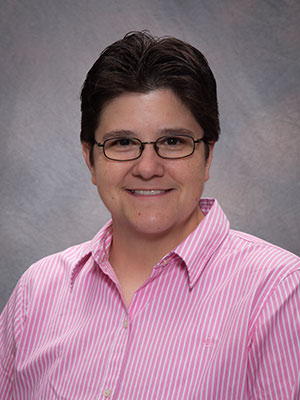
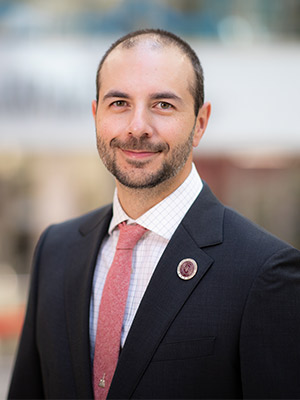
Dr. Martin Loidl is a researcher in Geoinformatics at the University of Salzburg's Department of Geoinformatics - Z_GIS, part of the Faculty of Digital and Analytical Sciences. His work focuses on GIS applications in mobility, urban planning, and cartography. Key projects include developing tools like NetAScore for assessing bikeability and walkability, and frameworks for analyzing transportation networks. He has authored over 75 publications, with recent work emphasizing spatial analysis for sustainable urban mobility. His research integrates agent-based modeling, spatial data science, and real-world transportation challenges. Education: Dr., MSc in Geoinformatics. Key Projects: GISMO Study on active commuting, Bike Sharing System Planning, Digital Twins for Urban Sustainability. Research Interests: GIS and mobility optimization, cartography, agent-based simulations, and spatial data science for urban planning. His contributions include software tools like NetAScore and frameworks for bicycle infrastructure analysis. Grants & Awards: Secured funding from various research initiatives; part of interdisciplinary teams addressing urban mobility challenges. Labs/Teams: Mobility Lab | UNIGIS, collaborating on projects like the Bicycle Observatory and spatial network analysis.
Lesley Wright is an Associate Professor in the J. Mike Walker ’66 Department of Mechanical Engineering at Texas A&M University, holding the Jana and Quentin A. Baker ‘78 Career Development Chair. She serves as ABET Coordinator and leads research in gas turbine cooling, convective heat transfer, and fluid mechanics experimentation. Her work emphasizes experimental methods and advanced measurement techniques like pressure-sensitive paint (PSP) for film cooling effectiveness analysis. Education: Ph.D., Mechanical Engineering, Texas A&M University (2006) M.S., Mechanical Engineering, Texas A&M University (2003) B.S., Engineering with Mechanical Engineering Concentration, (2001) Research Interests: Wright’s research focuses on optimizing turbine blade cooling through jet impingement, serpentine channel designs, and advanced thermal measurement technologies. She collaborates with the Turbomachinery Laboratory to develop solutions for high-temperature applications in aerospace and energy systems. Publications: Her recent work highlights contributions to film cooling performance, heat transfer enhancement in rotating channels, and the application of machine learning for temperature field reconstruction. Over 50 peer-reviewed articles and two textbooks ( Experimental Methods in Heat Transfer and Fluid Mechanics and Analytical Heat Transfer ) reflect her expertise. Awards: Walker Outstanding Service Award (2023) AIAA Associate Fellow (2023) ASME Fellow (2021) SAE Ralph R. Teetor Educational Award (2015) Lab Affiliations: Wright is affiliated with the Turbomachinery Laboratory, advancing research in turbomachinery cooling, heat transfer, and fluid dynamics. Her team employs state-of-the-art facilities for experimental validation and computational modeling.
Nathan Tichenor is a Research Associate Professor in the Department of Aerospace Engineering at Texas A&M University. He also serves as Chief Research Officer at the Bush Combat Development Complex and Director of Hypersonic Facilities there. His research focuses on high-speed aerodynamics, novel flow control strategies, advanced diagnostic development, and wind tunnel design, with expertise in computational fluid dynamics (CFD). He holds a PhD, MS, and BS in Aerospace Engineering from Texas A&M University, completed in 2010, 2007, and 2005 respectively. His work spans experimental and numerical studies of hypersonic boundary layers, shock wave interactions, and flow control techniques using laser-based methods and plasma discharges. Notable contributions include studies on cylinder-induced shock interactions, cycloidal rotor blade dynamics, and thermal transport in high-speed flows. He has led projects involving shape-memory alloy actuators for wind tunnel models and developed novel methods for flow tagging and imaging in hypersonic regimes. Recent publications highlight advancements in boundary layer instability measurements, dual-mode energy deposition control systems, and antenna optimization for hypersonic flows. His research emphasizes practical applications of fluid dynamics principles in defense and aerospace engineering contexts.
James Rendell is a Lecturer in Creative Industries at the University of South Wales, affiliated with the Faculty of Business and Creative Industries and the Creative Industries Research and Innovation Group. He serves as course leader for the Media, Culture and Journalism undergraduate programme and teaches on the MA in Visual Journalism. His research focuses on screen media audiences, participatory cultures, digital media technologies, horror/cult media, and media inclusion/diversity, including projects like dementia-friendly cinema initiatives and analyses of race/gender representation. Teaching modules: Contemporary Popular Television, TV Drama, Media Audiences and Fandom, Transmedia Industry collaborations: RNIB, Aardman, Fictioneers, The Democracy Box Professional roles: HEA/Advance HE Fellow, Industry Liaison Officer for Media/Culture/Journalism Research highlights include publishing in journals like New Review of Film and Television Studies , East Asian Journal of Popular Culture , and his monograph Transmedia Ters in Post-TV Horror . He has led projects like the Audience of the Future initiative collaborating with Fictioneers on Wallace and Gromit. Awards: HEA/Advance HE Fellow Grants/Projects: Sensory Impairment & Digital Tech Engagement (Swansea University/RNIB), Making Media Collaborative (AHRC)
James Tompkin is a visual computing researcher focusing on computer vision, computer graphics, and human-computer interaction. His lab develops techniques for image and video creation, editing, analysis, and interaction, emphasizing image and scene reconstruction from multi-camera systems and complex dynamic scenes. Applications span 2D, multi-view, and VR/AR displays. His research interests include scene reconstruction, neural rendering, light fields, time-of-flight sensors, and perceptual design for augmented reality. He works on algorithms for depth estimation, view synthesis, and interactive systems. His publications demonstrate expertise in neural fields, Gaussian splatting, and light field processing for VR/AR applications. Key themes include machine learning for scene flow estimation, efficient rendering of large-scale environments, and improving generative model stability.
Dominique Bechmann is a **Professor of Computer Science** at the University of Strasbourg, affiliated with the **Department of Computer Science** within the **Sciences Collegium**. He is also a researcher at the **ICube Lab** (UMR 7357 CNRS-University of Strasbourg). His academic career spans over three decades, including roles as Head of the IGG Computer Graphics and Geometry research group (1997–2022) and Head of the National Research Group GdR IG-RV (2014–2021). He holds a Habilitation (1995) and PhD (1989) from the University of Strasbourg, with postdoctoral research at IBM's Thomas Watson Research Center (1989–1990). His research focuses on **Computer Graphics**, **Geometric Modeling**, and **Virtual Reality**, with key contributions in free-form deformation, 3D modeling of anatomical structures, and interaction techniques in immersive environments. He has led projects like the ICT-Asian initiative on Virtual Reality (2004–2007) and organized conferences such as AFRV 2012 and AFIG-EG France 2005. His teaching spans undergraduate and graduate levels in algorithms, computer graphics, and computational geometry. Bechmann has held numerous leadership roles, including Head of the Computer Science Department (1997–2000), Vice-Head of LSIIT Lab (2009–2012), and member of the National Commission of Universities (CNU) section 27 (2007–2011). His work bridges theoretical computer graphics with practical applications in medicine, architecture, and collaborative systems.
Maarten van Reeuwijk is a Professor of Urban Fluid Mechanics at the Department of Civil and Environmental Engineering, Faculty of Engineering at Imperial College London. He serves as Director of Research and teaches at both undergraduate and postgraduate levels. His research focuses on transport processes in urban environments, atmospheric convection, and turbulent flows, with applications to air quality, urban microclimate, and sustainable infrastructure. He leads a multidisciplinary research group involving Aeronautical, Civil, and Mechanical Engineering experts. Education: MSc in Civil and Environmental Engineering (Fluid Mechanics), Delft University of Technology (1995-2002) PhD in Applied Physics (Turbulent Thermal Convection), Delft University of Technology (2002-2007) Research Interests: Urban fluid mechanics, turbulence dynamics, green infrastructure impacts, microplastics behavior, cloud physics, and large-eddy simulation (LES). His work integrates computational modeling (e.g., uDALES software) with experimental data to address environmental challenges like urban heat islands and pollution dispersion. Awards & Recognition: None explicitly stated in the text. Advising & Grants: Supervises PhD/postdoc researchers in diverse engineering and physics backgrounds. Active in securing grants for urban sustainability projects and computational fluid dynamics research. Labs/Teams: Heads the Urban Fluid Mechanics group and collaborates with Imperial's Grantham Institute and Artificial Intelligence Network. Develops the uDALES LES model for urban flow simulations.
Lin Ma is a Professor in the Department of Mechanical Engineering at the University of Virginia. His research focuses on 4D diagnostics and thermal-fluid systems, including novel optical measurement techniques for combustion and propulsion studies. He holds a Ph.D. from Stanford University (2006), an M.S. from Stanford (2001), and a B.S. from Tsinghua University (2000). Key research areas include laser-based diagnostics, tomography, non-intrusive measurements in harsh environments, and thermal management of energy systems. His work emphasizes 3D flow visualization and combustion analysis using advanced imaging techniques like VLIF and tomographic chemiluminescence. Notable awards include the NSF Career Award (2009) and the Air Force Summer Faculty Fellowship (2014-2016). His research has been applied to gas turbine exhaust characterization, battery thermal management, and high-speed combustion diagnostics in supersonic environments. Collaborations involve developing algorithms for 3D reconstruction and error correction in turbulent flow measurements.
David S. Thompson is a Professor in the Department of Aerospace Engineering at Mississippi State University, where he holds the inaugural Airbus Helicopters, Inc. Professorship. He is affiliated with the Bagley College of Engineering and has been a key figure in computational fluid dynamics (CFD) research and education. He previously served in leadership roles at the Center for Advanced Vehicular Systems (CAVS) and the Office of Research and Economic Development. Ph.D., Aerospace Engineering, Iowa State University (1987) M.S., Aerospace Engineering, Mississippi State University (1980) B.S., Aerospace Engineering, Mississippi State University (1979) Dr. Thompson's research focuses on computational fluid dynamics , particularly in aircraft icing , unsteady flows , and vortex-dominated flows . He also works on mesh generation, flow visualization, and high-performance computing applications in both aerospace and biomedical systems. His interdisciplinary work spans engineering mechanics, numerical methods, and biological flow modeling. His recent publications reflect a strong emphasis on turbulent wake analysis , flow visualization techniques , and CFD modeling of complex systems such as iced wings and lung airways. The articles demonstrate expertise in hybrid turbulence modeling, vortex detection, and adaptive mesh refinement, often applied to real-world engineering and biomedical challenges. Faculty of the Year, MSU Department of Aerospace Engineering (2015) Royal Academy of Engineering Distinguished Visiting Fellow (2014–15) Inaugural Airbus Helicopters, Inc. Professorship (2013–present) Bagley College of Engineering Hearin Faculty Excellence Award (2010) Mississippi State University StatePride Award (2010, 2011) Bagley College of Engineering Academy of Distinguished Teachers (2010) NASA Group Achievement Award for LEWICE development (2009) NASA TGIR Award for aircraft icing research (2001) Dr. Thompson has secured research funding from major agencies including the National Science Foundation , NASA , Air Force Office of Scientific Research , Army Research Office , Department of Homeland Security , and aircraft industry partners such as Airbus. He has advised numerous students and collaborators across disciplines, contributing to projects in aerospace, energy, and biomedical engineering. His work integrates simulation, visualization, and high-performance computing to solve complex fluid dynamics problems. He is associated with research facilities such as the Autonomous System Research Laboratory (ASRL) and the Center for Advanced Vehicular Systems (CAVS) , where he led the Computational Fluid Dynamics group. His collaborations extend to international institutions, including Cardiff University during his Royal Academy fellowship.
Jim Clark is a Senior Lecturer at the University of Lethbridge's Dhillon School of Business, specializing in E-commerce and Information Systems. He has been teaching at the institution since 1990 and maintains an active presence through his course instruction and professional blog. His educational background includes degrees from BYU and Ivey School of Business. Clark's professional experience extends beyond academia, with previous positions at Revenue Canada, Shell Canada, and Drowland Technologies, along with numerous small business consulting projects. Clark's research and teaching interests focus on E-commerce, Information Systems, Data Analytics, and Data Visualization, with particular emphasis on financing, organizational design, and entrepreneurship within E-commerce organizations. His work explores the application of technology in business contexts and classroom pedagogy. His recent publications and blog posts demonstrate consistent engagement with current technology trends affecting business, including digital advertising evolution, AI in finance, e-commerce strategies, and ethical considerations in technology adoption. These works reflect his commitment to connecting academic concepts with real-world business applications. Clark teaches Management of Information Systems (MGT 3061) and maintains an active online presence through his blog 'Info Systems in Practice' where he discusses relevant technology topics for business students and professionals. He has developed extensive teaching materials including video lectures, chapter projects, and discussion questions that integrate current business technology examples with core information systems concepts. His teaching approach emphasizes practical application of information systems knowledge in business decision-making contexts.
David Novog is a Professor in the Department of Engineering Physics at McMaster University . His work bridges nuclear reactor physics, thermal hydraulics, and computational modeling, with a focus on safety analysis and advanced reactor designs like small modular reactors (SMRs). Research Interests: Nuclear reactor safety, computational fluid dynamics (CFD) in reactor systems, neutron tomography, uncertainty quantification in nuclear data, and energy transition strategies. Teaching: Courses include Thermal Systems Design (ENGPHYS 2NE3), Numerical Methods for Engineering (ENGPHYS 3NM4), and Computational Methods for Engineering Physics (ENGPHYS 2CE4). Grants: Co-leader of a $2.6M project on SMR research, with ongoing contributions to OECD/NEA benchmarks and nuclear safety frameworks. Labs: Active at the McMaster Nuclear Reactor , where experiments on neutron flux and heat transfer are conducted.
Steven Brooks serves as Professor and Department Chair in the Department of Ophthalmology at the Medical College of Georgia, Augusta University, with additional appointment in Pediatrics. He holds the William S. Hagler, MD Chair in Ophthalmology and co-directs the Culver Vision Discovery Institute. His clinical expertise spans pediatric ophthalmology and strabismus, with research focusing on neonatal ocular blood flow, classroom visual demands, and surgical innovations for pediatric glaucoma. Recent work examines neurovascular compression syndromes and biomechanical approaches to drainage tube management. Notable honors include the 2023 University of Michigan Visiting Professorship, Emory Eye Center's Knights Templar Lecture, and AAPOS Honor Award (2022). His editorial service includes Journal of AAPOS editorship since 2018 and American Board of Ophthalmology exam development. Academic leadership encompasses Augusta University Medical Center committees, Columbia University's Telemedicine Development Team, and directorship of the Greater New York Society for Pediatric Ophthalmology. He maintains active clinical certifications including Georgia medical licensure (1994) and American Heart Association BLS (2020).
Prof. Dr. Katja Fiehler holds the W3 Professorship for Experimental Psychology ("Perception & Action") at Giessen University since March 2020. She previously served as W2 Professor (2016-2020) and Heisenberg-Professor (2011-2016) at the same institution. Her research focuses on sensorimotor integration, tactile perception, and spatial cognition in naturalistic environments, particularly through virtual reality applications. Current roles: Speaker of Cluster Project "The Adaptive Mind" Leadership: Speaker of DFG IRTG-1901 "The Brain in Action" Member of directorate: DFG SFB/TRR-135 "Cardinal mechanisms of perception" Directorate member: Bender Institute for Neuroimaging (BION) Katja's research spans tactile suppression during action, spatial memory coding, and multimodal perception. Her team investigates how sensorimotor predictions modulate sensory processing, how aging affects motor-sensory integration, and the neural basis of allocentric/egocentric spatial representations. Recent publications show strong focus on virtual reality experiments, sensorimotor recalibration, and inter-effector coordination. Key themes include tactile perception modulation by movement demands, spatial cognition in naturalistic environments, and cross-modal metacognition. She leads the "Team Perception and Action" at Giessen University, which includes researchers like Dr. Belkis Ezgi Arikan, Dr. Tom Nissens, and Dr. Meaghan McManus. Her lab develops tools like vexptoolbox for VR-based human behavior studies.
Sophie Demonceaux is a Lecturer at University of Burgundy , affiliated with IUT Le Creusot and research group CIMEOS . Her work bridges Digital Communication with interdisciplinary foci on family/relationship dynamics, educational technology, and media representation of scientific topics. Key Research Themes: ICT's impact on marital relationships, digital education strategies, school dropout prevention via communication, and media coverage of controversial subjects like homeopathy. Projects: Leading COM'PAS (2020-2023), a regionally-funded initiative analyzing school retention through digital communication. Publications span journals like Tic&société , book chapters on social media expertise, and conference presentations at events hosted by INSPE de Bourgogne and Université Catholique de l'Ouest . Her 2014 thesis on ICT and intimacy remains a foundational work. Career Progression: From Professor-documentaliste (2003-2006) to PRCE Expression-Communication (2011-2016), she transitioned to Lecturer in 2016. Holds a 2014 Doctorate in Information and Communication Sciences .
Malaika Brengman serves as a Senior Lecturer and postdoctoral researcher at the Free University of Brussels, specializing in consumer behavior within retail contexts. Her academic work bridges Communication Sciences, Business Studies, and Media Innovation through interdisciplinary research on digital retail environments. Her research focuses on consumer decision-making processes in physical and virtual retail spaces, with particular expertise in trust formation, digital signage effectiveness, and the psychological impact of emerging technologies. Key interests include: How virtual worlds influence retail appeal and consumer threat perception The relationship between store environment design and initial trust development Implicit measurement techniques for assessing service experiences Consumer responses to AI-driven personalization in retail settings Analysis of her recent publications reveals a strong emphasis on augmented reality applications, vaccine attitude segmentation, and social media addiction pathways, demonstrating methodological diversity across behavioral experiments and large-scale consumer surveys. Her scientific contributions have been recognized through multiple awards including the Best Conference Paper Award (2010), Best Extended Abstract Award (2020), and a Highly Commended Paper distinction (2016). These accolades highlight her impact in retail technology and consumer psychology research. Brengman actively supervises doctoral candidates and serves on PhD committees, with documented supervision of at least 153 academic works. She frequently engages with media as an expert on consumer finance topics, particularly regarding energy pricing impacts and savings behaviors during economic uncertainty. Her current projects include Brubotics (human-centered robotics) and SHALGO (algorithmic systems research). She maintains significant external engagement through advisory roles in consumer protection initiatives and regular media commentary on retail trends and consumer behavior patterns.