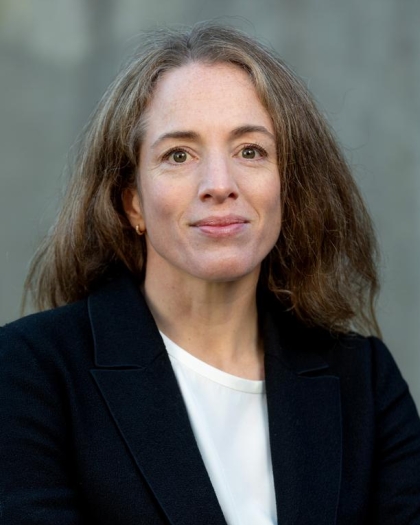
Inga Berre is a Professor at the Department of Mathematics, University of Bergen, and serves as Director of the Center for Modeling of Coupled Subsurface Dynamics (CSD). She leads the Porous Media Research Group and was appointed Argyris Visiting Professor at the University of Stuttgart's SimTech Cluster of Excellence in 2023. Research Interests: Mathematical modeling, partial differential equations, numerical methods for coupled thermo-hydro-mechanical-chemical processes in subsurface systems, and fault reactivation induced by injection/production. Scientific Leadership: Member of SIAM Council (2022-2027), Chair of SIAM GS activity group (2021-2022), Co-Chair of SET-Plan Deep Geothermal Implementation Working Group (2019-2021), and Chair of the Joint Program Geothermal, European Energy Research Alliance (2018-2021). Awards: 2011 Meltzer Award for Young Researchers. Advisory Roles: Member of Scientific Advisory Boards for GFZ (2024-2027) and SFB1313 (2018-), among others. Teaching: Developed courses on calculus, functional analysis, mathematical modeling, and numerical methods at the Bergen Summer Research School.
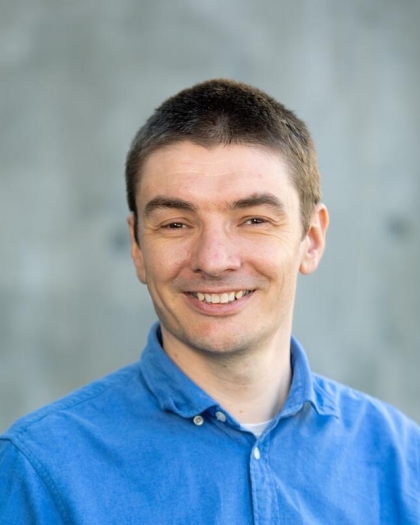
Eirik Keilegavlen is a Researcher at the Department of Mathematics, University of Bergen. His primary research focuses on developing mathematical models, numerical methods, and simulation tools for multiphysics processes in porous media, particularly in geothermal energy, CO 2 storage, and subsurface energy systems. He leads the development of the open-source software PorePy, designed for simulating processes in fractured porous media. His work emphasizes coupled problems involving fluid flow, heat transfer, and mechanical deformation. Key research interests include: Mathematical modeling of coupled thermal-hydro-mechanical processes Numerical discretization methods for fractured media Development of open-source simulation tools Applications in geothermal energy extraction and carbon sequestration Recent publications highlight advancements in: Uncertainty quantification for CO 2 leakage Viscous fingering in fractured reservoirs Automated solver selection for multiphysics systems Collaborations involve interdisciplinary teams addressing challenges in geothermal reservoir stimulation, fault mechanics, and high-performance computing. His work bridges theoretical developments with practical applications in energy and environmental systems.
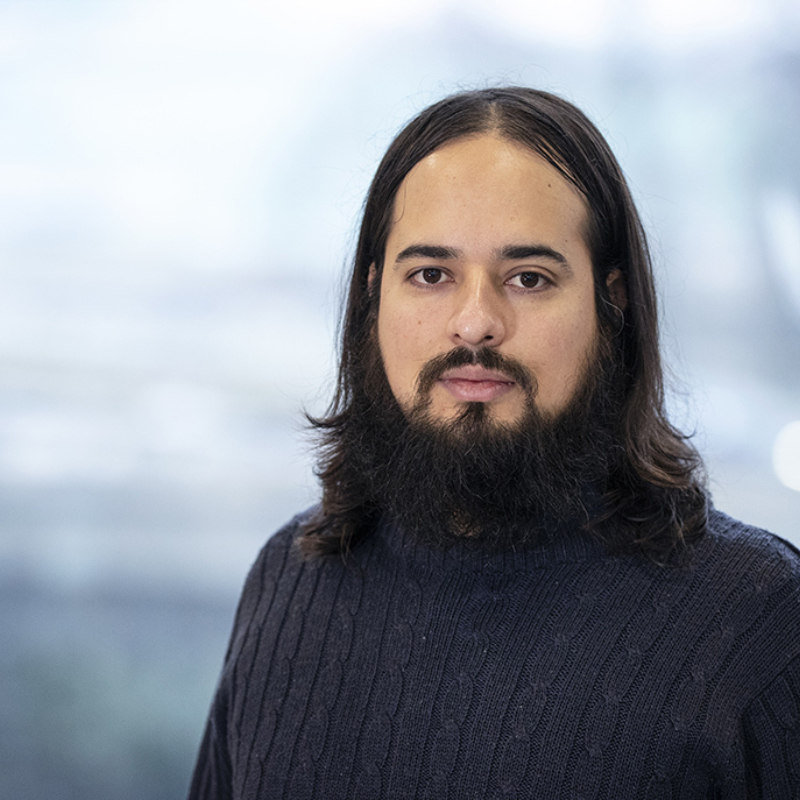
Yao Xu serves as a Research Fellow at the Porous Media Laboratory (SFF), a Centre of Excellence hosted by the University of Oslo within the Faculty of Mathematics and Natural Sciences. His work focuses on experimental investigations of carbon dioxide behavior in subsurface geological formations, particularly through advanced imaging and measurement techniques. His primary research domains include: Carbon Capture and Storage (CCS) in geological formations Fluid dynamics in porous media systems Experimental methodologies for CO2 sequestration validation X-ray computed tomography applications in geoscience Measurement techniques for dissolved carbon species Recent publications demonstrate Xu's expertise in developing experimental frameworks for CO2 storage research, with dual 2025 studies examining sandstone aquifer injection processes and dissolved carbon mapping in convective systems. These contributions advance critical measurement capabilities for carbon sequestration validation. Xu operates within the Porous Media Laboratory ecosystem, which conducts fundamental research on fluid transport in porous materials with direct applications to energy transition challenges and environmental protection initiatives.
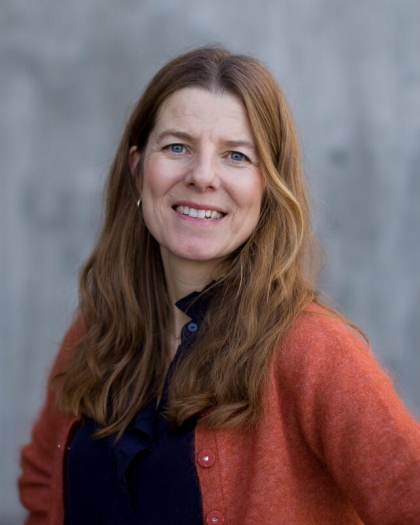
Raoof Gholami is a Professor of Energy Resources at the University of Stavanger's Faculty of Science and Technology, Department of Energy Resources. His research focuses on subsurface energy storage, particularly hydrogen and CO₂ sequestration in geological formations. He has contributed extensively to understanding mechanisms like hydrogen leakage in salt caverns, CO₂-mineral interactions in chalk reservoirs, and bio-reactive transport modeling in storage sites. Key research interests include: (1) Hydrogen storage in porous media, (2) CO₂ sequestration risks and geomechanical stability, (3) Reactive transport modeling, and (4) Machine learning applications in reservoir characterization. His work bridges experimental studies (e.g., salt precipitation dynamics) with numerical modeling (e.g., caprock integrity analysis). Recent publications emphasize hydrogen storage challenges (2025), CO₂ storage in chalk (2023), and leakage risk assessment frameworks (2021). His research also explores novel materials like biodegradable surfactants for drilling fluids (2023) and advanced well path design techniques (2022). Collaborations span institutions globally, addressing topics like shale reservoirs, geothermal energy, and subsurface imaging.
David Landa Marban is a Researcher at NORCE Research AS, affiliated with the Energy and Technology division. His primary focus is on mathematical modeling and simulation of subsurface processes, including applications in CO2 storage (CCS), microbial enhanced oil recovery (MEOR), and microbially induced calcite precipitation (MICP). He has expertise in scientific computing, software development for multi-phase flow and reactive transport, and numerical simulations at pore, core, and field scales. Education: PhD in Applied Mathematics from the University of Bergen (2019), followed by a postdoctoral position at NORCE (2019-2021). Current role as a Research Scientist since 2022. Research interests emphasize computational geosciences, with projects such as MuPSI (multiscale pressure-stress impacts on CO2 storage) and CSSR (sustainable subsurface resources). He develops open-source tools like pyopmspe11 and contributes to frameworks like OPM Flow for reservoir simulation and history matching. Key contributions include modeling pressure interference in CO2 storage, machine-learned near-well models, and data-driven predictions for CO2 EOR. His work bridges lab-scale experiments with field-scale applications, addressing challenges in subsurface energy systems and leakage remediation.
Kristine Spildo is a Professor at the Department of Chemistry, University of Bergen. Her research focuses on interfacial chemistry, enhanced oil recovery (EOR), and polymer applications in reservoir engineering. She has contributed to studies on low salinity processes, surfactant flooding, and hydrophobically modified polymers for EOR. Her work combines experimental and theoretical approaches to understand multiphase flow in porous media. Education: PhD (1999), University of Bergen, titled 'Wettability and two-phase flow in capillary systems.' Master’s and Bachelor’s details not explicitly stated in text. Teaching includes Chemical Thermodynamics (KJEM210) and Surface and Colloid Science (KJEM214). She has advised doctoral students Alette Løbø Viken and Annette Meland Johannessen. Key research themes include polymer rheology, surfactant mechanisms, and reservoir fluid interactions. Her publications span over 25 years, emphasizing practical applications in petroleum engineering and materials science. Labs/Teams: Active in the Department of Chemistry and collaborations with NORCE Norwegian Research Center. Research interests include advancing EOR technologies through interdisciplinary approaches.
Norwegian University of Science and TechnologyNorway
Carl Fredrik Berg is a Professor in the Department of Geosciences at the Norwegian University of Science and Technology (NTNU). His research focuses on porous media flow, subsurface reservoir modeling, and energy-efficient production strategies in petroleum engineering. Key areas include multiphase flow dynamics, CO₂ sequestration, phase-field modeling, and digital rock physics. Recent work emphasizes the interplay between material microstructure and macroscopic properties, particularly in porous media. Collaborations involve developing advanced computational methods for reservoir simulation, optimization algorithms for well placement, and energy policy analysis under CO₂ taxation frameworks. Publications highlight contributions to phase-field equations, permeability estimation from CT scans, and stochastic modeling for subsurface flows. His work bridges theoretical physics, applied mathematics, and engineering applications in oil recovery and environmental geoscience.
Renaud Toussaint is a Professor at the University of Oslo , affiliated with the Department of Physics within the Faculty of Mathematics and Natural Sciences . He leads research in the Porous Media Laboratory SFF , focusing on granular flows, geophysical phenomena, and fluid dynamics in disordered systems. His research interests include: Granular flow dynamics and seismic signal generation Porous media drainage and multiphase flow instabilities Earthquake mechanics and soil liquefaction Interstellar object modeling (e.g., 'Oumuamua) Fracture mechanics and thermal dissipation in materials Recent work emphasizes experimental and computational studies of granular media, with key contributions on drainage dynamics, seismic proxies for flow behavior, and interfacial fracture mechanics. Collaborations with institutions like the University of Oslo and international researchers highlight his interdisciplinary approach. Publications span Physical Review Letters , Nature Communications , and Journal of Geophysical Research , reflecting his impact in physics and geophysics. No awards or advisory roles are explicitly listed in the provided text.
Norwegian University of Science And TechnologyNorway
Raffaela Cabriolu is an Associate Professor in the Department of Physics at the Norwegian University of Science and Technology (NTNU). Her research focuses on computational and theoretical physics, materials science, and molecular dynamics simulations, with applications in colloidal systems, nanoporous materials, and soft matter physics. Her research interests include: Light propagation in colloidal particle systems Structural transitions in calcium carbonate Interfacial phenomena in ionic liquids Diffusion mechanisms in nanoporous materials Phase transitions under pressure Statistical mechanics of complex systems Recent work highlights trends in computational modeling, nanomaterials, and fluid dynamics. She has contributed to educational advancements in molecular simulation pedagogy and participated in outreach initiatives like the 2023 CSCS interview exploring nanobubble dynamics. Her teaching portfolio includes courses in electricity and magnetism (FY1003), numerical physics (TFY4235), and advanced numerical physics (FY8904).
Norwegian University of Science And TechnologyNorway
Basab Chattopadhyay is an Associate Professor in the Department of Physics at the Norwegian University of Science and Technology (NTNU). He obtained his Ph.D. from the Indian Association for the Cultivation of Science (IACS), India in 2011 and completed postdoctoral research at ULB, Brussels (2012-2018) with an EU Marie-Curie Fellowship and "Chargé de Recherche" from the Belgian National Science Foundation, followed by a postdoc at NTNU (2018-2020). His research focuses on X-ray physics, particularly 4D imaging, biomineralisation, computational imaging, and materials physics. He leads the ICONIC project (2020-2026) which aims to use 3D Coherent X-ray Diffraction Imaging to understand biomineralisation pathways, and is involved in several other major projects including SaltyPore, MISSION-CCS, and EXCITE2. Current Projects: ICONIC (Project Leader), SaltyPore, MISSION-CCS, EXCITE2 Past Projects: EXCITE Dr. Chattopadhyay has received notable recognition including the Mandate of 'Chargè de Recherche' from the Belgian National Science Foundation (2015-2018) and the Marie-Curie International Incoming Fellowship from the European Commission (2012-2015). His recent publications demonstrate expertise in advanced X-ray imaging techniques applied to diverse fields including geophysics, materials science, and biomedical engineering. The research spans from fundamental biomineralisation processes to practical applications in carbon capture and storage. He currently supervises multiple PhD candidates and Master's students, focusing on advanced X-ray imaging techniques and their applications in materials science and geophysics. His work spans multiple disciplines from biomineralisation to carbon capture and storage technologies.
Trine Mykkeltvedt is a Researcher II at NORCE (formerly IRIS) specializing in numerical simulation and modeling of flow and transport in porous media. She earned her master's and doctorate in applied mathematics from the University of Bergen (2014) and joined NORCE in 2015. Affiliated with the "Computational Geosciences and Modelling" group Department of Energy and Technology Her research focuses on CO2 storage, hydrogen storage, and enhanced oil recovery (EOR) through reservoir modeling. Applications include carbon capture and storage (CCS), subsurface energy systems, and environmental flow dynamics. Recent publications highlight her work on convective mixing in CO2 storage (2025), pressure interference effects (2024), and hydrogen leakage quantification (2024). Her methodological expertise includes WENO schemes, unstructured grids, and multiphase flow modeling. She contributes to projects like HyPE (Hydrogen Storage) and CSSR (Sustainable Subsurface Resources) while applying computational methods to address climate challenges through subsurface energy solutions.
Joachim Mathiesen is a Professor at the NJORD Center for the Study of Earth Physics within the Department of Physics, University of Oslo. His research spans geophysics, porous media dynamics, and nonlinear fluid systems. Key collaborations include Gaute Linga, Francois Renard, and Tanguy Le Borgne. His work focuses on fracture network analysis , turbulent flow in rough channels , and electrohydrodynamic phenomena . He investigates fluid-rock interactions, solute dispersion in multiphase systems, and stress-driven phase transformations. 2024-2023 : Deep-learning analysis of rock fractures, 4D neutron imaging of sandstone transport, chaotic signatures in porous media flows 2018-2020 : Wetting control with electrolytes, electrohydrodynamic channeling effects, dynamic fluid connectivity in porous media Mathiesen applies computational modeling to geological systems, including Martian araneiform formation, rock compaction, and communication networks. His numerical schemes address energy-stable simulations of complex fluid properties.
Adrian Florin Radu is a Professor in the Department of Mathematics at the University of Bergen, Norway. His research focuses on numerical analysis, applied mathematics, and computational methods for porous media systems, with particular emphasis on flow, transport, and coupled processes in complex environments. He has contributed to iterative schemes, upscaling techniques, and error estimation in multiphysics models. Key research areas include porous media flow, reactive transport, poromechanics, and numerical methods for coupled systems. His work addresses challenges in geosciences, environmental engineering, and mechanical systems through advanced mathematical modeling and simulation. Notable contributions include iterative coupling strategies for poroelasticity, adaptive time-stepping methods, and global random walk solvers for biodegradation processes. Radu's publications span topics such as dynamic capillary effects, fracture network modeling, and error analysis in wave equations. He has been involved in projects funded by the Research Council of Norway, including the FRACFLOW initiative. His research bridges theoretical developments with practical applications in environmental and energy systems.
Norwegian University of Science And TechnologyNorway
Adil Rasheed is a Professor in the Department of Engineering Cybernetics at the Norwegian University of Science and Technology (NTNU), within the Faculty of Information Technology and Electrical Engineering. His research focuses on digital twin technology, artificial intelligence (AI), machine learning (ML), physics-based modeling, and hybrid analysis methodologies. He leads projects such as the work package on Digital Twin and Asset Management, collaborating with major industry partners to advance digital twin capabilities. His interdisciplinary work bridges AI-driven approaches with traditional physics-based models for applications in wind energy, autonomous vessels, smart greenhouses, and aquaculture. Notable contributions include developing a VR-enabled smart greenhouse digital twin and the PoroTwin framework for porous media flow analysis. His recent publications span topics like safe marine navigation using reinforcement learning, federated learning for industrial IoT anomaly detection, and predictive maintenance in offshore wind turbines. Rasheed actively engages in academic outreach and serves as an advisor to research initiatives in hybrid modeling and autonomous systems. Research Interests Creation and application of digital twins for physical systems optimization Integration of AI/ML with physics-based models for hybrid systems Autonomous systems navigation and safety (vessels, drones) Wind energy systems and offshore renewable energy Condition monitoring and predictive maintenance Data-driven solutions for aquaculture and urban mobility challenges Key Projects Smart Greenhouse: AI-driven digital twin for autonomous plant growth monitoring via VR PoroTwin: Digital twin for porous media flow analysis in oil and gas Hybrid Analysis and Modeling (HAM) framework combining knowledge-based and data-driven methods NorthWind Project: Digital twin advancements for wind energy systems Publications Trends Rasheed's recent work emphasizes digital twin applications in energy systems (wind turbines), autonomous maritime navigation, and industrial IoT security. He explores federated learning techniques for decentralized anomaly detection and integrates reinforcement learning for safety-critical control systems. Collaborations with industry partners highlight practical implementations in offshore infrastructure, aquaculture, and urban mobility. Grants & Partnerships Active collaborations with industry leaders in renewable energy, maritime robotics, and smart agriculture ensure his research addresses real-world challenges. His work is supported by interdisciplinary projects combining academia-industry expertise. Labs & Teams Leads the Digital Twin and Asset Management team at NTNU, coordinating with research groups in computational engineering, autonomous systems, and renewable energy technology.
Norwegian University of Science and TechnologyNorway
Alex Hansen is a Professor and Center Director at PoreLab SFF (Porous Media Laboratory) at the Norwegian University of Science and Technology (NTNU), Department of Physics. His research focuses on complex systems, transport phenomena in disordered systems, porous media physics, and non-equilibrium statistical physics. He leads interdisciplinary projects in porous media dynamics, with applications in energy, geophysics, and materials science. Research interests include immiscible two-phase flow dynamics, granular media mechanics, and statistical mechanics of disordered systems. His work bridges microscopic pore-scale processes with macroscopic continuum models, using both theoretical frameworks and computational simulations. Key contributions address fingering phenomena, co-moving velocity theory, and effective rheology of multiphase flows. Publications highlight advancements in porous media rheology, Bingham fluid dynamics, and hyper-ballistic diffusion in active matter systems. Collaborations span academia and industry, with a focus on pore network modeling and energy applications. Leadership roles include editorial positions in Frontiers in Physics and the PoreLab SFF center. No scientific awards explicitly listed, though his extensive publication record and center directorship reflect significant contributions. Advising and collaborations involve international teams, though formal student listings are not provided. PoreLab serves as a hub for interdisciplinary porous media research, integrating physics, mathematics, and engineering approaches.