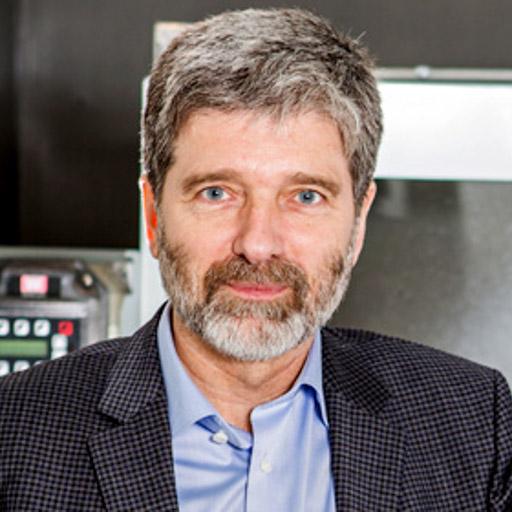
Professor Siu O'Young serves in Memorial University's Faculty of Engineering and Applied Science, specializing in Instrumentation, Controls, Automation and Robotics. His research focuses on Unmanned Aircraft Systems (UAS), with extensive work on aviation safety systems including radar-based positioning and collision avoidance. Recent innovations include methods for SSR positioning (2025), detect-and-avoid systems (2024), and ADS-B communication protocols. His publications demonstrate consistent advancement in radar signal processing, autonomous navigation, and safety-critical systems for aviation and marine applications. Key technical contributions span radar-based object tracking, transponder positioning systems, and autonomous vessel collision thresholds. Collaborative projects include soldier-robot teaming simulations and UAS computer modeling for sense-and-avoid applications.
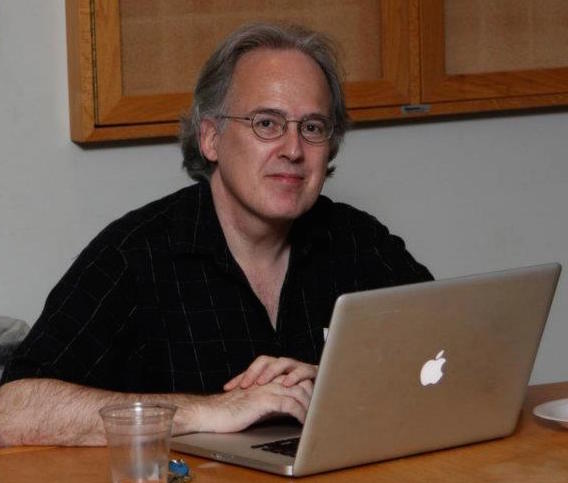
Dr. Sameh Eisa is an Assistant Professor in the Aerospace Engineering and Engineering Mechanics Department at the University of Cincinnati's College of Engineering and Applied Science. He leads the Modeling, Dynamics and Control Lab (MDCL) and serves as Principal Investigator on multiple significant research grants from NSF and DARPA. Dr. Eisa earned his BSc in Electrical Engineering from Alexandria University, Egypt (2010) and completed his PhD in Applied and Industrial Mathematics at New Mexico Tech, USA (2017) without obtaining a Master's degree due to his strong publication record. Prior to joining the University of Cincinnati, he served as a Postdoctoral Researcher and Lecturer in the Mechanical and Aerospace Engineering Department at UC Irvine (2017-2021). His research spans three primary interconnected areas: Dynamical Systems and Control Theory - focusing on nonlinear dynamics, stability analysis, averaging theory, geometric control, and vibrational stabilization Mathematical Modeling and Control Systems - specializing in wind turbine dynamics, UAV control, and bio-inspired robotics Signal Processing and Imaging - applying machine learning techniques to signal and image analysis His work demonstrates strong interdisciplinary connections between mathematics, aerospace engineering, and renewable energy systems. Analysis of Dr. Eisa's recent publications reveals a consistent focus on nonlinear dynamics and control applications, particularly in wind energy systems and bio-inspired UAVs. His research shows a progression from fundamental mathematical control theory toward practical engineering applications, with increasing emphasis on bio-mimicry approaches for UAV flight efficiency. The publications demonstrate strong methodological rigor while addressing real-world engineering challenges in renewable energy and autonomous systems. Dr. Eisa currently leads four major research projects: NSF Grant #DMS-2318772 (2024-2027): $199,098 as PI for research on sensitivity and control theory for systems with extreme behaviors DARPA Teaming Agreement (2024-2031): PI for the ALBATROSS project Mission Oriented Rapid Solution Engineering ALBATROSS (2025-2027): PI MOR1077 JIT documents (2025-2027): PI for testing autonomous dynamic soaring methods These projects demonstrate his leadership in cutting-edge research at the intersection of control theory and aerospace applications. As Director of the Modeling, Dynamics and Control Lab (MDCL), Dr. Eisa oversees research focused on advancing theoretical frameworks for nonlinear control systems with applications to wind energy and bio-inspired UAVs. The lab serves as an interdisciplinary research environment bridging mathematics, aerospace engineering, and robotics, with particular emphasis on developing nature-inspired solutions for autonomous flight systems.
Joseph Corcoran is an Associate Professor in the Department of Aerospace Engineering at the University of Cincinnati (UC), affiliated with the UC Center for Nondestructive Evaluation (www.ucnde.com). He holds an Honorary Lecturer position at Imperial College London. His research focuses on Structural Health Monitoring (SHM) systems, Digital Twin technology, and integrating electromagnetic/ultrasonic methods with probabilistic structural integrity assessments. He has expertise in real-time diagnostics, material degradation analysis, and sensor development for aerospace and industrial applications. Education: MEng in Mechanical Engineering, Imperial College London PhD in Mechanical Engineering, Imperial College London Research Interests: Development of smart SHM systems for aerospace structures High-temperature sensor technologies and EMATs Probabilistic modeling for uncertainty quantification Guided wave and acoustic emission-based monitoring Grants & Awards: Lead PI on $623,600 DOE grant for High-Temperature EMATs (2021-2024) Multiple industry collaborations with Rolls-Royce and ClampOn AS Ohio Department of Higher Education Fellowship for Ceramic Matrix Composites research Labs & Teams: UC Center for Nondestructive Evaluation (UCNDE) Advanced Structural Integrity Assessment Group
Andreas Johann Hörmer is a researcher at the Institute of Communication Networks and Satellite Communications, Graz University of Technology. He specializes in spacecraft systems, particularly CubeSat technologies and satellite communication payloads. Hörmer's research contributes to the PRETTY (PRecision Experiment and Training Satellite) mission, focusing on communication systems, power management, and in-flight testing. His work encompasses VHF/S-band link evaluation, software-defined radio implementations, and fault detection systems for satellite payloads. He participates in international workshops and conferences on aerospace engineering and has contributed to multiple satellite missions. Research activities include thermal-vacuum testing and spacecraft subsystem validation.
Dr. Ben Grier is an Assistant Teaching Professor in the Department of Mechanical Engineering at Colorado State University, part of the Walter Scott, Jr. College of Engineering. He holds a Ph.D. and B.S. in Mechanical Engineering from Clemson University. His career blends academic teaching with industry research, focusing on computational fluid dynamics (CFD), hypersonic aerodynamics, and innovative pedagogy. Education: Ph.D. Mechanical Engineering, Clemson University (2014) B.S. Mechanical Engineering, Clemson University (2009), Magna Cum Laude Postdoctoral Scholar, The Ohio State University (2020) Research & Teaching Interests: Dr. Grier specializes in CFD verification techniques, reduced-order modeling for hypersonic vehicles, and active learning methodologies. He has pioneered flipped-classroom approaches and developed MATLAB-based interactive curricula. Notably, he designed a virtual escape room project for engineering students, showcased at Moby Arena. Awards: 2023 Charles Ellison MacQuigg Award for Outstanding Teaching 2023 Outstanding Service to Undergraduate Students 2023 Outstanding Teaching in Engineering Education (OSU) Advising & Leadership: As MTI Coordinator for the College of Engineering, he promotes evidence-based teaching practices. He mentors graduate students and led curricular redesigns for first-year engineering programs. His service includes AIAA student advising and engineering technology coordination. Labs & Teams: Collaborates with the Department of Mechanical Engineering on active-learning lab infrastructure, including Arduino integration and accessibility initiatives for students without personal computers.
Trevor Young is an Associate Professor in Aeronautical Engineering at the University of Limerick, affiliated with both the School of Engineering and the Bernal Institute. He holds a PhD from Cranfield University and has over 30 years of combined industry and academic experience. His research focuses on composite materials, wind turbine blade technology, and aviation innovation, with over €15 million in secured grants. He co-founded the Irish Centre for Composites Research (IComp) and serves on the Scientific Committee of the EC's Clean Sky 2 programme. Education: BSc (Eng) from University of the Witwatersrand, MSc and PhD from Cranfield University. Teaching expertise includes aircraft design, flight mechanics, and fleet planning. Research interests span composites, laminar flow technologies, and sustainable aviation. He has published over 100 peer-reviewed papers, authored/co-authored books on aviation performance and technical writing, and led 40+ research projects. Key contributions include advancements in wind turbine blade coatings and thermoplastic composite wingbox designs. Grants and Awards: Principal Investigator for €7M+ in EC and Irish-funded projects. Recognized for contributions to composites research and aviation innovation through EC evaluations and expert roles. Professional Activities: Member of Royal Aeronautical Society, AIAA, and advisory bodies for Clean Sky and Clean Aviation. Active in UN Sustainable Development Goals related to affordable and clean energy.
Prof. Paul Söderlind is a Professor of Finance at the University of St. Gallen (HSG), affiliated with the School of Business and Finance (SBF). His research focuses on exchange rates, asset pricing, monetary policy, and forecasting. He has held academic roles at the Stockholm School of Economics, including Associate and Assistant Professorships, and has contributed to both theoretical and applied financial economics. His work examines liquidity risk in foreign exchange markets, the impact of central bank interventions (e.g., Swiss franc cap policies), and behavioral aspects of investor decision-making. He has published extensively in leading journals, with notable contributions on carry trade strategies, inflation risk premia, and the role of verbal interventions in shaping market expectations. Prof. Söderlind’s expertise spans macroeconomic modeling, econometrics, and empirical finance. His lectures and research address topics such as Taylor rules, factor pricing models, and the cyclical properties of financial markets. While no formal awards are listed here, his prolific publication record reflects significant academic influence in his field.
Carsten W. Scherer is a Professor and Head of the Institute of Mathematical Methods in Engineering, Numerical Analysis and Geometric Modeling at the University of Stuttgart, Faculty of Engineering. He holds the Chair of Mathematical Systems Theory and serves as Erasmus Coordinator for the Department of Mathematics. His research focuses on robust control, multiobjective control, linear matrix inequalities (LMIs), and semi-definite programming, with applications in mechatronics and flight control. He has authored numerous publications and contributed to advanced control theory methodologies. His research interests include exploring LMIs in control systems analysis, robust optimization techniques, and nonlinear control strategies. He has developed frameworks for model predictive control (MPC) and gain-scheduled control, leveraging integral quadratic constraints (IQCs) for system analysis and synthesis. Dr. Scherer’s work bridges theoretical advancements with practical applications, emphasizing convex optimization and its role in solving complex control problems. His contributions span both foundational theory and real-world implementations, particularly in aerospace and mechatronic systems. His publications reflect a sustained focus on robustness, optimization, and control system design, with recent work addressing data-driven methods, trajectory generation, and algorithmic synthesis. He leads research initiatives in mathematical systems theory and collaborates on interdisciplinary projects integrating control engineering with optimization and machine learning.
Christian Moreau is a Professor at Concordia University's Department of Mechanical, Industrial and Aerospace Engineering, part of the Faculty of Engineering and Computer Science. His research focuses on thermal spraying technologies, advanced coatings, and their applications in extreme environments. Key areas include particle diagnostics, optical sensors, and the development of corrosion-resistant and oxidation-resistant coatings for industrial use. He explores microstructural relationships in coatings, particularly high-entropy alloys (HEAs) and composite materials, to enhance tribological performance and thermal stability. His work addresses challenges in gas turbine components, aerospace materials, and energy technologies, with a focus on optimizing processes like HVOF, HVAF, and APS. Recent studies include improving wear resistance, reducing oxidation, and enhancing adhesion strength in coatings for next-generation applications. Dr. Moreau's articles highlight innovations in coating design through numerical modeling of particle behavior, process parameter optimization, and novel material conditioning techniques. His research bridges fundamental material science with industrial applications, aiming to improve durability and efficiency in high-demand sectors. His team investigates emerging trends such as cold spray deposition, suspension plasma spraying, and laser surface treatments to advance coating performance. Current projects emphasize sustainability in material processing and reducing greenhouse gas emissions through surface engineering innovations.
Marco Grassi is an Associate Professor in the Department of Electrical, Computer and Biomedical Engineering at the University of Pavia, specializing in electrical and electronic measurements (disciplinary sector IMIS-01/B). His academic activities include teaching three major courses: Electronics for Industrial Measurements, Digital IC Design, and Mechanical and Thermal Measurements for both Industrial Automation Engineering and Electrical Engineering programs. Professor Grassi's research spans multiple domains with a strong focus on analog-to-digital conversion techniques , particularly low-power SAR ADCs for audio and space applications, space instrumentation for missions like HERMES and THESEUS, and biomedical electronics including visual prostheses. His work consistently addresses the challenges of precision measurement systems in demanding environments. His recent publications (2023-2025) reveal a research trajectory that bridges fundamental circuit design with high-impact applications in space exploration and medical devices. This interdisciplinary approach has led to contributions in top journals across multiple fields including IEEE Transactions, Astronomy & Astrophysics, and biomedical engineering publications. Professor Grassi has secured patent protection for several of his innovations, particularly in power delivery circuits and microphone electronics, demonstrating the practical applications of his research. His technical expertise spans from theoretical circuit design to flight-ready space instrumentation. As an educator, Professor Grassi maintains an active teaching schedule with courses that integrate his research expertise into the classroom, providing students with exposure to cutting-edge measurement techniques and electronic design principles applicable to both terrestrial and space environments.
Gordon Erlebacher is a Professor at the Department of Scientific Computing at Florida State University (FSU), where he also serves as Program Director for Interdisciplinary Data Science . His work bridges artificial intelligence, scientific computing, and educational technology. B.Sc. , Free University of Brussels M.Sc. , Free University of Brussels Ph.D. , Columbia University His research spans from early contributions in GPU acceleration of numerical methods (2010s) to modern applications of transformer-based large language models (LLMs) in education and agentic systems for administrative automation. Key areas include: Neural networks (autoencoders, pruning, graph neural networks) Topic modeling and natural language processing Seismic wave propagation and geophysical simulations Interactive visualization tools for oceanographic data AI-driven educational platforms for classroom engagement His recent publications focus on AI in public health (CV19 SelfDefense) , Alzheimer's disease prediction , and GPU-accelerated seismic modeling . Earlier work includes foundational GPU implementations for seismic wave propagation and turbulence simulations. No scientific awards are explicitly mentioned in the provided text.
Esther Takeuchi is a Professor at the Department of Chemical & Molecular Engineering, Stony Brook University, affiliated with the College of Engineering and Applied Sciences. Her research focuses on advancing battery systems for high energy and power density applications, including renewable energy storage, portable electronics, hybrid/electric vehicles, biomedical devices, and aerospace technologies. She emphasizes collaborative efforts across multiple disciplines to address challenges in electroactive materials design, ion transport, and electrode dynamics. Her work investigates structure-function relationships in electroactive materials, synthesis of novel materials, and fundamental electrochemical mechanisms critical to battery longevity and safety. She has pioneered solutions for energy storage systems that operate reliably over extended periods, addressing both technical and societal needs through sustainable energy solutions. Professor Takeuchi has received numerous scientific accolades, including the National Medal of Technology and Innovation (2009), E. V. Murphree Award (2013), and induction into the National Inventors Hall of Fame (2011). Her contributions span over 150 issued U.S. patents, reflecting her impactful innovations in battery science. In advising and grants, while specific student names or grant details are not listed here, her research group actively collaborates with diverse scientific experts to drive breakthroughs in energy storage. Her team explores advanced battery architectures, such as aligned porous electrodes and tunable 3D nanostructured frameworks, to enhance battery performance. Notably, her work bridges material science, electrochemistry, and engineering applications, aiming to revolutionize energy storage for critical sectors. Her research group actively engages in interdisciplinary projects, focusing on sustainable energy storage solutions and biomedical device power systems. The group’s efforts include studying magnesium-based cathodes, epitaxial metal electrodeposition, and battery safety under abuse conditions.
Dr. Jae Yom is an Assistant Professor in the School of Health Sciences at the University of Illinois Springfield. He holds a Ph.D. in Exercise Science with a concentration in Biomechanics from the University of Georgia. His research focuses on clinical biomechanics, particularly ACL injury mechanisms, gait biomechanics for total knee arthroplasty, and postural control. He collaborates with the Neuromuscular Biomechanics and Health Assessment Laboratory at Ohio University, contributing to projects like cognitive dual-task landing and VR-based biomechanics funded by the Department of Defense. His work spans military medicine applications, sport injury prevention, and rehabilitation outcomes. Dr. Yom teaches courses including Exercise Science fundamentals, medical terminology, and biomechanics. His publications address biomechanical interventions, functional recovery assessments, and technology-driven analysis tools. Education: Ph.D. in Exercise Science (Biomechanics), University of Georgia Research Interests: ACL injury prevention, VR in biomechanics training, cognitive-motor interaction, gait analysis for TKA patients, and post-injury functional recovery. His lab collaborations emphasize translational research for military and athletic populations. Grants & Funding: Involved in Department of Defense (DOD) Orthopedic Research Program-funded projects investigating cognitive-motor dual-task effects and VR landing biomechanics. Labs/Teams: Collaborates with the Neuromuscular Biomechanics and Health Assessment Laboratory at Ohio University, focusing on advanced biomechanical assessment and intervention strategies.
Roger Birkeland is a Researcher at the Department of Electronic Systems , Norwegian University of Science and Technology (NTNU), within the Faculty of Information Technology and Electrical Engineering . His work focuses on the design and development of small satellites for Earth observation and communication, with an emphasis on maritime and Arctic applications. Co-founder and former leader of the NTNU Student Satellite Project Key contributor to the establishment of the NTNU Small Satellite Lab Research Interests include: Small satellite systems (CubeSats) Hyperspectral imaging payloads Software-defined radios (SDRs) for space communication Arctic sensor networks Integration of unmanned surface vehicles (USVs) with satellite systems Additive manufacturing for space components Recent publications highlight advancements in: Agile satellite maneuvering for improved imaging On-board processing for hyperspectral data Interference measurement in Arctic radio bands Low-cost prototyping materials via 3D printing
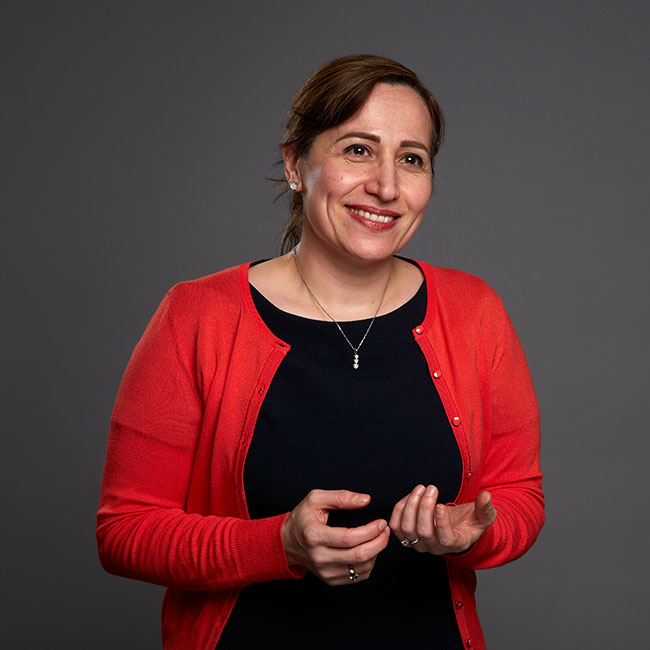
Dr. Shahrzad Zargari serves as Associate Head and Cyber Security and Computer Networks Subject Group Lead at Sheffield Hallam University's College of Business, Technology and Engineering. With over 20 years of experience in the IT industry and academic teaching since 2012, she holds a PhD in Applied Statistics from the University of Leeds, an MSc in Forensic Computing and Security, and a BSc (Hons) in Statistics. She also earned a PgCert in Learning and Teaching in Higher Education and achieved Senior Fellowship status in July 2019. Her research spans multiple areas of cybersecurity with particular expertise in digital forensics, mobile forensics, intrusion detection, and data mining applications in security contexts. She leverages her background in applied statistics to enhance network security methodologies and has published extensively on topics including memory forensics, IoT device investigations, drone forensics, and metaverse-related forensic challenges. Her work demonstrates a consistent focus on practical forensic methodologies and security enhancement techniques across evolving technological landscapes. Dr. Zargari's recent publications reveal a strong trend toward addressing emerging forensic challenges in new technologies, with increasing focus on IoT devices, robotics, drones, and the metaverse. Her research combines statistical analysis with practical forensic applications, showing particular strength in developing novel methodologies for evidence collection and analysis across diverse platforms. She has established herself as a leading researcher in mobile forensics and continues to expand her expertise into newer technological domains. As an active educator, Dr. Zargari teaches across multiple programs including BSc Cyber Security, BSc Cyber Security with Forensics, and MSc Cyber Security. She serves as associate editor for the Information Security Journal: A Global Perspective at Taylor & Francis and is an active researcher within CENTRIC. Her supervision includes PhD and MSc students, with documented supervision of O. Ajao's 2019 doctoral thesis on "Content-aware Location Inference and Misinformation in Online Social Networks." Dr. Zargari actively promotes collaboration among government, industry, and academia within the cyber security sector, focusing on initiatives to bridge the skills gap in this critical field. She has presented at numerous international conferences and workshops, including the Annual Teaching Computer Forensics Workshop series and the British Computer Society events. Her work with the Industry and Innovation Research Institute demonstrates her commitment to translating academic research into practical industry applications.