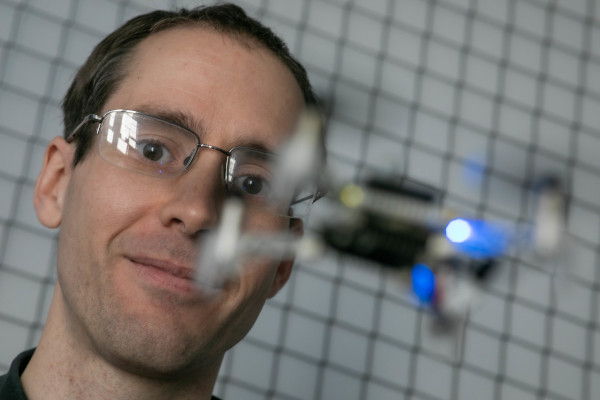
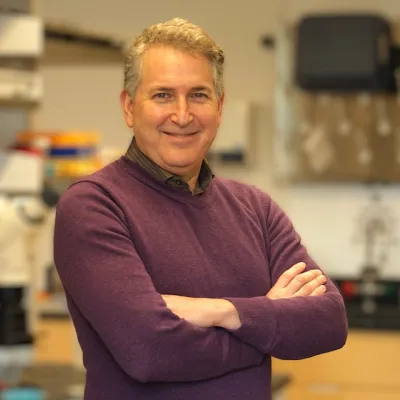
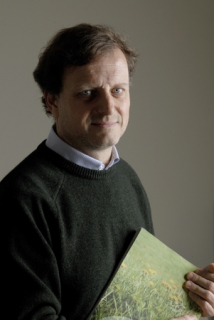
Wolfgang Hönig is an Assistant Professor heading the Intelligent Multi-Robot Coordination Lab at TU Berlin. He develops algorithms for coordinating robotic teams in complex environments. His research bridges motion planning, machine learning, and control theory to enable robust collaboration among robot swarms. Key contributions include the Neural-Swarm framework for proximity flight and discontinuity-bounded search methods. Open-source tools like Crazyswarm2 support experimental validation of multi-drone systems at scale.
Mohammed Alabsi is an Associate Professor in the Department of Mechanical Engineering at The College of New Jersey (TCNJ). His research focuses on machinery, big data analytics, cyber-physical systems, and unmanned aerial vehicle (UAV) guidance, navigation, and control (GNC). He teaches courses such as Dynamic Systems and Control, Strength of Materials, and Mechatronics. Research Interests Deep learning for fault diagnosis in machinery Generative adversarial networks for cross-domain fault detection Real-time system identification and control of UAVs Integration of handcrafted features with deep learning models Publications Trends Alabsi's work emphasizes deep learning applications in fault diagnosis and control systems for mechanical and aerospace engineering. His research spans convolutional neural networks, transfer learning, and sensor fault detection in UAVs, with a focus on real-time implementation and predictive maintenance. Scientific Awards Support of Scholarly Activities (SOSA) Award, TCNJ, 2023 IEEE Transactions on Instrumentation and Measurement Outstanding Reviewer, 2022 and 2021 UMKC Outstanding Doctoral Student, 2018 UMKC travel grants, 2017–2018 Grants and Research Funding NSF grant for STEM education, 2022–2025 NSF integrated advanced manufacturing education grant, $300,000, 2021–2024 DURIP grant (USDOD), $235,855, 2022
Aidan Ackerman is Associate Professor of Landscape Architecture at SUNY College of Environmental Science and Forestry. He directs research at the Ackerman Research Lab focusing on computational landscape visualization, virtual reality applications for forest ecology, and cultural landscape preservation. He teaches courses in digital methods, parametric design, and landscape construction. Research explores computational simulation of landscape processes through parametric modeling and immersive VR technology. Current projects include forest carbon visualization and climate change adaptation strategies, funded by NCPTT/NPS and ESF grants. Recent publications (2019-2025) focus on computational approaches to environmental challenges: 65% address climate change visualization, 25% cultural heritage documentation, and 10% software development for landscape simulation. Articles frequently integrate game engines, GIS data, and environmental modeling. Preservation Technology & Training Grant (NCPTT/NPS, 2021-2023) ESF Discovery Challenge Seed Grant (2019-2022) Case Study Investigation Research Fellow (LAF, 2019, 2013) Landscape Performance Education Grant (LAF, 2014) Advises 5 graduate students: Marty Benzinger (MLA), Chris Koudelka (PhD), Tanner Laramee (MLA), Geri Mae Tolentino (PhD), and Yuhao Zhang (PhD). Research collaborations include National Park Service projects at Statue of Liberty NM and Flight 93 Memorial.
Sofiane Achiche is a Full Professor in the Department of Mechanical Engineering at Polytechnique Montreal, specializing in mechatronics, artificial intelligence, and design. His research focuses on applying AI and machine learning to manufacturing processes, product development, and design automation, as well as mechatronics design applications and intelligent condition monitoring of machines including machine tools and wind turbines. His research interests span mechatronics, artificial intelligence, and design, with a focus on the integration of AI/ML techniques in manufacturing and product development. He investigates design automation and decision support systems, mechatronics applications, and intelligent monitoring and diagnostic systems for machinery. His work bridges theoretical developments with practical applications in industrial settings. His recent publications demonstrate a strong trend toward interdisciplinary research combining AI with mechanical engineering applications. The articles span healthcare robotics, agricultural monitoring, aerial systems, and prosthetics, showing how machine learning techniques are being adapted to solve diverse engineering challenges. Key themes include hybrid AI approaches, optimization methods, and human-centered design applications. Professor Achiche actively supervises numerous graduate students, with 5 doctoral and 10 master's students currently in progress, and a substantial record of completed supervision (19 doctoral and 39 master's theses). His research is supported by multiple affiliations including the Polytechnique Laboratory for Assistive and Rehabilitation technologies (POLAR), the Institute of Biomedical Engineering, and the Institute for Data Valorization (IVADO). He leads and participates in several research groups including the Virtual Manufacturing Research Laboratory, the Product Development and Manufacturing Research Group (GRDFP), and the Research Group on Globalization and Management of Technology (GMT), fostering collaboration across engineering disciplines and with industry partners.
Dr. Doug Altshuler is a Professor in the Department of Zoology at the University of British Columbia's Faculty of Science. His research focuses on the neural and biomechanical mechanisms underlying avian flight, particularly in hummingbirds. His work integrates aerodynamics, physiology, and neuroscience to understand how visual information is translated into flight control. He leads the Altshuler Lab, which explores topics such as wing morphing, optic flow processing, and the evolutionary adaptations enabling complex flight maneuvers. Key research interests include: Visual guidance of flight and its neural substrates Mechanics of wing deformation and aerodynamic performance Evolutionary trade-offs in flight physiology and morphology Comparative studies across bird species to uncover universal flight principles Recent studies highlight breakthroughs like uncovering how wing morphing enhances gliding efficiency and how hummingbirds use optic flow to control hovering and forward flight. His collaborative projects span biomechanics, genomics, and robotics, with notable partnerships with institutions like the University of Michigan and Stanford University. Dr. Altshuler has mentored numerous graduate students and postdocs, many of whom have pursued academic and industry careers. His lab actively engages in outreach, including collaborations with museums and the development of innovative tracking technologies for flight analysis.
Timothy Sands is Professor of Practice in Space Systems at Cornell’s Sibley School of Mechanical and Aerospace Engineering. His research spans autonomous robotics, spacecraft control, and nonlinear systems, with applications in lunar exploration and defense technology. Dr. Sands served in the U.S. Air Force for 30 years, contributing to NASA and DoD space missions like the Solar Wind Interplanetary Measurement project. Decorated with three Air Medals and the von Kármán Award, he holds a PhD from the Naval Postgraduate School and multiple master’s degrees. He teaches astronautics optimization and adaptive systems, emphasizing real-world space industry challenges. His publications focus on sensor noise reduction and control algorithms for space robotics.
Animashree (Anima) Anandkumar is the Bren Professor of Computing and Mathematical Sciences at the California Institute of Technology (Caltech). She holds a B.Tech from the Indian Institute of Technology Madras (2004) and a Ph.D. from Cornell University (2009). Prior to her current role, she was a Visiting Associate at Caltech (2017) and served as a Senior Director of AI Research at NVIDIA and Principal Scientist at Amazon Web Services. Her research focuses on large-scale machine learning, non-convex optimization, and high-dimensional statistics, with pioneering work on tensor decomposition methods for probabilistic models and neural operators for scientific simulations. Research Interests: Anima's work bridges AI and science, emphasizing scalable and interpretable algorithms. Key areas include quantum optimization, climate modeling via Fourier Neural Operators, medical AI for surgical skill assessment, and physics-informed neural networks for PDEs. Her lab, Anima AI+Science, drives interdisciplinary projects in climate, aerospace, engineering, and medicine. Awards & Recognition: She has received the IEEE Fellowship, Alfred P. Sloan Fellowship, NSF Career Award, and Blavatnik National Awards Finalist distinction. Her contributions to AI+Science include 45000x faster weather forecasting and AI-aided catheter design. Advising & Teams: Advises over 20 Ph.D. students and postdocs, many of whom hold faculty positions or lead roles in industry. Her lab collaborates with institutions globally on projects like the DeepSpeed4Science initiative for large-scale scientific discovery. Labs & Projects: The Anima AI+Science Lab advances AI methods for climate prediction (FourCastNet), aerospace control (FALCON), and molecular design (OrbNet). Ongoing efforts include quantum computing solvers, turbulence-resistant flight systems, and surgical skill analytics.
Mykel Kochenderfer is an Associate Professor at Stanford University's Department of Aeronautics and Astronautics and holds a courtesy appointment in Computer Science. He is a Senior Fellow at the Stanford Institute for Human-Centered AI (HAI) and directs the Stanford Intelligent Systems Laboratory (SISL), focusing on advanced algorithms for robust decision-making systems in aerospace and autonomous systems. His research emphasizes safety and efficiency in uncertain environments, with applications in air traffic control, unmanned aircraft, and automated driving. Education: PhD from the University of Edinburgh (2006), M.S. and B.S. in Computer Science from Stanford (2003). Prior to Stanford, he worked at MIT Lincoln Laboratory on airspace modeling and collision avoidance, leading to the ACAS X program. He co-directs the Center for AI Safety, and is affiliated with SAIL, HAI, the Symbolic Systems Program, Bio-X, and the Wu Tsai Neurosciences Institute. Research interests span decision-making under uncertainty, optimization algorithms, AI safety, and robotics. He authored influential textbooks including Decision Making under Uncertainty (2015), Algorithms for Optimization (2019), and Algorithms for Decision Making (2022). Recognitions include the 2017 DARPA Young Faculty Award. His work bridges theoretical AI with real-world applications in aviation, healthcare, and environmental systems. Labs and collaborations include SISL, the Center for AI Safety, and interdisciplinary teams at Stanford. He advises students from multiple departments and actively participates in policy discussions on AI governance and ethics.
M. Khalid Jawed is an Associate Professor in the Department of Mechanical and Aerospace Engineering at UCLA. His research focuses on the intersection of mechanics, robotics, machine learning, and computer graphics. The Structures-Computer Interaction Lab under his leadership explores smart structures, soft robotics, and physics-based modeling of flexible systems. Applications include precision agriculture robotics and bio-inspired locomotion systems. He holds a Ph.D. from MIT and postdoctoral training at Carnegie Mellon University. Education: Postdoctoral Research: Soft Robotics, Carnegie Mellon University (2016-17) Ph.D. (Mechanical Engineering: Mechanics), MIT (2016) S.M. (Mechanical Engineering), MIT (2014) B.S.E. in Aerospace Engineering and Engineering Physics, University of Michigan (2012) Research Interests: Professor Jawed’s work emphasizes computational mechanics, soft robotic design, and bio-inspired systems. His lab develops algorithms for real-time physics engines and explores novel materials like kirigami-enhanced composites. Key areas include robotic locomotion in complex environments, adaptive structures, and machine learning-driven simulations for deployable systems. Recent studies on spider ballooning mechanics and bacterial flagella-inspired propulsion highlight his interdisciplinary approach. Publications & Trends: His recent work emphasizes soft robotics, material innovation, and real-time control systems. Notable themes include kirigami-based morphing structures , machine learning for inverse design , and bio-inspired locomotion mechanisms . Over 50 publications span journals like Soft Matter and conference proceedings in robotics (e.g., IROS). Awards: NSF CAREER Award (2021) Outstanding Teaching Award, UCLA (2019) Multiple IROS Best Paper Finalist recognitions (2021-2023) Advising & Labs: He mentors students in robotics, mechanics, and computational modeling. The Structures-Computer Interaction Lab collaborates on projects with industry partners, focusing on precision agriculture robots and sustainable soft robotics. No specific students are listed in the provided materials. Key Projects: Developed the first real-time physics engine for soft robotics (2020) and explored sunlight-powered autonomous systems (2023). His work on spider flight mechanics was featured in multiple news outlets in 2022-2023.
Dr. Peter O'Shea is a Senior Lecturer in Electrical Engineering and Director of Student Experience at the School of Electrical Engineering and Computer Science, The University of Queensland. His roles focus on enhancing student success, educational methodologies, and curriculum design. He holds a BEng (Honours), Postgraduate Diploma, and PhD from UQ. His research spans Human Centred Computing, Signal Processing, and Engineering Education, with notable contributions to aerospace systems, machine vision, and student well-being strategies. Education: Bachelor of Engineering (Honours), The University of Queensland Postgraduate Diploma, The University of Queensland Doctor of Philosophy, The University of Queensland Research Interests: Dr. O'Shea's work bridges engineering education and technical domains. Key areas include improving student reflection and cognitive development, optimizing tutor quality, and applying signal processing techniques to aerospace systems such as sense-and-avoid algorithms. His recent focus on humor in education and programming pedagogy highlights innovative approaches to student engagement. Publications Trends: Recent works emphasize educational strategies (e.g., thinking skills development, programming cohort analysis). Earlier contributions addressed aerospace collision detection, signal parameter estimation, and modal sound radiation in mechanical systems. His research reflects a balance between technical innovation and pedagogical excellence. Awards and Grants: No specific awards or grants are listed, though his role as Director of Student Experience indicates institutional recognition of his contributions to educational leadership. Advising and Mentorship: While no named advisees are listed, his leadership roles in curriculum design and tutor training reflect an indirect mentorship impact on students and academic staff. Labs and Collaborations: His collaborations span interdisciplinary teams, particularly in aerospace systems and signal processing. His work aligns with UQ's focus on human-centered computing and engineering education innovation.
Ross Drummond is a Lecturer in Control and Systems Engineering at the University of Sheffield’s School of Electrical and Electronic Engineering. He holds an MEng in Aeronautical Engineering from Imperial College London (2009-2013) and a DPhil in Control from the University of Oxford (2013-2017). His career includes a UK Intelligence Community Research Fellowship (2020-2023) from the Royal Academy of Engineering, focusing on battery technology and control systems. His research spans lithium-ion battery modeling, nonlinear systems analysis, and neural network applications in control. Key areas include battery management systems, Lyapunov stability theory, and robustness certificates for neural networks. He leads the Engineering You're Hired initiative and coordinates student-led projects. Drummond’s work bridges academic research and practical engineering, with grants totaling £200,000 as PI for battery safety innovation. He teaches advanced control design (ACS317) and physical systems (ACS133). Recent publications emphasize battery modeling, additive manufacturing control, and neural network integration with control systems. Award: UK Intelligence Community Research Fellowship (2020-2023).
Dr. Yuanbo Nie is a Lecturer in Control and Systems Engineering at the School of Electrical and Electronic Engineering, University of Sheffield, and serves as the Employability Lead for the Global Engineering Challenge. He holds a Ph.D. in Aeronautics from Imperial College London (2021), with previous roles including a postdoctoral position at Rolls-Royce and research at the German Aerospace Center (DLR). His research focuses on numerical methods for dynamic optimization, optimization-based control, and aerospace systems control, particularly in trajectory optimization, energy management for aircraft, and upset recovery simulation. Education: MSc in Aerospace Engineering, Delft University of Technology MSc in Advanced Computational Methods, Imperial College London Ph.D. in Aeronautics, Imperial College London (Thesis: Numerical Optimal Control with Applications in Aerospace) Research Interests: Dr. Nie’s work emphasizes developing advanced numerical techniques for dynamic optimization, including integrated residual methods and optimization-based control strategies. He explores applications in aerospace systems, such as optimal flight trajectory design, hybrid-electric aircraft energy management, and next-generation flight simulators. His methods aim to bridge theoretical rigor and practical implementation for engineers. Professional Activities: He is a member of IEEE, the IFAC Optimal Control Technical Committee, and the EPSRC Automatic Control Engineering Network. His teaching includes courses on multisensor systems and aerospace system modeling. Labs & Groups: Involved in the Control Theory research group and collaborations with Rolls-Royce’s University Technology Centre.
Lara Laban is a PhD Researcher affiliated with Lund University's School of Aviation (LUSA) and the Department of Automatic Control at Lund University. She is part of the LTH Profile Area: AI and Digitalization and the ELLIIT initiative. Her research focuses on enhancing autonomous UAV mission planning, integrating modified RRT* algorithms with non-linear model predictive control (NMPC) for obstacle avoidance in complex environments. Education and Background: Lara’s academic journey includes studies in automatic control and robotics, though specific degree details are not provided. Collaborations include WARA Public Safety, where she conducted autonomous flight demonstrations in locations like Gränsö Slott and Lund Golf Course. She is also a WASP (Wallenberg AI, Autonomous Systems and Software Program) affiliated PhD student. Research Themes: Her work bridges automatic control and artificial intelligence, addressing challenges in autonomous UAV navigation, beyond visual line-of-sight (BVLOS) operations, and airspace integration with manned/unmanned aircraft. Key technical areas include path planning, nonlinear systems, and real-time optimization. Teaching and Outreach: Lara has been a teaching assistant for courses such as Automatic Control Basics (FRTF05), Non-Linear Systems (FRTF05), and the project course FRTN70. She co-supervised a master’s thesis on minimizing network utilization in multi-agent systems. She contributed to the Robotics Week for Schools 2023 and organized an AI Lund Lunch seminar on UAV path planning. Labs and Projects: Active in the RobotLab LTH and the UAS@LU project (2021–2025), focusing on autonomous flight systems. Her research involves field experiments at LTH Kemicentrum and collaboration with industry partners like WARA Public Safety.
Marco Schaerf is a Full Professor at Sapienza University of Rome, Department of Computer, Control, and Management Engineering. He previously held roles as Associate Professor at the University of Cagliari (1992–1994) and Sapienza (1994–2000). He chairs the Engineering Information Area in Latina and serves on the editorial boards of Artificial Intelligence Journal and Journal of Artificial Intelligence Research . His research focuses on artificial intelligence, nonmonotonic reasoning, computational complexity, digital libraries, and bibliometrics. Notably, he received the 1997 AI*IA Award for Best Young Researcher in AI. Key projects include coordinating the European MAGICSTER project, FIRB 2001 ASTRO, and COFIN grants (2002/2004). He led Sapienza’s participation in Italy’s VQR research assessment program and contributed to digital library systems like the Sapienza Digital Library. His work bridges AI with cultural heritage, including AI-driven visitor experience analysis in museums. Research interests span AI applications, knowledge representation, and computational methods in cultural heritage. He has published over 60 papers in top journals, with recent work on scientometrics, anomaly detection in infrastructure, and weakly supervised semantic segmentation. His contributions to AI theory, robotics, and bibliometric analysis underscore his interdisciplinary impact.
Christer Fuglesang is a Professor of Space Travel at KTH Royal Institute of Technology since April 2017, having previously served as an adjunct professor on secondment from the European Space Agency. He directs the KTH Space Center, established in 2014. His research focuses on particles in space, including radiation studies on the International Space Station (ISS) and projects like JEM-EUSO to detect ultra-high energy cosmic rays. He oversees the AeroSpace Master program and teaches courses such as Human Spaceflight (SD2905). His work involves advanced UV imaging from space, detector calibration, and space mission development. Fuglesang also contributes to initiatives like EUSO-SPB2 and EUSO-TA, exploring cosmic phenomena and space technology applications. His roles include examiner and course leader for multiple programs, emphasizing interdisciplinary education and research. Research Interests: Ultra-High Energy Cosmic Rays (UHECR) detection Space radiation environment and ISS-based experiments UV imaging and fluorescence telescope technology Space mission design and instrumentation Solar geoengineering and planetary sunshade concepts Labs & Teams: Active in the KTH Space Center, collaborating with the JEM-EUSO and EUSO collaborations. Engaged in interdisciplinary projects involving particle physics, astrophysics, and aerospace engineering.