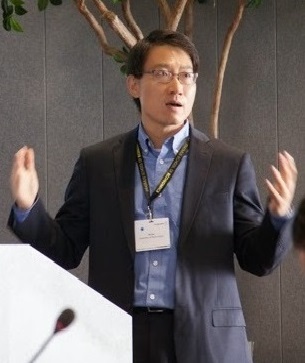
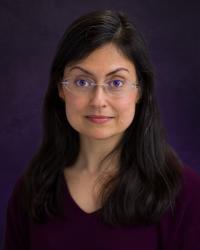
Jeffrey A. Cooper is a Professor of Law at Quinnipiac University School of Law , where he teaches courses in estate planning, wills and trusts, and taxation. He previously served as Associate Dean for Research and Faculty Development and is currently faculty adviser to the Quinnipiac Probate Law Journal . Education: AB from Harvard University, JD from Yale University, LLM from New York University Research Interests: His work focuses on tax policy , estate and gift taxation , and the intersection of federal tax law with state probate systems . He specializes in trust enforceability , uniform trust code , and historical analysis of tax legislation. Publications: Recent articles address perpetual trusts , state death tax decline , and curriculum reforms in estate planning education. His scholarship is widely published in national law journals and cited in casebooks. Scientific Awards: Academic Fellow, American College of Trust and Estate Counsel (ACTEC) Faculty Scholar, Quinnipiac University Professional Background: Before academia, Cooper practiced law for over a decade as a principal at Cummings & Lockwood, senior officer at United States Trust Company, and special counsel to Shipman & Goodwin. He also served as a senior adviser to Fiduciary Trust Company International.
Susan Fino is a Professor at the College of Liberal Arts and Sciences, Wayne State University. Her research focuses on public law, American constitutional law, administrative law, and the role of state supreme courts. She holds a B.A. from Johns Hopkins University, an M.A. and Ph.D. from Rutgers University. She has received the President's Award for Excellence in Teaching. Her courses include American Government (PS1010) and Constitutional Law (PS5110/PS5120), taught across multiple terms from 2023 to 2025. Dr. Fino's research explores judicial federalism, state constitutional frameworks, and legal interpretations of rights. Her work analyzes topics like church-state relations, taxation provisions in state constitutions, and assisted suicide debates. She has written extensively on state supreme court dynamics, including landmark cases and institutional performance metrics. Her scholarship bridges legal theory with practical governance challenges at both state and federal levels. Her publications span over three decades, addressing evolving legal landscapes such as the Rehnquist Court’s federalism approach and technological impacts on criminal sentencing. She consistently engages with issues at the intersection of law, politics, and societal values.
Jean C. Oi serves as the William Haas Professor of Chinese Politics in Stanford University's Department of Political Science and holds multiple leadership positions including Senior Fellow at the Freeman Spogli Institute for International Studies, Director of the China Program, and Lee Shau Kee Director of the Stanford Center at Peking University. Professor Oi earned her PhD from the University of Michigan and previously taught at Lehigh University and Harvard University before joining Stanford in 1997. Her research centers on comparative politics with specialized expertise in Chinese political economy and reform processes in transitional systems. She has made seminal contributions to understanding rural politics in China, introducing the influential concept of 'local state corporatism' to describe China's development model in her award-winning book Rural China Takes Off (1999). Her current research examines China's Belt and Road Initiative, fiscal politics and central-local relations, and structural change in China. Professor Oi maintains an active publication record with works spanning four decades, including her most recent 2025 article 'A Perfect Storm: Fiscal Discipline, COVID, and Local Government Debt in China' which analyzes how pandemic-era policies exposed China's fiscal vulnerabilities. Choice Outstanding Academic Title (1999) for Rural China Takes Off Professor Oi leads significant collaborative research initiatives, including directing the Stanford China Program at the Walter H. Shorenstein Asia-Pacific Research Center. Her fieldwork with Chinese scholars has examined rural community organization, public goods provision, and fiscal pressures from rapid urbanization, culminating in works like Challenges in the Process of China's Urbanization (2017).
University of California , Santa Barbara (UCSB)United States
Refet S. Gürkaynak is a Professor of Economics at Bilkent University and a Research Fellow at the Center for Economic Policy Research (CEPR), where he directs the Monetary Economics and Fluctuations Program. He holds a BA in Economics from Bilkent University and a PhD in Economics from Princeton University. His research focuses on monetary economics, financial markets, and international economics, particularly on extracting monetary policy insights from asset prices. His work has appeared in top journals like the Journal of Monetary Economics , Review of Economics and Statistics , and American Economic Review . Research Interests Monetary Policy Transmission Financial Market Reactions Inflation Dynamics ECB Policy Communication Post-Crisis Economic Modeling Scientific Awards & Grants Central Bank of Turkey Award European Central Bank Award Turkish Academy of Sciences Award ERC Grant Consulting & Affiliations Consultant to multiple central banks Director, Monetary Economics and Fluctuations Program at CEPR Former Economist, Federal Reserve Board's Monetary Affairs Division
Zhi Da is the Howard J. and Geraldine F. Korth Chair in Finance and Professor of Finance at the University of Notre Dame , Mendoza College of Business, Department of Finance. He completed his Ph.D. in Finance at Northwestern University’s Kellogg School of Management (2006), preceded by an M.Sc. in Financial Engineering from the National University of Singapore (2001) and a B.B.A. with First-Class Honors (1999) from the same institution. Holding editorial roles at Journal of Finance , Management Science , Review of Financial Studies and several other top journals, he is a leading voice in empirical finance research. Education Ph.D. in Finance, 2006 – Kellogg School of Management, Northwestern University M.Sc. in Financial Engineering, 2001 – National University of Singapore B.B.A. (1st Class Honors), 1999 – National University of Singapore Research Interests Zhi Da’s scholarship sits at the intersection of asset pricing , behavioral finance , and market microstructure . He investigates how investor attention, institutional trading, liquidity frictions, and information flows jointly determine the cross-section of expected returns. His work delves into retail margin trading, the role of pension-fund flows in exchange-rate dynamics, the informational content of SEC filings, and the efficiency of short-selling mechanisms. By combining large-scale data analytics, textual analysis, and structural modeling, he uncovers novel predictors of returns ranging from presidential approval ratings to real-time attention measures. Recent projects explore fractional trading ’s impact on price efficiency, hedging demand as a driver of intraday momentum, and the hidden effort problem in delegated portfolio management. These themes collectively advance our understanding of limits to arbitrage and the formation of extrapolative beliefs. Publication Landscape Spanning 2025 back to 2009, his 15 most recent articles in Journal of Finance , Review of Financial Studies , Management Science , Journal of Financial Economics , and Journal of Financial and Quantitative Analysis converge on three broad motifs: (1) micro-level trading frictions—liquidity costs, margin requirements, and short-selling constraints; (2) macro-finance linkages—exchange rates, fiscal policy, and global capital flows; and (3) information economics—attention allocation, media analytics, and regulatory disclosures. The collective evidence demonstrates that seemingly small trading or informational frictions aggregate into large, persistent cross-sectional return predictability. Honors and Awards 2017 William F. Sharpe Award for Best Paper, Journal of Financial and Quantitative Analysis Lead-article distinctions in Journal of Finance , Review of Financial Studies , and Management Science Featured coverage in SmartMoney and CNBC Teaching & Mentorship At Notre Dame’s Mendoza College, Professor Da teaches Investments (undergraduate and MBA) and Fixed Income Securities , integrating cutting-edge research insights into the curriculum. While specific advisees are not listed, his extensive co-author network (22+ recurring collaborators) attests to a vibrant mentoring environment. Laboratory & Data Resources He publicly distributes the NAT (Net Arbitrage Trading) dataset, a stock-quarter panel of arbitrage positions used in Chen, Da & Huang (2019). This resource has become a standard tool for researchers studying arbitrage capital movements.
Stephen Marglin is the Walter S. Barker Professor of Economics at Harvard University, Department of Economics. His research critically examines foundational assumptions of economics, particularly how economic theories marginalize community and cultural values. He explores labor-surplus economies, cost-benefit analysis, and macroeconomic adjustment processes. His work challenges mainstream economics through publications like The Dismal Science: How Thinking Like an Economist Undermines Community (2008). Marglin also advises governments and international agencies on economic policy, including recent tax reform work in Puerto Rico. His teaching integrates standard economics with critical perspectives, focusing on modernity's cultural impact and globalization. Research interests include development economics, economic theory, and the interplay between economic systems and cultural values. His articles span Keynesian theory reinterpretation, labor dynamics, and critiques of neoclassical economics. Marglin collaborates with his spouse, anthropologist Frédérique Apffel-Marglin, blending economic and cultural analyses. Personal interests include gardening, animal husbandry, and family life. He has held roles such as adviser to governments and institutions, emphasizing policy relevance. His academic contributions are translated into multiple languages, reflecting global influence.
Chen Lian is an Assistant Professor in the Department of Economics at UC Berkeley. Holding a PhD from MIT, their research bridges macroeconomics, behavioral economics, and finance, with a focus on bounded rationality, monetary theory, and macro-finance interactions. Education: PhD in Economics, MIT Chen’s work explores how incomplete information and behavioral biases shape macroeconomic outcomes. Key themes include inflation effects on households, fiscal-monetary policy interactions, and financial stress dynamics. They employ heterogeneous-agent models and analyze how micro-level shocks propagate through the economy. Their publications and working papers address topics like credit cycles, demand shock propagation, and the psychological underpinnings of economic decisions. Papers such as Low Interest Rates and Risk Taking (2019) and Confidence and the Propagation of Demand Shocks (2022) highlight their interdisciplinary approach.
Purnima Dhavan is an Associate Professor of History at the University of Washington's College of Arts & Sciences, holding the Giovanni and Amne Costigan Endowed Professorship. She specializes in early modern South Asia (1500-1800), focusing on religious and cultural identity, Mughal institutions, and literary networks. Her research integrates interdisciplinary methods, with adjunct affiliations in Near Eastern Languages and the Jackson School's South Asia Center. Education: PhD in South Asian History from the University of Virginia (2003), MA (1998), and BA (1996) from the University of Michigan. She has taught at multiple institutions, including the College of St. Benedict/St. John’s University and Bowdoin College. Research Interests: Mughal literary culture, Sikh warrior traditions, gender in pre-colonial societies, and environmental history. Notable works include her book *When Sparrows Became Hawks* (2011) on Sikh militarization and a forthcoming project on literary associations in Mughal urban centers. Publications span peer-reviewed journals and edited volumes, emphasizing pre-colonial South Asia’s intellectual and socio-political dynamics. Awards include the Howard Keller Chair and NEH fellowships. Service: Extensive contributions to academic governance at UW, including roles in the Faculty Senate, departmental leadership, and national professional organizations like the American Historical Association and Association of Asian Studies. Languages: Native Hindi speaker, advanced Urdu/Persian/Punjabi, and proficient in Spanish.
Wei Xiong is the Hugh Leander and Mary Trumbull Adams Professor in Finance and Professor of Economics at Princeton University, affiliated with the Department of Economics and Bendheim Center for Finance. His research centers on behavioral finance and capital market imperfections with a focus on China's financial system and commodity markets. His educational background includes: Ph.D. in Finance from Duke University (2001) B.S. in Physics from University of Science and Technology of China (1993) Research Interests: Professor Xiong's work fundamentally explores behavioral finance and capital market imperfections , pioneering studies on speculative bubbles , heterogeneous beliefs in asset pricing , and financing frictions . His recent scholarship critically examines the financialization of commodity markets , belief distortions during financial crises , and the unique institutional dynamics of China's hybrid economy , where state and market forces interact. Publication Trends: Xiong's 48 publications in top-tier journals reveal an evolving trajectory from classical behavioral finance (2001-2013) toward contemporary China-focused systemic analysis (2017-2025). Recent works integrate cryptocurrency economics, real estate risk management, and policy design in emerging markets, demonstrating methodological rigor through structural modeling and empirical analysis of large-scale financial datasets. Scientific Awards: 2012 Smith Breeden Award (first prize) for the best non-corporate finance paper published in Journal of Finance 2013 NASDAQ OMX Award for the best asset pricing paper presented in Western Finance Association Meetings Professional Activities: As NBER research associate and former Management Science finance editor (2009-2011), Xiong bridges academia and policy. He co-founded VoxChina.org to foster China-world economic dialogue and co-edited The Handbook of China’s Financial System (Princeton University Press). His keynote addresses at major conferences—including the 2024 Chinese Economists Society meeting on “Information Discovery in a Hybrid Economy”—demonstrate sustained policy influence. Labs and Initiatives: Xiong leads Princeton's Bendheim Center for Finance research initiatives and directs VoxChina.org, which produces influential policy analyses on China's economy. His recent work includes the NBER-commissioned study on commodity market risks and ongoing projects examining big tech lending models and data privacy impacts on digital finance.
Pol Antràs serves as the Robert G. Ory Professor of Economics at Harvard University, where he has been a faculty member since 2003. He holds significant research affiliations as a Research Associate at the National Bureau of Economic Research (NBER), where he directed the International Trade and Organization Working Group, and as a Research Affiliate at the Centre for Economic Policy Research (CEPR). He also contributes to the Barcelona School of Economics as a member of its Scientific Council. His academic foundation includes a BA and MSc in Economics from Universitat Pompeu Fabra in Barcelona and a PhD in Economics from MIT (2003). Antràs specializes in international economics and applied theory, with recent research focusing on global value chains, the interplay between globalization and interest rates, market power in global markets, and international relations. His work examines how firms organize cross-border production, the implications for trade policy, and the structural transformations in international trade following events like pandemics. He bridges rigorous theoretical modeling with empirical analysis to address contemporary economic challenges. His publication record reveals a sustained focus on the evolution of global trade architecture, particularly the rise of production networks and their vulnerability to disruptions. Recent work explores unconventional intersections such as monetary policy's impact on trade flows and the political economy of ideology-driven foreign influence. His major scientific distinctions include: Alfred P. Sloan Research Fellowship (2007) Fundación Banco Herrero Prize (2009) Fellow of the Econometric Society (2015) Member of the American Academy of Arts and Sciences (2024) As Editor of the Quarterly Journal of Economics (2015-2020) and contributor to multiple editorial boards, Antràs shapes scholarly discourse in economics. His research is institutionally supported through NBER and CEPR affiliations, though specific grant details aren't publicly itemized. He maintains an active role in mentoring graduate students at Harvard. He drives collaborative research through leadership in the NBER's International Trade and Organization Working Group and CEPR's research networks, fostering international scholarly exchange on trade and globalization.
Massachusetts Institute of TechnologyUnited States
Ricardo Caballero is the Ford International Professor of Economics at the Massachusetts Institute of Technology's School of Humanities, Arts, and Social Sciences, where he previously served as Chairman of the Economics Department from 2008 to 2011. A leading scholar in macroeconomics and financial economics, his research focuses on safe assets, monetary policy, financial crises, and international economics. His research interests center on the macroeconomic implications of financial frictions, with particular emphasis on safe asset shortages, risk premium dynamics, and monetary policy transmission mechanisms. Caballero's work has pioneered the risk-centric approach to macroeconomics, explaining phenomena such as the Wall Street/Main Street disconnect, global imbalances, and the collapse of interest rates through the lens of safe asset scarcity and risk intolerance. His research bridges theoretical modeling with empirical analysis of financial crises and policy interventions. Caballero's recent publications demonstrate a consistent focus on financial conditions indexing, monetary policy frameworks, and the interaction between financial markets and the real economy. His work increasingly examines how central banks can target financial conditions directly and how risk premia evolve during crises, with applications to pandemic-era economic policy and zero lower bound environments. 2002 Frisch Medal of the Econometric Society Smith Breeden Prize by the American Finance Association Journal of Finance 2014 Brattle Group Prize 2022 Banque de France-TSE Senior Prize in Monetary Economics and Finance Elected Fellow of the Econometric Society (1998) Elected Fellow of the American Academy of Arts and Sciences (2010) As an NBER Research Associate and frequent policy advisor, Caballero has influenced central bank thinking globally through his work on financial stability, monetary policy frameworks, and global imbalances. His research has informed policy discussions at the Federal Reserve, IMF, and multiple central banks regarding crisis management, safe asset creation, and the appropriate monetary response to financial shocks. Caballero maintains active collaborations with major financial institutions and central banks worldwide, translating theoretical insights into practical policy frameworks.
Kathleen R. McNamara is Professor of Government and Foreign Service at Georgetown University, where she also co-founded the Global Political Economy Project with Professor Abe Newman. Her work centers on the European Union, globalization, and the cultural and political foundations of market authority. Her research interests include the political economy of the European Union, monetary politics, culture and identity in global markets, institutional change, and the democratic legitimacy of supranational governance. She examines how ideas, norms, and collective identities shape economic integration and state formation, especially in Europe. Her recent publications (2020–2024) reveal a strong focus on the EU’s geopolitical turn, industrial policy transformation, the impact of crises like COVID-19 on globalization, and the interplay between democracy and populism. These works reflect a deep engagement with both theoretical and policy-relevant dimensions of contemporary European and global political economy. International Studies Association 2018 Distinguished Scholar in International Political Economy ISA 2020 SWIPE Award for Mentoring Women in International Political Economy German Marshall Fund Fellow Fulbright Fellow Simone Veil Fellow at the European University Institute (2023) McNamara has been a visiting scholar at the Russell Sage Foundation, taught at Princeton University and Sciences Po (Paris), and advised the US National Intelligence Council. She is active in public scholarship, writing for Foreign Affairs , Foreign Policy , and The Washington Post . She is a founding figure in the Global Political Economy Project, which aims to reframe the study of global markets through interdisciplinary and critical lenses.
Massachusetts Institute of TechnologyUnited States
Christian Wolf is an Assistant Professor at the Massachusetts Institute of Technology (MIT) Department of Economics and a Faculty Research Fellow at the National Bureau of Economic Research (NBER). His work bridges macroeconomics, monetary economics, and econometric methodology. Research Interests: Wolf specializes in macroeconomics and monetary policy , with a focus on econometric techniques like structural vector autoregressions (VARs) and local projections . His research explores policy counterfactuals, heterogeneous-agent models, and fiscal-monetary interactions. Recent Publications: His work spans topics such as equivalence between fiscal and monetary tools in HANK models, robust identification in VARs, and the interplay between inequality and macroeconomic dynamics. Articles appear in journals like Econometrica , Journal of Political Economy , and American Economic Review . Awards: Faculty Research Fellow, NBER Contact: ckwolf@mit.edu | Office: E52-554, MIT
Robert P. Bartlett is the W. A. Franke Professor of Law and Business at Stanford Law School and a courtesy Professor of Finance at the Stanford Graduate School of Business. He serves as Co-Director of the Arthur and Toni Rembe Rock Center for Corporate Governance. Previously, he held roles at UC Berkeley School of Law and the University of Georgia School of Law, and practiced corporate law at Gunderson Dettmer. He earned his JD (2000) and BA (1996) from Harvard University. His research focuses on law and finance, particularly venture capital, market structure, corporate governance, and capital market regulation. Key areas include fractional shares' impact, odd-lot trading dynamics, and ESG integration in executive compensation. Recent articles address hidden liquidity, venture capital contract standardization, and fintech-driven consumer lending discrimination. Bartlett’s work bridges legal and financial disciplines, influencing policy debates on market transparency, regulatory frameworks, and corporate accountability. He has contributed to prominent journals like the Journal of Financial Economics and Review of Financial Studies , and authored book chapters on venture capital valuation. His affiliations include the Stanford Institute for Economic Policy Research and leadership roles in academic centers fostering corporate governance research.
Sean F. Reardon is the Professor of Poverty and Inequality in Education and a Senior Fellow at the Stanford Institute for Economic Policy Research (SIEPR) at Stanford University . He also holds a Professor (by courtesy) of Sociology . His work focuses on social and educational inequality, including residential and school segregation, racial/ethnic and socioeconomic disparities in academic achievement, and causal inference methods. Education: Ed.D., Harvard University, Educational Administration, Planning, and Social Policy (1997) M.Ed., Harvard University, Educational Administration, Planning and Social Policy (1992) M.A., University of Notre Dame, International Peace Studies (1991) B.A., University of Notre Dame, Program of Liberal Studies; Minor in Honors Mathematics (1986) Research Interests center on the causes and patterns of educational and racial inequality, the effects of school integration policies, and income inequality's social consequences. His Stanford Educational Opportunity Research Lab analyzes achievement gaps and segregation trends across U.S. school districts using large-scale datasets. Recent Publications highlight cross-national achievement gap comparisons, pandemic recovery disparities, and methodological advancements in segregation measurement. His work often integrates Data Sciences and Sociology to address policy-relevant questions. Awards Elected Member, American Academy of Arts and Sciences Elected Member, National Academy of Education Advising includes mentoring Doctoral Students like Tyler McDaniel and Postdoctoral Researchers like Farah Mallah. His Stanford Interdisciplinary Doctoral Training Program in Quantitative Education Policy Analysis (2009–2021) trained future scholars in rigorous policy methods.