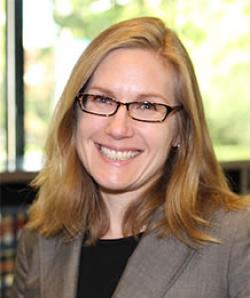
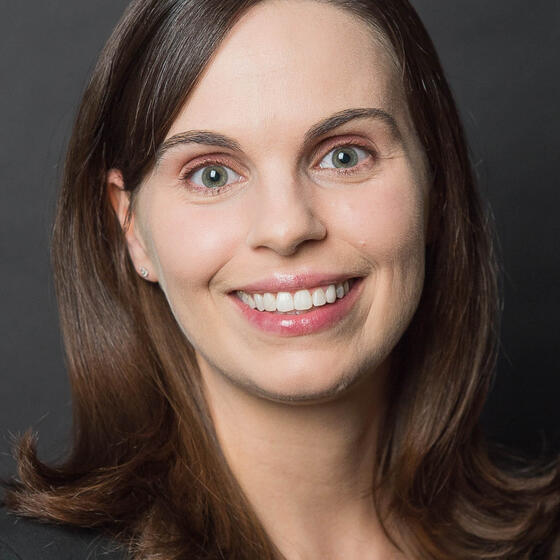
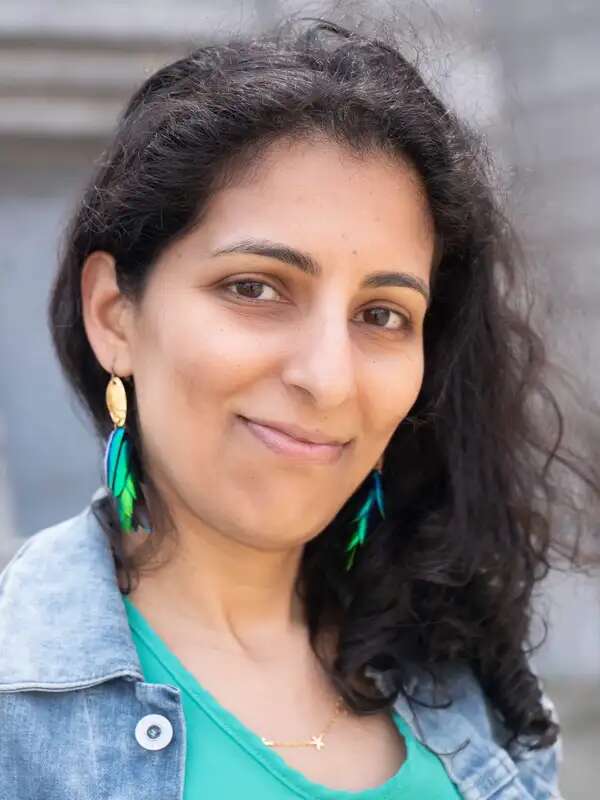
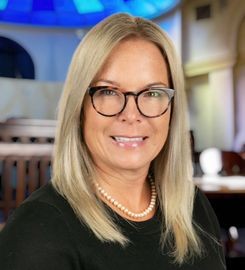
Robert Kaplan is an Advanced Senior Lecturer and Associate Director at Stony Brook University’s Program in Writing & Rhetoric, affiliated with the College of Arts and Sciences and Department of English. His work bridges academic writing pedagogy, writing transfer studies, and interdisciplinary research in Euro-American intellectual history, early American literature, queer theory, and poetry. Fields of Interest: Writing in the disciplines, writing transfer, eighteenth-century rhetoric, queer theory, HIV-related public health research. Research & Grants: Co-PI for the Writing Research Lab (2017–present), focusing on writing skills for non-native English speakers and cross-curricular transfer. Collaborated on NIH-funded workshops (D43TW000233) in Kyiv, Ukraine (2013). Scientific Awards: New York State English Council Mini-Grant (2017–18) Presidential Mini-Grant for Diversity Initiative (2016) FAHSS Interdisciplinary Award (2014) Presentations & Contributions: Active in conferences on writing pedagogy, including the Conference on College Composition and Communication, and interdisciplinary studies of moral philosophy and early American literature.
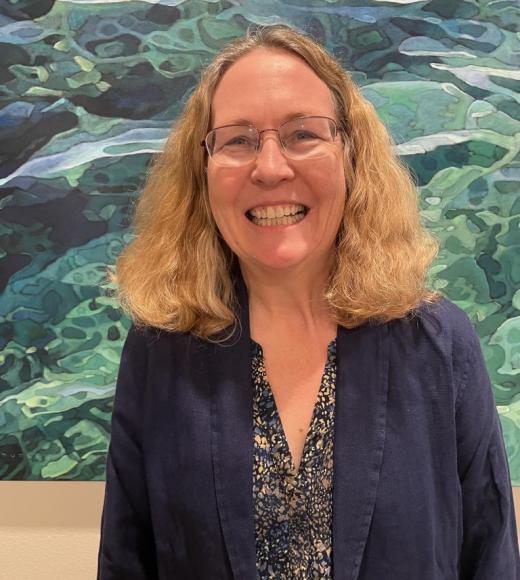
Jaime Bouvier is a Professor of Lawyering Skills at Case Western Reserve University School of Law, teaching second-year legal writing (LLEAP 3 Litigation) and previously instructing first-year legal writing, privacy torts, and leadership/emotional intelligence courses while co-directing the academic and writing support program. Education: Bachelor of Arts, University of Iowa Juris Doctorate, Case Western Reserve University School of Law Her research focuses on food policy and land-use law with deep specialization in urban agriculture regulation, examining municipal ordinances for backyard poultry/micro-livestock, cultural perceptions linking urban farming to race/gender/poverty, and constitutional intersections between food movements and First Amendment rights. She also develops leadership frameworks for legal professionals using neuroscience and organizational psychology. Publications consistently analyze local governance of urban agriculture, revealing patterns in regulatory approaches across municipalities while addressing social equity implications and advocating for model ordinances that balance community expectations with food sovereignty. As co-director of academic support, she mentored law students in writing and academic success. Pre-academic career included clerking for Judge Kathleen M. O'Malley (Northern District of Ohio), serving as staff counsel for Congressman Dennis Kucinich, and litigating public-policy cases at Chandra Law Firm.
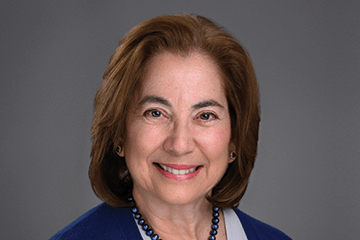
Robin Boyle-Laisure is a full-time Professor of Legal Writing at St. John's University School of Law , teaching first-year Legal Writing I/II and advanced courses in contract drafting. She has lectured internationally in Ukraine and China, designed legal education programs for college students through the Ron Brown Prep Program (17 years), and contributed to conditional admissions initiatives. Education: J.D., Fordham University School of Law (1989) B.A., Vassar College (1980) Her research spans legal writing pedagogy , contract drafting , human trafficking , and undue influence in cults . She has authored over 40 publications, including books like Taken No More (forthcoming 2025), and pioneered modular online learning platforms for legal education. Recent articles focus on learning-style theory, legal protections against trafficking, and interdisciplinary collaborations. She has presented at conferences globally and co-founded the Empire Legal Writing Biennial Conferences (since 2010). Scientific Awards & Service: Vincentian Senior Fellow (2021-present) and Research Fellow (2019-present) Co-Founder, Empire Legal Writing Biennial Conferences Editorial Board, Perspectives: Teaching Legal Research and Writing (2017-present) Faculty Advisor, EDNY Federal Bar Association student chapter Board Member, International Cultic Studies Association (2023-present) Chair, AALS Section on Academic Support (2010-2012)
Dr. Nhlanhla Mpofu is an Associate Professor in TESOL and Literacy at Stellenbosch University's Faculty of Education, where she serves as Vice Dean for Teaching and Learning and Chair of the Department of Curriculum Studies. She also holds a Visiting Professor position at the University of Antwerp in Belgium. She obtained her PhD in Humanities Education from the University of Pretoria in 2016. Her research focuses on second-language learning in English-medium classrooms , developing culturally sustaining pedagogies that leverage learners' mother tongues, and re-orienting language education research in multilingual systems. She leads the NRF-funded project "Exploring the preparation and experiences of teachers using English across the curriculum: An interdisciplinary approach" and specializes in asset-based approaches that challenge deficit models in language education. Her publications demonstrate consistent focus on language policy implementation , teacher development , and multilingual pedagogies within African educational contexts, with recent work examining translanguaging strategies and disciplinary literacies. Awards & Honors: Fulbright Alumna Golden Key Honor Society Rated Researcher (South African National Research Foundation) Member of South African Young Academy of Science (SAYAS) Margaret McNamara Education Grantee COIL Fellow Grants: 2019: NRF-funded project on teacher preparation for English as Language of Learning and Teaching (Principal Investigator) She maintains professional memberships with the Southern African Linguistics and Applied Linguistics Society (SALALS) and South African Association for Language Teaching (SAALT), and serves on the South African Council on Higher Education Accreditation Committee.
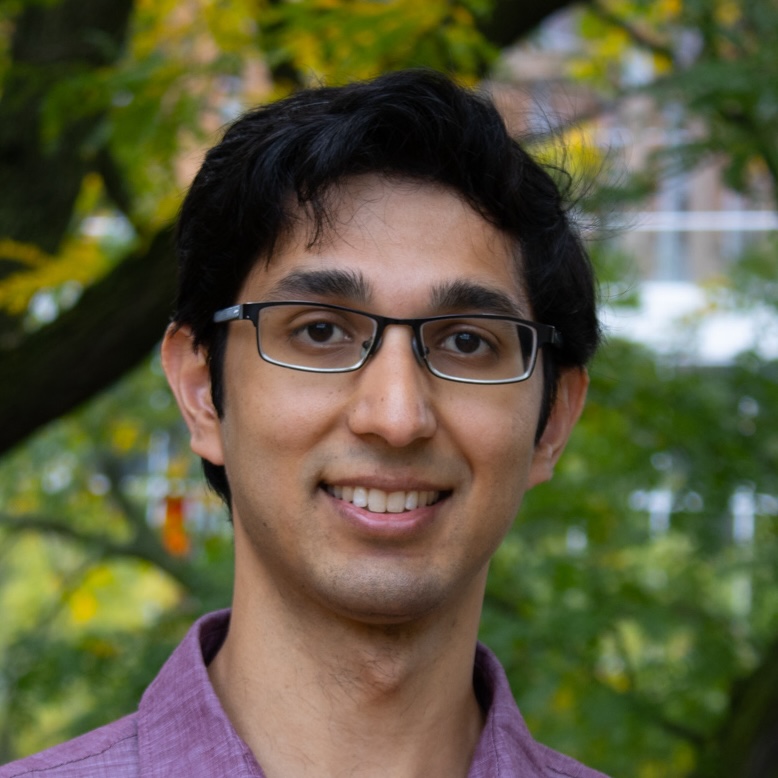
Tej Chajed is an Assistant Professor in the Department of Computer Science at the University of Wisconsin-Madison, where he conducts research in formal verification of systems software. His work focuses on building and proving the correctness of critical systems, particularly file systems and concurrent software. Dr. Chajed earned his PhD from MIT in the PDOS group, followed by a one-year postdoc at VMware Research before joining UW-Madison. His academic journey reflects a strong commitment to bridging theoretical formal methods with practical systems implementation. Chajed's research centers on formal verification techniques for systems software, with particular emphasis on concurrent and crash-safe systems . His work aims to eliminate bugs in critical software through mathematical proofs of correctness. Key contributions include DaisyNFS (a verified concurrent file system), the Perennial framework for reasoning about crash safety, and Goose for connecting proofs to Go code. His research spans the intersection of programming languages, operating systems, and formal methods, developing practical tools that bring verification to real-world systems. His recent publications demonstrate a consistent trajectory toward more practical and scalable verification techniques for increasingly complex systems. The research shows progression from foundational verification frameworks to applied work on specific systems like file systems, journaling, and distributed protocols. A notable trend is the focus on making verification more accessible and practical for systems developers, bridging the gap between theoretical formal methods and real-world software engineering. Dr. Chajed serves on numerous program committees including OSDI 2025 PC, PLDI 2024 PC, SySDW 2023 PC, ECOOP 2023 ERC, CPP 2023 PC, POPL 2023 PC, PLDI 2022 PC, POPL 2022 AEC, EuroDW 2021 PC, POPL 2021 AEC, PLDI 2020 AEC, POPL 2020 AEC, and SOSP 2019 AEC, reflecting his standing in the systems and programming languages research community. In teaching, Chajed has developed and instructed courses on systems verification, operating systems, and protocol verification. He previously helped create MIT's 6.826 (Principles of Computer Systems) during his PhD. His passion for technical communication was cultivated during his time as a Communication Fellow in the EECS Communication Lab at MIT, where he continues to offer guidance to students on writing and presentation skills. His research group at UW-Madison focuses on advancing the state of the art in systems verification, with current projects centered around practical verification frameworks for concurrent and crash-safe systems.
Robert E. Cummings is a Professor of Writing and Rhetoric and Executive Director of Academic Innovation at the University of Mississippi. He directs the Interdisciplinary Minor in Digital Media Studies and leads the Academic Innovations Group (AIG) and Center for Excellence in Teaching and Learning (CETL), focusing on evidence-based teaching strategies and professional development for faculty. His academic roles emphasize bridging technology and pedagogy, particularly in digital writing instruction. Education: B.A. in English, University of Tennessee-Knoxville (1990) M.A. and Ph.D. in English, University of Mississippi (1999, 2006) Research Interests: Cummings explores the intersection of digital tools and writing pedagogy, including generative AI’s impact on writing, Wikipedia’s role in education, and post-pandemic digital instruction. He collaborates with computer science researchers to study AI-human dynamics in writing processes. His work emphasizes open educational practices, resilience in teaching, and inclusive digital platforms. Publications Trends: His articles analyze AI writing tools, pandemic-era pedagogy shifts, and long-term trends in digital writing instruction. Recent work focuses on frameworks for integrating AI into first-year writing programs while addressing ethical and practical challenges. Awards: No scientific awards explicitly mentioned in the provided materials. Advising & Grants: No student advising records or grant details are listed. Current responsibilities include curriculum development and institutional innovation initiatives. Labs/Teams: Leads the Academic Innovations Group and collaborates with CETL to advance teaching strategies across the University of Mississippi campus.
Alissa Ruth is an educational anthropologist and faculty member at Arizona State University's School of Human Evolution and Social Change, serving as Director of Strategic Initiatives. She focuses on improving educational access, student success, and innovative pedagogies. Her work includes research on undocumented immigrant youth, undergraduate research experiences (UREs), and critical pedagogy. She leads the Innovations in Social Science Instruction and Training Lab and directs education for the NSF Cultural Anthropology Methods Program (CAMP). Ruth has over 22 years of experience in higher education, including teaching, curriculum design, and mentoring students and community members. She co-edited The Handbook of Teaching Qualitative and Mixed Methods (2023) and contributes to journals like Social Science & Medicine . Her research projects address higher education equity, methods training, and social entrepreneurship pathways for underserved students. Affiliations: Director of Strategic Initiatives, ASU; Institute for Social Science Research; NSF CAMP. Education: Ph.D. Anthropology (ASU), M.S. Justice Studies (ASU), B.A. Anthropology (University of Florida). Research Interests: Critical Issues in Higher Education, First-Generation Students, Ethnographic Methods, College Student Wellbeing, Immigration Policy, and Pedagogical Innovation. Publications: Over 20 peer-reviewed articles and edited volumes, emphasizing methods training, UREs, and marginalized student success. Awards: None explicitly listed, but recognized through editorial roles and program leadership. Teaching & Advising: Teaches courses on cultural anthropology, ethics, and global health. Advises students through honors programs and internships. Leads initiatives like the Global Ethnohydrology Study and Methods4all.
Kristi Murray Costello is an Associate Professor in the Department of English at Old Dominion University (College of Arts & Letters). She serves as the Associate Chair of Writing Studies and English General Education, and as the Four-Year College Chair of Writing Across Virginia. Her academic leadership and research focus on emotional labor, writing program administration, and interdisciplinary writing pedagogy.
Dr. Dana Ferris is a Professor in the University Writing Program at the University of California, Davis (UC Davis). She previously held leadership roles including Director of the UWP, Associate Director of English for Multilingual Students, and Associate Director of UWP 1. Her academic career spans over three decades, including 18 years at California State University, Sacramento, where she directed the TESOL MA program and ESL writing programs. She earned her B.A. from UC Davis, M.A. degrees from California State University, Sacramento and the University of Southern California (Linguistics), and a Ph.D. in Applied Linguistics from USC. Her research focuses on second language literacy, teacher preparation, and response strategies for student writing. She has authored nine books and over 60 scholarly works, including Teaching L2 Composition and Written Corrective Feedback in Second Language Acquisition and Writing . Ferris has served as co-editor of the Journal of Second Language Writing and founding editor of the Journal of Response to Writing , contributing significantly to academic discourse in her field. Ferris has received numerous awards, including the Best Article Award from the Journal of Second Language Writing and three-time finalist for the President's Award for Scholarly Achievement. She actively contributes to academic governance, serving on boards for CATESOL and TESOL. Beyond academia, she is an avid San Francisco Giants fan and writer for their fan blog under the pseudonym DrLefty. Key Roles: Professor, UWP Leadership, Journal Editorships Education: B.A. UC Davis (English/Creative Writing), M.A. Sacramento State (TESOL), M.A./Ph.D. USC (Linguistics/Applied Linguistics) Research Themes: Second Language Writing, Corrective Feedback, Multilingual Education Professional Activities: Board Member of CATESOL, TESOL Committees, and CCCC Standing Committee on Second Language Writing Her work bridges theory and practice, emphasizing evidence-based approaches to writing pedagogy while advocating for inclusive practices in multilingual education. Ferris's publications and editorial contributions have shaped curricula and teaching methodologies globally.
Ms. Eileen Espinoza is an Adjunct Professor of English at Shepherd University, teaching in the Department of English and Modern Languages since Fall 2023. She holds an M.F.A. in Nonfiction from the University of California, Riverside, and also teaches poetry in the M.F.A. program at Maharishi International University. Her academic roles include composition instruction in Shepherd's first-year writing program. Education: B.A. from Shepherd University (2015), M.F.A. in Nonfiction (UC Riverside) Research Interests: Creative writing (poetry/nonfiction), death studies, LGBTQ+ studies, spirituality, and publishing. Her work explores grief rituals, nature, and pop culture through lyrical nonfiction and poetry. Notable publications include works in the Los Angeles Review of Books , Bellvue Literary Review , and Joyland Magazine . She co-founded Boshemia , a feminist arts magazine, in 2016. Her 2024 book Carrying the Bones examines grief rituals in Western societies. Key Awards: 2021 McQuern Award in Nonfiction, finalist for Annie Dillard Award (2021), finalist for Marica and Jan Vilcek Poetry Prize (2020). Lives in Shepherdstown with her wife, poet Joshua Jennifer Espinoza, and frequently resides in the Mojave Desert. Active in interdisciplinary projects bridging literature and environmental/cultural studies.
Shannon Walters is Associate Professor of English in Temple University’s College of Liberal Arts and affiliated faculty in both the First-Year Writing Program and the Gender, Sexuality & Women’s Studies program. Since arriving at Temple in 2009 she has built an internationally recognized profile at the intersection of rhetoric-composition and disability studies. Education: PhD in English and Women’s Studies, Pennsylvania State University Research & Scholarly Focus: Walters’ scholarship fuses rhetoric and composition with disability, gender, and animal studies. Her 2014 monograph Rhetorical Touch: Disability, Identification, Haptics (University of South Carolina Press) theorizes tactile rhetorics and disabled embodiment. Ongoing projects explore neurodiverse writing pedagogies, multimodal accessibility, critical animal studies, and graphic narratives, producing articles in PMLA , JAC , DSQ , and other flagship journals. Recent Publication Trends: Across 2005-2022 Walters has published seventeen peer-reviewed pieces that collectively advance three intertwined trajectories: (1) crip/queer rhetorical theory and temporalities, (2) neurodiversity-informed composition and technical communication pedagogy, and (3) interspecies rhetorics that link disability and animal studies through comics and multimedia texts. Teaching & Mentoring: She teaches undergraduate writing (Analytical Reading & Writing, Social Issues in Literature, Women in Literature) and graduate seminars in rhetoric-composition, while regularly offering special-topics honors courses on disability and identity. No individual advisees are listed in available sources. Affiliations & Service: Walters serves as core faculty in the Gender, Sexuality & Women’s Studies program and participates actively in Temple’s interdisciplinary disability-studies community. Office: Mazur Hall 1051.
Michelle LaFrance is an Associate Professor in the English Department at George Mason University, specializing in Writing and Rhetoric. Her research focuses on feminist methodologies, institutional ethnography, community writing, and writing program administration. She holds a Ph.D. from the University of Washington (2009) and has published extensively on topics like academic labor, e-portfolios, and writing center pedagogy. Her recent work examines discourses of volunteerism and belonging in urban communities. Dr. LaFrance teaches courses on critical pedagogy, feminist research, and public writing. Her major awards include the 2021 College Composition and Communication Research Impact Award for her book Institutional Ethnography: A Theory of Practice for Writing Studies Researchers , which also received an Honorable Mention from the International Writing Across the Curriculum Association. She has supervised numerous graduate students in areas such as queer worldmaking, linguistic justice, and composition pedagogy. Education: Ph.D., University of Washington, 2009 Key Affiliations: Director of Graduate Studies, Writing Program Administrator LaFrance's research emphasizes materialist frameworks and participatory methods. She explores the intersections of writing studies with issues of labor, space, and community engagement. Recent projects include analyzing writing instructors' negotiations of language standards and reimagining equity practices in two-year colleges.
Joan Darling is an accomplished filmmaker, director, and acting teacher affiliated with Vermont College of Fine Arts (VCFA). She holds adjunct professor roles and has extensive experience in television and film production. Her career includes groundbreaking work as the original director of Mary Hartman, Mary Hartman and the iconic Mary Tyler Moore Show episode 'Chuckles Bites the Dust.' Darling has received major industry accolades, including an Emmy and a DGA Award, and is noted as the first woman Emmy nominee in her category. Education details are not explicitly stated in the text, but her professional trajectory suggests advanced training in film and theater. Her research interests center on narrative direction in television/film and actor-director collaboration, reflected in her Sundance Lab workshops. Over 20 years, she has advised at institutions like USC, CalArts, and Carnegie Mellon, focusing on directing techniques. Notable works include directing M*A*S*H , Rhoda , and Magnum P.I. , alongside her acting credits in Owen Marshall: Counselor at Law and her one-woman show Joni vs. the Bard…The Shakespeare Smackdown . Her creative advising spans Sundance Labs and international collaborations. Awards: Emmy, DGA Award, Image Award Grants/Advising: Sundance Director’s Lab Creative Advisor, Moonstone European Program Labs/Teams: Sundance Directors Lab workshop creator, Falcon Theatre collaborations
Nina Sharma is an Adjunct Lecturer in the Department of English at Barnard College, part of Columbia University, where she teaches and mentors students in creative writing and literature. She holds an M.F.A. from Columbia University’s School of the Arts, an M.A. from Columbia’s School of Arts and Sciences, and a B.A. from Barnard College, reflecting a deep academic engagement with the literary arts. M.F.A, Columbia University School of the Arts M.A., Columbia University School of Arts and Sciences B.A., Barnard College Her research and creative interests center on personal essays, BIPOC narratives, mental health in Asian American communities, humor writing, and intersectional identity. Her work explores themes of love, race, gender, and cultural belonging through a deeply personal and often satirical lens. She has been a two-time grantee of the Asian Women Giving Circle for her workshop “No Name Mind: Stories of Mental Health from Asian America,” highlighting her commitment to community-based storytelling. Her publications include essays and interviews in The New Yorker , Harper’s Bazaar , Electric Literature , Women’s Studies Quarterly , and The Margins . Her debut collection, The Way You Make Me Feel: Love in Black and Brown (Penguin Press, 2024), synthesizes personal narrative with cultural critique, examining interracial love and identity. The essays reflect recurring themes: the emotional labor of womanhood, the absurdities of assimilation, and the resilience of marginalized voices. She has been awarded prestigious residencies from the Vermont Studio Center and St. Nell’s Humor Writing Residency. These fellowships underscore her recognition in the literary community. She is also a proud co-founder of Not Your Biwi Improv and co-created the column Blackshop for Anomaly , fostering allyship between BIPOC communities. Nina Sharma formerly served as Programs Director at the Asian American Writers’ Workshop, where she expanded programming for emerging writers. Her current teaching at Barnard and Columbia continues this mission of mentorship and literary advocacy. She has no formal PhD students listed, but her workshops and public engagements suggest a strong advisory role in creative development. She is actively involved in literary events, with a book tour spanning New York, Chicago, Los Angeles, and Portland, engaging audiences through readings and panel discussions. Her work bridges academic, artistic, and public spheres, contributing to contemporary conversations on race, gender, and narrative form.
Leah Christensen serves as Professor of Legal Writing at the University of San Diego School of Law, where she joined the faculty in 2018 after teaching positions at Thomas Jefferson School of Law, University of St. Thomas School of Law, and University of Wisconsin School of Law. Her educational background includes a JD from the University of Iowa College of Law (1995) and BA from the University of Chicago (1992). Her academic journey began with a clerkship for Justice William A. Bablitch of the Wisconsin Supreme Court, followed by legal practice in medical malpractice, environmental law, and public education law. Her research focuses on innovative legal pedagogy with special emphasis on neurodiverse learners, professional responsibility training, and evidence-based learning strategies for law students. Christensen's scholarly output reveals consistent thematic development across 13 publications from 2006-2018, demonstrating evolving expertise in legal education psychology. Her work increasingly addresses learning differences in legal training while maintaining strong connections to professional ethics and practical lawyering skills, reflecting both theoretical depth and practical application in legal education reform. Among her distinctions: Professor of the Year (2006-2013) Lewis and Clark Award for Innovation (2013) Awards from Black Allied Law Students Association (BALSA) Awards from Women Law Students Association (WLSA) She has received research grants from the Legal Writing Institute and Association of Legal Writing Directors. Christensen actively contributes to legal education discourse through presentations at American Association of Law Schools (AALS), Legal Writing Institute, and Law School Admissions Council conferences. Her empirical research methodology, particularly regarding student learning patterns and editorial processes in legal scholarship, demonstrates rigorous academic approach to improving legal education outcomes.