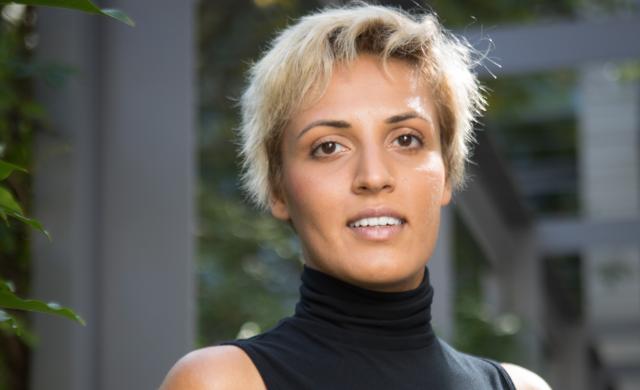
Prineha Narang is an Assistant Professor of Physics and Astronomy at the University of California, Los Angeles (UCLA), leading the NarangLab . Her research focuses on computational science, condensed matter theory, quantum photonics, and quantum information science. She holds a Sc.B. from Drexel University and advanced degrees from Caltech, where she was an NSF Graduate Fellow. Her work bridges theoretical and experimental realms, emphasizing nonequilibrium quantum materials and their applications in energy and computing. Education: Sc.B. in Materials Science (Drexel), M.S./Ph.D. in Applied Physics (Caltech). Labs/Teams: NarangLab explores quantum materials, photonic qubits, and quantum network science. Key Awards: Ziff Environmental Fellow, NSF Graduate Fellowship, Resnick Sustainability Institute Fellow. Her teaching includes courses like Quantum Engineering and Excited State Dynamics , with open-access materials to lower educational barriers. Research highlights include ab initio QED methods, magnon-pumping dynamics, and defect-engineered quantum systems. She actively mentors over 20 graduate students and postdocs, fostering interdisciplinary collaboration.
Danielle Manton is a Lecturer and Director of Indigenous Health Education at the University of Technology Sydney (UTS), Faculty of Health. Her role focuses on curriculum design to embed Indigenous Graduate Attributes into health programs, emphasizing community consultation and collaboration with Aboriginal and Torres Strait Islander communities. She holds a PhD in Indigenous Health (current candidate) alongside degrees in Arts/Communication Management and Education. Research & Projects: Danielle leads and collaborates on initiatives like the Bunya Project (curriculum development), the Grog Survey App (digital health intervention), and the Aboriginal Allied Health Workforce Pathways project. She has secured funding from UTS, NSW Health, and other organizations, totaling over $200K across multiple grants since 2018. Key Contributions: Developed culturally responsive teaching methods and health curricula. Advocated for Indigenous health equity through policy and education. Collaborates with organizations like Baabayn Aboriginal Corporation and First Peoples Disability Network. Teaching & Service: Teaches courses including Indigenous Health and Wellbeing and Health Promotion in Aboriginal Contexts . Served on committees for accreditation (Australian Physiotherapy Council), research governance (UTS Research Committee), and equity initiatives within UTS. Actively peer reviews for journals like Health Sociology Review and Nurse Education Today . Expertise: Indigenous health education, cultural safety, digital health tools, and community-driven research methodologies.
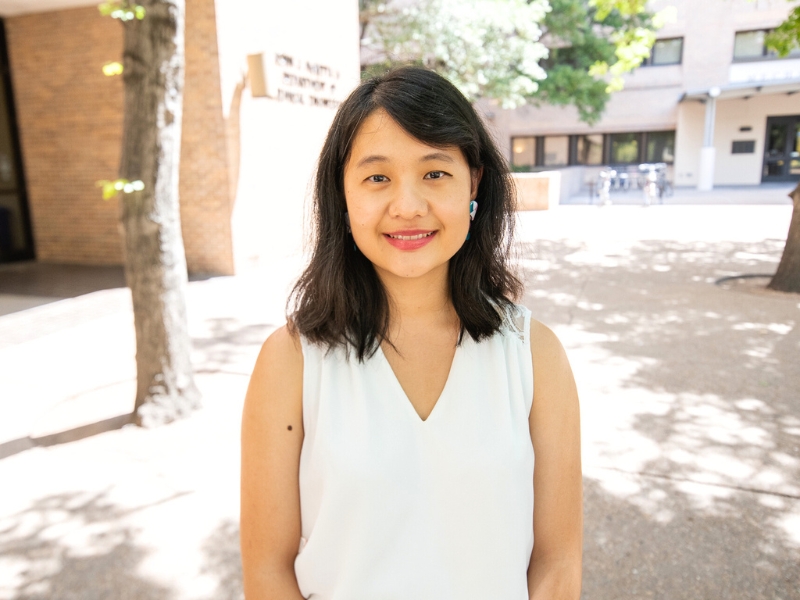
Wennie Wang is an Assistant Professor at the University of Texas at Austin, affiliated with the Allen J. Bard Center for Electrochemistry and the Texas Materials Institute. Her research focuses on computational engineering of optoelectronic materials for energy sustainability applications, particularly in catalysis, energy conversion, and next-generation computing. She utilizes first-principles methods to study defects in materials and their impacts on electronic/optical properties. Education: Postdoctoral Scholar, University of Chicago (2018-2021) Ph.D., Computational Materials, University of California, Santa Barbara (2018) B.S., Materials Science and Engineering, Massachusetts Institute of Technology (2013) Research Interests: Her interdisciplinary work integrates chemical engineering, materials science, and solid-state physics to design novel materials for sustainable energy technologies. Current projects include transition metal oxide electrocatalysts, semiconductor-aqueous interfaces, and low-dimensional computing materials. She emphasizes defect engineering and computational-experimental synergies. Publications: Recent work includes studies on BiVO4 surface energetics, MoS2 heterojunctions, and WO3 electrochromism. Her articles frequently address defect dynamics, surface chemistry, and computational modeling in energy materials. Awards: Maria Goeppert Mayer Award (APS, 2025) NSF Graduate Research Fellowship (2014) Multiple MRS and APS recognition for student contributions Labs/Teams: She leads the Wang Materials Group, fostering a diverse environment through weekly meetings and collaborative projects. Affiliations include the Oden Institute and MRSEC.
Claude Roux is a Distinguished Professor of Forensic Science and Director of the Centre for Forensic Science at the University of Technology Sydney (UTS). He holds academic affiliations with the School of Mathematical and Physical Sciences and the Faculty of Science. After completing his education in Switzerland, he migrated to Australia in 1996 and became a pivotal figure in establishing forensic science programs in the country, including the first undergraduate and PhD programs in forensic science. His research focuses on trace evidence, chemical criminalistics, fingerprints, forensic intelligence, and the role of forensic science in policing. He has published over 200 refereed papers, secured $5.5M in research grants, and received numerous awards including the 2004 AIPS Tall Poppy Award and the 2015 Deputy Vice-Chancellor Research Medal. He leads international organizations like the International Association of Forensic Sciences and serves on the Scientific Advisory Board of the International Criminal Court. Roux collaborates extensively with government agencies and academic partners globally. His recent work emphasizes forensic science's role in addressing modern challenges like drug trends, digital evidence, and crime scene management. He advocates for interdisciplinary approaches to enhance forensic science's reliability and relevance in the justice system. Awards: Over 20 prizes, including Tall Poppy Award and ICC advisory roles. Grants: $5.5M from ARC, government, and industry since 2015. Labs/Teams: Leads UTS's Centre for Forensic Science and collaborates with global forensic networks.
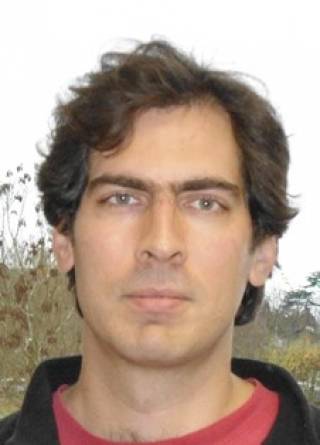
Dr. Michel Tsamados is an Associate Professor in Polar Observation & Modelling at the Department of Earth Sciences, University College London (UCL). He specializes in integrating remote sensing and numerical modeling to study polar climate systems, with a focus on sea ice dynamics, snow cover, and ocean-atmosphere interactions. His work bridges fundamental material science principles with applied climate research, leveraging satellite data (e.g., CryoSat-2, ICESat-2) and advanced machine learning techniques to improve model parameterizations and observational products. Key affiliations include UCL's Centre for Polar Observation and Modelling (CPOM) and collaborations with the Alan Turing Institute and Met Office Academic Partnership (MOAP). His research explores AI applications in polar climate analysis, geoengineering feasibility studies, and historical climatic data recovery (e.g., Ottoman-era rainfall records). Research interests encompass sea ice thickness estimation, snow depth retrieval via dual-frequency radar, and understanding drivers of Arctic amplification. He teaches courses on ocean physics, climate change, and climate principles. Current projects include advancing Southern Ocean tide models (ALBATROSS), optimizing sea ice thickness algorithms, and analyzing extreme cyclone impacts on sea ice. His contributions include developing satellite-derived products like the first summer Arctic sea ice thickness record and pan-Arctic drag coefficient datasets. He actively participates in multidisciplinary initiatives like the MOSAiC Distributed Network and CRISTAL mission preparations.
Katie Cunningham is an Assistant Professor in the Department of Computer Science at the Siebel School of Computing and Data Science, part of the Grainger College of Engineering at the University of Illinois Urbana-Champaign. Her work focuses on using Human-Computer Interaction (HCI) methods to align computer science education with students' goals and identities, aiming to broaden participation in computing at the college level. Education: Ph.D., Information, School of Information, University of Michigan (2020) M.S., Human-Centered Computing, Georgia Institute of Technology (2018) B.S., Computer Science and Molecular and Cellular Biology, University of Arizona (2013) Research Interests include computer science education, programming pedagogy, and leveraging HCI principles to improve learning outcomes. Her work emphasizes domain-specific programming plans, conversational programming approaches, and educational technologies. Her recent articles explore topics like PLAID systems for programming plan identification, split deadlines in CS1 courses, and learning curve analysis in programming education. These studies highlight innovative methods to enhance both technical and non-technical student success. Awards include the NSF Graduate Research Fellowship (2017–2020) and the Computing Innovation Fellowship (2021–2022). Teaching includes courses like CS 105 (Intro Computing: Non-Tech) and advanced topics in computer science education research. She actively contributes to broadening participation initiatives, reflecting her commitment to inclusive computing education. Her lab focuses on developing tools and frameworks for scalable, evidence-based educational interventions. Current projects aim to improve novice programming outcomes through purpose-first approaches and adaptive feedback systems.
Asegun Henry is an Associate Professor in the Department of Mechanical Engineering at the Massachusetts Institute of Technology (MIT), where he directs the Atomistic Simulation & Energy (ASE) Research Group. His work bridges fundamental science with applied engineering to address climate change through innovative energy technologies. Professor Henry received his B.S. in Mechanical Engineering from Florida A&M University in 2004, followed by M.S. and Ph.D. degrees from MIT in 2006 and 2009, respectively. His career path includes postdoctoral research at Oak Ridge National Laboratory and Northwestern University, a fellowship at ARPA-E, and an Assistant Professor position at Georgia Tech before joining MIT in 2018. Research Interests Professor Henry's primary research focuses on heat transfer with an emphasis on understanding energy transport, storage, and conversion at the atomic level. His work spans from fundamental studies of phonon transport in ordered and disordered materials to the development of industrial-scale energy technologies. Key research areas include thermal energy grid storage using multi-junction photovoltaics (TEGS-MPV or "Sun in a Box"), high-temperature concentrated solar power using liquid metals, methane pyrolysis for CO 2 -free hydrogen production, and atomistic modeling of phonon transport. His research combines molecular dynamics simulations, supercell lattice dynamics calculations, and first-principles approaches to understand thermal transport phenomena. Publication Trends Professor Henry's publications demonstrate a clear progression from fundamental phonon transport research toward applied energy systems. His early work focused on thermal conductivity in polymers and nanostructures, while more recent publications address high-temperature energy systems and grid-scale storage solutions. The research shows increasing integration of fundamental physics with practical engineering applications, particularly in developing technologies that can mitigate climate change. A significant portion of recent work focuses on liquid metal systems for high-temperature energy applications, culminating in the development of the world-record-setting ceramic pump for molten metal. Scientific Awards Professor Henry has received numerous prestigious awards recognizing his contributions to energy research and heat transfer, including: The Alan T. Waterman Award from NSF (2023) Physics World Top 10 Breakthroughs for super-efficient electricity generation (2022) Bell Labs Prize Winner (2021) ASME Bergles-Rohsenow Young Investigator Award in Heat Transfer (2018) World Technology Award for Energy (2018) National Science Foundation CAREER Award (2016) He has also been awarded multiple fellowships including the Ford Foundation Postdoctoral Fellowship, UNCF-MERCK Postdoctoral Fellowship, and DOE Computational Science Graduate Fellowship. Professor Henry's research has led to significant technological breakthroughs, most notably the development of the highest-temperature pump on record (capable of pumping liquid metal above 1400°C), which earned a place in the Guinness Book of World Records. This innovation has enabled new high-temperature energy systems concepts, including the "Sun in a Box" grid-level energy storage approach that promises to be cheaper than pumped hydro. His work on phonon transport has also advanced understanding of heat transfer in disordered materials and at interfaces. Labs and Teams Professor Henry directs the Atomistic Simulation & Energy (ASE) Research Group at MIT, which maintains laboratory space on the 3rd floor of building 31, with offices distributed across buildings 3, 31, and 35. The ASE Group works on both fundamental science (studying phonon transport in various materials) and applied engineering (developing novel energy systems for climate change mitigation). The group has achieved multiple world records, including the highest-temperature liquid metal pump (2082°C) and thermophotovoltaic efficiency exceeding 40% in collaboration with NREL.
Lan Luh Luh is an Associate Professor at the National University of Singapore (NUS) within the NUS Business School. She currently serves as Co-Director of the LL.M. (International Business Law) Programme and has held administrative roles such as Assistant Dean (2008–09), Deputy Director of the Centre for Commercial Law Studies (2012–2015), and Academic Director of the UCLA-NUS EMBA Programme (2016–2021). She holds a PhD (Business Policy) from NUS and a First-Class LLM in Commercial Law from the University of Cambridge, alongside an LLB from NUS and is an Advocate & Solicitor in Singapore. Her research focuses on company law, corporate governance, and corporate finance law, with a growing emphasis on ESG integration. She has authored Essentials of Corporate Law & Governance in Singapore (2022) and published in top-tier journals like the Academy of Management Review and Harvard Business Review . She chairs the Global Corporate Governance Colloquia and serves on the editorial board of the International and Comparative Corporate Law Journal . Her recent work examines board resilience in disruptive environments, ESG strategies in Asia, and directorial duties in climate risk contexts. Over 15 years, her research spans legal frameworks for disruption, shareholder empowerment in controlled companies, and gender dynamics in board representation.
Dr. S Zaung Nau is a Senior Lecturer at the School of Management and Marketing, Faculty of Business and Law at Curtin University, with a portfolio in the Office of the Provost. He is based at the Curtin Perth campus and has affiliations with multiple global campuses including Dubai, Malaysia, Mauritius, and Singapore. His research focuses on sustainable transportation, education technology, healthcare accessibility, and green IT. He holds a PhD in public transport sustainability from Curtin University, supervised by Prof. Jeffrey Kenworthy and Prof. Dora Marinova, examining determinants of public transport use in Perth. Dr. Nau has received notable awards including the Best Poster at Curtin's Festival of Learning (2023) and a Citation for Outstanding Contribution to Student Learning (2017). His work bridges academic innovation with practical applications, such as M-Learning adoption for SDG4 and holistic eLearning models for Saudi Arabian higher education. He actively contributes to pedagogical research in Education 5.0 and authentic assessment methodologies. His teaching spans diverse areas including Business and Law, Health Sciences, and Science and Engineering. He is committed to integrating sustainability principles into education and technology, reflecting Curtin's broader mission of social responsibility and First Nations collaboration.
Kyle S. Brinkman is a Professor and Chair of the Department of Materials Science and Engineering at Clemson University. He holds a B.S. and M.S. from Clemson University (1998, 2000) and a Ph.D. from the Swiss Federal Institute of Technology in Lausanne (2004). His research focuses on energy materials, including solid oxide fuel cells, solid-state batteries, nuclear materials, and experimental thermodynamics. He has authored over 100 publications and serves as an editor for the Journal of Materials Science and co-director of Clemson’s Nuclear NEESRWM Center. His awards include the 2020 Fellow of the American Ceramic Society and the 2020 Brimacombe Medalist Award. Education: Ph.D., Materials Science and Engineering, Swiss Federal Institute of Technology, 2004 M.S., Materials Science and Engineering, Clemson University, 2000 B.S., Chemical Engineering, Clemson University, 1998 Research Interests: Brinkman’s research emphasizes advanced ceramic materials for energy applications, including proton-conducting ceramics, hollandite waste forms, and 3D-printed electrolytes. His work integrates experimental thermodynamics, computational modeling, and advanced manufacturing techniques to develop sustainable energy solutions. Awards and Honors: Fellow of the American Ceramic Society (2020) Brimacombe Medalist Award (2020) Murray Stokely Prize for Excellence in Teaching (2018) Karl Schwartzwalder PACE Award (2015) Grants and Collaborations: He collaborates with institutions like DOE-NETL and leads initiatives in nuclear waste management and protonic ceramic fuel cells. His work is supported by grants focusing on additive manufacturing, radiation-tolerant ceramics, and sustainable energy materials. Labs and Teams: He directs the Energy Materials and Reactor Systems Laboratory (EMRL) and co-leads Clemson’s Nuclear NEESRWM Center, advancing innovations in radioactive waste management and clean energy technologies.
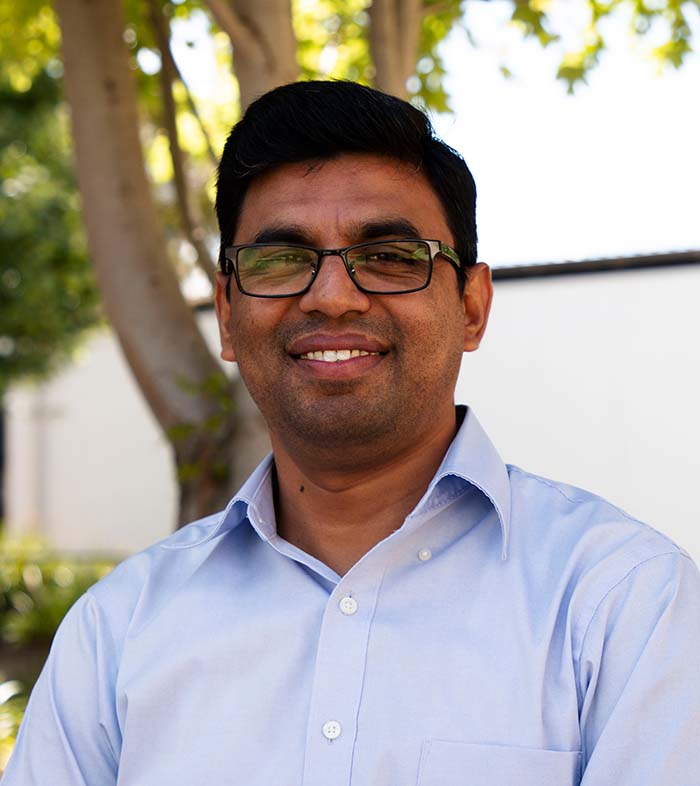
Raj Koju is a Postdoctoral Fellow at the Physics & Astronomy Department of George Mason University , affiliated as Research Faculty. His work focuses on computational modeling of materials' mechanical and kinetic properties using molecular dynamics and Monte Carlo methods. He holds a Ph.D. (2019) and M.Sc. (2011) in Physics from George Mason University and Tribhuvan University, respectively. His research interests include atomistic simulations of nanocrystalline alloys (e.g., Cu-Ta, Al-Mg), diffusion processes at interphase boundaries, and mechanical behavior under extreme conditions. Notable projects involve investigating thermal stability of Cu-Ta alloys, solute drag effects in Cu-Ag alloys, and grain boundary dynamics in severely deformed materials. Recent studies (2023–2025) highlight advancements in nanocrystalline alloy design, shock loading responses, and defect-mediated diffusion mechanisms in carbides. His work bridges computational predictions with experimental validation, emphasizing materials for high-performance applications. While no formal advisees are listed, his contributions span 20+ peer-reviewed articles since 2016, with ongoing investigations into nanomaterials and defect physics. He collaborates closely with Prof. Yuri Mishin and other computational materials scientists.
Dr. Igor I. Mazin is a Professor of Practice in Advanced Studies in Theoretical Physics (Condensed Matter Theory) at George Mason University's Physics & Astronomy Department, affiliated with the Quantum Materials Center. His research focuses on combining first-principle calculations with conventional theoretical physics methods, emphasizing real materials rather than idealized models. Education: Ph.D. in Theoretical Physics from P.N. Lebedev Physical Institute, Moscow (1984); M.S. in Physics of Metals from Moscow Institute for Steel and Alloys (1977). Research interests span condensed matter theory, materials science, superconductivity (including iron-based and multiband systems), electronic structure calculations, and quantum materials. His work often bridges computational physics with experimental observations in novel materials. Awards and honors include: State Prize for Young Scientists of the USSR (1989) Fellow of American Physical Society (1997) John Bardeen Prize (2018) Heraeus Research Award (2018)
Dr. Katherine Selena Taylor serves as an Adjunct Research Fellow at the Water Justice Hub within the Crawford School of Public Policy at the Australian National University. Her research and practice in Central and Western Australia address critical issues in environmental technology, drinking water risk management, and water policy, with dedicated focus on water rights, responsibilities, and decolonisation. Her academic qualifications include: PhD, Australian National University BSc (Hons) Environmental Science BSc Conservation Biology Taylor's research spans water policy, governance, security, and decolonisation of water management, emphasizing Indigenous water rights and knowledge systems. Her scholarship critically examines international frameworks like the OECD's water governance principles through a justice lens, advocating for systemic change recognizing Indigenous sovereignty. She investigates intersections of environmental technology, risk management, and policy to advance equitable water access for Indigenous communities. Analysis of her publications (2005-2023) reveals progressive deepening of Indigenous water governance engagement, evolving from technical wastewater irrigation studies to high-level policy critique. Her work consistently bridges academic research with community action, co-authored with Indigenous leaders, addressing drinking water quality gaps, non-market valuation of Indigenous values, and water security policy fragmentation across Australia's administrative landscapes. Her scientific recognition includes: Australian Post Graduate Award (2018) Australian Parliamentary Library Summer Scholar Though specific student advising details are limited in public records, her Water Justice Hub role suggests mentorship potential. Collaborative outputs like the 'Water Justice Podcast' and policy briefs demonstrate applied research impact beyond academia, including co-authoring a 2022 Indigenous water reserves policy brief for ANU. As a core Water Justice Hub member, Taylor contributes to interdisciplinary scholarship with Indigenous-led initiatives transforming Australian water governance, emphasizing Indigenous law and knowledge as central to achieving water justice through initiatives like the Martuwarra Fitzroy River Council partnership.
Dr. Tanveer Hussain is a Senior Lecturer in Applied Physics at the University of New England, within the Physics & Electronics discipline in the School of Science and Technology. He earned his PhD in computational condensed matter physics from Uppsala University, Sweden, focusing on nanomaterial design for clean energy storage. Education: PhD in Physics (Computational Condensed Matter Physics) - Uppsala University, Sweden His research encompasses computational design of functional materials for hydrogen storage systems, rechargeable metal-ion/sulfur batteries, and nanosensors for environmental and biomedical applications. He develops quantum mechanical simulations to design efficient energy storage materials and detection systems for pollutants, volatile organic compounds, disease biomarkers, and warfare agents. His work on battery technologies focuses on developing electrode materials and additives for sodium, potassium, magnesium and calcium-ion batteries. Recent publications demonstrate strong focus on nanomaterial-based sensors (MXenes, transition metal dichalcogenides) for detecting gases, pollutants and disease biomarkers, and innovations in battery technologies (Zn-ion, metal-sulfur systems) through computational design and experimental validation. Scientific Awards: Australian Nanotechnology Travel Award Vice Chancellor Travel Award (Uppsala University, Sweden) He has supervised 5 PhD, 2 Master's, and 4 undergraduate students to completion. His research has been supported by multiple grants including a Discovery Project from the Australian Research Council ($640,350), Research Grant for Post-Doctoral Fellowship from UAE University ($280,000), and National Research Council of Thailand grants. He leads projects on nanoparticle capture, CO2 conversion, MXene biosensors, and sodium-sulfur battery development. As part of his research activities, he collaborates with international institutions including King Mongkut's Institute of Technology Ladkrabang (Thailand) and UAE University. His laboratory utilizes advanced computational packages like VASP for materials simulations.
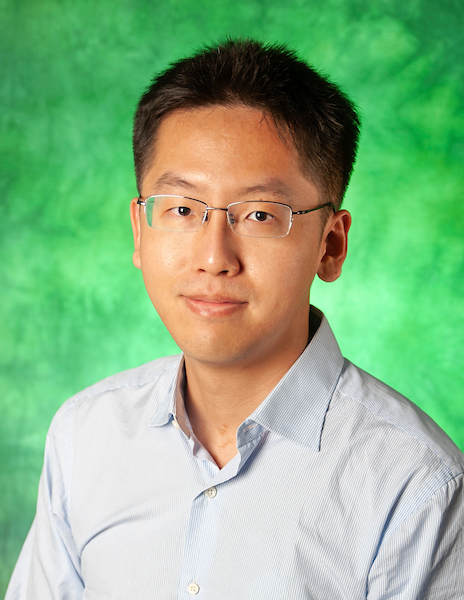
Dr. Yuanxi Wang is an Assistant Professor of Physics at the University of North Texas (UNT). His research focuses on computational materials theory, particularly in 2D materials like graphene, 2D semiconductors, air-stable 2D metals, and layered topological materials. He employs advanced computational tools such as density functional theory (DFT), many-body perturbation theory, and empirical forcefields to study electronic, optical, and mechanical properties of materials. His work emphasizes collaboration with experimentalists to bridge theory and practical applications in quantum photonics, spintronics, and optoelectronics. Education: Ph.D. in Materials Science (Pennsylvania State University, 2016). Research interests include defect physics, nonlinear optics, crystal growth modeling, and superconductivity in 2D systems. His theoretical frameworks address challenges in material synthesis, interfacial engineering, and device functionality. Recent studies explore quantum confined luminescence, insulator-to-metal transitions in layered semiconductors, and spin-orbit torque generation in Pb/Graphene heterostructures. He has developed novel methods for stabilizing air-stable 2D metals and optimizing nonlinear optical properties of inorganic crystals. No scientific awards or grants are explicitly listed. His research group focuses on advancing 2D material theory through multiscale computational modeling and experimental collaboration.