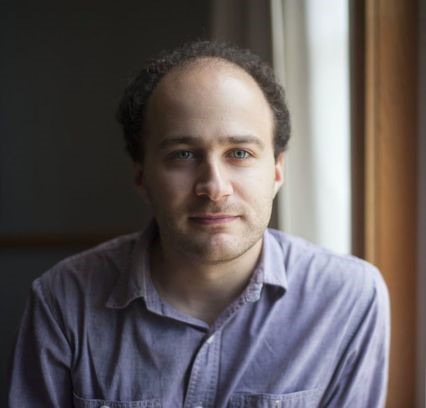
C. Michael Sampson is an Associate Professor in the Department of Classics at the Faculty of Arts , University of Manitoba . Holding a PhD in Classical Studies (2009) from the University of Michigan, an MA in Classics (2003) from Dalhousie University, and a BA (First Class Honours) in Classics and Early Modern Studies (2001) from the University of King's College, Sampson is a broadly trained philologist specializing in Greek and Latin literature with a focus on poetry, and a papyrologist working on fragmentary texts from Egypt. Research interests: Greek/Latin literature, papyrology, reception studies, Hellenistic literature Current project: The Books of Karanis (interdisciplinary study of Greek literary culture in Egypt) Awards: SSHRC Insight Grant (2021-2025), SSHRC Connections Grant (2020-2022), Community Engagement Award (2018) Editorial roles: Digital Corpus of Literary Papyri, Pylon: Editions and Studies of Ancient Texts Teaching: Courses on Ancient Greek culture, Roman comedy, Euripides, and Archaic poetry
Professor Vicky Chondrogianni holds the Personal Chair of Bilingualism and Language Development at the University of Edinburgh's School of Philosophy, Psychology and Language Sciences. She is affiliated faculty at CUNY Graduate Center's Department of Speech-Language-Hearing Sciences. Her research focuses on first/second language acquisition, child bilingualism, psycholinguistics, and developmental language disorders. She has held positions at Bangor University, Aalborg University, and the University of Reading before joining Edinburgh. Education: BA in Linguistics and Classics (University of Athens), MPhil in English and Applied Linguistics (University of Cambridge), PhD in Second Language Acquisition (University of Cambridge). Research interests include cross-linguistic aspects of acquisition in typically-developing and impaired children, production/comprehension relationships, and cognitive-language interactions. She currently supervises PhD students in topics like morphosyntax in bilingual children and employs eye-tracking methods. Grants/Projects: Includes studies on Gaelic-medium education, heritage children's eye-tracking data, and language disorders in multilingual settings. She has led over 20 projects since 2002, including work on Welsh-English bilingualism and L2 Greek acquisition. Labs/Teams: Active in Bilingualism Matters, a research center promoting bilingualism awareness. Serves as Editor for Linguistic Approaches to Bilingualism and holds roles in international associations like IASCL.
Ronald Fuentes is an Associate Professor and Director of Online Programs in the Department of English at the University of Memphis. His research focuses on language policy in education, immigration impacts on multilingualism, and transnational identity dynamics. He holds a Ph.D. in Sociolinguistics from the University of Washington, alongside a MAT in TESOL and a BA from the University of British Columbia. His research explores how immigration shapes language attitudes and practices, particularly in educational contexts. Fuentes examines language policy implementation in universities and K-12 settings, with recent work analyzing gender-inclusive language adoption and transnational family language maintenance strategies. He has published extensively on topics such as heritage language teaching in diaspora communities and structural barriers faced by immigrant students in higher education. His articles consistently address the interplay between institutional policies and individual agency, revealing both opportunities and constraints in multilingual education systems. Current projects investigate language planning in non-traditional migration regions and digital pedagogy for online language learners. As Director of Online Programs, Fuentes oversees innovative instructional design for distance learning initiatives while maintaining active grant-funded research on ESL program efficacy and transnational student support systems. His work bridges sociolinguistic theory and applied educational practice, contributing to both academic discourse and real-world policy recommendations.
Véronique Hoste is Senior Full Professor of Computational Linguistics at Ghent University's Faculty of Arts and Philosophy, where she serves as Department Head of Translation, Interpreting and Communication and Director of the LT3 language technology research team. She also holds the position of Research Director for the Faculty of Arts and Philosophy. Her educational background includes a PhD in Computational Linguistics from the University of Antwerp (2005) focused on optimization in machine learning for coreference resolution. Key research areas encompass machine learning for natural language processing, semantic and discourse modeling, including specialized work in event detection, entity/event coreference resolution, irony detection, and emotion analysis. Hoste's publication trends reveal strong interdisciplinary focus, with recent work bridging NLP with crisis communication, digital humanities, and ethical AI. Her team develops high-quality datasets (e.g., EmoTwiCS for emotion trajectories) and collaborates extensively with commercial partners on projects like SentEMO for aspect-based sentiment analysis. Current research emphasizes multimodal emotion analysis, fuzzy rough set methods for sentiment detection, and cross-document event coreference. Elected member of the Royal Flemish Academy of Belgium for Science and the Arts (KVAB) Francqui Chair appointment by Université Libre de Bruxelles (2023-2024) Co-founded LT3 spin-off AlfaSent (2024) for customer feedback analysis Authored first Dutch-language book on NLP: "Taaltechnologie ontrafeld" She actively supervises multiple PhD students on projects including Common-sense knowledge in irony detection (Common-sense), cross-document event coreference (Encore), and empathy modeling in conversational agents (FlandersAI). Her team secures funding through interdisciplinary collaborations like NewsDNA for news recommendation and METRICS for emotion trajectory analysis. Hoste also engages in public outreach through the "AI at school" initiative and advises on language technology integration in high school curricula. The LT3 laboratory under her leadership maintains strong industry partnerships and develops practical NLP tools including EmotioNL and Automatic Term Extraction systems, while advancing core research through projects like CLARIAH-VL for data curation.
Holly J. Nibert is an Associate Professor of Hispanic Linguistics and Director of the Spanish Language Program in the Department of Spanish and Portuguese at The Ohio State University. Her research focuses on second language acquisition (SLA) of Spanish phonology and phonetics within the revised Speech Learning Model (SLM-r). She also emphasizes principles of teaching Spanish as a second language, instructor training, and language program administration. Education: Ph.D. in Spanish Linguistics, University of Illinois at Urbana-Champaign (2000) M.A. in Spanish Linguistics, University of Illinois at Urbana-Champaign (1991) B.A. in Spanish, University of Illinois at Urbana-Champaign (1989) Research interests span Spanish phonetics/phonology SLA, pedagogical techniques, and leadership in language program administration. Her recent work examines applying leadership studies to program direction. She co-authored two Spanish textbooks: ¡Arriba! and Día a día . Key awards include the 2013 WMU Distinguished Teaching Award and multiple teaching accolades as a graduate TA. Her work bridges theoretical SLA research with practical classroom applications, including curriculum design and international teaching assistant training. Her contributions to the field include advancing techniques for SLA of segmental and prosodic features, as well as leadership strategies for language programs. She previously directed Western Michigan University's First-Year Spanish Program for 15 years before joining OSU in 2014.
Sadam Issa serves as Associate Professor of Arabic Studies within Michigan State University's Department of Linguistics, Languages, and Cultures (College of Arts & Letters). He teaches comprehensive Arabic language sequences from first-year through fourth-year levels, alongside specialized courses in Arabic society, literature, media, and Levantine dialects, while directing MSU's Arabic Study Abroad Program in Amman, Jordan. As a certified Oral Proficiency Interviewer (ACTFL), he actively advances language assessment standards. His research integrates discourse analysis, sociolinguistics, and visual rhetoric with language pedagogy, prominently featuring Arabic political cartoons—currently the subject of a book project—and comics-based instructional methods. Investigations span classroom anxiety, technology-enhanced learning, politeness strategies in Jordanian advertisements, and revolutionary folk music, revealing consistent focus on sociocultural dimensions of Arabic communication. Recent publications demonstrate interdisciplinary convergence: visual media (political cartoons/comics) increasingly informs language education research, while sociolinguistic analyses of Arabic media evolve toward comparative cultural studies, particularly regarding conflict representation and religious discourse. Scientific recognition includes: Open Educational Resources (OER) Leadership Awards (Michigan State University, 2021) Honor Instruction Award (Michigan State University, 2021) Fulbright Foreign Language Teaching Assistant (U.S. Department of State, 2006-2007) Issa pioneers curriculum innovation through OER textbooks for first/second-semester Arabic and hybrid learning models, receiving institutional awards for educational leadership. His study abroad program and OPI certification underscore commitment to experiential learning and proficiency-based assessment.
Meghan Allen is the Associate Head of Undergraduate Affairs and Associate Professor of Teaching in the Department of Computer Science at the University of British Columbia (UBC). She specializes in computer science education, with a focus on inclusive pedagogy, curriculum design, and teaching methodologies. Her work addresses challenges faced by English Language Learners (ELLs), non-majors, and diverse student populations in STEM education. Allen has taught numerous introductory computer science courses, including CPSC 107, 110, 121, and 210, emphasizing practical programming skills and systemic program design. Allen's research spans autograding innovations, student engagement strategies, and the efficacy of online learning tools. She has co-authored studies on technical writing in CS, universal design principles for accessibility, and the role of experiential learning in software engineering education. Her work is informed by partnerships with students and faculty in Scholarship of Teaching and Learning (SoTL). Awards: Incredible Instructor Awards; UBC CS Teaching Award (2007); multiple TA Teaching Awards. Leadership: Oversees undergraduate affairs in the UBC CS Department, including course coordination and academic policies. Publications: 15+ peer-reviewed articles on education innovation, including recent works on autograding systems and ELL support strategies. Her office is located in the ICCS Building room 243, and she actively contributes to departmental initiatives like the CPSC 110 Challenge Exam process. Allen advocates for inclusive curricula and has pioneered strength-based evaluation approaches to improve student outcomes.
Professor Barbara Skinner is a Professor of TESOL and Education at Ulster University's School of Education, based at the Coleraine campus. She serves as Director of Development and Partnerships for the School of Education and is a member of the School's Senior Management Team. Dr. Skinner was the first lecturer in Ulster's Centre for English Language Teaching (CELT) and moved to the School of Education to become Course Director of MA TESOL in 2006. Her educational background includes a Doctorate of Education from the University of Bristol (2014). Originally from Cornwall, she has extensive experience teaching ESOL and EAP, and has served as a UCLES examiner and IELTS examiner. Professor Skinner's research focuses on language teacher education, higher education pedagogy, and intercultural competence. Her current work explores minority language pupils in Northern Ireland, examining their educational attainment, home-school partnerships between schools and migrant parents, and the socio-emotional well-being of refugee pupils. She also investigates teacher talk and second language teacher education, with particular interest in conversation analysis, threshold concepts, and teacher identity. Her research has resulted in numerous publications in key international journals including the English Language Teaching Journal, Journal of Studies in International Education, and Journal of Education for Teaching. Professor Skinner has secured significant funding from external sources including the British Council, UKISA, and international partners in Spain, Korea, China, and Central Asia, with recent projects focusing on inclusive English language teaching across multiple countries. Sustained educational excellence award (2021) Professional Practice Innovation award (2021) Distinguished teaching fellowship - highly commended (2010) Excellence in International Partnership award (2020) Professor Skinner is actively involved in doctoral supervision and examination, and serves as Northern Ireland representative for the British Educational Research Association (BERA). She is an Editor of the BERA Blog and a member of BERA Publications Committee. Her professional activities include reviewing for several prestigious journals and mentoring new reviewers globally. She leads multiple international projects, including the MA TESOL dual award program between Kazakhstan and Northern Ireland, demonstrating her commitment to advancing language education worldwide.
Ros McLellan is an Associate Professor in Teacher Education and Development at the University of Cambridge's Faculty of Education , concurrently serving as Director of Learning & Teaching . She holds a PhD in Science Education (King's College London), MPhil in Psychology of Education (Cambridge), and PGCE in Secondary Mathematics. Her research focuses on student wellbeing, motivation, mathematics anxiety, and teacher learning, with a psychological lens. Research Interests: Student motivation, wellbeing, mathematics anxiety, teacher professional development, gender and achievement disparities, creativity in education. Collaborations: Leads school-university partnerships in Kazakhstan and the UK, including projects on student well-being and education transitions. Professional Roles: British Educational Research Association (BERA) Council member and Chair of its Publications Committee; co-convenes the European Educational Research Association's Health and Wellbeing Education network. Her recent work explores mindfulness-based interventions, bullying victimization across nations, and the impact of SEL programs on adolescent behavior. Over 50 peer-reviewed publications span journals like Frontiers in Education , Child Indicators Research , and Journal of Adolescence . Current projects include analyzing UKSA program impacts and Kazakhstan school well-being initiatives. She advises doctoral students focusing on psychological perspectives of education-related research topics.
Viktória Dabóczi is a lecturer in the Department of German Studies at the University of Siegen, Faculty I. She holds a doctorate from the University of Siegen (2016) and has been actively involved in teaching and research in German linguistics since 2012. Her current academic role as AOR aZ (Akademische Oberrätin auf Zeit) began in June 2025, indicating a senior academic position. She teaches courses such as Introduction to German Linguistics, Grammatical Variation, and Language Acquisition. Research Interests: Her work focuses on word classes, spoken language, grammar theory, language acquisition, and lexical change in German, often with comparative insights from Hungarian. She investigates how words are conceptualized in speech and writing, the evolution of discourse markers, and grammatical variation in contemporary usage. The analysis of her recent publications (2005–2025) reveals a consistent focus on theoretical and applied German linguistics, with increasing attention to sociolinguistic phenomena such as pandemic-related neologisms and ideological word formations. Her research bridges empirical analysis, cognitive linguistics, and language teaching, often in interdisciplinary or contrastive frameworks. Reviewed works on German morphology and grammar Contributed to international projects like EuroGr@mm and ProGr@mm Participated in interdisciplinary conferences on ellipsis and language processing Advising and Grants: While no formal students are listed, her editorial and collaborative roles suggest mentorship and academic leadership. She has been involved in long-term research projects, including EuroGr@mm (2004–2012), indicating sustained grant-supported activity. Her current role at Siegen reflects ongoing institutional support for her research and teaching. Labs and Teams: She has collaborated with researchers at Justus Liebig University of Giessen, University of Szeged, and IDS-Mannheim. Her work with the Diskursmonitor research group and participation in interdisciplinary conferences highlight her integration into active research networks in German linguistics.
Associate Professor Antonia Rubino is a leading scholar in sociolinguistics and applied linguistics at The University of Sydney , specializing in multilingualism within migration contexts and its educational implications. She is a Fellow of the Australian Academy of the Humanities and has conducted groundbreaking research on Italian language maintenance among Australian migrant communities across generations. Key research areas: multilingualism, language maintenance/shift, language and identity, intercultural pragmatics Current projects: Multilingualism and identity among third-generation Italo-Australian youth; WUN international project on multilingualism and mobility Collaborations: 'Helping first-year students flourish through languages' project with Flinders University Her work spans family language policies, media, education, and public health contexts. She has supervised numerous postgraduate students in topics ranging from classroom climate to multicultural workplace communication. In 2024, she received the NSW Co.As.It. Medal for contributions to Italian language and culture.
Sai Praneeth Karimireddy is an Assistant Professor in the Thomas Lord Department of Computer Science at the University of Southern California (USC), with a courtesy appointment in the Ming Hsieh Department of Electrical and Computer Engineering. He previously held an SNSF postdoctoral fellowship at UC Berkeley under Michael I. Jordan and earned his PhD at EPFL advised by Martin Jaggi. He co-leads the Federated Learning and Data Quality working group at MONAI (NVIDIA) and collaborates with researchers at Apple Research. His research lies at the intersection of optimization, machine learning, statistics, and economics, with a strong focus on federated learning, privacy-preserving machine learning, data valuation, and AI for healthcare. He investigates how data quality, privacy, and incentives shape collaborative ML systems, especially in high-stakes domains like medicine. His work has been deployed at companies such as Meta, Google, OpenAI, and Owkin. His recent publications span top-tier venues including NeurIPS, ICML, ICLR, and JMLR, with influential contributions such as the SCAFFOLD algorithm for federated learning. His research shows a consistent trend toward building robust, private, and incentive-compatible collaborative learning systems, with increasing emphasis on real-world deployment in healthcare and decentralized data markets. 2023 SNSF Mobility Fellowship 2022 Patrick Denantes Memorial Prize for best thesis in computer science 2022 EPFL thesis distinction (top 8%) 2021 Chorafas Foundation Prize for exceptional applied research Capitol One Fellow (2025) He is actively mentoring PhD students and leads a research group focused on foundational and applied challenges in federated and privacy-preserving ML. He teaches graduate courses at USC, including CSCI 599 on Optimization for Machine Learning and CSCI 699 on Privacy-Preserving Machine Learning. He serves as an area chair for ICLR 2025 and co-organizes major workshops on incentives in data sharing and federated learning. His lab collaborates with institutions like NVIDIA, Apple, and Argonne National Laboratory, and he is building a research program centered on sustainable, equitable, and trustworthy AI ecosystems.
Ji-young Shin serves as an Assistant Professor in the Teaching Stream within Education Studies at the University of Toronto Mississauga's Department of Language Studies. Her position integrates teaching, research, and practical application in language education with emphasis on assessment innovation and technology integration. Her academic credentials include: PhD in English / Second Language Studies & ESL from Purdue University, USA MS in Educational Psychology & Research Methodology from Purdue University, USA MA in Teaching English to Speakers of Other Languages (TESOL) from Hankuk University of Foreign Studies, South Korea BA in English Education (Japanese minor) from Hankuk University of Foreign Studies, South Korea Shin's research program focuses on language assessment, corpus linguistics, and technology-mediated pedagogy. She employs mixed methods with quantitative emphasis, utilizing corpus-informed computational analysis and latent-trait modeling complemented by qualitative discourse analysis. Her work addresses critical gaps in second language acquisition, educational measurement, and digital learning environments, particularly regarding AI applications and test validation across diverse language contexts. Her publication trajectory from 2017-2025 demonstrates consistent innovation in language assessment methodologies and technology integration. Key themes include AI-powered chatbots for L2 Korean instruction, online vocabulary testing for Spanish, and corpus-based writing pedagogy. Her work shows increasing focus on artificial intelligence applications and cross-linguistic validation studies, reflecting evolving priorities in language education research. Shin has secured competitive research funding including: Global Classrooms Grant (2025–2026) for VR-enhanced intercultural competence Black, Indigenous, and/or Racialized Scholar Grant (2025–2026) for cross-border AI language learning IRCC Engage3 Project (2022–2024) as Co-PI on VR/AI educational advancement Advancement Fund Plus (2022) for generative AI in teacher education British Council Award (2019) for technology-mediated assessment development She teaches advanced courses including 'The Future of Ed Tech: Active Learning Classrooms and Artificial Intelligence' (EDS285) and supervises community-based experiential learning (EDS388). Her grant portfolio indicates active supervision of research assistants and collaboration with international teams focused on AI implementation and assessment validation. Current projects explore generative AI for language learning across diverse contexts and virtual reality applications in teacher education. While specific laboratory infrastructure isn't documented, her collaborative publications with researchers across Korea, Spain, and the United States suggest participation in international research networks focused on language assessment technology and corpus applications.
Abigail C. Cohn is a Professor of Linguistics at Cornell University, affiliated with the College of Arts and Sciences and the Southeast Asia Program. Her research bridges phonetics, phonology, and sociolinguistics, with a focus on Austronesian languages of Indonesia and language shift dynamics. She investigates the interplay between abstract sound patterns (phonology) and their physical realization (phonetics), emphasizing laboratory phonology methods. Her work on Indonesian sociolinguistics examines how young Indonesians' shift to using Indonesian as a first language impacts local languages' structural integrity. Dr. Cohn's Fulbright Senior Research Scholarship (2012-2013) supported her project at Unika Atma Jaya on language contact in Indonesia, analyzing Sundanese-Indonesian interactions. She co-edited The Oxford Handbook of Laboratory Phonology and serves as co-editor-in-chief of Linguistics Vanguard . Her teaching spans foundational and advanced courses like Phonology I and II, guiding students in independent research and honors theses. Her research methodologies include experimental phonetics, sociolinguistic surveys, and corpus analysis. Current projects address language endangerment in majority-spoken languages and the role of multilingualism in structural language change. Awards: Fulbright Senior Research Scholar (2012-2013) Key Projects: Language Contact in Indonesia, Indonesian Language Shift Dynamics Editorial Roles: Co-Editor-in-Chief, Linguistics Vanguard ; Co-Editor, Oxford Handbook of Laboratory Phonology
J. Elliott Casal serves as an Assistant Professor in the Department of English at the University of Memphis, where his research centers on applied linguistics with emphases in corpus linguistics, discipline-specific writing, and genre-based language pedagogy. His work bridges theoretical frameworks with practical applications for language teaching and academic literacy development across diverse disciplinary contexts. His academic credentials include: Ph.D. (2016-2020) from Pennsylvania State University M.A. (2012-2014) from Ohio University B.A. (2004-2008) from Ohio University Casal's research investigates functional linguistic conventions in professional communication, development of discipline-specific literacies, and corpus tool integration in language education. His scholarship critically examines syntactic complexity, phraseological patterns, and academic literacy across disciplines through both quantitative corpus analysis and qualitative assessments of learner agency, creativity, and intentionality in writing development. Analysis of his 15 most recent publications (2019-2024) reveals consistent focus on corpus-driven methodologies applied to academic writing across STEM and humanities disciplines. Key trends include syntactic complexity development in L2 legal writing, AI-writing detection ethics, frame-based formulaic features in academic genres, and cross-disciplinary variation in research article structures, demonstrating evolving applications of corpus linguistics to contemporary language education challenges.