Sunday Oyadiji is an Associate Professor in the Department of Mechanical and Aerospace Engineering at The University of Manchester. He holds a BSc (First Class) and PhD in Mechanical Engineering from the same institution (1979 and 1983). Before joining the University of Manchester in 1991, he served as a Lecturer at Obafemi Awolowo University, Nigeria, and conducted postdoctoral research at Heriot-Watt University and the University of Manchester. His research focuses on viscoelasticity, smart materials for vibration isolation, structural fault identification, and composite materials. Key areas include fracture mechanics, multibody dynamics, and biomechanics. He contributes to the Aerospace Research Institute and Digital Futures platforms, advancing aerospace engineering and structural fire safety. Recent work involves stress-intensity factor analysis using 3D-DIC and finite element methods, constitutive modeling of elastomeric foams, and graphene-based energy storage systems. His publications span high-impact journals like Engineering Fracture Mechanics and Polymer .
Adrian Priest is a Senior Lecturer in the School of Mathematics and Computer Science within the Faculty of Science and Engineering at the University of Wolverhampton. He plays key roles in academic quality assurance, apprenticeship development, and international education partnerships. His responsibilities include serving as a University Quality Panel Member, School Apprenticeships Champion, Link Tutor for Degree Apprenticeships, and Personal Tutor for Computing students. His educational background includes a degree in Business Information Systems from Staffordshire University and postgraduate qualifications from the University of Wolverhampton, such as a Postgraduate Certificate in Learning and Teaching in Higher Education, and studies in Business Information Technology and Strategic Information Technology Management. Adrian's research and teaching focus on critical areas in modern computing and management, particularly Cyber Security, Project Management, Change Management, Risk Management, and Degree Level Apprenticeships . His work bridges academic theory and industry practice, informed by prior professional experience as an IT Manager and IS Consultant in the financial sector. The available publication highlights his interest in the integration of change management within project management frameworks, reflecting a broader trend in organizational and technological adaptation. His work suggests a strong applied research orientation with relevance to both academic and industrial contexts. Chartered IT Professional, British Computer Society (Member) Fellow of the Higher Education Academy Member of the Institute of Leadership and Management Adrian has extensive experience in academic leadership and student supervision, having served as Module Leader for numerous undergraduate and postgraduate courses, supervised MSc and BSc projects, and led curriculum development initiatives. He has also contributed to institutional growth through roles in course validation, transnational education (Sri Lanka and Malaysia), Knowledge Transfer Partnerships, and vocational training facilitation (Prince2). While no specific grants are mentioned, his involvement in KTP and international programs indicates engagement with funded collaborative projects. He is actively involved in professional service, including health and safety representation, union activities, wellbeing advocacy, and fire safety. These roles reflect a strong commitment to the broader university community beyond teaching and research.
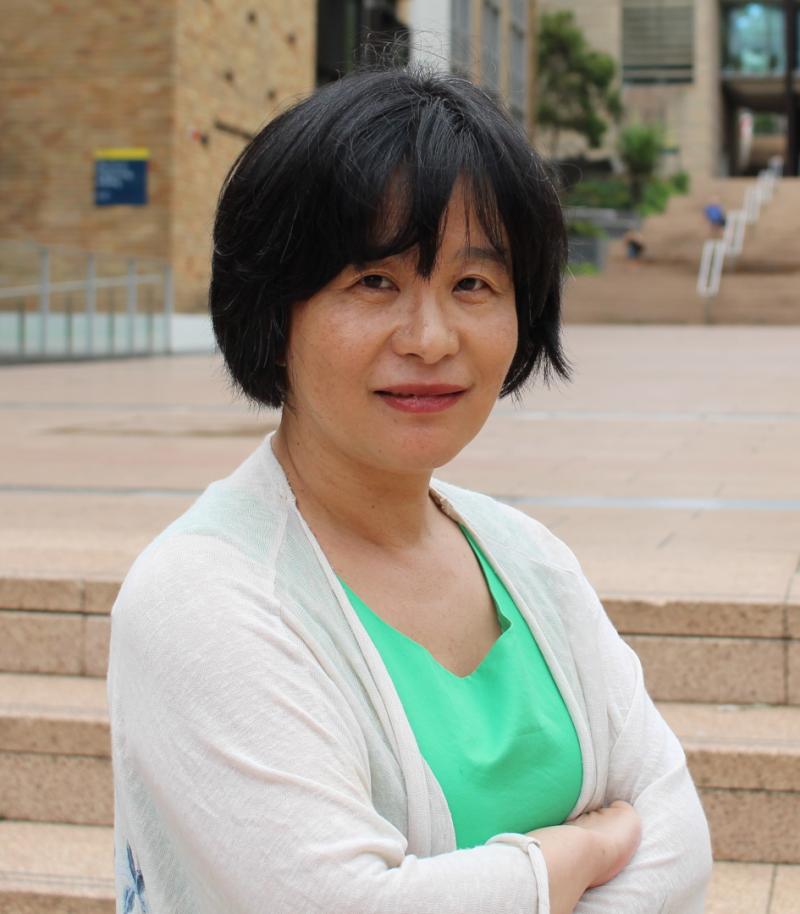
Professor Guangzhao Mao is the Head of the School of Engineering at the University of Edinburgh and holds the title of Chair Professor of Materials Engineering. She is also an Adjunct Professor at the University of New South Wales (UNSW) Sydney, where she formerly led the School of Chemical Engineering. Her research focuses on nanotechnology and materials engineering, with key areas including electrocrystallization for advanced sensors, nanomedicine for central nervous system (CNS) drug delivery, and innovative material synthesis using liquid metal technologies. Her work bridges engineering and medicine, addressing challenges like drug delivery across the blood-brain barrier and environmental monitoring through gas sensors. Professor Mao’s academic qualifications include a B.Sc. and Ph.D., with her doctoral studies likely in chemical or materials engineering (details unspecified). Her research team has pioneered technologies such as protein-drug nanoconjugates for spinal cord injury treatment and microfluidic assays for drug screening. She has received prestigious awards, including the Fulbright Senior Scholarship and AIChE Fellowship, and has held visiting roles at the Max Planck Institute. Her leadership and innovation have positioned her at the forefront of interdisciplinary research, with contributions to both academic institutions and industry partnerships. Current projects emphasize translating nanomedicines into clinical applications and advancing sustainable catalytic systems through liquid metal-enabled synthesis.
Dr. Marina Bock is a Chartered Civil Engineer and Lecturer in Civil Engineering at Aston University's College of Engineering and Physical Sciences. She specializes in structural engineering with expertise in metallic structures, additive manufacturing, and numerical modeling. Currently accepting PhD students, her work bridges academic research and industry applications in sustainable construction. Her educational background includes: PG Cert in Building and Design and Construction Technology, University of Wolverhampton (2017-2018) PhD in Local Buckling and Web Crippling Response of Stainless Steels, Universitat Politècnica de Catalunya (2010-2015) MSc in Patch Loading of Hybrid Plate Girders, Universitat Politècnica de Catalunya (2004-2010) Dr. Bock's research integrates laboratory experiments and numerical modeling to advance metallic structural systems, with pioneering work in additive manufacturing for construction. Her investigations span stainless steel design code development, corrosion prevention in reinforced concrete using hydrogels, and cold-formed steel behavior. Recent projects focus on sustainable infrastructure solutions through novel composite materials. Analysis of her 2022-2025 publications reveals dominant themes in additive manufactured aluminum structures, cold-formed steel design methodologies, and sustainable paving materials for urban heat island mitigation. Her work consistently addresses practical engineering challenges through experimental validation and code-compliant design solutions. Scientific recognition includes: IStructE Academic Research Award Commendation (2021) for research on aluminum SHS/RHS under biaxial bending Dr. Bock has secured significant research funding including a Royal Society Research Grant (£20k, 2023) for additive manufactured Al7075 aluminum and Innovate UK funding (£437k) for UV-reflective resin-based paving. Previous internal projects (£20k) focused on structural aluminum applications. She supervises PhD research in additive manufacturing and corrosion prevention while maintaining industry collaborations. Her experimental work utilizes advanced university laboratories for structural testing, with collaborations spanning European research consortia and industrial partners. Current projects involve multi-institutional teams developing reusable structural systems and solar-energy-harvesting building envelopes.
Professor Evangelos Boulougouris is Head of the Department of Naval Architecture, Ocean and Marine Engineering at the University of Strathclyde, where he also serves as Chair of the Maritime Safety Research Centre. He is a chartered professional engineer with over 28 years of internationally recognized research in maritime safety, design for safety, and holistic ship design. His work spans damage stability, autonomous vessels, alternative fuels, and ship survivability, with strong impact on international regulations through roles in IMO, ITTC, SNAME, and RINA. Research Interests: His primary research focuses on safety of marine operations, including damage and intact stability in waves, collision avoidance, ship evacuation, crashworthiness, and the integration of alternative fuels like ammonia and hydrogen. He leads cutting-edge work in multi-objective ship design optimization, risk modeling, and decarbonization strategies for advanced marine vehicles. The recent 15 publications highlight a strong trend toward digitalization and sustainability in shipping, combining machine learning for propeller optimization, CFD simulations for catamaran performance, real-time decision support in emergencies, and hybrid propulsion systems for zero-emission vessels. His work increasingly emphasizes climate resilience, port risk under extreme weather, and energy management in CTVs, aligning with global SDGs. Scientific Awards: 2020 Denny Medal SNAME ABS Captain Joseph H. Linnard Prize (2023) Safety 2020 Best Paper Award (2022) Honorable Mention for Vice Admiral E. L. Cochrane Award (2022) EU CHAMPIONS of Transport Research (HOLISHIP, TRA 2014) Greek Technical Innovation Award, Lloyd’s List (2009) 1st Prize, International SAFER SHIP Competition (1999) Advising and Grants: He actively supervises PhD students and has led numerous EU and UK-funded projects such as SEASTARS, SAFARI, EcoShipYard, and Digital Shipwright. As Principal Investigator and Co-I, he secures substantial research funding, coordinates knowledge exchange (KE) initiatives, and leads training programs across Europe. Labs and Teams: He leads the Maritime Safety Research Centre at Strathclyde, fostering interdisciplinary collaboration on ship safety, stability, and sustainable design. His team works closely with industry partners RCG and DNV, and engages in international networks through STAB, ITTC, and IMO committees.
Dr. Shabnam Sadeghi Esfahlani is an Associate Professor in Robotics at the School of Engineering and the Built Environment, Anglia Ruskin University , where she serves as Deputy Leader of the BORI research group and leads the Automation & Robotics MSc program. Her interdisciplinary expertise spans mechatronics, artificial intelligence, virtual reality, and serious games , with a focus on applications for rehabilitation, medical training, and autonomous systems . As a Chartered Engineer and Senior Fellow of the Higher Education Academy , she has secured significant funding from Innovate UK, Horizon 2020, and GCRF , with grants exceeding £3 million. Education PhD in Mechanical Engineering, Anglia Ruskin University BSc (First Class) in Statistics & Mathematical Science, Shahid Beheshty University Her research integrates AI with robotics for societal impact, exemplified by the open-source SROBO ground robot and projects like Rehabgame and the Assistive Feeding Robot . She has published over 45 peer-reviewed articles and contributes to academic communities as a journal guest editor and conference organizer . Key collaborations include IET, IMechE, and the Nuffield Foundation as a mentor for young students. Scientific Awards & Recognitions: Chartered Engineer (CEng), Engineering Council UK Senior Fellow (SFHEA), Higher Education Academy Student-Voted 'Made a Difference Award' (2018) Post-Graduate Certificate in Higher Education
Professor Stephen Hicks is a Professor in Civil Engineering and Leader of the Civil and Environmental Engineering Discipline Stream at the School of Engineering, University of Warwick. He has held senior roles in research institutes like the Heavy Engineering Research Association (HERA) and the Steel Construction Institute (SCI), contributing to national and international standards development. Education: PhD (University of Cambridge, 1998), BEng (University of London, 1993) Research focuses on composite steel-concrete structures, structural reliability, and vibration serviceability. He leads teaching modules including ES3E1 Design Project and ES2C2 Civil Engineering Design. Key projects include Eurocode 4 revisions and steel-concrete composite systems development. Grants include leadership on Steel-CLT composite design (WSP UK) and EU-funded Eurocode 4 standardization projects. He chairs CEN Subcommittee SC4 for Eurocode 4 and contributed to Australasian standards like AS/NZS 2327. Engaged in governance roles with organizations such as EPD Australasia and Steel Construction New Zealand.
Dr Laura Lander is a Lecturer in Engineering at King's College London's Department of Engineering, part of the Faculty of Natural, Mathematical & Engineering Sciences. Her research focuses on sustainable energy storage systems, particularly advancing high-performance batteries through materials science and techno-economic analysis. She holds a PhD from the Collège de France and has held postdoctoral roles at the University of Tokyo and Imperial College London. Her work emphasizes battery recycling, lifecycle assessment, and circular economy frameworks. Notable contributions include developing methodologies for recycling lithium-ion batteries and optimizing battery pack designs for cost-effective disassembly. She leads the UKRI Future Leaders Fellowship-funded project 'Aluminium-Ion Batteries for a Resilient Energy Future' (2024–2028). Key collaborations span institutions globally, addressing challenges in energy storage sustainability. Her research aligns with UN Sustainable Development Goals related to affordable and clean energy (SDG7) and responsible consumption (SDG12). Office hours: Wednesdays 10am–12pm at Strand Campus. Education: PhD (Collège de France), Postdoc (University of Tokyo), Faraday Institution Researcher (Imperial College London) Awards: JSPS Postdoctoral Fellowship, UKRI Future Leaders Fellowship Research interests include battery materials discovery, life cycle assessment, and techno-economic analysis of renewable energy storage systems. She is affiliated with the London Centre for Nanotechnology and the Centre for Sustainable Business.
Dr. Mingfeng Wang is a Senior Lecturer in Robotics and Autonomous Systems at Brunel University London, affiliated with the Department of Mechanical and Aerospace Engineering within the College of Engineering, Design and Physical Sciences. His research focuses on specialized robotic systems including continuum, legged, soft, precision farming, and miniaturized robots. Chartered Engineer (CEng) with Engineering Council UK Fellow of the Higher Education Academy (FHEA) Member of IEEE, IEEE-RAS, IMechE, and IFToMM Editorial roles: Associate Editor of International Journal of Advanced Robotic Systems (JCR-Q3); Associate Editor of Frontiers in Robotics and AI (JCR-Q2); Editor of Information Processing in Agriculture (JCR-Q1), Biomimetic Intelligence and Robotics (JCR-Q1), and STEM Education Research expertise includes: Continuum Robotics : Design of extra-slender continuum robots (diameter-to-length ratio Legged Robotics : Parallel mechanism-based biped and hexapod robots for extreme environments Miniaturized Robotics : Active locomotion and drug delivery in capsule endoscopes Soft Robotics : Compliant end-effectors and bio-inspired designs Precision Farming : Laser weeding systems and agricultural automation Key scientific awards: BRIEF award (2022) TAROS Best Paper Post Nomination (2022) IFToMM Asian-MMS Best Paper Award (2014) Recent publications focus on: Cochlear implant surgery robotics Passive compliance in train fluid servicing Snake-biomimetic sealing surfaces Parallel kinematic manipulators Capsule endoscope image enhancement Professional services include conference organization (TAROS 2023/2024 Steering Committee; TAROS 2024 Programme Chair) and journal refereeing for IEEE-ASME Transactions on Mechatronics and Scientific Reports.
Professor Oliver Wild is based at the Lancaster Environment Centre , Lancaster University , where he serves as Programme Director for Environmental Science and Earth and Environmental Science degree schemes. Previously, he was Associate Director for Research (2017-2023) and Undergraduate Admissions Tutor for Environmental Science degrees. His research focuses on atmospheric composition and chemistry , particularly modeling intercontinental transport of ozone and its precursors , indirect climate impacts of short-lived gases (NOx, CO), and Earth System interactions . He contributes to international policy through the UN-ECE HTAP task force and has participated in IPCC climate assessments (2001, 2007, 2013). Current projects include HYDRA (hydrogen economy climate impacts), COP-AQ (net zero policy effects on air quality), and ACITES (atmospheric chemistry in Earth systems). His work spans global to urban scales , with collaborations across US, Japan, China , and involvement in model intercomparison projects (ACCENT, HTAP, CCMI). Scientific Awards EGU Outstanding Reviewer Award He teaches undergraduate courses on atmosphere, weather, and climate, and supervises PhD studentships supported by ExaGeO, E5 DTP , and Edinburgh .
Amna Shibeika is a Lecturer in Construction and Project Management at the University of Reading , where she leads the MSc in Construction Cost Management program. Her research focuses on the intersection of digital innovation in construction , sustainable and resilient built environment for vulnerable populations, and construction management . Previous Role: Assistant Professor at UAE University Qualifications: PhD in Construction Management and Engineering, MSc in Applied Informatics – Construction, BSc in Architecture Her work addresses housing resilience for vulnerable groups, digital transformation in construction via BIM and IoT, and labor market dynamics . She leads the Building Resilience project (2024-2025, ISPF ODA) examining war displacement impacts on Sudanese elderly housing. Key publications span energy retrofitting in UAE, digital trio frameworks (BIM–EIR–IoT), environmental analysis in MMC housing , and Sustainability Assessment challenges in UAE construction. Her research has appeared in Buildings , Applied Sciences , Sustainability , and Archnet-IJAR . Professional affiliations include the Chartered Institute of Architectural Technologists and the Higher Education Association .
Dominic King is an Honorary Clinical Lecturer at the Department of Surgery & Cancer, Faculty of Medicine, Imperial College London. He transitioned from a full-time NIHR Clinical Lecturer role in 2016 to focus on executive leadership in AI healthcare sectors, including roles at Microsoft AI (Health), DeepMind, Google Health, and UnitedHealth Group. His expertise spans behavioral economics, digital health innovation, and clinical informatics. Education & Research: King holds a PhD in Behavioral Economics, co-authoring the influential Mindspace Report on public policy design. His research focuses on Public Health, Clinical Sciences, and Applied Economics, with contributions to the HELIX Centre (a hospital design initiative) and co-founding Hark, a clinical task management platform acquired by Google. Professional Contributions: He pioneered early digital health programs, leading to numerous products and collaborations with Imperial College. His work bridges clinical practice with AI-driven solutions, emphasizing patient safety and healthcare optimization. Notable projects include AI systems for breast cancer screening and frameworks for esports athlete wellness. Key Themes in Publications: Recent articles explore barriers in healthcare access, biologic therapy efficacy in IBD, AI diagnostic tools, and musculoskeletal interventions. His work consistently integrates behavioral insights with technological innovation to address clinical challenges. Advising & Grants: As a startup founder and academic collaborator, King has secured funding for digital health ventures and co-authored studies on health informatics. His affiliations include the Centre for Health Policy and Patient Safety Translational Research Centre , reflecting his commitment to systemic healthcare improvement. Labs & Teams: Key affiliations include the HELIX Centre (Imperial/Royal College of Art collaboration) and the Behavioural Insights Team , leveraging multidisciplinary approaches to healthcare innovation.
Anne Templeton serves as a Senior Lecturer in Social Psychology at the University of Edinburgh's School of Philosophy, Psychology and Language Sciences. She holds a UKRI Future Leaders Fellowship and leads the research group Identities and Collective Behaviour . Her academic journey includes a PhD from Sussex, MSc from Surrey, and MA (hons) from St Andrews. Her research centers on applying social identity theory to crowd psychology, particularly examining how group dynamics influence safety during emergencies and mass events. Key focus areas include: psychological crowd modeling, first responder communication strategies, and incorporating social identities into evacuation simulations. She develops behavioral interventions to improve public adherence during crises through computational modeling and virtual reality experiments. Her 15 most recent publications reveal strong thematic consistency across emergency management, crowd dynamics, and social identity applications. Recent work emphasizes high-rise evacuation protocols, tunnel fire egress, COP26 protest support mechanisms, and bystander CPR interventions. The research demonstrates interdisciplinary integration of psychology, computational modeling, and public safety practice. Scientific Recognition: UKRI Future Leaders Fellowship (2022) Research Leadership: Principal Investigator for ESRC, DCMS, and Chief Nursing Office grants totaling over £1.8 million, including the £1.377m UKRI project on first responder communication strategies. Current supervision of four PhD students (Waleed Alhajri, Sam Vo, Sayaka Hinata, Kayleigh Smith). Her knowledge exchange extends through government advisory roles including the Scottish Government COVID-19 Behavioural Insights team (2021-2022), UK Department of Digital, Culture, Media and Sport Science Board (2021), and Sports Grounds Safety Authority consultation (2020). Media engagements feature BBC, Reuters, and The Conversation coverage of Hajj crowd safety and stadium atmosphere research.
Matthew Hobbs is a Lecturer in Semiconductor Materials and Devices at the University of Sheffield's School of Electrical and Electronic Engineering. He also serves as an Electrical and Electronic Engineering Y1 & 2 Tutor. His academic journey includes an MEng (2009) and PhD (2014) in Electronic Engineering from the University of Sheffield, followed by a Knowledge Transfer Partnership (KTP) role with AMETEK Land. Since 2016, he has contributed to research on single-pixel measurement instruments and non-contact thermometry within the Sensor Systems Research Group. His current research focuses on developing novel optical instrumentation, including luminescence metrology, hyperspectral imaging, and aerosol jet-printed electronics. He actively supervises PhD students in optical sensing and instrumentation. Education: MEng (Hons) in Electronic Engineering, University of Sheffield (2009) PhD in Electronic Engineering, University of Sheffield (2014) Research Interests: Hobbs' work centers on advanced measurement technologies such as non-contact temperature sensing, hyperspectral imaging, and luminescence-based techniques. He is pioneering innovations in printed electronics via Aerosol Jet Printing and advancing instrumentation for industrial and academic applications. His research bridges fundamental science and practical industrial challenges in sectors like foundation industries and environmental monitoring. Grants & Leadership: PI of Game Changers grant: "Single-Pixel Salt Concentration Mapping" (2023-2023) PI of TFI Network+ grant: "Accurate Emissivity Characterisation of Metals" (2022-2023) Teaching & Mentorship: Teaches undergraduate courses including EEE117 (Electrical Circuits), EEE123 (Introduction to Circuits), and EEE126 (General Skills). He balances research with teaching roles since 2021. Professional Activities: Member of the Institution of Engineering and Technology (IET). Collaborates with industry partners such as AMETEK Land and actively publishes in high-impact journals like Optics Express and Sensors .
Dr. Kirti Ruikar is a Reader in Digital Construction with 19 years of experience, specializing in applying digital technologies like BIM and AI to enhance safety, resilience, and performance in construction and infrastructure projects. She holds a BArch, MSc, and EngD, and is a Fellow of the Higher Education Academy (FHEA). As a University Special Envoy for India, she bridges international collaborations. Her research focuses on BIM integration for site safety and sustainability, Data-driven solutions for infrastructure projects, AI applications in construction safety, Public-Private Partnerships in developing countries, Enterprise systems optimization, and policy interventions in roadworks management. Notable projects include Data Lakes for Indian highways (collaboration with IIT Delhi), BIM-based safety frameworks for staircases and ladders, Social network analysis for knowledge management, and FCDO-funded automated construction safety systems. Her work spans over 150 publications, including 3 books and 50 journal papers, with a strong emphasis on Q1 journals. She has secured £1m+ in funding from Innovate UK, EPSRC, and international bodies. Collaborations include Asite, Arup, and Derby City Council. Her research outputs highlight trends in Industry 4.0 adoption, AI-driven safety systems, and leveraging data lakes for infrastructure resilience. She advocates for ethical innovation and cross-disciplinary collaboration to address global construction challenges.