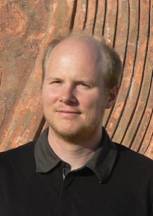
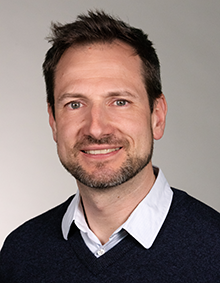
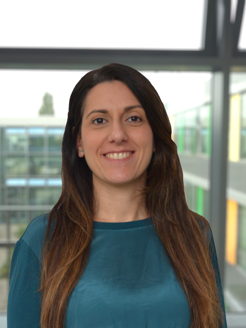
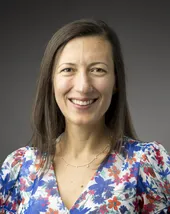
Anna Levina is an Assistant Professor for Computational Neuroscience at the University of Tübingen , affiliated with the Department of Computer Science under the Faculty of Science. Her research focuses on the self-organization of neuronal activity, critical dynamics in neural networks, and the excitation/inhibition balance in cortical circuits. Current positions: Assistant Professor (since 2018), Group Leader (2017-2018), Equality Officer (Computer Science) Previous roles: IST Fellow (2015-2017), Associated Researcher (2011-2015), Postdoc/PI (2011-2015), Postdoc (2008-2011) Her research integrates mathematical modeling , statistical physics , and computational neuroscience to study criticality phenomena, neural avalanches, and adaptive network dynamics. Key interests include: Self-organized criticality in neural systems Excitation/Inhibition balance mechanisms Network topology and dynamics Timescale analysis in neural processing Stochastic modeling of neural activity Recent publications reveal trends in understanding critical dynamics across biological and artificial networks, with applications to memory systems, sensorimotor integration, and disease modeling. She has received recognition as an IST Fellow .
Dr. Conny Kopp-Scheinpflug is an Associate Professor (PD) at the Faculty of Biology, Ludwig Maximilian University of Munich, where she leads a research group focused on auditory neuroscience. Her laboratory investigates the function and mechanisms of activity-dependent neuromodulation in the mammalian auditory system, with particular interest in how ambient sensory stimulation activates neuromodulators and how these influence neural processing of relevant information. Dr. Kopp-Scheinpflug's research spans auditory neuroscience, neuromodulation, neuronal excitability, and synaptic transmission. She employs electrophysiological (single cell in vivo and patch clamp in brain slices), anatomical, and optogenetic techniques to study how hyper- or hypo stimulation lead to acquisition or loss of function in the auditory system. Her work has significant implications for understanding and potentially treating functional disorders of neuronal excitability. Current research examines potassium channels, nitric oxide signaling, and neuromodulators like urocortin 3 in auditory processing. Analysis of Dr. Kopp-Scheinpflug's recent publications (2016-2022) reveals consistent focus on auditory processing mechanisms, particularly potassium channels (Kv3.1, Kv3.3, Kv1.1), nitric oxide signaling, and activity-dependent changes in myelination. Her research spans molecular mechanisms to systems-level auditory processing, with emphasis on sound localization, temporal processing, and recovery from hearing impairment. Key findings include how sound-evoked activity influences myelination, how nitric oxide regulates postsynaptic excitability, and how urocortin 3 aids hearing recovery. Dr. Kopp-Scheinpflug has secured funding from multiple research agencies. She maintains active collaborations with researchers at Lehigh University (Michael Burger Lab), University of Edinburgh (Matthias Hennig Lab), Ben-Gurion University of the Negev (Michal Hershfinkel Lab), and UCL (Dr. Jennifer Linden). Her laboratory currently includes Ezhilarasan Rajaram, Dr. Mihai Stancu, Oskar Kalle Juhani Markkula, Sara Pagella, and Katharine Krueger. Past lab members who have completed their training include Dr. James Sinclair, Dr. Matthew Fischl, Max Bayer, Alkmini Damkou, Alyahyay Mansour, Leander Mrowka, Joseph Kroeger, and Myriam Schmidt-Pauly.
Markus König is a Professor of Informatics in Civil Engineering at Ruhr University Bochum, where he has been researching and teaching since October 2009. His work focuses on Building Information Modeling (BIM), digital construction technologies, and civil engineering informatics, with significant contributions to the development and implementation of digital methods in German construction industry. Dr. König earned his degree in civil engineering with a focus on applied computer science at Leibniz University Hannover, where he also completed his doctorate on cooperative building planning at the Institute for Building Informatics. He subsequently held a junior professorship for Theoretical Methods of Project Management at Bauhaus University Weimar before joining Ruhr University Bochum. His research spans multiple cutting-edge areas including Building Information Modeling (BIM), construction process simulation, tunneling informatics, infrastructure asset management, and the application of artificial intelligence and computer vision in civil engineering. As chair of the Building Informatics Working Group from 2012-2016, he played a key role in developing the first national BIM curriculum for German universities and serves as editor of the book 'Building Information Modeling: Technological Foundations and Industrial Practice.' Analysis of his recent publications reveals a strong trend toward semantic technologies, digital twins, automated compliance checking, and the integration of AI in construction processes. His work increasingly focuses on information containers, ontology development, and the application of large language models to infrastructure data, reflecting the evolving landscape of digital construction. Dr. König's significant contributions to digital construction have been recognized with prestigious awards: Lower Saxony-Bremen Construction Industry Award (2017) for 'services in the development and introduction of digital construction in Germany' Konrad Zuse Medal (2020) While specific details about his advising and grant activities aren't explicitly mentioned in the provided text, his extensive publication record with numerous co-authors suggests active supervision of doctoral students and research staff. His involvement in multiple collaborative research projects is evident from his publication history. At Ruhr University Bochum, Professor König leads a research group focused on civil engineering informatics, with particular emphasis on BIM, digital construction technologies, and their application across the building lifecycle. His team appears to work at the intersection of computer science and civil engineering, developing innovative solutions for construction process optimization, infrastructure management, and digital transformation of the AEC industry.
Jürgen Groeneveld is a researcher at the Department of Ecological Modelling at the Helmholtz Centre for Environmental Research (UFZ) in Leipzig, Germany. His work focuses on agent-based modelling of ecological and socio-environmental systems, with a particular emphasis on pollinator conservation, climate change impacts, and biodiversity digital twins. He contributes to the BioDT Project and collaborates on initiatives like the BEEHAVE and BEE-STEWARD models for honeybee and bumblebee dynamics. His research integrates computational methods with ecological theory to address challenges in sustainable land use and environmental policy. Key projects include modeling land use transformations, analyzing the effects of pesticides on pollinators, and exploring risk-sharing mechanisms for smallholder farmers. Groeneveld has published extensively on topics such as metapopulation dynamics, forest fragmentation, and the application of standardized protocols (e.g., ODD) for simulation models. His work bridges theoretical ecology with practical applications, aiming to inform conservation strategies and climate adaptation policies. He participates in interdisciplinary collaborations across the UFZ’s research units, including the 'Smart Models / Monitoring' group. His contributions span publications in journals like Ecological Modelling, Ecosphere, and Nature, reflecting his expertise in both ecological and computational methodologies.
Prof. Dr.-Ing. Ruben-Laurids Lange is a faculty member at the Westfälische Hochschule Gelsenkirchen, where he holds the Professorship for Water Technologies in Supply and Disposal within the Faculty of Mechanical Engineering, Environmental and Building Technology. His work bridges academic teaching and applied research in municipal water systems, with strong ties to practical engineering through prior industry experience at Emschergenossenschaft and Dahlem Beratende Ingenieure. Bachelor in Civil Engineering, Bergische Universität Wuppertal (2006) Doctorate in Engineering (Dr.-Ing.), Ruhr-Universität Bochum (2013) His research focuses on sanitary engineering, wastewater treatment, and urban water management , with particular expertise in micropollutant removal, membrane technologies, sediment dynamics in sewers, and hydraulic design of water systems. He investigates advanced treatment methods such as powdered activated carbon dosing and ultrafiltration, often in combination, to improve water quality and sustainability. His work contributes to optimizing cleaning intervals, minimizing environmental impact, and adapting infrastructure to climate change. The 15 most recent publications highlight a consistent focus on micropollutant and pharmaceutical removal , especially through adsorption and membrane-based processes . Key themes include the integration of powdered activated carbon with ultrafiltration, phosphate precipitation effects on greenhouse gases, sediment transport in real wastewater systems, and fourth-stage wastewater treatment. The research spans experimental studies, technical comparisons, and field applications, primarily targeting municipal wastewater treatment plants and urban drainage systems. No scientific awards or fellowships are mentioned in the provided text. Prof. Lange teaches core undergraduate courses in Sanitary Technology, Wastewater Engineering, and Water Treatment , covering topics such as drinking water installation design, DIN standards, fire protection, rainwater utilization, biological and chemical wastewater treatment, sludge processing, and membrane technology. He supervises various internships in water and biomass energy systems. While no formal students or advising roles are listed, his leadership in teaching and applied research suggests an active mentoring role. There is no mention of research grants or funding sources. His research is closely aligned with practical applications in municipal water infrastructure, particularly through collaborations with water management associations like Emschergenossenschaft and Lippeverband. While no formal lab or research team is explicitly named, his work involves experimental sewer systems and pilot-scale treatment studies, indicating hands-on research facilities likely integrated within the university’s engineering programs.
Gernot Müller is a Professor of Economics at the School of Business and Economics, University of Tübingen. His research focuses on international macroeconomics, monetary policy, fiscal policy, and economic networks, with a particular emphasis on how news, expectations, and structural shocks propagate through economies. Current Affiliation: Professor, University of Tübingen Research Areas: Monetary policy, fiscal policy, climate economics, economic networks, conflict economics Recent publications explore topics such as the economic impact of war, tariff shocks in production networks, green transition policies, and the role of expectations in business cycles. His work appears in journals like the American Economic Review , Journal of Monetary Economics , and European Economic Review . Active collaborations with researchers across Europe and the U.S. highlight his interdisciplinary and global approach. Contact: gernot.mueller@uni-tuebingen.de
Jun.-Prof. Dr.-Ing. Federica Ferraro is an Assistant Professor in the Faculty of Mechanical Engineering at TU Braunschweig, leading the Reactive Flows in Aero Engines research group. Her work focuses on combustion dynamics, sustainable aviation propulsion, and numerical simulations of reactive flows. She investigates flame-wall interactions, soot formation mechanisms, and alternative fuels like hydrogen and oxymethylene ethers. Key projects include the Cluster of Excellence SE2A (C3.5) and CRC 150 (C07), addressing synthetic fuels and flame retardancy under aviation conditions. Ferraro teaches courses in numerical simulation and high-performance computing for CFD applications. Her research integrates advanced modeling techniques such as Large Eddy Simulation (LES), flamelet manifolds, and quadrature-based methods for particle dynamics. Her contributions span experimental validation, turbulent combustion analysis, and green fuel substitution strategies for decarbonizing aviation. Research Interests : Combustion physics, aero-engine propulsion, sustainable fuels, soot dynamics, CFD modeling, and thermo-chemical systems. Her studies often bridge fundamental combustion science with industrial applications in turbine design and emission control. Projects & Collaboration : Leads the Numerical investigations of synthetic fuel flames (SE2A) and Boundary layer flames with flame retardants (CRC 150). Collaborates with institutions like the Lower Saxony Graduate School on hydrogen/ammonia energy systems. Her team develops novel numerical frameworks for predictive combustion modeling. Labs & Teams : Manages the Reactive Flows group at TU Braunschweig's Institute of Jet Propulsion and Turbomachinery, fostering interdisciplinary research in propulsion and energy technologies.
Dr. Yelda Turkan is an Associate Professor in the School of Civil and Construction Engineering at Oregon State University and a Hans Fischer Fellow at the Technical University of Munich (TUM-IAS). Her research focuses on leveraging computer vision, machine learning, and digital twins to enhance sustainability and resilience in the built environment. She holds a Ph.D. in Civil Engineering from the University of Waterloo, Canada, and dual B.Sc. degrees in Civil Engineering and Geomatics Engineering from Istanbul Technical University, alongside an M.Sc. in Remote Sensing. Her work integrates advanced technologies like LiDAR and BIM to improve construction monitoring, structural safety, and fire protection. She has authored over 80 peer-reviewed publications and secured $4.5M in grants from agencies like the NSF. Dr. Turkan serves as Vice President of the International Association for Automation and Robotics in Construction and chairs the ASCE Computing Division Executive Committee. Her research spans digital twins for infrastructure performance, fire safety simulations, and automated progress tracking. Key contributions include frameworks for bridge construction monitoring, fire safety management in timber structures, and BIM-based energy fault detection. Awards include the Robert C. Wilson Faculty Scholar (2023–2025) and ASCE ExCEEd Teaching Fellow (2015).
Prof. Dr. Rüdiger Weber is a Professor of Finance at Goethe University Frankfurt , affiliated with the Faculty of Economics and Business Administration and the Department of Finance . He holds the Endowed Chair for Alternative Investments at the House of Finance. Research Focus : Asset pricing, risk sharing between heterogeneous agents, institutional investor dynamics, cash-flow timing, discount rate variation, and behavioral finance. Recent Publications : Explored implied volatility duration, time-varying expected returns, belief-driven investment behavior, and methodological robustness in portfolio analysis. Contact : r.weber@finance.uni-frankfurt.de | Room HoF 2.57 | Office hours by appointment.
Christopher Miller is a Professor of Geoarchaeology at Eberhard Karls University of Tübingen (since 2016) and Director of Undergraduate Studies in the Institute for Archaeological Sciences (since 2013). He previously served as Junior Professor of Geoarchaeology (2010-2016) and Acting Head of the Archaeometry Division (2013-2015). His research focuses on site formation processes, archaeological micromorphology, and the role of fire in human evolution, with a particular emphasis on Paleolithic cave sites. Education: PhD (2010): Eberhard Karls University of Tübingen, Dissertation on Paleolithic cave sites' formation processes and settlement dynamics MSc (2004-2006): University of Maine, Thesis on geoarchaeological settings in the eastern US BA (2000-2004): Boston University, Dual degree in Archaeology and Earth Science Research interests include: Micromorphological analysis of archaeological sediments Geochemical tracing of Paleolithic sites Reconstruction of prehistoric human-environment interactions Development of novel microanalytical techniques for archaeological contexts His recent publications highlight interdisciplinary approaches to site formation processes, paleoenvironmental reconstruction, and the application of clumped isotope thermometry in archaeological contexts. He has conducted fieldwork in South Africa, Italy, Germany, and the Levant, focusing on cave systems and open-air sites. As an academic leader, he oversees the Geoarchaeology research group and collaborates with international teams on projects such as the Neolithic Movila lui Deciov settlement and the Swabian Jura Paleolithic sites. His work bridges geochemistry, archaeology, and environmental science to unravel the complexities of human adaptation in prehistoric environments.
Raul Wood is a Research Fellow at the Swiss Federal Institute for Forest, Snow and Landscape Research (WSL), specifically within the Institute for Snow and Avalanche Research (SLF) in Davos. He operates in the Snow and Atmosphere Unit under the Hydrology & Climate Impacts in Mountain Regions Group, focusing on climate-hydrology interactions in alpine environments. His research centers on extreme hydroclimatic events, with emphasis on precipitation extremes, flood/drought dynamics, and climate change impacts in mountainous regions. Wood employs global climate model ensembles and hydrological modeling to dissect internal variability versus forced responses, particularly across European and Alpine domains. His work bridges theoretical climate science with practical water resource management challenges. Analysis of Wood's publication record reveals consistent focus on multi-scale extreme event analysis, compound hazards, and ensemble-based uncertainty quantification. His recent work increasingly addresses societal impacts through urban flood resilience and population exposure metrics, while maintaining technical rigor in statistical downscaling and hydrological modeling. Wood actively contributes to three major research initiatives: SynFire (synchronous forest fires in Europe), Hydro-SMILE (hydrological ensemble for Swiss droughts/floods), and upXdown (upstream-downstream drought cascades in the Alps). These projects demonstrate his commitment to solving complex climate-water challenges through collaborative, interdisciplinary approaches with European partners.
Klaus von Gadow is a Professor with a focus on forest ecology and management. He has supervised numerous doctoral theses across diverse topics in forestry, including GIS visualization, biomass estimation, and silvicultural strategies. Research Areas : Forest Management, Ecology, Biomass Estimation, GIS Applications, Population Genetics, and Tropical Forestry. Advisory Role : Supervised 18 theses from 2000–2015, covering topics like invasive species monitoring, dry savanna ecosystems, and fire succession. Key Projects : Development of k-NN methods for biomass analysis, simulation of mixed-species forest treatment pathways, and sustainable management of tropical watersheds. Trends in Publications : Recent works emphasize ecological resilience, technical innovations in forestry machinery, and data-driven forest planning. Earlier articles focus on genetic studies and post-fire succession dynamics. Advising Legacy : His supervised research has driven advancements in forest inventory systems, silvicultural modeling, and sustainable resource use.
Dr. Yun Qian is a distinguished Earth Scientist and Lab Fellow at Pacific Northwest National Laboratory (PNNL), where he leads the Earth System Modeling Group with over 80 scientists and staff within the Atmospheric, Climate, and Earth Sciences (ACES) Division. He joined PNNL in 2000 and has established himself as a renowned expert in climate modeling, particularly in regional climate systems, aerosol-climate interactions, and urban climate effects. Dr. Qian is also an AMS Fellow with significant contributions to understanding human influences on the Earth system. Dr. Qian received his academic training in China: Ph.D. in Atmospheric Science from Nanjing University, Nanjing, China B.S. in Atmospheric Science from Nanjing University, Nanjing, China Dr. Qian's research focuses on advancing our understanding of climate systems through sophisticated modeling approaches. His work spans regional and global climate modeling, aerosol-climate interactions, snow and glacier impurities and their climatic impacts, land-atmosphere-water interactions, urban and coastal environment modeling, and uncertainty quantification in climate modeling. His pioneering work on Asian aerosols revealed their dominant role in shaping climatic trends in East Asia, while his research on snow and ice impurities provided new insights into changes in snowpacks in the western United States and the Himalayas. Dr. Qian has also made significant contributions to understanding how atmosphere-land-water interactions modulate the influence of human activities on the environment. Analysis of Dr. Qian's recent publications shows a strong focus on urban climate effects, regional climate modeling, and the impacts of human activities on climate systems. His work increasingly incorporates advanced computational methods including machine learning for weather pattern identification. There's a clear trend toward studying the interactions between urban environments and climate systems, with particular attention to heat stress, precipitation patterns, and regional warming effects. His research also shows growing interest in extreme weather events and their changing patterns under climate change scenarios. Dr. Qian has received numerous prestigious awards and recognitions: Fellow of American Meteorological Society Chair of AMS Coastal Environment Committee Program Chair for Annual AMS Coastal Environment Symposium Editor of JGR-Atmospheres, Atmospheric Chemistry and Physics, and Advances in Atmospheric Sciences Director of international workshop on Uncertainty Quantification in Climate Modeling and Projection Member of Scientific Steering Committee for IPCC CMIP6 Global Monsoons Modeling Inter-comparison Project NSR 2020 Best Paper AAS Esteemed Review Paper Award PNNL Exceptional Contribution Program Award PNNL EBSD Mentor of the Year Editors' Citation for Excellence in Refereeing at AGU (2015, 2019) Contributing Author of IPCC Assessment Report Fellowship Award of International Council for Science (ICSU), 1997 Xue-Du-Feng-Zheng Award in Chinese Academy of Sciences, 1998 With over 200 peer-reviewed articles and 20,000 citations (h-index of 74), Dr. Qian has made substantial contributions to climate science. His work has garnered significant media attention, with features in top-tier scientific publications like Nature and Science, as well as major news outlets including the Associated Press, New York Times, Washington Post, BBC, NBC, and NPR. He has served as chair of the AMS Coastal Environment Committee, Program Chair for the Annual AMS Coastal Environment Symposium, and as a member of the Scientific Steering Committee for the IPCC CMIP6 Global Monsoons Modeling Inter-comparison Project. Dr. Qian has also directed international workshops on uncertainty quantification in climate modeling and served as an editor for three prestigious journals. Dr. Qian leads the Earth System Modeling Group at PNNL, which comprises over 80 scientists and staff. His team focuses on developing and applying atmospheric and land surface models to advance understanding of human influence on the Earth system. The group's work spans regional climate modeling, aerosol-climate interactions, snow and glacier impurities, land-atmosphere-water interactions, urban and coastal environment modeling, and uncertainty quantification. Their research has significant implications for understanding climate change impacts and developing adaptation strategies.
Anna Treydte is an Associate Professor in Nature and Environmental Management with a focus on Sustainable Development at Stockholm University's Department of Physical Geography. She also holds Adjunct Professor positions at the University of Hohenheim (Ecology of Tropical Agricultural Systems) and the Nelson Mandela African Institution of Science and Technology (Department of Life Sciences and Bioengineering). Her work spans multiple continents, addressing biodiversity conservation and human-wildlife coexistence across temperate climates (Germany, Sweden, Italy), desert environments (Mongolia, Saudi Arabia), savanna systems (eastern and southern Africa), mountain regions (Andes), and tropical forests (China, Vietnam, Thailand, Tanzania). Dr. Treydte's research centers on biodiversity and conservation challenges in human-impacted, changing environments. She investigates how climate change and human activities alter structural, species, and functional biodiversity in natural and agro-ecological systems. Her work examines plant-animal interactions, animal population management, human-wildlife coexistence, and livestock impacts on rangelands. She specifically studies shifts in nutrient cycling, carbon stocks, and species diversity in landscapes under varying human land use pressure, including corridors, buffer zones, protected lands, and cultivated areas facing climate-induced weather extremes. She integrates socio-ecological aspects into her research, emphasizing that sustainable human-wildlife coexistence requires local stakeholder involvement in resource use decision-making. Analysis of her recent publications reveals a strong focus on landscape ecology, rangeland management, and human-wildlife conflict across diverse ecosystems. Her work combines field observations, GPS tracking of wildlife and livestock, socio-ecological surveys, and advanced spatial modeling techniques. Key thematic areas include pastoral mobility patterns, invasive species management, pollination networks in rangelands, and the impacts of land use change on wildlife habitat suitability. Her research consistently addresses the intersection of ecological processes and human livelihoods in changing environments. Dr. Treydte actively supervises numerous PhD, MSc, and BSc students across multiple institutions, with current projects investigating human-wildlife coexistence in Sweden and Tanzania, rangeland restoration techniques, and invasive plant species management. She leads several major research projects including 'Human-Wildlife Coexistence: Reaching a sustainable human-wildlife coexistence by understanding patterns, predicting conflict hotspots and improving communication' and 'Rangeland Ecology: Adapting to change – co-management scenarios of local pastoralists and protected area management to maintain cultural and biological diversity in the Dzungarian Gobi, Mongolia.' Her laboratory, 'NG| Landscape Ecology,' focuses on how landscape patterns, climate, and land use influence ecological processes, biodiversity, and ecosystems. The group employs interdisciplinary approaches that bridge natural and social sciences to address contemporary environmental challenges in a changing world.
Prof. Dr. Eileen Eckmeier serves as Director of the Institute for Ecosystem Research at Christian-Albrechts-University of Kiel and holds a W3 Professorship in Geoarchaeology and Environmental Risks. She concurrently acts as Co-spokesperson of the ROOTS Cluster of Excellence (since October 2023), Spokesperson of the ROOTS subcluster "Socio-Environmental Hazards," Vice President of DEUQUA (German Quaternary Association), and Board member of multiple academic organizations including the Soil and Archaeology Working Group of the German Soil Science Society. Her educational background includes a Dr. sc. nat. from the University of Zurich (2007) with award from the Faculty of Mathematics and Natural Sciences for her dissertation "Detecting prehistoric fire-based farming using biogeochemical markers," and a Diploma in Geography from the University of Cologne (2002) with minors in Soil Science, Prehistory and Early History, and History. Eckmeier's research centers on soil geography and geoarchaeology , particularly human-environment relationships during the Holocene where soils serve as both resources and archives of human activity. Her work investigates changes in soil properties due to land use and climate change across spatial and temporal scales, with geographical focus spanning European and Asian loess/steppe landscapes (Central Europe, Middle East, Mongolia), North Frisian Islands, the Alps, and African savannahs. She employs interdisciplinary approaches combining soil science, archaeology, and paleoenvironmental reconstruction. Analysis of her 15 most recent publications reveals strong emphasis on paleoenvironmental reconstruction through soil archives , with significant contributions to understanding prehistoric agriculture, loess-paleosol sequences, and human impacts on landscapes. Key thematic clusters include Neolithic fertilization practices, ridge and furrow cultivation systems, wildfire impacts on soils, and tectonic-landscape-human interactions in critical regions like the Kenya Rift and European loess belts. Award from Faculty of Mathematics and Natural Sciences, University of Zurich As Director of the Institute for Ecosystem Research and Co-spokesperson of the ROOTS Cluster of Excellence, Eckmeier leads major research initiatives examining societal, environmental, and cultural change. Her leadership extends to the Scientific Advisory Board of the Stone Age Park Dithmarschen and multiple institutional boards focused on Quaternary research and soil-archaeology integration. Current projects investigate socio-environmental hazards through the ROOTS framework while maintaining active fieldwork in diverse global landscapes from European loess regions to African savannahs. Eckmeier directs research teams within the Institute for Ecosystem Research's Geoarchaeology and Environmental Risks group, coordinating work across multiple specialized units including Geobotany, Environmental History and Archives, Applied Ecology and Paleoecology, and Technical Platform teams. Her ROOTS Cluster leadership integrates these efforts into a comprehensive framework examining human responses to environmental change over millennia.