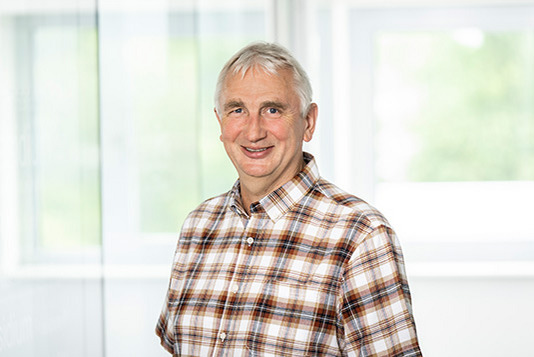
Prof. Dr.-Ing. Michael Wehmöller is a full Professor at the Faculty of Engineering and Computer Science, Osnabrück University of Applied Sciences. His career spans roles as a technical director in medical device companies and interdisciplinary research leadership in DFG/EU-funded programs, integrating CAD/CAM, additive manufacturing, and biomechanics. Research interests focus on dental technology , medical device innovation , biomechanics , biomaterials , and 3D printing . His work bridges engineering precision with clinical applications , particularly in craniofacial reconstruction and selective laser melting for implants. The 15 most recent publications highlight trends in computer-aided implant design biodegradable materials testing automated surgical planning with a strong emphasis on clinical translation of engineering solutions. Scientific recognition includes Innovationspreis NRW (1996) Innovationspreis Ruhrgebiet (2002) and ongoing membership in VDI medical technology panels . He leads the Digitale Dentale Technologien lab, focusing on next-generation implant systems.
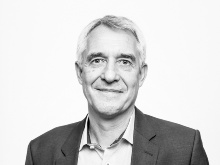
Ole Madsen is a Professor at the Department of Materials and Production within The Faculty of Engineering and Science at Aalborg University . His research focuses on Robotics and Automation , particularly in 5G Smart Production , AI for Manufacturing , and Industry 4.0 applications. He also holds a part-time position at Adding Robotics , applying his expertise in robot integration for industrial and healthcare settings. Research Interests : Robotics, Automation, AI, Sensor Systems, Modular Manufacturing, Welding Technology, Digital Twins, Human-Centered Robotics, Industry 4.0 His work spans 35+ years with over 205 publications , emphasizing smart production systems and robot-assisted processes . Key contributions include Swarm Production Architectures , 5G-Enabled Robotics , and Human-Robot Collaboration frameworks. He has supervised 10 PhD students and led major projects like RAU (Robot-Assisted Ultrasound) and GINP: Robotics & AI Innovation Network . Scientific Awards : SCAP2020 Best Presentation Award (2020) Ole's 31 projects include AP2030: Aseptic Factory 2030 (pharma production), AddSmart (robotics R&D), and 5G-Enabled Autonomous Systems . His 127 press/media mentions highlight advancements in robotic welding , industrial metaverse , and swarm production . He maintains an ORCID: 0000-0003-2133-2541 with extensive publication records across Swarm Robotics , Modular Manufacturing , and AI-Driven Production .
Götz Gresser is a Professor at the Institute for Textile and Fiber Technologies (ITFT) , affiliated with the University of Stuttgart . He serves as Principal Investigator in the Integrative Computational Design and Construction for Architecture (IntCDC) cluster and Director of the German Institutes for Textile and Fiber Research Denkendorf (DITF) . His work spans technical textiles, fiber-reinforced composites, and adaptive architectural systems. Experience in textile value chain research Focus on coreless filament winding and bio-inspired compliant mechanisms Developed adaptive façades with integrated photovoltaics (FlectoSol, Flexafold) Contributed to planetary sunshade concepts for climate mitigation Research Trends : His recent publications emphasize coreless filament winding for lightweight structures pneumatically actuated adaptive systems integration of sensors and feedback in composite manufacturing space-based applications of fiber composites digital fabrication workflows sustainable material systems
Professor Sarah Stallebrass is a leading academic in geotechnical engineering at City, University of London. Her work focuses on physical and numerical modeling of soil behavior, particularly in stiff clays and during tunneling processes. She has held positions at institutions including King's College London and serves on professional committees like the Joint Board of Moderators. PhD in Civil Engineering (1990, City, University of London) MA (Hons) in Engineering (1987, University of Cambridge) Her research expertise includes: Constitutive modeling of overconsolidated clays Disaggregation of soil cuttings in slurry Finite element analysis of construction-induced ground movements Centrifuge testing for complex geotechnical problems Deep foundation behavior in challenging soils Recent publications highlight advancements in: Shaft break-out modeling in clay Hollow heated pile performance in sand Impression pile capacity in overconsolidated clay Recycled material applications in plant platforms Scientific recognition includes: Fellow of the Institute of Civil Engineers (2010–present) She contributes to laboratory techniques development and serves as external examiner for civil engineering programs at Imperial College London and University of Glasgow.
Kent Bertilsson is a Professor and Director of Studies at the Department of Computer and Electrical Engineering (DET) at Mid Sweden University . He serves as a Deputy Prefect and specializes in Power Electronics , with a focus on Embedded Systems , Power Converters , and Fiber Installation Equipment . His research includes projects like DeHigh (electrification of work vehicles) and STORE (electrical energy storage). His work spans High-Frequency Converters , Planar Magnetics , and Multilevel Inverters , with applications in Electric Vehicles and Renewable Energy Systems . He has extensively published in journals like IEEE Transactions on Power Electronics and Energies , emphasizing component optimization and energy efficiency. Notable projects include 48 V Drive Systems and Smart Industry Sweden .
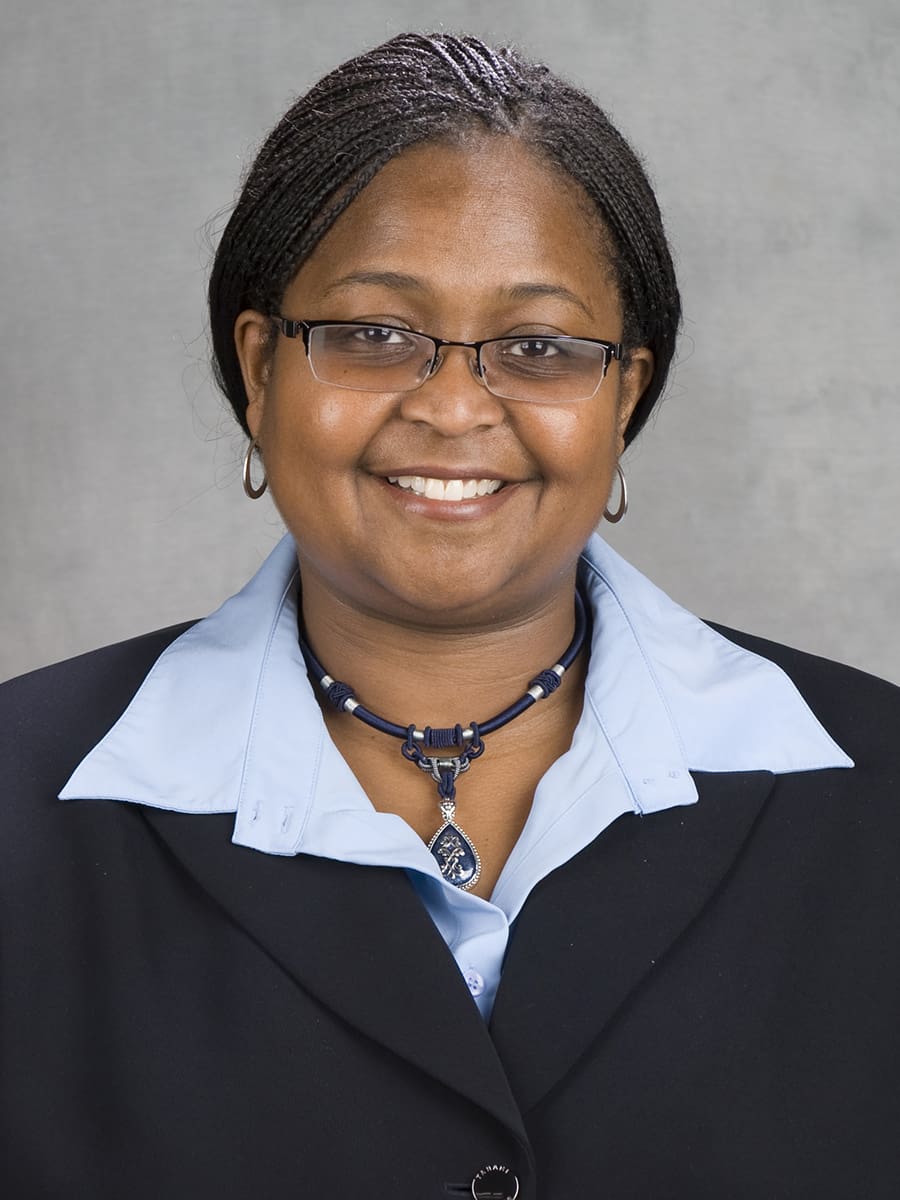
Jacqueline Henderson serves as an Associate Professor in the Mechanical Engineering Department within Bradley University's Caterpillar College of Engineering & Technology. Her research focuses on biomechanics with specialization in upper extremity disorders and mathematical modeling applications. Her educational background includes a Ph.D. in Biomedical Engineering from Wayne State University, an M.S. in Mechanical Engineering from the same institution, and a B.S. in Mechanical Engineering from Prairie View A&M University. Joining Bradley in 2010, she has established herself as a key researcher in skeletal biomechanics. Ph.D., Biomedical Engineering, Wayne State University M.S., Mechanical Engineering, Wayne State University B.S., Mechanical Engineering, Prairie View A & M University Dr. Henderson's research centers on upper extremity biomechanics, particularly investigating carpal tunnel syndrome through mathematical modeling of subsynovial connective tissue shearing. Her work extends to cumulative trauma disorders and rehabilitation biomechanics, with significant collaborations between Bradley University and local medical communities. She employs advanced techniques including speckle-tracking ultrasound and finite element modeling to analyze tendon-nerve interactions in the carpal tunnel. Her publication record demonstrates consistent focus on biomechanical analysis of the carpal tunnel and spinal structures, with recent expansion into neurovascular coupling and Alzheimer's disease mechanisms. Key methodologies include ultrasound assessment, finite element modeling, and quantitative tissue property measurement. Professional recognition includes an NIH National Research Service Award fellowship at Mayo Clinic. She serves as a reviewer for the Journal of Applied Biomechanics and Journal of Clinical Biomechanics, and participates in Bradley University's Affirmative Action Committee. Dr. Henderson actively mentors STEM-interested youth and has developed educational initiatives including ME 101: Introduction to Mechanical Engineering and ME 591: Human Centered Design. Her service extends to K-12 engineering outreach programs in the Detroit Public School system.
Professor Chen Jianfei is a Chair Professor at the Department of Marine Science and Engineering, Southern University of Science and Technology (SUSTech), Shenzhen, China. He previously held academic positions at Queen’s University Belfast (2013-2019), University of Edinburgh (2002-2013), and Zhejiang University (1987-1992). His leadership roles include serving as President of the International Institute for FRP in Construction (IIFC) from 2014 to 2018. PhD in Civil Engineering, University of Edinburgh (1996) MSc in Structural Engineering, Zhejiang University (1987) BEng in Structural Engineering, Zhejiang University (1984) Professor Chen’s research spans civil engineering and mechanics of bulk materials , focusing on: Application of high-performance FRP composites in civil infrastructure Development of advanced discrete/finite element methods for structural analysis Mechanics of granular solids and bulk material flow in silos Seawater sea-sand concrete and high-performance concrete systems Hybrid floating structures and subsea pipelines His publications include the foundational monograph FRP-Strengthened RC Structures (translated into Chinese, Korean, Persian) and over 300 papers. Google Scholar cites exceed 7,664 (Web of Science), with an h-index of 30. His work has been adopted into international standards. Honors include: 2021 IIFC Medal (highest award in FRP composites) 2016 Howard Medal (oldest ICE award, since 1872) 2016 Elsevier Highly Cited Researcher in Civil Engineering 2015 Frederick Palmer Prize (ICE journal best paper) 2006 President’s Award (IIFC) He has secured major grants for projects like Re-use of Wind Turbine Blades (US-Ireland partnership, $1.3m) and FRP Confined Seawater Concrete (NSFC, RMB747,000).
Dr Abu Bakar Dawood is a Postdoctoral Research Associate at the Centre for Advanced Robotics (ARQ) within the School of Engineering and Materials Science at Queen Mary University of London. He works on UKRI and EU-funded projects like PALPABLE , focusing on soft robotic systems, tactile sensor skins, and their applications in minimally invasive surgery. PhD in Mechanical Engineering (Robotics), Queen Mary University of London (2023) MSc in Design and Manufacturing Engineering, National University of Sciences and Technology (NUST), Pakistan BE in Mechatronics Engineering, NUST Pakistan His research integrates soft robotics with tactile sensing to develop medical devices for surgical applications. Key innovations include capacitive and optical tomography-based sensor skins, dynamic force sensors for tissue palpation, and steerable eversion robots with pneumatic actuators. His work bridges robotics , materials science , and biomedical engineering . The article titles reflect a strong focus on soft robotics , sensor design , and clinical applications . From 2017 to 2025, his contributions span manufacturing techniques, tactile sensing tools, and real-time pressure estimation systems, emphasizing minimally invasive surgery and soft sensor modeling . His affiliations include the Centre for Advanced Robotics (ARQ) at Queen Mary University of London, where he contributes to advanced robotics research in the Engineering G16 lab at Mile End.
Professor Cedric D'Mello is a distinguished Professor of Structural Engineering at City, University of London, where he has been serving since 2012. He previously held positions as Senior Lecturer (1999-2012), Lecturer/Teaching Fellow (1987-1999), and various leadership roles including Associate Dean for Education (2009-2014), Associate Dean for Learning & Teaching (2007-2009), and Assistant Dean for Civil Engineering Programmes (2002-2007). He was also an elected member of University Senate until 2013. Professor D'Mello received his BSc (Hons) in Structural Engineering (1976) and DPhil in Structural Engineering (1981), both from the University of Sussex. His academic journey began as a Research Assistant at Sussex (1976-1980), followed by positions as Lecturer in Structural Engineering (1980-1981), Postdoctoral Research Assistant at Ocean Engineering Research Centre (1981-1986), and Associate Consultant at OTEC (UK) Ltd (1988-1990). His research primarily focuses on very large scale testing of structures, with particular emphasis on composite structures and dynamics of structures. His work spans from grouted connections in offshore structures to long span composite floors in buildings, with current research centered on ultra slim floor beams where the floor slab is incorporated within the beam depth. His recent work has expanded into steel structural fire engineering, particularly thermo-mechanical damage modeling for predicting steel deterioration under fire conditions. Professor D'Mello's extensive publication record demonstrates a clear research trajectory from offshore structures to composite floor systems, with increasing focus on structural fire engineering in recent years. His work shows strong industry collaboration, with many projects supported by UK/European funding bodies and industry partners. His research has practical applications in building cost reduction and sustainable construction through innovative structural designs. Professor D'Mello has made significant contributions to structural engineering through his books on jack-up platforms and dynamics of structural systems, along with numerous journal articles and conference papers. He has also filed a patent on structural beam design, demonstrating the practical application of his research. As an academic leader and educator, Professor D'Mello has supervised PhD students including Eric Cheilletz and Sam Tariverdi, and has contributed to engineering education through his leadership roles in curriculum development and educational strategy at City University London.
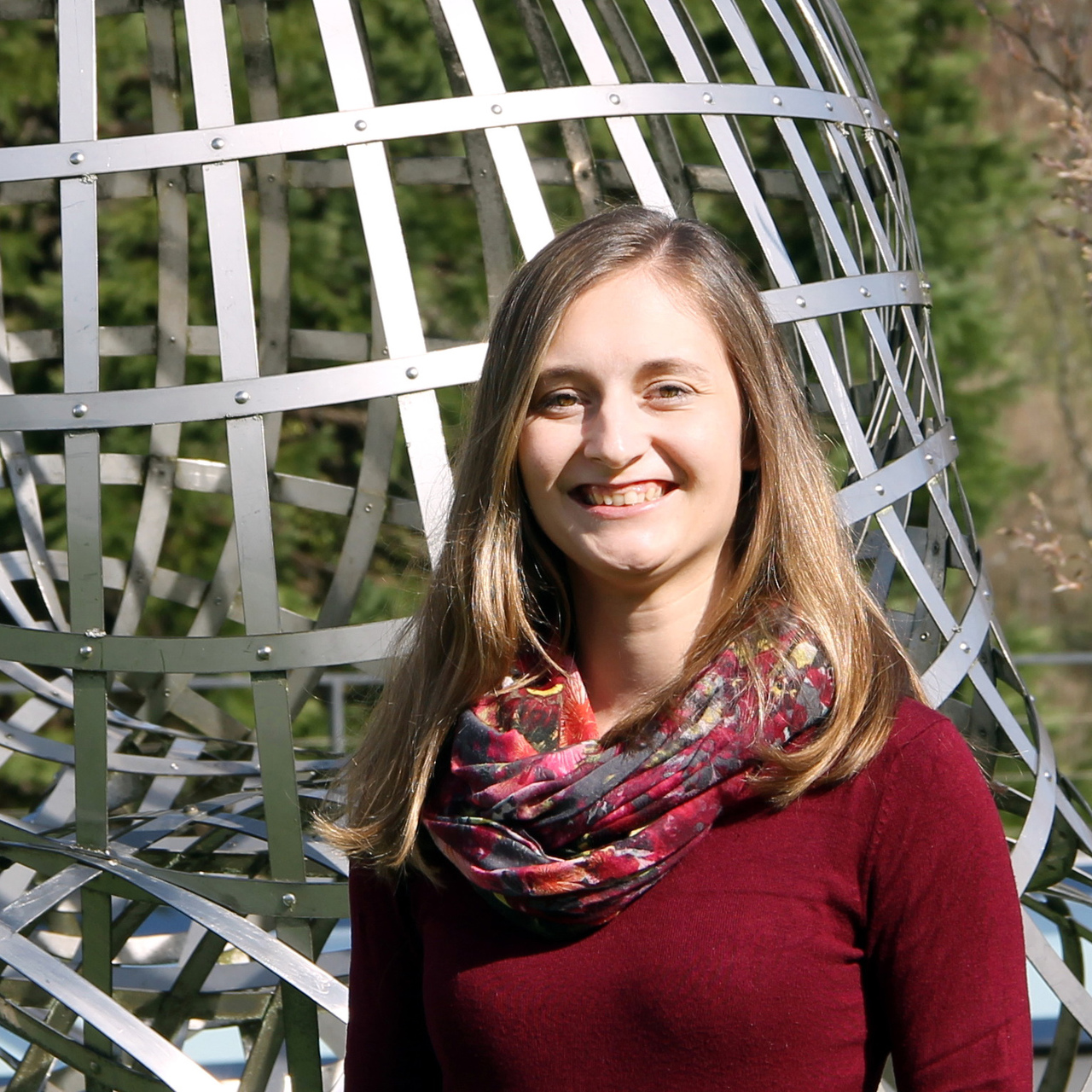
Silke Glas is a Postdoctoral Researcher at the Institute of Numerical Mathematics, Ulm University, a position she has held since July 2018. Previously, she served as a Research Assistant at the same institute from April 2016 to July 2018 and at the Chair of Energy Trading and Finance, University of Duisburg-Essen (2012-2016), funded by the German Research Foundation's Priority Programme 1324. Her research visits include the Institut Henri-Poincaré in Paris and SISSA in Trieste. Her educational background features: Diploma in Mathematics and Economics from Ulm University (2006-2012), thesis on "Reduced Basis Method for Variational Inequalities" Master of Mathematics from the University of South Florida (2009-2010) Dr. Glas specializes in model reduction for nonlinear problems, with core expertise in reduced basis methods applied to variational inequalities, wave equations, Hamilton-Jacobi-Bellman equations, and space-time formulations. Her work bridges theoretical numerical analysis with practical applications in energy markets, particularly intraday electricity trading. She has developed novel approaches for noncoercive and parabolic systems, addressing challenges in error estimation and computational efficiency. Her publication trajectory reveals evolving sophistication in handling time-dependent nonlinear systems, with increasing emphasis on financial applications. Early work focused on theoretical foundations of variational inequalities, while recent publications integrate model reduction with optimal control for energy trading problems, demonstrating cross-disciplinary impact. Scientific recognition includes: No formal awards documented in source material Research funding has been secured through the German Research Foundation's Priority Programme 1324. No student advising activities are mentioned, though her collaborative work involves prominent researchers like K. Urban and Anthony T. Patera. Her primary research environment at Ulm University's Institute of Numerical Mathematics supports her focus on computational mathematics and real-world applications.
Professor Chris J Budd OBE is a distinguished Professor of Applied Mathematics at the University of Bath's Department of Mathematical Sciences, where he serves as Director of Knowledge Exchange for the Bath Institute for Mathematical Innovation (IMI). He is also Professor of Mathematics at the Royal Institution of Great Britain and a former Gresham Professor of Geometry. His leadership extends to directing the Centre for Nonlinear Mechanics and serving as Super Champion of the KE Hub. His educational background includes a gap year with Marconi that profoundly shaped his career, followed by undergraduate studies at Cambridge and a DPhil at Oxford. This industry experience during his formative years established his lifelong commitment to industrial mathematics and knowledge exchange. Budd's research focuses on nonlinear mathematical problems with industrial applications, particularly adaptive moving mesh methods for meteorology and climate modeling, data assimilation, non-smooth dynamical systems, and the mathematics of machine learning. He approaches linear problems as 'for cissies,' preferring the challenges of nonlinear systems that better represent real-world phenomena. His work bridges theoretical mathematics with practical applications across meteorology, environmental science, and engineering. His recent publications reveal a strong trend toward integrating machine learning with traditional numerical methods, particularly in climate modeling and solving partial differential equations. This includes Fourier Neural Operators, adaptive mesh methods enhanced by graph neural networks, and mathematical frameworks for understanding climate tipping points through non-smooth dynamics. OBE for services to mathematics National Teaching Fellowship (NTF) Knowledge Transfer Award for work with the Met Office Fellow of the Institute of Mathematics and its Applications (FIMA) Chartered Mathematician (C Math) British Science Association award for best science festival (2009) As principal investigator of the £3.5M EPSRC Programme Grant 'Maths4DL' on the Mathematics of Deep Learning, Budd leads a major collaborative effort between Bath, Cambridge, and UCL. He actively supervises numerous PhD students across diverse projects including climate modeling, machine learning applications, and industrial mathematics problems. His commitment to knowledge exchange is exemplified through V-KEMS (Virtual Forum for Knowledge Exchange in the Mathematical Sciences), which he co-founded to address challenges like the COVID-19 pandemic through mathematical approaches. Budd directs the Centre for Nonlinear Mechanics at Bath, fostering interdisciplinary research through mathematical modeling of complex systems. He also leads the Bath Institute for Mathematical Innovation's knowledge exchange activities, connecting academic mathematics with industrial and societal challenges. His work with V-KEMS has proven particularly effective during the pandemic, mobilizing teams of mathematicians to address urgent real-world problems.
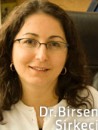
Birsen Sirkeci is a Professor in the Department of Electrical Engineering at San Jose State University (SJSU), San Jose, CA. She holds a PhD from Cornell University (2006), an MSc from Northeastern University (2000), and a BSc from Middle East Technical University, Turkey (1998). Prior to joining SJSU, she was a postdoctoral researcher at UC Berkeley. Her educational background includes: PhD in Electrical Engineering, Cornell University, Ithaca, NY (2006) MSc in Electrical Engineering, Northeastern University, Boston, MA (2000) BSc in Electrical Engineering, Middle East Technical University, Ankara, Turkey (1998) Professor Sirkeci's research spans wireless communications , sensor networks , statistical signal processing , and machine learning . Her work focuses on developing advanced algorithms for cognitive radio networks, spectrum sensing, and cooperative communication systems. She has pioneered applications of neural networks in materials science (e.g., stress prediction in porous ceramics) and medical imaging (e.g., colon cancer detection), demonstrating exceptional interdisciplinary innovation. Analysis of her 2013-2021 publications reveals a dominant trend at the intersection of wireless communications and deep learning. Key themes include spectrum sensing via convolutional neural networks, cooperative broadcast strategies in dense networks, and physics-informed machine learning for materials engineering. Her work consistently addresses real-world constraints like channel estimation errors and hardware limitations using USRP SDRs. Her scientific contributions have been recognized with: Best Paper Awards at MILCOM 2005, WCECS 2010, and ICETEC 2013 IEEE ICME Outstanding Organizing Committee Member (2013) Applied Materials Teaching Award at SJSU (2014) As an advisor, she co-led the SJSU Spartans team to the DARPA Spectrum Challenge finals in 2013. While specific grants aren't detailed in source material, her award-winning publications and competition success indicate sustained research funding. She actively mentors students through capstone projects and competitive teams, emphasizing hands-on implementation. Professor Sirkeci leads wireless communications research within SJSU's Electrical Engineering department, with strong ties to industry through awards like Applied Materials. Her DARPA Spectrum Challenge involvement underscores leadership in translating theoretical research into competitive, real-world systems.
Sorin Mitran is a Professor in the Department of Mathematics at the University of North Carolina at Chapel Hill. His research focuses on computational simulation of multiscale and multiphysics systems, data-driven constitutive relations for hyperelastic materials, and information geometry for reduced stochastic models. PhD in Aerospace Engineering from Politehnica University Bucharest (1995) Professional background includes fellowships at University of Tokyo (1993), Karlsruhe Institute of Technology (1998-1999), and University of Washington (1999-2002) His research develops numerical tools to predict macro-scale behavior from micro-scale interactions, such as plastic deformation of metals from lattice defect dynamics, microtubule mechanics from molecular dynamics, and protein folding from atomic-level simulations. Mathematical approaches include adaptive computation, machine learning for constitutive law prediction, and information geometry for stochastic process analysis. Recent publications (2023-2018) span computational biology, multiscale fluid dynamics, and medical applications of continuum mechanics. Articles frequently explore data-driven modeling, wave propagation in biological systems, and GPU-accelerated numerical methods like Lattice Boltzmann and Lattice Fokker-Planck formulations.
Benoit Delhaye is a Professor at Universite catholique de Louvain , affiliated with the Louvain Polytechnic School (EPL) and Mathematical Engineering Center (INMA) . His research bridges tactile neuroscience and biomechanics to understand how tactile receptors encode object information and how the brain uses these signals for dexterous manipulation. He also contributes to Institute Of NeuroScience (IoNS) . Email: benoit.delhaye@uclouvain.be Email: delhayeben@gmail.com His research focuses on three main areas: Tactile Signal Processing : Analyzing skin deformation patterns during object interactions using advanced imaging and computational models Neuroprosthetic Applications : Developing biomimetic afferent response simulations for bionic hand feedback systems Haptic Perception : Investigating how tactile receptors encode friction, slip, and edge orientation The articles demonstrate his contributions to understanding: tactile mechanics (6 papers), grip force adaptation (4 papers), skin strain patterns (5 papers), and neuroprosthetic simulations (3 papers). Key 2024 publications include collagen-induced anisotropy analysis and 3D fingertip deformation modeling. Benoit's technical innovations include: TouchSim - A MATLAB package for simulating tactile afferent responses Open-source instrumented objects for manipulation studies Advanced skin deformation measurement systems His collaborative network spans institutions in Belgium, the USA, and Germany, working with researchers in Philippe Lefevre 's and Jean-Louis Thonnard 's labs. Current teaching includes LEPL1506 Project and LGBIO2110 Clinical Engineering courses.
Dr. Anh-Vu Phan is a Professor in the Department of Mechanical, Aerospace, and Biomedical Engineering at the University of South Alabama's College of Engineering. His work bridges computational mechanics, quantum physics, and biomechanics through advanced numerical methods. He maintains an active research program with numerous publications spanning several decades and teaches a wide range of mechanical engineering courses from undergraduate to graduate levels. Dr. Phan earned his B.S. in Mechanical Engineering from Ho Chi Minh City University of Technology, followed by an M.S. in Solid Mechanics from Grenoble Institute of Technology, and completed his Ph.D. in Mechanical Engineering from Ecole Polytechnique, University of Montreal. His academic journey has positioned him at the intersection of theoretical mechanics and practical engineering applications. Dr. Phan's research focuses on boundary element methods, particularly the Symmetric-Galerkin Boundary Element Method (SGBEM), applied to diverse problems including quantum mechanics (confined electron states in quantum structures), fracture mechanics (dynamic crack analysis), and biomechanics (cAMP signaling). His work demonstrates a remarkable ability to apply computational techniques across disciplinary boundaries, from nanoscale quantum phenomena to cellular-level biological processes. He has developed sophisticated numerical frameworks for analyzing energy eigenvalues, T-stresses, and fracture propagation in various materials systems. Analysis of his recent publications (2015-2025) reveals three primary research thrusts: continued development of boundary integral methods for quantum mechanical problems (particularly confined electron states in quantum dots), application of computational techniques to biological signaling processes (especially cAMP pathways), and ongoing work in dynamic fracture mechanics with emphasis on crack interactions and wave propagation. His work shows increasing interdisciplinary collaboration, particularly with biologists and systems engineers in recent years. Dr. Phan teaches a comprehensive range of mechanical engineering courses including Dynamics, Mechanics of Materials, Aerodynamics, Aircraft Structural Analysis, Thermodynamics, Finite Element Analysis, Vibration Analysis, and various graduate-level specialized topics. His teaching portfolio reflects both foundational mechanical engineering principles and advanced computational techniques, aligning closely with his research expertise in numerical methods and computational mechanics. Dr. Phan's research laboratory appears to focus on computational mechanics, with particular emphasis on boundary element methods and their applications across multiple domains. His collaborations with researchers in biomedical fields suggest interdisciplinary work at the intersection of mechanical engineering and cellular biology, particularly in modeling intracellular signaling processes. His recent work on quantum dot solar cells indicates expanding research into renewable energy applications.