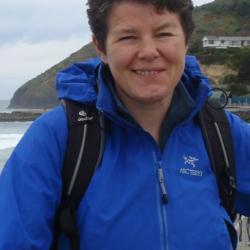
Dr. Julian Limberg is a Senior Lecturer in Public Policy at the Department of Political Economy, King’s College London. He previously held a post-doctoral position at Ludwig Maximilian University of Munich and earned his PhD in Political and Social Sciences from the European University Institute. His research focuses on public policy and political economy, particularly inequality dynamics, tax policy, and environmental governance. Education: PhD in Political and Social Sciences (European University Institute), Post-doctoral Research (Ludwig Maximilian University). Affiliations: Public Policy and Regulation Research Group, Quantitative Political Economy Research Group, Global South Research Group. His work examines the causes and consequences of progressive taxation, climate policy effectiveness, and public perceptions of fiscal fairness. Recent studies include the impact of dedicated climate ministries on emissions reduction and the link between financial sector growth and tax policies. Limberg is also engaged in projects analyzing how technological changes influence tax preferences and the societal consequences of major tax cuts for the wealthy. Key articles highlight his contributions to understanding taxation trends, climate policy implementation, and the interplay between economic shifts and fiscal strategies. He collaborates across disciplines, bridging political science and economics to address contemporary governance challenges.
Professor Matthew Treherne is a leading scholar in Italian literature at the University of Leeds, where he holds the position of Professor of Italian Literature in the School of Languages, Cultures and Societies within the Faculty of Arts, Humanities and Cultures. He currently serves as Pro-Dean for Research and Innovation, and co-directs the Leeds Centre for Dante Studies. His research bridges medieval and Renaissance literature with contemporary issues such as finance, ecology, and technology. PhD in Italian Literature, University of Cambridge (2007) Diploma in Management Studies, Judge Business School, University of Cambridge (2000) M.Phil in European Literature (Distinction), University of Cambridge (1999) BA in Modern and Medieval Languages (First-class), University of Cambridge (1997) Matthew Treherne's research focuses on Dante and late-medieval religious culture, with a strong emphasis on the liturgical imagination and theological discourse in poetry. He explores how Dante’s work can inform modern debates on the ecological crisis, financialisation, and time. His interdisciplinary approach integrates theology, philosophy, and cultural studies. He leads the project The Cultural Life of Money and Finance , which investigates how the humanities can shape financial futures. His recent publications include Dante’s ‘Commedia’ and the Liturgical Imagination and co-edited volumes on Dante’s theology. His recent scholarly articles and chapters show a consistent engagement with Dante’s theological and poetic structures, Tasso’s religious poetry, and the role of art and liturgy in early modern culture. Themes such as sacramentality, time, vision, and interdisciplinarity recur across his work, reflecting a deep commitment to understanding literature as a living, ethically engaged practice. University Teaching Fellowship Developmental University Teaching Fellowship Faculty of Arts Development Teaching Prize Treherne has supervised numerous PhD students and fosters research-led teaching, notably through projects like Discover Dante and the Leeds Dante Podcast . He has led major research initiatives, including the AHRC-funded Dante and Late Medieval Florence , and collaborates widely across disciplines and institutions. He is also active in public engagement, contributing to BBC Radio 4’s In Our Time and curating podcast series such as Conversations on Dante and Arts and Humanities Futures . He co-leads the Cultural Life of Money and Finance project with Invisible Flock, blending humanities research with creative practice.
Dr Benjamin Hunter is a Lecturer in International Political Economy at the University of Glasgow, specializing in the political economy of development and global health financing. He holds degrees from the University of Cambridge, London School of Hygiene and Tropical Medicine, and King's College London. His research focuses on development finance, private finance in global health, and the global healthcare economy. He leads the Unsettling Healthcare initiative and is affiliated with The Collective for the Political Determinants of Health and the Editorial Board of Globalization and Health . Key research themes include financialization of healthcare, market-making in social sectors, and regulatory capitalism. His work examines case studies in India, China, and the UK, exploring how private finance influences healthcare systems and global health equity. He has secured grants from the UK Economic and Social Research Council and the Wellcome Trust. Recent publications analyze private financial actors' threats to global health, NHS internationalization, and corporatization in Indian healthcare. His 2023 book Investor States: Global Health at The End of Aid critiques evolving development financing paradigms. Collaborations with WHO, the Global Fund, and Oxfam highlight his engagement with multilateral and NGO sectors. Dr Hunter advises on PhD topics related to healthcare globalization, including Singapore’s medical history and menstrual health in Delhi. His grants include a £722k ESRC project on NHS service commercialization in China/India and a Wellcome Trust study on healthcare brokerage in Delhi/London.
Dr. Omiros Georgiou is an Associate Professor in Accounting at the Department of Accounting, Birmingham Business School, University of Birmingham, where he also serves as the Research Lead. He has been a full-time academic since 2010, with prior appointments at the University of East Anglia, the London School of Economics, and the University of Manchester. He holds a PhD in Accounting from the University of Essex. His research focuses on the social and political dimensions of financial accounting regulation. Key themes include the use of accounting information by investment professionals, the ideological and legal influences on accounting standard development, and the role of accounting in financializing business and society. His work is published in leading journals such as Accounting, Organizations and Society , Critical Perspectives on Accounting , and Contemporary Accounting Research . Omiros has secured external funding from the Institute of Chartered Accountants of Scotland (ICAS) and the Social Sciences and Humanities Research Council of Canada (SSHRC). He contributes to the academic community through editorial board memberships at Accounting and Business Research , Accounting Forum , and Critical Perspectives on Accounting . His recent publications show a strong trend in critical accounting studies, particularly in fair value accounting, standard-setting controversies, and the socio-political legitimacy of financial reporting. The research spans both empirical and theoretical analyses, with increasing attention to emerging topics like sustainability reporting and the future of financial reporting in light of technology and global events. Omiros supervises MSc dissertations and teaches in areas such as Advanced Financial Accounting and Accounting and Finance practice. He has not received specific scientific awards mentioned in the text, but his sustained funding and publication record reflect scholarly recognition.
Giuseppe Fontana is Professor of Monetary Economics at the Leeds University Business School, University of Leeds. He also holds affiliations as Associate Member at the Cambridge Centre for Economic and Public Policy (University of Cambridge), Life Member Fellow at Clare Hall (Cambridge), Research Associate at the Levy Economics Institute (USA), and Associate Professor at the University of Sannio (Italy). His educational background includes a PhD and MA in Economics from the University of Leeds, a Dottorato di Ricerca from the University of Naples, and a Laurea (First Class Honours) from the same institution. Fontana specializes in Endogenous Money Theory , New Consensus Macroeconomics , fiscal and monetary policy , and the economics of uncertainty . His research critically examines financial crises, the Great Recession, and labour market dynamics from a Post-Keynesian and institutional perspective. He has published extensively in top heterodox economics journals such as the Cambridge Journal of Economics , Journal of Post Keynesian Economics , and Review of Political Economy . His recent scholarly output shows a strong focus on macroeconomic theory, crisis analysis, monetary institutions, and economic pedagogy. Themes of financialisation, sustainable development, and policy critique recur across his publications, especially in the context of EU-funded research like the FESSUD project. President of the Association for Social Economics (elected 2015) Life Member Fellow, Clare Hall, University of Cambridge Fontana has supervised multiple PhD students, including Toby Swales and Aidan Knox. He has led major research initiatives, notably serving on the executive board and as work-package leader for the €8 million EU FP7 FESSUD project. His research has been supported by international institutions and collaborative networks across Europe and the US. He is actively involved in academic leadership and interdisciplinary research teams focused on rethinking macroeconomic frameworks and policy responses to global economic challenges.
Kaveri Medappa is a Postdoctoral Researcher in Human Geography at the University of Oxford's Department for Continuing Education and a Junior Research Fellow at Kellogg College. She contributes to a multi-institutional ESRC-funded project, 'Trucking Lives: Making Space for People in Truck Driving Work', focusing on UK HGV drivers' work-life conditions. Formerly associated with the University of Sussex, where she earned her PhD in International Development (2022), and St. Joseph’s College, Bengaluru. Doctoral research on app-based workers in Bengaluru under Prof Geert De Neve and Dr Rebecca Prentice Teaching experience in Anthropology and Social Work across UK and India Previous role as Research Associate in 'Speculative Urbanism' project Her expertise spans labour anthropology , critical mobility studies , and feminist political economy , examining intersections of digital technologies, financialisation, and social movements. Recent publications highlight gig economy dynamics, platform worker rights, and speculative finance impacts. Key trends in her research include: Digital labor platform governance (2020–2023) Comparative truck driving work (2024) Financialisation and social reproduction (2022–2025) Urban displacement and affective landscapes (2020) Scientific recognition includes: DSA 'Highly Commended' PhD Thesis Prize (2023) Adam Weiler Doctoral Research with Impact Award (2022) Chancellor’s International Research Scholarship (2018–2021) Her work connects academic research with public scholarship through policy briefs, media contributions, and podcast appearances.
Engelbert Stockhammer is Professor of Political Economy in the Department of European and International Studies at King's College London, where he joined in 2018 after previously working at Vienna University of Economics and Business (2000-2009) and Kingston University London (2010-2018), where he led the Political Economy Research Group. He holds a PhD in Economics from the University of Massachusetts at Amherst and has held visiting positions at Bilkent University, German Institute for Economic Research (DIW Berlin), Maastricht University, Macroeconomic Policy Institute (IMK), and Sabanci University. His research interests focus on political economy and macroeconomics , with particular emphasis on financialisation, distribution and growth, and economic policy in Europe. His work bridges Post-Keynesian economics with comparative political economy, examining growth models, housing systems, and business cycle dynamics. He has published over 70 peer-reviewed articles and is actively engaged in research projects funded by organizations like the Leverhulme Trust and the Institute for New Economic Thinking. His recent publications reveal a strong focus on housing cycles, heterodox business cycle theory, and the political economy of growth models, with particular attention to European economies and historical perspectives. His work integrates macroeconomic modeling with institutional analysis, examining how financialization affects growth patterns across different economic systems. Stockhammer actively engages with policy through collaborations with international organizations including the International Labour Office (ILO), and think tanks such as the New Economics Foundation, Friedrich Ebert Stiftung, Renner Institute, Rosa Luxemburg Foundation, and Foundations for European Progressive Studies. He has published commentary in media outlets including The Guardian, Al Jazeera, Profil, and ORF. He leads the ongoing research project "The Political Economy of Growth Models in an Age of Stagnation" funded by the Leverhulme Trust (2021-2024), and previously led a project on "Income distribution, asset prices and aggregate demand formation 1850-2010" funded by the Institute for New Economic Thinking. His work contributes to several United Nations Sustainable Development Goals, particularly those related to economic growth and reduced inequalities.
Indranil Dutta is a Senior Lecturer in Economics at the University of Manchester, holding a Ph.D. from the University of California, Riverside and an M.A. from Delhi School of Economics, India. Previously, he taught at the University of Sheffield and University of East Anglia, and served as a research associate at Manchester's Brooks World Poverty Institute and a research fellow at UNU-WIDER (Helsinki). His academic background includes: Ph.D. in Economics, University of California, Riverside M.A. in Economics, Delhi School of Economics, India Dr. Dutta specializes in quantitative development economics and applied welfare economics, focusing on well-being, deprivation, and distribution measurement. His research critically examines poverty and inequality indicators while addressing political economy dimensions of deprivation. This work directly contributes to UN Sustainable Development Goals for poverty reduction (SDG 1) and reduced inequalities (SDG 10). His publication trends reveal consistent methodological rigor in poverty measurement (e.g., vulnerability frameworks, multidimensional indices) and empirical analysis of refugee impacts using natural experiments. Recent work applies difference-in-differences techniques to Rohingya refugee effects in Bangladesh and investigates health system competition in developing countries, demonstrating interdisciplinary reach across economics, policy, and social welfare. Scientific awards: No major awards listed in available profile data. Advising and Grants: Dr. Dutta has supervised 4 students. He serves as Co-Investigator on the 2024-2025 project 'Financialised Cocoa Chains and Implications for Ghanaian Farmers’ Productivity, Income and Livelihoods', examining how global cocoa supply chains affect West African smallholders. His media engagement includes policy-relevant analysis of India's demonetization, covered by news outlets and referenced in policy sources.
Dr. Jack Copley is an Associate Professor in International Political Economy at the School of Government and International Affairs, Durham University. Previously, he held a Lecturer position at the University of Bath and earned his PhD from the University of Warwick. His research bridges historical and contemporary analyses of capitalist governance. Current affiliation: Durham University Prior affiliation: University of Bath Education: PhD, University of Warwick Copley's work focuses on the governance of global capitalism, emphasizing how states navigate economic development dilemmas. His research spans two key themes: (1) the financialization of the global economy through state policies, exemplified by his analysis of Britain's financial liberalization (1970s–1980s), and (2) the challenges of decarbonizing economies amid long-term growth stagnation. He integrates declassified archives, historical analysis, and critical political economy frameworks to explore intersections between financial policy, class struggle, and climate governance. Recent publications highlight his expertise in financialization dynamics, climate crisis management, and Marxist economic theory. His 2022 book Governing Financialization provides a foundational account of Britain's financial liberalization, while his 2024 work on steel decarbonization underscores industrial transition challenges in stagnant economies. Collaborative projects examine late capitalism's 'wicked trinity' of stagnation, surplus humanity, and environmental breakdown.
Dr. Shonali Banerjee is an Assistant Professor of International Development at the University of Warwick's Department of Politics and International Studies (PAIS), serving as Deputy Director of External Affairs. She also holds roles as Visiting Research Fellow at the Judge Business School (University of Cambridge) and guest lecturer at the University of the Witwatersrand (South Africa). Her academic journey includes a PhD from the University of Sussex, MSc from SOAS University of London, and BA from The George Washington University. Her research focuses on the financialisation of international development, digital technologies in aid, and private sector influences. Key themes include philanthropy's evolving role, impact investing, and decolonising aid systems. She has conducted fieldwork with NGOs, digital platforms, and philanthropic organisations across Africa, Southeast Asia, and the Middle East. Shonali teaches undergraduate modules on international development and advises on Global Challenges Research Fund proposals. She contributes to policy through advisory roles at the OECD Development Centre, Arab Foundations Forum, and L’Oréal Global Fund for Women. Her upcoming book Horizontal Development critiques power structures in global aid systems.
Professor Fangzhu Zhang is a leading academic in China planning at The Bartlett School of Planning, University College London (UCL). With a PhD from the University of Southampton and prior roles at Southampton and Cardiff University, she has been at UCL since 2011, progressing from Lecturer to Professor since 2023. Education: BSc (Nanjing University, 1991), MPhil (University of Hong Kong, 1998), PhD (University of Southampton, 2007) Her research focuses on urban governance , financialization , and environmental planning in China. Recent work explores post-pandemic statecraft, eco-city development, and land assetization in municipal finance. She leads the ERC Advanced Grant project "Rethinking China’s Urban Governance" (2020–2026) and contributes to journals like Urban Studies and Land Use Policy . The 15 most recent publications span topics such as: State entrepreneurialism in megaprojects Financial intermediation in local government bonds Land assetization and urban debt risks Post-pandemic governance transitions Participatory micro-regeneration models She has supervised 20 PhD students (10 completed, 10 ongoing) and serves as founding Editor-in-Chief of the journal Transactions in Planning and Urban Research (TPUR). Her teaching integrates equality, diversity, and inclusion, with leadership roles in UCL's dissertation curriculum.
Eagle Zhang is a Senior Lecturer in the Discipline of Accounting at the University of Sydney. He specializes in financial accounting and critical accounting research, with a PhD from the University of Wollongong. His work examines the socio-political dimensions of accounting, particularly in China's economic transitions. Research interests focus on: Political economy of financial accounting practices and regulation Globalization of International Financial Reporting Standards (IFRS) and China's role Neoliberalism and financialization in accounting frameworks Historical analysis of Chinese accounting systems since 1949 Critical perspectives on accounting's role in capitalism His publications predominantly explore accounting history, neoliberalism in financial frameworks, and China's regulatory evolution. Recent works analyze comparative accounting traditions, public sector reforms, and conceptual framework critiques, reflecting a consistent focus on accounting's socio-political impact. Awards: Accounting History 2014 Manuscript Award for significant contribution to accounting history literature No information is available regarding student advising, grants, labs, or research teams.
Sonia Arbaci Sallazzaro is an Associate Professor in Spatial Planning at The Bartlett School of Planning, University College London. Her academic career spans both education and professional practice in urban planning across multiple countries including Italy, Spain, Portugal, the UK, and USA (New York). She has held academic positions at UCL since 2003 and was previously a Marie Curie Research Fellow at Universitat Pompeu Fabra in Barcelona. Current Position: Associate Professor, The Bartlett School of Planning, UCL (2013-present) Previous Positions: Marie Curie Research Fellow (2012-2014), Lecturer (2006-2013), Teaching Fellow (part-time, 2003-2006), Visiting Lecturer (part-time, 2003-2006) Education: PhD from University College London (2007), Master of Architecture from Politecnico di Milano (1995) Sonia's research focuses on international comparative studies of urban processes, particularly in Southern European cities. Her work examines the role of the state in producing urban inequality and ethnic residential segregation through the lens of European housing systems and welfare regimes. She investigates how urban policies and regeneration programs impact mechanisms of redistribution and marginalization, with specific attention to gentrification, peripheralization, and the financialization of social housing. Her current research includes leading a UK-European collaborative project on 'ReHousIn: Contextualized pathways to reduce housing inequalities in the green and digital transition' (2024-27), funded by UKRI/EU-Horizon RIA Programme. Her scholarly contributions demonstrate consistent engagement with Sustainable Development Goals 11 (Sustainable Cities and Communities) and 10 (Reduced Inequalities). Her publication record shows an evolving research trajectory from early work on ethnic residential segregation in European cities to more recent studies on housing financialization, with particular attention to Southern European contexts including Italy, Spain, and Portugal. Her work bridges theoretical frameworks with policy-relevant analysis, often challenging conventional wisdom about urban regeneration and social mixing policies. Commendation - Sir Peter Hall Award for Research Excellence (2020) UCLU Student Choice Awards for Inspiring Teaching Delivery (2018, 2017) UCLU Student Choice Awards for Excellent Personal Tutoring (2017-2018) Sonia has been actively involved in teaching at both undergraduate and postgraduate levels, currently serving as Director of the MSc in International City Planning at the Bartlett School of Planning. She has developed and taught courses on strategic planning projects, production of the built environment, and comparative housing studies. Her professional activities include extensive conference presentations, keynote speeches, and editorial roles, demonstrating her leadership in the field. She has collaborated with numerous European universities through international research networks including EU URBAN INNOVATIVE Action, COST Action, and Horizon programs.
Rory Hearne is an Associate Professor in Social Policy at Maynooth University's Department of Applied Social Studies within the Faculty of Social Sciences. He holds a PhD in political and economic geography from Trinity College Dublin (2009). His work focuses on housing policy, economic inequality, human rights, and climate justice. He teaches courses on social policy, housing rights, and the welfare state at both undergraduate and postgraduate levels. Education: PhD in Political and Economic Geography, Trinity College Dublin, 2009 Research Interests: Housing crises, financialisation of housing, homelessness, human rights-based approaches, neoliberalism, spatial justice, public policy reform, and social movements. His landmark books Housing Shock (2020) and Gaffs (2022) address Ireland’s housing crisis and advocate for constitutional rights to housing. His work has influenced national policy debates and been recognized by the Irish presidency and international scholars. Articles Trends: Recent publications analyze housing financialisation, participatory policy approaches (e.g., PAHRCA methodology), and post-neoliberal social policy. His research bridges academic and activist spheres, emphasizing community engagement and systemic change. Awards: His book Housing Shock was honored by the President of Ireland for its policy contributions. Peer reviews acclaim his work for its interdisciplinary rigor and practical impact. Grants & Projects: Co-developed the Participatory Action Human Rights and Capabilities Approach (PAHRCA) during the EU-funded Re-InVEST project (2017–2018). Lead author of influential TASC reports on inequality and housing. Labs/Teams: Active in Maynooth University’s Social Sciences Institute and collaborates with NGOs like the Irish Human Rights and Equality Commission. Engages in public advocacy through media, podcasts, and conferences.
Professor Emma Mawdsley is a leading scholar in Human Geography at the University of Cambridge, where she contributes to the Geographies of Knowledge Research Group . As a Fellow of Newnham College and Director of the Margaret Anstee Centre for Global Studies , her work bridges academic rigor with practical engagement in global development politics. BA in Geography (St. John’s College, Cambridge, 1989-1992) PhD in Geography (St. John’s College, Cambridge, 1992-1996) Academic trajectory: Lecturer (1996-2003), Senior Lecturer (2009-2014), Reader (2014-2022), Professor (2022-present) Her research interrogates the politics of global development , focusing on South-South Cooperation (especially India-Africa dynamics), financialisation of aid, and the UK’s shifting development agendas. She leads the ESRC-funded project ‘Development Consultants and Contractors’ , analyzing private-sector roles in ‘Aidland’. Recent publications highlight trends in South-South partnerships , innovative finance, and decolonial approaches. Awards include the Leverhulme Research Fellowship and recognition as a Royal Geographical Society medalist. She supervises PhD students on topics like Sino-Indian development cooperation and postcolonial governance. As Director of the Margaret Anstee Centre, she fosters interdisciplinary global studies, connecting academia to policy through initiatives like the India-UK Development Partnership Forum .