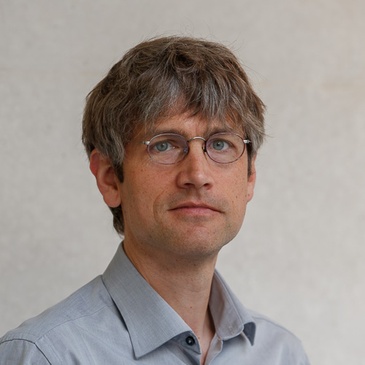
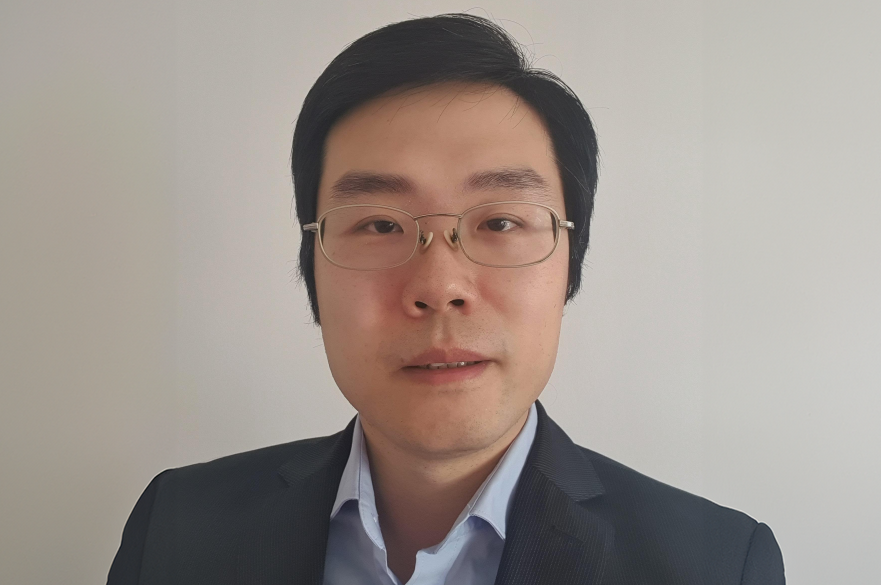
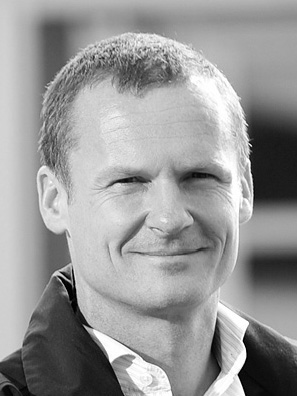
Kai Lessmann is a senior scientist and Working Group Leader at the Potsdam Institute for Climate Impact Research (PIK) , affiliated with the Climate Economics and Policy - MCC Berlin department. He specializes in Public Economics and Climate Finance, focusing on cooperative climate policy, carbon pricing, and sustainable finance. Research Focus: Incentives for global public goods cooperation, integrated climate assessment models, policy instruments, and sustainable finance. Publications: Recent work includes articles on carbon beta externalities, green transition economics, financial frictions in climate policy, and carbon dioxide removal governance. Collaborations: Frequent collaborator with institutions like the Mercator Research Institute on Global Commons and Climate Change (MCC Berlin) and SSRN networks. Contact: Email lessmann@pik-potsdam.de | Phone: +49 (0)331 288 2563
Yan Wang serves as Associate Professor of Accounting and Finance and Acting Head of the Accounting and Finance Research Group at Nottingham Business School, Nottingham Trent University. Previously, he held academic positions at Leicester Castle Business School (De Montfort University) and the University of Huddersfield. His research spans corporate finance, corporate governance, and sustainability with specialized focus on board networks, executive compensation, disclosure practices, board diversity, and corporate social responsibility (CSR). Wang's scholarly work examines critical intersections between governance structures and financial outcomes, including how board ethnic diversity impacts IFRS disclosures, the relationship between renewable energy consumption and carbon emissions in G20 nations, and geopolitical risks affecting climate change investments. His methodology frequently employs advanced econometric techniques like quantile regression to analyze governance-performance linkages across diverse contexts from African institutions to UK higher education. He currently serves as Editor of Cogent Business and Management and Associate Editor for Corporate Governance: The International Journal of Business in Society and Journal of Financial Reporting and Accounting. Wang secured significant research funding including a British Academy of Management grant (2019-2020) as Principal Investigator for 'Board Diversity, Risk Disclosure and Performance in UK Higher Education Institutions' and a SAMS grant (2022-2023) as Co-Investigator for 'Climate risks and net-zero solutions'. His expertise is regularly sought by numerous international journals as an ad-hoc referee, particularly for topics involving corporate governance disclosure and executive compensation.
Christian Berndt is Professor of Economic Geography in the Department of Geography at the University of Zurich. He has previously held academic positions at the University of Frankfurt, University of Cambridge (where he earned his PhD), and the University of Eichstätt-Ingolstadt (habilitation), and was a Visiting Scholar at UCLA. His research is central to critical economic geography, focusing on marketization, post-neoliberalism, global commodity chains, and the moral and spatial dimensions of markets. His research interests include: Economic Geography and market theory Post-neoliberal institutional change, particularly in Latin America Commodification of care and elderly care markets Global pesticide and agrarian industries Behavioral economics and market experimentation Spatial divisions of labor and transnational production His recent publications reveal a strong focus on the political economy of markets, with recurring themes in: The socio-spatial dynamics of marketization Chemical geographies and environmental justice (e.g., glyphosate, pesticides) Moral economies of finance and social policy (e.g., Social Impact Bonds) Critical analysis of neoliberalism and austerity Global production networks and labor His work often engages with theoretical frameworks from Polanyi, Peck, and poststructuralist economics. Christian Berndt has led significant research projects, including a Swiss National Science Foundation-funded study on care markets and the role of agencies in elderly care commodification and circular migration of live-in care workers. He has co-edited key volumes such as Market/Place: Exploring Spaces of Exchange and Kulturelle Geographien , and has been instrumental in shaping debates in economic geography through collaborative work with scholars like Marc Boeckler, Marion Werner, and Jamie Peck. He is actively engaged in academic leadership through editorial contributions and research group coordination, with no indication of retirement or part-time status. Though no awards are listed, his extensive publication record in top journals like Progress in Human Geography , Economic Geography , and Environment and Planning A underscores his scholarly impact.
David A. Weisbach is a prominent Professor of Law at the University of Chicago Law School, where he has established himself as a leading scholar in tax law, climate change policy, and fiscal policy. His extensive academic career spans decades with significant contributions to the understanding of carbon taxation, income and consumption taxation, and corporate tax policy. Weisbach's work bridges legal scholarship with economic analysis, making him a respected voice in both academic and policy circles. Weisbach's research interests focus primarily on tax law and climate change policy. His scholarship explores the intersection of environmental policy and fiscal instruments, particularly examining how carbon taxation can be designed effectively within international frameworks. He has made significant contributions to understanding tax avoidance, the integration of tax and spending programs, and the theoretical foundations of optimal taxation. His work often employs economic analysis to address complex legal questions in tax policy, demonstrating how legal rules can be designed to achieve efficient and equitable outcomes. Analysis of Weisbach's recent publications reveals a strong focus on contemporary policy challenges, particularly carbon taxation and climate change mitigation strategies. His work increasingly addresses international dimensions of tax policy, examining how border adjustments and international cooperation can address carbon leakage. The interdisciplinary nature of his research combines legal scholarship with economic modeling and policy analysis, making significant contributions to both academic discourse and practical policy design in taxation and environmental regulation. Weisbach has collaborated extensively with leading scholars across disciplines, including economists and environmental scientists. His work has appeared in top law reviews and interdisciplinary journals, demonstrating the broad impact of his scholarship. While specific grant information isn't detailed in the available materials, his numerous working papers through research institutes like the Coase-Sandor Institute for Law & Economics indicate substantial research support for his work.
Douglas Davis is a Professor in the Department of Economics at Virginia Commonwealth University and serves as Director of the Experimental Laboratory of Economics and Business Research. His work focuses on experimental economics, particularly in financial markets and banking regulation. Research: Banking stability, financial market regulation, and market behavior through controlled experiments. Contact: dddavis@vcu.edu | Office: Snead Hall B3140, 301 West Main Street, Richmond, VA 23284 Scientific Trends: His studies analyze regulatory policies, market dynamics, and behavioral responses in financial systems. Key areas include liquidity requirements, information disclosure, and interbank market stability.
Haibei Zhao is an Associate Professor at the Perella Department of Finance , College of Business, Lehigh University . Holding the Theodore A. Lauer Professorship of Investments from 2018-2021, his research focuses on asset management, investor behavior, and liquidity management in financial markets. Education : PhD in Finance (Georgia State University, 2016), Master of Accounting (Virginia Tech, 2010), Master in Atmospheric Physics (Chinese Academy of Sciences, 2008), and Bachelor of Science in Mathematics (Shandong University, 2005). His research spans hedge funds, mutual fund liquidity, investor protection, and behavioral finance. Recent work examines redemption strategies, capital fragility, and performance metrics. Publications appear in top journals like the Review of Financial Studies and Journal of Financial and Quantitative Analysis . Scientific Awards : NSE-NYU Stern Initiative on Indian Capital Markets (2018) Theodore A. Lauer Distinguished Professorship (2018-2021) Teaching Excellence Award (Robinson College of Business, 2015) Zhao has taught courses across levels, including derivatives, risk management, and financial institutions. He actively contributes to academic service through committee roles at Lehigh University and peer reviewing for journals like Review of Financial Studies and Journal of Financial Markets .
Sale Lilly IV is a Senior Policy Analyst and Professor at the RAND School of Public Policy. His research focuses on China's economic development, soft power, crisis wargaming, and military systems optimization. He holds an M.A. in Economic and Social History and Modern Chinese Studies from Oxford University, and a B.S. in Economics from the U.S. Naval Academy. His career includes eight years as a U.S. Navy officer and prior work in management consulting designing crisis simulations for Fortune 500 firms. Research interests span geopolitical competition, military strategy, and defense industrial analysis. Recent work addresses Sino-Russian military cooperation, Taiwan defense strategies, and the role of digital currencies in U.S.-China competition. His articles often combine historical patterns with forward-looking scenarios, particularly analyzing PLA vulnerabilities and U.S. strategic responses. Notable contributions include frameworks for assessing defense industrial bases and evaluating military training efficacy in great-power conflicts. Though no formal awards are listed, his work frequently appears in high-impact RAND publications and informs policy discussions on Indo-Pacific security, cyber resilience, and innovation trends.
Suyong Song is an Associate Professor in both the Department of Economics and the Department of Finance at the Tippie College of Business, University of Iowa. He is also a Henry B. Tippie Research Fellow, recognizing his contributions to research in economics and finance. His academic appointments reflect a strong interdisciplinary profile bridging econometric theory and financial applications. Education: Ph.D. in Economics, University of California-San Diego (2010) M.A. in Economics, Korea University (2004) B.A. in Economics, Korea University (2002) Suyong Song's research lies at the intersection of econometrics, corporate finance, and machine learning. His work focuses on developing and applying advanced statistical methods to economic and financial problems, particularly in the areas of quantile regression, measurement error models, network analysis, and non-Euclidean data. He investigates how social and interfirm networks influence corporate decisions, and applies machine learning techniques to diverse domains such as body shape-income relationships and social media sentiment analysis. His methodological rigor is evident in his publications in top-tier econometrics and finance journals. The recent publications highlight a consistent trend toward integrating modern data science tools—especially machine learning and network analytics—into traditional economic frameworks. His work spans corporate governance, supply chain resilience, monetary policy evaluation, and labor economics, demonstrating broad applicability of his methodological innovations. The articles reflect a strong emphasis on causal inference, robust estimation, and the use of novel data sources such as social media and biometric data. Scientific Awards and Recognitions: Henry B. Tippie Research Fellow Suyong Song actively engages in research advising and has collaborated with numerous scholars across institutions. While specific grant details are not listed, his publication record in high-impact journals suggests successful funding and research leadership. His interdisciplinary collaborations indicate involvement in team-based research projects, particularly in econometrics and applied finance. There is no mention of formal student advising in the provided text, but his role as a research fellow and associate professor implies mentorship responsibilities. He is involved in the broader research ecosystem at the Tippie College of Business, contributing to seminars and research initiatives in business analytics and econometrics. His work with the Tippie Analytics Cooperative and participation in research seminars suggest engagement with data-driven research platforms and academic discourse. His research program appears poised to continue advancing econometric methods and their application to pressing economic and business challenges.
Francesco Findeisen is a Postdoctoral Researcher at the Hertie School's Center for Sustainability and an Associate Researcher at Sciences Po's Centre for European Studies and Comparative Politics (CEE), affiliated with the Observatory of Market Society Polarization (AXPO). His work bridges climate governance, state capacity reconfiguration, and territorial policy analysis. Published in European Journal of Sociology, Competition & Change, and Territory, Politics, and Governance Focuses on multi-level climate governance systems Investigates political economy of subnational climate action Analyzes infrastructure and housing policy dynamics Employs qualitative comparative case study methodologies His research particularly examines how market-based finance mechanisms interact with state capacity in implementing large-scale infrastructure projects like the Thames Tideway Tunnel, and tracks longitudinal developments in French housing policy instruments.
Amal Shehata is a Clinical Professor of Accounting at the Leonard N. Stern School of Business, New York University (NYU), where she has been a full-time faculty member since 2015 and an adjunct professor since 2008. She serves as Academic Director of the BS/MS Dual Degree CPA Program and teaches Financial Accounting, Auditing, and a pioneering course on Accounting and the Blockchain. University: New York University School: Leonard N. Stern School of Business Academic Rank: Clinical Professor Email: ats1@stern.nyu.edu She is passionate about teaching and curriculum innovation, having received the 2021 NYU Distinguished Teaching Award and the 2018 Stern Distinguished Teaching Award. She was also recognized as one of Poets & Quants’ 'Top 50 Undergraduate Business Professors.' Her fields of interest include Accounting, Auditing, Financial Accounting, Blockchain in Accounting, Accounting Education, and Curriculum Development. As a clinical faculty member, her work emphasizes pedagogy and student engagement over traditional research. Professor Shehata has been instrumental in modernizing accounting education, creating an online course and integrating emerging technologies into the curriculum. She advises four undergraduate student organizations and mentors students in career development. Her scientific awards highlight her excellence in teaching and contribution to business education: 2021 NYU Distinguished Teaching Award 2018 Stern Distinguished Teaching Award Named 'Top 50 Undergraduate Business Professors' by Poets & Quants Although she does not engage in traditional research, her impact is evident in curriculum development and public commentary on the accounting profession. She has contributed to discussions on the national accountant shortage and the need to modernize accounting education to attract younger generations. Her work on blockchain and accounting reflects a forward-looking approach to the field. She maintains strong ties with the professional world, having worked for 11 years at PricewaterhouseCoopers (PwC) in roles including Assurance and Internal Firm Services, and as Director of Sales and Operations at a private company. She is a Certified Public Accountant (CPA).
Patrick Augustin is an Associate Professor of Finance at McGill University's Desautels Faculty of Management . He holds the Canada Research Chair in Macrofinance and Derivatives and serves as an Associate Fellow at the Canadian Derivatives Institute . His roles include being a Fellow at the Global Future Councils of the World Economic Forum and a certified Financial Risk Manager by the Global Association of Risk Professionals. He received the Bank of Canada Governor’s Award (2022) . Education: PhD in Finance from the Stockholm School of Economics . Visiting Positions: NYU Stern School of Business, UCLA Anderson School, Stockholm School of Economics, University of Sydney, and Luxembourg School of Finance. Research Interests: Focuses on the intersection of macroeconomics and financial markets, including sovereign credit risk, credit derivatives, law/finance (insider trading), and digital financial securities. Recent work explores emerging digital financial instruments. Awards: Bank of Canada Governor’s Award (2022) Canada Research Chair World Economic Forum Global Future Councils Fellowship Professional Roles: Associate Editor at Management Science , Journal of Banking and Finance , and International Review of Finance . Former roles include structured credit officer at Dexia and attaché to Luxembourg’s Ministry of Foreign Affairs. Media and Impact: Work covered in The New York Times, Wall Street Journal, and other major outlets. Active in policy discussions on financial markets and regulation.
Hervé Jacquemin is a Professor at the University of Namur's Faculty of Law, where he serves as Vice-Dean for Research and Director of the e-commerce unit within the Center for Research on Information, Law and Society (CRIDS). He also directs the Bachelor of Law program with staggered hours launched in September 2016. His academic affiliations include the Namur Digital Institute (NADI) and multiple institutional committees including the Faculty Office and Research Commission. His educational background includes: Bachelor of Laws from the Catholic University of Louvain (UCL) (2001) Master in Informatics and Law from the Universidad Complutense de Madrid (2002) Doctor of Law from the University of Namur (2009), with a thesis on 'the formalism of protection of the weaker party in the contractual relationship' funded by FRS-FNRS Professor Jacquemin specializes in Consumer Law and Business Law, particularly in the digital environment. His research focuses on e-commerce law, contract law, and the intersection of technology and legal frameworks. He is particularly known for his work on consumer protection in digital transactions, electronic contracts, and regulatory compliance in the digital economy. His research spans both theoretical legal analysis and practical applications in contemporary digital markets. His recent publications demonstrate a strong focus on emerging challenges in digital law, including crypto-assets regulation, electronic identification frameworks, and the application of EU consumer protection directives in national contexts. His work increasingly addresses the legal dimensions of new business models like 'Product-as-a-Service' in the circular economy and the legal implications of digital transformation in public services. As an active legal scholar, he serves in several editorial capacities: Co-director of the Information Technology Law Review (RDTI) Member of the Editorial Board of the CRIDS Collection Member of the Editorial Board of the Journal des Juges de Paix (JJP) Member of the Editorial Board of Droit de la consommation/Consumentenrecht (DCCR) Professor Jacquemin also maintains an active legal practice as an attorney-at-Law (of Counsel at ULYS Law Firm) and is a member of the Brussels Bar. He regularly participates in conferences both in Belgium and internationally, sharing his expertise on digital law topics. His teaching responsibilities include Economic Law in the Bachelor of Law program and E-commerce Law in the complementary Master's in Digital Technologies, Information and Communication (DTIC). Within the research community, he leads several significant projects including the legal framework for 'Product-as-a-Service' contracts to promote circular economy (2024-2026) and analysis of the European Commission's proposal on combating late payment (2024). He also directs research on eIDAS regulation implementation and digital transformation strategies for local authorities.
Elisa María Aracil Fernández is an Associate Professor at the Institute for Research in Technology (IIT), Universidad Pontificia Comillas, where she leads the Smart Management for Sustainability research area. She also serves as a collaborating professor in the Economics Department at ICADE, part of the same university. Her academic journey includes a PhD in Sustainable Banking from Universidad Rey Juan Carlos and a degree in Business Administration from CUNEF - Universidad Complutense de Madrid, complemented by ten years of professional experience in investment banking at Morgan Stanley. Her research interests span a broad and interdisciplinary range, including sustainable finance, corporate strategy, innovation and digitalization, development economics, stakeholder capitalism, and the socioeconomic dimensions of demographic aging , particularly through her work on the Senior Economy Tracker. She is deeply engaged in analyzing how sustainability and digital transformation impact financial institutions and contribute to broader sustainable development goals. The trends in her recent publications reveal a strong focus on the intersection of finance, sustainability, and societal challenges. Her work frequently addresses climate-related financial risks, financial inclusion in developing countries, the role of fintech, and the socioeconomic readiness for demographic transitions . She employs both empirical and conceptual frameworks, often in collaboration with leading scholars, and publishes in top-tier journals across business, finance, and sustainability domains. Best paper award on “Management Challenges in Business for Society” on the EURAM 2023 Erasmus Scholarship «Teachers / Researcher» Training Estudios Financieros 2020 Award on Accounting and Business Administration II Prize Bankinter Consumer Finance-ICADE to Business Ethics Research, CSR, Corporate Governance and Sustainability Finalist Award for the best work - XXIX ACEDE Congress Second prize Best communication in I Workshop ACEDE financial section Finalist award Estudios Financieros 2015 Elisa Aracil advises PhD students at Universidad Pontificia Comillas, including N. Verdugo Rojas and M. Redondo García, and has been a key contributor to numerous research projects funded by the European Commission, Fundación Mapfre, CaixaBank, and the Community of Madrid. She is actively involved in academic service, serving as a reviewer for ranked journals and as an editor for academic books. Her leadership extends to organizing and chairing scientific events on climate finance, sustainability, and the silver economy. She is also a prominent voice in public discourse, regularly contributing to media outlets such as The Conversation, El País, and La Vanguardia, and presenting at national and international conferences. She leads the Smart Management for Sustainability research area at IIT and has been instrumental in developing and disseminating the Senior Economy Tracker, a multidimensional tool for assessing socioeconomic readiness in aging societies. Her work bridges academic research with practical policy and business applications, particularly in the financial sector.
Dr. Anoop Singh is a Professor at the Department of Management Sciences, Indian Institute of Technology Kanpur (IITK). His work focuses on Power Sector Regulation , Renewable Energy Policy , and Energy Economics , with significant contributions to energy pricing , climate policy modeling , and cross-border energy cooperation . He founded the Centre for Energy Regulation (CER) and Energy Analytics Lab (EAL) at IITK. His research interests span power sector reforms, regulatory governance, energy pricing, renewable energy integration, project financing, and climate policy modeling. He has led initiatives in smart grid development , minigrid economics , and energy analytics , often contextualized within India's energy transition. Key Publications : 15+ works on electricity market reforms, renewable policy, and regulatory frameworks Projects : ADB-funded regional power exchange studies Scientific Awards include: Amity Academic Excellence Award (2013) Best Business Model Award, Asia Clean Energy Forum (2010) UNU/IAS and ADB Institute fellowships He served on the Planning Commission's Working Group on Power for the 11th and 12th Five-Year Plans and actively participates in global regulatory dialogues . His students and mentees engage in energy policy research with applications to sustainable development and infrastructure finance .
Marco Maugeri is an Associate Professor of Trade Law at the Law Department of the European University of Rome. He has held academic positions at Luiss University and Università di Foggia, including Researcher and Full-Adjunct Professor roles. His research focuses on corporate law, shareholder rights, and financial regulations. Education: PhD in Economic Law (Università di Foggia, 1997) Dissertation: "La parità di trattamento degli azionisti in società quotate" Marco's expertise spans trade law, economic law, and corporate governance, with a particular emphasis on shareholder financing, group dynamics, and legal compliance in financial systems. His work addresses legal frameworks, regulatory challenges, and practical implications for businesses and investors. His publications from 2005–2012 explore topics like shareholder loan regulations, corporate group transactions, and market competition. These works often intersect with legal definitions, financial instruments, and corporate restructuring. He serves on the editorial board of "Giurisprudenza Commerciale" and the Scientific Committee of "Osservatorio del diritto civile e commerciale", contributing to legal discourse in trade and economic domains.