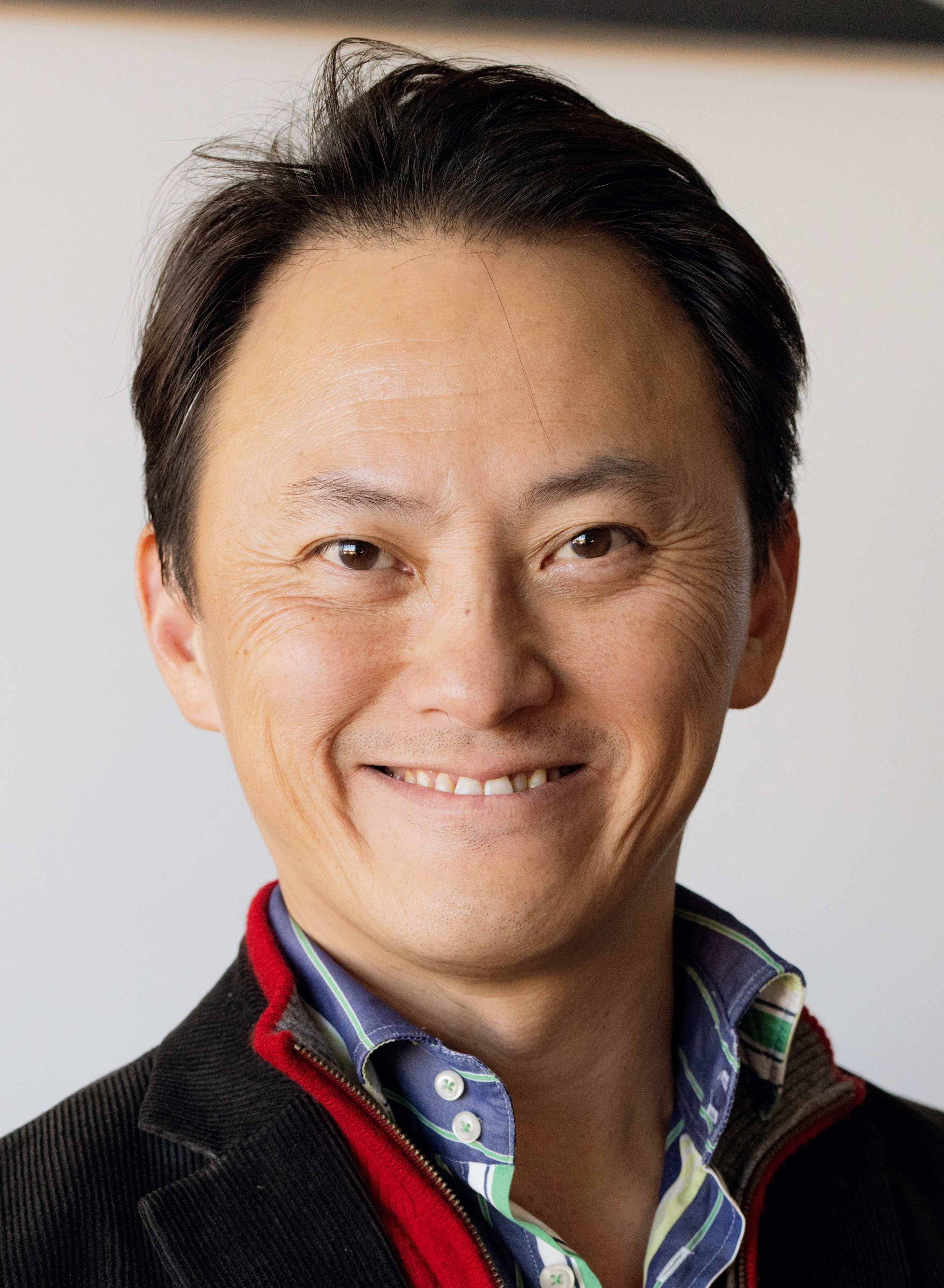
Prof. Dr. Bernd Skiera holds the first chair for electronic commerce in Germany at Goethe University Frankfurt am Main since 1999. He serves on the board of efl - The Data Science Institute and the Schmalenbach Society, while representing Germany at the European Marketing Community (EMAC). Chair of Marketing, Goethe University Frankfurt am Main Board member, efl - The Data Science Institute National representative, European Marketing Community (EMAC) His research focuses on MarTech/SalesTech integration, customer value management, online advertising analytics, data-driven pricing models, and the economic implications of internet privacy regulations. He leads the ERC Advanced Grant project on cookie usage restrictions' economic consequences. Recent publications examine dynamic pricing in digital markets, competition visualization using big data, and AI applications in marketing analytics. The ERC Advanced Grant research has produced empirical analyses of GDPR impacts on advertising ecosystems. 2015 Journal of Marketing Best Paper Award 2013 International Journal of Research in Marketing Best Paper Award Multiple MSI/H. Paul Root Award recognitions He has mentored 17 doctoral students who became professors globally, including at London Business School and LMU Munich. His work bridges marketing analytics with financial valuation through customer equity modeling.
Juan Yao is a Senior Lecturer at the Finance Discipline, Business School, The University of Sydney. Her research focuses on empirical asset pricing , funds management , foreign exchange markets , and business forecasting . She has contributed to national research projects such as "Strategies and Approaches to Teaching and Learning Cross Cultures" (2007-2009) and is affiliated with the Sydney Environment Institute, China Study Centre, and Australia-China Business Network. Research Interests: Juan’s work explores financial market efficiency, investor behavior, and cross-cultural economic dynamics. Her publications address hedge fund performance, mutual fund strategies, and behavioral anomalies in both Australian and Chinese markets. Publications: Recent articles analyze price bubbles, sentiment analysis, and institutional trading impacts, spanning journals like Journal of Banking & Finance and Pacific-Basin Finance Journal . Grants: She served as Chief Investigator for a national teaching and learning grant (2007-2009) and a 2014 CIPR grant on asset-price bubbles in Australia.
Allaudeen Hameed is the Tang Peng Yeu Professor in Finance at the National University of Singapore (NUS) Business School , where he has been a Professor since 2006. He also holds editorial roles at several leading finance journals and has previously held visiting positions at the Chinese University of Hong Kong, University of North Carolina at Chapel Hill, and University of Texas at Austin. Education: Ph.D. in Finance, University of North Carolina at Chapel Hill Bachelor of Business Administration (Honours), Second Class Upper Division, National University of Singapore Research Interests: His research spans a wide range of topics in finance, including return-based trading strategies , stock return co-movement , liquidity , the role of financial analysts , and international financial markets . These interests are deeply rooted in empirical asset pricing, market microstructure, and behavioral finance. His work often explores how market frictions, investor behavior, and institutional features affect asset prices and trading strategies, with a strong focus on cross-country and emerging market contexts. Scientific Awards & Honors: Asian Finance Conference Best Paper Award – 2024 Pacific Basin Finance Journal Best Paper Award – 2024 UM Distinguished Visiting Scholar, University of Macau – 2024 Best Paper of PERC Award – 2023 Tun Ismail Mohamed Ali Distinguished Chair, Universiti Kebangsaan Malaysia – 2022–2024 Teaching Excellence Team Award, NUS Business School – 2020 Best Paper Awards, FMA – 2016 & 2018 Outstanding Researcher Award, NUS Business School – 2015 & 2003 University of North Carolina Kenan-Flagler Alumni Merit Award – 2011 Professional Service: He serves as Editor of the International Review of Finance and Associate Editor of the Journal of Financial and Quantitative Analysis and Pacific-Basin Finance Journal . He is also a Senior Fellow at the Asian Bureau of Financial and Economic Research (ABFER) and a former Council Member of the Society for Financial Studies. Leadership Roles: He is currently Chair of the Faculty Promotion & Tenure Committee (FPTC) and Chair of the Faculty Promotion in Educator Track Committee (FPEC), both from 2025–2026.
René M. Stulz is the Everett D. Reese Chair of Banking and Monetary Economics at The Ohio State University's Max M. Fisher College of Business , where he also serves as Director of the Dice Center for Research in Financial Economics . He has held academic positions at MIT, University of Chicago, and University of Rochester. Ph.D., Massachusetts Institute of Technology Marvin Bower Fellowship (Harvard Business School) Doctorat Honoris Causa (University of Neuchâtel) Risk Manager of the Year (Global Association of Risk Professionals) His research spans corporate finance , financial institutions , and asset pricing , with recent work on unicorns , cyberattack economic impacts , and banking regulation . His articles show expertise in market volatility , governance , and financial globalization . Stulz has won multiple scientific awards and served as editor of the Journal of Finance and Journal of Financial Economics . He consults for the IMF , World Bank , and major financial institutions , and has testified in federal/state courts .
Kingsley Yuen Lung Fong is an Associate Professor of Finance at the UNSW Business School, specializing in Banking and Finance. He has published extensively in leading international finance journals and co-founded the RISE Finance Lab to explore how finance can better foster well-being, relational trust, and long-term stewardship. Institution: University of New South Wales School: UNSW Business School Department: Banking and Finance His academic work is guided by the principle that finance is an evolving design for organizing life and activity across individuals and society. Fong's research expertise spans market microstructure, investment, household finance, and sustainable finance. He has made significant contributions to understanding the connections between finance, society, and nature for a flourishing future. The analysis of his 15 most recent publications reveals a strong focus on market microstructure, trading behavior, and sustainable finance. His work examines algorithmic trading impacts, liquidity measurement, household investment decisions, and regulatory aspects of financial advice. Fong's research demonstrates consistent interest in how financial systems can be designed to better serve societal needs while maintaining market efficiency. 2017 Review of Finance Spängler IQAM Prize 2021 Aspen Institute Ideas Worth Teaching Award 2022 S&P Global Decarbonisation Hackathon As an educator, Fong teaches Wealth Management and Client Engagement, Sustainable Investing, and Sustainable Finance. His leadership roles include serving as Deputy Head of School for Banking and Finance (2011-2019), Co-Founder of UNSW RISE Finance Lab (2025), and member of the Australian Sustainable Finance Institute Sustainable Finance Capability Reference Group (2024). Beyond traditional finance, he created DATKIS, an intellectual framework that grounds common sense and intelligence in truth, awareness, and design.
Peter Kondor is an Assistant Professor affiliated with the London School of Economics & Political Science (LSE) and Central European University (CEU). His research focuses on finance, asset pricing, liquidity risk, market microstructure, and arbitrage dynamics. Research Interests: Asset pricing with heterogeneous agents Liquidity risk and intermediary capital Over-the-counter market structures Behavioral finance and sentiment analysis Global financial cycles and investment waves Information diffusion and market stability Key Publications Trends: 2011-2025: Explores causal inference in asset pricing, hedge fund impacts on idiosyncratic risk, and liquidity risk dynamics. 2018: Investigates arbitrage capital and liquidity risk in global markets. 2020-2025: Analyzes rational sentiments, narrative momentum, and aggregate earnings.
Dr. Kai Li serves as Professor of Finance at the University of British Columbia's Sauder School of Business, holding the Canada Research Chair in Corporate Governance and W. Maurice Young Endowed Chair in Finance. Elected Fellow of the Royal Society of Canada (2022), she is Managing Editor of the Journal of Financial and Quantitative Analysis and previously served on editorial boards of Review of Financial Studies, Management Science, and Journal of Finance. Her academic foundation includes a BSc from Jiaotong University, MA from Concordia University, and PhD from the University of Toronto. Dr. Li's research examines corporate governance through three interconnected lenses: gender dynamics in finance (board diversity, analyst performance), corporate culture quantification (using generative AI and machine learning), and green innovation (environmental governance). Her methodology pioneers computational approaches to analyze textual data from corporate disclosures, bridging finance, computer science, and social sciences. Analysis of her recent publications reveals a distinct trajectory toward interdisciplinary research, increasingly integrating artificial intelligence with traditional finance to study culture and sustainability. This shift demonstrates growing emphasis on empirical measurement of intangible governance factors through NLP and generative models. Her accolades include: Fellow of the Royal Society of Canada (2022) UBC Killam Research Award Sauder Research Excellence Award (junior/senior) Barclays Global Investors Canada Research Award John L. Weinberg/IRRCi Best Paper Award (2024) Best Paper Award at 2024 China International Conference in Finance While the provided materials confirm her editorial leadership and research impact, specific details regarding graduate student supervision and grant funding portfolios were not disclosed. Dr. Li maintains affiliations with the Asian Bureau of Finance and Economic Research (Senior Fellow), European Corporate Governance Institute (Research Member), and FinTech at Cornell Initiative (Research Fellow).
Dr. Eric Tan is a Senior Lecturer in Finance at the University of Queensland's School of Business. He holds a PhD in Finance from the University of New South Wales and a Bachelor of Commerce (First Class Honours) from Monash University. Currently, he serves as the postgraduate coordinator for the finance PhD program and is a member of the Low and Negligible Risk (LNR) Ethics Review Panel. His research focuses on investments, fund management, and institutional investors like mutual funds and hedge funds. He has expanded into corporate finance, examining media coverage and political connections' roles. His work has been presented at major conferences such as the American Finance Association (AFA) and European Finance Association (EFA). He has received numerous grants from AFAANZ, industry bodies, and internal funding. Dr. Tan's articles explore topics like media influence on CEO dominance, climate transition risk in banking, and mutual fund performance. His research has won three Best Paper Awards at academic forums between 2016 and 2018. He also referees for top journals including the Review of Financial Studies and Financial Analysts Journal . Educations: PhD in Finance, University of New South Wales Bachelor of Commerce (First Class Honours), Monash University Awards: Best Paper Award, UWA Accounting and Finance Research Forum (2018) Best Paper Award, FIRN Annual Conference (2017) Best Paper Award, New Zealand Finance Colloquium (2016) Grants: AFAANZ, industry, and internal research grants. His advisory roles include overseeing the finance PhD program and ethics review. He contributes to the academic community through peer review and conference participation.
Benjamin F. Hobbs serves as the Theodore M. and Kay W. Schad Professor of Environmental Management at Johns Hopkins University, holding a primary appointment in the Department of Environmental Health and Engineering and a joint appointment in the Department of Applied Mathematics and Statistics. He is co-director of the USEPA Yale-JHU SEARCH Center and director of the NSF-funded Electric Power Innovation for a Carbon-free Society (EPICS) Center, focusing on interdisciplinary research at the intersection of energy systems, environmental management, and public health. Hobbs' educational background includes a BS from South Dakota State University (1976), an MS in Resources Management and Policy from SUNY-Syracuse (1978), and a PhD in Environmental Systems Engineering from Cornell University (1983). Prior to joining Johns Hopkins in 1995, he worked at Brookhaven and Oak Ridge National Laboratories and served as a professor at Case Western Reserve University, with additional visiting appointments at institutions including Cambridge University. His research integrates systems analysis, economics, and optimization to address critical challenges in electric utility planning, renewable energy integration, and environmental resource management. Key focus areas include solar forecasting using AI, green infrastructure for urban water management, health impacts of energy transitions, and grid reliability under high renewable penetration. His work emphasizes practical applications through engineering-economic modeling with rich technological and environmental detail. Analysis of his recent publications reveals a strong trend toward addressing grid reliability in decarbonizing systems, with increasing emphasis on market design innovations, resource adequacy under uncertainty, and storage-transmission tradeoffs. His research consistently bridges theoretical optimization with real-world policy implementation, particularly evident in his leadership of the EPICS Center's 100% renewable grid initiatives. Lifetime Achievement Award by Energy Systems Integration Group (ESIG), 2024 Fellow of the Institute of Electrical and Electronics Engineers (IEEE) Fellow of the Institute for Operations Research and Management Science (INFORMS) Hobbs advises graduate students through Johns Hopkins' interdisciplinary programs, with alumni employed as energy consultants, policy analysts, and researchers. His current grants include leadership of the NSF Global Center EPICS and co-direction of the USEPA SEARCH Center, focusing on energy-air-climate-health interactions. He chairs the Market Surveillance Committee for the California Independent System Operator and serves on editorial boards for Energy Economics and other leading energy journals. He leads the Hobbs Energy & Environment Decisions Research Group, which collaborates with institutions including IBM, National Renewable Energy Laboratory, and University of Texas at Dallas. The group participates in the Global Power Systems Transformation Consortium and Columbia-JHU Future Power Markets Forum, conducting fieldwork initially in California and the central United States.
Rahul Vashishtha is a Professor of Accounting at Duke University's Fuqua School of Business, where he has served since earning his PhD in Accounting from the University of Pennsylvania in 2012. His research focuses on the determinants of corporate and banking sector disclosure, emphasizing economic consequences such as investment behavior, financial stability, and transparency's impact on institutions. Key areas include how mandated reporting frequency influences managerial myopia, banking sector fragility, and the interplay between mutual fund transparency and corporate decision-making. Dr. Vashishtha's work explores topics like loan covenant violations, bank mergers' effects on disclosure, and the role of analyst recommendations in stock price bubbles. He teaches Financial Statement Analysis in Duke's Daytime MBA program, blending academic rigor with practical business insights. His research has been published in top-tier journals such as the Journal of Financial Economics , Journal of Accounting Research , and Review of Financial Studies . Notable contributions include demonstrating how quarterly financial reporting pressures lead to short-term investment biases and analyzing bank transparency's role in deposit flows. His findings have been widely cited in media outlets like the Wall Street Journal , Financial Times , and Forbes . While no formal awards are listed, his extensive publication record and media engagement highlight his influence in accounting and finance research. Advising roles and grants are not explicitly detailed in available materials. He is actively involved in ongoing research on liquidity transformation in banking and voluntary disclosure strategies during financial crises.
Murat Yaş is Assistant Professor at the Institute of Islamic Economics and Finance, Marmara University, and Visiting Fellow at Sophia University's Institute of Asian, African and Middle Eastern Studies. His academic journey includes a PhD in Islamic Finance from INCEIF, a Postgraduate degree in Islamic Finance from INCEIF, and a B.A. in Economics from Boğaziçi University. Doctorate (2014-2020): INCEIF, Islamic Finance, Malaysia Postgraduate (2012-2014): INCEIF, Islamic Finance, Malaysia Undergraduate (2008-2012): Bogazici University, Faculty of Economics and Administrative Sciences, Department of Economics, Turkey His research spans financial markets , Islamic finance , and Shariah compliance , with a focus on anomalies in Islamic financial systems, regulatory frameworks, and cross-cultural economic performance. He has contributed to debates on Islamic microfinance, equity fund behaviors, and methodological foundations in Islamic economics. Recent publications and conference presentations highlight his expertise in Shariah-compliant investment analysis, regulatory challenges in Islamic finance, and comparative studies across Malaysia, Indonesia, and Türkiye. His work bridges theoretical Islamic economic principles with empirical financial market analysis. Yaş actively engages in academic service as Assistant Editor for Jurnal Ekonomi Syariah Teori dan Terapan , Editor for Journal of Islamic Economics , and peer reviewer for journals indexed in ESCI and SSCI. He has advised one thesis and participated in funded projects under the Organization of Islamic Cooperation (OIC) related to Islamic finance standardization.
Lubomir P. Litov is the David M. Moffett Professor of Corporate Finance and an associate professor in the Finance Department at the Michael F. Price College of Business, University of Oklahoma. He also holds an appointment as Affiliate Associate Professor of Law at the OU College of Law. Dr. Litov received his Ph.D. in Economics from Leonard Stern School of Business at New York University. Prior to joining OU, he held faculty positions at the University of Arizona and Washington University in St. Louis. He is also a research associate at the Financial Institutions Center at the Wharton School of the University of Pennsylvania. Dr. Litov's research focuses on several key areas of finance and corporate governance: Corporate governance mechanisms and board structures Mergers and acquisitions processes and outcomes Venture capital and private equity investment strategies Entrepreneurial finance and growth equity Capital structure decisions and risk management International corporate finance and policy impacts His recent publications examine critical issues such as dual-class stock IPOs, policy uncertainty effects on venture capital, poison pill defenses, and the relationship between venture capitalist directors and managerial incentives. Dr. Litov's work consistently bridges theoretical frameworks with practical applications in corporate finance and governance, with articles published in top journals including the Journal of Finance, Journal of Financial Economics, and Journal of Accounting and Economics. Dr. Litov has received numerous teaching and research honors including: Harold E. Hackler Outstanding MBA Professor Award (2022) Merrick Foundation Teaching Award (2018) Hurley Roberson Teaching Excellence Award (2017) William Sharpe award for best paper in JFQA (2010) As an educator, Dr. Litov teaches courses on Mergers, Acquisitions & Corporate Restructuring across multiple programs including the MBA, Executive MBA in Aerospace & Defense, and MSc in Finance. He also co-organizes the Virtual Household Finance Seminar and the NYU-Georgia Tech-OU Economics Virtual Seminar on Artificial Intelligence and Decentralized Finance, bringing together leading researchers to discuss cutting-edge developments in finance.
Professor Heinrich Liechtenstein is a full professor in the Department of Financial Management at IESE Business School. He teaches in MBA and executive education programs, specializing in entrepreneurial venture financing, wealth management, and entrepreneurial family governance. His academic work bridges theoretical research with practical application in the finance industry. His educational background includes: Ph.D. in Economics and Business Administration from the University of Vienna MBA from IESE Business School, University of Navarra B.Sc. in Economics and Business Administration from Karl-Franzens-Universität Graz European Financial Analyst (CEFA) certification Professor Liechtenstein's research focuses on private equity, venture capital, and family wealth management. His work examines operational value creation in private equity, investment impact, and governance structures for entrepreneurial families. He has developed country attractiveness indices for venture capital and private equity investments, providing valuable tools for institutional investors evaluating global opportunities. His publication record shows a consistent focus on practical finance applications, with particular emphasis on family offices, venture capital fund selection criteria, and country-level investment climates. His research often involves collaboration with practitioners and addresses real-world challenges faced by investors and family businesses. Professor Liechtenstein brings significant practical experience to his academic work, having served at Liechtenstein Global Trust working with high-net-worth individuals, advised families at Boston Consulting Group, and founded and sold two successful companies. He currently serves on the boards of several family foundations.
Wen He is a Professor of Accounting at the Department of Accounting, Monash Business School, Monash University. He holds an MBA from Lancaster University and a PhD from National University of Singapore (NUS). Prior to joining Monash in 2020, he worked at UNSW and the University of Queensland. His research focuses on auditing, corporate governance, corporate social responsibility, dividends, financial reporting, and financial analysts. He has published in top journals such as Contemporary Accounting Research and Journal of Business Finance and Accounting , with recent works exploring regulatory cooperation, climate risk, and cross-border financial policies. Research Interests include: Auditing methodologies and regulatory enforcement Corporate governance in China Climate risk and financial flexibility Dividend policies and payout strategies Financial reporting transparency Recent articles highlight themes such as cross-border regulatory frameworks, auditor performance metrics, and shareholder dissent mechanisms in digital voting systems. His work contributes to UN Sustainable Development Goals through studies on corporate social responsibility and environmental accountability. He is actively supervising PhD students and accepting new candidates, particularly in auditing and governance contexts. He has held visiting positions at NUS and Xiamen University, fostering collaborative research networks in Asia. Labs/Teams: Impact Labs (Monash Business School).
Professor Tan Hun Tong is a Professor in the Division of Accounting at the Nanyang Business School, Nanyang Technological University (NTU), holding the UOB Chair in Banking. He is also Director of the Centre for Accounting & Auditing Research (CAAR). His academic journey includes a B. Acc (Honors) from NUS, M.A. in Psychology, and Ph.D. in Business Administration (Accounting) from the University of Michigan. Research focuses on judgment and decision-making in accounting, leveraging psychological theories and experimentation. Key interests include preparers, users, and intermediaries of accounting information, and institutional/environmental influences on financial judgments. His editorial roles include Editor-in-Chief of Accounting, Organizations and Society , and Editor of Journal of International Accounting Research . Recent work spans critical audit matters, investor decision-making, and auditing standards, reflecting themes in behavioral accounting and regulatory impact. Awards: 2021 ABO Notable Lifetime Contribution Award Public Administration Medal (Silver, 2016) Nanyang Award for Research (2008) Long Service Awards (2015, 2019) Advising and grants: No formal advisee list provided. Active in editorial and AAA committees, emphasizing professional standards and research advocacy. Labs/Teams: Leads CAAR, focusing on accounting and auditing research. Engaged in interdisciplinary projects merging psychology with financial decision-making.