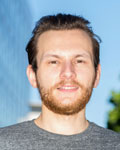
Björn Möller, a researcher at the Department of Signal Processing and Machine Learning within the Faculty of Electrical Engineering, Information Technology, and Physics at Technical University of Braunschweig, specializes in machine learning and computer vision applications. His academic journey includes a diploma in Business Information Systems from TU Dresden (2012–2019), with a focus on Business Intelligence. Research Interests His work bridges deep learning with practical applications in two distinct domains: Advancing microscopy techniques through low-resolution data-driven super-resolution models Optimizing viticulture operations via object detection and yield prognosis systems His publications demonstrate expertise in algorithm development for both scientific imaging and agricultural technology. Publication Trends Research spans atomic-scale imaging (2024, 2023) and agricultural AI (2019, 2021). Notably, he explores how transformer architectures and super-resolution methods can solve domain-specific challenges in microscopy and vineyard management. Contact Information Email: bjoern.moeller@tu-braunschweig.de Location: Schleinitzstraße 22 (Room 302), Braunschweig Phone: +49 (0) 531 391 - 2446
Scott Mahlke is a Professor and Associate Chair in the Department of Electrical Engineering and Computer Science at the University of Michigan's College of Engineering. He is affiliated with both the Advanced Computer Architecture Laboratory and the Software Systems Laboratory. Dr. Mahlke joined the University of Michigan in 2001 after completing his Ph.D. at the University of Illinois and working at HP Laboratories. Ph.D., University of Illinois Former Researcher, HP Laboratories Dr. Mahlke's research spans compilers, computer architecture, and high-level synthesis, with particular focus on overcoming challenges in performance, power consumption, and reliability for next-generation computer systems. His work integrates hardware and software co-design approaches to address fundamental limitations in modern computing platforms. His research has evolved from traditional compiler and architecture topics toward increasingly incorporating machine learning acceleration, autonomous systems, and reliability engineering. Analysis of his recent publications (2021-2025) reveals a strong trend toward hardware-software co-design for emerging workloads, particularly in autonomous systems, neural network acceleration, and reliability-aware computing. His work demonstrates consistent innovation in bridging compiler technology with architectural innovations to solve real-world performance and efficiency challenges. Dr. Mahlke has received significant recognition for his contributions to the field: National Science Foundation CAREER Award (2003) for "Compiler-Directed Synthesis of Application Specific Processors" Morris Wellman Faculty Development Assistant Professor appointment (2004) ISCA Most Influential Paper Award (2006) for the 1991 paper "IMPACT: An Architectural Framework for Multiple Instruction Issue Processors" Young Alumni Award from the University of Illinois ECE Department (2007) As an educator, Dr. Mahlke has taught core computer systems courses including EECS 370 (Introduction to Computer Organization), EECS 483 (Compiler Construction), and EECS 583 (Advanced Compilers) since joining Michigan. His teaching philosophy follows Yale Patt's 10 commandments for teaching, emphasizing understanding over memorization, genuine respect for students, and taking responsibility for course content. He has received mixed but generally positive student evaluations, with students noting both his deep subject matter expertise and areas for improvement in lecture delivery. Dr. Mahlke maintains active research leadership through his affiliations with the Advanced Computer Architecture Laboratory and Software Systems Laboratory, where his team continues to explore innovative approaches to compiler and architecture challenges in modern computing systems.
Professor Simon Marvin is a distinguished academic in the Faculty of Social Sciences at the University of Sheffield, where he holds the position of Professor of Geography. With an internationally recognized publication profile, Professor Marvin has established himself as a leading expert in the field of urban studies, particularly in understanding the complex relationships between socio-technical networks and urban and regional restructuring. Professor Marvin completed his MA in Urban Studies and Planning at the University of Sheffield during the mid-1980s, and later pursued PhD studies at the Open University, where he conducted research on Sheffield's combined heat and power district heating program. His academic journey has included significant roles at Newcastle University, Salford University, and Durham University, where he served as Chair in the Department of Geography. Professor Marvin's research is characterized by innovative, interdisciplinary approaches that have opened up new agendas in urban studies and infrastructural research. His work spans telecommunications, infrastructure and mobility, sustainability, systemic transitions, climate change, ecological security, and most recently, the intersection of artificial intelligence and urban development. He has been instrumental in advancing the field through his critical examination of smart cities and the emerging paradigm of urban AI, exploring how technological systems reshape urban environments while addressing pressing ecological challenges. His extensive publication record shows a clear evolution from early work on urban infrastructure and socio-technical networks toward contemporary research on urban AI, robotics, and climate-controlled urban environments. The publications reveal a consistent focus on how technological systems reshape urban environments while addressing ecological security challenges, with recent work particularly examining the implications of automation and artificial intelligence for urban governance and spatial organization. Currently, Professor Marvin serves as either Principal Investigator or Co-Investigator on five Research Councils UK (RCUK) funded grants, including two major projects, one impact grant, and two international networks. These projects employ five researchers and also include research work for the Swedish Mistra Urban Futures Foundation. His expertise is sought after by policy users across central government and urban and regional agencies in the UK, Europe, and internationally. Professor Marvin currently serves as an urban expert on the JPI Urban Europe Scientific Advisory Board. Professor Marvin's work bridges academic research with practical policy applications, making his contributions relevant to both scholarly debates and real-world urban challenges. His ongoing research trajectory suggests continued engagement with the most pressing urban issues of our time, particularly the intersection of technological innovation, environmental sustainability, and urban governance in an era of climate emergency.
Dr Richard Collins is a Senior Lecturer in Water Engineering at the University of Sheffield , affiliated with the School of Mechanical, Aerospace and Civil Engineering. His research focuses on hydraulic transients , pipeline integrity , and smart water infrastructure . Graduated with an Aerospace Engineering degree (2005) and PhD in Materials and Mechanical Engineering (2009) Current research explores pressure transients , leak detection , and autonomous robotic systems for pipeline inspection Projects include fatigue analysis , biofilm mobilisation , and ultrasound-based pipe assessment His publications emphasize cast iron pipe fatigue , acoustic leak detection , and transient-induced contamination . Funded by RCUK and Datatecnics , his work bridges mechanical engineering and civil infrastructure challenges.
Prof. Monika Sester is a distinguished Professor and Executive Director of the Institute of Cartography and Geoinformatics at Leibniz University Hannover, within the Faculty of Civil Engineering and Geodetic Science. She also serves as Spokesperson for the Leibniz Research Center FZ:GEO and holds multiple leadership roles including Faculty Information Officer (FIO) for the Faculty of Civil Engineering and Geodetic Science, Ombudsman for Good Scientific Practice, and Exchange Coordinator for Geodetic Science and Geoinformatics. Her research focuses on the intersection of geospatial information science, cartography, and urban mobility. Prof. Sester's work spans several key areas: Geospatial data processing and analysis Cartographic representation and visualization Urban mobility and transportation systems Spatial data uncertainty and quality Digital mapping technologies and applications Historical map analysis and interpretation Prof. Sester's recent publications demonstrate a strong focus on applying advanced computational techniques to geospatial problems. Her work shows increasing emphasis on machine learning applications for map analysis, urban mobility optimization, and 3D spatial modeling. She has been particularly active in researching applications of deep learning for historical map interpretation, urban mobility patterns, and spatial uncertainty visualization. Her contributions to the field have been recognized through leadership positions in major research initiatives: Executive Director, Institute of Cartography and Geoinformatics Spokesperson, Leibniz Research Center FZ:GEO Faculty Information Officer, Faculty of Civil Engineering and Geodetic Science Ombudsman for Good Scientific Practice Member of multiple academic committees including the Admissions and Examination Board Prof. Sester actively collaborates with students and researchers across multiple projects focused on geospatial information systems, urban mobility, and cartographic visualization. Her leadership extends to guiding research directions within the Leibniz Research Center FZ:GEO, which brings together interdisciplinary expertise to address complex spatial challenges.
Justin Bradley is an Associate Professor in the Computer Science Department at North Carolina State University. Previously, he held the position of Richard L. and Carol S. McNeel Associate Professor of Computing in the School of Computing at the University of Nebraska-Lincoln. His educational background includes: Ph.D. in Aerospace Engineering from the University of Michigan (2014) M.S. in Aerospace Engineering from the University of Michigan (2012) M.S. in Electrical Engineering from Brigham Young University (2007) B.S. in Computer Engineering from Brigham Young University (2005) Dr. Bradley's research focuses on cyber-physical systems with particular emphasis on control, autonomy, software, and computing for aerospace vehicles. A key theme in his work involves developing algorithms that can dynamically adjust their resource utilization in response to uncertainty while maintaining performance requirements. His research spans several critical areas including Artificial Intelligence and Intelligent Agents, Cyber-Physical Systems, and Embedded and Real-Time Systems, with applications primarily in unmanned aircraft systems (UAS) operating in challenging environments like wetlands and fire-prone areas. His scientific achievements have been recognized with prestigious awards including: 2021 NSF CAREER award AIAA Associate Fellow designation Dr. Bradley has been actively involved in research funding and mentoring. His NSF CAREER award (NSF-2047971) supports work on "co-regulation" algorithms for unmanned aircraft systems. He has co-directed research labs including the MAGICC lab at BYU, the A2Sys lab at the University of Michigan, and the Nebraska Intelligent MoBile Unmanned System (NIMBUS) lab since 2015. His research group focuses on developing performance-adjustable, resource-aware algorithms for autonomous systems, with applications in environmental monitoring, wetland studies, and fire management. His educational efforts target K-12 through adult engagement to expand the cyber-physical systems educational pipeline. His laboratory work centers around the development of the Co-regulated Hybrid Systems (CHS) framework, Co-regulated Real-Time Kernel (CRTK), and co-regulated Markov Decision Process (MDP) for resource-aware autopilots. These technologies enable unmanned systems to dynamically reallocate computing resources while maintaining mission objectives, particularly valuable in complex environments like rainforests where systems must transition between surveillance, sampling, and sensor emplacement tasks.
Al-Hafeez Z Dhalla serves as an Assistant Research Professor in the Department of Biomedical Engineering at Duke University and is a Faculty Network Member of the Duke Institute for Brain Sciences. His academic appointment reflects his engineering expertise in translating optical technologies to clinical ophthalmology applications. He earned his Ph.D. from Duke University in 2012, establishing a foundation for his specialized work in biomedical optics. This educational trajectory directly informs his current research and teaching activities within the university's engineering framework. Dr. Dhalla's research program centers on developing optical coherence tomography (OCT), scanning laser ophthalmoscopy (SLO), and LiDAR systems for non-invasive, high-resolution biological tissue imaging. His laboratory specifically targets ophthalmic disease diagnosis and treatment, with strong emphasis on engineering novel instrumentation for image-guided surgery and robotic microsurgery. A critical aspect of his work involves preparing these technologies for commercialization through rigorous clinical validation and regulatory approval processes, bridging the gap between engineering innovation and medical practice. His publication portfolio demonstrates consistent advancement in optical imaging technologies, particularly handheld OCT devices, real-time volumetric surgical imaging, and adaptive optics for photoreceptor visualization. The research exhibits a clear trajectory from fundamental optical engineering toward clinical implementation, with recurring themes of enhancing surgical precision through robotic integration and improving diagnostic capabilities via novel scanning methodologies. Within the educational sphere, Dr. Dhalla teaches multiple courses including BME 791 (Graduate Independent Study), BME 590 (Special Topics), BME 494/493 (Projects in Biomedical Engineering), and BME 436L (Biophotonic Instrumentation), directly connecting his research expertise to student training in optical instrumentation and biomedical device development.
Professor Gang-Ding Peng is a leading academic in photonics and optical communications at the School of Electrical Engineering and Telecommunications , University of New South Wales (UNSW). With over three decades of experience, his research focuses on silica and polymer optical fibers, fiber lasers, sensors, and photonic signal processing. Education: B.Sc. in Physics (1982, Fudan University), M.Sc. in Applied Physics (1984), Ph.D. in Electronic Engineering (1987, both Shanghai Jiao Tong University) Career: Lecturer at Shanghai Jiao Tong (1987-1988), Postdoctoral Fellow at Australian National University (1988-1991), UNSW Faculty since 1991, Queen Elizabeth II Fellow (1992-1996) Research Interests: Specialized in specialty optical fibers, nonlinear optics, and photonic devices. His work spans: Silica and polymer fiber amplifiers/lasers Electro-optic and liquid-crystal-doped fibers Multi-core fiber Bragg grating systems Photonic crystal fiber sensing 3D-printed optical components Quantum and neuromorphic photonic applications Scientific Awards: Queen Elizabeth II Fellowship (1992-1996) Fellow and Life Member of OSA & SPIE Supervision: Active mentor in Bi/Er co-doped fibers, 3D-printed optical fibers, and fiber sensing technologies.
Cat Cassel is a Lecturer at the Sweetland Center for Writing, University of Michigan. She earned her BA in English & Women’s Studies from the University of Iowa and a PhD in the same fields from the University of Michigan. Research Focus: Post-atomic bug metaphors in American fiction and film, environmental dystopias, animal representation, and visual communication. Teaching: Courses on topics like material culture, feeling robots, and infographics. Personal Interests: Traveling for art/architecture, bad TV/movies, crafting, and Dungeons & Dragons. She is affiliated with the Lloyd Scholars for Writing and the Arts program at UM.
Ioannis Andreadis is a Professor in the Department of Electrical and Computer Engineering at the School of Engineering, Democritus University of Thrace. He has been a faculty member since 1993, following his appointment as a Visiting Professor at the School of Technological Applications of TEI Kavala (1991-1992). His academic journey began with a Diploma in Electrical Engineering from Democritus University of Thrace (1983), followed by an M.Sc. in Electrical Engineering & Electronics (1985) and a Ph.D. in Instrumentation & Analytical Science (1989), both from the University of Manchester. Professor Andreadis's research spans the Design and Implementation of Electronic Systems with particular emphasis on Intelligent Systems and Machine Vision . His work has resulted in over 230 publications in international journals, book chapters, and conference proceedings. He has made significant contributions to image processing, particularly in mathematical morphology, color image processing, and real-time implementation of image processing algorithms. His research has practical applications in seismic signal processing, crowd management systems, and 3D reconstruction technologies. The analysis of his recent publications reveals a strong focus on advanced image processing techniques, with increasing integration of deep learning approaches. His work spans both theoretical foundations (such as entropy estimation and moment calculations) and practical applications (including image stabilization, multi-focus image fusion, and crowd management systems). The interdisciplinary nature of his research connects electrical engineering, computer vision, and signal processing with applications in safety engineering, structural analysis, and robotics. Among his notable achievements are the IET Image Processing Premium Award (2009) , Best Paper Award at PSVIT 2007 , and Best Paper Award at EUREKA 2009 . He was elected Fellow of the Institute of Engineering & Technology (IET) in 2006 and Fellow of the Institute of Measurement & Control (InstMC) in 2021. He has also served as Subject Editor of the IET Electronics Letters and as Guest Editor for special issues of Pattern Recognition journal. Professor Andreadis has supervised 14 PhD theses , 21 Master's theses , and 88 Diploma works , demonstrating his commitment to academic mentoring. His research has been supported by significant grants including the EDUnet project (€280,000), wireless network implementation (€37,000), laboratory infrastructure development (€120,000), school information systems support (€478,000), the RESCUER project (€350,000 as Deputy P.I.), and the EDUSAFE project (Marie Curie Actions). He leads the Electronics Laboratory at Democritus University of Thrace, which has undergone significant infrastructure development through multiple funding sources. His work on the RESCUER project demonstrates collaboration with European partners on emergency risk management systems, while his EDUSAFE involvement shows commitment to advanced AR/VR safety systems development. His research group applies computational intelligence techniques to diverse challenges from seismic analysis to pedestrian evacuation modeling.
Kyriaki Papageorgiou is a Senior Researcher and Marie Skłodowska-Curie Fellow at the Department of Interdisciplinary Studies of Culture, Faculty of Humanities, Norwegian University of Science and Technology (NTNU). She holds a PhD in Cultural Anthropology and investigates the intersection of education, innovation, and technological transformation, with a focus on robotics, AI, and systemic societal challenges. Her work employs ethnographic methods and anthropological theory to analyze innovation ecosystems and pedagogical futures. Research Interests include: AI and Robotics in Societal Contexts Future of Learning and Academic Work Social Innovation and Ecosystems Ethics of Co-Creation and Scaling Digital Transformation in Education Recent Publications (2020–2025) span AI ethics, educational reform, and social innovation, often bridging cultural anthropology with technology studies. Key trends include: Critical analysis of human-AI collaboration and trust Design of challenge-based and co-creative learning models Role of technology in pandemic response and daily life Evaluation of social innovation labs and ecosystems Scientific Awards include: Marie Skłodowska-Curie Fellowship Fulbright Scholarship She has secured grants from the US National Science Foundation (NSF), EU Framework Program (FP7, H2020), Wenner-Gren Foundation, and UNESCO, and has served as an independent expert for the European Commission and other governmental agencies. Kyriaki leads the Fusion Point collaborative research program in Barcelona.
An Jacobs is a prominent Professor at the Vrije Universiteit Brussel (VUB) in the Faculty of Social Sciences, specifically within the Department of Sociology and Communication Sciences. With a Doctor of Political and Social Sciences in Sociology, Jacobs has established herself as a leading researcher at the intersection of technology, healthcare, and social sciences. Her work spans multiple disciplines with significant contributions to human-robot collaboration, digital health, and the sociology of technology. Her research interests focus on Human-Computer Interaction , Human-Robot Collaboration , Participatory Design , and Digital Health Inclusion , particularly for older adults. Jacobs explores how technology can be designed with and for users, emphasizing the importance of understanding user experiences, especially in healthcare contexts. Her work on multimorbidity self-management platforms demonstrates her commitment to creating practical solutions that address real-world challenges in healthcare systems. She has pioneered approaches to studying technology acceptance among older adults and has made significant contributions to understanding digital bother and burden in aging populations. Analysis of Jacobs' recent publications reveals a strong trend toward human-centered AI applications in healthcare, with particular emphasis on explainable AI systems, breast cancer screening innovations, and digital self-management tools for chronic conditions. Her work consistently bridges technical development with social implications, ensuring that technological solutions are not only effective but also ethically sound and socially appropriate. The interdisciplinary nature of her research is evident in publications spanning biomedical engineering, oncology, endocrinology, and social robotics. Finalist science communication award 2019 from the Royal Flemish Academy of Belgium for Science and the Arts Jaarprijs Wetenschapscommunicatie 2019 Silver ITEA Achievement Award 2012 Sustainability Leadership Recognition in Robotics 2024 As a principal investigator on numerous research projects including Brubotics, COMPASs 2.0, and DIGIT-ABLE, Jacobs has secured substantial funding for interdisciplinary research that combines social sciences with technological innovation. Her approach emphasizes co-creation with end-users, particularly evident in her work on digital health solutions for older adults with multimorbidity. Jacobs leads the Digital Ageing Consortium, which has produced significant datasets on older adults' technology experiences in Flanders. Her laboratory work spans multiple domains, from robotics research at Audi Vorst (where humans and robots work side-by-side) to in vitro testing of nano-aerosol exposures. Jacobs collaborates extensively across disciplines, working with medical researchers, engineers, and social scientists to address complex challenges in technology adoption and healthcare innovation.
Abdurrahman Yılmaz is an Assistant Professor at Istanbul Technical University's Department of Control and Automation Engineering within the College of Electrical-Electronics. His career spans academic and industrial roles, including a Research Assistant position at Istanbul Technical University (2018-2022) and Test Rig Design Engineer at ASELSAN INC. (2014). Education: PhD in Control and Automation Engineering (Istanbul Technical University, 2014-2022) MSc in Mechatronics Engineering (Yildiz Technical University, 2014-2017) BSc in Electronics Engineering (Istanbul Technical University, 2009-2014) Double Major in Control and Automation Engineering (Istanbul Technical University, 2011-2014) Research Interests focus on Robotics, Autonomous System Design, and Control Theory. His work includes localization frameworks for autonomous mobile robots, adaptive control algorithms for quadcopters, and soft haptic sensing technologies. Recent research explores digital twin simulators and quadruped robot dynamics. Scientific Output trends highlight advancements in mobile robot navigation, industrial automation, and autonomous systems. Publications span journals like Journal of Field Robotics and conferences including TAROS and RoboSoft. Awards: The Most Successful Doctoral Thesis Award of 2022 (University, 2023) 1st Water Management Awards (Ministry of Forestry and Water Affairs, 2019) Collaborations extend to international researchers in robotics and control systems. He serves as PI for the project "Development of a Design-Aiding Analysis Tool for Four-Legged Robots" (2023-2024).
Oliver Lomp is a researcher at the Institute for Neuroinformatics (INI) within the Faculty of Computer Science at Ruhr University Bochum. His work focuses on integrating perception and object recognition into dynamic field theory frameworks for robotic systems. He actively contributes to publication and teaching in neurorobotics and cognitive systems. Contact details: Email: oliver.lomp@ini.rub.de Office: NB 02/77, Ruhr University Bochum Campus Research trends include: Dynamic Field Theory applications in robotics Neurodynamic architectures for autonomous systems Object recognition with concurrent pose estimation Development of cognitive frameworks like CEDAR
Thibault Tricard is an Associate Professor at Ensimag Grenoble and a permanent researcher in the Maverick team at Inria Grenoble. His work bridges Computer Graphics and Additive Manufacturing , focusing on procedural methods for virtual world content generation. His research interests include: Procedural modeling for surface and microstructure details Mesh shaders and GPU-accelerated volume rendering 3D printing optimization with staggered infill structures Recent publications like Interval Shading (HPG 2024) and Procedural Phasor Noise (ACM Siggraph 2020) highlight trends in real-time rendering and fabrication-aware procedural synthesis. Awards include the GDR IG-RV Thesis Award 2023 . He advises PhD students and collaborates with researchers such as Sylvain Lefebvre and Hans-Peter Seidel. Teaching includes GP-GPU High-Performance Computing and 3D Graphics at Inp Grenoble and UGA Mosig. Personal projects like the LavaCake Vulkan library emphasize developer accessibility.