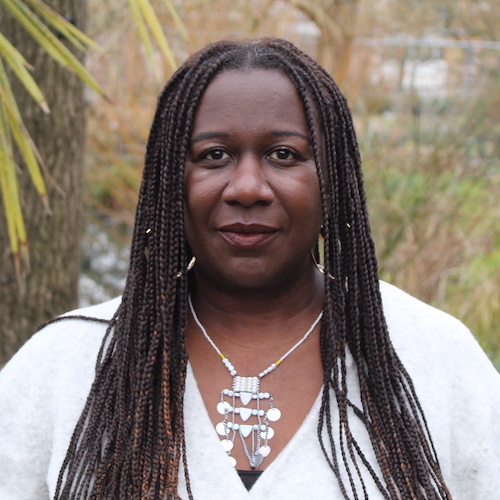
Dr. Trude Sundberg is a Senior Lecturer in Social Policy at the University of Kent's School of Social Policy, Sociology and Social Research. They joined the institution in 2012 after completing a PhD at the University of Kent, an MSc in Comparative Politics at the London School of Economics, and an MPhil in Political Science at the University of Oslo. Research Interests: Dr. Sundberg focuses on marginalized groups' experiences globally, including LGBTQ+ communities, feminists in China and India, and improving university working conditions for marginalized staff. Their work emphasizes inclusive research methods and water security in South Asia. Recent projects include collaborations with Freie Universität Berlin and the University of Connecticut on water security in South Asia. Teaching & Professional Roles: Director of Kent's Q-Step Centre (quantitative methods training), Editorial Board Member of Radical Statistics and Social Policy & Society , and active member of the Social Policy Association and International Political Science Association. Collaborations: Leading interdisciplinary projects on water security in Kolkata, India, and feminist transnational knowledge production with Nordic partners.
Dr. Katy Pilcher is a Senior Lecturer in Sociology at Aston University, affiliated with the Research Centre for the Humanities. She specializes in gender, sexualities, embodiment, and social inequalities. Her research explores erotic dance, sex work, ageing, and digital exclusion. She leads projects such as 'Creative Voices, Activist Voices' with Fun Palaces, fostering civic engagement through creativity. She has published widely, including monographs like Erotic Performance and Spectatorship and co-edited volumes on queer sex work and religion. Her teaching includes modules on feminist theory, qualitative research, and identities. She holds external roles as an examiner at Trinity College Dublin and University of Westminster, and serves on editorial boards and professional committees. Education: PhD Sociology, University of Warwick (2012) MA Social Research, University of Warwick (2008) BA (Hons) Sociology, University of Warwick (2007) Research Interests: Her work intersects with power dynamics, visual methods, and creative pedagogies. Notable areas include the sexual health needs of online sex workers, ageing and digital exclusion, and the role of creativity in activism. She collaborates with organizations like Fun Palaces to translate research into public exhibitions and toolkits. Grants and Projects: Recent funding includes Research England (Ageing and Digital Exclusion), the Collaborate Fund (Creative Voices project), and an ESRC Innovation Award for touring exhibitions. Her research emphasizes participatory methods and community impact. Labs/Teams: Collaborations with Fun Palaces focus on sensory storytelling and civic activism. She also engages with NHS Trusts and academic networks to address marginalized populations' needs.
Ko-Le Chen is a Researcher at Northumbria University , with a focus on interdisciplinary work at the intersection of Human-Computer Interaction , Participatory Design , and Emotional Labor . Their academic contributions span transcultural support systems, creative economy initiatives, and critical frameworks for inclusive design practices. Research Interests : Chen's work examines the emotional and affective dimensions of participatory design, with projects addressing gender support systems ( Kharm Unn Jai ), place-based creative economies, and ethical challenges in field research. They investigate how design can mediate interpersonal relationships, as seen in the Lovers' Box project (2011), and advocate for disability rights through policy analysis (2016). Key themes include transcultural collaboration, respectful hierarchies in design, and the materiality of knowledge dissemination practices. Scientific Trends : Chen's publications from 2011-2025 reveal a trajectory from intimate relationship technologies to broader societal impacts. Their work bridges technical innovation (e.g., affective labor in PDC conferences) with critical social theory (disability law, feminist biology critiques) and practical applications (creative economy insights). Notable Collaborations : Co-authorships with J. Yee, Y. Akama, and others across international institutions in the UK, Thailand, and Australia highlight their global interdisciplinary network.
Dr. Andrea Jimenez Cisneros is a Senior Lecturer in International Business (Management) at the University of Glasgow. Her research focuses on decolonial approaches to innovation, post-growth economies, and sustainable development, with particular attention to marginalized communities in the Global South. She has conducted extensive fieldwork in Peru, Zambia, and Bangladesh, examining how innovation discourses and practices intersect with postcolonial dynamics and socio-environmental justice. Her work bridges critical theory with practical interventions, such as designing participatory water governance platforms in Lima-Callao and analyzing grassroots circular economy initiatives. She critiques the exclusionary impacts of 'innovation speak' in development projects, advocating for frameworks like Buen Vivir and pluriverse principles to reimagine equitable systems. Her interdisciplinary contributions span fields like information systems, environmental studies, and political ecology. Key collaborations include projects with Javier Martinez and Liliana Miranda Sara on water justice, and with Pamela Abbott on reflexive methodologies in ICT4D. Her recent articles in World Development and Science, Technology and Society highlight her analytical rigor in exposing colonial legacies in conservation and innovation policies. Dr. Jimenez Cisneros’ work emphasizes community-led solutions and data justice, particularly through participatory design processes. She has co-authored over 20 peer-reviewed articles and book chapters, and her research has been published in Journal of Development Studies , Local Environment , and Information Technology for Development . She actively engages with policy dialogues on sustainable transitions and decolonizing knowledge systems.
Dr Heather Johnson is a Senior Lecturer at Queen's University Belfast's School of History, Anthropology, Philosophy and Politics, with an affiliation to the Senator George J. Mitchell Institute for Global Peace, Security and Justice. Her research focuses on irregular migration, border security, non-citizenship, and the intersection of visual representation with refugee studies. She leads projects such as the ESRC-funded 'Boats, Borders and Asylum' examining maritime migration. Research Interests: Irregular migration and asylum seeker policies Border security technologies and ethics Activism and protest among non-citizens Critical security theories Gendered narratives in refugee representation Recent Articles: Her work explores themes like the dissonances of teaching IR in conflict zones (2024), migrant storytelling ethics (2023), and border technology ethics (2020). The 2019 article Lost in the Aftermath analyzes security dialogue frameworks. Awards: 2016 Distinguished Book Award (Honourable Mention) 2006 Canadian Graduate Scholarship 2008 Doctoral Fellowship 2009 Ontario Graduate Scholarship Advising & Grants: Supervised PhDs on topics like piratical threat mitigation (Gulf of Aden), migrant activism in Ireland, and counter-radicalization strategies. Active in research projects funded by ESRC and international partnerships. Serves on advisory boards like The Migrant Centre. Labs/Initiatives: Engaged with the Mitchell Institute's global peace initiatives and collaborative projects on security technology governance.
Shelley Cobb serves as Professor of Film and Feminist Media Studies within the Department of Film Studies at the University of Southampton's Faculty of Arts and Humanities, where she has been a faculty member since 2008. A Senior Fellow of the Higher Education Academy, she leads foundational undergraduate modules including Film2019: Women and Hollywood and Film2028: Film Adaptation while co-convening the MA module Film Stardom and Celebrity Culture, significantly shaping film education through feminist and critical industry perspectives. Her research program centers on women filmmakers, gender dynamics in Hollywood, celebrity culture, and film adaptation, with particular emphasis on intersectional analyses of race, class, and aging. As Principal Investigator for the AHRC-funded 'Calling the Shots' project (2000-2015), she pioneered data collection on women in British film production, establishing womencallingtheshots.com as a vital public resource that continues to drive industry equality initiatives through its comprehensive reports and media impact. Professor Cobb's publication trajectory from 2018-2024 reveals evolving scholarly focus: early work established foundational critiques of gender inequality (e.g., 'What about the Men?'), while recent scholarship examines aging women filmmakers, Black women's industry experiences, and intersectional analyses of adaptations like Little Fires Everywhere . Her collaborative approach with researchers Linda Ruth Williams and Natalie Wreyford produces methodologically diverse outputs spanning statistical analyses, oral histories, and critical discourse studies that consistently bridge academic rigor and public discourse. Senior Fellow of the Higher Education Academy She actively supervises eight PhD candidates pursuing cutting-edge research on Black women in Hollywood, Chinese chick flicks, East Asian celebrity, and queer Black cinema, building on her supervision of completed theses covering British women directors, literary celebrity, and children's media adaptation. Her grant leadership extends beyond the AHRC project to include British Academy-funded research on 'Women in Film After the Ottoman Empire', demonstrating sustained excellence in securing major research funding. As a core member of the Centre for International Film Research and Southampton Institute for Arts and Humanities, Cobb integrates her scholarly work with public engagement through womencallingtheshots.com, which hosts industry reports and oral history archives. Her co-editorship of Celebrity Studies and co-authorship of First Comes Love: Power Couples, Celebrity Kinship and Cultural Politics further anchor her within international scholarly networks driving contemporary media studies.
Claudia Bernard is a Professor of Social Work and Co-Head of the Department of Social, Therapeutic and Community Studies at Goldsmiths, University of London . With over two decades of experience, her work focuses on social work with children and families , gender-based violence , and critical race theory , particularly through an intersectionality lens. She has authored and edited seminal works such as Constructing Lived Experiences and Safeguarding Black Children , and her upcoming book Intersectionality for Social Workers further solidifies her contributions. Research Interests include examining how race, gender, and class intersect in child welfare, with a focus on child abuse , domestic violence , and ethical research practices . She has supervised numerous studies in child welfare inequalities and childhood transitions , and her recent articles analyze COVID-19’s impact on BAME communities , affluent family neglect , and cultural diversity in social work . Scientific Awards include grants from the ESRC (2009) Department of Health (2007-2011) BAPSCAN (2007) Goldsmiths Research Office (1995, 2011) . Professional Activities encompass leadership roles in the UK Joint University Council Social Work Research Committee , co-editorship of the Journal of Ethics and Social Welfare , and participation in feminist research initiatives. She also reviews for international journals and contributes to policy development in child protection.
Dr. Agomoni Ganguli-Mitra is a Senior Lecturer in Bioethics and Global Health Ethics at the University of Edinburgh's School of Law, and Deputy-Director of the JK Mason Institute for Medicine, Life Sciences and the Law. She is also a member of the Wellcome Trust-supported Centre for Biomedicine, Self and Society, co-leading thematic strands on 'Beyond Global' and 'Beyond Sex'. Her roles include teaching, research leadership, and governance of interdisciplinary initiatives. Education: PhD in Biomedical Ethics and Law, University of Zurich (2005-2012) MSc in Medical Ethics, Independent Research (2003-2004) BSc in Biology, University College London (2000-2003) Research Interests: Dr. Ganguli-Mitra focuses on global bioethics and justice, particularly in global health emergencies (e.g., pandemics, humanitarian crises). She examines structural and epistemic injustice, exploitation, and vulnerability in healthcare systems. Her work integrates feminist approaches to analyze issues like sex-selection, surrogacy, and conscientious objection. She critiques systemic racism in healthcare and advocates for equitable public health policies. Key Projects: "Vulnerability and justice in global health emergency regulation" (UK charity-funded, 2018-2020) "Medicine without Doctors: Reimagining Care and Voice through Play" (Wellcome Trust, 2025-2031) She advises on global health ethics for organizations like the Nuffield Council on Bioethics and serves on the Board of Shakti Women's Aid since 2016. Her lab focuses on developing ethical frameworks for biomedical research, public health interventions, and crisis response.
Ana Cecilia Dinerstein is Chair of Political Sociology and Critical Theory at the Department of Social and Policy Sciences, University of Bath. A Fellow of the Higher Education Academy, her work bridges critical theory, decolonial praxis, and grassroots social movements across Latin America, Europe, and the Global South. Research focuses on the Global Politics of Hope , connecting Ernst Bloch’s philosophy with radical organizing Key contributions: Subjectivity of Labour , Open Marxism , and Concrete Utopias framework Supervises research on Argentina’s social movements, prefigurative politics, and decolonial feminist theory Her 115+ publications include monographs like The Politics of Autonomy in Latin America (2015) and Open Marxism 4 (2019). She founded the Women on the Verge network, fostering decolonial feminist scholarship globally. Awards include the Fellow of the Higher Education Academy (2017). Current projects span EU Horizon 2020 and British Academy grants on urban solidarity economies and prefigurative politics.
Bethany Aylward serves as a University Teacher at the School of Information, Journalism and Communication, University of Sheffield, joining the academic staff in 2023 after completing her PhD in 2024 titled 'Capturing social movements: Web archiving needs of activist collections in the north (UK)'. Her educational qualifications include: BA in Russian and History from University College London (UCL, 2014) with year abroad in St Petersburg MA in Librarianship from University of Sheffield PhD from University of Sheffield (2024) Her research centers on the convergence of alternative archival methodologies and digital social movements, expanding into critical archive studies, community web archiving practices, digital inclusion frameworks, systemic bias in library classification systems, and decolonial approaches within public library services. This interdisciplinary work bridges archival science with social justice imperatives in digital information ecosystems. Recognition includes a 2018 scholarship supporting her activist archivist research. She actively supervises students in her specialized domains while contributing to institutional knowledge through curriculum development across multiple degree programs. Bethany co-founded the Sheffield Feminist Archive—an intersectional community project preserving womanhood-centered histories—and serves as trustee for the Society for Cooperation in Russian and Soviet Studies (SCRSS). She actively participates in the Digital Societies Research Group and professional associations including AoIR and ASIS&T, driving initiatives that challenge traditional archival paradigms through community engagement.
Dr. Santiago Sanchez is a Senior Lecturer in the Department of Education at the University of Bath, specializing in socially situated teacher cognition, critical pedagogies, and social justice research. He contributes to the UN Sustainable Development Goals related to education and has collaborated across Argentina, Brazil, the UK, and Hong Kong. Doctor of Philosophy (PhD), University of Warwick (2010) Master of Arts (MA), Universidad de Jaén (2006) Bachelor of Arts (BA), Universidad Nacional de Mar del Plata (1998) His research focuses on two main strands: (1) Language education in socio-economically marginalized contexts, particularly in state schools in Brazil and Argentina; (2) Assessment feedback practices in higher education, examining student agency and tutor feedback mechanisms. He also explores academic writing literacy through a cognitive development lens. Recent research trends include digital teaching resilience during the pandemic, bricolage methodology in qualitative inquiry, and collaborative action research for social justice in Latin American language education. His work often bridges theory-practice gaps in teacher education. Senior Fellow of the Higher Education Academy (SFHEA) Sanchez has secured grants like the H&SS Grant Capture Fund (2022/23) and collaborates on projects investigating linguistic diversity, teacher wellbeing, and pedagogical innovation. He supervises doctoral students and works with international research clusters.
Barby Asante is a Lecturer in Fine Art Critical Studies within the Art Department at Goldsmiths, University of London. An accomplished artist, curator, and educator, she works across social practice, film, performance, and collective writing to create transformative spaces for ritual and healing. Her academic journey includes a BA Hons in Fine Art Time Based Media from the University of East London (1995), an MA in Visual Culture from Middlesex University (1999), and a Practice Based PhD from CREAM at the University of Westminster (2022). Asante's research centers on Black Feminism and decolonial theory, foregrounding knowledge from African, Caribbean, Latin American, and Indigenous communities. She explores how these frameworks inform art practice, institutions, and curation, with particular focus on social justice, care work, environmental justice, and abolition. Integrating West African cosmologies into her theoretical approach, she investigates archives, memory practices, and hauntology in art, alongside performance studies related to race, gender, and queer theory. Her work draws inspiration from Akan heritage and African Diaspora histories, examining post-colonial migrations and their implications for understanding history and memory in the UK and Europe. Her extensive publication record reveals a consistent engagement with Black feminist and decolonial methodologies across multiple formats. A significant thread throughout her output is the 'Declaration of Independence' project (ongoing since 2017), which manifests as performances, podcasts, and exhibitions exploring Black liberation and self-determination. Her scholarship demonstrates how artistic practice functions as critical theory and social intervention, particularly through concepts like Sankofa that connect past, present, and future. Her recent work shows increasing engagement with ecological justice and community-based knowledge systems. Asante's professional activities include significant collaborations with institutions such as the Stuart Hall Foundation, Haus der Kulturen der Welt, and the Library of Africa and the African Diaspora (2023 residency). Her ongoing projects 'The Queen and the Black-Eyed Squint' and 'Declaration of Independence' demonstrate sustained research commitment across multiple platforms and international contexts. Her work frequently involves collective approaches, as seen in collaborations with artists like Rabz Lansiquot and Imani Mason Jordan, reflecting her commitment to community-based knowledge production and transformative practices.
Michelle Williams Gamaker is a Professor in Fine Art at Goldsmiths, University of London, where she teaches in the Department of Art. Based in London, she is a moving image and performance artist whose work explores the fiction-making machine of 20th Century British and Hollywood studio films through restaging sequences to reveal cinematic construction and recasting characters to propose alternative endings. She is also Chair of Trustees at Pavilion in Leeds and co-founder of the Women of Colour Index (WOCI) Reading Group with Samia Malik and Rehana Zaman. 2016: Postgraduate Certificate in the Management of Teaching and Learning (HEA) 2012: PhD in Fine Art, Goldsmiths College, University of London 2005-06: MA Visual Anthropology, Goldsmiths College, University of London 1998-01: BA Fine Art (First Class Hons), Middlesex University 1997-98: BTEC Diploma in Art & Design, Middlesex University 2003-05: de Ateliers, Amsterdam, The Netherlands Williams Gamaker's key focus is the development of 'fictional activism': the restoration of marginalised brown characters as central figures who return in her works as vocal brown protagonists challenging historical cinematic injustices. Her practice involves scriptwriting, workshopping with actors, acquiring film paraphernalia, and producing props for intricate restagings of film sets. She explores migratory aesthetics, mental health, and the emotional complexities of capitalism and gender ideology through collaboration, particularly with artists Julia Kouneski and Mieke Bal. Her work with the WOCI Reading Group focuses on improving the visibility of women of colour artists while using archival material to generate discussion around current social and political concerns. Her recent works demonstrate a consistent exploration of postcolonial narratives, feminist film theory, and decolonial aesthetics. The Dissolution Trilogy represents a significant body of work that deconstructs Powell and Pressburger's 1947 Black Narcissus, revealing how cinematic construction shapes representation. Her filmic approach combines historical critique with contemporary theoretical frameworks, particularly around race, gender, and representation in cinema. Williams Gamaker is represented by Tintype Gallery, London, and her work has been exhibited internationally at venues including the BFI London Film Festival, Internationale Kurzfilmtage Winterthur, and various galleries across Europe. She has also presented at academic conferences such as Spectacular Evidence: Theatres of the Observed Mind, where she discussed Lygia Clark's work on 'biological architecture'. She has collaborated extensively with artist and cultural theorist Mieke Bal on projects including 'Madame B: Explorations in Emotional Capitalism' and 'Precarity,' which have been shown internationally at venues including Stedelijk Museum in Amsterdam, Gallery of Sydney College of the Arts, and Museum Bärengasse in Zürich. Her collaborative practice extends to her work with Julia Kouneski, revisiting Brazilian artist Lygia Clark's psychotherapeutic work as inspiration for interventions with the body, architecture and landscape.
Evdoxia Viza is a Senior Lecturer in the School of Computing, Engineering and Physical Sciences at the University of the West of Scotland. She holds additional roles including Principal Investigator for multiple grants focused on STEM education, gender equality, and sustainable development. Her work integrates engineering principles with social sciences, emphasizing quality management, lean methodologies, and circular economy practices. Research Focus: Viza's research spans quality management systems, lean Six Sigma applications, and their impact on organizational efficiency. She is particularly noted for projects addressing gender equity in STEM, sustainable manufacturing in low-resource economies, and circular economy solutions to waste challenges. Her work often combines technical expertise with community engagement, as seen in initiatives like the FemaleINSPIRES network supporting female early-career researchers. Key areas: Quality Management, Circular Economy, STEM Education Equity, Women's Entrepreneurship, Sustainable Development Goals Geographic focus: Nigeria, Uganda, Kenya, and Scotland Awards & Recognition: Recipient of the Scottish Crucible 2018 award for interdisciplinary leadership. Her grants include major funding from the Royal Academy of Engineering, Global Challenges Research Fund, and Scottish Funding Council. Grants & Collaborations: Over 10 funded projects since 2017, including: "FemaleINSPIRES" (2021): Global support network for female STEM researchers "Circular Economy In Motion" (2018): Industrial sustainability initiative Multiple projects empowering craftwomen in Africa through manufacturing capacity building Public Engagement: Leads outreach initiatives like "Making Engineering a Family Affair" and collaborates with museums to highlight engineering pioneers like Dorothee Pullinger. Active in policy advisory roles with Renfrewshire Council and UNESCO-linked networks.
Zrinka Uzbinec is a Croatian dance artist, choreographer, and academic currently serving as Assistant Professor at the Dance Department of the Academy of Dramatic Arts (University of Zagreb). She is also a PhD researcher at Coventry University's Centre for Dance Research (C-DaRE) since 2021. Her work bridges choreographic practice with feminist and gender studies, focusing on montage-like choreography and collaborative artistic methodologies. PhD Researcher, Centre for Dance Research (C-DaRE), Coventry University (2021–ongoing) Assistant Professor, Dance Department, Academy of Dramatic Arts, Zagreb (2024) MA in Choreography and Performance, Institute for Applied Theatre Studies, Giessen (2020) Her research investigates intersections between cuteness and violence in choreography, supported by grants like the Croatian Ministry of Culture’s 'Dances for Nobody's Gaze Except for a Fleeing Fox' (2024) and 'Koreografija kože' (2023). She co-developed the 'Whatever Dance Toolbox' for movement analysis and has been involved in EU-funded projects (LABO21, DIS-TANZEN). Key awards include the 2015 Croatian Association of Dance Artists Award for choreography and solo performance in 'A Lesser Evil', and Venice Biennale nominations. She has taught at institutions across Europe, including JLU Giessen, HfMDK Frankfurt, and P.A.R.T.S. Brussels.