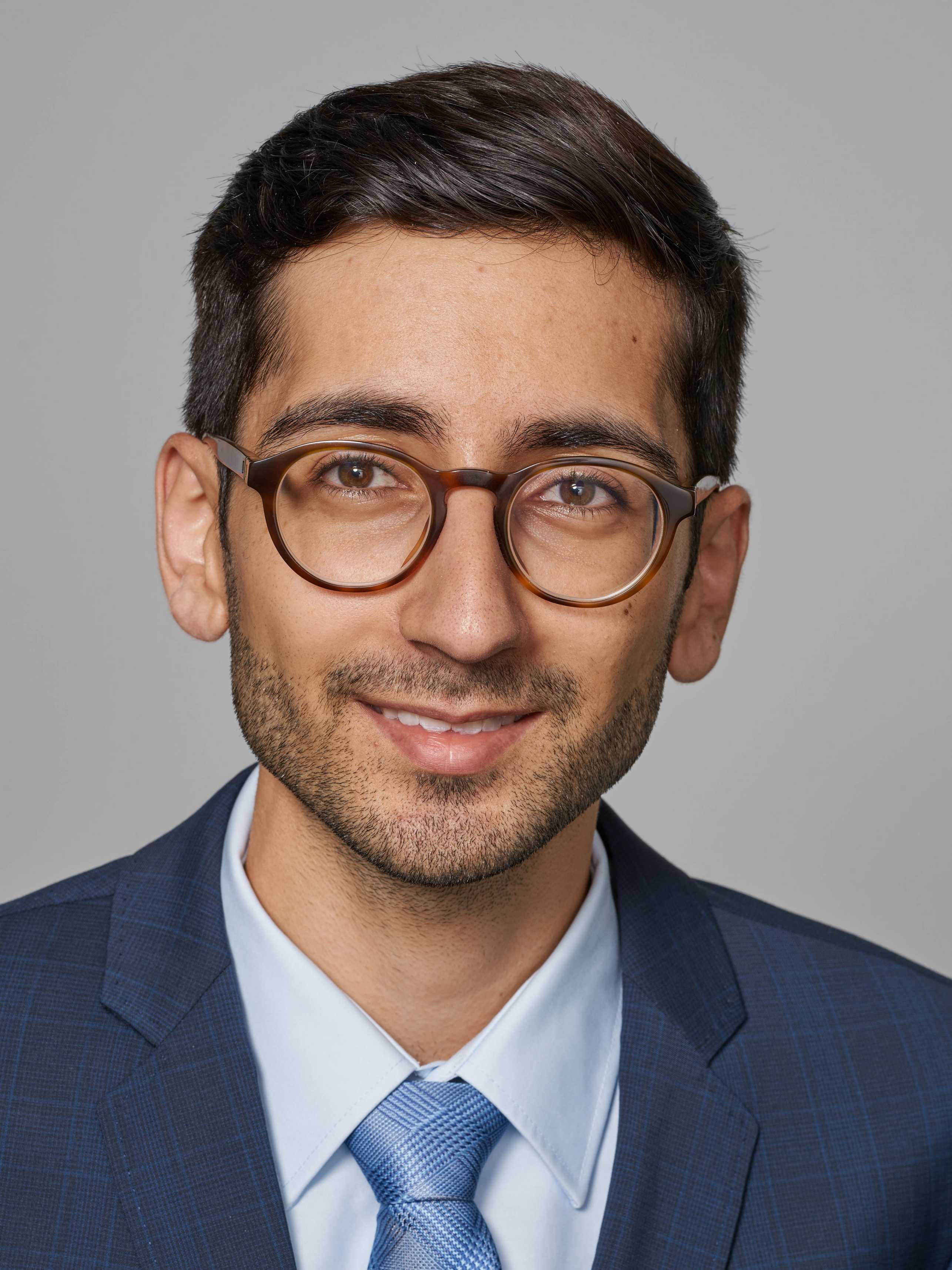
Jakob Merane is a postdoctoral researcher at ETH Zurich's Professorship of Law, Economics and Business, and a visiting researcher at the Max Planck Institute and Harvard Law School. He holds a Ph.D. from ETH Zurich and law degrees from the University of Basel, with additional studies in applied statistics. His research focuses on AI-driven legal enforcement, legal technology, and compliance-by-design approaches, leveraging computational and empirical methods. Merane's work includes developing tools like SwiLTra-Bench for multilingual legal translation and LEXam for benchmarking AI legal reasoning. He has contributed to GDPR compliance studies, automation of legal enforcement processes, and quantitative analyses of Swiss legal datasets. Awards include the 2024 Young Scholar Prize from the German Law and Economics Association. Teaching responsibilities include ETH's Law & Tech course since 2020, emphasizing AI regulation and interdisciplinary collaboration between law and computer science. Merane's research also addresses AI liability in medical contexts, digital advertising regulations, and ethical AI integration in legal systems. His work bridges legal theory with practical applications, aiming to enhance justice accessibility through technology.
Professor Tatsuhisa Tamura is affiliated with the Faculty of Law at Waseda University , specializing in Public Law . His academic career spans over two decades, with a focus on local government law, administrative law, and economic regulation. Research Interests include: Public Law : Constitutional frameworks and local governance structures. Disaster Relief Law : Legal systems for JSDF deployment in crises. Economic Regulation : Impacts of deregulation on administrative law. Civic Accountability : Judicial control mechanisms like resident litigation. Policy Reform : Decentralization and carbon-neutral governance. Recent Publications (2015–2020) address municipal financial systems, citizen litigation frameworks, and disaster response protocols. His work emphasizes balancing efficiency with democratic control in shrinking societies. Grants & Projects include: 2025–2029: Sustainable Public Official Law (JSPS Grant). 2019–2022: Civil Defense Systems in Large-Scale Disasters . 2017–2021: Legal Regulation of Local Government Enterprises . 2021–2025: Comparative Studies on Personnel Administration . Teaching involves courses like Local Government Law and Administrative Law at Waseda’s Graduate School of Law. He also contributes to public policy debates on carbon neutrality and judicial transparency.
Elliott Ash is an Associate Professor of Law, Economics, and Data Science at ETH Zurich's Center for Law & Economics. He holds a Ph.D. in Economics and J.D. from Columbia University, a B.A. in Economics, Government, and Philosophy from the University of Texas at Austin, and an LL.M. in International Criminal Law from the University of Amsterdam. His research focuses on empirical legal studies using econometrics, NLP, and ML, examining topics like judicial behavior, legislative impact, and AI-driven governance. He has been funded by the ERC, Swiss NSF, and others. Research Interests: Elliott explores automation of legal decisions, text-as-data analysis in law, and the intersection of AI with legal systems. He develops tools like BallotBot and LePaRD to enhance legal transparency and public understanding. His work bridges law, economics, and computer science, with publications in top journals like the American Economic Journal and Review of Economics and Statistics . Teaching: Courses include Building a Robot Judge , Natural Language Processing for Law , and Big Data for Public Policy . He co-organizes the Zurich Workshop in AI+Economics and Monash-Warwick-Zurich Text-as-Data Workshops. Awards: European Research Council Starting Grant, Swiss National Science Foundation Grant, and multiple grants from U.S. and Swiss institutions. His work has been featured in NPR , VoxEU , and Georgetown Law Journal . Labs/Teams: Leads the Swiss AI Initiative's Human-AI Alignment team, collaborates with the CEPR on Political Economy research, and serves as an Economic Journal Associate Editor.
Michael Wara is a Senior Research Scholar at the Stanford Woods Institute for the Environment and Director of the Climate and Energy Policy Program. He holds a JD from Stanford Law School, a PhD in Ocean Sciences from UC Santa Cruz, and a BA from Columbia University. His work bridges legal, scientific, and policy domains to address climate and energy challenges through bipartisan technical assistance and research collaboration with economists, engineers, and scientists. His research focuses on carbon pricing mechanisms, energy innovation, and regulatory solutions for climate policy. He advises policymakers on designing effective laws and regulations, with particular expertise in international environmental treaties like the ozone and climate regimes. Wara also teaches courses on energy law, wildfire policy, and carbon taxation at Stanford Law School. Key contributions include analyzing the economic impacts of EPA regulations, evaluating California’s carbon market mechanisms, and advancing strategies to decarbonize building electrification. His interdisciplinary approach emphasizes practical solutions to global environmental challenges, leveraging Stanford’s expertise in energy systems and policy. Wara’s policy practicum courses engage students in real-world projects such as evaluating carbon pollution standards and wildfire management policies. His work frequently appears in peer-reviewed journals and media outlets like The Atlantic and New York Times , addressing topics like the Supreme Court’s EPA rulings and wildfire insurance issues.
Professor Duc Duy (Louis) Nguyen is Professor in Finance at Durham University Business School. Previously, he was Associate Professor at King's College London and Assistant Professor at University of St Andrews. His research has been featured in Forbes, Harvard Business Review, and BBC. He holds a BSc in Computing from National University of Singapore, MSc in Accounting, Finance, and Management from University of Bristol, and PhD in Finance from University of Edinburgh. Research foci include: Climate risk integration in mortgage markets and corporate finance Impact of social policies (e.g., marriage equality) on credit access Corporate governance and misconduct prevention in banking Local information environments and fraud detection Cross-cultural dimensions of executive decision-making His publication portfolio demonstrates consistent examination of how institutional frameworks (regulation, culture, governance) shape financial behaviors and market outcomes, with recent emphasis on climate finance and social equity impacts. Awards include: David Hume Publication Prize (2015) Semi-finalist, FMA Europe Best Paper Award (2018) Finalist, FMA Asia/Pacific Best Paper Award (2019) Best Registered Report on "Politics and Corporate Power" Vietnam Symposium in Climate Transition Best Paper Award (2024) He currently supervises PhD candidates Bingzhi Zhang and Jing Wei. His externally funded research includes grants from British Academy/Leverhulme Trust and Carnegie UK Trust. He serves as Associate Editor for European Journal of Finance and British Accounting Review. As frequent speaker at central banks and policy forums (Federal Reserve Banks of New York & St. Louis), he translates research insights into regulatory practice and policy development.
Joshua Feinzig serves as a Visiting Assistant Professor of Law at Duke University School of Law, specializing in civil procedure, administrative law, transnational litigation, and conflict of laws. His research examines how courts, agencies, and private actors structure adjudicative processes across overlapping legal systems, with a focus on transnational coordination through administrative procedure. His academic credentials include: J.D. from Yale Law School M.Phil. from the University of Cambridge as a Gates Cambridge Scholar B.A. summa cum laude from Yale University Feinzig's scholarship bridges constitutional, administrative, and international legal frameworks, analyzing procedural mechanisms that shape substantive outcomes in domestic and transnational contexts. His work demonstrates particular expertise in voting rights, presidential power dynamics, financial punishment jurisprudence, and cross-jurisdictional legal interpretation. His recent publications reveal a consistent focus on systemic interactions between legal regimes, with emerging trends examining how procedural rules channel authority across borders and within bureaucratic structures. This interdisciplinary approach spans constitutional challenges, regulatory governance, and comparative constitutional interpretation. His scholarly contributions have earned recognition through: Benjamin Scharps Prize for best third-year paper at Yale Law School Marshall Jewell Prize for best second-year contribution to a specialized journal Gates Cambridge Scholarship for graduate study Prior to academia, Feinzig clerked for Judge Diane P. Wood of the Seventh Circuit Court of Appeals and practiced appellate litigation at WilmerHale, authoring briefs for federal courts of appeals and the U.S. Supreme Court while representing clients in cross-border disputes involving foreign law and agency adjudications. His pre-legal career included fieldwork in immigration detention facilities and policy work with Taiwan's Ministry of the Interior on transpacific migration regulation.
David L. Schwartz serves as the William G. and Virginia K. Karnes Research Professor of Law at Northwestern University's Pritzker School of Law, where he joined the faculty in 2015 and served as Associate Dean of Research & Intellectual Life from 2019-2022. His interdisciplinary work bridges legal scholarship, data science, and technology policy with emphasis on patent systems and judicial transparency. His educational foundation includes a BS from the University of Illinois at Urbana-Champaign and a JD cum laude from the University of Michigan Law School. Professor Schwartz specializes in empirical analysis of intellectual property systems , particularly patent litigation dynamics and court record accessibility. His research leverages computational methods to transform legal scholarship through projects like SCALES OKN, where he examines how technological interventions can democratize access to justice. This work situates him at the nexus of legal informatics , patent policy , and court system innovation , challenging traditional methodologies in legal academia. His publication trajectory reveals a decisive shift toward technology-driven legal transparency since 2018, with recent work focusing on large-scale court record analysis and open justice infrastructure. The 2024 Northwestern University Law Review article represents the culmination of his NSF-funded SCALES initiative, demonstrating how machine-readable litigation data can reshape legal scholarship and practice. As Co-Principal Investigator of the NSF-funded Systematic Content Analysis of Litigation EventS Open Knowledge Network (SCALES OKN), he leads a multidisciplinary consortium developing tools to convert opaque court records into structured, analyzable datasets. This $1.2M grant supports collaboration between legal scholars, computer scientists, and data engineers to build public infrastructure for judicial transparency. The SCALES OKN project operates as a cross-institutional research collective involving Northwestern faculty, data scientists from multiple universities, and partnerships with legal technology organizations. It maintains active development teams for natural language processing pipelines, litigation event databases, and public-facing analytical interfaces serving legal practitioners and researchers.
Professor Will Bateman is a distinguished academic at the Australian National University (ANU) College of Law, where he serves as a Professor and recently completed his term as Associate Dean (Research) from 2021 to 2024. He is also a Chief Investigator for the ANU Grand Challenge project "Humanising Machine Intelligence" and a Fellow at the Gradient Institute, a leading ethical AI research organization based in Sydney. Professor Bateman's educational background is impressive, having earned a PhD and LLM (Hons) from the University of Cambridge and a BA/LLB (Hons) from the Australian National University. Prior to his academic career, he worked in appellate litigation, commercial disputes, and banking as a solicitor at Herbert Smith Freehills, and served as an associate to Justice Stephen Gageler AC of the High Court of Australia and Justice Steven Rares of the Federal Court of Australia. Professor Bateman's research spans two major interdisciplinary domains that sit at the intersection of law with finance and technology. His work on financial regulation focuses on the legal aspects of central banking, sovereign debt markets, digital currencies, and sustainable investing. He has provided expert evidence to the UK Parliament's House of Lords Inquiry into Quantitative Easing, and has collaborated with major financial institutions including the Federal Reserve Bank of New York and the Bank of England. His research on artificial intelligence examines regulatory frameworks for AI in the public sector, with collaborations including the Minderoo Foundation and the Gradient Institute. His recent publications demonstrate a remarkable breadth across legal theory, financial regulation, and AI governance. The articles reveal a consistent theme of examining how traditional legal frameworks adapt to new financial technologies and monetary policy challenges. His work bridges theoretical legal scholarship with practical policy implications, as evidenced by his numerous government consultations and collaborations with central banks worldwide. 2020 Yorke Prize by the University of Cambridge for his work on public finance and constitutionalism Top 10 all-time most downloaded SSRN paper on central banking ("Central Bank Money: Liability, Asset, or Equity of the Nation?") Professor Bateman actively supervises research students, currently mentoring Benjamin Ettinger who is pursuing a PhD on "Legal Method, Cartels and Public Monopolies: A View From the High Court 1908 - 1948." He has secured significant research funding, including projects funded by the Economic and Social Research Council (UK), the German Research Foundation (Deutsche Forschungsgemeinschaft), and The Minderoo Foundation. His "Rebuilding Macroeconomics Initiative: Legal and Economic Conceptions of Money" received £245,000, while the "FA Mann" project was funded with €620,000 (approximately A$1,012,500). He leads the "Humanising Machine Intelligence" project, an ambitious interdisciplinary initiative involving computer scientists, mathematicians, philosophers, sociologists, psychologists, and lawyers aimed at developing democratically legitimate machine intelligence. He also co-led a major project with the University of Western Australia to formulate model legal frameworks for AI regulation in the public sector, funded by The Minderoo Foundation.
Mark J. Loewenstein is the Monfort Professor of Commercial Law at the University of Colorado Law School, where he has been a faculty member since 1979. He teaches courses in Business Associations, Securities Law, and Contracts, and has established himself as a leading scholar in business law. Professor Loewenstein previously practiced business law at a Chicago law firm before joining academia and has maintained strong connections with the legal profession throughout his career. Professor Loewenstein's educational background includes: JD from the University of Illinois, Champaign-Urbana BA from the University of Illinois, Champaign-Urbana Professor Loewenstein's research focuses on business associations, agency law, and securities law, with particular expertise in corporate governance. His scholarly work examines the legal structures of business organizations, fiduciary duties in unincorporated entities, and the evolving landscape of corporate law. He has made significant contributions to understanding LLC governance, veil piercing doctrines, and the application of good faith principles in business contexts. His comparative work on stakeholder protection in Germany and Japan demonstrates his international perspective on corporate governance issues. Analysis of Professor Loewenstein's publications reveals a consistent focus on the intersection of business organization law and corporate governance. His work spans theoretical examinations of agency principles, practical analyses of LLC structures, and historical perspectives on corporate law developments. A notable trend in his scholarship is the examination of how traditional corporate law concepts apply to newer business forms, particularly limited liability companies. His publications also demonstrate a strong interest in the balance between state and federal regulation of business entities. Professor Loewenstein has received significant professional recognition: Monfort Professor of Commercial Law (endowed chair) Fulbright Scholar at Hokkaido University, Japan (1990-91) Visiting Professor at University of Michigan Law School (1999) Throughout his career, Professor Loewenstein has demonstrated exceptional service to both the University of Colorado Law School and the broader legal community. He served as associate dean for academic affairs for nine years and associate dean for research for four years. He was a member of Colorado's Securities Board from 1995 to 2000 and contributed to the drafting of the 1994 Colorado Business Corporation Act. As a delegate to the ABA House of Delegates (1999-2005) and active member of the ABA's business law committee, he has influenced business law development at the national level. His service extends to editorial roles for legal publications and frequent presentations at professional conferences. Professor Loewenstein maintains strong connections with the legal practice community through his ongoing service on the Colorado Bar Association's Corporate Law Revision Committee and his contributions to continuing legal education programs. His work bridges academic scholarship and practical legal application, making him a valued resource for both students and practitioners.
Willy E. Rice is a tenured Professor of Law and Englehardt Research Fellow at St. Mary’s University School of Law in San Antonio, Texas. He holds a J.D. from the University of Texas at Austin, a Ph.D. from the University of North Carolina at Chapel Hill, and a postdoctoral fellowship from Johns Hopkins University. His career includes roles as a Visiting Public-Law Professor at the University of Texas at Austin, a Scholar-In-Residence at The American Bar Foundation, and a legal expert/statistician for law firms globally. Rice specializes in Insurance Law, Consumer Litigation, Contract Law, and Legal Practice Technology. His research focuses on empirical analyses of judicial decisions, particularly in insurance disputes and consumer rights litigation. Notable works include Legal Practice Technology and Law (2017) and Consumer Litigation and Insurance Defense (2011), which critically examine legal frameworks and industry practices. His awards include the Distinguished Faculty Award for Excellence in Teaching (2005–2006) and recognition for scholarly contributions to law and economics. Rice’s expertise bridges legal theory and statistical analysis, influencing both academic discourse and practical legal strategies in insurance litigation and regulatory compliance.
Dr. Amelia Simpson holds the position of Honorary Associate Professor at the Australian National University (ANU), specializing in constitutional law with a focus on discrimination principles and federalism. She earned her BA Hons and LLB Hons from ANU, followed by an LLM and JSD from Columbia University. She is a practicing Barrister and Solicitor in the High Court of Australia. Her research critically examines constitutional frameworks, particularly regarding state residence discrimination under Section 117 and interstate free trade jurisprudence. Her work has been cited in landmark High Court and Federal Court rulings, solidifying her reputation as a leading scholar in public law. Amelia’s contributions include co-authoring Hanks Australian Constitutional Law: Materials and Commentary (2016) and contributing to the Oxford Handbook of Australian Constitutional Law (2018). Her research on social equality and functionalist approaches to non-discrimination has advanced scholarly discourse on constitutional values. Notably, her 2017 paper Social Equality in Australia critiques the historical neglect of equality principles in constitutional interpretation. Her publications span constitutional doctrine, class actions reform, and environmental policy, reflecting her interdisciplinary approach. She ranks among Australia’s top 20 most prolific legal scholars in high-impact journals (2000–2010). Her work bridges theoretical analysis with practical legal challenges, influencing both academia and judicial practice.
Stephen Brown is a Full Professor at the School of Political Studies , part of the Faculty of Social Sciences at the University of Ottawa . His research focuses on democracy, democratization, conflict, foreign aid, and LGBT rights, particularly in Sub-Saharan Africa and Mongolia. He also analyzes Canadian foreign aid policies under recent governments. Email: brown@uottawa.ca Office: 613-562-5800 (1896) Languages: English, French, Spanish, Portuguese His work bridges international development, political science, and human rights, examining how foreign aid intersects with democratic ownership, gender equality, and conflict resolution. Recent publications highlight tensions between donor priorities and local contexts, as well as Canada's evolving role in global development. Key trends in his 15 most recent articles (2025–2020) include: Canadian foreign aid policy under Harper and Trudeau governments LGBTQI+ rights advocacy in Africa and Asia Impact of global crises (e.g., COVID-19) on development cooperation Political economy of extractive industries in developing economies Debates on aid effectiveness, policy coherence, and donor alignment Transitional justice and electoral conflict management in post-crisis states
Andrew Green serves as Professor and Metcalf Chair in Environmental Law at the University of Toronto Faculty of Law, where he teaches environmental law, climate change law, administrative law, natural resources law, judicial decision-making, and international trade. His scholarly contributions span multiple legal domains with particular emphasis on the intersection of environmental regulation and administrative governance. Green's research interests encompass Environmental Law , Administrative Law , Climate Change Policy , Judicial Decision-Making , and International Trade Law . His empirical approach to legal scholarship has produced significant insights into how judges make decisions, particularly in administrative contexts, and how trade rules interact with domestic environmental regulations. His work often bridges theoretical legal analysis with practical policy implications. His recent publications reveal a strong focus on Canadian climate policy implementation, judicial behavior in high courts, and the evolving standards of review in administrative law. The research demonstrates increasing interdisciplinary integration, incorporating machine learning approaches to analyze judicial decisions and examining the systemic challenges in environmental governance. His scholarship consistently addresses the tension between regulatory effectiveness and legal accountability. Metcalf Chair in Environmental Law Past co-President of the Society for Empirical Legal Studies Past President of the Canadian Law and Economics Association Former Associate Dean at the Faculty of Law Chair of the University of Toronto Academic Appeals Committee (2009-2018) Before joining the Faculty of Law, Green practiced environmental law in Toronto for six years, handling both litigation (including prosecutions, administrative appeals, and civil actions) and transactional work. His practical experience informs his scholarly work on regulatory design and implementation. His research has influenced policy discussions on climate change, securities regulation, and administrative law reform in Canada.
Michael Morse is an Assistant Professor of Law at the University of Pennsylvania Carey Law School, with a secondary appointment in the Political Science Department. He holds a JD from Yale Law School and a PhD in Political Science from Harvard University. Prior to his current position, he was a Bigelow Fellow at the University of Chicago Law School and served as a law clerk for federal judges in Alabama and California. Morse specializes in voting rights, election administration, and criminal justice system reform, combining empirical methods with legal scholarship to address issues such as felony disenfranchisement, voter ID laws, and election integrity. His research has been published in top journals including the California Law Review , American Political Science Review , and Science Advances . Notable contributions include analyses of Florida’s Amendment 4, voter registration coordination via the Electronic Registration Information Center (ERIC), and studies on ballot design impacts. He has also written extensively on the election of local prosecutors and the role of fines/fees in criminal justice. Morse’s work frequently bridges legal and political science disciplines, emphasizing data-driven approaches to electoral systems. His recent focus on ‘lost votes by mail’ and privacy in election results underscores his commitment to advancing equitable and transparent electoral practices. He has been cited in media outlets like Slate , Vox , and NBC News for his accessible explanations of complex election-related issues. Scientific Recognition: Morse was recognized as a Bigelow Fellow at the University of Chicago Law School, a prestigious postdoctoral position supporting legal research.
Jennifer D. Oliva is a Professor of Law at Indiana University Maurer School of Law where she holds the Val Nolan Faculty Fellow position. She maintains significant interdisciplinary affiliations as a Research Scholar at Georgetown University Law Center's O'Neill Institute for National & Global Health Law and as a Senior Scholar with the UCSF/UC Law Consortium on Law, Science & Health Policy. Her academic work bridges legal scholarship with practical health policy development, focusing on the intersection of constitutional protections, public health needs, and modern surveillance technologies. Professor Oliva's research interests center on health law, privacy law, and drug policy with particular expertise in prescription drug monitoring programs (PDMPs), health information privacy, and the legal dimensions of the opioid crisis. Her scholarship critically examines how law enforcement surveillance of prescription data impacts patient privacy rights, particularly for vulnerable populations including those with substance use disorders. She has developed significant expertise in how constitutional privacy protections apply to health data in the digital age, especially following the Supreme Court's decision in Carpenter v. United States. Her recent publications reveal a growing focus on algorithmic regulation in healthcare, examining how risk scoring systems and coverage algorithms can perpetuate health disparities. She has published extensively on the intersection of reproductive rights and health data privacy in the post-Dobbs landscape, analyzing how prescription monitoring systems could be weaponized against individuals seeking reproductive healthcare. Her work consistently connects doctrinal legal analysis with public health realities, advocating for evidence-based policy approaches that prioritize patient privacy and health equity over punitive enforcement. Dosing Discrimination: Regulating PDMP Risk Scores (2022) The "New" Drug War (2024) Prescription Drug Policing: The Right to Health Information Privacy Pre- and Post-Carpenter (2020) Opioid Multidistrict Litigation Secrecy (2019) Surveillance, Privacy, and App Tracking (2020) Professor Oliva actively engages with policymakers and has contributed to amicus briefs in significant cases including Ruan v. United States. Her scholarship has been cited in legal proceedings and she regularly presents at major academic conferences including the Association of American Law Schools Annual Meeting. She has collaborated with scholars across disciplines including public health researchers, medical ethicists, and data scientists to address complex challenges at the intersection of law, technology, and healthcare.