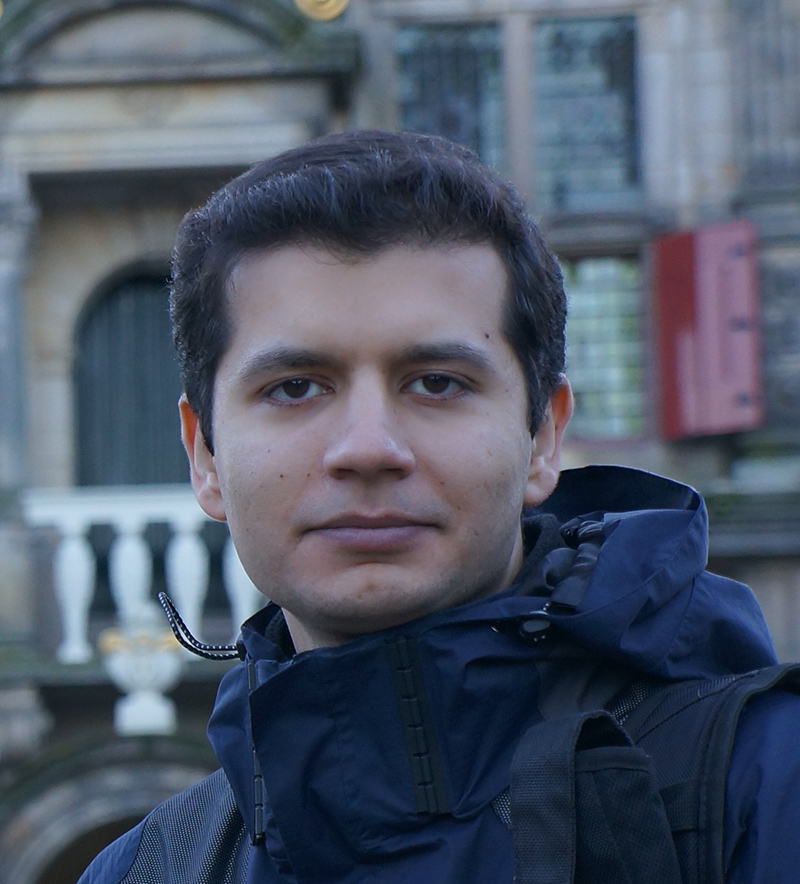
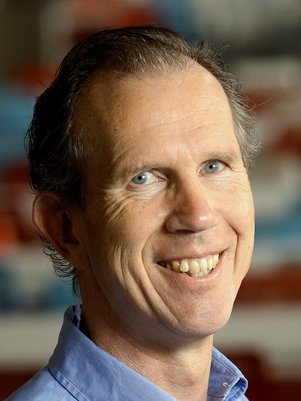
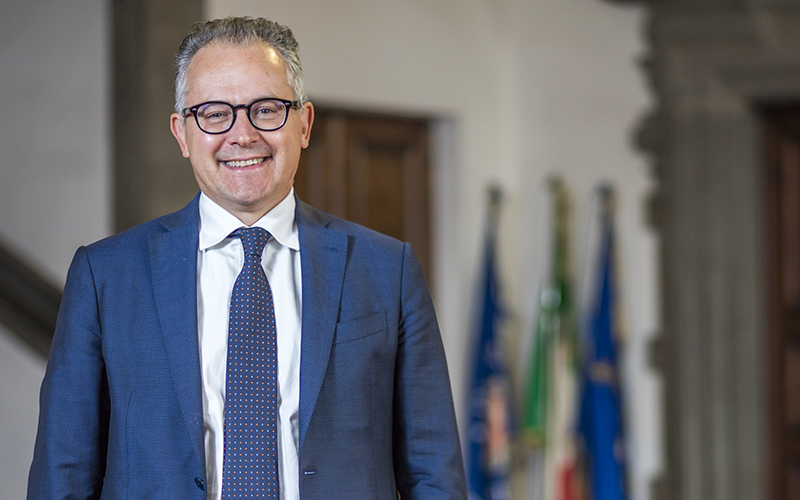
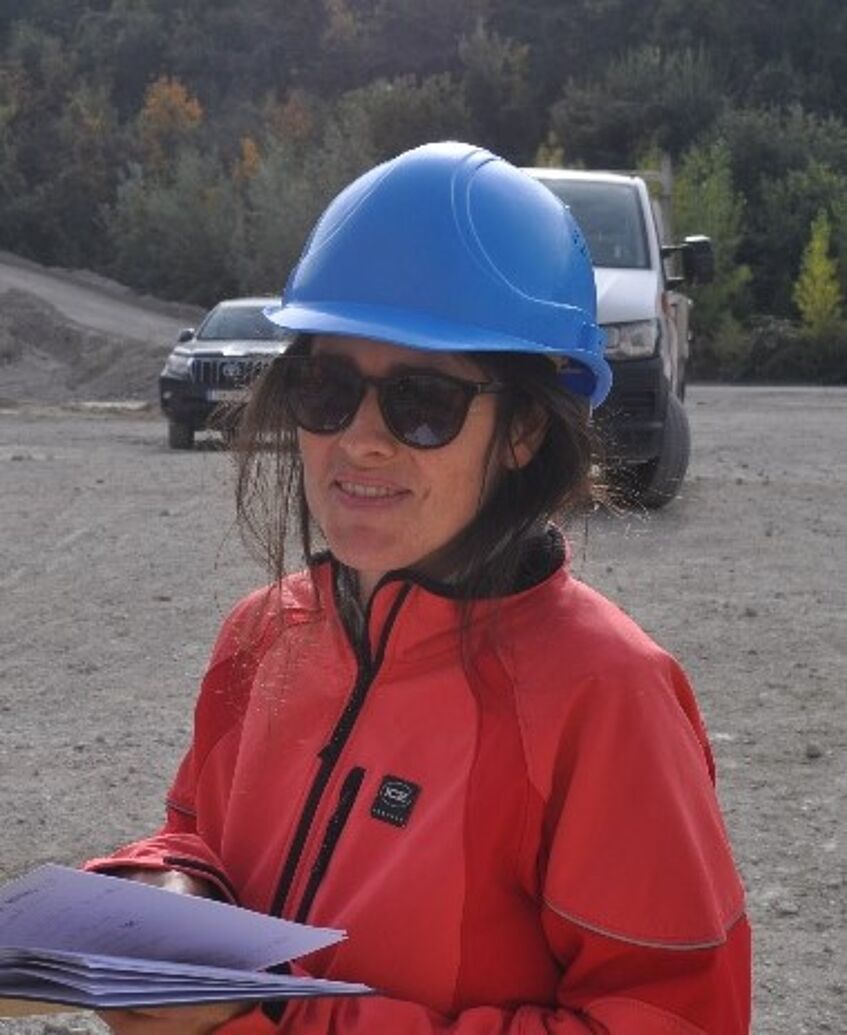
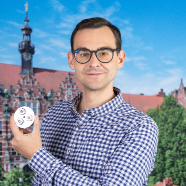
Dr. Kenneth Israel Eshiet is a Senior Lecturer in Civil Engineering at the University of Wolverhampton within the Faculty of Science and Engineering and the School of Architecture and Built Environment . A Chartered Engineer and Fellow of Advance Higher Education (UK), he combines academic expertise with industry experience in geomechanics, structural analysis, and computational modeling. Education : PhD in Civil Engineering (University of Leeds), MEng in Civil Engineering (University of Leeds), PGDip in Management, MSc in Computational Fluid Dynamics. Research Interests focus on: Numerical/experimental modeling of subsurface systems Deterministic/stochastic risk assessment models Computational fluid dynamics in civil engineering Geotechnical and structural analysis of rock mechanics Scientific Awards : University of Leeds Teaching Award Professional Standard 2 (ULTA-2) University of Leeds Teaching Award Professional Standard 1 (ULTA-1) Industry Experience : Senior Consultant at Sustainable Energy Environmental and Educational Development (USA), Lead Technical Consultant at Thompson Integrated Projects Ltd. His work spans hydraulic fracturing, underground coal gasification, and CO2 storage projects.
Poria Fajri is an Associate Professor at the University of Nevada, Reno . His research focuses on electric and hybrid electric vehicles, renewable energy systems, and advanced power electronics control. Electric and hybrid electric vehicles Plug-in Hybrid Electric Vehicle (PHEV) and Vehicle-to-Grid (V2G) technology Wind and solar power generation technologies Optimal control of power electronic devices utilized in renewable energy generation Automotive/aerospace power electronics and motor drives Energy management in hybrid systems Mechatronics and robotics Recent publications highlight his work on machine learning applications for power consumption modeling and motor fault detection, hybrid ML-digital twin frameworks for cyberattack differentiation, and GaN-based inverter optimization. His research spans grid resilience, autonomous vehicle energy efficiency, and cybersecurity in smart distribution systems. Key article trends include integrating machine learning with energy systems, advancing V2G technologies, and addressing cybersecurity challenges in smart grids. His work on regenerative braking optimization and power electronics for renewable energy systems demonstrates a focus on sustainable transportation and grid stability.
Alessandro Savino is an Associate Professor at the Department of Control and Computer Engineering (DAUIN) of Politecnico di TORINO. He serves as an academic advisor for Bachelor’s and Master’s degree programs in Computer Engineering (Ingegneria Informatica) and contributes to PhD programs in Artificial Intelligence and Computer Engineering. Research Interests: Approximate computing, Cybersecurity (including automotive systems), Dependability, Parallel computing, Reliability analysis, and Neuromorphic architectures. Key Projects: Leads RESCHIP4EU (2024-2028), NEUROPULS (2023-2027), and commercial contracts focused on real-time OS validation and avionics design. Publications: Recent work spans hardware security (e.g., VeriSide for leakage assessment), spiking neural networks (SpikeExplorer, SpikingJET), and automotive cybersecurity (CARACAS, CAN-MM). Teaching: Instructs courses on Parallel and Distributed Computing, Hardware & Wireless Security, and System Programming across Politecnico di TORINO and Scuola IMT Alti Studi - LUCCA. Research Group: Leads the SMILIES group, focusing on resilient computer architectures and life sciences.
Hadi Hajibeygi is a Professor of Geo-Energy Solid and Fluid Mechanics at Delft University of Technology, leading subsurface storage research and multiscale modeling initiatives. He serves as the Subsurface Storage Theme Lead (2016–present) and Energi Simulation Chair holder (2022–present), with a focus on underground hydrogen storage, CO2 sequestration, and geothermal energy systems. His research integrates multiphase flow in porous media , multiscale simulation , and geomechanical stability , supported by NWO-Vidi and Interpore awards. He leads the DARSim and ADMIRE projects, developing frameworks like Adaptive Dynamic Multiscale Integration and pEDFM-U for fractured reservoirs. Key awards include: Interpore Award for Porous Media Research (2021) NWO-Vidi Laureate (2019) Interpore Rosette (2017) ETH Zurich PhD Medal (2012) TU Delft Innovative Teaching Talent (2018) His teaching portfolio spans Dynamics of Solids and Fluids , Numerical Methods for Subsurface Simulation , and Multiscale Modeling , while advising a team of postdocs and PhD candidates on projects spanning induced seismicity, microbial interactions, and fractured reservoir mechanics.
Prof. Jan Dirk Jansen (Delft University of Technology) specializes in systems and control theory applied to subsurface flow and geomechanics. His research spans induced seismicity , geothermal energy , reservoir simulation , and data assimilation . Current projects include co-leading the NWO-funded NEPTUNUS initiative on transient induced seismicity and previously researching seismicity mitigation in Dutch gas fields through the Science4Steer program. Expertise in numerical reservoir simulation History matching & model-order reduction Optimization of fluid injection/production He authored the textbook Nodal Analysis of Oil and Gas Production Systems , with significant contributions to closed-form geomechanical solutions and scalable numerical schemes . Contact: J.D.Jansen@tudelft.nl
Karl Meinke is a Professor at KTH Royal Institute of Technology, where he serves as Head of the Computer Science Department and Head of the Division of Theoretical Computer Science within the School of Electrical Engineering and Computer Science. His research focuses on applying machine learning techniques to software testing, particularly for safety-critical systems like autonomous vehicles and embedded systems. His research interests span machine learning, software testing, safety critical systems, embedded systems, autonomous driving, digital pathology, and graph neural networks. Meinke has developed innovative approaches like Learning-Based Testing that combine machine learning with formal methods for system validation. His work bridges theoretical computer science with practical applications in automotive systems and medical diagnostics. His recent publications show a strong trend toward applying graph neural networks to diverse domains including program analysis, digital pathology, and autonomous vehicle testing. His research demonstrates a consistent focus on solving the test oracle problem and generating meaningful test cases for complex systems where traditional testing approaches fall short. Meinke actively collaborates with Karolinska Institutet (KI), indicating interdisciplinary work between computer science and medical research. He is responsible for Masters level education in software testing at KTH and serves as examiner for several advanced courses including Degree Projects in Computer Science and Software Reliability. His research group has developed tools like LBTest for learning-based testing of reactive systems, and he has secured funding for projects such as the ITEA3 Testomat Project focused on next-level test automation. His work has significant implications for validating autonomous systems where safety is paramount. Meinke leads research in using machine learning to address fundamental challenges in software testing, particularly for systems where traditional test oracles are unavailable or impractical. His approach of combining active learning with formal specifications has created new pathways for validating complex cyber-physical systems.
Masood Parvania is the Roger P. Webb Endowed Professor at the University of Utah in Electrical and Computer Engineering. He serves as Director of the Utah Smart Energy Laboratory (U-Smart) and Co-Director of the NSF WIRED Global Center . His research focuses on mathematical optimization , control theory , and machine learning applications in power system operation, resilience, and interdependent infrastructure modeling. His work addresses critical challenges including: Equity-aware grid restoration Climate-resilient energy systems Cyber-physical security analysis Hybrid energy storage coordination Extreme heat event mitigation strategies Key research trends across his 15 most recent publications reveal deep integration of: Renewable energy with storage systems Machine learning in real-time grid operation Cybersecurity frameworks for critical infrastructure Equity metrics in energy distribution Honors include: IEEE Outstanding Associate Editor Award (2022) University of Utah Presidential Scholar (2020) IEEE Utah Section Outstanding Educator Award (2017) Multiple Best Reviewer and Distinguished Service Awards As Associate Editor for IEEE Transactions on Power Systems , he actively shapes energy research discourse while leading NSF-funded initiatives like: U.S.-Canada Climate-Resilient Grid Center ($90M+ Western EV Infrastructure Scale-Up Wasatch Multi-Modal Corridor Electrification
Professor Luca Fanucci is a Full Professor of Electronics at the Department of Information Engineering , University of Pisa. He serves as Rector's Delegate for Inclusion of Students with Disabilities and leads research in integrated circuits, embedded systems, and assistive technologies . Institutional roles include membership in the National University Conference of Delegates for Disability (CNUDD) and leadership in the PhD program in Information Engineering. Born: Montecatini Terme (1965) Education: Laurea in Electronic Engineering (1992), PhD in Information Engineering (1996), University of Pisa Professional Journey: ESA research (1992-1996), CNR researcher (1996-2004), University of Pisa faculty (2004-present) His research focuses on: System-level design of integrated circuits and embedded systems Hardware-software co-design for low power consumption Spacecraft and satellite communication systems Medical devices and telemonitoring platforms Assistive technologies for disabilities Recent publications highlight AI in space applications and telemedicine systems . Key projects include the Ingeniars spin-off for satellite communications and the AsTech National Laboratory for assistive technologies. Scientific Recognition : IEEE Fellow (2019) 40+ patents H-index 34 (5000+ citations) He coordinates international conferences (DATE, HiPEAC, Spacewire) and serves as Associate Editor for Technology and Disability and Microprocessors and Microsystems journals.
Stefano Di Carlo is a Full Professor at the Department of Control and Computer Science (DAUIN) at Politecnico di Torino. He is the Coordinator of the Doctoral School in Artificial Intelligence and a member of the PolitoBIOMed Lab and the Doctoral School Council. His research spans Artificial Intelligence , Computer Architecture , Bioinformatics , and Cybersecurity , with a focus on 3D bioprinting , hardware security , and reliability analysis . Research Interests : Approximate computing systems Cybersecurity for connected vehicles Spiking neural networks and neuromorphic hardware Multicellular synthetic biological systems Hardware-based malware detection Biomedical simulation tools Article Trends : His recent publications address approximate computing (7/15), cybersecurity (6/15), and bioinformatics (4/15). Key subtopics include RISC-V security , gradient inversion attacks , photonic computing , and real-time fault injection . Scientific Awards : Best Paper Awards at IEEE AQTR (2010, 2012), IEEE DDECS (2013), and BIOINFORMATICS/BIOSTEC (2014) IEEE Computer Society Golden Core Award (2006), Meritorious Service Award (2010) IEEE Fellow (2011-) and Senior Member Advising & Grants : He supervises 14 PhD students and leads projects like Vitamin-V (RISC-V cloud services), APROPOS (approximate computing), and SERICS (cybersecurity). His lab, SMILIES, focuses on resilient computer architectures and bioinformatics . Labs & Teams : Lab 6 - Research Laboratory (DAUIN) SMILIES - Resilient computer architectures and life sciences PolitoBIOMed Lab - Biomedical engineering
Helene Bauer is a scientific staff member at the Institute of Geology, University of Vienna, specializing in structural geology and hydrogeology of carbonate rocks. Her research focuses on deformation mechanisms, fault zone hydrology, and reservoir properties in carbonate systems. Current project: Upscaling Reservoir Properties of the Hauptdolomite Fm (geothermal reservoir permeability analysis) Methodologies: Lab porosity/permeability tests, injection tests, leak-off tests, and core analysis Research Interests: Brittle deformation processes in carbonates, fault-controlled hydrogeology, and geothermal reservoir characterization. She investigates how fracturing and faulting affect permeability across multiple scales. Collaborators: Kurt Decker, Bernhard Grasemann, Gerlinde Habler, Anna Rogowitz, Theresa Schroeckenfuchs, and others in structural geology and hydrogeology fields.
Martin Stute serves as the Alena Wels Hirschorn '58 and Martin Hirschorn Professor in Environmental and Applied Sciences and Co-Chair of the Department of Environmental Science at Barnard College. He holds concurrent appointments as Adjunct Senior Research Scientist at the Lamont-Doherty Earth Observatory and faculty member in Columbia University's Department of Earth and Environmental Science. Professor Stute has been teaching at Barnard since 1993, becoming full-time faculty in 1995. His educational background includes a BS from the University of Münster (Germany) and MA/PhD from the University of Heidelberg (Germany). His doctoral research pioneered novel tracer techniques for studying groundwater flow dynamics and using groundwater as paleoclimate archives. Professor Stute's research spans water resources, contaminant transport in groundwater, carbon sequestration, unconventional gas production, paleoclimate reconstruction, and mathematical modeling of environmental phenomena. His work frequently employs environmental tracer methodologies to investigate hydrological systems and climate history. Current projects include the LDEO Environmental Tracer Group, Health Effects of Geochemistry of Arsenic Manganese studies, New Jersey Arsenic Awareness Initiative, Carbfix project in Iceland, and the Big Sky CCUS Partnership. His publication record demonstrates consistent contributions to hydrogeology and environmental science since the early 1990s, with recent work focusing on carbon sequestration techniques and arsenic contamination mechanisms. Professor Stute teaches Environmental Data Analysis, Hydrology, Workshop in Sustainable Development, and leads the joint Columbia/Barnard Senior Research Seminar. As Co-Chair of the Environmental Science Department, Professor Stute oversees curriculum development and faculty coordination while maintaining an active research program. His mentorship approach emphasizes professional communication, meticulous documentation, and integration of field, laboratory, and computational methods. Students working with him gain access to Lamont-Doherty's analytical facilities and participate in international research projects spanning Bangladesh, Hungary, Iceland, and the American West. The LDEO Environmental Tracer Group under his leadership provides students with hands-on experience in noble gas analysis, isotope hydrology, and environmental modeling. Professor Stute encourages thesis students to pursue publication opportunities and conference presentations, with travel support available through Columbia's Earth Institute resources.
Prof. Dr. Kerstin Lemke-Rust is a Professor at the Department of Computer Science at Bonn-Rhein-Sieg University of Applied Sciences (H-BRS) and a key member of the Institute for Cyber Security and Privacy (ICSP). Her affiliations include leadership roles in the Gesellschaft für Informatik (GI) and the International Organisation for Cryptologic Research (IACR). Her research spans: Cryptographic algorithm security (side-channel/fault analysis) Blockchain and IoT security Automotive cybersecurity Hardware vulnerability detection She teaches courses in IT Security, Applied Cryptography, and Embedded Systems across bachelor’s and master’s programs. Recent publications (2021-2025) focus on blockchain privacy, side-channel attacks, and hardware security, reflecting her emphasis on real-world cryptographic vulnerabilities. She leads research initiatives at ICSP and collaborates internationally on cybersecurity projects.
David Dempsey is an Associate Professor in the Department of Civil and Environmental Engineering at the University of Canterbury's Faculty of Engineering, where he has been affiliated since December 2020. He leads the Subsurface Engineering Group, addressing critical challenges for a low-emissions future. His research integrates geomechanics, machine learning, and fluid dynamics across four key areas: Carbon Dioxide Removal : Designing systems to combust forestry waste and sequester CO₂ in geothermal reservoirs. Underground Hydrogen Storage : Modeling hydrogen injection/recovery in depleted gas fields. Volcanic Forecasting : Developing real-time ML systems for eruption prediction using seismic data. Induced Seismicity : Quantifying earthquake risks from energy projects. His recent publications (2021-2025) show a strong focus on machine learning applications in geohazards and energy storage, with themes including seismic forecasting, CO₂-hydrogen geostorage, and wildfire prediction. Numerical modeling and data-driven approaches dominate his methodology. He actively supervises 13+ graduate students on projects such as hydrogen geostorage, volcanic forecasting, and flood prediction. His group collaborates with industry on geothermal and seismic risk projects, leveraging real-time data from networks like GeoNet.
Dr. Roland Ryndzionek is an Associate Professor at Gdańsk University of Technology with dual affiliations in the Department of Power Electronics and Electrical Machines and the Department of Mechanics of Materials and Structures. His research bridges electromechanical systems and renewable energy, specializing in: Piezoelectric ultrasonic motors with multi-rotor designs Fault-tolerant multiphase doubly-fed induction generators (DFIGs) for wind turbines Power Hardware-in-the-Loop (PHIL) emulation of synchronous generators He leads the BLDFIG project (2023–present), developing gearless wind turbines using multiphase DFIGs, and co-leads the EU-funded DigiWind initiative for wind energy digitalization. His publications emphasize real-time control systems, harmonic reduction in power converters, and mechatronic integration, with recent work in IEEE Transactions and COMPEL journals. No awards or student advising roles are documented in available sources.
Djordje Lekic is a Senior Lecturer at the Faculty of Electrical Engineering, University of Banja Luka, specializing in the Department of Electrical Power Engineering. He was elected to his current academic rank in December 2022. His research spans: Electric machine design and optimization Renewable energy integration and hybrid power systems Fault detection in power distribution networks Finite element analysis applications in electromagnetics Power electronics and drive systems Recent publications demonstrate strong focus on energy efficiency optimization, electromagnetic modeling, and sustainable power solutions. He has led or contributed to multiple national research projects including: Development of permanent magnet synchronous motors (2021-2024) Non-contact fault detection in power networks (2020-2022) Renewable energy for telecom infrastructure (2020-2022) Power quality improvement for industrial consumers (2019) with cumulative funding exceeding 100,000 BAM. He maintains active industry collaborations, including a patented wireless power transfer system with international inventors.