Dr. John A. Aucar is an Associate Professor in the Department of Surgery at Creighton University School of Medicine. He practices at Creighton University Medical Center, specializing in trauma and acute care surgery. His career spans academic surgery, clinical research, and surgical education. Clinical Appointments: Associate Professor, Department of Surgery Research Affiliation: Creighton University Medical Center Academic Focus: Trauma Surgery, Acute Care Surgery, Telemedicine Dr. Aucar's research focuses on traumatic coagulopathy, surgical simulation, telemedicine applications in trauma care, and healthcare policy. His work bridges clinical practice with systems-based improvements, including surgical safety protocols and trauma care regionalization. Key contributions include bibliometric analysis of acute care surgery literature and innovative approaches to endoscopic competency training. Scientific contributions include the Jack Barney Award (2008) for his study on trauma resident fatigue. His publications span 30+ years, covering trauma epidemiology, damage control techniques, and digital health integration. Research Themes: Trauma Systems Optimization Methodological Approaches: Bibliometric Analysis, Clinical Epidemiology Technological Interests: Surgical Simulation, Telesurgery
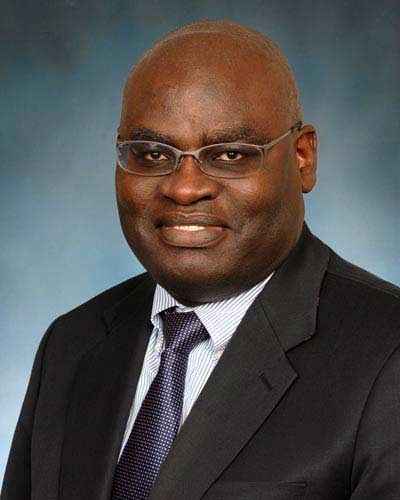
Clement Adebamowo is a Professor in the Department of Epidemiology and Public Health at the University of Maryland School of Medicine, where he serves as the Director of the Cancer Epidemiology Division. At the Marlene and Stewart Greenebaum Comprehensive Cancer Center, he holds dual leadership roles as Associate Director of the Population Sciences Program and Associate Director for Diversity, Equity, Inclusion, and Accessibility. Additionally, he serves as a Research Scientist at the Center for Bioethics and Research in Ibadan and the Institute of Human Virology Nigeria in Abuja. Dr. Adebamowo earned his BM, ChB (Hons) from the University of Jos in Nigeria (1978-1984), completed postgraduate surgical training in Oncology at University College Hospital, Ibadan (1987-1993), and received his Sc.D. in Nutrition Epidemiology with a minor in Biostatistics from Harvard University (2000-2004). His research spans multiple interconnected domains focused on improving health outcomes, particularly in African populations. Dr. Adebamowo leads the NIH-funded African Collaborative Center for Microbiome and Genomics Research (ACCME), part of the H3Africa initiative, conducting comprehensive studies on genomic and epidemiologic risk factors for cervical cancer, breast cancer, uterine fibroids, and viral infections. His work integrates host germline genomics, somatic genomics, viral genomics, epigenomics, microbiome, proteomics, and metabolomics data from a cohort of approximately 12,000 women followed every six months. He also directs the Baltimore Clinical Site of the NCI CASCADE Network, a global partnership optimizing cervical cancer screening and management for women living with HIV. Additionally, Dr. Adebamowo has developed innovative training programs in Research Ethics, Responsible Conduct of Research, and Research Methodology, creating short, medium, and long-duration graduate programs that have trained over 150,298 individuals. Dr. Adebamowo's recent publications demonstrate a strong interdisciplinary approach spanning cancer epidemiology, genomics, nutrition, and research ethics. His work shows a consistent focus on African populations, with particular attention to HPV-related cancers, uterine fibroids, and the ethical implications of data science in health research. The integration of genomic, microbiome, and epidemiological data represents a cutting-edge approach to understanding disease mechanisms in understudied populations. 2022 Jeff Cohen Service Award from PRIM&R for pioneering work in research ethics in Nigeria and West Africa Mamadou Gueye Prize from the West African College of Surgeons Member of Keystone Symposia Scientific Advisory Board Member of the Fogarty International Center Advisory Board Member of the Independent Review Panel for Vivli and CSDR As an educator, Dr. Adebamowo directs the graduate course in cancer epidemiology at the University of Maryland, which attracts students across the University System of Maryland and features lecturers from the National Cancer Institute and surrounding institutions. He has secured multiple NIH grants including the Scaling Up Research Ethics and Research Integrity (SURER) Project, Bridging Gaps in the ELSI of Data Science Health Research, and the Point of Care Diagnostic test for Molecular Subtyping of Breast Cancer study. He has also developed a Food Frequency Questionnaire and Food Composition Database for African foods, significantly enhancing nutritional research capacity in Africa. Dr. Adebamowo directs the NIH Fogarty-funded West African Bioethics Training program and has been instrumental in establishing research ethics infrastructure in Nigeria, including serving as founding chair of the Nigerian National Health Research Ethics Committee for ten years. His work implementing the Nigerian National System of Cancer Registries has significantly improved cancer surveillance in the country.
Amanda G. Oglesby-Sherrouse is an Assistant Professor at the University of Maryland School of Pharmacy with a secondary appointment in Microbiology and Immunology. She also holds the title of Associate Professor of Pharmaceutical Sciences. Her laboratory, established in 2012, is located at the University of Maryland School of Pharmacy in Baltimore, Maryland at 20 Penn Street, HSF2 Room 509. Dr. Oglesby-Sherrouse's research focuses on the role of iron in bacterial physiology and pathogenesis. Iron is an essential metallonutrient for nearly all living organisms and represents a primary driver of host-pathogen interactions. During infection, pathogenic bacteria must balance their requirement for iron with its potential for toxicity through iron uptake and regulatory pathways that maintain iron homeostasis. Her laboratory studies Pseudomonas aeruginosa and Staphylococcus aureus , opportunistic pathogens of significant concern for hospital-acquired infections and in cystic fibrosis patients. Using a multidisciplinary approach, her research has made significant contributions to understanding small regulatory RNA-mediated control of iron homeostasis, particularly through the PrrF and PrrH sRNA systems. Her work connects iron metabolism with quorum sensing, secondary metabolite production, and bacterial virulence mechanisms. Analysis of her publication history from 2014-2024 shows a consistent research trajectory focused on bacterial iron homeostasis, with increasing emphasis on host-pathogen interactions and the role of host immune proteins like calprotectin in inducing iron starvation responses in pathogens. Her work spans molecular mechanisms to animal infection models, demonstrating translational relevance to clinical infections.
Luciano Gatiboni is an Associate Professor and Extension Specialist in Soil Fertility and Nutrient Management at the Department of Crop and Soil Sciences, North Carolina State University. He leads an applied research and extension program focused on North Carolina cropping systems, with the goal of developing and refining soil test-based nutrient and lime recommendations to maximize yields and profitability while minimizing nutrient losses. Dr. Gatiboni completed his B.S. in Agronomy, M.S. in Agronomy, and Ph.D. in Soil Science at Federal University of Santa Maria, Brazil. He worked for 15 years as a professor of Soil Fertility at the Santa Catarina State University (Brazil) before joining NC State University in 2019. His research program focuses on soil fertility and nutrient management, particularly in phosphorus and potassium management, soil testing methodologies, and fertilizer recommendations. Current projects include P and K soil test calibration using long-term trials, impact of saltwater intrusion on cropping systems, and crop response to lime and gypsum application. His work integrates soil chemistry, plant nutrition, and environmental considerations to develop sustainable nutrient management practices that address both productivity and environmental concerns across diverse North Carolina agricultural systems. Dr. Gatiboni teaches Soil Fertility (CSS 541) in the Graduate Program in Soil Science, covering soil-plant relationships, nutrient cycles, soil testing, and environmental quality associated with fertilizer application. His course is offered face-to-face every fall semester and online every spring semester. Extension activities include producing practical publications and providing technical support to NC Extension Agents, crop consultants, and farmers Research team includes current graduate students: Lily Kile (Ph.D. candidate studying legacy phosphorus), Dionata Filippi (Ph.D. candidate focusing on P and K critical soil test values), Lydia Miles (M.S. student working on soybean nutrient recommendations), and Anselme Dossou (M.S. student researching saltwater intrusion impacts)
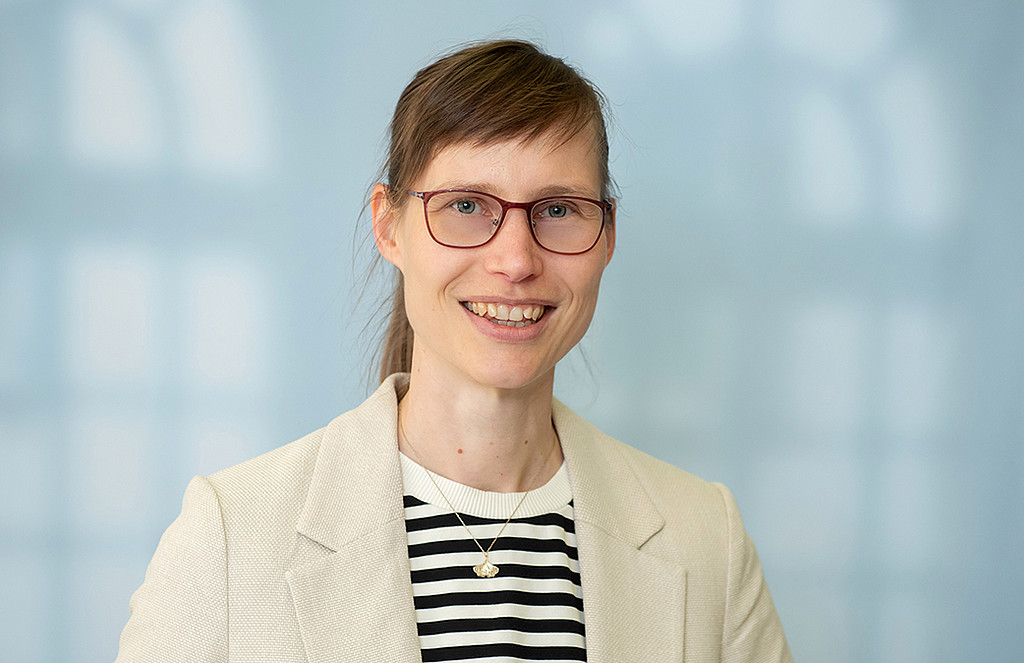
Antonia Saravanou is a Ph.D. graduate from the Department of Informatics and Telecommunications at the National and Kapodistrian University of Athens (NKUA), advised by Prof. D. Gunopulos. She holds an M.Sc. in Advanced Information Systems and a B.Sc. in Computer Science from the same department. Since 2011, she has worked as a Research Scientist and Engineer at NKUA and Athens University of Economics and Business (AUEB), and is affiliated with the Knowledge Discovery in Databases Laboratory (KDDLab) and the Management of Data, Information & Knowledge Group (Madgik). Her research spans Data Mining, Machine Learning, and Anomaly Detection, with a focus on Social Network Analysis, Graph Representations, and Healthcare Applications. She has completed research visits at Stanford University's Geometric Computing Group, Spotify Tech Research, and Bloomberg AI. Education: Ph.D., Informatics and Telecommunications, NKUA M.Sc., Advanced Information Systems, NKUA B.Sc., Computer Science, NKUA Her research explores graph-based methods for event detection in social networks, self-supervised node representation learning, and applications in healthcare and news analysis. Projects include music recommendation systems via graph representations, infant mortality prediction models using birth certificate data, and real-time news monitoring frameworks. She has also worked on knowledge graph applications for news ranking and anomaly detection in sparse time series data. Scientific Awards: Outstanding Reviewer for ICLR 2021 Top Reviewer for NeurIPS 2018 As a teaching assistant, she has supported graduate and undergraduate courses at NKUA, including Mining Big Datasets, Data Mining, and Artificial Intelligence. She actively participates in outreach programs like ACM Student Chapter UoA, Rails Girls Athens, and Django Girls.
Joseph King Jr. is Associate Professor of Neurosurgery at Yale School of Medicine; Associate Program Director of the Neurosurgery Residency; Director of Neurosurgical Outcomes Research; and Chief of Neurosurgery at the VA Connecticut Healthcare System. He maintains a general neurosurgical practice at the VA with a focus on spine disease. Dr. King earned his MD from Yale School of Medicine (1988), BS in Psychology from Boston College (1983), and MSCE (Masters in Clinical Epidemiology and Biostatistics) from University of Pennsylvania (1995). He completed his neurosurgery residency at the Hospital of the University of Pennsylvania and is certified by the American Board of Neurological Surgery (1999). His research interests center on using large databases to examine health care systems issues, measurement of patient-oriented outcomes and quality of life in neurologic disease, incorporation of patient preferences into neurosurgical decision making, cost-effectiveness analyses of neurosurgical interventions, and COVID-19 in Veterans. His work demonstrates a consistent focus on outcomes research using large datasets to improve neurosurgical care, particularly for vulnerable populations including Veterans and minority groups. His recent publications show increasing emphasis on health disparities, surgical outcomes in diverse populations, and the impact of the pandemic on healthcare delivery. Dr. King has received notable recognition including the Lusted Prize at the 1993 Society for Medical Decision Making annual meeting, Blue and Red ribbon poster prizes at the Congress of Neurological Surgeons 2001 annual meeting, and the 2003 Sonntag Award. His work has been supported by grants from the National Institute of Neurologic Disorders and Stroke, the National Cancer Institute, the Veterans Health Administration, and the AANS/CNS Joint Section on Disorders of the Spine and Peripheral Nerves. He has authored or coauthored 60 peer-reviewed publications, 6 book chapters, and 66 published abstracts. His research collaborations prominently feature investigators from the VA Connecticut Healthcare System, including Amy Justice, Ira Leeds, Kathleen Akgün, Melissa Perkal, and Christopher Rentsch.
Leo Vijayasarathy is Professor and Chair of the Department of Computer Information Systems and Director of the Master of Computer Information Systems (MCIS) program in the College of Business at Colorado State University. He holds an MBA from Marquette University and a Ph.D. in Information Systems from Florida International University. Prior to joining CSU in 2000, he held academic positions at Barry University and North Dakota State University where he served as MIS Coordinator. His research examines the development, use, and organizational impacts of information systems, with emphasis on: Software development methodologies (agile/waterfall selection, testing techniques) Business analytics competence and IT value realization E-commerce adoption and online consumer behavior Database systems and information retrieval effectiveness Supply chain technology integration Recent publications demonstrate strong focus on analytics-driven business value, agile project management, and security in emerging technologies. His work consistently appears in premier journals including Journal of Management Information Systems , IEEE Software , and Information & Management . Awards recognizing his contributions: Mortar Board Award for Excellence in Academic Teaching Outstanding Research Award (NDSU College of Business) Excellence in Service Award (CSU College of Business) Distinguished Service Award (CSU Office of International Programs) He actively mentors graduate students and has secured university grants for teaching/research initiatives. As Director of MCIS, he oversees program development while advising the CIS Student Association and Tech Masters Connect. His editorial service includes the advisory board of Internet Research journal.
Lena Tonzer is a Professor of Money, Credit & Banking at Leipzig University's Faculty of Economics and Management Science and a Research Fellow at the Leibniz Institute for Economic Research Halle (IWH). She leads the IWH's International Banking Library and serves as a SUERF Research Affiliate. Her work focuses on international banking, financial regulation, monetary policy, and financial crises. PhD from the European University Institute, Florence Former teaching roles at Martin-Luther-University Halle-Wittenberg, VU Amsterdam, and Otto-von-Guericke-University Magdeburg Her research explores: Bank and sovereign debt crises Financial market integration and regulation Cross-border banking dynamics Monetary policy transmission mechanisms Recent studies examine inflation concerns' psychological impact on financial behavior, EU banks' funding cost responses to CRD IV, and cultural norms influencing corporate fraud detection. She co-founded a newsletter for young finance researchers and contributes to policy evaluations through databases like the Banking Union Directives Database.
Anatoly V. Anisimov is a Professor and current Dean of the Faculty of Computer Science and Cybernetics at Taras Shevchenko National University of Kyiv, with a career spanning over five decades. He previously served as Dean of the Faculty of Cybernetics (2004-2016) and has held academic roles ranging from Assistant Professor to Head of Department of Mathematical Informatics. Candidate of Physical and Mathematical Sciences (1972) Doctor of Science (Dr. Sc.) in Physics and Mathematics (1994) Internship at Stanford University (1976-1977) under Donald Knuth His research interests focus on information theory, cryptography, data compression, natural language processing, and algorithm design , with recent work exploring multidelimiter prefix codes, two-base numeration systems, and lightweight authentication protocols for IoT. Over 150 publications and book chapters reflect his contributions to computational linguistics and theoretical computer science. Key article trends reveal a consistent emphasis on encoding techniques, mathematical modeling, and parallel computing , including applications in error correction, semantic analysis, and tensor factorization . His work bridges classical algorithmic theory with modern cybersecurity and AI challenges. Scientific honors include: Glushkov Prize (1994) Soros Professor Grant (1994-1995) State Prize of Ukraine (1998) Honored Worker of Science and Technique (2005) Distinguished Professor Title (2008) Lebedev Prize (2008) Corresponding Member, National Academy of Sciences (2009) Order of Merit (2018) Advising and grants show collaborations with researchers like I.O. Zavadskyi and O.O. Marchenko. He secured international grants (e.g., Soros) and led projects in computational linguistics, information security, and matrix factorization .
Anna Karolina Cieślińska is a Professor at the Department of Biochemistry, Faculty of Biology and Biotechnology, University of Warmia and Mazury. Her research focuses on biological sciences with an emphasis on genetic polymorphism, molecular mechanisms in food science, and biochemical pathways related to milk peptides, vitamin D, and DNA analysis. Research areas include gene receptors, autism, and allergy genotyping High-impact publications with total impact factor of 141.647 Active in academic cooperation with multi-center publications She maintains an ORCID profile (0000-0001-6641-5880) and is associated with major citation databases including Scopus, Web of Science, and Google Scholar. Her work shows significant academic influence with an h-index of 20 in Web of Science and 15 in Scopus.
Dr. Pam Dupin-Bryant is a tenured Professor of Data Analytics and Information Systems and serves as Vice Provost for Statewide Campuses at Utah State University, affiliated with the Jon M. Huntsman School of Business and Department of Management Information Systems. Her primary teaching base is the USU Tooele campus, where she delivers evening courses through in-person, online, hybrid, and independent study formats since 1998. Her educational qualifications include: PhD in Education (Adult Learning and Technology) from the University of Wyoming (2000) MS in Business Information Systems and Education (Business and Marketing Education) from Utah State University (1994) BS in Business Administration/Marketing from Utah State University (1993) Dr. Dupin-Bryant's research centers on information systems pedagogy, online/distance education, web design, business ethics, and business intelligence/data analytics. She investigates learner-centered instructional strategies, computer-mediated communication in collaborative learning, student retention in online environments, and software piracy prevention, consistently bridging theoretical frameworks with practical educational applications. Analysis of her 15 most recent publications (2004-2016) reveals sustained innovation in database education (particularly SQL), business intelligence visualization, and web 2.0 integration in distance learning. Key trends include data analytics education through real-world applications, ethical considerations in software usage, and evidence-based approaches to enhancing student engagement in information systems coursework. Her extensive recognition includes: Best Paper Award (2017, International Academic Conference on Business) Eldon J. Gardner Teacher of the Year (2016, USU Provost Office) Professor of the Year (2016, USU Tooele) Teacher of the Year awards (2016) from Jon M. Huntsman School of Business and Management Information Systems Ben Bauman Award for Excellence (2015, International Association for Computer Information Systems) Researcher of the Year (2004, USU Continuing Education) Multiple distance education awards including Award of Merit in Distance Education (2006) Dr. Dupin-Bryant has mentored graduate students including Deborah Baird (2009-2011). While her prolific publications and teaching innovations suggest grant involvement, specific funding details are not documented. Her leadership as Vice Provost demonstrates commitment to expanding educational access across Utah.
Aleksandar Rajkovic, MD, PhD, serves as Chief Genomics Officer at UCSF Health with a joint academic appointment as a Professor in the Departments of Pathology and Obstetrics, Gynecology and Reproductive Sciences at the University of California San Francisco. He holds the Stuart Lindsay Distinguished Professorship in Experimental Pathology and is affiliated with multiple UCSF campuses including Mission Bay, Parnassus Heights, and Mount Zion. BS in Chemistry from Johns Hopkins University (1985) MD/PhD in Medicine & Molecular Biology from Case Western Reserve University (1992) Residency & Fellowship in Obstetrics/Gynecology and Maternal-Fetal Medicine at Metrohealth Medical Center (1997) Medical Genetics Residency at Baylor College of Medicine (1999) Dr. Rajkovic's research focuses on reproductive genetics and reproductive tract development , particularly investigating genetic causes of human infertility and accelerated reproductive tract aging. His lab discovered critical transcriptional regulators like Nobox, Lhx8, Sohlh1/2, and Hormad1 through animal models and next-generation sequencing of reproductive pathologies. Current work includes genomic analysis of uterine leiomyomas using Med12 gene variant mouse models and DNA damage response gene studies (MCM8/9) in gonadal dysgenesis. His team applies cutting-edge technologies like single-cell sequencing to understand cellular heterogeneity in reproductive tissues and leverages global genomic databases (gnomAD) for equitable carrier screening frameworks. Scientific recognition includes: Election to Association of American Physicians (2017) Keynote Speaker, International Federation of Fertility Societies (2016) Stuart Lindsay Distinguished Professorship (2018) Multiple research awards from Metrohealth Medical Center and professional societies His 15 most recent publications (2022-2025) demonstrate expertise in reproductive genomics, covering topics from uterine fibroid pathogenesis and pregnancy loss genetics to pharmacogenomics implementation and diverse population carrier screening . These works employ advanced techniques like optical genome mapping, single-cell sequencing, and cross-institutional electronic health record analysis.
Professor Nikoleta Jones is a leading environmental sociologist at the University of Warwick's School of Global Sustainable Development, specializing in the social dimensions of biodiversity conservation and climate change policy. Formerly a Principal Research Associate at the University of Cambridge, she has secured over £2.2 million in research funding including an ERC grant for the FIDELIO project which collaborates with 20 European park authorities. Her research integrates mixed-methods approaches to analyze social impacts of protected areas, forest management, and climate adaptation policies. She develops behavioral predictive models incorporating spatial-temporal elements, with core interests in equitable governance, social capital dynamics, and policy implementation across European and Global South contexts including Madagascar. Her work directly informs EU Biodiversity Strategy targets and UK net zero commitments. Recent publications reveal strong thematic concentration on spatial distribution of social impacts, equitable governance frameworks, and socio-economic drivers of conservation support, with methodological innovations in Bayesian modeling and participatory assessment tools. Geographic focus spans European protected areas, Madagascar's deforestation challenges, and UK rewilding initiatives. Scientific Awards: Senior Fellow of the Higher Education Academy Professor Jones has supervised 3 PhD completions and currently mentors 5 doctoral candidates alongside over 25 Master's dissertations. She designs and leads postgraduate modules in sustainability while directing the Social Capital and Impact Assessment Tool for Protected Areas (SOCIAT). Her FIDELIO project established Europe's largest social impact database for protected areas, directly influencing Global Biodiversity Framework implementation. She leads a multi-institutional research consortium under the FIDELIO project, coordinating with park authorities across 20 European sites to develop evidence-based policy tools. Her team's work on SOCIAT provides standardized frameworks for measuring social impacts in conservation governance.
Gernot Rottermanner is a Researcher at the Media Computing Research Group within the Department of Media and Digital Technologies at St. Pölten University of Applied Sciences' Institute of Creative\Media/Technologies. He has been working at the institution since September 1, 2013, focusing on Usability Evaluation and User Centered Design within various research projects. Rottermanner completed his studies in Media Technology and Digital Media Technologies at St. Pölten University of Applied Sciences from 2008 to 2013, following which he worked as a Student Assistant at the same university from 2011 to 2013 before transitioning to his current research role. His research spans multiple domains including Human-Computer Interaction, Usability Evaluation, Accessibility Technologies, and AI/Machine Learning applications. Rottermanner has made significant contributions to air traffic control systems, accessibility solutions for elderly users, and industrial applications of digital technologies. His work often involves developing and evaluating prototypes for real-world applications, particularly in safety-critical environments and media technology contexts. Analysis of Rottermanner's recent publications (2019-2024) reveals a strong focus on practical applications of HCI principles across diverse domains. His work demonstrates consistent collaboration with industry partners and academic colleagues, with particular emphasis on user-centered solutions for media technology, air traffic control systems, and industrial automation. The publications show an evolution from foundational usability studies toward more complex AI-integrated systems, reflecting broader trends in the field. As a member of the Media Computing Research Group, Rottermanner contributes to numerous research projects including TrustAI, FairMedia, ERIKA, comfort:zone, QUAKE-iP, CLUE, and several iterations of CargoRider platforms. His work often bridges theoretical research with practical implementation, particularly in developing user interfaces for specialized contexts such as aviation and industrial manufacturing.
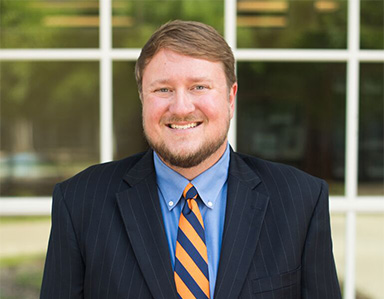
James Long is a Professor of Accountancy at the Harbert College of Business, Auburn University, where he serves as Assistant Dean of Global Programs. His career spans academic leadership, research, and teaching excellence in accounting, financial wellness, and international business. Education: PhD in Accounting, Virginia Polytechnic Institute and State University (2009) MAcc in Accounting, Auburn University (2002) BSBA in Accounting, Auburn University (2001) Dr. Long's research focuses on how task timing affects judgment, decision-making, and performance in accounting. His work intersects behavioral accounting, audit quality, and emerging technologies like blockchain and artificial intelligence, particularly in educational contexts. His scholarly output includes publications in top-tier journals such as Accounting, Organizations & Society , Auditing: A Journal of Practice & Theory , and Journal of Accounting Education . Recent studies examine AI's role in accounting education, cryptocurrency accounting challenges, and interruptions in financial decision-making. Scientific Awards: Gerald and Emily Leischuck Endowed Presidential Award for Excellence in Teaching Alumni Undergraduate Teaching Excellence Award Harbert College's Lowder and McCartney Teaching Awards School of Accountancy Outstanding Research Award (three-time recipient) National awards for educational research articles (four-time recipient) Dr. Long has also contributed to professional practice, including a Fulbright Scholar stint in Hungary (2017), and prior industry roles as a Staff Auditor and Internal Audit Manager. He holds certifications in CIA, CMA, CPA, ABV, and CGMA, and is active in major accounting associations.