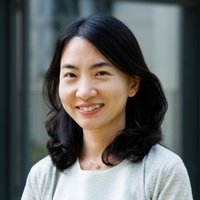
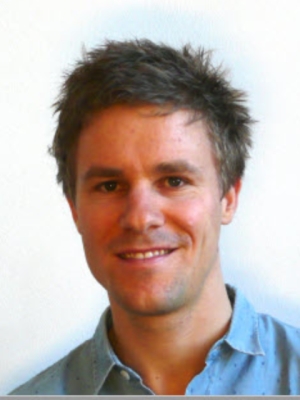
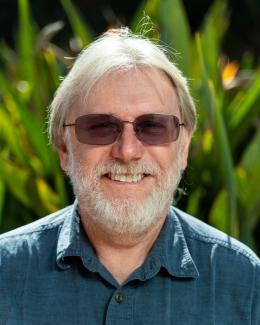
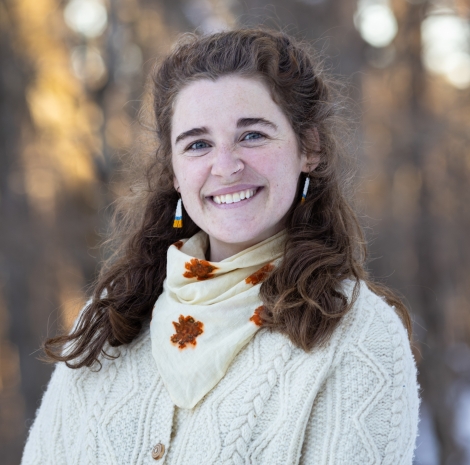
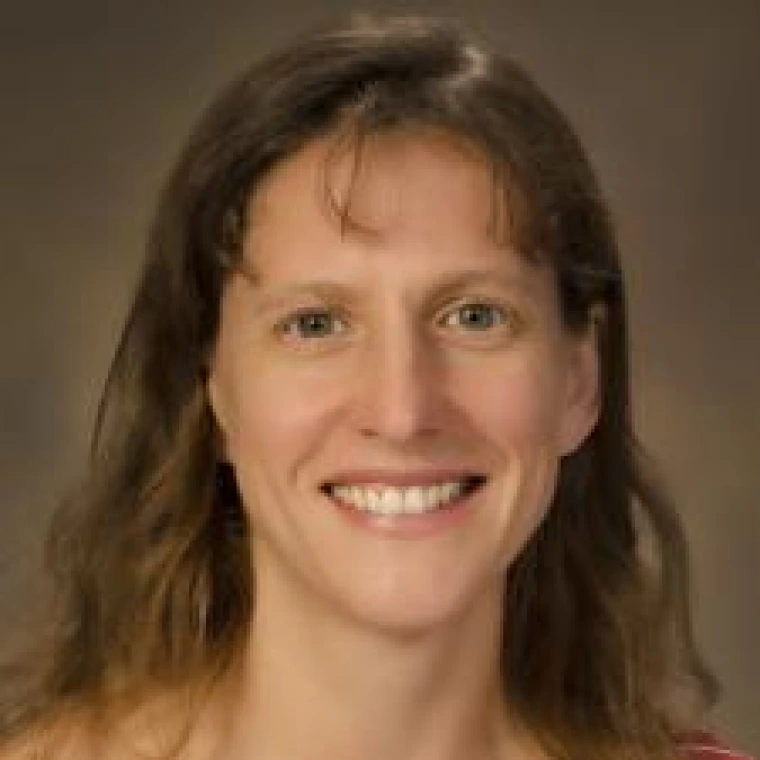
Joakim Nivre is a Professor at Uppsala University's Department of Linguistics and Philology. He is a leading researcher in computational linguistics, with a focus on dependency parsing, Universal Dependencies (UD) framework development, and multilingual NLP applications. His recent work explores LLMs in climate change discourse analysis, pharmacovigilance explainability, and historical text processing. Key research areas: Dependency parsing theory, Universal Dependencies standardization, LLM evaluation Collaborations: SweSAT-1.0 benchmark development, ClimateEval project, PARSEME integration His 2025-2023 publications demonstrate expertise in explainable AI for healthcare, synthetic data generation for idioms, and multilingual benchmark design. Notably, he co-developed SweSAT-1.0 to evaluate Swedish LLMs and contributed to typology-informed UD revisions. Despite extensive work in NLP, no scientific awards are mentioned in available texts.
Sarah Kang is the Director of the Department of Climate Dynamics at the Max Planck Institute for Meteorology in Hamburg, Germany, a position she has held since August 2023. She leads the Director's Research Group (CDY) focusing on fundamental climate dynamics. Prior to this, she served as Professor in the Department of Urban and Environmental Engineering at Ulsan National Institute of Science and Technology (UNIST) in South Korea from 2011-2023, progressing through assistant, associate, and full professor ranks. Her research examines complex climate system dynamics, with emphasis on: Large-scale atmosphere and ocean circulation patterns Tropical-extratropical climate interactions Hydrological cycle responses to climate change Mechanisms of polar amplification Teleconnections between ocean basins and climate zones Analysis of her recent publications reveals dominant research themes: Ocean-atmosphere coupling mechanisms Radiative forcing and climate sensitivity Hemispheric climate asymmetries Tropical precipitation dynamics Polar warming impacts on global circulation with consistent methodology employing high-resolution climate modeling and observational verification. Major scientific recognitions include: AGU Atmospheric Sciences Ascent Award (2022) AOGS Kamide Lecture Award (2018) Editor's Citation for Excellence in Refereeing (GRL 2018) UNIST Teaching Excellence Award (2012) NCAR Advanced Studies Fellowship (2009) She maintains extensive professional engagement as: Co-chair of CLIVAR Climate Dynamics Panel Science Steering Committee member for CFMIP Associate Editor for Frontiers in Climate Editor for AGU Advances Board member of Korean Meteorological Society
Dr. Dominik Büeler is a Researcher at ETH Zurich's Institute for Atmospheric and Climate Science and staff member of the Center for Climate Systems Modeling (C2SM). His work bridges atmospheric dynamics with practical climate services, focusing on subseasonal prediction systems and their societal applications in Europe. Research Focus: Büeler's work centers on subseasonal-to-seasonal prediction, with emphasis on weather regime dynamics, extratropical cyclone behavior, and stratosphere-troposphere interactions. His research integrates large ensemble modeling, forecast verification, and climate impact assessment, particularly for European weather extremes. Recent projects examine heatwave mortality prediction, energy meteorology applications, and the role of moist processes in atmospheric blocking. Analysis of his publication record since 2021 reveals consistent advancement in subseasonal forecasting methodology, with growing emphasis on societal applications including public health (heat-related mortality) and energy sectors. His work increasingly connects fundamental atmospheric processes with operational forecasting systems, leveraging collaborations through the Subseasonal-to-Seasonal Prediction Project. Affiliations: Center for Climate Systems Modeling (C2SM) - Core Research Staff ETH Zurich Institute for Atmospheric and Climate Science MeteoSwiss Collaborator (Energy Meteorology) Büeler contributes to multidisciplinary teams developing climate services, with recent work supporting Swiss operational forecasting systems. His research group within C2SM focuses on improving subseasonal predictability through advanced diagnostics of model biases and atmospheric processes.
Ben Seiyon Lee is an Assistant Professor in the Department of Statistics at George Mason University's College of Science. His work bridges computational statistics, climate modeling, and environmental risk assessment. Education: PhD in Statistics, Pennsylvania State University (2020) Lee specializes in computational methods for high-dimensional spatiotemporal data and uncertainty quantification in climate models. His research explores climate change impacts on extreme hydrological events, wildfire emissions, and medical decision-making. Recent publications focus on Bayesian spatiotemporal frameworks for extreme precipitation analysis, zero-inflated spatial models, and multisector uncertainty quantification. His work addresses challenges in flood risk assessment, agricultural yield projections, and healthcare compliance metrics.
Mariam Zachariah serves as a Research Fellow at the Centre for Environmental Policy within the Faculty of Natural Sciences at Imperial College London. She is a core contributor to World Weather Attribution (WWA), an international scientific collaboration conducting rapid climate change attribution analyses for extreme weather events globally. Her work bridges climate science, vulnerability assessment, and policy-relevant research. Her educational foundation includes a PhD from the Indian Institute of Technology Bombay (IITB), where she investigated climate impacts on Indian agriculture. This research focused on drought and extreme temperature effects on crop yields in major agrarian regions, recognizing agriculture's critical role in India's climate-vulnerable economy. Zachariah's research centers on near-real-time attribution of extreme events to quantify human-induced climate change influences. Her expertise spans climate modeling, statistical analysis of extreme weather, and integrating vulnerability frameworks to assess compound impacts on communities. She examines how climate change interacts with socioeconomic factors to exacerbate disasters, particularly in agricultural systems and flood-prone regions worldwide. Analysis of her recent publications reveals a dominant focus on rapid attribution of droughts, floods, and heatwaves across diverse global contexts - from the Horn of Africa to Central Europe and South America. These studies consistently demonstrate climate change as a significant amplifier of event severity, while emphasizing how pre-existing vulnerabilities determine actual impacts. Her work increasingly addresses compound hazards and the intersection of climate change with infrastructure failures and land management. As a key member of the World Weather Attribution initiative, Zachariah collaborates with climate scientists, social scientists, and vulnerability experts in a unique operational framework that delivers scientific assessments within days of extreme events. This work directly informs policymakers, media, and affected communities about climate change's role in contemporary disasters.
Hyuck Jin Park is a Full Professor in the Department of Energy Resources and Geosystems Engineering at Sejong University, South Korea, where he has been teaching and conducting research since 2003. With a Ph.D. in Engineering Geology from Purdue University, his expertise spans geotechnical engineering, landslide analysis, and geospatial technologies. Professor Park has built a distinguished career in landslide hazard assessment, combining traditional geotechnical approaches with modern machine learning techniques to improve prediction accuracy and risk management. His educational background includes: B.S. in Geology from Yonsei University (1990) M.S. in Geophysics from Yonsei University (1993) Ph.D. in Engineering Geology from Purdue University (2011) Professor Park's research focuses on the spatial and temporal probability of landslide occurrence, utilizing fuzzy logic, probabilistic analysis, GIS, Monte Carlo simulation, and machine learning for landslide hazard assessment. His work integrates physically based models with statistical approaches to better understand landslide mechanisms and improve prediction capabilities. He has made significant contributions to the development of methodologies that account for geological uncertainties in hazard assessment, with applications ranging from rock slope stability to rainfall-induced shallow landslides. His recent publications demonstrate a clear trend toward integrating explainable artificial intelligence with traditional geotechnical approaches for natural hazard assessment. Professor Park's work increasingly focuses on making machine learning models transparent and interpretable while maintaining high predictive accuracy. The research spans multiple hazard types including landslides, earthquakes, and floods, with a growing emphasis on climate change impacts and data-scarce environments. With an h-index of 28 and over 3,421 citations, Professor Park has established himself as a leading researcher in his field. His work has been published in high-impact journals including Engineering Geology, Landslides, and Catena, reflecting the significance and quality of his contributions to geotechnical engineering and natural hazard assessment. Professor Park has mentored numerous researchers through collaborative projects and has secured funding for his innovative work in landslide prediction and hazard assessment. His research has involved significant international collaboration, particularly with researchers from Malaysia, Australia, and Yemen, addressing landslide and flood risks in diverse geographical contexts. He leads research activities within the Department of Geoinformation Engineering at Sejong University and has contributed to the development of specialized tools like DEWS (Distance, Elevation, Watershed, and Slope unit) for landslide early warning systems.
Mingfang Ting is a Professor of Climate at the Columbia Climate School , affiliated with the Lamont-Doherty Earth Observatory . She co-directs the M.S. in Climate program and serves as Co-Senior Director for Education at the Columbia Climate School. Her research focuses on climate variability, extremes, Asian monsoons, Arctic sea ice, and climate change impacts on agriculture and health. Education: Ph.D. in Climate Dynamics (Princeton University, 1990), M.S. and B.S. from Peking University (1985, 1983). She has taught climate science at Columbia since 2004. Research Interests: Investigates weather/climate extremes in a warming world, Asian monsoon dynamics, Arctic sea ice variability, decadal climate modes, and hydroclimate impacts. Recent work emphasizes heatwaves, drought-flood linkages, and climate model projections. Key Projects (2020–2023): Advancing predictive understanding of North American drought Asian monsoon response to climate change Causal mechanisms of dry/humid heat extremes Arctic transport pathways and sea ice loss Scientific Contributions: Authored/co-authored over 200+ peer-reviewed articles. Her 2022 analysis of the 2021 North American heatwave and 2022 Pakistan floods exemplifies climate attribution science. Awards: AMS Distinguished Scientific Award (2021) AGU Fellow (2022) NSF CAREER Award (1995) Reuters' World’s Top Climate Scientists (2021) Leadership: Former Co-Editor-in-Chief of Journal of Climate (2020–2023). Active in climate education and global resilience initiatives through the Decarbonization Network. Labs/Teams: Leads interdisciplinary teams at LDEO focusing on climate dynamics and extreme event analysis. Collaborates internationally on monsoon systems and Arctic research.
Anders Karlström is a Professor at KTH Royal Institute of Technology, specializing in Transport Modelling and Economics. His research focuses on sustainable transportation systems, emissions reduction, and energy efficiency. Key interests include activity-based modelling, dynamic discrete choice frameworks, and policy analysis for urban mobility. He has contributed to studies on travel behavior, infrastructure planning, and environmental impacts of transport systems across multiple international cities. His work integrates advanced methodologies such as recursive logit models, spatial regression, and machine learning for predictive analytics. Notable research areas involve evaluating weather variability effects on travel patterns, optimizing traffic state estimation with sensor data, and developing scenario-based models for future employment growth. Karlström collaborates with industries to enhance the competitiveness of sustainable transport solutions globally.
Olli Varis is an Aalto Distinguished Professor at Aalto University's Department of Built Environment, specializing in Water and Environmental Engineering. He holds adjunct professorships at Asian Institute of Technology (Thailand) and has served as Vice Dean for Research & Innovation at Aalto School of Engineering (2013–2018). His expertise spans water resources management in developing economies, climate change impacts, and transboundary water governance. Education: Doctoral degree in Engineering (Helsinki University of Technology, 1991), Licentiate (1988), and dual Master's degrees in Agriculture (University of Helsinki, 1986) and Engineering (Helsinki University of Technology, 1984). Research focuses on sustainable development goals (SDGs), particularly water-energy-food nexus dynamics, urbanization impacts, and global river basin vulnerabilities. Key interests include flood early warning systems, migration-environment linkages, and Asian transboundary water challenges. Notable awards include Aalto Excellence Awards (2018, 2021), Best Research Paper 2023, and Environmental Research Letters' Best Paper 2010. Over 350 publications include works on China's water risks, Nepal's flood resilience, and global migration drivers. Active in UNESCO, WMO, and UNU/WIDER. Recent projects address urbanization's environmental pressures, interdisciplinary education challenges, and东南亚数字经济的崛起与挑战 (Vietnam's digital economy challenges). Leads the Water and Environmental Engineering research group, supervising 12 theses. Involved in public outreach,如芬兰赫尔辛基大学的媒体参与案例.
Dar Roberts is a Professor in the Department of Geography at the University of California, Santa Barbara, where he directs the Visualization & Image Processing for Environmental Research (VIPER) Lab. His research focuses on advanced remote sensing applications including: Imaging spectrometry for ecosystem analysis Wildfire fuel mapping and fire emissions modeling Drought impact assessment on vegetation Land use/land cover change detection Integration of remote sensing with climate modeling Roberts leads the Southern California Wildfire Hazard Center and has pioneered techniques for mapping wildfire fuels using remote sensing technologies. His work combines field measurements with satellite, airborne, and drone-based sensors to monitor environmental changes.
Sophie Ryan is a Climate and Health Research Fellow at Appalachian State University's Department of Geography and Planning, supported by the National Academy of Sciences. She holds a Ph.D. in Geography (candidate) from the University of North Carolina at Chapel Hill and advanced degrees in Geography from Appalachian State University and the University of Vermont. Education : Ph.D. Candidate in Geography (UNC Chapel Hill), M.A. in Geography (Appalachian State), B.S. in Geography (University of Vermont) Ryan's research integrates medical geography and climate science to explore mental health impacts of extreme weather events. Her work combines spatiotemporal modeling , health data analysis , and disaster response studies , focusing on youth, older adults, and vulnerable populations. Recent projects examine greenspace effects on mental health , compound climate events , and pandemic-related health disparities . Her publications highlight climate-mental health linkages , spatial epidemiology , and social vulnerability in disaster contexts. Articles address topics like heat-stress and mental health , transgender youth post-disaster trauma , and suicide risk disparities during the COVID-19 pandemic. Ryan employs distributed lag models , cluster analysis , and geospatial techniques to assess environmental health impacts. Scientific Awards : NASEM Climate-Health Fellow
Heidi Brown is a Professor and Program Director at the University of Arizona , affiliated with multiple programs including the Mel and Enid Zuckerman College of Public Health, Entomology and Insect Science, Remote Sensing and Spatial Analysis, and the School of Geography and Development. PhD in Epidemiology of Microbial Diseases (Yale University) MPH in International Health Promotion (George Washington University) Postdoctoral experience at Oxford University (Zoology) and CDC (Bacterial Diseases Branch) Her research focuses on infectious disease epidemiology , emphasizing the spatial and temporal dynamics of diseases, vector-borne/zoonotic transmission, and environmental determinants of health. She integrates epidemiological and spatial analysis to address climate change impacts on disease patterns. Recent publications highlight her work linking climate variability to infectious diseases like Campylobacter, stakeholder engagement in climate adaptation, and dual hazard response strategies during the 2020 heat-COVID overlap. Her 2019 Fulbright in Brazil and 2023 sabbatical at Heidelberg Institute of Global Health underscore her international expertise. Scientific Awards: Fulbright (2019) She leads projects such as Adaptation Mal-Adaptation Assessment , Climate and Health Adaptation Monitoring Program (CHAMP) , and initiatives on heat health resilience. Her work bridges academic research with practical implementation for state and local health departments.
Univ.-Prof. Aiko Voigt is a Professor and Head of the Department of Meteorology and Geophysics at the University of Vienna. Her research focuses on climate dynamics, cloud physics, and atmospheric processes. She leads the Environment and Climate Research Hub and teaches advanced courses like 'Climate Modelling Lab' and 'Cloud Physics.' Her work explores cloud-radiative interactions, climate change impacts, and extreme weather dynamics. Recent studies analyze energy imbalances, high-cloud feedbacks, and tropical precipitation patterns. Voigt's contributions bridge climate modeling with observational data, emphasizing high-resolution simulations and interdisciplinary approaches. Teaching includes courses such as 'Climate System of the Earth,' 'Scientific Communication,' and 'Introduction to Computational Meteorology.' Her research spans from present-day climate to Snowball Earth scenarios, addressing both modern and paleoclimatic challenges. Publications highlight advancements in radiative transfer algorithms, cyclone dynamics under warming, and uncertainties in climate model predictions. Her work underscores the critical role of clouds in amplifying climate sensitivity and reshaping atmospheric circulation patterns.
Professor Jochen J. Brocks is a faculty member at the Research School of Earth Sciences (RSES) at the Australian National University (ANU). He holds a PhD in Organic Geochemistry from the University of Sydney (2002) and a Diplom Chemie (~MSc Chemistry) from the University of Freiburg, Germany. His research focuses on Paleobiogeochemistry, using molecular fossils (biomarkers) to study ancient ecosystems and evolutionary processes, including the origin of life and the emergence of complex organisms. He is particularly interested in the conditions that led to the appearance of multicellular life and the role of primary producers in mass extinctions, as well as the potential existence of a 'lost world' of complex life in Earth's early oceans. He previously served as a Junior Fellow of the Harvard Society of Fellows (2001–2004). His research group, Brocks Geobiology, explores topics such as the molecular signatures of early organisms, the geochemical record of ancient oceans, and the preservation mechanisms of organic matter in sedimentary deposits. Brocks collaborates on projects like the biogeochemistry of salt lakes and the analysis of Precambrian rocks to trace microbial diversity. Education: PhD (Organic Geochemistry, University of Sydney, 2002), MSc (Chemistry, University of Freiburg, Germany). His research interests span the intersection of organic geochemistry and paleontology, with a focus on applying biomarker analysis to understand Earth's history. Recent work includes studies on the environmental aftermath of Snowball Earth glaciations, the origins of Dickinsonia as an early animal, and the preservation of ancient biomolecules in extreme conditions like evaporites and concretions. Brocks has contributed to significant debates in the field, such as reinterpreting steroid biomarkers to challenge early animal evolution timelines and identifying novel preservation mechanisms for plant fossils. His work often integrates experimental geochemistry with field studies, particularly in northern Australia and Mauritania, to explore the co-evolution of life and Earth's systems. Awards: Junior Fellow of the Harvard Society of Fellows (2001–2004). He supervises multiple research projects, including those investigating the Velkerri Formation and the McArthur River deposit. Brocks also collaborates on initiatives like the Sedimentary Geochemistry and Paleoenvironments Project, which synthesizes global data to inform Earth history. His lab work emphasizes the development of analytical techniques to distinguish syngenetic biomarkers from contaminants in ancient samples.
Eunchun Park serves as an Assistant Professor in the Department of Agricultural Economics and Agribusiness at the University of Arkansas, concurrently holding the position of Director of the Experiment Station (DREX). A specialist in Bayesian spatial statistics and econometrics, his research focuses on agricultural risk analysis with particular emphasis on crop insurance mechanisms and financial commodity markets. His methodological expertise addresses critical data scarcity challenges in federal crop insurance premium calculations through advanced spatial modeling techniques. Dr. Park's academic foundation includes: Ph.D. in Agricultural Economics from Oklahoma State University (2017) M.S. in Food and Resource Economics from Korea University (2013) B.S. in Food and Resource Economics from Korea University (2010) His research program centers on extreme price and yield risk quantification in agricultural commodities, employing sophisticated Bayesian modeling frameworks to overcome data limitations in spatial risk assessment. Current work develops innovative approaches for measuring catastrophic risks in crop production systems and refining insurance rating structures through spatial smoothing of yield densities. This research bridges theoretical econometric advances with practical applications for risk management tools used by farmers and policymakers. Analysis of Dr. Park's recent publications reveals a consistent trajectory in spatial risk modeling for agricultural insurance systems, with increasing focus on prevented planting coverage factors, commodity market volatility around information releases, and climate-related production risks. His work demonstrates methodological progression from theoretical Bayesian frameworks toward actionable risk assessment tools, particularly through the application of kriging techniques to non-normal yield distributions and extreme event modeling. Dr. Park's scholarly contributions have been recognized through: Outstanding Contribution to Applied Risk Analysis Award (2020) from the Agricultural and Applied Economics Association Outstanding Graduate Student Paper Award (2018) from the Agricultural and Applied Economics Association Outstanding Doctoral Dissertation Award (2018) from the Southern Agricultural Economics Association While specific details of current advisees and grant funding are not provided in available materials, his active publication record in top agricultural economics journals suggests an ongoing mentorship role for graduate students and potential involvement in externally funded research initiatives related to agricultural risk management. His work on spatial smoothing techniques and extreme risk modeling likely informs collaborative projects with agricultural extension services and federal risk management agencies. No specific laboratory facilities or dedicated research teams are mentioned in the available documentation, though his methodological expertise suggests collaboration with spatial statistics and agricultural risk modeling groups within the university's research infrastructure.