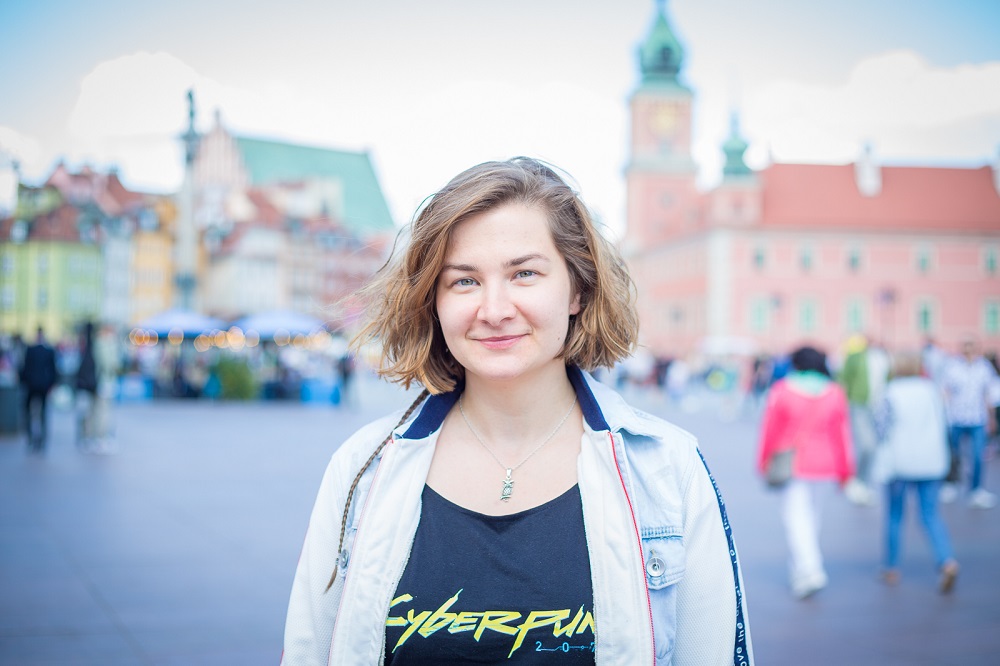
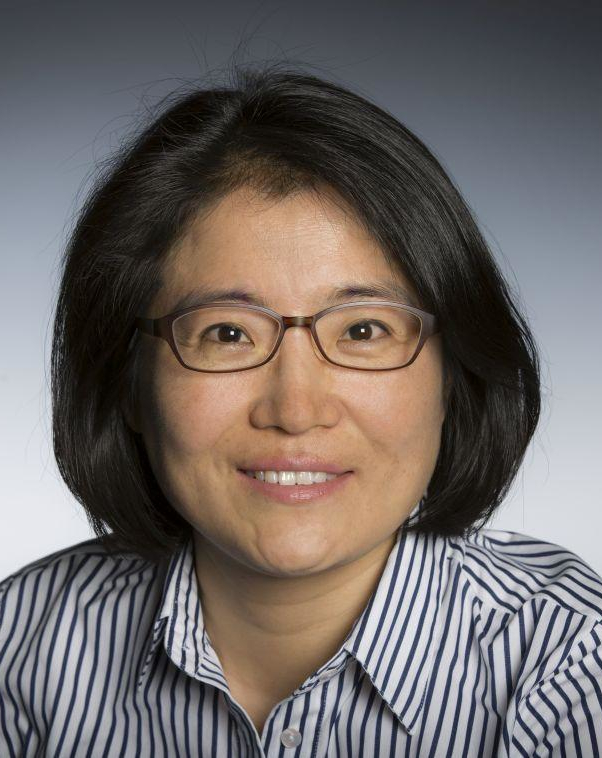
Tatiana Smirnova-Nagnibeda is an Associate Professor in the Mathematics Section at the University of Geneva, where she obtained her PhD before holding positions at ETH Zurich and KTH Stockholm. She returned to UNIGE where she has established herself as a leading researcher in geometric and combinatorial group theory. Her research focuses on combinatorial, asymptotic and geometric group theory, as well as probabilities on groups and graphs. She has made significant contributions to the understanding of branch groups, self-similar groups, Schreier graphs, and spectral properties of group actions. Her work often bridges algebra, probability, and geometry, revealing deep connections between these areas through the study of Thompson's groups, Grigorchuk's group, and other important group constructions. Her recent publications demonstrate a consistent focus on subgroup structure in various classes of groups, spectral properties of Schreier and Cayley graphs, and connections to dynamical systems. She frequently collaborates with researchers from around the world, particularly with Rostislav Grigorchuk, and has mentored numerous doctoral students who have gone on to successful academic careers. Managing Editor for Groups, Geometry, and Dynamics Editor for L'Enseignement Mathématique Organizer of GAGTA conferences (2022, 2024) Organizer of specialized workshops on high-dimensional expanders (2015, 2016) She leads an active research group comprising postdoctoral fellows and doctoral students working on various aspects of group theory and its applications. Her teaching includes advanced courses on graph theory, random walks on groups, spectral theory of graphs, and amenability at the University of Geneva.
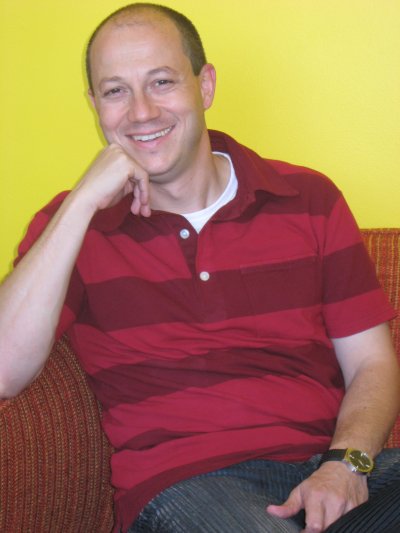
Alina Vdovina is a Professor of Mathematics at The City College of New York (CCNY) and a member of the doctoral faculty at the CUNY Graduate Center. Her office is located at North Academic Center 8/201, with an alternative listing showing MR 333, and she can be reached at (212) 650-5161 or via email at avdovina@ccny.cuny.edu. Dr. Vdovina's research focuses on Geometric Group Theory and its interactions with Dynamical systems, K-theory of C*-algebras, and Knot Theory. Her work bridges multiple mathematical disciplines, exploring the connections between algebraic structures, geometric representations, and topological properties. She has made significant contributions to the understanding of higher-rank graphs, cube complexes, and their applications in operator algebras. Her recent publications demonstrate a consistent focus on the interplay between geometric structures and algebraic properties, with particular attention to how group-theoretic concepts manifest in topological and combinatorial settings. Her work spans theoretical developments in group theory, applications to operator algebras, and connections to discrete mathematics. Dr. Vdovina is actively involved in mentoring students, with recent successes including Kadar He moving to the PhD program at CUNY's Graduate Center, Nicholas Videen transitioning from musician to CCNY mathematics graduate, and Joshua Bourne-Inniss advancing from community college to CCNY mathematics graduate degree. Her research presentations include "Groups acting on buildings and their subgroups" at GAGTA 2025 and "C*-algebras coming from buildings and their K-theory" at the Conference on Analytic Group Theory in Austin, Texas.
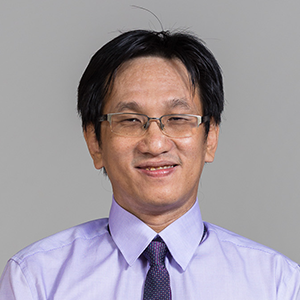
Yi-Jun Chang is an Assistant Professor in the Department of Computer Science at the National University of Singapore (NUS). He previously held a Junior Fellow position at the Institute for Theoretical Studies, ETH Zurich (2019–2021), and earned his Ph.D. in Computer Science and Engineering from the University of Michigan (2019). His research focuses on theoretical computer science, particularly distributed, parallel, and sublinear graph algorithms. Ph.D., University of Michigan (2019) M.S., National Taiwan University (2015) B.S., National Taiwan University (2013) Chang’s research explores the complexity and optimization of algorithms in distributed systems, including leader election, graph shattering, expander decomposition, and subgraph detection. His work addresses fundamental challenges in time-energy trade-offs, communication efficiency, and deterministic vs. randomized approaches in models like LOCAL and CONGEST. Recent publications highlight advancements in distributed triangle enumeration, optimal coloring, shortest path computation, and certification in bounded pathwidth graphs. Awards include the PODC 2019 Best Paper and Best Student Paper Awards, followed by the 2020 PODC Doctoral Dissertation Award. PODC 2019 Best Paper Award PODC 2019 Best Student Paper Award 2020 PODC Doctoral Dissertation Award Chang teaches courses such as CS3230 (Design and Analysis of Algorithms) and CS5275 (The Algorithm Designer's Toolkit). He advises Ph.D. students Hung Thuan Nguyen and Haoran Zhou, and has collaborated with postdoctoral researchers including Gopinath Mishra and Dean Leitersdorf.
Yanhua Li is an Associate Professor in the Computer Science Department and Data Science Program at Worcester Polytechnic Institute (WPI), where he has served since 2021 (previously as Assistant Professor from 2015-2021). He is also an affiliated researcher at UMass Transportation Center (UMTC). His educational background includes dual PhDs: Computer Science from University of Minnesota, Twin Cities (2013) and Electrical Engineering from Beijing University of Posts and Telecommunications (2009), along with an MS (2006) and BS (2003) in Electrical Engineering from Sichuan University. Dr. Li's research focuses on artificial intelligence and spatial-temporal data science with applications in smart cities and urban intelligence. His work particularly emphasizes imitation learning and meta learning in AI for understanding and influencing urban human agents' decision-making strategies, such as taxi drivers' passenger-seeking behaviors and urban travelers' transit choices. His laboratory develops advanced computational methods for urban transportation systems, traffic prediction, and spatial-temporal data analytics. His publication record shows a strong trajectory in top AI and data science venues, with recent work bridging foundation models with urban computing, enhancing robustness in spatial-temporal representation learning, and applying generative models to urban traffic estimation. His research spans computer vision, reinforcement learning, generative modeling, and spatio-temporal data analysis with applications in transportation, environmental monitoring, and urban planning. Best Applied Data Science Paper Award at SDM 2019 NSF CAREER Award (2020) Runner-up for the 10-Year Impact Award for SIGSPATIAL Conference (2024, for 2014 paper) Dr. Li has secured significant research funding including an NSF CAREER award ($529k), multiple NSF grants totaling over $2 million, and industry collaborations with DiDi Chuxing Research. He has advised numerous PhD students who have gone on to faculty positions at institutions like San Diego State University and SUNY Binghamton University. His research group maintains active collaborations with industry partners including DiDi Chuxing, Pitney Bowes Inc., and NVIDIA. He leads several research initiatives including the CityLines project for urban transportation systems and has contributed to foundational work in spatial-temporal imitation learning. His laboratory continues to expand into new areas including applying large language models to urban dynamics prediction and developing advanced methods for environmental monitoring.
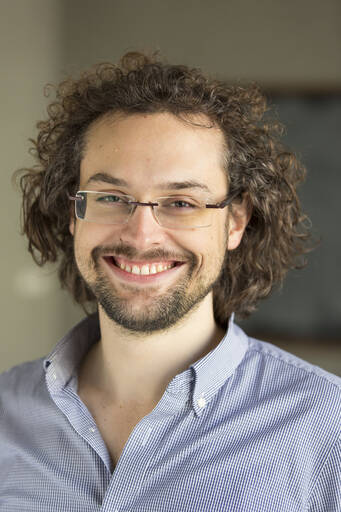
Eyal Z. Goren is a Professor in the Department of Mathematics and Statistics at McGill University. His research focuses on arithmetic geometry, including studies of Shimura varieties, modular forms, complex multiplication, expander graphs, arithmetic dynamics, and mathematical cryptography. He is affiliated with the Centre Interuniversitaire en Calcul Mathématique Algébrique (CICMA), a Montreal-based group in number theory. Goren’s work bridges pure mathematics and applications in cryptography, with notable contributions to the theory of supersingular elliptic curves and cryptographic hash functions derived from expander graphs. Education : PhD in Mathematics from the Hebrew University of Jerusalem (1996), advised by Ehud De Shalit. Teaching : Teaches advanced courses such as Higher Algebra I/II, Algebra 1/2/3/4, Number Theory, and specialized topics like Unlikely Intersections. Affiliations : Active member of CICMA and the CRM (Centre de Recherches Mathématiques), collaborating on seminars and research initiatives. Research Interests : Goren’s work emphasizes the interplay between number theory and geometry, with recent focus on p-adic dynamics, canonical subgroups, and Faltings heights. His studies on Picard modular forms and Shimura varieties explore geometric structures in positive characteristic and their arithmetic implications. Publications : Over 40 articles in leading journals, including Inventiones Mathematicae , Compositio Mathematica , and Journal für die reine und angewandte Mathematik . His book Lectures on Hilbert Modular Varieties and Modular Forms is a key resource in the field. Grants and Collaboration : Engaged in collaborative projects on expander graphs, post-quantum cryptography, and the geometry of abelian varieties with complex multiplication. His research is supported by grants from the NSERC and other agencies.
Kok Sheik Wong is a Professor and Deputy Head (Research) at the School of Information Technology, Monash University Malaysia. He holds a Doctor of Engineering from Shinshu University, Japan, and Master’s and Bachelor’s degrees in Computer Science and Mathematics from Utah State University, USA. His academic leadership and research excellence are central to his role at Monash. B.S. Computational Mathematics, Utah State University (2002) M.S. Computer Science, Utah State University (2006) M.S. Mathematics, Utah State University (2004) Doctor of Engineering, Shinshu University, Japan (2009) His research focuses on multimedia signal processing and cybersecurity , particularly in data hiding , reversible data hiding , coverless steganography , and multimedia encryption . He is also expanding into digital health , applying AI to mental health in workplace environments. His work aligns with UN SDGs, particularly in health and education. The recent publication trends show a strong emphasis on reversible data hiding , image watermarking , and AI-driven health applications . His interdisciplinary work spans computer science, engineering, and public health, with increasing focus on real-world impact through EU and national grants. He has received several honors, including: Academic of Science Malaysia - Young Scientist Network (2020) Best Paper Award, IWDW 2019 ITEX 2021 Gold Medal for BAITRADAR School of IT Excellence in Research Award (2022) Dr. Wong actively supervises PhD students and leads major research projects, including the EU-funded WAge project. He has served as an associate editor for IEEE Signal Processing Letters and the Journal of Information Security and Applications, and is a member of IEEE IFS and APSIPA technical committees. His grants reflect strong external collaboration and funding in cybersecurity and digital health. He is involved in key research labs and teams through Monash University and international consortia, particularly in the areas of multimedia security and digital health innovation. His leadership in the WAge project connects him with European and Asia-Pacific research networks, enhancing global impact.
Anna Dawid-Lekowska is an Assistant Professor at the Leiden Institute of Advanced Computer Science (LIACS) and affiliated with the Leiden Institute of Physics (LION) at Leiden University, Netherlands. She leads a research group within the aQa group, focusing on the intersection of machine learning and quantum physics. Previously, she was a Research Fellow at the Center for Computational Quantum Physics, Flatiron Institute, New York. PhD in Physics and Photonics (joint, cotutelle), University of Warsaw & ICFO, Spain MSc in Quantum Chemistry, University of Warsaw BSc in Biotechnology, University of Warsaw Anna's research centers on interpretable machine learning for scientific discovery, particularly in quantum systems. She investigates how overparametrized models generalize, the role of loss landscape flatness, and double descent phenomena. Her work bridges deep learning with quantum simulations, aiming to detect quantum phase transitions and extract physical insights from trained models. She also explores ultracold molecules and novel quantum phases using simulation platforms. Her recent publications demonstrate a strong trend in applying machine learning to automate and interpret quantum experiments, such as detecting laser cooling schemes and understanding neural network initialization. The work emphasizes interpretability, aiming to make AI a transparent scientific tool rather than a black box. Anna has received significant recognition, including: 2022 FNP START laureate Participant in the 2024 Lindau Nobel Laureate Meeting She is actively mentoring and expanding her group, currently recruiting PhD students and postdoctoral researchers. Her work is supported by institutional affiliations with leading research centers and collaborations across Europe and the US. Anna also engages in science communication and education, having lectured at the Nordita Winter School on Machine Learning and Physics. She is involved in the aQa research group, which focuses on quantum algorithms and AI, fostering interdisciplinary collaboration between computer science and physics. Her lab integrates theoretical modeling, algorithm development, and applications to quantum experiments.
Ulrik Brandes serves as Full Professor and Head of the Department of Humanities, Social and Political Sciences at ETH Zurich, holding the Professorship for Social Networks. He actively teaches courses including Network Analysis and Applied Network Science: Sports Networks for Fall semester 2025, with office location at WEP J 14, Weinbergstr. 109, Zurich. His research spans Social Network Analysis, Graph Theory, and Network Science, with significant applications in sociology, sports analytics (particularly soccer and Australian Football League), and archaeological networks. As a longstanding member of the International Network for Social Network Analysis (since 2001) and the Academy of Sociology (since 2017), he bridges theoretical graph algorithms with practical interdisciplinary applications, recently expanding into sports analytics through the Football Scouting Association (2023). Analysis of his recent publications reveals strong thematic continuity in network centrality, temporal dynamics, and robustness, with increasing application diversity across sports analytics, archaeological trade networks, and decentralized social media platforms. His work consistently emphasizes efficient computational methods for real-world network problems. Honors: Simmel Award (2024) Prof. Brandes maintains active research leadership through departmental oversight and course development, though specific grant details and student advisement records are not publicly documented in available sources. His departmental role indicates substantial administrative responsibilities alongside research and teaching commitments.
Valentine Kabanets is a Professor in the School of Computing Science at Simon Fraser University. He holds a Ph.D. in Computer Science from the University of Toronto (2000), M.Sc. from Simon Fraser University (1996), and B.Sc. from the National University of Kiev (1993). His research focuses on computational complexity theory, pseudorandomness, circuit lower bounds, and cryptography. He has received prestigious awards including the Nerode Prize (2013) and multiple best-paper awards at conferences like STOC and CCC. Teaching includes courses on computability and complexity (CMPT 308), data structures and algorithms (CMPT 307), and advanced complexity theory. His research explores foundational questions such as derandomization of algorithms, connections between upper/lower bounds in complexity, and cryptographic hardness assumptions. He leads the Algorithms and Complexity Theory Lab and has supervised numerous graduate students and postdocs. Kabanets' work bridges theoretical insights with practical algorithmic advancements, contributing to both foundational computer science and applied cryptography.
Ngoc Thanh Nguyen is a Full Professor at Wroclaw University of Science and Technology where he serves as Head of the Department of Applied Informatics. He holds the prestigious title of Professor granted by the President of Poland and has been recognized as a Distinguished Scientist of ACM since 2009. He serves as Editor-in-Chief of both the Journal of Information and Telecommunication (JIT) and the Vietnam Journal of Computer Science (VJCS), and chairs the IEEE SMC Technical Committee on Computational Collective Intelligence. His research spans computational collective intelligence, knowledge integration, data mining, social media analysis, and sentiment analysis. Professor Nguyen has pioneered significant methodologies in spatial data clustering within network space, inter-sequence pattern mining, and graph neural network applications. His work bridges theoretical computer science with practical applications in intelligent information systems, demonstrating particular expertise in handling complex spatial and sequential data structures. His research has evolved from foundational pattern mining techniques to sophisticated neural network approaches for geospatial and social data analysis. The analysis of his recent publications reveals a strong focus on spatial data analysis in network environments, with significant contributions to clustering algorithms, graph neural networks, and pattern mining. His work consistently addresses efficiency challenges in data processing while expanding into emerging areas like Vietnamese language processing and topological data analysis. The research demonstrates a clear trajectory from traditional data mining techniques toward more sophisticated AI-driven approaches that incorporate spatial relationships and network topologies. Distinguished Scientist of ACM (2009) ACM Distinguished Speaker (2009-2013) IEEE Distinguished Visitor (2009-2013) Title of Professor granted by the President of Poland Professor Nguyen has supervised over 20 PhD students to completion and currently mentors several ongoing doctoral candidates. His academic leadership extends to founding two major conference series: the Asian Conference on Intelligent Information and Database Systems (ACIIDS) and the International Conference on Computational Collective Intelligence (ICCCI), which have become significant venues in their respective fields. His collaborative network spans multiple institutions, particularly with Yeungnam University as evidenced by several co-supervised PhD projects. As founder and chair of the IEEE SMC Technical Committee on Computational Collective Intelligence, he leads an international community of researchers advancing this specialized field. His departmental leadership at Wroclaw University of Science and Technology positions him at the center of applied informatics research and education in Poland, with particular emphasis on computational intelligence applications.
Anthony TUNG Kum Hoe is a Professor in the Department of Computer Science at the National University of Singapore (NUS), where he has established himself as a leading researcher in database systems and data mining. He is also affiliated with the NUS Graduate School for Integrative Sciences and Engineering and serves as a SINGA supervisor. His educational background includes a Ph.D. in Computer Science from Simon Fraser University (2001), an M.Sc. in Information Systems & Computer Science from NUS (1998), and a B.Sc. with 2nd Class Upper Honours in Information Systems & Computer Science from NUS (1997). Professor Tung's research spans several interconnected areas within database systems and data mining. His primary focus is on developing efficient methods for indexing and searching complex data structures including time series, trajectories, trees, graphs, and high-dimensional objects. He has pioneered work in visual query processing, keyword search, and ranking systems. His GENIE (Generic Inverted Index) and LAMP (semi-Lazy Mining Paradigm) projects represent significant contributions to big data analytics, particularly in handling the 'variety' aspect of big data by providing unified frameworks for processing diverse data structures while preserving semantic meaning. His research bridges theoretical database concepts with practical applications in visual data mining, collaborative analytics, and just-in-time model construction. His recent publications reveal a clear evolution from traditional database research toward more complex analytics on diverse data types. While maintaining his core expertise in database indexing and query processing, his work has expanded to incorporate machine learning techniques, particularly in areas like nearest neighbor search, anomaly detection, and predictive analytics. There's a noticeable trend toward interdisciplinary applications, with publications spanning computer vision, natural language processing, transportation systems, and social computing. His research group consistently publishes in top-tier venues including SIGMOD, VLDB, ICDE, and KDD, demonstrating both theoretical rigor and practical relevance. 2005 Best Paper Award for 'Indexing DNA Sequences Using q-grams' 2007 Invited panel speaker on 'Advice for a successful database researcher career in Asia' at SIGMOD 2010 Guest Lecturer for VLDB Database School 2012 VLDB 2012 Research PC Co-chairs 2015 10 Years Best Paper Award, DASFAA 2015 Invited to SIGMOD 2008 and SIGKDD 2008 Program Committees Professor Tung has supervised numerous PhD students and research associates throughout his career, including notable researchers like Zhang Zhenjie (recipient of the 2007 President Graduate Fellowship) and Wang Nan (published in SIGMOD'08). His research group has been consistently productive, with students publishing in top conferences including SIGMOD, ICDE, and VLDB. His professional service is extensive, having served as PC Chair for COMAD'06, Research PC Co-chair for VLDB 2012, and on program committees for virtually all major database and data mining conferences over the past two decades. His research has been supported by various grants that have enabled significant contributions to database technology. His GENIE and LAMP projects represent a cohesive research direction focused on developing systematic approaches to big data analytics. GENIE provides a unified platform for storage and retrieval of big data with various structures, while LAMP introduces a novel paradigm for predictive analytics that combines the strengths of lazy and eager learning approaches. These projects have evolved to incorporate GPU acceleration and parallel processing capabilities, reflecting his commitment to addressing real-world scalability challenges in data-intensive applications.
David Steurer is an Associate Professor in the Department of Computer Science at ETH Zurich, where he leads the Institute for Theoretical Computer Science. His research bridges theoretical computer science, mathematics, and practical applications in machine learning and statistics. Steurer has made significant contributions to the understanding of sum-of-squares methods, semidefinite programming, and high-dimensional estimation problems. Steurer earned his B.Sc. & M.Sc. in Computer Science from Saarland University in 2006, followed by a Ph.D. in Computer Science from Princeton University in 2010 under the supervision of Sanjeev Arora. His doctoral dissertation, "On the Complexity of Unique Games and Graph Expansion," received an Honorable Mention for the ACM Doctoral Dissertation Award in 2011. Steurer's research focuses on algorithm design through mathematical programming relaxations, particularly semidefinite programming and the sum-of-squares method. His work addresses computational complexity of high-dimensional estimation problems including tensor decomposition, clustering, Gaussian mixture models, and stochastic block models. He also investigates algorithmic aspects of robustness and differential privacy, especially for estimation tasks. His theoretical contributions have practical implications for machine learning and data analysis in the presence of noise and adversarial conditions. Analysis of Steurer's recent publications reveals a consistent trajectory in advancing the sum-of-squares framework for high-dimensional estimation and robust statistics. His work demonstrates how sophisticated mathematical programming techniques can provide certifiable guarantees for challenging problems in machine learning. The research spans theoretical foundations while maintaining relevance to practical applications, particularly in scenarios involving corrupted or noisy data. A notable trend is the extension of sum-of-squares methods to handle increasingly complex statistical models while providing rigorous performance guarantees. ERC Consolidator Grant (2019) Michael and Sheila Held prize (2018, with Raghavendra) Invited speaker at International Congress of Mathematicians (2018) STOC Best Paper Award (2015) Alfred P. Sloan Research Fellowship (2014) NSF CAREER Award (2014) Microsoft Research Faculty Fellowship (2014) FOCS Best Paper Award (2010) Steurer has advised numerous PhD students and postdocs who have gone on to prominent positions, including Sam Hopkins (now faculty at MIT), Jonathan Shi, and Aaron Potechin. His research is supported by multiple prestigious grants, including an ERC Consolidator Grant, an NSF CAREER Award, and a Microsoft Research Faculty Fellowship. He has served on numerous program committees for top theoretical computer science conferences and has been recognized for his service to the community through roles such as internal member of the Scientific Advisory Committee of the Institute for Theoretical Studies at ETH Zurich. As head of the Institute for Theoretical Computer Science at ETH Zurich, Steurer leads a research group focused on advancing the theoretical foundations of computer science with particular emphasis on mathematical optimization methods. His team explores the boundaries of what can be efficiently computed in high-dimensional settings, with applications spanning machine learning, statistics, and data science. The group maintains strong connections with both theoretical and applied researchers across ETH and the broader academic community.
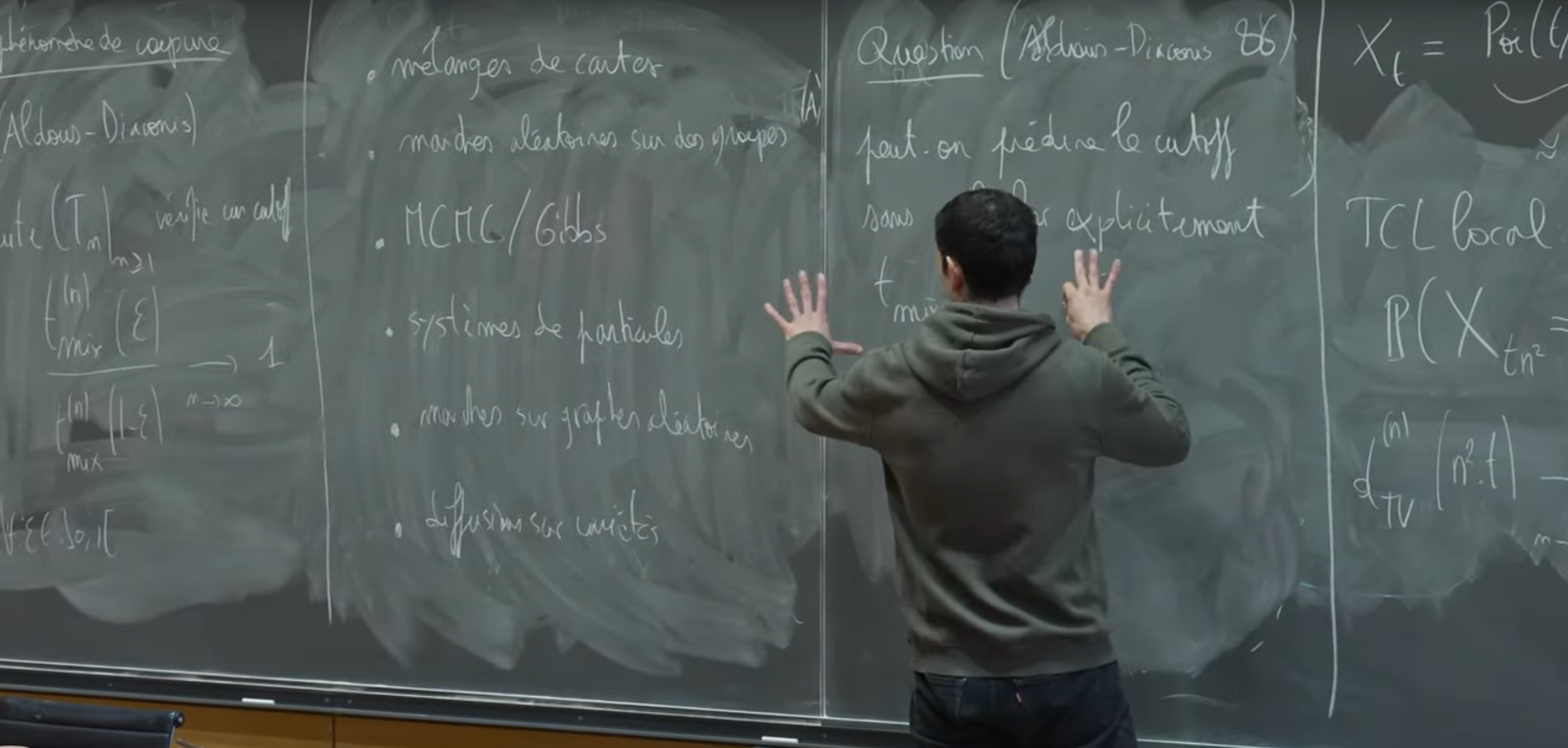
Justin Salez is a Professor of Mathematics at Université Paris-Dauphine & PSL University and an Institut Universitaire de France junior fellow. He serves as Principal Investigator for the ERC Consolidator Grant CUTOFF project, focusing on the cutoff phenomenon in Markov processes. His academic affiliations include editorial roles at Electronic Journal of Probability and co-organizing the CEREMADE Colloquium. Education: Mathematics Aggregation (2007-2008), Master in Probability (2006-2007), Master in Theoretical Computer Science (2005-2006), PhD (2008-2011). Professional Experience: Full Professor (2019-present) and Assistant Professor (2012-2019) at Paris Dauphine/Diderot, Postdoc at UC Berkeley (2011-2012). His research centers on Markov chain mixing times , non-negative curvature , and functional inequalities , with applications to random graphs, interacting particle systems, and MCMC algorithms. Key themes include entropy dissipation, cutoff criteria, and spectral analysis. The 15 most recent publications highlight advances in cutoff theory, curvature-entropy relationships, and functional inequalities. These span journals like Transactions of the American Mathematical Society , Annals of Probability , and Annals of Applied Probability , reflecting interdisciplinary work in probability, spectral theory, and statistical physics. Scientific Awards: ERC Consolidator Grant (2023), Marc Yor Prize (2024), Bourbaki Seminar (2024), Saint-Flour Lecture (2025), and Institut Universitaire de France fellowship (2019). As an advisor, he has supervised or is supervising PhD students including Alexandre Bristiel , Hong Quan Tran , and Guillaume Conchon-Kerjan . His lab, CEREMADE, hosts a monthly colloquium he co-organizes, fostering interdisciplinary dialogue in probability, analysis, and statistics.
Mihyun Kang is a Professor in the Institute of Discrete Mathematics at Graz University of Technology (TU Graz), leading the Combinatorics Group. She holds significant academic positions and has been recognized with a Heisenberg Fellowship (German Research Foundation) and a Friedrich Wilhelm Bessel Research Award (Alexander von Humboldt Foundation). Her research focuses on combinatorics, discrete probability, and algorithms, with a specialization in random graph theory. She contributes to editorial boards, including Random Structures & Algorithms . Her research interests emphasize high-dimensional graphs, percolation processes, and structural properties of random graphs. She explores topics such as phase transitions, graph enumeration, and algorithmic applications in combinatorial problems. Her work bridges theoretical foundations with practical applications in algorithm design and probabilistic modeling. Dr. Kang’s scientific achievements include pioneering studies on hypergraphs, bootstrap percolation, and the evolution of random graph processes. Her recent publications highlight advancements in understanding graph components, connectivity thresholds, and universality phenomena in random structures. She collaborates widely, contributing to conferences and international initiatives like the SFB “Discrete random structures: enumeration and scaling limits.” Her professional activities include advising doctoral students and supervising research projects at TU Graz. She leads the Combinatorics Group, which hosts the Graz Combinatorics Seminar and actively engages in academic outreach. Her contributions extend to textbook authorship, including Diskrete Mathematik für die Informatik , and she maintains an active presence in discrete mathematics education and research.
Benny Sudakov is a Professor of Mathematics at ETH Zurich, where he conducts research in combinatorics. He has previously held positions at UCLA, Princeton University, and the Institute for Advanced Study. His work is supported by the SNSF grant 200021_196965. Research Interests: His primary research areas include Extremal Graph and Hypergraph Theory, Ramsey Theory, Random Structures, and the application of Algebraic and Probabilistic Methods in Combinatorics, with strong connections to Theoretical Computer Science. He investigates fundamental structural properties of discrete systems, such as the existence of regular subgraphs, extremal configurations, and the behavior of random combinatorial objects. The recent popular science articles on his work highlight a consistent trend of solving long-standing open problems in extremal combinatorics using sophisticated probabilistic and algebraic techniques. His research spans topics like equiangular lines, graph decompositions, and the emergence of cycles in sparse graphs, demonstrating a deep focus on the interplay between structure and randomness. Scientific Awards: No specific awards are mentioned in the provided text. Advising and Grants: He has advised numerous Ph.D. students, many of whom have gone on to become professors at top universities (e.g., Oxford, Stanford, CMU, ETH, Princeton). His research is currently funded by the Swiss National Science Foundation (SNSF). He has organized workshops and seminars, such as the Theory of Combinatorial Algorithms Mittagsseminar at ETH and a workshop at UCLA on Extremal and Probabilistic Combinatorics. Labs and Teams: He is a key member of the combinatorics group at ETH Zurich and co-organizes the Theory of Combinatorial Algorithms Mittagsseminar, a central forum for research discussions in discrete mathematics at the institution.