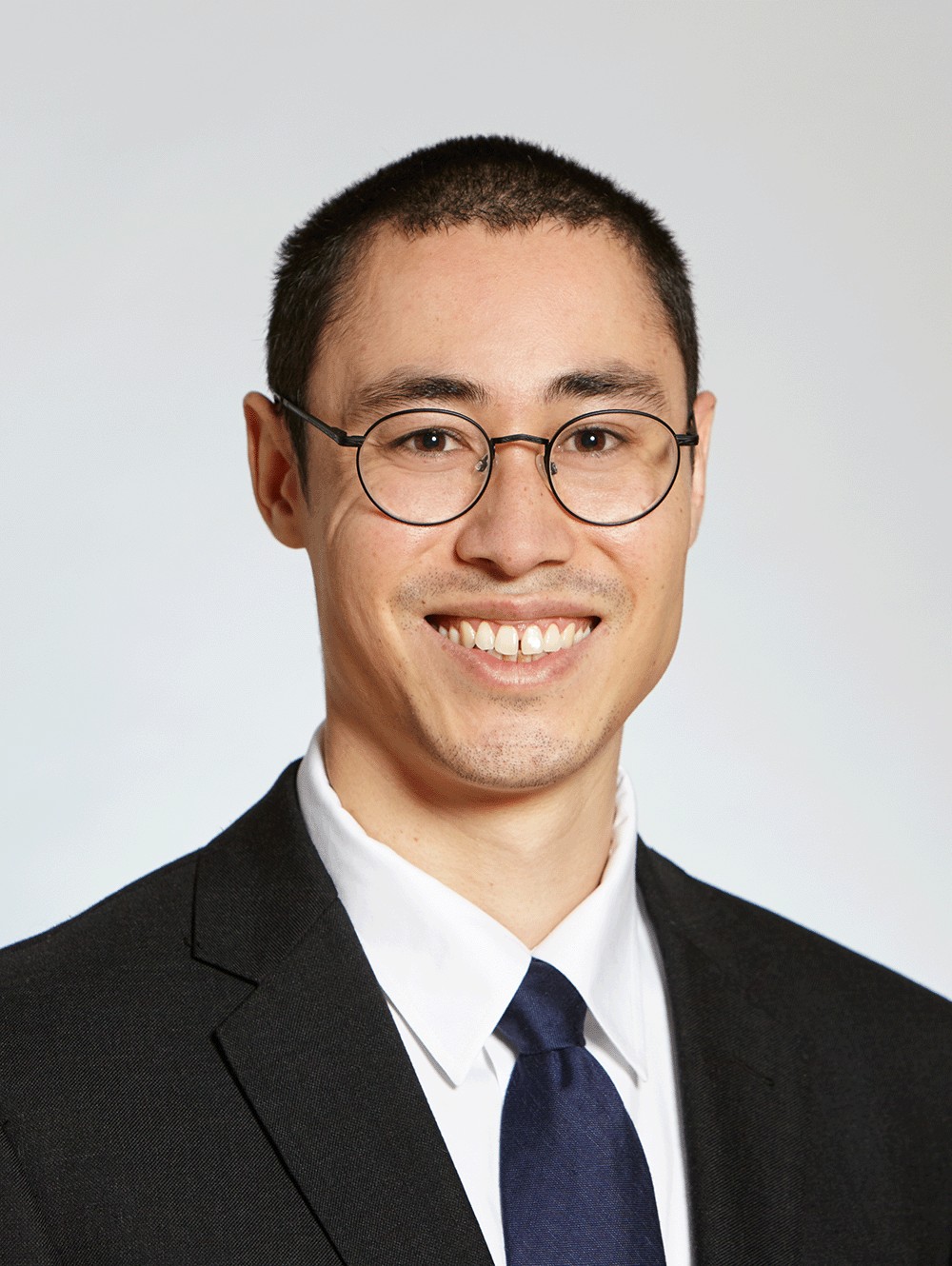
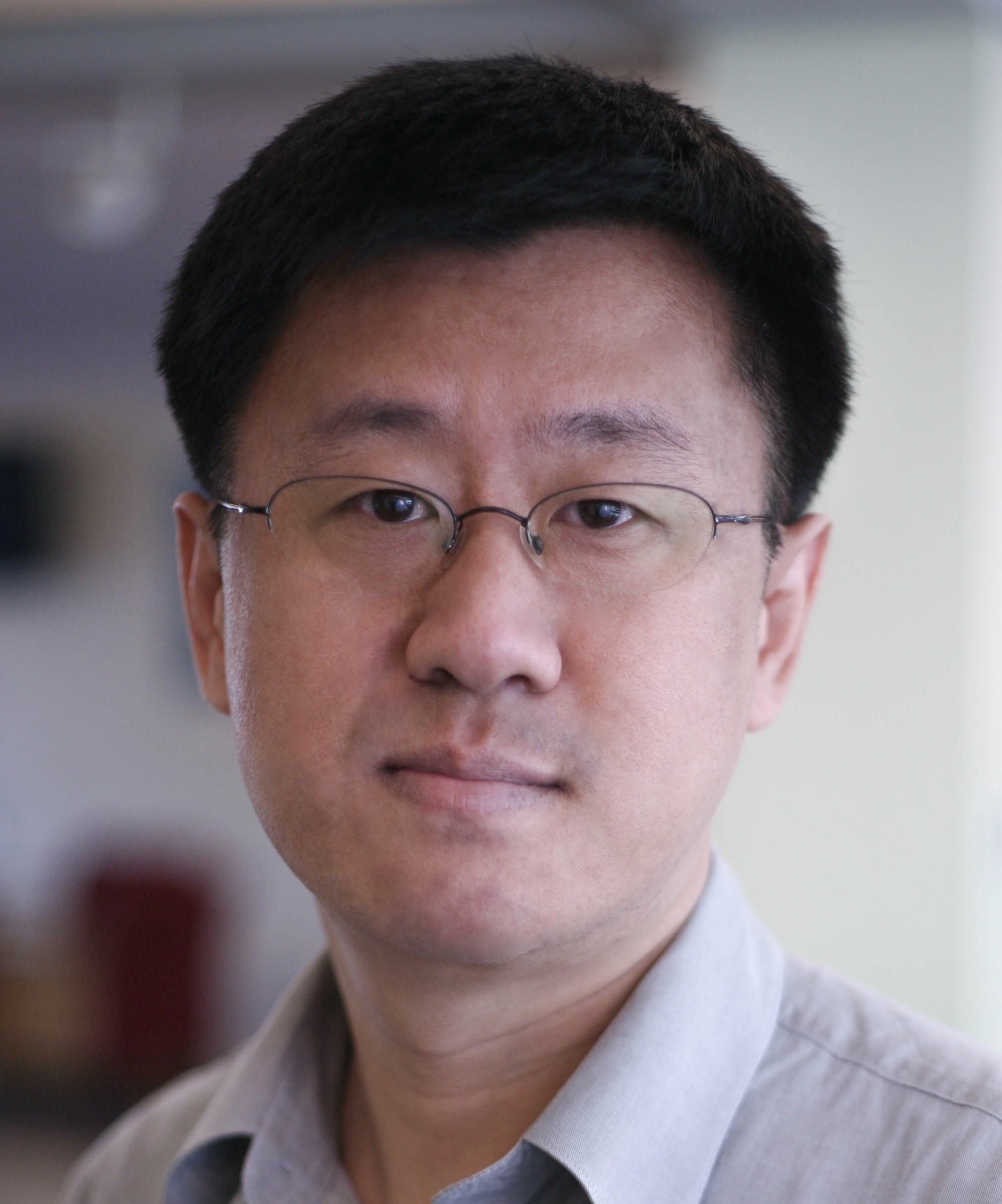
Prof. Srdjan Capkun is a Full Professor in the Department of Computer Science at ETH Zurich and Director of the Zurich Information Security and Privacy Center (ZISC). He holds a Dipl.Ing. from the University of Split (1998) and a Ph.D. from EPFL (2004). His research focuses on system and network security, including wireless security (e.g., secure positioning), trusted computing, blockchain technologies, and privacy-preserving systems. He co-founded 3db Access (acquired by Infineon) and Sound-Proof, addressing secure distance measurement and authentication. Notable achievements include an ERC Consolidator Grant (2016), ACM Fellowship, and IEEE Fellowship. Education: Dipl.Ing., Electrical Engineering / Computer Science, University of Split, 1998 Ph.D., Communication Systems, EPFL, 2004 Research Interests: Wireless security (e.g., UWB, GNSS, cellular) Trusted execution environments (TEEs) Blockchain and cryptocurrency systems Privacy-preserving technologies Awards & Grants: ERC Consolidator Grant (2016) ACM Fellow and IEEE Fellow Leadership of ZISC Advising & Labs: Leads the System Security Group at ETH Zurich Guided postdoctoral researchers and graduate students in security and privacy Companies: 3db Access (secure distance measurement) Futurae (online authentication)
Ana Klimovic is an Assistant Professor at the Department of Computer Science, ETH Zürich, and Deputy Head of the Institute for Computing Platforms. She leads the Efficient Architectures and Systems Lab (EASL) and focuses on optimizing cloud computing performance and resource efficiency. Education: Ph.D. in Electrical Engineering (Stanford University), M.S. in Electrical Engineering (Stanford), B.A.Sc. in Engineering Science (University of Toronto) Previous Roles: Research Scientist at Google Brain Her research spans cloud computing, operating systems, distributed systems, and their intersection with machine learning. Key areas include cloud-native programming models, elastic storage, GPU sharing, and data pipeline optimization. The 2025-2024 articles highlight trends in serverless computing, large language model (LLM) serving, GPU optimization, and data-centric ML systems. Themes include elasticity, resource multiplexing, heterogeneous computing, and infrastructure for AI/ML workloads. Scientific Awards: Microsoft Research PhD Fellowship, Stanford Graduate Fellowship She has led research projects on ephemeral storage, distributed training automation, and cost-efficient ML preprocessing, with grants from Microsoft Research and Stanford.
Nicola Carcano is a Lecturer at the Faculty of Economics, Università della Svizzera italiana (USI), where he teaches Structured Products. He is also a seasoned financial professional currently serving as Head of Asset Management at Phosphor Asset Management SA, indicating a strong bridge between academic instruction and industry leadership in finance. His educational background includes a degree in Economics from LUISS University in Rome, an MBA in Finance from New York University, and a PhD in Financial Markets Theory from the University of St. Gallen. The Fulbright Scholarship supported his MBA studies, highlighting early academic excellence. His research and teaching focus on fixed income finance and yield curve risk management models. Given his industry leadership roles at institutions such as UBS Investment Banking, Mercer, and Bank Vontobel, his expertise brings practical depth to academic finance. His work emphasizes quantitative and strategic aspects of asset and portfolio management for high-net-worth clients. While no publications are listed in the provided text, his research areas suggest contributions to financial modeling, risk assessment in fixed income markets, and structured investment products. Fulbright Scholarship Nicola Carcano advises through teaching rather than formal student supervision, as no advisees are listed. His career reflects a pattern of leadership in funded financial initiatives, particularly in portfolio and asset management, though specific grant details are not provided. His dual role in academia and executive management suggests a focus on applied research and industry-relevant curriculum development. He is associated with the academic environment at USI's Lugano campus, particularly the Blue Building (Office PC-006), and is available for contact every Wednesday before or after lectures, indicating active engagement with students and the academic community.
Prof. Dr. Matthias A. Tietz is an Assistant Professor and leads the Competence Center for Entrepreneurship at the St.Gallen Institute of Management in Asia (SGI-HSG), part of the University of St.Gallen in Singapore. He holds affiliate positions at IE Business School (Madrid), INDEG ISCTE (Lisbon), and the Mediterranean School of Business (Tunis). His academic journey includes degrees from Ivey Business School (Ph.D. in Entrepreneurship), Universidad del Pacífico (Peru), and Nanyang Business School (MBA, Singapore). Research focuses on entrepreneurial decision making, corporate innovation in SMEs and MNCs, and business model copycats. He regularly presents at global conferences like the Babson College Entrepreneurship Research Conference and Academy of Management Annual Meetings. Prior to academia, he consulted for companies like DHL, Henkel, and Sulzer Engineering, focusing on HR and turnaround management. He teaches courses on business consulting, social entrepreneurship in Southeast Asia, and executive education programs globally. Awarded multiple Best Paper Awards (2012, 2014, 2020) and Best Lecturer Awards across IE University programs (2019-2020). Engaged in startups as an advisor and investor, emphasizing cultural diversity in entrepreneurial contexts. Active in pro bono projects, such as supporting rural entrepreneurs in Peru.
Barton Lee is an Assistant Professor (tenure track) and Chair of Political Economy & eDemocracy at the Department of Management, Technology, and Economics (D-MTEC) of ETH Zurich . He holds an Affiliate Fellowship with the Stigler Center at Chicago Booth and was a Junior Research Fellow at Magdalen College, University of Oxford (2021–2022). Dr. Lee earned his PhD in Economics from the University of New South Wales (UNSW) in 2021, following a visiting year at Harvard University (2018–2019). Current Role : Asst. Prof (TT) + Chair, ETH Zurich Affiliations : Stigler Center (Chicago Booth), UNSW Resilient Democracy Lab Research Focus : Political Economics, Applied Theory Dr. Lee investigates democratic fragility through lenses of legislative gridlock , technocratic governance , and populist voter behavior . His work connects economic policy with political institution design , often employing formal modeling and empirical analysis . Notable projects include studies on the feedback loops between polarization and policy failure and adaptive strategies in autocratic regimes . He actively contributes to academic networks via personal website and Google Scholar , and engages in collaborative workshops such as the 2025 IAST/TSE Workshop on Political Economy of Autocratic Rule . Dr. Lee also advocates for academic positions like the Professor of Health Economics role at ETH Zurich. Scientific Awards: Affiliate Fellow, Stigler Center (2021–present) Junior Research Fellow, Magdalen College, Oxford (2021–2022) Dr. Lee's recent work explores intersections between technology , democracy , and economic theory , with active participation in conferences and mentoring networks across Europe and Australia.
Jing Zeng is an Assistant Professor of Computational Communication Science at the University of Zurich, Switzerland. She holds a PhD in Media and Communication from Queensland University of Technology (2017), an MSc in Social Science of the Internet from the Oxford Internet Institute (2013), and a BA in International Communications from the University of Nottingham (2012). Her research focuses on digital platforms, computational social science, AI governance, and misinformation dynamics. She has held academic appointments at Utrecht University (2022–2024) and fellowships at institutions including the Max Planck Institute for the History of Science and the Weizenbaum Institute. Zeng is a leader in digital media research, serving on editorial boards for journals such as Big Data & Society and Convergence , and co-editing the Technology, Power & Society book series. Her work bridges critical platform studies with empirical analyses of conspiracy theories, climate communication, and TikTok culture. Zeng’s research has been recognized through awards including the ICA Computational Methods Interest Group Top Paper (2020) and the Utrecht University Teaching Award (2023). She actively engages in public discourse through media commentaries in The Guardian , The Atlantic , and Science|Business , addressing topics like AI ethics, platform governance, and disinformation. Her current projects explore AI imaginaries, visibility moderation on TikTok, and cross-cultural digital activism. Education: PhD (QUT), MSc (Oxford), BA (Nottingham) Affiliations: Association of Internet Researchers (AoIR Executive Board), IPIE Scientific Network
Swiss Federal Institute of Technology in LausanneSwitzerland
Andreas Fuster is an Associate Professor of Finance and SFI Senior Chair at the Swiss Finance Institute (SFI) @ EPFL, and a Research Fellow at the Centre for Economic Policy Research (CEPR). He previously worked at the Federal Reserve Bank of New York and the Swiss National Bank, where he maintains a part-time research advisor role. His research focuses on empirical finance (household finance, real estate, banking, fintech), macroeconomics, and behavioral economics, with recent work examining technological advancements in credit markets. He teaches courses in financial engineering, macroeconomics, and financial econometrics at EPFL. As Director of the Doctoral Program in Finance at EPFL and academic co-director of the EPFL Executive Education Fintech program, he oversees academic development and executive training. His editorial roles include Associate Editor at the Review of Financial Studies and Journal of Financial Economics . Education: Ph.D. from Harvard University, M.Phil. from Oxford University, B.A. from University of Lausanne (all in economics). Research Interests: Empirical finance, macroeconomics, behavioral and experimental economics, fintech, mortgage markets, and banking regulation. External Roles: Co-organizer of the BIS-CEPR-SCG-SFI Conference on Financial Intermediation and SNB-CIF Conference on Cryptoassets and Financial Innovation. Grants & Awards: Recognition for contributions to financial stability and policy analysis (no specific awards listed). His work has been published in top journals such as the Quarterly Journal of Economics and Review of Financial Studies. He advises on sustainable digital finance through Innosuisse and contributes to policy analysis via CEPR and the Federal Reserve Bank of NY.
Robert Winter is a Full Professor of Business IT at the University of St. Gallen (HSG), Switzerland, and Director of the Institute of Information Management (IWI-HSG). He serves as Founding Director of HSG’s Executive MBA in Business Engineering and has led the School of Management’s Doctoral Program. His roles include Vice Editor-in-Chief of Business & Information Systems Engineering and current editorial board membership at MIS Quarterly Executive. Education M.Sc. Business Administration (1984), Goethe University, Frankfurt M.Sc. Business Education (1986), Goethe University, Frankfurt Ph.D. in Social Sciences (1989), Goethe University, Frankfurt Venia legendi (1995), Goethe University, Frankfurt Research Interests Focuses on Design Science Research, Enterprise Architecture Management, and governance of digital platforms. His work explores methodologies for collaborative innovation, data-driven transformation, and complexity management in large-scale systems. Key areas include enterprise transformation steering, data mesh adoption, and agile methodologies in public-sector contexts. Key Contributions Developed frameworks for enterprise architecture governance and digital platform ecosystems Authored influential papers on design science methodology and simulation-based research Recipient of AIS Senior Scholars’ Global Best Paper Award (2017) and Herbert A. Simon Award (2022) Professional Roles President of the School of Management Doctoral Program Member of editorial boards for leading journals (e.g., European Journal of Information Systems) Leadership in professional associations: VHB Board (2011–2014), AIS Swiss Chapter President (2012–2016)
Swiss Federal Institute of Technology in LausanneSwitzerland
Hatice Altug is a Full Professor at EPFL's Institute of Bioengineering within the School of Engineering, where she leads the Bionanophotonic Systems Laboratory. Her research integrates nanophotonics, plasmonics, and microfluidics to develop advanced biosensors for real-time molecular diagnostics. She holds dual roles in EPFL's doctoral programs and academic committees. Education: PhD in Applied Physics, Stanford University (2000-2007) B.S. in Physics, Bilkent University (1996-2000) Her research centers on creating label-free, high-sensitivity optical biosensors using nanophotonic technologies. Key innovations include dielectric metasurfaces for mid-infrared spectroscopy, AI-enhanced detection platforms, and portable nanoplasmonic imagers for point-of-care diagnostics. Her work bridges fundamental light-matter interactions with clinical applications like sepsis monitoring and cancer biomarker detection. Her publications emphasize nanophotonic biosensor design, metasurface applications, and single-cell analysis. Recent trends show increased focus on AI integration, vibrational spectroscopy, and wafer-scale manufacturing for clinical translation. Awards & Honors: Optical Society Fellow (2020) Presidential Early Career Award (PECASE, 2011) ERC Consolidator Grant (2016) IEEE Photonics Society Young Investigator Award (2011) She mentors numerous PhD students and leads interdisciplinary teams developing optofluidic platforms. Her laboratory pioneers nanoplasmonic microarrays and collaborates globally on projects like neurodegenerative disease biomarker detection. She co-directs EPFL's doctoral program in photonics and champions women in STEM through executive roles in diversity initiatives.
Zhendong Su is a full professor in the Department of Computer Science at ETH Zurich since August 2018. Previously, he held a full professorship at UC Davis from 2003 until June 2019. He earned his Ph.D. in Computer Science from UC Berkeley and dual Bachelor’s degrees in Computer Science and Mathematics from UT Austin in 1995. Affiliations: ETH Zurich: Full Professor (since 2018) UC Davis: Full Professor and Chancellor’s Fellow (2003–2019) IEEE Fellow, ACM Fellow, and Member of Academia Europaea His research focuses on programming languages, compilers, software engineering, computer security, and education technologies . Key contributions include compiler validation (e.g., Project Yin-Yang for SMT solvers and DBMS testing), testing tools like SQLancer, and educational innovations such as the Algot visual programming language. Recent work emphasizes secure AI (e.g., CipherSteal for TEE-shielded models) and compiler reliability (e.g., Artemis/Apollo for JIT validation). He has pioneered techniques like metamorphic testing and equivalence modulo inputs (EMI) for compiler validation, uncovering thousands of bugs in GCC/LLVM and SMT solvers. Awards: ICSE MIP Award (2022), ACM SIGSOFT Impact Paper (2018), NSF CAREER Award, and multiple industrial awards. His students have won IEEE TCSE Rising Star and SIGSOFT Impact Paper awards, securing roles at top universities and companies like Google and NVIDIA. Service: Steering committee member of ISSTA and ESEC/FSE, ACM Distinguished Speaker, and Associate Editor for ACM TOSEM. Program chaired ISSTA 2012 and co-chaired FSE 2016. Labs/Teams: Leads research groups on compiler validation, secure AI, and education technologies. Projects include Yin-Yang (SMT testing), SQLancer (DBMS fuzzing), and Algot (visual programming for education).
Filippo Carlo Wezel is a Full Professor of Organization and Management at the Faculty of Economics of Università della Svizzera italiana (USI), where he also serves as Director of the Institute of Management and Organisation. He holds additional research affiliations as a Visiting Research Professor at emlyon Business School (France) and a Research Fellow at Judge Business School, University of Cambridge. He plays a significant editorial role as Senior Editor at Organization Studies and serves on the editorial review boards of Organization Science , Strategic Entrepreneurship Journal , Strategic Organization , and the Advisory Board of Research in the Sociology of Organizations . His educational background includes a PhD in Management from the University of Bologna. Prior to joining USI in 2009, he held academic positions at the University of Groningen (post-doctoral researcher) and Tilburg University (Assistant and Associate Professor). He has also been a visiting scholar at leading institutions including Wharton, MIT, Columbia, Duke, London Business School, LSE, and Hong Kong University. His research centers on organizational identity, managerial and inter-firm mobility, entrepreneurship, and institutional theory. His recent publications explore identity hybridization in political parties, category dynamics in creative industries, historical organizational practices in colonial firms, and stigma in emerging markets. He frequently employs longitudinal, historical, and experimental methodologies, often bridging sociology and management. The most recent articles (2020–2025) reflect a strong trajectory in the sociology of organizations, with recurring themes of identity, categorization, legitimacy, and mobility. He investigates how social evaluations, historical constraints, and institutional environments shape organizational behavior and strategic positioning. His work spans diverse contexts—from 18th-century Lyon silk traders to modern ICT firms and medical marijuana markets—demonstrating a broad empirical and theoretical reach. Scientific Honors and Editorial Roles: Senior Editor, Organization Studies Editorial Review Board, Organization Science Editorial Review Board, Strategic Entrepreneurship Journal Editorial Review Board, Strategic Organization Advisory Board, Research in the Sociology of Organizations He has extensive experience in teaching organizational theory and behavior at undergraduate, master’s, PhD, and executive levels. His research has been published in top-tier journals such as Administrative Science Quarterly , American Sociological Review , Academy of Management Journal , and Strategic Management Journal . He leads a vibrant research agenda at USI, supported by a broad international network, though specific grants and funded projects are not detailed in the provided text. He is also involved in mentoring students and shaping the next generation of organizational scholars, though a list of advisees is not available. Filippo Carlo Wezel is a key figure in the European organizational studies community, leading the Institute of Management and Organisation at USI and fostering interdisciplinary dialogue between organization theory and strategy. His work combines deep historical insight with contemporary theoretical innovation, contributing significantly to our understanding of how organizations and careers evolve under institutional and social pressures.
Harald C. Gall is a Professor of Software Engineering and Dean of the Faculty of Business, Economics, and Informatics at the University of Zurich (UZH). He leads the Software Evolution and Architecture Lab, focusing on software evolution analysis, mining software repositories, and cloud-based software engineering. His research emphasizes improving software development productivity through data-driven insights. He has held visiting positions at Microsoft Research and the University of Washington. Education: PhD (Dr. techn.) and Master's (Dipl.-Ing.) in Informatics from TU Vienna Research Interests: Software evolution, mining software archives, cloud-based tools, developer productivity, and empirical software engineering. Notable contributions include the Evolizer , ChangeDistiller , and SOFAS systems. Key Contributions: Established the Mining Software Repositories (MSR) research area, program chair for ICSE 2011 and ESEC/FSE 2005, associate editor of leading journals like Empirical Software Engineering and IEEE Software. Awards: Most Influential Paper Award, Test of Time Award, and multiple Best Paper Awards. Recognized for contributions to SE research methodologies and tool development. Professional Activities: ACM SIGSOFT awards chair, board member of Informatics Europe, and executive committee member of CHOOSE (Swiss SIG for OO Systems). Labs/Teams: Director of the Software Evolution and Architecture Lab at UZH, leading projects like SURF-MobileAppsData (SNSF-funded) and DevCloud (Hasler Foundation).
Alexis H. Kunz serves as Professor of Financial Accounting and Director of the Institute for Corporate Accounting and Controlling at the University of Bern since 2011, with prior academic appointments at HEC Lausanne, University of Lausanne, and University of Friborg spanning over two decades in accounting research and leadership. Education: Habilitation, University of Friborg (2002-2004) Visiting Researcher, UCLA (2003) PhD (Dr. oec. publ.), University of Zurich (1995-2000) Master in Business Administration, University of Zurich (1989-1994) Military Service (1988) College Education, Gymnasium Zürcher Unterland (1981-1987) His research centers on Earnings Management, Financial Reporting Systems, Incentive Structures, and Corporate Governance, examining how accounting information systems influence organizational decision-making and executive behavior. Work integrates economic theory with empirical analysis of real-world corporate practices. Publication analysis reveals consistent focus on incentive design, financial disclosure quality, and governance mechanisms across 12 major works from 1999-2020. Key themes include structured product risk assessment, performance metric validity (EVA/ERIC), and behavioral impacts of compensation systems, primarily published in The Accounting Review and European Accounting Review. Scientific Awards No specific awards or fellowships were documented in the source material. Research leadership includes SNF-funded UCLA Visiting Scholarship and grants for IFRS 15 implementation, Swiss GAAP/FER reporting systems, and Say on Pay analysis. Third-party projects cover CEO evaluation frameworks, cost accounting concepts, and performance measurement system development. He directs the Financial Accounting Section within the Institute for Corporate Accounting and Controlling, overseeing research initiatives in financial reporting standards and incentive system design while serving as primary institutional contact for accounting research.
Patrick Emmenegger is a Professor of Comparative Political Economy and Public Policy at the University of St. Gallen's School of Economics and Political Science (SEPS-HSG). He chairs the PhD Program in International Affairs and Political Economy and serves on the Executive Committee of the Council for European Studies. His research focuses on direct democracy, electoral systems, vocational education policy, and the political economy of skill formation. He has held roles in federal vocational education commissions and served as editor of the Socio-Economic Review. His academic interests include the interplay between economic policy and political institutions, particularly in Switzerland and Europe. Recent work examines voter behavior in direct democratic contexts, electoral district design, and the adaptation of skill formation systems to the knowledge economy. He co-authored a forthcoming book on electoral system reforms and contributed to policy reports on industrial policy and education reforms. Key research outputs include analyses of higher education as industrial policy, municipality-level voting patterns in Switzerland, and partisan strategies in electoral districting. His work bridges comparative political economy with methodological rigor, addressing topics like taxation politics, labor market governance, and the impact of war on state capacity. Advising and grants include leadership of the PhD program and contributions to federal education policy initiatives. His research team explores themes such as gender segregation in occupations and the role of skill requirements in labor markets. He maintains strong links with European policy networks through his involvement in the Council for European Studies.
Josh Lerner is a leading authority in venture capital and entrepreneurship, holding the Jacob H. Schiff Professor of Investment Banking at Harvard Business School with joint appointments in Finance and Entrepreneurial Management. His career spans academia, policy analysis, and cross-sector research collaborations. Yale College (Special Divisional Major in Physics & History of Technology) Ph.D. in Economics, Harvard University Research Focus: Josh specializes in venture capital , private equity , and their economic implications. Key contributions include analyzing: Structural dynamics of venture capital organizations Patent systems' impact on high-tech firm strategies Public-private innovation policies Global entrepreneurship ecosystems Long-term investment challenges Scientific Recognition: Josh has been honored with the prestigious Jacob H. Schiff Professorship, reflecting his significant contributions to investment banking scholarship. Academic Leadership: He has pioneered educational programs including: Private Equity Finance course for MBAs (since 1993-94) Doctoral entrepreneurship curriculum Annual executive education in Boston & Beijing Co-editor of Innovation Policy and the Economy Research Impact: Through his National Bureau of Economic Research working groups on Entrepreneurship and Innovation Policy, and international collaborations like his World Economic Forum study, Josh continues to shape global understanding of capital markets and innovation ecosystems.