Gerald Matthews is a Professor of Psychology at George Mason University, with prior faculty positions at the University of Dundee (Scotland) and the University of Cincinnati. He holds a BA (1980) and PhD (1984) from the University of Cambridge. His research focuses on human factors, stress measurement, workload assessment, driver behavior, and individual differences in performance. He developed the Dundee Stress State Questionnaire and contributed to models linking cognition-emotion dynamics to Metacognitive Therapy. Key affiliations include roles as Specialty Chief Editor for Frontiers in Psychology (Social Psychology and Personality Section), Associate Editor for Human Factors and Personality and Individual Differences , and former President of IAAP Division 13 and ISSID. His work is funded by DoD agencies, NRC, and IARPA. Awards include IAAP Fellowship and book accolades from the British Psychological Society and AAP. Research spans automation dependency in UAS operations, fatigue in automated vehicles, and human-robot teaming. He teaches Advanced Topics in Cognitive Science (PSYC-768-003). Current research emphasizes applying human factors principles to emerging technologies like extended reality training systems and AI-based security tools. Key Research Themes: Human-Machine Teaming, Multidimensional Stress Assessment, Cognitive-Affective Interactions Recent Focus: AI ethics, insider threat detection, and operator performance in nuclear control rooms
Marian Mach is an Associate Professor at the Department of Cybernetics and Artificial Intelligence, Technical University of Kosice. He holds a Ph.D. (1992) and habilitation in Artificial Intelligence (2001). His research focuses on symbolic AI, evolutionary computation, knowledge modeling, and ontological engineering. He has led national and EU projects like Modermed (2023-2027) and DL4VISION (2022-2025), addressing toxic behavior detection and deep learning for image processing. Education: Ph.D. in Technical Cybernetics (1992), TU Kosice Habilitation in AI (2001), TU Kosice M.S. in Technical Cybernetics (1985), TU Kosice Research Interests: Evolutionary algorithms Constraint satisfaction problems Knowledge representation Machine learning applications in social media analysis Robotics and intelligent systems Teaching: Courses include Machine Learning II, Evolutionary Algorithms, and Application of Logic in Intelligent Systems. He has developed over 20 courses since 1987. Grants & Projects: EU-funded initiatives: VICINITY (2016-2019), PICASO (2016-2019) National grants: APVV-22-0414 (2023-2027), VEGA 1/0394/22 (2022-2025) Labs/Teams: Involved in AI Center at TU Kosice and collaborative projects on cloud-based robotics and semantic web technologies.
Paco Calvo is a Professor of Philosophy of Science at the University of Murcia, Spain, and Director of the Minimal Intelligence Lab (MINT Lab). His work focuses on plant cognition and intelligence, blending insights from cognitive science, philosophy, and biology to challenge traditional views of animal-centric intelligence. He leads interdisciplinary research on plant behavior, decision-making, and adaptive responses, emphasizing plant sentience and interspecies cognitive comparisons. Calvo’s research areas include Plant Signaling & Behavior, Plant Cognition & Sentience, and the Philosophy of Plant Neurobiology. His lab, MINT Lab, investigates minimal cognition in plants through experimental and theoretical approaches. Notable contributions include the book *Planta Sapiens: The New Science of Plant Intelligence* (2023) and co-editing volumes like *The Routledge Companion to Philosophy of Psychology* (2020). Recent publications highlight plant sentience debates, protein-based intelligence markers, and plant-inspired robotics. Calvo actively engages in public discourse through media appearances, podcasts (e.g., *Behind Greatness Podcast*), and events like *Human Entities 2025* in Lisbon. His work advocates for a broader, ecologically grounded understanding of intelligence across life forms.
Robin D. Hanson is an Associate Professor of Economics at George Mason University, having earned his Ph.D. in Social Sciences from Caltech in 1997. Previously a postdoctoral fellow at UC Berkeley, he specializes in health policy, regulation, formal political theory, and futuristic studies involving AI and extraterrestrial intelligence. Education: Ph.D. in Social Sciences (Caltech, 1997), M.Phil. and M.A. (Yale University). His research examines hidden motivations in human behavior, the economics of future technologies like brain emulations, and strategic approaches to interstellar communication. Recent work analyzes decision-making under uncertainty, such as cost-benefit frameworks for contacting alien civilizations and ethical implications of exponential technological growth. Professor Hanson's publications reflect interdisciplinary trends, merging economics with cognitive science, evolutionary biology, and existential risk management. Key themes include prediction market design, self-deception mechanisms, and civilizational development trajectories. He has supervised doctoral students including Kenneth Lee (2011) and Iwona Kicinger (2009), focusing on empirical health economics and insurance policy analysis.
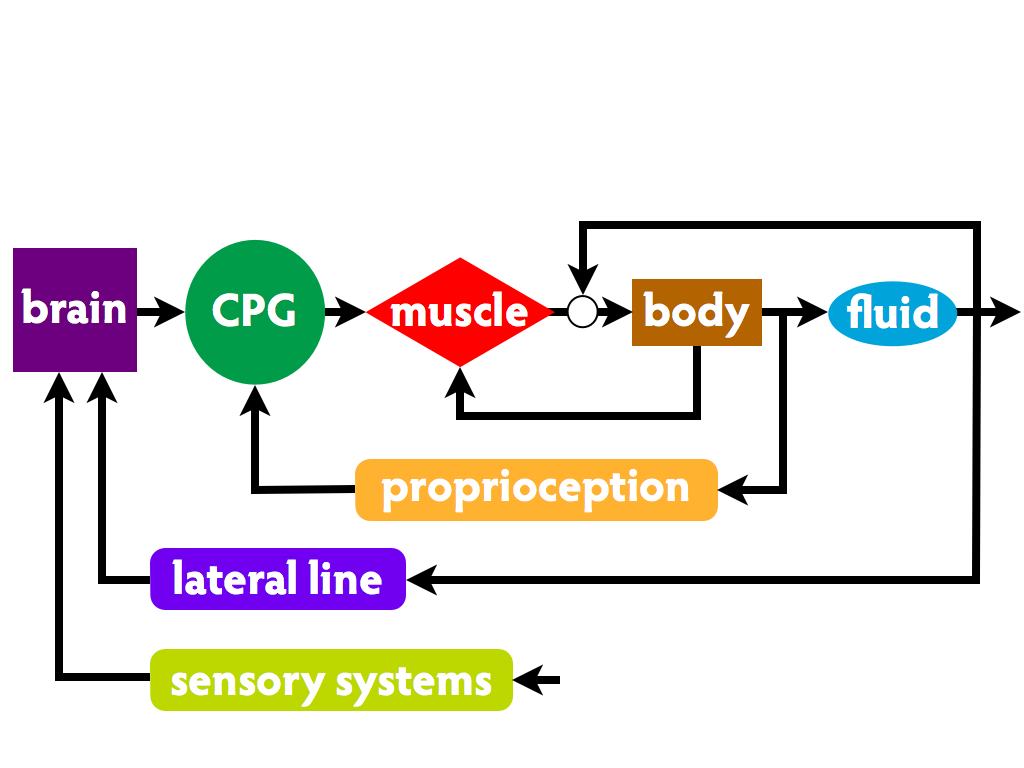
Eric Tytell is an Associate Professor in the Department of Biology at Tufts University, within the School of Arts and Sciences. He holds a PhD in Biology from Harvard University (2005), an MPhil in Zoology from the University of Cambridge (1999), and a BA in Biology and Physics from the University of North Carolina (1998). His research focuses on the biomechanics and neural control of locomotion in fishes, particularly how they generate propulsive forces and maintain stability in dynamic environments. His work integrates experiments, computational modeling, and robotics to explore feedback loops between sensory input, neural circuits, and body mechanics. Key research themes include the role of the lateral line system in schooling behavior, the biomechanics of rapid turns, and the design of bio-inspired swimming robots. He leads the Tytell Laboratory, which collaborates on projects involving fluid dynamics, muscle physiology, and evolutionary adaptations. Notable grants include NSF-funded studies on locomotor biomechanics and Army Research Office projects on neuromechanical control. He teaches courses such as Experiment in Physiology and advises graduate students in neurobiology and ecology.
Dr. Itshak Tkach is a Visiting post-doctoral researcher in the Department of Computing at Goldsmiths, University of London. His research focuses on swarm intelligence, human-robot collaboration, and robotics. He collaborates with Tim Blackwell on swarm intelligent optimization projects. Tkach holds a PhD in Industrial Engineering from Ben-Gurion University of the Negev, Israel, with a focus on AI and swarm intelligence, alongside an MSc in intelligent systems (human-robot collaboration) and a BSc in Mechanical Engineering. His work includes co-authoring the book Distributed Heterogeneous Multi Sensor Task Allocation Systems (SpringerNature, 2020) and numerous journal articles and conference papers in control systems and robotics. Tkach serves on the board and as a reviewer for several leading journals. Recent research trends emphasize task allocation systems in multi-agent environments, fault-tolerant sensor networks, and optimizing AI-driven algorithms. His publications span theoretical frameworks, algorithm modifications (e.g., bees algorithm variants), and practical applications in law enforcement and supply chain security. He actively contributes to the academic community through editorial roles and peer review, maintaining a focus on advancing collaborative robotics and swarm-based solutions.
Dr. Robyn A Grant is a Reader in Comparative Physiology & Behaviour at Manchester Metropolitan University and Editor-in-Chief of Mammal Review . Her research investigates facial touch sensing mechanisms (whiskers in mammals, rictal bristles in birds) across four domains: behavioral associations, anatomical diversity, evolutionary origins, neurodegeneration impacts, and bio-robotic applications. She directs multiple funded projects including 'Walk on the Wild Side: Canid Gait' (Evolution Education Trust), 'MMMMammalWhiskers' (Royal Society APEX), and 'Whisker TacTip' (EPSRC). She mentors postdoctoral researchers like Dr. Alyx Milne (BBSRC Fellow) and leads public engagement initiatives such as the Royal Academy of Engineering's 'Bedtime Stories for Young Engineers'. Grant teaches comparative anatomy and behavior across undergraduate and postgraduate programs, leads the MSc Zoos & Conservation unit with Chester Zoo, and directs the MSc Zoo Conservation Biology program. As a Fellow of the Higher Education Academy, she emphasizes experiential learning in courses like 'Fieldtrip', 'Brain and Behaviour', and 'Comparative Anatomy, Physiology & Behaviour'. Honors include Pew and Joan Mitchell Fellowships, dual Pennsylvania Arts Council grants, and Software Sustainability Institute Fellowship. She frequently contributes to scientific media (BBC Springwatch, Discovery Channel) and serves on review panels for BBSRC, BES, MRC, and NIH.
Merryn Constable is a Research Fellow at Northumbria University , focusing on cognitive psychology, human-robot interaction, and healthcare performance optimization. Her work explores self-other attribution in social environments and its implications for technology-assisted human performance. Education : PhD in Arts (University of Queensland), BA (Hons) in Business Studies, PGCert in Psychology Research Themes : Self-other attribution mechanisms Human-robot interaction dynamics Healthcare performance optimization Evolutionary and modern social conventions Recent Publications highlight interdisciplinary applications of AI in healthcare, comparative studies of joint action in primates, and reinforcement learning for human-robot handovers. Grants : Funded by DSTL, The Royal Society, and Australian Government (Department of Education and Training). Professional Affiliation : Associated with Social Mind and Body Group (Central European University) and Action and Attention Lab (University of Toronto).
Nobuaki Mizumoto is an Assistant Professor in the Department of Entomology & Plant Pathology at Auburn University's College of Agriculture. His research focuses on termite behavior, collective animal behavior, and evolutionary biology, with a particular emphasis on understanding social interactions, communication mechanisms, and ecological adaptations in insects. Key research areas include: Collective behavior in termites and ants, including tandem running and swarming patterns Evolutionary and genetic aspects of termite classification and phylogeny Behavioral ecology of mating systems and predator-prey dynamics Applications of genomic data to resolve taxonomic relationships Recent work highlights innovative approaches such as amber fossil analysis for behavioral reconstruction and development of tools like TManual for measuring animal-built structures. His lab's research bridges field observations with computational modeling to uncover principles underlying complex social behaviors. Publications span topics from termite tunneling strategies to the molecular basis of caste determination, demonstrating interdisciplinary integration of entomology, genomics, and behavioral ecology.
Federico Rossi is an Associate Professor in Architecture and Digital Manufacturing at London South Bank University's Architecture Digital x Data Research Centre. As the founding director of the Digital Architecture and Robotic Lab (DARLAB), he leads research at the intersection of digital fabrication, robotics, and sustainable construction. His work spans both academic and industry applications, with collaborations including Volkswagen, Astana Energy Expo, Ars Electronica, SCM Group, Veolia, Dyson, and Southwark Council. Rossi graduated from the Architectural Association in London and previously worked with Dame Zaha Hadid focusing on digital manufacturing processes in construction. His expertise has been recognized through significant research funding, including a £400k HEFCE grant for establishing DARLAB in 2013, a KEEP+ grant from EU Horizon 2020 in 2018, and EPSRC UKMSN+ funding in 2021 for the SCRAM project (Sustainable Construction through Robotic Additive Manufacturing). Rossi's research focuses on computational design, Design for Additive Manufacturing, circular manufacturing, and large-scale reinforced polymer structures. His work explores how robotics and automation can overcome traditional constraints in the AEC industry by integrating digital workflows directly with the design process. Recent projects include collaboration with the European Space Agency on 3D printed planetary habitats using recycled polymers, and research on circular cementitious products and modular interlocking bricks in Nigeria and the UK. Analysis of Rossi's publication record reveals a strong trajectory toward sustainable construction solutions using advanced manufacturing techniques. His recent work demonstrates increasing focus on circular economy principles, recycled materials (particularly polymers and glass), and international collaboration (especially between the UK and Nigeria). The integration of machine learning and topology optimization with robotic manufacturing represents an emerging trend in his research. Fellow of the Royal Society of Arts Work exhibited internationally at Salone del Mobile, Wired, Domus, Royal Academy Summer Show, and Italian Trade Agency Recipient of multiple research grants including HEFCE, KEEP+, EPSRC UKMSN+, UK Innovate, and Royal Society funding Rossi serves as an External Examiner for MArch at the University of East London and holds additional responsibilities as Director of DARLAB, Head of Research for the Architecture Division, and Member of the Research and Enterprise Committee. His research grants demonstrate strong industry and government partnerships focused on sustainable construction, circular economy implementation, and advanced manufacturing. Current projects include UK Innovate research for circular cementitious products and Royal Society research on modular interlocking bricks with waste reuse models. As Director of the Digital Architecture and Robotic Lab (DARLAB), Rossi leads a multidisciplinary team exploring robotic manufacturing applications in architecture. The lab serves as a hub for industry collaboration, with partners including Volkswagen, Dyson, and SCM Group. Current research teams are focused on sustainable construction through robotic additive manufacturing, circular economy implementation in building materials, and international projects addressing waste reuse models in both developed and developing contexts.
Dr. Mengchu Zhou is a Distinguished Professor in the Department of Electrical and Computer Engineering at the New Jersey Institute of Technology. His research spans discrete event systems, industrial IoT, optimization algorithms, and intelligent manufacturing. With over 30 years of experience, he has made significant contributions to Petri net theory and its industrial applications. Research interests include intelligent automation, manufacturing systems, optimization algorithms, and quantum computing applications. His work frequently addresses scheduling problems, robotic systems, and IIoT implementations using advanced computational methods. Publication trends demonstrate consistent focus on scheduling optimization, manufacturing automation, and emerging computing paradigms. Recent works increasingly explore quantum computing applications and security aspects of industrial systems. Honors include election as National Academy of Inventors Fellow and the IEEE Norbert Wiener Award. His research has been recognized through multiple patents and technology transfer implementations. Dr. Zhou maintains strong industry connections and has advised numerous graduate students through his laboratory focused on automation and intelligent systems.
Samaneh Berenjian is a Senior Lecturer in the Department of Computer Science at New Jersey Institute of Technology (NJIT). Her academic journey includes a Ph.D. from Stevens Institute of Technology (2022), and M.S. degrees from Stevens (2018) and Amirkabir University of Technology (2013), alongside a B.S. from the University of Isfahan (2011). Her research focuses on cybersecurity, network security, and peer-to-peer systems, with contributions to secure protocol design, intrusion response mechanisms, and privacy-preserving technologies. She has also explored navigation models in AI and wireless sensor networks. Her research interests span cybersecurity frameworks, P2P network anonymity, and intelligent systems. Notable work includes encryption-based protocols, incentive models for secure P2P fairness, and fuzzy logic-based intrusion detection systems. Her 2020 GridCell navigational model highlights interdisciplinary AI contributions. Her publications reflect expertise in secure communication, network architecture, and optical fiber error control. While no awards are listed, her work demonstrates consistent engagement with cutting-edge topics in computer science and information security.
Dr. Aznam Yacoub is an Assistant Professor at the School of Computer Science, University of Windsor. His research focuses on cognitive modelling, computational intelligence, and formal methods in system engineering. He holds a Ph.D. in Computer Science from Aix-Marseille Université (2016). His work integrates simulation and formal verification techniques, particularly through extensions of PROMELA (DEv-PROMELA) for discrete-event systems. Key research areas include evolutionary algorithms, software/system engineering methodologies, and modelling complex systems such as mobile ad-hoc networks and virtual game architectures. He explores human-machine interaction, extended reality (metaverse), and computational philosophy. His educational interests span computer science pedagogy and the theory of computation. Dr. Yacoub's recent work emphasizes interdisciplinary applications like disaster response infrastructure simulation and adaptive storytelling in virtual environments. His technical contributions bridge formal verification with simulation frameworks, enhancing reliability in complex system design.
Andrew Vardy is a Professor jointly appointed to the Faculty of Engineering and Applied Science and the Department of Computer Science at Memorial University of Newfoundland. He holds a B.Eng. in Electrical Engineering (Memorial), M.Sc. in Evolutionary and Adaptive Systems (University of Sussex), and PhD in Computer Science (Carleton University). His research explores swarm robotics, biologically inspired algorithms, autonomous navigation, and multi-robot systems. Key areas include visual homing, distributed construction, environmental sensing, and robotic simulation tools. He leads the Memorial University Bots Lab, developing applications for marine and terrestrial environments. Vardy teaches courses in autonomous robotics, computer programming, software design, and control systems. His publications emphasize computational complexity in swarm algorithms, reinforcement learning for coordination, and novel applications like drum accompaniment AI and marine urchin detection. Recent work integrates attention mechanisms, transformer networks, and edge computing paradigms.
Dr. Kelly Androutsopoulos is a Senior Lecturer in the Department of Computer Science at Middlesex University. Her research focuses on static analysis algorithms, finite state machines, security-critical systems, safety-critical systems, and software engineering. She contributes to the development of educational robotics platforms like MIRTO and applies formal methods to improve software correctness and security. Her work spans theoretical foundations and practical applications in areas such as symbolic execution, model slicing, and system validation. Dr. Androutsopoulos has published extensively on topics including robotic platforms for education, static analysis techniques for WebAssembly, and formal verification of state-based models. Her research emphasizes bridging the gap between theoretical computer science and real-world software engineering challenges, particularly in safety-critical domains. Her publications reflect a strong emphasis on model-based approaches, with contributions to finite state machine slicing, error propagation analysis, and open-source tools for education. She is affiliated with Middlesex University’s Hendon Campus and can be contacted via K.Androutsopoulos@mdx.ac.uk.