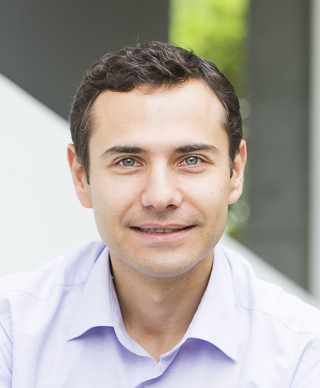
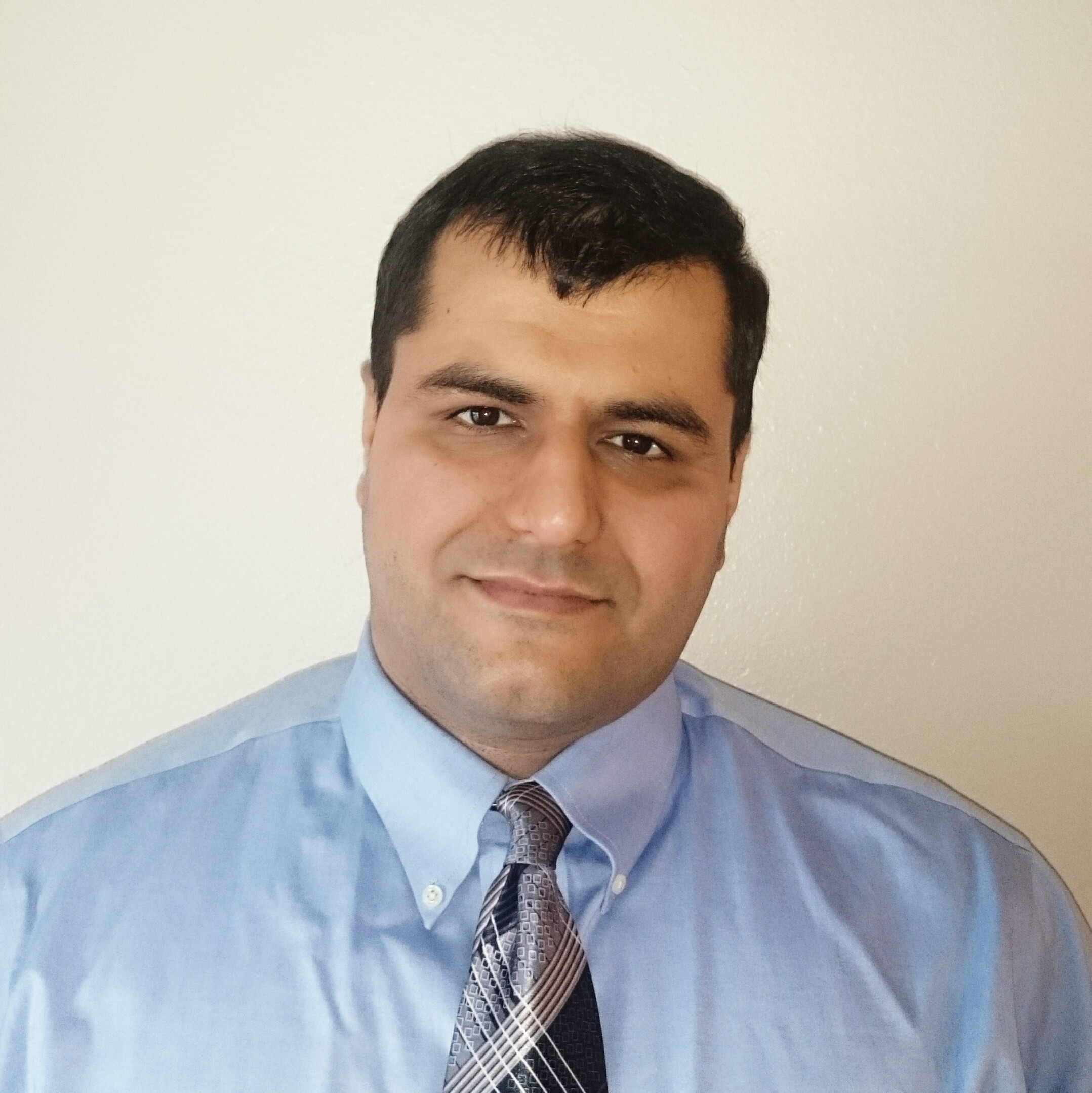
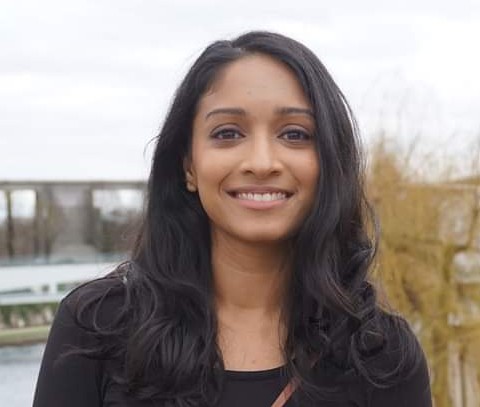
Dr. Bisan Alsalibi is a Lecturer at the School of Information Technology, Monash University (Malaysia campus). She holds a PhD (2017) and MSc (2013) in computer science from Universiti Sains Malaysia, specializing in Artificial Intelligence. Previously, she served as Senior Lecturer at Taylor's University (2022–2023) and Teaching Fellow at Universiti Sains Malaysia (2018–2020). Education: PhD in Computer Vision and Optimization (2014–2017), Universiti Sains Malaysia MSc in Artificial Intelligence (2011–2013), Universiti Sains Malaysia Research focuses on AI-driven solutions in feature selection, bio-inspired optimization techniques, and computer vision applications. Her work bridges membrane computing and real-world problem-solving, including privacy-preserving recommender systems for social networks. She currently supervises PhD students exploring bio-inspired algorithms for complex challenges. Advising & Grants: Acknowledged PhD project areas: Bio-inspired optimization techniques and evolutionary machine learning
Professor Amin Abbosh is a faculty member at the School of Electrical Engineering and Computer Science, University of Queensland. His research focuses on Medical Microwave Imaging and Millimeter-wave Engineering, with contributions to advanced imaging systems, antenna design, and communication technologies. He leads projects in electromagnetic medical sensing, including portable brain scanners and wearable diagnostic systems. His work integrates applied electromagnetics with AI-driven algorithms, addressing challenges in stroke detection, liver health monitoring, and deep vein thrombosis diagnosis. With over 16 patents and collaborations across biomedical and engineering domains, his research bridges clinical needs with cutting-edge electromagnetic techniques. Key projects include the development of low-cost healthcare monitoring systems and reconfigurable antennas for satellite communications. Research interests span medical imaging systems, antenna array design, and signal processing for healthcare applications. His team innovates in areas like phased arrays, dielectric property analysis, and non-invasive diagnostics. Recent advancements include synthetic microwave focusing techniques and self-supervised deep learning models for clutter removal in imaging. Publications highlight contributions in IEEE journals and conferences, emphasizing clinical applications and device prototyping. Collaborations with institutions like the University of Queensland’s medical faculty and industry partners ensure practical implementation of his research.
Jon McCormack is a Professor jointly appointed in Monash University's Faculty of Art, Design & Architecture (MADA) and Faculty of Information Technology. He founded and directs SensiLab, a research facility focusing on computational creativity, human-machine interfaces, and generative systems. His work spans electronic media art, evolutionary music, and artificial life. McCormack holds a PhD in Computer Science from Monash University, along with degrees in Computer Science, Applied Mathematics, and Film/Television. Research interests include computational creativity, tangible interfaces, and cybernetic systems. Notable projects include 'Explainable Artificial Creativity' (ARC-funded) and 'Building 4.0 CRC,' addressing architectural innovation through AI. He has been recognized with awards for collaborative projects like the Blundstone Intelligent Footwear for Healthcare. McCormack's recent articles explore AI-driven art, generative systems, and interdisciplinary design. His work bridges artistic practice with technical innovation, emphasizing ethical and creative dimensions of human-AI collaboration. SensiLab serves as a hub for practice-based research in digital media and interactive systems. Education: PhD in Computer Science, Monash University (2004) Bachelor of Science (Honours), Computer Science/Applied Mathematics, Monash University (1987) Graduate Diploma in Film/TV, Swinburne University (1986) Bachelor of Science, Computer Science/Applied Mathematics, Monash University (1985) Key Projects: Lead investigator on 'Explainable Artificial Creativity' (2022–2026) Co-investigator in 'Building 4.0 CRC' (2020–2027), exploring AI-driven architectural design Awards: 2022 Designers Australia Award for Blundstone Footwear 2020 'On the Machine Condition' Prize McCormack's lab, SensiLab, fosters collaborations across disciplines, producing exhibitions, software, and theoretical frameworks for computational creativity. He actively supervises PhD students in practice-based research, emphasizing the intersection of art and technology.
Professor Valentyn Panchenko is a leading academic in Economics at the UNSW Business School, specializing in advanced econometric methodologies and financial modeling. Holding a PhD from the University of Amsterdam and an MPhil from the Tinbergen Institute, his research bridges theoretical econometrics with real-world financial applications, emphasizing big data analysis, network structures, and dependence modeling in economic systems. His expertise spans financial econometrics, time series analysis, non-parametric statistics, and agent-based economic simulations. He focuses on Granger causality, model evaluation, structural economic modeling, and bounded rationality with heterogeneous agents. His work has secured significant grants including ARC Discovery Projects and DECRA fellowships, enabling cutting-edge research on market dynamics and economic interactions. Professor Panchenko's publications appear in top-tier journals like the Journal of Econometric Theory, AEJ: Micro, Journal of Economic Dynamics & Control, and Journal of Banking & Finance. His methodological contributions include novel approaches to copula-based forecasting, nonlinear causality testing, and evolutionary learning models in strategic economic environments. While specific student advising details aren't provided, his research leadership demonstrates sustained impact across econometric theory, financial markets, and experimental economics.
Matthew Stephenson is a Lecturer at Flinders University's College of Science and Engineering, specializing in Artificial Intelligence applications for games. He leads the Data for Decisions initiative within the Factory of the Future Transdisciplinary Hub, focusing on AI-powered scenario generation for smart digital twins. Additionally, he is a member of IRL CROSSING, an international lab studying human-autonomous agent teaming dynamics. PhD in Computer Science (Australian National University, 2019) B.Sc.(Hons) in Computer Science (University of Canterbury, 2015) His research applies AI, Machine Learning, and Data Science to game domains, including intelligent agent development for physics-based environments, procedural content generation, and game analytics. He also investigates deceptive behaviors in multi-agent systems and leverages games as testbeds for real-world AI solutions. Recent publications focus on large language models for game benchmarking, physical reasoning challenges, and evolutionary game generation. Scientific awards include an honourable mention at Foundations of Digital Games (FDG'18). He supervises students in procedural generation, game AI, and physics-based task creation, with teaching roles in computational intelligence and neural networks courses.
Dr. Ali Ahrari is a Lecturer at the School of Systems and Computing, University of New South Wales, Canberra. He holds a Ph.D. in Mechanical Engineering from Michigan State University (2016) and has extensive experience in research and academia, including roles as a Research Fellow and Associate at UNSW-Canberra and the University of Sydney. His research focuses on evolutionary algorithms, multimodal and multi-objective optimization, and surrogate-assisted optimization. Ahrari is a recipient of prestigious awards, including the ARC-DECRA 2023 and multiple international competition wins in optimization (e.g., CEC/GECCO competitions). He leads research groups like the Canberra Evolutionary Optimization (EvOpt) and serves on editorial boards, including Applied Soft Computing. Education: Ph.D. (2016, Michigan State University), M.Sc. and B.Sc. (University of Tehran). Awards: ARC-DECRA, ISCSO, and GECCO/CEC competition wins. Grants: ARC DECRA (2023), NCI Adapter Schemes, UNSW HPC allocations. Supervision: Currently advising 1 PhD student at SEIT, UNSW-Canberra. Engagements: Chair of IEEE Task Force on Multi-modal Optimization, organizer of optimization competitions (GECCO'2024, CEC'2022). His research emphasizes computational optimization, evolutionary computation, and swarm intelligence, with applications in engineering design and dynamic environments. He actively contributes to academic communities through editorial roles and conference organization.
Fabio Zanini is an Associate Professor at the University of New South Wales (UNSW) , leading a research group focused on computational biology , single-cell approaches , and transcriptomic analysis across diseases like severe dengue , neonatal lung disease , cancer , and marine biology . He previously conducted postdoctoral research at Stanford University (2016-2019) and earned a PhD in Bioinformatics from the Max Planck Institute for Developmental Biology and the University of Tuebingen (2015). Current Affiliation: Group leader, UNSW Previous Training: Postdoc (Stanford), PhD (Max Planck/University of Tuebingen) His research spans single-cell RNA sequencing , computational virology , developmental cell biology , and bioinformatics tool development , with recent work on: Severe dengue progression (viral-host interactions, immune signatures) Lung development (endothelial cell diversity, hyperoxia-induced injury) Cancer genomics (mutant HSC clones, AZA therapy response) Marine biology (plankton transcriptomics, evolutionary analysis) Bioinformatics (HTSeq 2.0, northstar algorithm) Recent scientific awards include grants from the Chan Zuckerberg Initiative ($270,000), NIH R01 (multiple), ARC Discovery Grant , and NHMRC Ideas Grant . Notable contributions include: Northstar - Cell classification algorithm SpectralSeq - Hyperspectral-transcriptomic integration Tabula Muris - Mouse aging atlas He has supervised research into hematopoietic stem cell regulation , lung vascular development , and autophagy in viral infections , with collaborations across Stanford , University of Sydney , and Harvard .
Associate Professor Vic Ciesielski is affiliated with RMIT University's School of Computing Technologies. His research focuses on Artificial Intelligence, Evolutionary Computing, Computer Vision, and Genetic Programming, with applications in areas like robot soccer and aesthetic analysis of images. He has supervised projects including efficient neural architecture search and off-line handwritten text recognition. His work bridges computational techniques with creative fields such as art history and digital media. Key research interests include machine learning, data management, and graphics/augmented reality. He actively contributes to conferences like GECCO and IJCNN, publishing on topics ranging from neural architecture optimization to sensor-based activity recognition. His research often integrates evolutionary algorithms with deep learning methodologies. He can be contacted via vic.ciesielski@rmit.edu.au and has an ORCID identifier: 0000-0001-7273-9566 .
Dr. Mahdi Sedighkia is a Research Fellow at The Australian National University (ANU), affiliated with the Institute for Climate, Energy & Disaster Solutions (ICEDS) and the Mathematical Sciences Institute (MSI). His research focuses on flood modeling, water resource management, climate change impacts, and the application of AI and GIS/RS techniques. He holds degrees in environmental and water resource engineering from the University of Tehran, Tarbiat Modares University, and James Cook University. Education: B.Eng: Environmental Engineering, University of Tehran M.Sc: Water Resource Engineering, Tarbiat Modares University PhD: Environmental Engineering, James Cook University Research Interests: Flood/river hydraulic modeling and damage assessment AI and fuzzy systems in water resources management Climate change impact on ecosystems and water resources RS/GIS applications in hydrology and ecology Collaborations and Projects: Conserving floodplains to mitigate flood risk (2025–2028) Community-driven flood resilience initiatives (2022–2025) Groups: Extreme Events, Water and Flooding, Risk Resilience Publications: Focus on integrated modeling, reservoir optimization, and environmental flow assessment in river systems.
Aldeida Aleti is a Professor in the Department of Software Systems & Cybersecurity at Monash University. Her research focuses on Automated Software Engineering, leveraging AI and optimization techniques for tasks like software design, testing, and repair. She has held roles including Chief Examiner for units like FIT4002 and FIT5136, and has contributed to teaching FIT3077 and FIT1008. Education: PhD in Software Engineering (Swinburne University of Technology, 2012), Master of Computer Engineering (Polytechnic University of Tirana, 2008), and Bachelor Honours in Computer Engineering (Yildiz Technical University, 2005). Research Interests: Automated software engineering, fitness landscape analysis, optimization, and search-based techniques. She leads projects like RAISE (Responsible AI Software Engineering) and collaborates on quantum computing and healthcare AI initiatives. Awards include the FIT Dean's Award (2016), Best Paper Awards (2015, 2011), and the Heidelberg Laureate Forum invitation (2014). She has been a grant assessor for the Australian Research Council since 2015. Advising: Accepting PhD students in AI-driven software engineering, optimization, and automated testing. Active in committees like the Faculty Research Committee and Early Career Researcher committee.
Bithin Datta is a Senior Lecturer in the Discipline of Civil Engineering at James Cook University (Australia), part of the College of Science and Engineering and the Division of Tropical Environments and Societies. He is affiliated with TropWATER (Centre for Tropical Waters and Aquatic Ecosystem Research), the Economic Geology Research Unit (EGRU) at JCU, and the CRC-for Contamination Assessment and Remediation of the Environment (CRC-CARE) at the University of Newcastle. Previously, he held Professor and Senior Professor positions at IIT Kanpur, India (1995-2009), and served as Head of the Civil Engineering Department and Head of the Postgraduate Environmental Engineering and Management Program. He has held Visiting Professorships at Dalhousie University (Canada), Denmark Technical University (Copenhagen), and the Asian Institute of Technology (Bangkok). Education: B.Tech (Hons) in Civil Engineering from IIT Kharagpur (India), Master’s degree in Civil Engineering (first rank in specialization), and a PhD in Civil Engineering from Purdue University (USA), specializing in Hydraulics and Systems Engineering. He is a Fellow of Engineers Australia (FIEAust). Research interests include water resources systems management, groundwater and surface water modeling, reservoir operation optimization, saltwater intrusion control, AI-driven environmental predictions, and ecological flow assessment. His work integrates simulation-optimization frameworks, machine learning (e.g., ANFIS, SVM), and hydraulic engineering principles to address contamination, climate change, and infrastructure challenges in tropical and coastal regions. His publications (178+ entries) focus on computational tools for groundwater contamination source identification, sustainable aquifer management, and reservoir environmental impacts. Notable projects include a $629,000 CRC-CARE-funded initiative for contamination monitoring networks and AI-based drought prediction models in tropical Queensland. Advising: Coordinated the Master of Engineering (Water Resources Management) at JCU and supervised over 30+ Master’s and 19 Ph.D. students across IIT Kanpur, JCU, and the University of South Australia. His research has been ranked #1 globally by ScholarGPS in Groundwater Pollution, Surrogate Models (AI/ML), and Saltwater Intrusion management. Labs/Teams: Core member of TropWATER, EGRU, and CRC-CARE, leading interdisciplinary projects on tropical water systems and geochemical contamination modeling in mine sites.
Professor Ashley Ward is a Professor of Animal Behaviour at the University of Sydney's School of Life and Environmental Sciences. His research focuses on social behaviour, collective animal behaviour, and the ecology of fish, particularly in group-living species. He leads the Animal Behaviour Lab and has authored influential books like Sociality: The Behaviour of Group-Living Animals (2016) and Questions and Answers on Aquarium Fishes (2007–2008). His work integrates experimental and theoretical approaches to understand how animals make decisions in groups, navigate risks, and adapt to environmental challenges. Research interests include predator-prey dynamics, immune system effects on social behavior, and the role of social context in camouflage. Notable grants include 'Understanding animals through movement' (2018) and 'Advancing fauna conservation in post-fire landscapes' (2021). His recent studies explore collective decision-making, immune-challenge responses in fish, and the impact of environmental cues on shoaling behavior. Awards and recognitions are not explicitly listed, but his contributions to fish behavior research are widely cited. He advises on grants and collaborates internationally, with over 100 peer-reviewed articles and books. His lab emphasizes field and laboratory experiments, combining behavioral observations with computational modeling to uncover principles of collective behavior and social organization.
Dr. Sahani Pathiraja is a Lecturer (tenure track assistant professor) at UNSW Sydney , specializing in Data Science . Her research bridges mathematical and statistical foundations with practical applications in environmental and biomedical sciences. Research Focus : Sequential Bayesian inference, Monte Carlo methods, stochastic analysis of non-linear filtering, uncertainty quantification, and real-time parameter estimation. Current Projects : Co-investigator in the ARC Industrial Transformation Training Centre: Data Analytics for Resources and Environment (DARE) and the Next Generation Graduate Program (NGGP) in Sports Data Science and AI . Research Supervision : Dr. Pathiraja supervises PhD students in areas including: Bayesian inference Stochastic differential equations Data assimilation Non-linear filtering Scientific Collaborations : Her work intersects with environmental science, biomedical applications, and machine learning. Projects include stochastic hydrology, SDEs, and operator learning for environmental systems. Contact Information : Email: s.pathiraja@unsw.edu.au Phone: +61 2 8065 0836 Office: Room 2070, Level 2, The Red Centre, UNSW Sydney
Eduardo Eyras is a Professor at the Australian National University (ANU) and EMBL Australia Group Leader, leading research in computational RNA biology and cancer genomics. He directs the Centre for Computational Biomedical Sciences and is part of the Shine-Dalgarno Centre for RNA Innovation. His work focuses on transcriptome and epitranscriptome analysis using long-read sequencing, machine learning, and computational methods to study cancer mechanisms. Eyras holds a PhD in Mathematics from the University of Groningen (1999) and previously led research at the Sanger Institute and Pompeu Fabra University. Affiliations: Director, Centre for Computational Biomedical Sciences Researcher, Shine-Dalgarno Centre for RNA Innovation Member, Division of Genome Sciences and Cancer Leader, The Eyras Group - Computational RNA Biology Research Interests: Development of algorithms for long-read sequencing Machine learning applications in RNA biology Epitranscriptomic modifications and cancer Therapeutic mRNA platform steering Key Projects: Novel algorithms for transcriptome variation analysis Predictive models of RNA modifications in disease Ribosomal DNA variation analysis Advisees & Grants: Supervises PhD students (e.g., Favour Oyelami, Stefan Prodic) and leads ARC-funded projects on mRNA diagnostics and epitranscriptomic therapies. Collaborates with global teams on forensic genomics, cancer drug resistance, and AI-driven translational research. Labs/Teams: Leads the Eyras Group, collaborating with the Hannan Group (Cancer Therapeutics) and Shirokikh Group (Protein Biosynthesis).
Professor Will Browne is the Chair in Manufacturing Robotics at QUT, collaborating with the ARM Hub and CSIRO to advance robotics in manufacturing, healthcare, and industry. He holds a Doctorate in Engineering from the University of Wales and has over 30 years of expertise in AI, robotics, and Learning Classifier Systems (LCS). His research focuses on transparent AI systems like LCS for Explainable AI (XAI), human-robot collaboration, and advanced manufacturing solutions. He co-leads the $5M SfTI Robotics Spearhead project and is internationally recognized for LCS contributions, including co-authoring the first LCS textbook with Ryan Urbanowicz. Publications emphasize emotion recognition, embodied AI, and scalable machine learning. His work bridges academia and industry through the ARM Hub, fostering innovation in robotics and design-led manufacturing. Key roles include co-track chair at GECCO (2011–2025) and editorial board memberships. Research spans evolutionary computation, robotics control, and energy systems optimization.