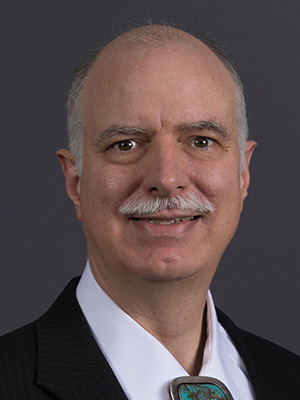
Donald Wunsch II is the Mary K. Finley Missouri Distinguished Professor and Director of the Kummer Institute Center for Artificial Intelligence and Autonomous Systems at Missouri S&T. He also directs the Applied Computational Intelligence Laboratory. His academic career includes roles at Texas Tech University and industry positions at Boeing, Rockwell International, and others. He holds a Ph.D. in Electrical Engineering from the University of Washington, an Executive MBA from Washington University in St. Louis, and additional certifications in Nonprofit Management. Research interests focus on neural networks, fuzzy systems, evolutionary computing, and applications in AI, robotics, and bioinformatics. Notable contributions include work on unsupervised learning, reinforcement learning architectures, and adaptive resonance theory. Awards include the IEEE Neural Networks Pioneer Award (2023), INNS Gabor Award (2015), and Ada Lovelace Service Award (2019). He has advised numerous Ph.D. students across Computer Engineering, Electrical Engineering, and related fields. Leadership roles include service on the NSF’s Program Director panel, St. Patrick’s School Board, and multiple academic and professional society boards. His labs and initiatives emphasize interdisciplinary AI integration and policy development.
Matthew Ross serves as an Associate Professor in the Department of Physical Sciences within MacEwan University's Faculty of Arts and Science. His research program integrates environmental chemistry, analytical chemistry, and toxicology to investigate anthropogenic pollutant dynamics in natural systems, with particular emphasis on oil sands-affected environments and microplastic contamination. His academic credentials include a PhD in Environmental and Analytical Chemistry from the University of Alberta (2011) and a B.Sc. in Biology from Arizona State University. This foundation supports his multidisciplinary approach to environmental contamination challenges. Dr. Ross's research spans petroleum acid identification in oil sands process water, microplastic fate in urban watersheds, behavioral toxicology of contaminants, and atmospheric chemistry of urban pollution. His analytical expertise in chromatography and mass spectrometry enables precise characterization of complex environmental mixtures, particularly naphthenic acids and emerging pollutants. Current projects examine microplastic transport mechanisms and biodegradation pathways in oil sands-affected ecosystems. Recent publication trends (2017-2024) reveal a strategic research evolution from fundamental oil sands contaminant characterization toward urgent environmental challenges including microplastic pollution across diverse ecosystems (urban stormwater, rivers, Arctic waters) and innovative remediation approaches like biochar treatment. His work maintains strong methodological continuity in advanced analytical techniques while expanding into novel environmental matrices and emerging contaminants. Scientific recognition includes: Natural Sciences and Engineering Research Council (NSERC) Discovery Grant (2014–2019) MacEwan University Special Projects Grant (2013) MacEwan University Arts and Sciences Research Fund (2013) MacEwan University Project Grant (2013) Dr. Ross actively mentors undergraduate researchers through independent study projects and integrates field research into his environmental chemistry courses. His grant portfolio supports analytical instrumentation development and collaborative studies with environmental agencies addressing real-world pollution monitoring challenges in Alberta's watersheds. Current research expands into Arctic microplastic contamination and advanced oxidation processes for oil sands process water treatment. His laboratory maintains specialized capabilities in high-resolution mass spectrometry for environmental analysis, with ongoing field sampling programs in the North Saskatchewan River watershed and urban Edmonton stormwater systems.
Howard J. Hamilton is a Professor at the Department of Computer Science, Faculty of Science, University of Regina. His research spans Data Mining, Machine Learning, and Human-Computer Interaction. University of Regina Department of Computer Science Faculty of Science Research Interests: Hamilton focuses on Data Science , Machine Learning , Speech Recognition , and Augmented Reality applications in healthcare. His recent work includes the My Daily Routine (MDR) system using HoloLens for dementia care and blockchain-based IoT security mechanisms. Scientific Contributions: He has co-authored 15 recent papers on topics spanning Time Series Forecasting , GANs for Game Design , and Smart Grid Security . His work has been presented at top venues like IEEE ICC, ICAART, and IEEE VR. Awards: Recipient of the Best Paper Award at INTENSIVE'12 and Second Place Best Paper at FLAIRS'99. Student Training: As a supervisor, he has mentored over 30 graduate students and project assistants in Computer Science and related fields, including Ph.D. candidates in Multi-Agent Systems and AI for Cooperative Games .
David C. Richardson is a Professor in the Biology Department at State University of New York at New Paltz, where he conducts research on aquatic ecosystems with a focus on lake and pond ecology. His work spans multiple dimensions of freshwater science including biogeochemistry, climate change impacts, ice phenology, and ecosystem metabolism. Richardson leads research projects examining how climate change affects winter conditions in lakes and the subsequent implications for ecosystem functioning. His research interests center on aquatic ecosystem ecology, with specific expertise in lake biogeochemistry, climate change impacts on freshwater systems, invasive species, ice phenology, and the distinction between ponds and lakes. Richardson has developed a functional definition to distinguish ponds from lakes, addressing a long-standing question in limnology. His work often examines how shorter winters and changing ice cover affect lake metabolism, greenhouse gas emissions, and phytoplankton dynamics. Climate change impacts on lake ice phenology and duration Biogeochemical functioning of shallow waterbodies as freshwater hotspots Under-ice ecosystem processes during winter Classification systems for ponds and lakes based on functional characteristics Nutrient dynamics and phytoplankton responses in freshwater ecosystems Richardson's recent publications show a strong focus on winter limnology, with multiple studies examining how changing ice cover affects lake thermal dynamics and ecosystem metabolism. His research demonstrates that ice cover variability does not significantly affect annual metabolism estimates in reservoirs, while shorter ice seasons fundamentally alter under-ice thermal dynamics. He has also documented how shallow waterbodies function as biogeochemical hotspots with high primary production. 5-year $2.5 million National Science Foundation research grant for 'On thin ice- implications of shorter winters for the future of freshwater phytoplankton phenology and function' (Thin Ice Project) Collaborative research with institutions including Cornell University, University of Colorado Boulder, University of Missouri, and University of Vermont Richardson actively mentors undergraduate students in research, with documented success stories like Heather Wander who presented at national meetings. His lab has produced educational materials including a documentary on algal growth in freshwater lakes. He collaborates extensively through networks like the Global Lake Ecological Observatory Network (GLEON) and leads multi-institutional research projects examining climate change impacts on freshwater systems across North America and globally.
Tyler Jones is an Assistant Research Professor at the University of Colorado Boulder’s Institute of Arctic and Alpine Research (INSTAAR) and a co-lead of the renowned Stable Isotope Lab (SIL). He investigates abrupt climate change through the lens of stable-isotope geochemistry, focusing on Alaska, Greenland, and Antarctica, while actively engaging in science communication and climate policy. Education PhD (Biogeochemistry), University of Colorado, 2015 MS (Environmental Studies), University of Colorado, 2010 BS (Civil Engineering – Hydrology), University of Colorado, 2006 Research Interests Jones employs cutting-edge drone and ice-core technologies to reconstruct past climates and quantify modern greenhouse-gas emissions. His work integrates stable-isotope biogeochemistry , polar meteorology , and Indigenous knowledge systems to understand how rapid warming alters Arctic and Antarctic environments. In Alaska, he maps methane hotspots released by thawing permafrost alongside Yukon River communities; in Greenland and Antarctica, he drills ultra-high-resolution ice cores that reveal 120,000 years of climate history. His broader mission couples rigorous science with storytelling, film, and policy engagement to foster societal resilience. Publication Trends From 2021–2025 Jones has published extensively on Greenland and Antarctic climate variability , water-isotope diffusion processes , and unmanned aerial sampling systems . His recent articles emphasize abrupt warming events (Dansgaard-Oeschger cycles), high-frequency climate oscillations, and the utility of drones for atmospheric profiling, collectively advancing our understanding of polar climate sensitivity. Scientific Awards & Honors While specific named awards are not listed, Jones’s research has been highlighted on the cover of Nature and featured in leading journals such as Science , Nature Geoscience , and PNAS , attesting to significant peer recognition. Advising & Grants Jones currently mentors Brooke Chase (PhD, co-advised with Cassandra Brooks) and Kevin Rozmiarek (PhD, co-advised with Irina Overeem). He welcomes additional graduate students who arrive with independent funding and values interdisciplinary collaboration. Active funding streams include the National Science Foundation, Office of Naval Research, and Sandia National Laboratories, supporting projects such as “Navigating the New Arctic.” Laboratory & Field Teams Jones is one of five co-leads of the Stable Isotope Lab (SIL) at INSTAAR, a facility celebrated for decades of carbon-cycle and hydrologic-cycle research. Field campaigns deploy drones, ice-core drilling systems, and mobile isotope analyzers across remote Arctic and Antarctic camps, often in partnership with international consortia and Indigenous communities.
Konstantinos Kotis is an Associate Professor at the Department of Cultural Informatics and Communication, University of the Aegean, and a Research Associate at the AI Lab of the University of Piraeus. He serves as Director of Postgraduate Studies in Cultural Informatics and leads the Semantic Web of Things research group. He holds a B.Sc. in Computation from University of Manchester (UMIST) and a Ph.D. in Information Management from University of the Aegean. His research focuses on: Knowledge engineering methodologies and ontology evolution Semantic Web technologies and linked data applications IoT semantics and semantic sensor networks Intelligent systems for cultural heritage and digital twins AI chatbots and conversational interfaces His publication portfolio demonstrates significant contributions to semantic data integration, with recent work emphasizing ontology engineering, RDF generation from streaming data, and maritime domain applications. Research consistently addresses knowledge representation challenges in distributed environments. Awards include: ERCIM 'Allain Bensoussan' Post-Doctoral Fellowship (2011-2012) He directs the postgraduate program in Cultural Informatics and leads multiple research projects including GreenHeritage (Erasmus+), RE-SAMPLE (H2020), and datACRON (H2020). Manages research teams at the Intelligent Systems Lab (i-lab) and contributes to European projects on semantic interoperability and digital culture.
Vadim Safronov is a Research Associate in the Department of Computer Science at the University of Oxford, specializing in IoT systems security, privacy, and AI/ML applications. Holding a PhD from the University of Cambridge, he maintains dual institutional affiliations through his Visiting Researcher role at Cambridge and leads critical projects addressing modern cyber-physical challenges. Education: PhD in Computer Science, University of Cambridge Research Focus: Dr. Safronov's work bridges theoretical and applied domains in IoT security, with emphasis on memory-safe wireless gateways, protocol-independent smart building automation, and privacy-preserving edge computing. His research integrates AI/ML for anomaly detection in home routers and develops novel frameworks like SunBlock for cloudless IoT protection. Recent publications demonstrate consistent innovation in securing AI supply chains (TAIBOM) and optimizing LoRaWAN traffic (LoRaLive), reflecting deep expertise in real-world IoT deployments including 185-sensor networks across Cambridge campuses. Publication Trends: Analysis of his 15 most recent articles (2018-2025) reveals three dominant trajectories: (1) IoT security architecture evolution from device identification to memory-safe gateways, (2) AI/ML integration for threat detection and federated learning at the edge, and (3) smart environment infrastructure development including Digital Twins and real-time event recognition. His work increasingly addresses AI supply chain vulnerabilities while maintaining core focus on wireless communication security. Grant Leadership: He serves as Research Associate on multiple high-impact projects including EPSRC SCULI (2025-active) for securing smart infrastructures, UKRI TAIBOM (2025) on AI supply chain threats, and UKRI DSbD (2024-2025) for secure networking design. Previously, he contributed to EPSRC PETRAS PRISM (2023) developing router-based anomaly detection, and Innovate UK's Centre for Digital Built Britain (2018-22) deploying LoRaWAN networks and Digital Twin models. Teaching & Service: Dr. Safronov teaches Network Security and Security Principles for Oxford's MSc Software and Systems Security program since 2024, and supervised Cambridge undergraduates in Computer Networking (2022-active). He chairs TPC sessions for IEEE WoWMoM 2025 and PerFail 2025, and served as Shadow PC for EuroSys 2024, demonstrating active community engagement.
Dr. Julia Knapp is an Associate Professor in the Department of Earth Sciences at Durham University, where she has advanced from Assistant Professor (2020-2024). Her academic trajectory includes research positions at ETH Zurich (Senior Research Assistant and Postdoctoral Fellow) and the University of Tuebingen (Postdoctoral Researcher and PhD student). She completed her doctoral studies at Tuebingen from 2013-2017. Her research focuses on hydrological processes with emphasis on: Catchment-scale water movement and solute transport Groundwater-surface water interactions using isotopic tracers Climate change impacts on river systems Urban hydrology and water quality dynamics Development of innovative field measurement techniques Recent publications demonstrate her work in modeling concentration-discharge relationships, assessing land-river connectivity under climate change, developing novel tracer methodologies, and analyzing urban stream thermal regimes. Her research consistently integrates field observations with theoretical frameworks to address water resource challenges. She currently supervises seven graduate students including PhD candidates Anthony Jones, Joe Brown, and Shubhangi Khobragade, covering topics from catchment hydrology to water quality assessment.
Ilia Rodushkin serves as an Adjunct Professor at Luleå University of Technology within the Department of Civil, Environmental and Natural Resources Engineering. His academic work focuses on Applied Geochemistry through the Geosciences and Environmental Engineering division. His research interests center on environmental geochemistry with special emphasis on Technology-Critical Elements (TCEs) and Rare Earth Elements (REEs). Dr. Rodushkin's work examines elemental composition in various environmental contexts including plant uptake mechanisms, stream networks, waste incineration byproducts, and even geological impact events. His research has significant implications for environmental risk assessment and resource management. Recent publication trends show Dr. Rodushkin actively contributing to understanding the environmental behavior of emerging contaminants, particularly focusing on how technology-critical elements interact with biological systems and natural environments. His multidisciplinary approach combines analytical chemistry with environmental science to address contemporary challenges in elemental cycling and potential health impacts. His collaborative research spans multiple international institutions, demonstrating his integration within the global geochemistry research community.
Stefano Cirillo serves as an Assistant Professor at the Department of Computer Science, University of Salerno, Italy. His academic career spans roles including Research Fellow (2022-2023) and Adjunct Professor for Databases courses. He maintains significant editorial responsibilities as Associate Editor for Journal of Visual Language and Computing and Multimedia Tools and Applications , while serving on program committees for major conferences including EDBT/ICDT 2024. His research focuses on data-intensive domains with emphasis on Data Profiling, Mining, and Privacy . Core interests include Social Network analysis, AI-driven database optimization, and anomaly detection in data streams. His work bridges theoretical algorithms with practical applications in e-procurement, cybersecurity, and healthcare systems, particularly through projects like Profiling Data Streams for Anomaly Detection and Security and Rights in the CyberSpace (SERICS) . Analysis of his recent publications reveals strong trends in applied AI for societal challenges – including pandemic mental health detection, perinatal depression prediction, and smart city security. His work consistently integrates novel neural architectures (YOLO variants, LSTM hybrids, Transformer networks) with domain-specific constraints, demonstrating expertise in both algorithmic innovation and real-world implementation across transportation, healthcare, and public administration sectors. Professional service highlights include Program Co-Chair for International DMS Conferences (2021-2022), Local Arrangements Chair for EDBT/ICDT 2024, and editorial board membership for journals including Data Science and Management . His research has been supported through PON-funded PhD studies and the SERICS project, with active collaborations spanning Hasso Plattner Institute (Germany) and Italian research centers like CeRICT.
Clément Alexandre Bonnerot serves as a Guest researcher at the Niels Bohr Institute's Niels Bohr International Academy, University of Copenhagen, specializing in theoretical and observational astrophysics with emphasis on extreme gravitational phenomena. His research centers on tidal disruption events (TDEs), where stellar bodies are torn apart by supermassive black holes. Key investigations include relativistic hydrodynamics of debris streams, accretion disc formation mechanisms, and multi-wavelength emission signatures. Bonnerot employs advanced numerical simulations to model general relativistic effects, black hole spin dynamics, and collision-induced outflows, bridging theoretical frameworks with observational data from X-ray and radio telescopes. Analysis of his 8 recent publications (2022-2024) reveals dominant focus on TDE physics, with growing integration of AGN disc modeling techniques. The Nature-published study on quasi-periodic X-ray eruptions demonstrates impactful observational contributions, while his pAGN computational framework advances theoretical modeling capabilities. Collaborative patterns show extensive international partnerships across 44+ co-authors per major study. As part of the Niels Bohr International Academy's theoretical physics ecosystem, Bonnerot contributes to Copenhagen's leadership in gravitational astrophysics research through active participation in interdisciplinary seminars and computational working groups.
Dr. Rainer Bell is a Researcher in the Department of Geography at the University of Bonn, affiliated with the Research Group 'Geomorphology and Environmental Systems'. He focuses on natural hazard analysis, geomorphology, and remote sensing applications. His work addresses landslides, floods, permafrost dynamics, and climate change impacts. Dr. Bell has held academic roles at multiple institutions, including part-time positions at the University of Innsbruck. He contributes to disaster risk governance through teaching and interdisciplinary projects like 'touRES' (tourism resilience in the Himalayas) and 'ILEWS' (integrated landslide early warning systems). Education: PhD in Geography (2007, University of Bonn); Diplom in Geography, Geology, and Soil Science (2002, University of Bonn). Earlier studies at Universities of Cologne and Bonn (1996–1998). Research Interests: Integrative natural hazard analysis, cascading risks, landslide susceptibility modeling, GIS applications, and mountain geohazards. Current projects include post-flood geomorphology in Germany's Ahr Valley and permafrost studies in the Andes. Teaching: GIS courses, geomorphology, Earth System Science, and field courses in Nepal, Romania, and the European Alps. Involvement in the Master of Disaster Management program at University of Bonn and BBK. Labs/Teams: Active in the Schrott Research Group, focusing on geomorphic processes and environmental systems. Collaborates with institutions like the Norwegian Geotechnical Institute and the Austrian Academy of Sciences.
Toby Lee is an Associate Professor in the Department of Cinema Studies at New York University’s Tisch School of the Arts. She previously served as Director of the Collaborative Studio program at UnionDocs: Center for Documentary Art in Brooklyn, NY (2012–2014). Her research and artistic practice intersect, emphasizing visual anthropology, cultural institutions, and documentary experimentation. She holds office hours at NYU’s Tisch School and maintains collaborations with institutions like Harvard’s Sensory Ethnography Lab. Education includes: PhD in Anthropology and Film & Visual Studies, Harvard University MPhil in Modern Greek Literature, Oxford University BA in Anthropology and Modern Greek Studies, Columbia University Research focuses on ethnographic approaches to film festivals, cultural citizenship in austerity Greece, and expanded documentary forms. Her work critiques neoliberalism’s impact on public culture and explores how media documentation intersects with power structures. Key outputs include her monograph The Public Life of Cinema: Conflict and Collectivity in Austerity Greece (2020) and experimental films addressing waste, memory, and surveillance. Her articles and exhibitions reflect a trend toward interdisciplinary analysis, blending anthropological theory with artistic practice. Recent works examine material culture (e.g., recycling facilities), urban spaces, and the politics of cultural preservation. Scientific awards include the 2007 2nd Best Creative Documentary Award for Bell dress , alongside grants from the NY State Council on the Arts, Fulbright Foundation, and others. Lee’s projects often involve collaborative teams, such as her work with Fotini Lazaridou-Hatzigoga on installations like Anepikaira and Single Stream . Her artistic practice spans film, video installations, drawing, and performance. Notable works include COMPOSITE (2017), a film exploring memory through police sketches, and Royal (2007), a meditation on time and place. She also co-founded Eugene presents: The Colossus of Long Island (2005) and curated site-specific events like Anepikaira (2009) in Thessaloniki.
Todd Walter is Professor of Biological and Environmental Engineering at Cornell University's College of Agriculture and Life Sciences. His research examines interactions between hydrology, ecology, and biogeochemistry, with applications in watershed engineering, ecohydrology, and environmental nanotechnology. Dr. Walter directs the Soil and Water Lab and teaches courses including Physical Hydrology, Watershed Engineering, and Ecohydrology. Current research investigates hydrological controls on biogeochemical hotspots, nano-biotechnology applications in ecohydrological systems, and climate change impacts on water resources. Projects span urban stormwater management, agricultural nutrient transport, groundwater-surface water interactions, and microbial processes in engineered ecosystems. Honors include multiple teaching awards from SUNY and Cornell. Publications demonstrate interdisciplinary approaches combining field measurements, laboratory experiments, and modeling to address water quality and ecosystem challenges in diverse landscapes.
Thomas Spengler is a Professor at the University of Bergen’s Geophysical Institute and Director of the Research School on Changing Climates in the Coupled Earth System (CHESS). He also leads the International Commission on Dynamical Meteorology (ICDM) as its President. His primary affiliations include the Bjerknes Centre for Climate Research and the Faculty of Mathematics and Natural Sciences. His research focuses on meteorological dynamics, particularly atmosphere-ocean-ice interactions, jet stream variability, and polar lows. He leads projects like BALMCAST (2020–2025) and ARCLINK (2022–2026), addressing biases in weather/climate models and Arctic weather dynamics. Notable awards include the 2012/2013 Best Lecturer Prize at the University of Bergen. Spengler has supervised 29 Master’s students, 14 PhDs, and 8 postdocs, with active supervision of current students like Qidi Yu and Rhituja Bhorade. His outreach includes collaborations with the Bergen Philharmonic Orchestra to integrate climate themes into concerts. Key research themes include air-sea interactions, cyclone development, and extreme weather attribution. His recent publications explore future precipitation changes linked to weather features, diabatic effects on storm tracks, and Arctic cyclone dynamics. He contributes to climate models like CESM2-LE and investigates mechanisms behind extreme events such as sea ice breakup and cold air outbreaks.