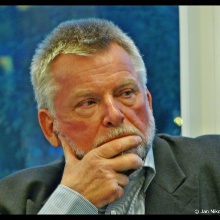
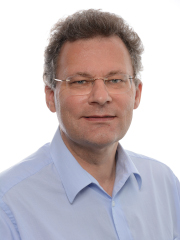
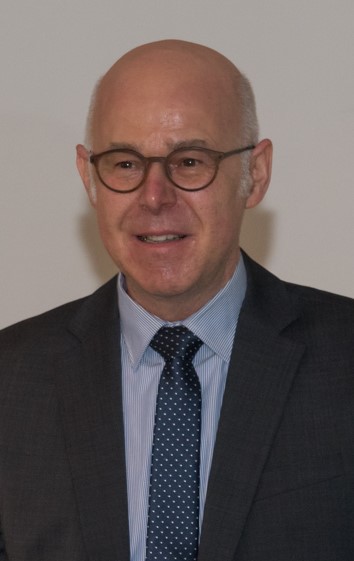
Gerhard Hirschfeld is an Honorary Professor at the Department of History, University of Stuttgart, and has served as Director of the Bibliothek für Zeitgeschichte since 1989. His research focuses on Social and Cultural History of World War I , Comparative Occupation History of World War II , 20th Century Netherlands History , and Academic Emigration post-1933 . He has been a Fellow of the Netherlands Institute of Advanced Studies in the Humanities and Social Sciences (1996/1997, 2006/2007) Fellow of the German Historical Institute London and held leadership roles including Chair of the German Committee for the History of WWII (1991–2000) and President of the International Committee for the History of WWII (2000–2010). His publications span monographs, edited volumes, and essays on occupation policies, collaboration, and exile studies. Recent works emphasize the media representation of WWI , continuity of nationalist rhetoric , and ethical dimensions of historical taboos . He contributes to journals like Zeithistorische Forschungen and Tijdschrift voor Geschiedenis . Scientific awards include Fellowships at NIAS and DHIL Editorial leadership in academic series like Zeit der Weltkriege and Schriften der Bibliothek für Zeitgeschichte and advocacy for interdisciplinary war studies.
Leibniz Institute for Jewish History and CultureGermany
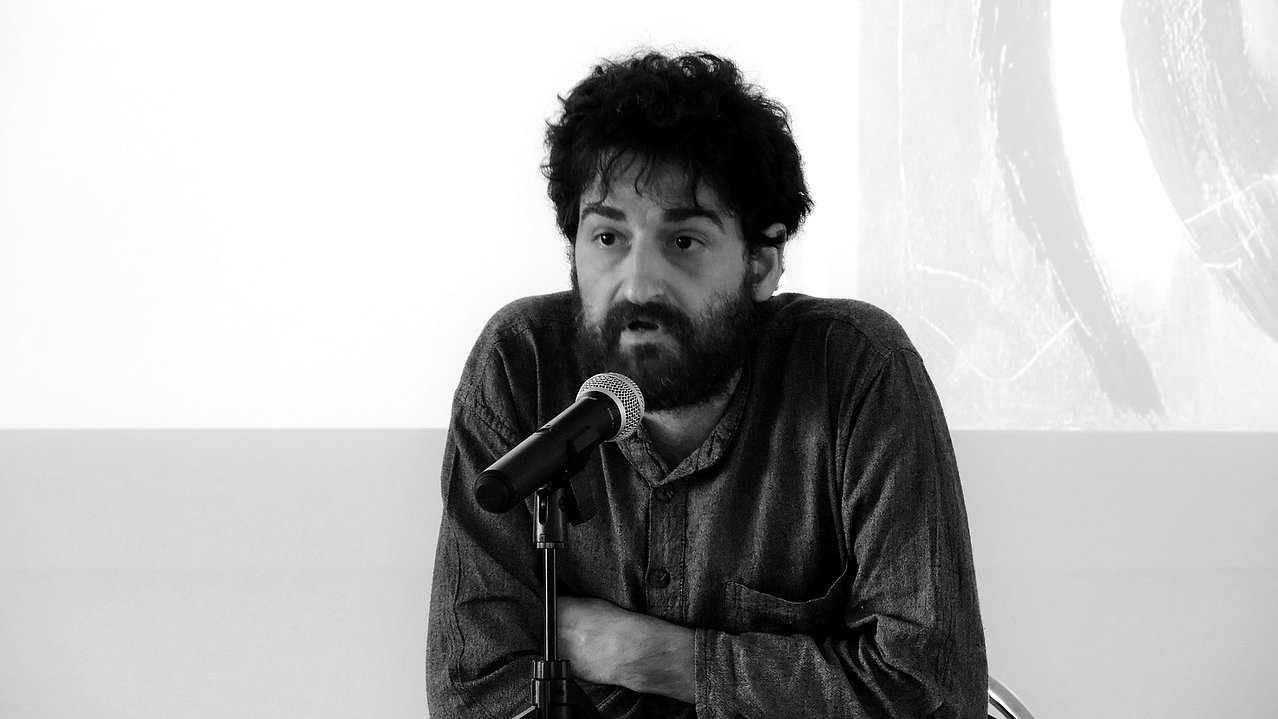
Dr. Enrico Lucca serves as a Research Fellow at the Dubnow Institute, where he has held the position of Research Associate since January 2018. He concurrently coordinates the Research Unit 'Knowledge', the Institute's Forum, and oversees peer reviewing for the Dubnow Institute Yearbook. His academic work centers on twentieth-century European-Jewish history and thought, with specialized focus on knowledge transfer between Europe and Israel/Palestine, intellectual history, and institutional history within Jewish contexts. Lucca completed his Master's degree in Philosophy at the University of Milan in 2007, followed by doctoral studies (2009-2012) at the same institution, culminating in a dissertation titled 'A Dialectic Vision of Jewish History. Gershom Scholem and the Legacy of Messianism.' His academic training includes post-graduate specialization in Cultural Studies at Scuola Alti Studi in Modena (2009) and visiting research periods at the University of Chicago Divinity School (2009-2010) and Hebrew University of Jerusalem (2011). His research traverses European-Jewish intellectual history, Jewish cultural studies, and philosophy of religion, with particular emphasis on messianic thought, Kabbalah studies, and Hebrew literature. Lucca's scholarship frequently examines biographical and institutional frameworks that shaped Jewish thought in the twentieth century, especially through figures like Gershom Scholem, Franz Rosenzweig, and Hugo Bergmann. His methodological approach integrates cultural history with philosophical analysis to explore knowledge transmission across geographical and temporal boundaries. Analysis of his 15 most recent publications reveals consistent engagement with Central European Jewish intellectual migration to Palestine/Israel, institutional history of the Hebrew University, and critical reinterpretations of Scholem's legacy. His work demonstrates interdisciplinary breadth across history, philosophy, and literary studies, with recurring themes of linguistic identity, cultural transfer, and the interplay between mysticism and modernity in Jewish thought. No scientific awards are documented in the provided materials. While no formal students are listed, Lucca has secured significant research funding including a Gerda Henkel Foundation fellowship (2016-2017) for 'German-Jewish Knowledge and Cultural Transfer 1918–1948' and currently serves as Principal Investigator for the German Research Foundation-funded International Research Training Group 'Belongings: Jewish Material Culture in Twentieth-Century Europe and Beyond' (since 2024). Lucca actively leads the Research Unit 'Knowledge' and co-directs the International Research Training Group 'Belongings'—a tripartite collaboration between the Dubnow Institute, Leipzig University, and Hebrew University of Jerusalem—focusing on material culture approaches to Jewish history through comparative, transnational frameworks.
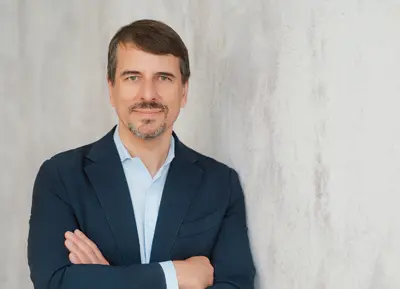
Prof. Dr. Pascal Fischer is a Professor for English and American Cultural Studies at the Faculty of Humanities and Cultural Studies, Otto-Friedrich-University Bamberg. He serves as Head of the Examination Board for the B.A. English and American Studies program and has held various academic roles since 2014, including interim professorships at multiple German universities earlier in his career. Education: PhD (summa cum laude) in English Literature (2003), Habilitation in English Philology (2009), both from University of Würzburg. His research spans interdisciplinary intersections of British Romanticism with medical humanities , urban studies , and Jewish-American literature . Key themes include: Political and religious discourse in historical contexts Urban space as a site of resistance and identity negotiation Cognitive approaches to literature and political thought Language as a marker of cultural identity in diasporic communities Prominent publications include monographs on literary conservatism and Jewish identity , co-edited volumes on poetry pedagogy and urban politics, and articles analyzing: Edmund Burke’s legacy in Brexit discourse Biblical texts in early modern political theory Cognitive contrasts between human and AI: literature as a bridge Scientific contributions: PhD with highest honors (2003) Keynote addresses at conferences (e.g., Anglistentag 2011 ) Teaching initiatives focus on integrating lyrical texts into language education and fostering interdisciplinary seminars for pre-service English teachers.
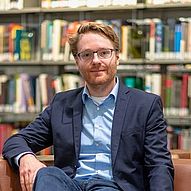
Benjamin Kohlmann serves as Professor of English Literature and Culture at the University of Regensburg, where he has held a full professorship since November 2020. Previously, he was Assistant/Associate Professor at the University of Freiburg (2011-2019) and held visiting positions at Columbia University, Cambridge University, UC Davis, and Queen Mary University of London. An elected member of Academia Europaea and the International Association of University Professors of English, Kohlmann maintains an active international research profile with current visiting fellowships at Clare Hall, Cambridge (2024-25). Education Habilitation in English Literature, University of Freiburg (2011-2017) PhD in English Literature, Lincoln College, University of Oxford (2007-2010) MA in Philosophy/English Literature, University of Freiburg and Yale University (2004-2007) Undergraduate Studies in Philosophy/English Literature, University of Freiburg (2001-2004) Research Focus Professor Kohlmann specializes in British literature and culture from 1860 to the present, with particular expertise in the relationship between literature and politics. His scholarship explores the literary and cultural histories of socialism and communism, politicized modernism of the interwar years, the prehistory of the welfare state (c.1860-1940), literary histories of populism, and global approaches to literature. His theoretical work examines how literature conceptualizes political structures and revolutionary events, bridging historical analysis with contemporary theoretical concerns. Publication Trends Kohlmann's research trajectory reveals a consistent engagement with literature's political dimensions across historical periods. Early work focused on modernist political aesthetics, particularly in the 1930s, as seen in his monograph Committed Styles (2014). Recent scholarship demonstrates increasing attention to global revolutionary narratives and the bildungsroman as political form, culminating in his British Literature and the Life of Institutions (2021) and the forthcoming Revolutionary Subjects . His most recent publications show sophisticated integration of theoretical frameworks with historical analysis, particularly in examining how literature processes revolutionary events and conceptualizes institutional frameworks. The 2023-2025 publications reveal heightened focus on contemporary political formations while maintaining historical depth. Scientific Recognition Heisenberg Programme grant from German Research Foundation (2020-2025) Heinz Maier-Leibnitz Prize (2018) Feodor Lynen Fellowship from Alexander von Humboldt Foundation Elected Life Member of Clare Hall, University of Cambridge Member of Academia Europaea Academic Leadership Professor Kohlmann has supervised numerous PhD theses including Nikolina Hatton's award-winning work on decommodified things in 18th-19th century novels and current projects examining democratic essay forms and literary histories of collective resistance. He serves on editorial boards for Critical Quarterly and CUSP , co-edits the Oxford UP book series "Literature and Politics," and has organized multiple international conferences on literature and political thought. His research leadership includes directing the "Writing Collectivity" research group at Regensburg and coordinating international collaborations through the Heisenberg grant. Research Environment At Regensburg, Kohlmann contributes to a vibrant research environment within the Department of English and American Studies, collaborating on interdisciplinary projects examining literature's relationship to political economy and social structures. His "Thinking Revolution" project connects with global scholarly networks through visiting fellowships at Cambridge and other institutions. The department's research focus on British literary history benefits from Kohlmann's leadership in organizing international conferences and securing substantial research funding, creating a dynamic environment for graduate students and junior researchers working at the intersection of literature and political thought.
Prof. Dr. Matthias Armgardt holds the Nucleus Professorship for Global Legal History and Civil Law as well as Computational Legal Theory at the Faculty of Law, University of Hamburg . His work focuses on interdisciplinary fundamental research at the intersection of history, logic, philosophy, and legal reasoning. Historical perspective: Comparative study of ancient Jewish, Greek-Hellenistic, and Roman law Logical perspective: Development of computational legal theory using formal logic and AI Philosophical perspective: Analysis of Leibniz's legal philosophy Legal perspective: Critique of German civil law with comparative methods His research includes collaborations with Harvard Law School, European University Institute, and University of Bologna. Key projects: CISAL (Center for Ancient Legal History) and LLCA (Legal Logic, Computational Law, and AI project). He organizes summer schools on Law and Logic with institutions like the European University Institute.
Dr. Olga Katharina Schwarz is a researcher at the Institut für Germanistik of Heinrich Heine University Düsseldorf since 2023. Her academic journey includes affiliations with Ruhr-Universität Bochum (2019–2023), Freie Universität Berlin (2014–2019), and visiting positions at Princeton University (2012–2013), Peking University (2018), and Universität Wien (2017). Education : Magister Artium in German and French Philology (Universities of Hamburg, Montpellier, Paris [ENS], Berlin [FU, HU]); Promotion at Freie Universität Berlin (2019). Research Focus : Spans General Literary Studies , Aesthetics , Poetics , Intermediality , Lyric and Epic Genre Theory , and German-French Cultural Transfer . She is currently working on a Habilitation project on the narrative poem cycle and lyric cycles in European literature. Her publications include a monograph on Rationalistische Sinnlichkeit (De Gruyter, 2022) and co-edited special issues like Lyrische Zyklen (Zeitschrift für Germanistik, 2025). She has organized international conferences, including the Tagung Der Sonettenkranz (2024) at Humboldt University Berlin, supported by the Fritz Thyssen Stiftung . Scientific Awards : DFG Doctoral Scholarship (2011–2014) Global Young Faculty Fellowship (2021–2023) Thuringia Research Scholarship (2022–2023) Young Scientist Fellowship at Peking University (2018) She has contributed to academic governance as a member of committees at Ruhr-Universität Bochum and Freie Universität Berlin . Her teaching includes courses on Enlightenment Literature , Narratology , and Intermediality , often with a focus on 19th-century German poetry and contemporary German literature .
Susanne Lachenicht is a Professor of Early Modern History at the University of Bayreuth since 2009. She holds the Chair of Early Modern History within the Faculty of Cultural Studies . Her academic journey includes a Habilitation at the University of Hamburg (2009), a PhD from Ruprecht-Karls-Universität Heidelberg (2002), and studies at Université Paris 1 Panthéon-Sorbonne (1995). She has held visiting professorships at institutions in France, the UK, and the USA. Education 2009: Habilitation in Early Modern and Modern History, University of Hamburg 2002: PhD, Early Modern and Modern History, Heidelberg 1996: Magister Artium in Medieval, Early Modern, and Modern History/German Literatures, Heidelberg 1995: Maîtrise d'Histoire in Modern History, Université Paris 1 Research Interests focus on knowledge transfer in the Atlantic World , clash of knowledge systems , and formation of colonial discourse through natural histories. She examines how early modern media (e.g., periodicals, books ) facilitated cultural exchange, particularly among Huguenots, Sephardi Jews , and other diasporic groups. Her work bridges confessional boundaries , transnationalism , and historical globalization . Academic Leadership includes co-editing series like Anthem Intercultural Transfer Studies , Forum historische Forschung – Frühe Neuzeit , and Humanities . She serves on the European Research Council (ERC) Advanced Grant Review Panel SH6 and advisory boards for institutions in Paris, Berlin, and Heidelberg. Key Contributions Founded the Summer Academy of Atlantic History (SAAH) (2009) Spokesperson for the Emerging Field 'Cultural Encounters and Transcultural Processes' (2012-2023) Member of the Bayreuth Institute for American Studies (BIFAS)
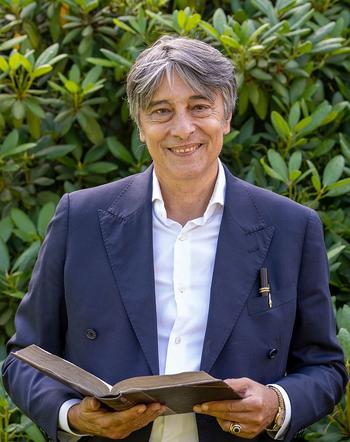
Prof. Dr. Giulio Busi is a distinguished C4 Professor of Jewish Studies at the Institute of Jewish Studies, part of the Department of History and Cultural Studies at the Free University of Berlin. Born in Italy, he earned his doctorate in Judaic Studies in 1989 and has held academic positions at the University of Venice (1992-1999) before joining the Free University of Berlin in 1999. He is a Fellow of the Accademia Nazionale Virgiliana in Mantua (since 2004) and serves on the Scientific Board of the Hanadiv Foundation in London (since 2003). Busi's research centers on the history of Jewish mysticism and Jewish culture in late antiquity and the early modern period. His scholarly work spans Kabbalah studies, Jewish manuscript traditions, Hebrew literature, and Jewish-Christian intellectual exchanges during the Renaissance. He has made significant contributions to understanding Jewish mystical traditions, particularly through his extensive work on Giovanni Pico della Mirandola's Kabbalistic Library and the transmission of Jewish esoteric knowledge in early modern Europe. His publications reveal a consistent focus on Jewish cultural history, with particular attention to the intersections between Jewish thought and broader European intellectual currents. Busi's research demonstrates how Jewish mystical traditions influenced and were influenced by Christian humanism, particularly through the study of Hebrew texts and Kabbalistic literature. His recent work has expanded into contemporary Jewish issues, including Shoah commemoration and modern Jewish identity. Busi has served as editor for 'The Kabbalistic Library of Giovanni Pico della Mirandola' and 'Berlin Studies in Judaism,' while also contributing to the advisory boards of Materia Giudaica (Bologna) and Studia Rosenthaliana (Amsterdam). His extensive publication record includes numerous scholarly books, edited volumes, and over two hundred articles in both academic journals and major newspapers like Il Sole 24 Ore, where he has regularly contributed cultural commentary since the early 2000s. Notably, a farewell conference for Prof. Busi is scheduled for June 19, 2025, suggesting an imminent conclusion to his tenure at the Free University of Berlin. Throughout his career, he has organized significant academic conferences on Jewish topics, including gatherings on Jewish travelers, strategies of cultural persistence, and the transmission of Hebrew knowledge between cultures.
Daniel Schumann is a Research Fellow in New Testament and Ancient Judaism at the Protestant Theology Faculty of Eberhard Karls Universität Tübingen. He completed his theological studies in Jena and Leipzig (2002-2011), with additional studies in rabbinic literature at the Hebrew University in Jerusalem (2006-2007). He earned his doctorate summa cum laude in 2018 and has held research positions at prestigious institutions including Oxford University (as a Marie Skłodowska-Curie Fellow and Keble Research Associate) and the Centre for the Study of the Bible in the Humanities. Eberhard Karls Universität Tübingen (2020-present): Research position under Prof. Dr. Tilly Oxford University (2018-2020): Marie Skłodowska-Curie Fellow University of Münster (2014-2018): Research position under Prof. Dr. L. Doering University of Tübingen (2012-2014): Research position under Prof. Dr. M. Tilly University of Leipzig (2011-2012): Research position under Prof. Dr. R. Lux Schumann's research focuses on the intersection of New Testament studies and Ancient Judaism, with particular expertise in Rabbinic literature, Second Temple Judaism, and early Christian origins. His work demonstrates how Jewish and Christian traditions developed in dialogue with each other, especially regarding topics like vows, exodus narratives, and anthropological concepts. His scholarship combines textual criticism with historical analysis to illuminate the complex relationship between early Judaism and Christianity. His publications reveal a consistent interest in how Jewish traditions influenced early Christian thought, particularly in Pauline literature and the development of early Christian identity. Schumann's work on the Tosefta and Mishnah provides valuable insights into rabbinic approaches to religious practice that contextualize early Christian developments. Hanns-Lilje-Preis (2020) Schumann has successfully secured significant research funding, including a European Research Council grant (Horizon 2020) for his project on the Dead Sea Scrolls and cognate literature, with total third-party funding amounting to approximately 200,000 euros. His current habilitation project focuses on 'Romans 7 in Context.' He is affiliated with several scholarly societies including the Society of Biblical Literature and the Studiorum Novi Testamenti Societas.
Prof. Dr. Christian Strecker is a Professor of New Testament at Augustana University Neuendettelsau, where he has held the Chair of New Testament since 2010. He previously served as Vice-Rector (2012–2014) and Rector (2015–2016) of the university. His academic journey includes studies in Protestant theology at multiple universities, ordination as a pastor, and habilitation in New Testament studies with a focus on Jesus research. Strecker’s expertise spans Pauline theology, Jesus studies, cultural anthropology approaches to biblical exegesis, and ritual/performance studies. His teaching emphasizes historical-critical methods, exegetical skills, and exploration of New Testament writings within their socio-cultural contexts. Courses cover early Christian history, Pauline epistles, Gospel studies, and Johannine literature. Strecker’s research integrates interdisciplinary frameworks, such as cultural anthropology and ritual theory, to analyze early Christian practices and theological concepts. Strecker’s publications include monographs like The Liminal Theology of Paul (1999) and Performative Worlds (2002), as well as numerous essays on topics such as ritual studies, Pauline soteriology, and the cultural contexts of early Christian rituals. He has edited journals like Zeitschrift für Neutestamentliche Wissenschaft and contributed to major series like ReligionsKulturen . His work bridges biblical scholarship with contemporary theological debates, addressing issues like honor/shame dynamics, the body in early Christian thought, and the intersection of Pauline theology with imperial politics. Strecker’s research also explores methodological innovations, including performance studies and cultural turns in New Testament interpretation.
Knut Martin Stünkel is a Privatdozent and Researcher at Ruhr-Universität Bochum, affiliated with the Centrum für Religionswissenschaftliche Studien and the Collaborative Research Center (SFB) 1475 ‘Metaphern der Religion’ (Project C03). He holds roles as a Wissenschaftliche*r Mitarbeiter*in in SFB 1475 and a member of the CERES Research Department. His work focuses on religious metaphors, interfaith dialogue, and the historical and philosophical dimensions of religious language. Research Interests: Stünkel’s work examines metaphor theory applied to religious discourse, particularly in contexts of colonial contact, early modern theology, and modern critiques of religion. He explores how metaphors shape religious identity, mediate intercultural encounters, and function in theological polemics. Key areas include Reformation studies, Jewish-Christian relations, and the evolution of religious concepts in philosophy and literature. Publications: His recent work (2025–2020) includes analyses of metaphors in totalitarian literature, Franciscan martyr narratives, and Cusanus’ cosmological symbolism. He also investigates colonial linguistic dynamics and critiques of religious frameworks by thinkers like Marx and D’Holbach. Grants & Projects: Active in SFB 1475 since 2025, he contributes to CERES research on religious science. He has co-edited volumes on religious contact and metaphorology, including Transcending Words: The Language of Religious Contact (2015). Labs/Teams: Collaborates with the CERES Research Department and SFB 1475’s interdisciplinary team on metaphor-based religious analysis.
Leibniz Institute for Jewish History and CultureGermany
Dr. Magnus Klaue is an Affiliated Researcher at the Simon Dubnow Institute for Jewish History and Culture in Leipzig since 2021, previously serving as a Research Associate from 2015 to 2021. His academic foundation includes studies in German Literature, Philosophy, Theatre and Film at Freie Universität Berlin, where he also worked as a Research Associate at the Institute for Modern German Literature under Prof. Dr. Marlies Janz from 2003 to 2008. His educational background comprises: MA in German Literature, Philosophy, Theatre and Film, Freie Universität Berlin (2001) PhD from Freie Universität Berlin (completed circa 2008) with thesis "Poetischer Enthusiasmus. Else Lasker-Schülers Ästhetik der Kolportage" Dr. Klaue's research centers on Critical Theory—particularly Max Horkheimer's intellectual biography—and the history/poetics of German-Jewish and Austrian literature from the 19th-20th centuries. He critically examines language criticism (Fritz Mauthner, Karl Kraus), satire, and vagabondage in modern aesthetics, with significant contributions to German-Israeli academic relations and Holocaust literature. His monograph "The Last Citizen. An Intellectual Biography of Max Horkheimer" and co-edited volumes like "Bruchlinien. Deutsch-israelische Wissenschaftsbeziehungen" establish him as a key scholar in Central European intellectual history. Analysis of his 15 most recent publications reveals sustained engagement with Horkheimer's role in post-war Germany and Frankfurt School theory, while his work on Fritz Mauthner bridges linguistic philosophy and Jewish cultural critique. The recurring themes of testimony, cultural dialogue, and aesthetic resistance demonstrate how his scholarship navigates the intersections of Jewish identity, language politics, and Central European modernity through interdisciplinary methodologies spanning literary studies, intellectual history, and critical theory.
Prof. Dr. Elisabeth Meilhammer is a faculty member at the University of Augsburg , specializing in Adult and Continuing Education . Her work bridges historical analysis with contemporary educational practices, focusing on democratic principles, intercultural dialogue, and lifelong learning frameworks. Chair of Examination Board, Master's program 'Educational Science – Focus on Heterogeneity in Education' Chair of Management Board, Center for Continuing Education and Knowledge Transfer (ZWW) Founding member, Center for Interdisciplinary Health Research (ZIG) Meilhammer's research emphasizes the historical evolution of adult education , particularly in post-conflict contexts like post-WWII Germany. She explores educational resilience, citizenship training, and the role of Volkshochschulen (adult education centers) in democratic societies. Her recent publications analyze educational trends including: Post-war reconstruction of educational institutions Intercultural dialogue mechanisms Modernization of Volkshochschulen Pop-up education formats Adult learning in the rail sector Democratic education frameworks Meilhammer contributes to editorial boards of journals like Education and Upbringing . She leads projects such as FEvEHH (Formative Evaluation of Ellinor-Holland-Haus) and rail sector training analysis, demonstrating commitment to applied educational research. Her work addresses educational justice , historical memory in adult learning, and the intersection of education with societal challenges like antisemitism and migration. She actively participates in networks such as the Bavarian Science Forum and the European Society for Research on the Education of Adults (ESREA).
Prof. Silvana Greco is an Honorary Professor of Sociology of Judaism at the Institute of Jewish Studies, Freie Universität Berlin since 2023, and a Privatdozentin (Senior Lecturer) at the Institute of Sociology, Technische Universität Dresden since 2022. She holds a Habilitation in Sociology (2021, TU Dresden), a Ph.D. in Sociology (2005, University of Milan), and a Magister in Economics (1993, Bocconi University). As Vice-President of Fondazione Palazzo Bondoni Pastorio , she curates cultural programs, including art exhibitions like "The Renaissance speaks Hebrew" (2019) and "The Gold of Mirandola" (2014-2015). Education M.A. in Economics, Bocconi University (1993) Ph.D. in Sociology, University of Milan (2005) Habilitation in Sociology, TU Dresden (2021) Research Interests span the Sociology of Judaism , focusing on Jewish identity in diaspora and Israel; Jewish culture from the Renaissance to the 21st century , including theater and artistic practices; Shoah studies through biographies of survivors and recognition struggles; and Sociology of the Body and Emotions , with attention to migration, social exclusion, and cultural hybridity. Her work intersects with history of sociology , friendship theory , and gender perspectives in Jewish and European contexts. Publications since 2018 include Moses Dobruska and the Invention of Social Philosophy (2022, DeGruyter), The Renaissance speaks Hebrew (2019, Silvana Editoriale), and entries in the Encyclopedia of Quality of Life (2023, Springer). She has contributed to Shoah memory studies , health sociology , and gender in Renaissance art . Scientific Awards include the Goldmedaille des italienischen Staatspräsidenten for her exhibition curation. She serves on editorial boards for Social Sciences (since 2023) and Quaderni di Teoria Sociale (since 2022), and is active in the European Association for Jewish Studies (since 2019). Academic Leadership includes curating art exhibitions (e.g., with Giulio Busi) and coordinating cultural activities at Fondazione Palazzo Bondoni Pastorio. Her teaching at Freie Universität Berlin (since 2017) covers topics like "Jewish Identity in Modernity" and "Body Images in Judaism".
Prof. Dr. phil. Fritz Dross serves as Scientific Associate at the Institute for the History and Ethics of Medicine, Chair of the History of Medicine at Friedrich-Alexander University Erlangen-Nuremberg. He has held significant leadership roles as Acting Chair and Director at multiple medical history institutes including University Medical Center Hamburg-Eppendorf (2018/19), University of Würzburg (2016), University of Bonn (2013/14), and Otto von Guericke University Magdeburg (2010). His academic credentials include: Habilitation at Friedrich-Alexander University Erlangen-Nuremberg (2008) Doctorate at Heinrich Heine University Düsseldorf (2001-2003) Master's degree in Modern and Eastern European History and Information Science Dross specializes in the History of Medicine with particular focus on municipal and territorial state poor relief and health care (16th-19th centuries), history of hospitals, social history of medicine in the early modern period, and urban history/microhistory. His research examines how disease, healthcare institutions, and social structures intersected historically, with particular attention to marginalized populations and the evolution of medical thought and practice. His recent publications demonstrate a strong trajectory examining epidemic disease interpretation, Nazi medicine and ethics, early modern healthcare systems, and the social dimensions of disease. There's a clear progression from institutional hospital history toward more nuanced analyses of disease concepts, medical ethics, and the politics of healthcare provision across different historical periods. His scientific recognition includes: Düsseldorfer Jonges Research Award (2002) Dross has been actively involved in editorial work, serving as editor for publications like 'Objekte als Quellen der Medizingeschichte' (2021) and co-editing multiple volumes on medical history. He has participated in numerous research projects, including DFG-funded projects on hospital history and cataloging historical medical collections. His work frequently involves interdisciplinary collaboration with historians, medical professionals, and museum curators. He serves on the board of the Erlangen-Nuremberg Medical History Association and the German-Polish Society for the History of Medicine, demonstrating his commitment to fostering international scholarly dialogue in medical history.