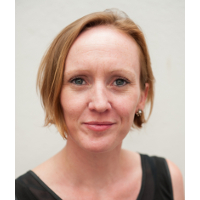
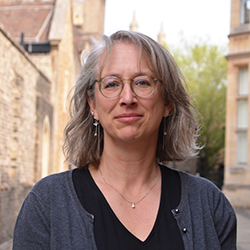
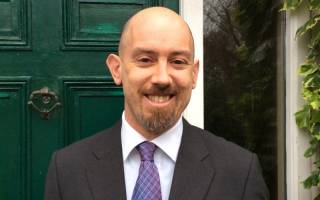
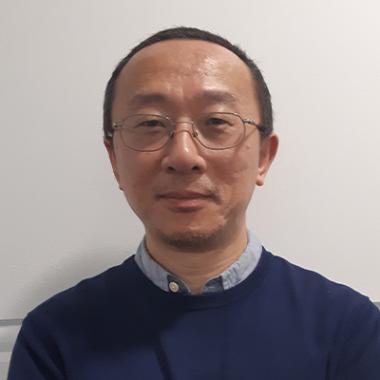
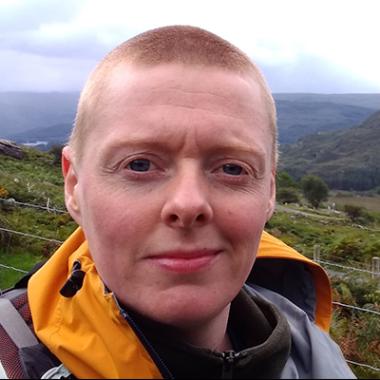
Dr. Frances Smith is an Associate Professor in Film Studies at the University of Sussex's School of Media, Arts and Humanities. She holds a PhD in Film and Television Studies from the University of Warwick (2013), an MA in Management from Durham University (2008), and a Master of Modern Languages in French/Italian from Manchester University (2007). Her research focuses on teen cinema, female authorship, Hollywood and European cinema, and gender studies, with current work on Céline Sciamma's Girlhood. She authored Rethinking the Hollywood Teen Movie (2017) and co-edited Refocus: The Films of John Hughes (2021). Teaching includes convening Analysing Film, American Teen Cinema, and Working with Film modules. She has taught Gender and Representation, British Cinema, and Study Skills. Her awards include Fellowship of the Higher Education Academy (2016). Active in PhD supervision focusing on teen cinema, female authorship, and gender in cinema. Publications span over 25 articles/chapters addressing topics like queer youth representation, transatlantic media comparisons, and directorial authorship in John Hughes and Amy Heckerling films. Research explores intersections of gender, space, and cultural identity in global popular cinema.
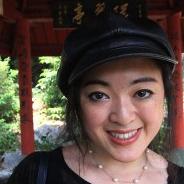
Professor Gabrielle Lynch is a leading scholar in Comparative Politics and African Studies at the University of Warwick. She holds the academic rank of Professor and serves as PAIS Impact Director, Comparative Politics cluster lead, and Warwick UCU Equalities Officer. Her research focuses on ethnic identities, elections, transitional justice, and social media's role in African politics. Lynch earned her BA, MPhil, and DPhil from the University of Oxford. She has conducted extensive fieldwork in Kenya, Ghana, and Uganda, supported by grants from the ESRC, Warwick Policy Support Fund, and others. Her awards include the ESRC Award for Outstanding International Impact (2019) and the Market Research Society’s President’s Medal. Lynch is editor of African Affairs and a member of the African Studies Association of the UK and British Institute in Eastern Africa. Lynch’s work bridges academia and public engagement, including columns in The Saturday Nation and The East African . She founded the African Judiciaries Research Network and co-authored influential books like Performances of Injustices and The Moral Economy of Elections in Africa . Her research emphasizes democratization challenges, electoral integrity, and the intersection of technology and politics in Africa.
Professor Astrid Nordin holds the Lau Chair of Chinese International Relations at King's College London's Lau China Institute, within the School of Global Affairs. Previously, she was a Professor and Director at Lancaster University's China Centre. Her research bridges Chinese studies and critical international relations, focusing on relational theories and China's global role. Key areas include Chinese foreign policy, surveillance technologies, and decolonial approaches. Education: Peking University, Jilin University, City University Hong Kong, University of Warwick, University of Manchester Research Interests: Chinese world order concepts, relational approaches, critical social theory, and ontology of war. Her work emphasizes interdisciplinary collaboration, impacting policy, media, and cultural sectors. Notable projects include the 'Chinese Anger Diplomacy' study and the 'ESRC IAA: Community-led support for overseas Chinese' initiative. She co-edited the Routledge Handbook of Social Futures (2021) and contributes to public discourse on China's global influence. Awards: KingsCAT Tool Development (2024) alongside interdisciplinary team.
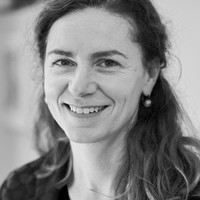
Rachel Leow is an Associate Professor in Modern East Asian History and Fellow of Murray Edwards College at the University of Cambridge. She holds a PhD and MPhil from St Catharine’s College, Cambridge, and a BA from Warwick University. Her research critiques rigid nationalisms in East Asia, focusing on transregional cultural and intellectual histories. Her book Taming Babel: Language in the Making of Malaysia (2016) won the 2018 Harry J. Benda Prize for Southeast Asian studies. Current projects include an anti-diasporic history of Chinese migration and early 20th-century Asian thought-worlds. Leow emphasizes public engagement, contributing to blogs, literary reviews, and collaborative manifestos. She teaches World History courses, including Part IA’s Outline 11 and specialized modules on East/Southeast Asia. She supervises postgraduate students exploring transnational East Asian history from 1850 to the present. Professional affiliations include the Royal Historical Society, Center for History and Economics, and editorial roles at The Historical Journal and Global Intellectual History . Awards include the Harry J. Benda Prize and RHS Fellowship. Her digital work includes a visualization of Afro-Asian Cold War networks and a short film on diasporic identity.
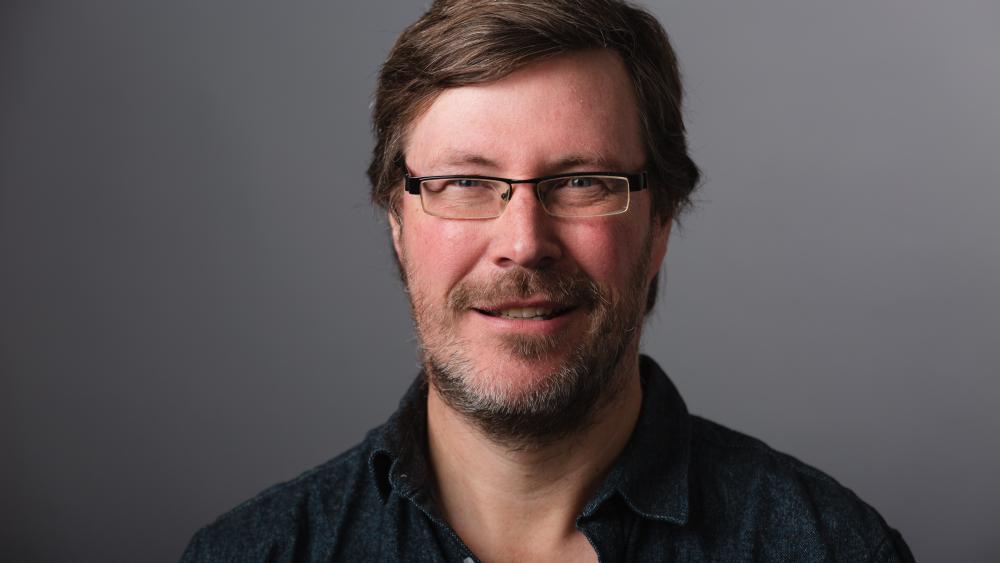
Professor Stephen Chan is a faculty member at SOAS University of London in the Department of Politics and International Studies (POL) . With a focus on African political thought and international relations, his work critically examines postcolonialism, decoloniality, and global governance. Key research themes include: Decolonizing international relations theory Sino-African political dynamics Election observation and democratic processes Non-Western cosmopolitanism Comparative diplomatic practices His recent publications analyze the ideological ambiguity of decoloniality (2023), pluralist visions for global security (2017), and the legacy of African liberation movements (2021). He has advised multiple theses on topics ranging from parliamentary governance in Kenya/Zimbabwe to China-Africa media interactions. Notably: Critiqued the misuse of 'decoloniality' as ideological rhetoric (2023) Authored a poetic autobiography of political engagement (2022) Traced Africa's intellectual history of freedom (2021) Examined Zimbabwean elections (2017) Explored non-Western modernity (2018)
Professor D Graham J Shipley is the Professor of Ancient History at the University of Leicester's School of Archaeology and Ancient History since 2002. His research focuses on Hellenistic and Classical antiquity, particularly on political landscapes, environmental studies, and urban planning. He holds a D.Litt. from the University of Oxford (2020) and is a Senior Fellow of the Higher Education Academy (2014). Education: Graduated in Classics from Oxford University. Academic roles include serving on the Oxford Classical Texts Committee and the UK Education Honours Committee. Previously chaired the Council of University Classical Departments and convened the Dorothy Buchan Memorial lectures. Research interests emphasize ancient geography, socio-political structures, and environmental interactions. His work spans studies of Sparta, Greek urban planning, and the cultural impact of Hellenistic expansion. Recent publications examine Pseudo-Skylax's geographical texts and post-Alexandrian political dynamics. Scientific Awards: Senior Fellow of the Higher Education Academy (2014) D.Litt. (Doctor of Letters) from University of Oxford (2020) Advising and Grants: No specific advisees listed, but supervises research in ancient history and archaeology. Active in collaborative projects such as the Laconia Survey. Grants have supported archaeological fieldwork and publication initiatives. Labs/Teams: Collaborates with the Oxford Classical Texts Committee and has led interdisciplinary teams in regional archaeological surveys.
Professor Phil Clark is a Professor of International Politics at SOAS University of London, specializing in conflict and post-conflict issues with a focus on transitional justice, peacebuilding, and reconciliation after mass atrocity in Rwanda, Uganda, the Democratic Republic of Congo, and Burundi. He holds a DPhil in Politics from the University of Oxford, where he studied as a Rhodes Scholar, and a Bachelor of International Studies from Flinders University. His research focuses on international, national, and community-based responses to mass violence in Central Africa, particularly examining the gacaca community courts in post-genocide Rwanda and the International Criminal Court (ICC). Professor Clark has advised multiple governments (Danish, Sudanese, Swedish, Ugandan, and UK), international organizations (ICC, International Criminal Tribunal for Rwanda), and NGOs (Human Rights Watch, Crisis Group) on conflict issues in Africa. Professor Clark's work spans several key areas including the History, Politics and Law of the African Great Lakes; Transitional Justice Theory and Practice; the Politics of Violence; Community-Based and Customary Law; Conflict Resolution and Reconciliation; the Politics of International Criminal Justice; Peacebuilding, Security and Post-Conflict Reconstruction; and Moral and Political Philosophy. His approach often combines theoretical analysis with practical fieldwork in post-conflict societies. His publications reveal a consistent focus on the tension between international legal frameworks and local justice mechanisms, particularly examining how post-genocide societies navigate complex reconciliation processes. Over time, his work has evolved from documenting specific cases (like the gacaca courts) to analyzing broader patterns of transitional justice and international criminal law across the African continent. Shortlisted for the Raphael Lemkin Award for best book on genocide and mass violence (for "Distant Justice: The Impact of the International Criminal Court on African Politics") Regular contributor to major media outlets including The New York Times, Foreign Affairs, Washington Post, The Guardian, and BBC Frequent media commentator on international news networks including BBC, France 24, Al Jazeera, CNN, and Deutsche Welle Professor Clark has supervised multiple PhD students working on topics related to conflict analysis, women's access to transitional justice, China-Africa relations, and conflict transformation. His current research includes "Intergenerational Justice in Eastern Africa" and "Reframing Justice after Atrocity," which examines justice interactions beyond the linear international-to-national transmission of norms and practices. He has led significant research projects, including serving as technical advisor and co-author of a 2007 UN Office of the High Commissioner for Human Rights project surveying popular perceptions of transitional justice and peacebuilding in northern Uganda. His ongoing work continues to shape academic and policy discussions about justice mechanisms in post-conflict societies.
London School of Economics and Political Science (LSE)United Kingdom
Professor Catherine Allerton is a faculty member in the Department of Anthropology at the London School of Economics and Political Science (LSE). She specializes in the materialities and mobilities of everyday life, with a focus on place, kinship, childhood, migration, and temporalities in island Southeast Asia. Her fieldwork spans a two-placed village in Flores, Indonesia, and Kota Kinabalu, Sabah, East Malaysia. Her research emphasizes interdisciplinary ethnographic methods, particularly involving child participants to challenge adult-centric approaches. She launched the 'Childhood in the Migrant City' exhibition using child-taken photographs from her ESRC-sponsored research. Current projects include exploring discordant temporalities between migration systems and childhood development, as well as completing a book manuscript on moral economies of belonging. Key research interests include the social and political dimensions of landscapes, the anthropology of children, and the impacts of legal status on marginalized youth. She teaches an LSE course on 'Children and Youth in Contemporary Ethnography' and actively supervises PhD students focusing on childhood, migration, citizenship, and Southeast Asian studies. Her work addresses exclusionary practices tied to race, religion, and legal frameworks in Malaysia and Indonesia. Languages spoken include Bahasa Manggarai, English, Indonesian, and Malay. No part-time status is mentioned, indicating full-time faculty commitment.
Sian Lazar is a Professor of Social Anthropology at the University of Cambridge, serving as Head of the Department of Social Anthropology and a Fellow at Clare College. Her research focuses on labor politics and social movements across Latin America, particularly within trade unions in Buenos Aires, Argentina, and collective mobilizations in El Alto, Bolivia. Research Interests include political anthropology, ethics and kinship in collective action, citizenship studies, and the anthropology of Latin America. She explores themes of labor agency, urban rebellion, and the interplay between state and non-state forms of political engagement. Recent Publications demonstrate a strong focus on labor organization in precarious economies, moral dimensions of political outrage, and comparative analyses of citizenship practices. Her work spans ethnographic studies of trade unions, indigenous movements, and the evolving role of infrastructure in political subjectivities. Teaching & Supervision at Cambridge includes courses on Social Anthropology, with a particular emphasis on labor, citizenship, and political movements. She supervises postgraduate students and contributes to the academic community through editorial and research leadership roles.
Dr. Richard McMahon is a Lecturer in EU Politics at the Department of Political Science, University College London (UCL). He specializes in the intersection of political narratives, cultural identity, and European integration. His research focuses on how conceptualizations of Europe and national identities shape political dynamics, with current emphasis on China-EU mutual representations. Previously, he held roles at the University of Portsmouth, University College Cork, and others. McMahon earned his PhD in History and Civilisation from the European University Institute, analyzing transnational race scientists' efforts to classify Europeans by race. His research spans EU narratives, counter-narratives in populist politics, and the historical context of race classification. Recent work includes co-editing special issues on EU narratives and Chinese-EU relations. He has taught widely across institutions, covering EU studies, international law, and cultural studies. McMahon's interdisciplinary approach bridges political science, history, and anthropology, addressing topics like Brexit, enlargement, and transnational scientific networks. Publications include monographs such as The Races of Europe: Construction of National Identities in the Social Sciences, 1839-1939 and edited volumes on transnational power struggles and European integration narratives. His work frequently appears in journals like Journal of Contemporary European Studies and European Societies .
Dr. Galina Miazhevich is a Senior Lecturer at the School of Journalism, Media and Culture (JOMEC) at Cardiff University, UK. Previously, she served as a lecturer at the University of Leicester's School of Media, Communication and Sociology (2013-2017) and as the Gorbachev Media Research Fellow at the University of Oxford (2008-2012). Her academic career focuses on media representations in post-communist contexts, with particular expertise in Russian and Eastern European media landscapes. Dr. Miazhevich earned her PhD from the University of Manchester, where she subsequently worked for two years as a Research Associate on an AHRC-funded project examining representations of Islam as a security threat. Her educational background has informed her research trajectory, which bridges media studies, political communication, and cultural analysis of post-Soviet societies. Dr. Miazhevich's research spans several interconnected domains: media representations of Islam and multiculturalism in Europe; media and democracy in post-communist Europe; gender, media, and emergent forms of post-Soviet identity; feminism; Eurovision and popular culture; and diaspora, transnationalism, and media. Her work consistently examines how media shapes and is shaped by political transitions, identity formation, and social movements in post-Soviet contexts, with particular attention to marginalized voices and resistance practices. Analysis of Dr. Miazhevich's recent publications reveals a consistent focus on resistance, identity, and power dynamics in post-Soviet media environments. Her work increasingly examines gender and sexuality as political categories, particularly through the lens of feminist and LGBTQ+ resistance to authoritarian regimes. The Eurovision Song Contest serves as a recurring analytical framework for understanding cultural diplomacy and nation-branding strategies. More recently, her research has pivoted toward documenting anti-war resistance following Russia's invasion of Ukraine, examining how celebrities and media figures navigate political dissent under authoritarian conditions. Dr. Miazhevich has received several notable recognitions for her scholarly contributions: AHRC Leadership grant 'A Quiet Revolution: Discursive Representations of Non-heteronormative Sexuality in Russia' (2018-2020, £250,960) Visiting Fellowship at the Davis Centre for Russian and Eurasian Studies, Harvard University (Fall 2023) Fellow of the Higher Education Academy (FHEA) Associate Editor for the Oxford Encyclopedia of Race, Ethnicity, and Communication (2024) Dr. Miazhevich actively mentors the next generation of scholars, currently co-supervising PhD students Diyana Dobreva (with Professor Martin Innes) and John Tasker (with Professor Paul Bowman). She welcomes PhD proposals in areas including digital culture and resistance, media management and misinformation, media and democracy, representation of minority groups, post-communist identity politics, gender and feminism, Eurovision and popular culture, and geopolitics and nation-branding. Her grant portfolio demonstrates sustained success in securing competitive research funding, including leadership of an AHRC grant and participation in the Academy of Finland project FEMCORUS (2021-2025). Dr. Miazhevich is deeply engaged with academic communities, serving as co-convenor of the (Digital) Media and Culture group at the British Association for Slavic and East European Studies (BASEES) since 2016 and as a member of the Advisory Board of the European Communication Research and Education Association (ECREA) since 2021. Her work extends beyond academia through public engagement, including invited talks at prestigious institutions like Harvard University and participation in policy-relevant events at Chatham House addressing LGBTQ+ politics in Russia.
Jakob Klein is a faculty member in the Department of Anthropology and Sociology at SOAS University of London. His research focuses on the anthropology of food, with emphasis on Chinese and Asian culinary cultures, ethical consumption, heritage politics, and the interplay between state policies and market forces in shaping food systems. Klein's work explores themes such as: Culinary modernity and identity in China State-led food security initiatives (e.g., potato promotion) Heritage commodification of regional foods Buddhist vegetarianism and changing meat consumption Alternative food movements in postsocialist contexts His publications demonstrate consistent focus on: Cultural adaptation of global food trends Political economy of dietary change Ethnographic analysis of food practices across urban/rural divides He has supervised doctoral research on food tourism in Istria, gastronomic reinvention in Bulgaria, and cultural capital in Chinese leisure industries.
Cangbai Wang is a Professor of Migration, Heritage and Language at the University of Westminster and co-founder of HOMELandS (Hub On Migration, Exile, Languages and Spaces). He holds a PhD in Asian Studies from the University of Hong Kong (2003) and previously worked as a Post-doctoral Fellow/Honorary Assistant Professor at the University of Hong Kong and Visiting Lecturer at City University of Hong Kong. Academic focus: Transnational migration, Chinese diasporas, cultural heritage Co-Director of HOMELandS since 2014 (elevated to Research Centre in 2023) External Examiner for 20 institutions including University of Birmingham (2024), University of Cambridge (2020), and Nanyang Technological University (2024) His research explores the intersection of migration and material culture , emphasizing how diasporic communities negotiate identity through heritage practices. Recent work examines museum representations of Chinese diasporas and language dynamics in multicultural London. He has led the AHRC-funded Global Diasporic Chinese Museums Network Initiative (2023-2025) and contributed to policy discussions on diaspora engagement with Chinese municipal governments. Key publication: Museum Representations of Chinese Diasporas (Routledge 2021) and Negotiating Identities, Language and Migration in Global London (Multilingual Matters 2024). Supervised PhDs include Denise Kwan’s The talking of objects: migratory experiences and Chinese women in UK (2020) and Xiao Ma’s ongoing London Chinatown: heritage making and diasporic identities . Active in academic leadership: Co-editor: Routledge Research on Museums and Heritage in Asia Editorial board: Social Transformations in Chinese Societies (since 2024) International editorial board: Chinese Overseas Review (since 2020) UKRI FLF Peer Review College member
Seagh Kehoe is a Senior Lecturer in Chinese Studies at the University of Westminster's School of Humanities, joining in 2019. Previously, he taught at the University of Leicester, University of Nottingham, and University College Dublin. His research focuses on cultural dimensions of social and political transformation in modern China, particularly Chinese media representations of ethnicity, race, gender, sexuality, nationalism, and military. He holds a BA from University College Cork, an MA from Leiden University, and a PhD from the University of Nottingham, with additional studies in Mandarin and Tibetan. His academic work spans journal articles in China Quarterly , positions , and Media, Culture & Society , as well as edited volumes like Cultural China . His research interests include Tibet-China relations, critical university studies, and abolition theory. He supervises undergraduate and postgraduate dissertations on diverse socio-political topics. Kehoe has presented at conferences such as the British Association of China Studies and contributed to workshops on decolonizing Chinese studies. His recent work examines temporal politics in post-2008 Tibet and queer cinema in China. Education: BA Chinese Studies & Sociology (University College Cork) MA East Asian Politics (Leiden University) PhD (University of Nottingham) Mandarin Studies (Sichuan University) Tibetan Studies (Rangjung Yeshe Institute) Grants & Labs: Active in the Contemporary China Centre, contributing to interdisciplinary research on modern China.
Renasha Khan is a Lecturer in Religion, Politics and Ethics at King’s College London, based in the Department of Theology & Religious Studies within the Faculty of Arts & Humanities. She holds a PhD in the Sociology of Religion from King’s College London. Her research focuses on digital religion, examining how social media shapes narratives of British Bangladeshi Muslim women’s agency, identity, and belonging through decolonial and feminist methodologies. She co-designed decolonised pedagogical modules at King’s, emphasizing lived experiences and challenging dominant epistemologies. Her teaching spans religion, politics, ethics, sociology, race, and gender at undergraduate and postgraduate levels, employing film and digital media to foster critical thinking. Beyond academia, she is an award-winning documentary filmmaker and media consultant for BBC, Sky Arts, and National Geographic. She co-founded Forward Culture to empower South Asian women and leads the Religion, Neurodiversity and Disability Network. Publications include Living the Muslim Atlantic: Race, Gender, and the Politics of Marginality (2020) and works addressing digital activism and Muslim women’s online identities. She actively engages in policy work on digital rights and inclusive futures through her roles at the British Sociological Association and King’s College London.