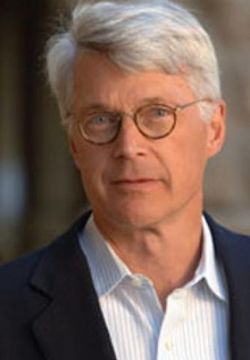
Jean Oh is a Researcher at the Robotics Institute of Carnegie Mellon University (CMU) , leading the interdisciplinary Bot Intelligence Group (BIG) . Her work focuses on developing persistent robots that co-exist and collaborate with humans in shared environments, emphasizing continuous improvement through training, exploration, and human interaction. Education: Ph.D. in Language and Information Technologies, CMU M.S. in Computer Science, Columbia University B.S. in Biotechnology, Yonsei University Oh's research integrates vision, language, and planning systems in robotics, with applications in human-robot teaming , self-driving cars , disaster response , eldercare , and creative robotics . She has pioneered projects like socially-compliant robot navigation in human crowds and AI-driven robotic painting systems. Recent publication trends highlight her work in vision-language planning , social navigation , computational creativity , and human-robot collaboration . Notable contributions include the StyleCLIPDraw algorithm for text-to-art generation and Social-PatteRNN for human-like trajectory prediction. Scientific Awards: Best Paper Award in Cognitive Robotics (ICRA'18, ICRA'15) Best Systems Paper Finalist (HRI'25) Best Oral Paper Finalist (Humanoids'24) Best Paper in Entertainment (IROS'24) Argoverse Challenge Winner (CVPR'24) Best Student Paper (AIAA'24) Best Demo Finalist (RoboSoft'24) Oh mentors a diverse team of PhD, MS, and undergraduate students from CMU departments including Robotics, Computer Science, and Mechanical Engineering. Her research is funded by US Army Research Lab , DiDi Chuxing , and DARPA , with collaborations across industry and academia .
Antoine Bosselut is a Tenure Track Assistant Professor at École Polytechnique Fédérale de Lausanne (EPFL) in the School of Computer and Communication Sciences, where he leads the EPFL NLP group. His research focuses on developing AI reasoning agents that can model, represent, and reason about human and world knowledge, with applications in health, education, and global fairness. His research interests span multiple critical areas in modern AI: LLM Representations of Knowledge: Understanding what language models know and how they represent that knowledge internally Reasoning Algorithms: Developing methods to improve LLMs' reasoning capabilities through symbolic systems, neuroscience, and cognitive science Large-scale AI Development: Creating open-source foundation models with multilingual capabilities AI Democratization: Ensuring equitable access to AI technologies across different cultural and regulatory contexts His recent publications reveal a strong focus on the intersection of language models and cognitive science, with multiple studies examining how LLMs align with human cognition. He's also deeply engaged in practical applications of NLP technology, particularly in education and multilingual settings, as evidenced by his work on evaluating AI's impact on higher education and developing culturally-aware language models. His scientific achievements have been recognized with several prestigious awards: Outstanding Paper Award at NAACL 2025 ELLIS Scholar designation in 2024 Outstanding Paper Award at ACL 2023 Inclusion in Forbes 30 Under 30 list for Science & Healthcare in 2021 Bosselut actively mentors numerous PhD students across diverse NLP research areas and has secured significant recognition for his work in both academic and media circles. His lab has been featured in major publications including Communications of the ACM, The Atlantic, and Quanta Magazine, highlighting the societal impact of his research on commonsense reasoning and AI capabilities.
Dr. Diyi Yang is an Assistant Professor in the Computer Science Department at Stanford University. She leads the Social and Language Technologies (SALT) Lab, affiliated with the Stanford NLP Group, Stanford HCI Group, Stanford AI Lab (SAIL), and Stanford Human-Centered Artificial Intelligence (HAI). Her research focuses on socially aware natural language processing, large language models (LLMs), and human-AI interaction, aiming to improve human-human and human-computer communication through socially grounded AI systems. Education: Ph.D. in Language Technologies Institute, Carnegie Mellon University (2013–2019) B.S. in ACM Honored Class, Shanghai Jiao Tong University (2009–2013) Research Interests: Dr. Yang’s work bridges computational social science and NLP. She explores how AI can understand social contexts in language use and develop systems that respect cultural norms, ethical standards, and human values. Her lab’s projects include AI companions for skill training (e.g., Rehearsal Dialects), norm-aware LLMs (NormBank), and frameworks for human-AI collaboration (Co-Gym). Recent efforts address bias in AI, societal impacts of LLMs, and ethical evaluation of human-AI systems. Awards & Honors: 2024: Sloan Research Fellowship, ONR Young Investigator Award 2023: Adamic-Glance Young Distinguished Award (ICWSM), Kavli Fellow (NAS) 2022: NSF CAREER Award, Microsoft Research Faculty Fellow 2020: IEEE AI’s 10 to Watch Advising & Grants: Dr. Yang advises over 10 PhD students and postdocs, co-leading projects on LLM evaluation (SWE-bench/SWE-smith), human-AI ethics, and culturally aware NLP. Her research is supported by NSF, Amazon, DARPA, Google, and Stanford’s HAI initiative. Labs & Teams: The SALT Lab collaborates across disciplines, with projects spanning computer science, linguistics, and social sciences. Current initiatives include developing AI tools for mental health support (AI Partner & Mentor) and auditing societal impacts of LLMs.
Silvia Lindtner is an Associate Professor at the University of Michigan's School of Information and Director of the Center for Ethics, Society, and Computing (ESC). She holds courtesy appointments in the Penny W. Stamps School of Art and Design and the Digital Studies Institute. Her work focuses on the social and cultural study of technology in China and globally, with a focus on data-driven governance, AI ethics, and the intersection of technology and labor. Lindtner has conducted nearly two decades of fieldwork in China, examining innovation ecosystems, digital economies, and the affective dimensions of state control. She is the author of the award-winning *Prototype Nation: China and the Contested Promise of Innovation* (2020) and co-author of *Technoprecarious* (2020). Education: PhD in Information and Computer Sciences from University of California, Irvine; BS/MS in Media Technology and Design from University of Hagenberg, Austria. Research Interests: Science and Technology Studies (STS), China Studies, HCI, Critical Computing, AI Ethics, Data Governance, Labor Studies, and Transnational Digital Economies. She explores how technological systems shape governance, labor practices, and everyday life, particularly in contexts of global inequality and state surveillance. Awards: Joseph Levenson Prize (2021), Francis L.K. Hsu Book Prize (2021), ACM Distinguished Member (2022), and fellowships from the National Committee on US-China Relations (2021-2023) and China-US Scholars Program (2021-2022). Grants: Supported by NSF, IMLS, Intel Labs, Google Anita Borg, and Chinese National Natural Science Foundation. Leads interdisciplinary initiatives including Tech.Culture.Matters research group and Michigan Interactive and Social Computing (MISC) research group. Labs/Teams: Directs the Center for Ethics, Society, and Computing (ESC) and collaborates with the Lieberthal-Rogel Center for Chinese Studies. Current projects include studies on affective control in AI governance and transnational data practices in healthcare and labor.
Andrew Mitchell is a Professor at the Faculty of Law, Monash University, and a member of the WTO Dispute Settlement Panelists Indicative List. He has extensive legal practice experience with Allens Arthur Robinson and consults for governments, international organizations, and the private sector. Mitchell has taught law in Australia, Canada, Indonesia, Singapore, and the US. He holds law degrees from the University of Melbourne, Harvard Law School, and a PhD from the University of Cambridge. His research focuses on international economic law, public international law, and digital trade governance, with a particular emphasis on the intersection of trade law and public health. Mitchell has secured six major grants, including an Australian Research Council Future Fellowship, and has authored over 170 books and articles. He serves as an editor for Edward Elgar’s International Economic Law Series and multiple journal editorial boards. Recent projects include 'Safeguarding Health in International Investment Agreements' (2022–2025) 'Maritime Cooperation for a Sustainable Indo-Pacific' (2021–2022) 'Global E-Commerce and Cottage Industries in India' (2020–2021) He has contributed to policy submissions on bilateral investment treaties and delivered lectures on data sovereignty and digital trade. His awards include editorial leadership roles at journals like the Journal of World Investment and Trade and Asia Pacific Law Review .
Alan Ritter is an Associate Professor at the School of Interactive Computing , Georgia Institute of Technology, with additional affiliation to the Machine Learning Center . His research focuses on Natural Language Processing , particularly robust models across domains/languages with fewer labels and efficient resource use, plus data-driven dialogue agents for open-topic conversations. Research Interests : Robust NLP models, cross-lingual transfer, resource-efficient learning, dialogue systems, cultural bias measurement, and privacy-aware language models Students : Mentors Ph.D. students in Georgia Tech's ML and CS programs, including Junmo Kang, Yang Chen, and Duong Minh Le. Alumni include Fan Bai (Ph.D. 2023), Yang Chen (Ph.D. 2024), and Andrew Li (M.S. 2024). Awards : NSF CAREER Award, Amazon Research Award, ACL 2024 Best Social Impact Paper, IUI 2009 Best Student Paper. Recent Work : Studies training budget allocation between supervised and preference-based finetuning, cross-lingual information extraction, cultural bias in LLMs, and privacy risk mitigation in social media disclosures. Service : Served as Program Chair for NAACL 2025, Area Chair for multiple top-tier conferences (COLM, EMNLP, ACL, EACL, AAAI). Email : alan.ritter@cc.gatech.edu
Tanzeem Choudhury is a Professor at the Jacobs Technion-Cornell Institute at Cornell Tech, specializing in Information Sciences. She co-founded HealthRhythms Inc. and directs the People-Aware Computing lab, focusing on machine learning for human activity and social network analysis. Her work pioneered the 'Reality Mining' field, leveraging mobile sensors to model social interactions. Choudhury holds a Ph.D. from MIT's Media Lab and B.S. in Electrical Engineering from the University of Rochester. Her research spans wearable tech, mental health interventions, and ubiquitous computing. Notable projects include affective touch wearables for anxiety reduction, stress detection systems (e.g., StressSense), and the BeWell app for well-being monitoring. Choudhury has been recognized as an ACM Fellow and SIGCHI Academy member, with impactful contributions to healthcare technology and sensor-based behavioral analysis. Current lab initiatives include developing closed-loop interventions for mental health, equity-driven sensing systems, and exploring AI integration in psychotherapy. She advises PhD students on topics like digital biomarkers, burnout detection in healthcare workers, and smartphone-based mental health assessment. Education: Ph.D. in Media Arts & Sciences (MIT), M.S. (MIT Media Lab), B.S. in Electrical Engineering (University of Rochester) Lab Team: Includes PhD candidates (Dan Adler, Yiran Zhao) and researchers focusing on health AI, wearable devices, and clinical applications. Major Awards: ACM Fellowship (2020), SIGCHI Academy (2018), Best Paper Awards at Ubicomp and MobileHCI conferences. Key Projects: OptoBeat (skin-tone calibrated blood oxygen sensor), EmotionCheck (anxiety intervention), and Affective Touch devices.
Bobak Mortazavi is an Associate Professor in the Department of Computer Science & Engineering at Texas A&M University. His research focuses on medical analytics, machine learning, wearable sensors, and cyber-physical systems. He leads interdisciplinary projects in healthcare technology, including AI-driven diagnostics and predictive modeling for cardiovascular diseases. He has received notable awards such as the Best Demonstration Award at IEEE EMBS 2012 and the Best Paper Award at the Fourth International Conference on Data Analytics 2015. His work bridges machine learning with clinical applications, emphasizing practical solutions for healthcare challenges. Recent research includes developing AI tools for aortic stenosis detection, electrolyte estimation via ECG, and real-time patient monitoring systems. He collaborates with industry and academic partners to advance telemedicine and wearable health technologies. Key contributions include the SMART-LV project for smartphone-based cardiac diagnostics and the ArterialNet framework for blood pressure reconstruction using wearable sensors. His work is published in top journals like IEEE Journal of Biomedical and Health Informatics and Elsevier's Pervasive and Mobile Computing.
Dr. Kaya de Barbaro is an Associate Professor in the Department of Psychology at the University of Texas at Austin (College of Liberal Arts). She holds a Ph.D. from the University of California San Diego. Her research focuses on bridging computer science and developmental/clinical psychology, particularly maternal mental health and infant social-emotional development. She directs the Daily Activity Lab, which uses mobile/wearable sensors and machine learning to analyze real-world interactions, aiming to develop just-in-time interventions for new mothers. Key research areas include maternal-infant dynamics, physiological synchronization, and the impact of environmental chaos on development. She has pioneered methods for analyzing high-density data, such as Granger causality and machine learning algorithms to detect behaviors like crying and holding. Recent work emphasizes leveraging ecological momentary assessment surveys and 24-hour LENA audio recordings to understand proximal mechanisms of development. Dr. de Barbaro teaches Psychology 333D (Introduction to Developmental Psychology) and has developed curricula for both in-person and online formats. She is actively involved in training students through the Eureka program at UT Austin. Her lab collaborates on tools like chatbots for postpartum mental health and has published extensively on sensor-based methodologies in developmental science.
Maile Arvin is a Kanaka Maoli feminist scholar and Assistant Professor at the Department of Ethnic Studies, University of Hawaiʻi at Mānoa. Her research and teaching focus on Indigenous relationships to land, histories of race and settler colonialism in Hawaiʻi, Oceania, and the United States. Previously, she was faculty in History and Gender Studies at the University of Utah and founding director of the Center for Pasifika Indigenous Knowledges. PhD in Ethnic Studies, University of California San Diego (2013) MA in Ethnic Studies, University of California San Diego (2009) BA in English, Swarthmore College (2005) Her research examines: Colonial production of racial categories, particularly Polynesians as an 'almost white race' in historical social science History of incarceration of Native Hawaiian children in government institutions (1865–1960s) Intersection of settler colonialism and Indigenous feminisms Critique of eugenics and genomic studies in the Pacific Community-engaged memorialization projects in Hawaiʻi Recent scholarly trends include analyses of Indigenous sovereignty, critiques of settler colonial whiteness, and interdisciplinary studies of race-gender dynamics. Arvin's publications explore Polynesian racialization, decolonial feminism, and the socioeconomic impacts of colonial institutions. NEH Chair's Grant for Nā Lei Poina ʻOle ACLS Digital Justice Seed Grant Arvin leads Nā Lei Poina ʻOle (Beloved Children Never Forgotten), a community history project about reformatories and industrial schools in Hawaiʻi. In collaboration with Kawela Farrant and the North Shore Community Land Trust, this project uses archival and oral histories to confront the legacy of child incarceration. She also critiques the nonprofit-industrial complex's role in limiting Indigenous sovereignty.
Dr. Jimeng Sun is a Health Innovation Professor at the Siebel School of Computing and Data Science and Carle Illinois College of Medicine at the University of Illinois Urbana-Champaign. Co-founder of Keiji AI , he leads groundbreaking research at the intersection of artificial intelligence and healthcare, actively deploying clinical AI systems and developing frameworks like PyHealth and Therapeutics Data Commons . His research spans four major areas: Clinical AI Systems : Developing interpretable models (e.g., RETAIN) for patient similarity, temporal event prediction, medication recommendation, and clinical outcome forecasting Drug Discovery : Creating molecular optimization frameworks, drug-target interaction models, and AI-driven platforms Clinical Trials : Pioneering patient-trial matching, outcome prediction, and optimization frameworks using deep learning and graph neural networks Biosignal Analysis : Advancing sleep staging, seizure classification, and automated EEG/Cardiac monitoring systems With over 500 top-tier publications (including in Nature , NEJM AI , and leading AI conferences) and an h-index of 99, his work has been recognized with the Top 100 AI Leaders in Drug Discovery and Advanced Healthcare award. He maintains active collaborations with institutions like Massachusetts General Hospital , Medidata Solutions , and OSF Healthcare . His recent publications reveal a strong focus on: Reinforcement learning applications in medical data analysis Large language model adaptation for clinical tasks Knowledge graph integration with AI systems Synthetic data generation for healthcare Multi-modal learning in clinical contexts Explainable AI for medical applications Dr. Sun's lab ( Sunlab ) emphasizes practical impact over theoretical work, actively collaborating with hospitals and healthtech companies. He welcomes contributions from clinicians, researchers, and industry partners through initiatives like his AI for Health webinar series .
Paul Gölz is an Assistant Professor at Cornell University's School of Operations Research and Information Engineering (ORIE), with affiliations in Computer Science. His research focuses on computational social choice, algorithmic fairness, and AI ethics, addressing topics like democratic innovation, fair resource allocation, and AI systems for diverse users. Education: Undergraduate studies at Saarland University (Germany), PhD in Computer Science from Carnegie Mellon University, followed by postdoctoral research at Harvard University, UC Berkeley, and the Simons Laufer Mathematical Sciences Institute. His work has been recognized with awards including the JPMorgan Chase AI Research Fellowship (2021) and honorable mentions for prestigious dissertation awards (Dantzig and ACM SIGecom). Research Highlights : Developed Panelot, a tool for selecting citizens' assemblies using state-of-the-art algorithms. His work on fair refugee resettlement and apportionment methods has been featured in Operations Research and Nature . Recent projects include AI alignment distortion analysis and generative social choice mechanisms. Teaching : Teaches Optimized Democracy (Spring 2025) and Mathematical Programming (Fall 2024). Supervises PhD students in ORIE, focusing on interdisciplinary applications of optimization and social choice. Awards & Grants : Received a $40K Structural Democracy Fellowship (Crankstart) and an OpenAI grant for Democratic Inputs to AI. Active in policy briefs (e.g., mini-public selection strategies). Labs/Tools : Co-developed Panelot.org , a nonprofit platform for fair citizen assembly selection. Active in open-source tool development for social choice applications.
Sarah Billington is the UPS Foundation Professor of Civil and Environmental Engineering at Stanford University and a Senior Fellow at the Woods Institute for the Environment. Her research program focuses on sustainable building design, human wellbeing, and ethical supply chain practices. Education: PhD, University of Texas at Austin, Structural Engineering (1997) MSE, University of Texas at Austin, Structural Engineering (1994) BSE, Princeton University, Civil Engineering & Operations Research (1990) Her lab employs interdisciplinary methods to study how built environments impact human physical, psychological, and social wellbeing. Current projects include developing tools to quantify nature exposure in buildings, exploring affordable housing's role in wellbeing, and using AI to assess forced labor risks in material supply chains. While no longer active in this area, her group previously pioneered research on sustainable construction materials like bio-based composites and ductile cement-based composites. Her recent publications address topics such as nature integration in architecture, workplace design optimization, and health impacts of building materials. The Billington Lab at Stanford fosters collaborative team science, welcoming partnerships to advance occupant-centric engineering solutions.
Scott D. Sagan is the Caroline S.G. Munro Professor of Political Science at Stanford University and a Senior Fellow at the Freeman Spogli Institute for International Studies. He serves as Co-Director of the Center for International Security and Cooperation (CISAC) and holds the position of Bass University Fellow in Undergraduate Education. Sagan also co-chairs the American Academy of Arts and Sciences' Committee on International Security Studies, demonstrating his significant influence in the field of international security. Sagan received his Ph.D. in Political Science from Harvard University in 1983 and his B.A. in Government from Oberlin College in 1977. Prior to joining Stanford, he taught at Harvard University and served as special assistant to the director of the Organization of the Joint Chiefs of Staff in the Pentagon, providing him with valuable practical experience in defense policy. Professor Sagan's research primarily focuses on nuclear weapons policy, international security, arms control, and nonproliferation. His work examines the organizational, political, and ethical dimensions of nuclear strategy, with particular attention to the risks of nuclear accidents, the effectiveness of nonproliferation policies, and public attitudes toward nuclear weapons use. He has pioneered important theoretical frameworks regarding the organizational causes of nuclear accidents and the normative constraints on nuclear weapons use. Sagan's publications reveal a consistent focus on nuclear deterrence theory, the organizational aspects of nuclear command and control, and the ethical dimensions of nuclear weapons policy. His work bridges theoretical analysis with practical policy implications, often challenging conventional wisdom about nuclear strategy and proliferation. Recent publications show increasing attention to public opinion on nuclear weapons use, the evolving nature of nuclear deterrence in the contemporary security environment, and the relationship between international law and nuclear strategy. Thérèse Delpech Memorial Award (2022) Susan Strange Award, International Studies Association (2017) William and Katherine Estes Award, National Academy of Sciences (2015) International Security Studies Section Distinguished Scholar Award (2013) Stanford's Dean's Award for Distinguished Teaching (1998-99) Stanford's Hoagland Prize for Undergraduate Teaching (1996) International Studies Association's Innovative Teaching Award (2008) Monterey Institute for International Studies' Nonproliferation Education Award (2009) Sagan has been instrumental in shaping the research agenda at CISAC, mentoring numerous students and junior scholars in the field of international security. His work has been supported by various research grants from foundations and government agencies focused on nuclear security issues. At Stanford, he has led numerous research initiatives examining nuclear weapons policy, arms control, and nonproliferation challenges. As Co-Director of CISAC, Sagan oversees one of the world's leading research centers on international security, nuclear policy, and arms control. The center brings together scholars, practitioners, and students to address pressing security challenges through interdisciplinary research, policy-relevant analysis, and educational programs. Under his leadership, CISAC has maintained its position as a premier institution for security studies research and policy engagement.
Snježana Babić serves as Associate Professor and Head of the Graduate Study Program Informatics - Teaching Major at the Faculty of Informatics in Pula , University of Pula. With a PhD obtained in 2016 and university affiliation since 2017, she teaches across undergraduate and graduate programs focusing on ICT fundamentals, web design, digital competencies, and informatics education methodology. Her educational background includes graduation in 1993 followed by doctoral studies culminating in 2016. Though specific institutions aren't detailed in the text, her career trajectory shows progression from foundational ICT teaching to specialized informatics education leadership. Babić's research centers on educational technology adoption with particular emphasis on programming pedagogy for young learners through the MEMA method. Her work investigates digital competencies across multiple educational contexts, from primary schools to higher education. Recent publications demonstrate rapid adaptation to emerging technologies, with 2025 studies examining ChatGPT integration in Croatian educational settings and cross-cultural applications of programming methods. Analysis of her 15 most recent publications reveals consistent focus on technology acceptance models applied to Croatian educators and students. The research trajectory shows evolution from foundational e-learning systems (2016-2020) to cutting-edge AI and robotics applications (2022-2025), maintaining strong methodological focus on teacher motivation , implementation barriers , and culturally-specific adoption factors . Her teaching portfolio demonstrates deep integration with research interests: Undergraduate: ICT Fundamentals, Web Design and Application Graduate: Digital Competencies in Education, Informatics Education Methodology, Practicum for IT Educators Cross-disciplinary: ICT in Nursing, Healthcare Informatics Babić actively contributes to institutional leadership as program head while maintaining robust research productivity. Her work bridges theoretical technology adoption frameworks with practical implementation challenges in Croatian educational contexts, particularly examining how emerging technologies like humanoid robots and AI assistants can be effectively integrated into teaching practices.