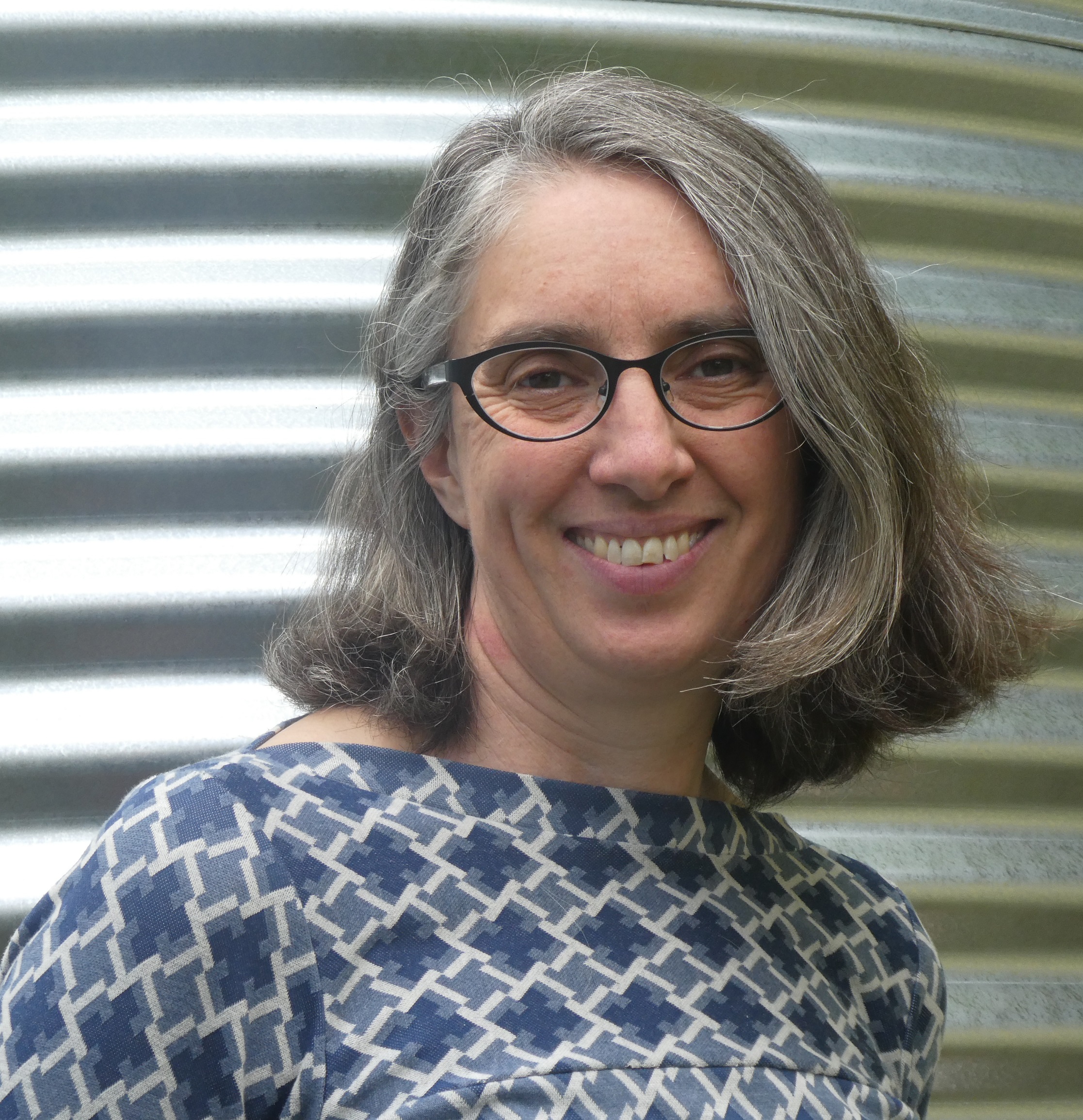
Dr. Megan Blaxland is a Senior Research Fellow at the Social Policy Research Centre (SPRC) of the University of New South Wales (UNSW), affiliated with the Faculty of Arts and Social Sciences. Her research focuses on improving policies and services for vulnerable families, particularly in early childhood education, care systems, and community services. She holds a B.Soc.Sc. (Hons) from UNSW and a PhD from the University of Sydney. Research Interests: Dr. Blaxland specializes in social policy, early childhood education and care (ECEC), family policy, and community systems resilience. Her work emphasizes equitable access to services for marginalized families and enhancing policy responsiveness to adversity. Publications: Her recent work addresses issues such as parenthood among disadvantaged young women, pandemic response in community sectors, and NDIS self-management practices. Key themes include policy implementation, service accessibility, and systemic challenges in social welfare. Affiliations: SPRC collaborator, UNSW academic, and advisor to Australian social policy initiatives. Active in interdisciplinary research with a focus on translating evidence into actionable policy.
Kirstin Kerr is a Professor at the Manchester Institute of Education (University of Manchester), specializing in educational equity, extended education, and place-based initiatives. She focuses on addressing educational disadvantage through community partnerships, policy analysis, and innovative methodologies. Her expertise includes sustainable area-based interventions, community schools, and theories of change applied to educational systems. She leads the World Education Research Association (WERA) Taskforce on Extended Education. Recent research emphasizes equity in market-driven systems and the role of hyperlocal strategies in education reform. External roles: Executive committee member of WERA Taskforce on Extended Education Key research areas: Community Schools, Place-Based Initiatives, Collective Impact, Interagency Collaboration Her work bridges academia and practice, aiming to transform educational systems through asset-based approaches and systemic equity frameworks. Notable impacts include policy recommendations for long-term sustainable change in disadvantaged areas. Supervised Work: 8 students (names unspecified) Grants/Projects: Includes evaluations of Children’s Zones and Talk of the Town Project Labs/Teams: Collaborates with networks focused on equity in education systems and policy implementation.
Willemijn Roozendaal is a Full Professor in Social Law at the Faculty of Law, Vrije Universiteit Amsterdam, with additional appointments at the Kooijmans Institute and in the domain of Fundamental Rights, Regulation and Responsible Government. She is actively engaged in research, teaching, and academic service, focusing on employment law, social security, and legal responses to societal transformation. Full Professor, Faculty of Law, Vrije Universiteit Amsterdam Full Professor, Kooijmans Institute Chair: Fundamental Rights, Regulation and Responsible Government Editor, Kluwer (since 2014) Her research centers on Employment Law and Social Security Law, particularly the legal frameworks governing flexible work, demographic decline, and fair treatment in social systems. She investigates how constitutional rights, especially the right to dignified treatment, can safeguard individuals in times of economic and social uncertainty. Her work bridges legal doctrine with broader societal challenges, advocating for sustainable and equitable social policies. The recent scholarly output reveals a consistent thematic trajectory: judicial adaptability in evolving labor markets, the impact of EU working time regulations on social dumping, and constitutional responses to existential insecurity. Her publications also explore the transformation of the citizen-state relationship and the need for a renewed human image in public governance. These works span both academic journals and public-facing platforms, indicating a commitment to influencing both legal scholarship and policy discourse. Willemijn Roozendaal actively supervises PhD research and has examined multiple doctoral theses. She teaches core courses in Social Security Law and contributes to advanced training in labor law. Her current research project, Behoorlijke bejegening in de sociale zekerheid (Fair Treatment in Social Security), is funded with a 100% research load from 2020 to 2026, underscoring her central role in advancing legal scholarship in this domain. She is a frequent keynote speaker and participant in academic and policy events, demonstrating leadership in her field. Her involvement in editorial work and public commentary further amplifies her impact beyond the university.
Associate Professor Scott Hawken is a faculty member at the University of Adelaide, affiliated with the School of Architecture and Civil Engineering within the Faculty of Sciences, Engineering and Technology. He serves as the Program Director for the Master of Landscape Architecture and Urban Design and is actively involved in teaching, research, and supervision at the postgraduate level. Position: Associate Professor, Landscape Architecture Role: Program Director, Master of Landscape Architecture and Urban Design Faculty: Sciences, Engineering and Technology School: School of Architecture and Civil Engineering Email: scott.hawken@adelaide.edu.au Dr. Hawken holds a PhD awarded in 2012 for his work mapping archaeological landscapes of Angkor using remote sensing. His research bridges landscape architecture, urban design, and landscape archaeology, emphasizing biodiversity-positive design, green infrastructure, and the use of advanced geospatial technologies. He is a national leader in promoting biodiversity in urban landscapes and chairs AILA's National Biodiversity Positive Working Group. His research interests span critical urban scholarship, radical political ecology, and the application of GIS, remote sensing, and geodesign in urban contexts. He has led international workshops across Asia, Europe, and North America and has consulted for the United Nations on urban development and human rights. His recent work includes editing a special issue for Urban Studies that integrates archaeology with contemporary urban planning and exploring biocultural digital twins and patch urbanism. The 15 most recent publications reflect a strong interdisciplinary trend, combining archaeology, urban studies, smart cities, and sustainability. His work consistently applies geospatial methods to historical and contemporary urban challenges, focusing on resilience, equity, and ecological integration in cities. Dr. Hawken has received recognition through editorial board appointments for Environment and Urbanisation ASIA and the Journal for Knowledge Based Development , and he regularly reviews for top journals. He was invited to deliver a keynote address to the Japanese Society of Landscape Architects in 2023. He is passionate about mentoring and is currently supervising or seeking PhD students in areas such as cultural landscapes, landscape archaeology, smart cities, green and blue infrastructure, and urban megaprojects. He has secured research grants related to urban resilience and digital transformation and has led the Smart Cities Research Cluster at UNSW in the past. Dr. Hawken leads research initiatives that integrate archaeological insights with modern urban design, particularly through his work on Angkor and rapid urban greening. He collaborates with government agencies, professional bodies, and international institutions to advance sustainable and equitable urban futures.
Professor Dominique A. Greer is a Professor in Marketing and Head of School at the School of Advertising, Marketing & PR within the Faculty of Business & Law at Queensland University of Technology (QUT). With extensive expertise in services marketing and consumer behavior, she leads significant research initiatives focused on risk communication, emergency warnings, and public transport safety. Dr. Greer holds a PhD from Queensland University of Technology, a Master of Arts (Writing, Editing and Publishing) from the University of Queensland, and multiple graduate certificates in academic practice and research commercialization from QUT. Her academic credentials reflect her commitment to both scholarly excellence and practical application of marketing principles. Her research primarily investigates how co-creation in professional services is disrupted by deviant consumer behavior, with specializations in experimental design, survey research, scale development, and both qualitative and quantitative data analysis. Professor Greer has made significant contributions to understanding risk communication during natural disasters, having led major collaborative research projects with government agencies and industry partners to improve public perceptions, trust, and acceptance of emergency warning systems. Her work extends to addressing women's safety on public transport and developing multi-hazard public information platforms. Professor Greer's publication portfolio demonstrates strong trends across services marketing, consumer behavior, and risk communication. Her recent work shows increasing focus on vulnerability in service contexts, technological solutions to service challenges (including service robots), and the intersection of marketing principles with disaster management and public safety. She publishes regularly in top-tier journals including the Journal of the Academy of Marketing Science, European Journal of Marketing, and Journal of Services Marketing. 2015 Australian Awards for University Teaching Award for Programs that Enhance Learning for the development and delivery of the Teaching Advantage Program Professor Greer has successfully secured and led multiple significant research grants, including a $7.1 million collaborative research program (2012-2014) between the Queensland State Government, CSIRO, Boeing Research & Technology Australia, Insitu Pacific Ltd, and QUT; a $2.39 million project (2014-2021) with the Bushfire and Natural Hazards Cooperative Research Centre; a $260,000 project (2022-2023) with iMove CRC; and an upcoming $600,000 project (2025-2027) with Natural Hazards Research Australia. She actively supervises research students at Honours, Masters, and PhD levels, with a current focus on 'the human factors in self-service technology.' Through her leadership roles and research collaborations with organizations including the Australian Institute of Disaster Resilience (AIDR) and the Australian and New Zealand Council for Fire and Emergency Services (AFAC), Professor Greer has significantly influenced national policy, notably contributing to the harmonization of natural hazard warnings across Australian jurisdictions into the Australian Warnings System (AWS).
Eliana Osorio Saez is a Lecturer in the Department of Education at the University of Bath , specializing in educational technology and digital pedagogy. She actively contributes to the EdD Summer and Winter Schools and has held external roles such as Senior Digital Education Developer at the University of Bristol since 2022, and previously as an E-Learning Specialist at the British Council Colombia and a Technology Specialist at Apple. Doctor of Philosophy , University of Bath (2022) Master of Arts , Bath Spa University (2016) Master of Arts , Universidad Externado de Colombia (2009) Bachelor of Arts , Universidad Popular del Cesar (2003) Her research focuses on the intersection of AI technologies and digital pedagogy , examining how institutions and individuals navigate the implementation of technology-based education. She investigates issues such as the digital divide , inclusive learning environments, and the evolving role of teachers in digital ecosystems. Her work often addresses policy implications, particularly in cross-national contexts, and includes collaborations with researchers from over 20 countries. Recent publications analyze parental engagement during the COVID-19 pandemic , the use of co-creation in educational settings, and longitudinal studies on technology adoption in schools. Her findings highlight disparities in digital access and provide frameworks for equitable educational technology integration. She contributes to educational technology consulting and serves as a Grants Reviewer for the UK AI Safety Institute. Her teaching spans BA(Hons) Education with Psychology and MA in Education programs, emphasizing critical thinking and digital skills in diverse learning environments.
Professor James Buchan is a renowned Honorary Professor at the National Centre for Epidemiology and Population Health, Australian National University, with over four decades of experience in health workforce policy and global health systems research. He holds concurrent appointments as Senior Fellow at the Health Foundation (UK), Adjunct Professor at the WHO Collaborating Centre, University of Technology Sydney, Senior Fellow at the University of Pennsylvania, and Visitor Professor at the National School of Public Health (Portugal). His research focuses on health workforce policy and planning , recruitment and retention , health systems reform , and labour market analysis . His work spans 50+ countries, addressing challenges like nurse migration , workforce sustainability , and post-pandemic recovery . Recent publications highlight global nursing workforce trends , workforce mobility , and policy frameworks for healthcare resilience. Scientific Awards & Affiliations: Senior Fellow, Health Foundation (UK) Senior Fellow, Center for Health Outcomes and Policy Research, University of Pennsylvania His publications emphasize workforce planning , global health governance , and equitable healthcare delivery , with a focus on low- and middle-income countries and post-crisis recovery strategies .
Dr. Lucy Natarajan is an Associate Professor at the Bartlett School of Planning, University College London . She specializes in participatory urban planning, social infrastructure, and crisis response, with a focus on integrating community knowledge into policy. Her work spans public, private, and charitable sectors, and she leads UCL’s Health Citizenship research cluster.
Debbie Sonu serves as Associate Professor of Curriculum and Teaching at Hunter College and is doctoral faculty in the PhD Program at The Graduate Center, City University of New York. Her academic career focuses on the intersection of curriculum theory, urban education, and critical childhood studies. She received her education in Urban Education from Teachers College, Columbia University in 2009. Her scholarly background informs her critical approach to educational systems and structures. Dr. Sonu's research examines how childhood memories shape educators' understanding of systemic inequities in schools, with particular attention to race, class, and identity. Her work critically analyzes concepts of childhood innocence and nostalgia, revealing how these constructs often obscure historical and contemporary educational injustices. She investigates how teachers' personal histories influence their capacity to recognize and challenge inequitable practices in educational settings. Her recent publications demonstrate a growing body of work that connects memory studies with critical pedagogy, showing how nostalgic narratives about childhood can reinforce normative ideas about education while ignoring the experiences of racially minoritized, queer, and trans children. Her research reveals how technological shifts during the pandemic created unexpected benefits for some marginalized students by providing respite from in-person school violence. Dr. Sonu has received research funding from the Social Sciences and Humanities Research Council of Canada, supporting her collaborative work with scholars across Canadian institutions. Her scholarship contributes significantly to understanding how personal memory intersects with structural analysis in teacher education, offering pathways toward more equitable educational practices that acknowledge historical and contemporary inequities rather than romanticizing idealized pasts.
James Shen is a Senior Lecturer at Otis College of Art and Design , where he contributes to the BFA Environmental Design program. He is also the Principal and Founding Partner of People’s Architecture Office and Co-founder of Plugin House Company , blending academic practice with real-world impact. Loeb Fellow, Harvard University Graduate School of Design (2017) Master of Architecture, Massachusetts Institute of Technology (2007) Bachelor of Science in Product Design, California State University, Long Beach (2001) James Shen’s research focuses on urban design , socially engaged architecture , and sustainable housing solutions . His work emphasizes community participation , modular plug-in systems , and adaptive reuse of existing structures. He has pioneered plugin architecture to address homelessness and post-disaster housing, combining critical pragmatism with design innovation . His projects span public space activation , affordable housing , and urban regeneration , often utilizing low-cost, scalable technologies. His publications include studies on interrogative design , plugin architecture , and cost-effective housing systems . Awards highlight his contributions to emerging architecture practices , innovative housing solutions , and public space design . Recent exhibitions at Lisbon Architecture Triennale , Oslo Architecture Triennale , and Design Society Museum showcase his international influence. 2022 Loop Design Awards Category Winner: Jingdezhen House-in-House Plugins 2019 Domus Magazine World’s 100+ Best Architecture Firms 2019 Aga Khan Award Finalist 2018 Fast Company World’s Ten Most Innovative Architecture Companies 2018 Architecture Review Emerging Architecture Practice James Shen has taught at MIT’s School of Architecture and Planning and Harvard’s Graduate School of Design , while serving as a Senior Research Fellow at Harvard’s Joint Center for Housing Studies. His work integrates design theory , urban practice , and social advocacy , reflecting a commitment to equitable architecture and community-driven innovation . Current projects include the Long Beach Covid-19 Memorial and Amoeba Public Restroom , demonstrating his ongoing exploration of flexible urban systems .
Nicholas Alexandre Dourado Beloso is a PhD candidate in Urban and Regional Development (40th cycle, 2024-2027) at the Polytechnic University of Turin, where he also serves as an external lecturer and teaching assistant at the Interuniversity Department of Territorial Sciences, Planning and Policies (DIST). His doctoral research investigates the relationship between Traditional Ecological Knowledge and Nature-Based Solutions in high-risk coastal communities of Brazil facing climate-related events. His research spans Climate Change adaptation, Nature-Based Solutions, Urban and Regional Governance, Environmental Justice, Sustainable Land Use, Territorial Resilience, and Risk Management. Beloso holds a Master's degree in Sustainable Architecture and Landscape Design from Politecnico di Milano (2022) and brings professional experience from architecture studios in Canada, Brazil, and Germany, alongside research collaborations in Brazil and Italy. He contributes to academic instruction as a course collaborator for the Master's Degree course "Designing with Nature-Based Solutions (Atelier)" in the Urban and Environmental Planning Module of the Urban and Regional Planning program for the 2025/26 academic year. His work directly supports United Nations Sustainable Development Goals 10 (Reduced Inequalities), 11 (Sustainable Cities and Communities), and 13 (Climate Action) through interdisciplinary approaches to climate resilience and equitable urban development.
Camille Barchers is an Assistant Professor in the Department of Landscape Architecture and Regional Planning at the University of Massachusetts Amherst, part of the College of Social and Behavioral Sciences. She is actively involved in interdisciplinary research and teaching, with affiliations including the Northeast Center for Coastal Resilience and the School of Earth and Sustainability Steering Committee. She was an ADVANCE Faculty Fellow (2022–2023) and contributes to applied scholarship that bridges planning practice and community engagement. Education: PhD, School of City & Regional Planning, Georgia Institute of Technology, 2019 M.R.P., Regional Planning, Cornell University, 2007 B.S., Natural Resources and International Agriculture & Rural Development, Cornell University, 2005 Her research focuses on how planners use technology to enhance public engagement and equitable long-range planning. Key interests include big data applications, information and communication technologies (ICT), land use and transportation integration, and the use of games and learning science in participatory planning processes. She emphasizes applied research that directly impacts community planning practices. Her recent scholarly work, reflected in conference presentations and studio projects, spans topics such as climate action planning (e.g., Impact 2045), scenario planning, transit authority studies, and the use of digital tools in public participation. These works collectively highlight a trajectory toward data-informed, inclusive, and resilient regional planning. Scientific Awards and Grants: Outstanding Mentorship Award, UMass Amherst College of Social and Behavioral Sciences (2023) Interdisciplinary Faculty Research Award (2020) ADVANCE Mutual Mentoring Grant (2021–2022) SES Sustainability Seed Grant Award (2022–2023) Camille advises students and leads studio courses that combine academic rigor with real-world application. She has secured competitive grants supporting faculty development and sustainability research. Her work is supported by institutional affiliations with centers focused on coastal resilience and sustainability, and she collaborates across disciplines to advance equitable planning outcomes. She is also a member of professional organizations including the American Institute of Certified Planners (AICP), American Planning Association (APA), and Association of Collegiate Schools of Planning (ACSP). She has led several impactful studio projects, including planning initiatives for Orange, MA (winner of the 2020 APA MA Student Project Award), Boxborough, MA, the Pioneer Valley Transit Authority, and New Haven County’s climate action plan. These reflect her commitment to community-engaged scholarship and student mentorship.
Dr. Steven Hadley is a Lecturer in Events and Tourism at De Montfort University, affiliated with the School of Humanities and Performing Arts. He is an internationally recognized cultural policy scholar with extensive research and consultancy experience across over thirty countries. He serves as Co-Editor in Chief of Cultural Trends and holds visiting positions at Leuphana University and the University of Leeds. His educational background includes a PhD, MBA (Distinction), MA (Distinction), and BA (Hons). Steven's research focuses on cultural policy , cultural democracy , arts management , and audience development . His work critically examines how cultural access is constructed and how institutions can enable democratic participation. He explores the ideological tensions within audience development and advocates for reflexive, equitable cultural policies. His recent publications reveal a strong thematic focus on cultural democracy, policy realism, and institutional critique. These works span disciplines including cultural studies, sociology of culture, and arts management, emphasizing ethical engagement, structural inequality, and policy innovation. His scientific recognition includes the Outstanding Paper of 2022 Award from Arts and the Market . He also serves on the Editorial Advisory Board of Arts and the Market and the Steering Committee of the Cultural Research Network. Steven has supervised no formal students listed, but his editorial and advisory roles demonstrate significant mentorship and leadership. He has led major consultancy projects for Arts Council England, the National Lottery Heritage Fund, and the Royal Irish Academy, focusing on cultural strategy, evaluation frameworks, and cross-border cooperation. His work bridges academia, policy, and practice. He is Chair of Dumbworld, an international multidisciplinary production company, and collaborates with organizations like The Audience Agency and the Danish Centre for Arts & Interculture. His global engagements include keynote talks at the European Parliament and ministries of culture in Paris and Santiago de Chile.
Patricia Krueger is an Associate Professor in the Department of Leadership in Education at the University of Massachusetts Boston, within the College of Education and Human Development. Her work centers on urban education and the critical examination of educational policies and their impact on youth in urban school systems. Her research focuses on understanding how young people perceive and experience social injustices within educational contexts. Utilizing mixed-method and participatory action research approaches, she emphasizes youth-centered visual narratives as tools for reimagining education as embodied and spatialized knowledge. This work bridges theory and practice in equitable and community-driven educational reform. Dr. Krueger-Henney earned her PhD in Urban Education from The Graduate Center at The City University of New York. Prior to her current role, she served on faculty in various teacher education programs and taught social studies in New York City public high schools, grounding her academic work in practical classroom experience. She is actively involved in several academic and research communities: a member and consultant for The Public Science Project at The CUNY Graduate Center, serves on the advisory board for SPARK, a graduate teacher education program at Keene State College, and acts as an editorial reviewer for peer-reviewed educational journals. These roles reflect her commitment to collaborative, justice-oriented scholarship and teacher development.
Lizzie Yarina is an Assistant Professor in the School of Architecture at Northeastern University, with affiliate roles in the School of Public Policy and Urban Affairs and Global Asian Studies. She holds a PhD in Urban and Regional Planning from MIT, specializing in sustainability and resilience. Her research critically examines the intersection of environmental risk, spatial politics, and climate adaptation practices, particularly in contexts like Vietnam’s Mekong Delta. Her work challenges technocratic norms in climate planning and explores how such frameworks reshape global responses to environmental crises. She co-edited the interdisciplinary volume Climate Changed: Models and the Built World (Columbia University Press) and is completing a book on climate adaptation politics in the Mekong Delta. Lizzie’s research interests span interdisciplinary approaches to urban resilience, climate justice, and the geopolitical dimensions of environmental policy. She investigates how spatial representations and models influence decision-making in vulnerable regions. Awards include the Fulbright-Hays Doctoral Dissertation Award (2022), Foreign Language and Area Studies Fellowship (2021), and Fulbright New Zealand Fellowship (2017). Her work intersects academic research with policy engagement, advocating for equitable and participatory climate solutions. Her publications analyze topics ranging from managed retreat strategies to transboundary water management, emphasizing the socio-political dimensions of environmental adaptation. Lizzie collaborates across disciplines, fostering dialogues between architects, policymakers, and communities to reimagine resilient futures.