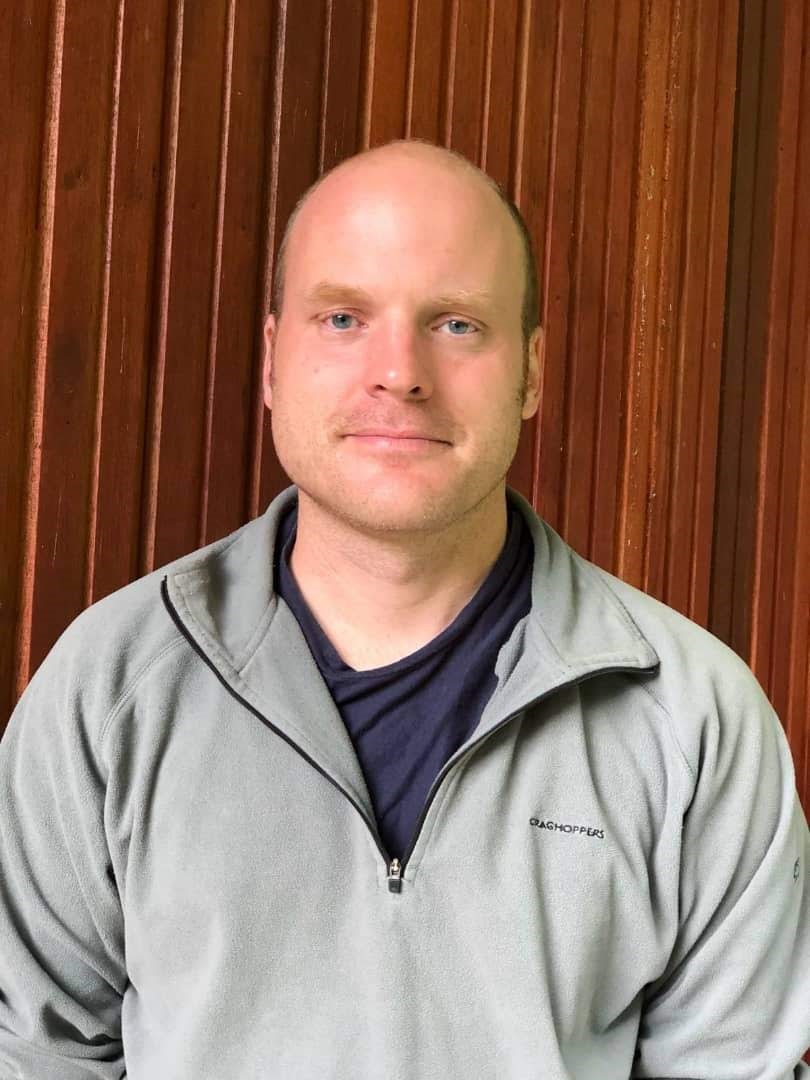
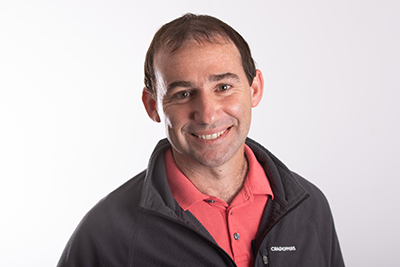
Professor Tariq Butt of Swansea University's Faculty of Science and Engineering leads the Biocontrol and Natural Products (BANP) group , focusing on entomopathogenic fungi and natural product-based biopesticides for managing pests impacting food security , human health , and agriculture . He co-directs the Natural Products BioHub and Health Technology Solutions Research Institute . His cross-disciplinary research includes collaborations with Dr Joel Loveridge (Chemistry) for chemical ecology, Professor Chedly Tizoui (Engineering) for plant-based molluscicides, and Professor Dan Eastwood (Biosciences) for fungal biocontrol. Externally, he works with experts in Greece, Brazil, Turkey, Saudi Arabia , and companies like Certis Belchim and Lallemand . Recent publications highlight his work on fungal volatile organic compounds for pest control, mosquito repellents , and microbial consortia to reduce chemical dependencies. He has supervised over 35 PhD/MSc students and contributed to 174+ peer-reviewed articles and 14 book chapters .
Dr. Ben Clunie is a Lecturer in Entomology at Harper Adams University, UK, specializing in applied entomology with expertise in integrated pest management (IPM) and agroecology. He holds a PhD from Swansea University focusing on wireworm control in potato crops. His research emphasizes sustainable agricultural practices, including the use of biopesticides and entomopathogenic fungi. Teaching roles span undergraduate programs (BSc Zoology, Wildlife Conservation & Ecology) and postgraduate courses (MSc Entomology, Integrated Pest Management). Professional memberships include the Royal Entomological Society and the Association of Applied Biologists. Research interests center on biological control strategies, plant-insect interactions, and environmentally friendly pest management. His work explores volatile organic compounds (VOCs) and their role in pest control efficacy, as well as practical applications of IPM in agroecosystems. Dr. Clunie is affiliated with the Entomology Group at Harper Adams and actively contributes to academic outreach via Twitter (@benclunie) and GitHub repositories related to experimental design and survival analysis tools.
Professor James Bull is a faculty member in the School of Biosciences, Geography and Physics at Swansea University, within the Faculty of Science and Engineering. His academic rank is Professor, specializing in population dynamics, disease ecology, and spatial connectivity in ecological systems. He conducts research using mathematical modeling, field observations, and experimental approaches to address challenges in marine conservation, agri-environmental sustainability, and biodiversity loss. Research Interests: Spatial connectivity and movement patterns in populations Marine mammal ecology and seagrass dynamics Pest control strategies and pollinator biology Climate change impacts on species resilience Recent Articles: His work spans studies on seagrass restoration, mosquito repellent development, and grey seal phenology. Key areas include habitat suitability modeling, biological control agents, and the impacts of environmental changes on species distribution. Grants & Projects: He has led projects funded by EU ERDF (SEACAMS2), INTERREG (BLUEFISH), and DEFRA, focusing on coastal management and pest control. Labs/Teams: Coordinates the Biosciences Maths and Statistics Support (BioMaSS) and supervises postgraduate research in ecology and conservation biology.
Dr. Tom Fayle is a Senior Lecturer in Ecology at Queen Mary University of London, affiliated with the School of Biological and Behavioural Sciences. His research focuses on community ecology, conservation biology, and behavioral ecology, particularly examining species interactions and their responses to environmental changes. He studies ecological networks, ant-plant mutualisms, and tropical ecosystem dynamics. Key areas of research include network ecology, big data applications in ecology, and the impacts of land-use change on tropical invertebrates. His work spans global collaborations, such as the Global Ants database and the LifeWebs project. Recent publications highlight studies on symbiont networks, fungal-host associations, and the resilience of tropical ecosystems to human activities. Dr. Fayle supervises students in biodiversity and conservation, and his research has been supported by grants exploring forest carbon dynamics, ant community ecology, and conservation thresholds. He is part of the Centre for Biodiversity and Sustainability, contributing to initiatives that bridge ecological research with conservation policy. His lab engages in field studies across tropical regions, emphasizing applied ecology and biodiversity preservation.
Dr. Joel Loveridge serves as an Associate Professor in the Department of Chemistry within Swansea University's Faculty of Science and Engineering. Previously a Senior Lecturer since joining Swansea in 2016, he established himself as part of the university's new Chemistry Department initiative after transitioning from Cardiff University where he held a Lectureship in NMR Spectroscopy since 2012. His academic journey began with an MSci in Chemistry with Industrial Experience and PhD in Biological Chemistry from the University of Bristol. His research spans enzymology, natural products biosynthesis, and antimicrobial compound synthesis, with particular expertise in NMR spectroscopy and enzyme dynamics. Early career work focused on dihydrofolate reductase mechanisms and protein dynamics, evolving toward applied research in fungal volatile organic compounds for agricultural applications. His publication record reveals a strategic shift from fundamental enzymology toward biocontrol solutions, particularly investigating Metarhizium species as sources of biostimulants and pest control agents. His 15 most recent publications demonstrate increasing collaboration with agricultural scientists, reflecting expansion into microbial pest management. The research trajectory shows progression from pure biochemical studies to field applications, with recent work examining VOC-based molluscicides, wireworm repellents, and slug management systems. This evolution highlights his commitment to translating biochemical insights into practical agricultural solutions. Fellow of the Higher Education Academy Organizer of Royal Society of Chemistry South Wales West Local Section's Science and Energy demonstration series Coordinator of Swansea University's Spectroscopy in a Suitcase program As an active supervisor, he currently mentors multiple PhD candidates investigating Metarhizium applications, plant protection mechanisms, and semiochemical-based pest control strategies. His teaching portfolio includes advanced organic chemistry, biological and medicinal chemistry, and analytical chemistry modules, reflecting his commitment to developing innovative chemistry curricula that integrate subject knowledge with professional skills. His public engagement efforts include chemistry carnivals at science festivals and extensive outreach through the Royal Society of Chemistry.
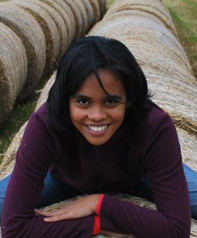
Kalsum M. Yusah is a Principal Investigator at Universiti Malaysia Sabah, focusing on animal responses to human-driven environmental changes with a primary emphasis on ant communities. Her research explores impacts of logging, forest fragmentation, and oil palm conversion on ant-plant interactions, vertical stratification of ant communities in canopies, and climate change predictions through ant scavenging rate analysis along altitudinal gradients. She collaborates with the Stability of Altered Forest Ecosystems (SAFE) project, Sabah Parks, and Danau Girang Field Centre for banteng conservation studies. Current research spans ant community dynamics in tropical rainforests and human disturbance effects on wild cattle distribution Collaborators include institutions in UK, Czech Republic, Australia, and Malaysia Her PhD students investigate entomopathogenic fungi-arthropod interactions, ant co-occurrence patterns, and pest control in oil palm using weaver ants. Funding sources include UMSGreat, Czech Science Foundation, and SEARRP.
Dr. Thierry Maffeis is an Associate Professor in the Electronic and Electrical Engineering Department within the School of Aerospace, Civil, Electrical and Mechanical Engineering at Swansea University. His research focuses on the fabrication, characterization, and application of zinc oxide nanostructures, with particular emphasis on understanding how surface chemistry affects electrical and optical properties for improved gas sensing devices. Dr. Maffeis specializes in several key research areas including Zinc Oxide Nanostructures, Surface Science, Gas Sensing, X-ray Photoelectron Spectroscopy, and Cryo-electron microscopy. His work bridges fundamental materials science with practical applications in sensor technology, nanoelectronics, and environmental monitoring. He employs a wide range of advanced characterization techniques including field emission SEM, scanning probe microscopy, and photoluminescence to investigate nanoscale phenomena. Analysis of Dr. Maffeis's recent publications reveals a strong focus on surface engineering of zinc oxide nanostructures, particularly examining how treatments like vacuum annealing and argon bombardment affect electrical properties and band structure. His research spans both fundamental materials science and practical applications, with significant contributions to gas sensor development. Additionally, he has expanded his expertise into interdisciplinary areas including nanotoxicology, biocontrol using entomopathogenic fungi, and biomedical applications of nanomaterials. Dr. Maffeis actively supervises multiple PhD and master's students across diverse research projects. His current supervision includes work on designer nanoparticles for biomedicine and energy, deposition and photonics of clusters and devices, and surface studies of gas sensing materials. He has recently overseen the completion of PhD projects on forecasting solar energy generation using machine learning and production of nanoparticles for various applications. His teaching responsibilities include Introduction to Electromagnetics, Applied Electromagnetics, and Nanoscale Structures and Devices.
George Christophides is a Professor of Infectious Diseases and Immunity at Imperial College London and Director of the Vector Immunogenomics and Infection Laboratory. He holds adjunct roles at the Cyprus Institute and has held visiting positions at institutions globally. His research focuses on mosquito immunity, malaria transmission, and climate change impacts on health. He completed his PhD at the National and Kapodistrian University of Athens and has led international projects funded by the Wellcome Trust and Bill & Melinda Gates Foundation. His work includes developing gene drive strategies to engineer malaria-resistant mosquitoes and advancing synthetic biology tools. He is an elected Fellow of the Royal Society of Biology and contributes to global health policy through organizations like the IPCC and IAP. Education: PhD (2000) and BSc (1993) from the National and Kapodistrian University of Athens. Academic roles include Reader (2009–2011) and Senior Lecturer (2005–2009) at Imperial College London, as well as leadership roles at the Cyprus Institute (President 2020–2021, Associate Dean 2014–2020). Research interests span vector biology, microbial interactions, and climate change's role in disease spread. Key contributions include sequencing mosquito genomes and pioneering functional genomics. His lab explores mechanisms to block malaria transmission, such as targeting Plasmodium sporogony and engineering resistant populations via gene drives. Collaborations with institutions worldwide emphasize translational research and global health equity. Awards: Wellcome Trust Investigator (2015–2021), Fellow of the Royal Society of Biology. His work is supported by grants from the Gates Foundation and European initiatives. He advises on climate change adaptation and vector-borne disease control, authoring reports for the IPCC and IAP. Grants and collaborations include projects on gene drive efficacy, climate modeling for disease vectors, and microbiome effects on mosquito immunity. His lab's interdisciplinary approach integrates genomics, immunology, and environmental science to address global health challenges.
Dr. Frank Thomas Ndjomatchoua is a Researcher at the University of Cambridge , Department of Plant Sciences. His work focuses on computational modeling of agricultural pests and diseases, integrating climate change impacts and mathematical frameworks to predict outbreaks and develop control strategies. He also applies nonlinear dynamics to ecological systems and contributes to malaria vector modeling. Ph.D. in Physics (2018), University of Yaoundé 1 M.Sc. in Physics (2013), University of Yaoundé 1 B.Sc. in Physics (2010), Le Mans Université His research spans agricultural epidemiology , nonlinear dynamics , and climate risk modeling , utilizing statistical and computational methods to address insect pest outbreaks, pathogen spread, and ecological stability. Recent projects explore thermal risk indices, bistable oscillator networks, and hybrid machine learning approaches for disease vector prediction. Dr. Ndjomatchoua has supervised postgraduate students and taught physics to undergraduates. He collaborates with institutions like the International Rice Research Institute and consults on financial modeling. Contact: tfn21@cam.ac.uk
Roger Santer is a Lecturer in Zoology at the Department of Life Sciences, Aberystwyth University, within the Institute of Biological, Environmental and Rural Sciences (IBERS). He holds a BSc in Zoology (Newcastle University, 1999) and a PhD in Invertebrate Neuroethology (Newcastle University, 2003). Prior to joining IBERS in 2010, he held postdoctoral positions at Newcastle University (2003–2006) and the University of Nebraska-Lincoln (2006–2008), followed by a lectureship in Biology at the University of Limerick (2008–2010). His research focuses on animal behavior and the neural mechanisms underlying it, particularly visually-guided behavior in insects and arachnids. Techniques include electrophysiology, behavioral studies, and computational modeling. His work aligns with UN Sustainable Development Goals related to biodiversity conservation and sustainable ecosystems. He led the project Conservation of butterflies under natural and modified illumination conditions (2017–2020), funded by the Welsh European Funding Office. Media coverage highlights his research on insect visual perception, including why biting flies are attracted to blue objects and the role of UV lighting in butterfly behavior. Collaborations span institutions like the University of Nebraska-Lincoln and international partners, with datasets and open-access publications emphasizing pest control strategies and arthropod sensory biology.
Paul Dean is a Senior Lecturer in Microbiology at Teesside University's School of Health and Life Science (SHLS). His research focuses on understanding pathogen infection mechanisms and host responses, particularly in microbes like E. coli , Salmonella , and Microsporidia. He employs advanced microscopy techniques to study protein transporters enabling pathogens to exploit host cells. Dean lectures in Biomedical Science, Dietetics, and Microbiology programs, covering modules such as Medical Microbiology and Immunology. He actively engages in outreach via STEMulate and moderates Access to HE Diplomas. His work has yielded over 20,000 microscopic images, several journal covers, and collaborations on projects like fluoride's effect on gut microbiota and microbial life in extreme environments. Research emphasizes how pathogens 'steal' metabolites from hosts, with notable studies on Microsporidia nucleotide transporters and E. coli 's effector proteins. Dean has co-authored over 40 publications and serves as an editor for journals including PLOS One and Frontiers in Microbiology . His recent projects include investigating cariogenic biofilm interventions and ancient microbial life in salt mines.
Professor Ioli Kotta Loizou is a molecular microbiologist specializing in viruses, bacteria, and fungi at the University of Hertfordshire. She holds a Professorship in Plant Pathology and leads the Crop Protection and Climate Change research group. As Co-director of the Centre for Agriculture, Food and Environmental Management Research, she focuses on mycoviruses' roles in agricultural and environmental contexts. Her research interests include viral ecology in fungal pathogens, molecular mechanisms of viral co-infection, and applications of mycoviruses in pest control. Notable areas of study involve Aspergillus fumigatus , Dothistroma septosporum , and entomopathogenic fungi like Beauveria bassiana . Recent work emphasizes computational tools for mycovirus discovery (e.g., DiscMycoVir platform) and explores how viral infections influence fungal virulence and ecological fitness. Collaborations span institutions globally, addressing topics like climate change impacts on crop protection and viral-driven pest management strategies. She has secured funding for projects investigating mycoviruses in pine needle blight fungi and entomopathogenic fungi applications. Over 70 peer-reviewed publications demonstrate her cross-disciplinary approach bridging virology, microbiology, and agricultural science.
Dr. A Francis is a University Lecturer in the Faculty of Divinity at the University of Cambridge, part of the School of Arts & Humanities. Their work focuses on theological studies and religious history, with contributions to academic discussions in comparative religion and biblical analysis. Dr. Francis holds a position within the Divinity Faculty, contributing to teaching and research in theological disciplines. Research interests include the study of religious texts, historical theology, and interfaith dialogue. Their scholarly contributions emphasize interdisciplinary approaches to religious studies, integrating historical, philosophical, and sociological perspectives. Publications span theological analysis and religious ethics, though the listed articles suggest an additional focus on biological research (possibly attributed to a different individual with the same name, given the mismatch with Divinity Faculty context). These include studies on host-parasite interactions, Wolbachia symbiosis, and evolutionary immunology in Drosophila models. No scientific awards or grants are explicitly mentioned in the provided texts. Students and advising roles are not listed. The faculty affiliation implies involvement in undergraduate and graduate teaching programs related to Divinity studies.
Dr. David Studholme is an Associate Professor in the College of Life and Environmental Sciences at the University of Exeter, specializing in the Department of Biosciences. With over 437 publications and 76,151 reads on ResearchGate, his work focuses on bioinformatics and computational approaches to understanding plant pathogens and infectious diseases. Dr. Studholme earned his PhD from Imperial College London in 1998, followed by an MSc with Distinction from the University of East Anglia (1994) and a BSc (Hons) from Southampton University (1993). In 2012, he completed a Postgraduate Certificate in Academic Practice at the University of Exeter. His research spans two main themes: understanding the evolution and emergence of infectious diseases and deploying bioinformatics to address biological questions, particularly around plant pathogens. His laboratory work is primarily computer-based, with extensive collaborations across the UK and internationally. His expertise centers on handling data from massively parallel DNA sequencing (next-generation sequencing) and applying these methods to study plant pathogens, particularly Xanthomonas species that cause devastating diseases in crops like bananas, beans, and brassicas. Analysis of his recent publications reveals a strong focus on genomic approaches to plant pathology, with particular emphasis on Xanthomonas pathogens, fungal diseases of amphibians, and computational methods for genomic analysis. His work bridges computational biology with practical agricultural applications, developing tools for pathogen identification, tracking disease outbreaks, and exploring biocontrol solutions for crop diseases. Dr. Studholme has held his current position as Associate Professor since 2013, having previously served as a Senior Lecturer at the University of Exeter (2009-2013). His career includes significant roles as Head of Bioinformatics at The Sainsbury Laboratory (2004-2009), Computer Biologist at the Wellcome Trust Sanger Institute (2002-2004), and postdoctoral positions at Southampton and Imperial College London. He actively contributes to research networks including Exeter Food Health Analytics and Microbes and Society at Exeter, with research spanning microbiology, genetics, plant biology, bioinformatics, and agricultural biotechnology. His work has important implications for food security, sustainable agriculture, and understanding pathogen evolution.
Ali Rajabpour is a Full Professor of Entomology at the Agricultural Sciences and Natural Resources University of Khuzestan, Iran, and a Visiting Professor at Macquarie University, Australia. Since 2011, he has been actively involved in academic research and teaching. His work focuses on insect population ecology and integrated pest management (IPM), with over 80 research articles, nine textbooks, and 100+ conference papers. He serves on the editorial boards of Journal of Plant Diseases and Protection (Springer) and Plant Protection . Research Interests: Dr. Rajabpour’s research spans Insect ecology and pest population dynamics, Biological control strategies, Development of sampling techniques for pest monitoring, Evaluation of biorational and synthetic pesticides, Impact of climate on pest behavior, Application of GIS and machine learning in pest management. Projects & Grants: Notable projects include pilot studies on termite control, sequential sampling plans for Heliothis sp., and aphid population dynamics. His work has been funded through grants since 2009, with active projects in 2024–2025 focusing on pest monitoring and molecular dynamics of carbon nanomaterials. Awards & Recognition: While no specific awards are listed, his editorial roles and prolific publication record reflect his academic contributions. Labs & Teams: Collaborates internationally on pest management research, with active partnerships in Iran, Australia, and other countries. Leads research groups specializing in entomology and precision agriculture.