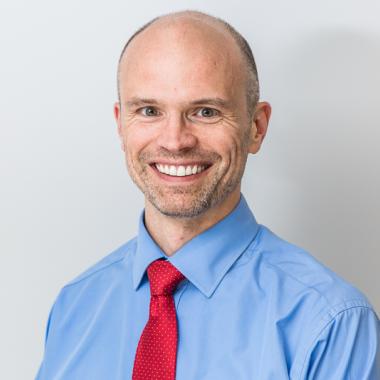
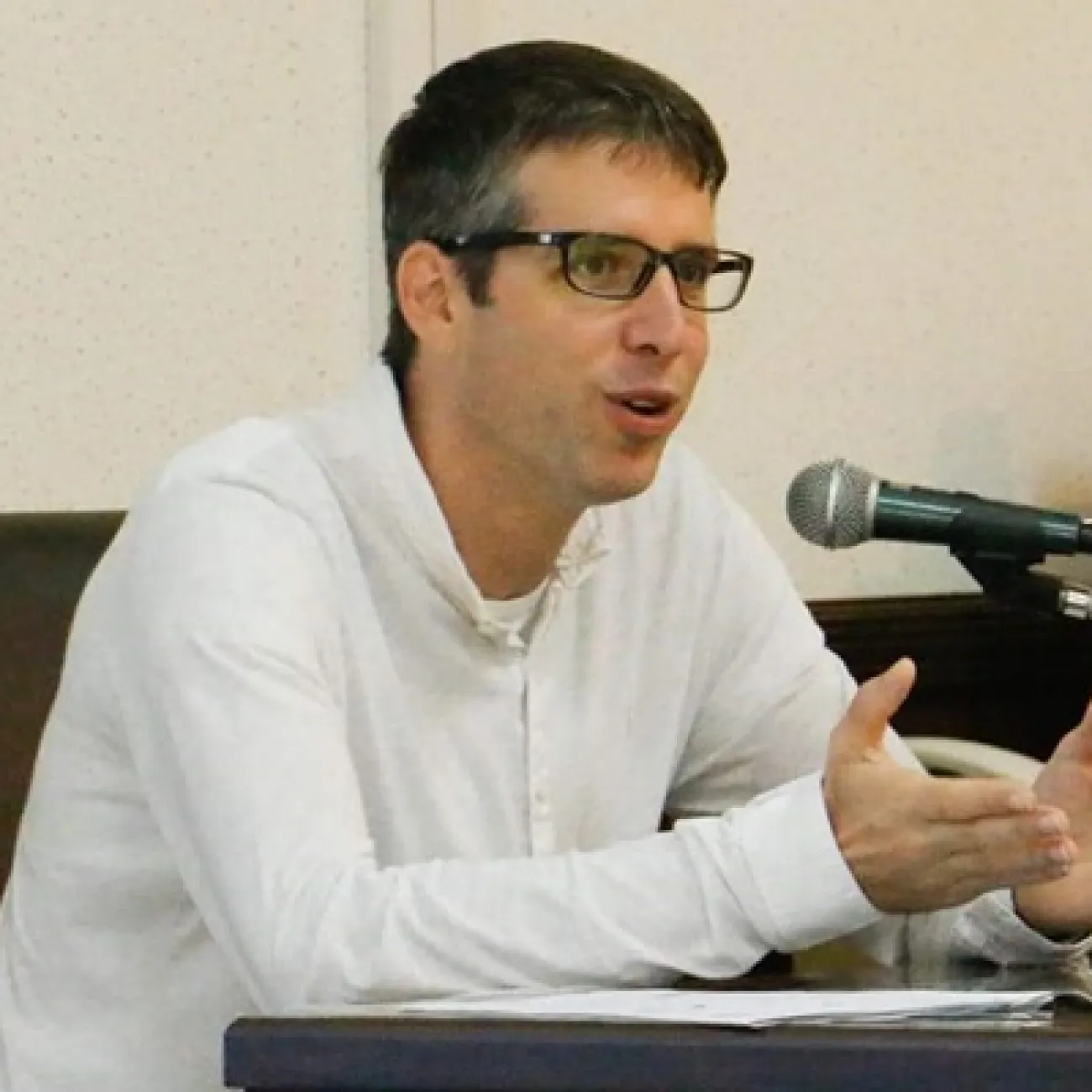
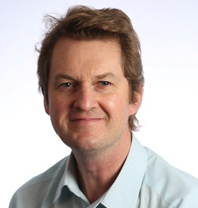
Professor Luke Harding is a faculty member at the Department of Linguistics and English Language , Lancaster University , within the School of Social Sciences . His work bridges applied linguistics, language assessment, and critical discourse studies, with a focus on the ethical and societal implications of testing. Research Interests : Language testing and assessment, World Englishes and English as a Lingua Franca (ELF), second language listening and pronunciation assessment, diagnostic approaches to language evaluation, and language assessment literacy. Recent projects integrate digital technology and corpus linguistics into testing frameworks. Publications : Published extensively in Language Testing , Applied Linguistics , and Language Assessment Quarterly . Co-edited the Routledge Handbook of Language Testing (Second Edition) (2022), a key reference work in the field. Teaching : Leads modules in Language Test Construction and Evaluation , Issues in Language Testing , and Statistical Analysis for Language Testing within the university's distance MA program. Leadership : Convened the Language Testing Research Group with colleagues Tineke Brunfaut and John Pill, advancing interdisciplinary approaches to assessment.
Dr. Louise Palmour serves as a Lecturer in English for Academic Purposes within the School of Modern Foreign Languages at the University of Glasgow. Her academic profile centers on advancing oral communication assessment and intercultural dynamics in global higher education contexts through teaching and research initiatives. Her educational foundation includes: PhD in Applied Linguistics from the University of Southampton (2020) Masters in Applied Linguistics for Language Teaching from the University of Southampton (2013) BA in Russian Studies from the University of Nottingham (2010) Research focuses intensely on oracy development and oral assessment practices within English Medium Instruction environments, with pioneering work examining sociolinguistic fairness in presentation evaluations. She integrates English as a Lingua Franca frameworks to address equity issues while employing qualitative methodologies to investigate classroom dynamics. Her scholarship challenges conventional assessment constructs through multimodal analysis and intercultural perspectives. Publication trends (2019-2024) reveal consistent contributions to oral assessment validity, particularly regarding construct representation in EAP contexts. She demonstrates increasing emphasis on sociolinguistic justice and ELF-aware practices, with methodological rigor spanning journal articles in Language Testing and conference presentations at BALEAP/BAAL events. Her British Council report provides practical frameworks for oral skills development in academic settings. Key recognition includes: ESRC Postdoctoral Fellowship (2021) at the Centre for Global Englishes, University of Southampton Current teaching encompasses Teaching English for Academic Purposes, Developing Professional Practice in TESOL, and Advanced English for Business Students. Previous instruction includes Language Testing and Assessment in Society, English as Medium of Instruction, and Dissertation Skills for Applied Linguistics/TESOL. As an active BAAL and BALEAP member, she bridges research and practice through conference leadership and practitioner resources.
Lisa Fairbrother is an Associate Professor at Sophia University in Tokyo, specializing in intercultural interaction, sociolinguistics, and classroom discourse. Her research focuses on challenges in intercultural contact situations, particularly through the lens of Language Management Theory. She explores the management of 'foreignness' and power dynamics in English-as-a-lingua-franca interactions, with current data collection from multilingual workplaces in Japan. Intercultural Communication Sociolinguistics Language Management Theory Multilingual Workplaces Her teaching includes British and American culture, English speaking skills, and sociolinguistic analysis of classroom interactions.
Christopher J Hall is Professor of Applied Linguistics at the York St John University , School of Education, Language and Psychology. With a PhD in Linguistics from the University of Southern California, he has made significant contributions to the fields of Global Englishes, Second Language Acquisition, and cross-linguistic influence. His research explores the social and cognitive dimensions of English as an international language, notably through the co-developed Parasitic Model of vocabulary learning with Peter Ecke. A Fellow of the Higher Education Academy (FHEA), he has taught at undergraduate and postgraduate TESOL courses while supervising postgraduate researchers. His book Ontologies of English (CUP, 2020) was shortlisted for the 2021 BAAL Book Prize. Recent collaborative work with colleagues in Germany and China focused on reconceptualizing English in teacher education, supported by the British Association for Applied Linguistics' Applying Linguistics fund. He has served in editorial and committee roles for major academic organizations like BAAL and QAA Linguistics Review Group.
Mario Saraceni is an Associate Professor in English Language and Linguistics at the University of Portsmouth, Faculty of Humanities & Social Sciences. His research focuses on English as a transnational, de-anglicized language, examining its political, ideological, and sociocultural dimensions. He teaches on BA and MA programs, emphasizing English as a global language and textual analysis. His work aligns with the UN Sustainable Development Goals, particularly in education and global citizenship. Collaborations include projects in Thailand, Uzbekistan, and Europe, with a focus on language pedagogy and decolonization. Research Outputs: He has 41 publications, including works on World Englishes, language ideologies, and decolonization. His 2021 co-authored chapter on decolonizing Englishes and 2020 analysis of Brexit's linguistic implications highlight his critical approach. He contributed to the Routledge Handbook of World Englishes and The Handbook of Asian Englishes . Scientific Awards: Recipient of the 2016 British Association for Applied Linguistics Book Prize for his contributions to English language research. Activities: He has participated in conferences like IAWE 25 (2023), edited Bloomsbury World Englishes volumes, and organized events such as the BAAL SIG Annual Conference (2019). His projects include CPD courses on teaching methodology and research skills for PhD students.
Sean Sutherland is a Lecturer in English Language at the University of Westminster’s Department of English, Linguistics and Cultural Studies. He holds a PhD in Applied Linguistics from King's College London (2010), an MA in Applied Language Studies from Carleton University (2001), and a Bachelor of Journalism from Carleton University (1994). His academic career spans teaching roles in Japan and Korea, followed by his current position in London. PhD Applied Linguistics, King's College London (2010) MA Applied Language Studies, Carleton University (2001) Bachelor of Journalism, Carleton University (1994) His research focuses on discourse analysis (language in use), sociolinguistics, World Englishes, and English as a Lingua Franca. He has published extensively on team teaching dynamics in Japan, critical online discourse, and language education practices. Recent publications include a 2023 book chapter on corpus-based pedagogy and a 2020 article on stylistic strategies in online commentary. His work on team teaching challenges the native speaker fallacy in language education, analyzing power dynamics between Japanese teachers and native English-speaking assistants. He supervises PhD students like Giulia Pepe, whose research examines Italian migrants’ language practices in London. Current affiliations include the English Language and Linguistics Research Group at Westminster. Contact: S.Sutherland@westminster.ac.uk
Anna Costantino is a Senior Lecturer in Languages at Regent's University London, specializing in applied linguistics and Italian language education. With over 35 years of experience (since 1986), she has held roles at multiple institutions including the University of Greenwich and Bishopsgate Institute. She leads the Foundation Certificate in Acting (Humanities and Social Sciences) and contributes to course development in acting and global theatre programs. Her qualifications include a PhD in Education from King's College London and an MA in Journalism Studies from the University of Westminster. Her research focuses on inclusive practitioner research, critical pedagogies, and language teacher/learner development. Notable methods include materials development, creative research approaches, and transdisciplinary perspectives. She has authored/co-authored works such as Obiettivo: Professione and contributed to journals like Scenario: A Journal for Performative Teaching and Rethinking Multimodal Literacy . Anna's teaching spans undergraduate and postgraduate levels, emphasizing collaborative and ethical pedagogical practices. She has advised on curriculum design and serves on the editorial board of Tuttitalia , a journal for language learning. Her work bridges theory and practice, addressing challenges in multilingual and multicultural education contexts.
Dr. Will Baker is an Associate Professor in Modern Languages and Linguistics at the University of Southampton, serving as Director of the Centre for Global Englishes. His research focuses on Global Englishes, English as a Lingua Franca (ELF), intercultural communication, and English Medium Instruction (EMI). He holds a PhD in Applied Linguistics from the University of Southampton and has taught for over 10 years in the UK and Thailand, specializing in English for Academic Purposes. Research interests: Decolonizing English education, language policy, transcultural communication, and EMI pedagogy Leadership roles: Editor for De Gruyter Mouton's 'Developments in English as a Lingua Franca' series International collaborations: Studies on language policies in European and Asian universities He has supervised numerous doctoral students and published over 50 works. Key contributions include co-editing major book series and presenting at global conferences on ELF, intercultural communication, and decolonization in education.
Kari Sahan is a Lecturer in Second Language Education at the University of Reading's Institute of Education. They co-direct the MA in English Language Education (Guangdong), offering programs delivered in collaboration with Guangdong University of Foreign Studies. Their teaching focuses on research methods, second language pedagogy, assessment strategies, and multilingualism in education. Research interests center on English as a global language's impact on education, particularly in higher education contexts. Key areas include English Medium Instruction (EMI), Content and Language Integrated Learning (CLIL), translanguaging pedagogy, and language policy in transnational education. Ongoing and completed projects include studies on EMI implementation in Turkey, Thailand, Vietnam, and digital innovation in teacher training funded by the British Council. Publications span conference presentations and peer-reviewed articles addressing EMI policy-practice gaps, student and teacher perceptions, and global EMI trends. Current projects emphasize multilingual research methodologies and EMI's emotional dimensions. Supervision focuses on EMI pedagogy, translanguaging, and global Englishes in teaching. Key grants: British Council-funded EMI teacher training (2022), Global EMI Mapping (2020-2021) Professional roles: Member of EMI Oxford Research Group, Assistant Project Lead for Teaching English in Global Contexts
Dr Jeremy Filet is a Lecturer in French at the School of English, Manchester Metropolitan University. He holds a French National Qualification for the title of Lecturer in Literature, Linguistics, and Languages, and is a Fellow of the Royal Historical Society and Senior Fellow of the Higher Education Academy. His research focuses on the Jacobite diaspora in France from the 18th century to modern cultural impacts, emphasizing the interplay between educational travel and politics via travel narratives as tools of performative diplomacy. He has published extensively on Jacobite studies, Lorraine's role in early modern diplomacy, and travel literature. Education: Teaching career began in France (2016) before roles at University of Liverpool and University of Lorraine. Previously led international training programs for PhD students at the Education University of Hong Kong (2017-2019). Awards & Grants: National Grant for Doctoral Excellence (University of Lorraine), Manchester Jean Monet Centre Grant, BSECS Research Fund, and multiple others. Consultancy: Advised BBC Radio’s You’re Dead to Me , Château de Lunéville (French Ministry of Culture), and various media appearances. Research interests span 18th-century studies, travel literature, and comparative methodologies, with a particular focus on transnational networks and cultural diplomacy. Recent work includes examining the Jacobite presence in France through the lens of the Grand Tour and Lorraine’s diplomatic role. His monograph on Jacobite diaspora was published by Manchester University Press. He is affiliated with the IDEA Research Lab and Manchester’s History Research Centre.
Hugo Bowles is an Honorary Professorial Research Fellow at the University of Buckingham's Vice-Chancellor's Office. Over 30 years, he has taught English linguistics at four Italian universities and conducted pioneering research in applied linguistics, focusing on legal/medical English, English as a lingua franca, and literary stylistics. His work bridges linguistics and literature, particularly in analyzing Charles Dickens's manuscripts through stenographic techniques. Education: MA in Classics, University of Cambridge PGCE in English, University of Oxford MPhil in English and Applied Linguistics, University of Cambridge PhD in English, University of Cambridge Research Interests: His current projects include the Dickens Code initiative (winner of the 2022 Times Higher Education Award), which deciphers Dickens's shorthand manuscripts, and editing a new Oxford edition of Pickwick Papers . His work explores the intersection of orality, textual analysis, and Dickens's creative process. Awards: 2022 Times Higher Education Award for best research project in Arts, Social Sciences and Humanities ESSE Book Prize for Storytelling and Drama (2010) Teaching & Grants: Specializes in discourse analysis and stylistics. His research has been supported by crowdsourced collaboration and institutional grants for the Dickens Code project. Labs/Teams: Co-founder of the Dickens Code project, collaborating with international scholars and crowdsourced researchers to analyze Dickens's handwritten manuscripts.
Sahan Kari is a researcher specializing in English-medium instruction (EMI) in higher education. His work critically examines the intersection of language policy, pedagogical practices, and emotional dimensions in multilingual academic environments. Collaborating with scholars like N. Galloway and J. McKinley, he has extensively studied EMI implementations in Turkey, Thailand, and Vietnam. Research Focus: EMI policy-practice gaps, translanguaging, academic language challenges, and student motivation. Key Collaborations: Joint studies with Ernesto Macaro, Heath Rose, and international teams across China, Turkey, and Southeast Asia. Publications: Over 20 peer-reviewed articles and book chapters analyzing EMI's sociolinguistic and educational impacts, with a 2024 monograph on Turkish EMI systems. His recent work highlights multilingual research methodologies and critiques of 'English-only' hegemony in university settings, advocating for more inclusive language practices.
Eoin Jordan serves as Research Professor and Director of the International Education & Lifelong Learning Institute (IELLI) at the Centre for International, Language and Teacher Education Research, University of St Andrews, UK. His work focuses on enhancing educational practice through technological innovation and linguistic understanding, with leadership roles in program development and practitioner mentorship. His educational credentials include a Doctor of Education in Higher Education from the University of Liverpool (2021), HEA Senior Fellowship (2018), Certificate in Professional Studies in Learning and Teaching in Higher Education (Distinction) from the University of Liverpool (2011), MA in Applied Linguistics and English Language Teaching (Distinction) from the University of Nottingham (2010), CELTA from the Royal Society of Arts (2004), and BSc in Economics from the University of Nottingham (2000). Professor Jordan's research spans technology-enhanced learning, online peer assessment, World Englishes, English for academic purposes, pronunciation, vocabulary acquisition, assessment design, and intercultural communication. His work consistently bridges theoretical research with practical educational applications, particularly through digital tool development for language learners. His recent publications (2024-2025) reveal a concentrated focus on intercultural competence development through digital resources, language curriculum innovation, and evidence-based support systems for international student transitions. A dominant trend involves leveraging technology to address linguistic and cultural barriers in global higher education contexts. His scientific recognition includes: HEA Senior Fellow (2018) Professor Jordan actively supervises doctoral and master's students on DProf TESOL and MSc International Education programmes, with seven dissertations publicly available on topics ranging from technology-mediated vocabulary learning to lecturer English proficiency in EMI universities. He developed the Reading and Writing Tools platform (www.readingandwritingtools.com) for academic English support and serves as External Examiner for University of Dundee and University of Birmingham programs, while contributing to LanguageCert Academic panels. As Director of IELLI, he leads strategic initiatives including the development of web-based intercultural competence resources and student transition tools, collaborating with international institutions to enhance educational quality and equity in global learning environments.
Alex Ho-Cheong Leung is a Lecturer at Northumbria University specializing in Second Language Acquisition and Applied Linguistics. He joined Northumbria as a part-time lecturer in TESOL in 2012 and has been employed as a full-time lecturer since the academic year 2012-2013. He serves as Secretary of the British Association for Applied Linguistics (BAAL) and holds editorial positions with several academic journals including Open Linguistics and ELT Journal. His educational background includes: PGCHE (July 20, 2015) DPhil in Linguistics (November 23, 2012) BA (Hons) in English (September 1, 2007) Dr. Leung's research focuses on Second Language Acquisition, Second Language Speech & Phonology, Applied Linguistics and TESOL, Teacher Identity and Experience, Racialisation of the TESOL Profession, Language Attitudes and Variations, Lived Experience of Ethnic Minoritised Students, and English Historical Linguistics. His work examines the complex interplay between linguistic, social, and cultural factors in language learning contexts, with particular attention to Hong Kong and Southeast Asian contexts. His recent publications demonstrate a strong focus on transdisciplinary approaches to second language acquisition, with particular emphasis on phonological development, the impact of social factors on language learning, and innovative teaching methodologies. His research spans multiple contexts including Hong Kong, Southeast Asia, and European settings, examining diverse populations from young learners to adult professionals. Dr. Leung actively supervises postgraduate research, currently guiding Nancy Dieu-Ngoc Nguyen's work on "TRANSNATIONAL VIRTUAL EXCHANGE FOR GLOBAL CITIZENSHIP EDUCATION BEYOND WEIRD CONTEXTS." He has secured research funding for projects including "(Re-)Exploring Ethics in Applied Linguistics Research" and "Perceptions of vulnerability of clinical populations involved in biomedical research," demonstrating his commitment to advancing ethical practices in language research.
Andrew Preshous is a Senior Lecturer in Academic English at the School of Humanities, Faculty of Arts and Humanities, Coventry University. With extensive international experience teaching English in Greece, Poland, Hong Kong, Malaysia, and the UK, he specializes in English for Specific Purposes (ESP) and English for Academic Purposes (EAP). Education: MA in Teaching English for Specific Purposes, University of Warwick BA (Hons) in English and Greek Civilisation, University of Leeds His research focuses on English for Specific Academic Purposes, discourse analysis (written and spoken), materials development in EAP, and teacher training methodologies. He has held key roles such as Module Leader for Advanced English for Business and Work Placement in ELT, and has lectured on MA in ELT courses including Designing Language Training Materials and English for Business. Recent publications include co-authored works on IELTS Foundation materials (2012), alongside articles on ESOL in Further Education, workplace English training, and Malaysian English features. His professional certifications include CELTA Trainer (2011), RSA/UCLES qualifications, and specialized FE training credentials. Andrew actively contributes to professional activities such as serving on the BALEAP executive committee, advancing standards in EAP and teacher training.


/prod01/yorksjacuk/media/content-assets/safe-images/1600-x-1000/CHRIS-HALL-6.jpg)