Dr. Etieno Enang is an academic with a focus on organizational strategy, narrative analysis, and technological innovation. He currently coordinates the BUSINESS IN THE GLOBAL ECONOMY module (MKIB225) and contributes to research exploring storytelling in strategic contexts, Industry 4.0/5.0 transitions, and AI in education. His work bridges management theory with practical applications in organizational behavior and educational technology. Research Interests: Strategy formulation through narratives Embodied sensemaking in crises Techno-economic transitions in manufacturing AI integration in academia Recent Themes in Publications: His articles analyze storytelling's role in leadership, Industry 5.0's value-centric shift, and the adoption of AI tools like ChatGPT in teaching. This reflects a dual focus on qualitative organizational studies and applied technological inquiry.
Ardion D. Beldad is an Associate Professor at the University of Twente, Netherlands, specializing in consumer behavior, digital communication, and crisis management. His research focuses on trust dynamics in technology adoption, intercultural integration in academic settings, and effective crisis communication strategies. He has published extensively in journals like the European Journal of Engineering Education and SAGE Open, with over 1982 citations and an h-index of 19. Key research areas include: consumer decision-making processes, corporate social responsibility (CSR) communication effectiveness, and the impact of digital technologies on social behaviors. His work bridges theoretical frameworks (e.g., Technology Acceptance Model) with practical applications in education, health sectors, and nonprofit organizations. Recent studies explore interdisciplinary curriculum design for engineering education, factors influencing autonomous vehicle acceptance, and cross-cultural integration challenges faced by international PhD candidates. He has supervised PhD examinations in system design and evaluation methods. His research often employs mixed methods, including narrative inquiry and longitudinal studies.
Renee Chow is a Senior Research Fellow at Monash University's Australian Regenerative Medicine Institute and Victorian Heart Institute. She leads her own lab (since 2023) focusing on heart valve development, disease progression, and injury healing mechanisms using zebrafish genetics, live imaging, and micromanipulation techniques. PhD, University of Cambridge (retinal development under Prof. Bill Harris) Postdoctoral research with Dr. Julien Vermot in Strasbourg (mechanical forces in heart development) Lefoulon-Delalande Fellowship recipient (2019) Her research explores how heartbeat-induced mechanical forces regulate cardiac morphogenesis, particularly heart valve formation, through biophysical signaling pathways like Nfat and Hippo. She employs advanced imaging technologies including photoconversion and phase-matching methods to study calcium dynamics in zebrafish hearts. Current work involves collaborations across Australia and New Zealand, with recent presentations at the 2025 Australia and New Zealand Zebrafish Meeting. Her publications emphasize mechanical force regulation of cardiac development and bioregenerative applications. Scientific Awards : Lefoulon-Delalande Foundation Fellowship (2019)
Yangqiuting "Doris" Li is an Assistant Professor in the Department of Physics at Oregon State University, specializing in Physics Education Research (PER). Her work focuses on enhancing students' motivational beliefs through inclusive learning environments, investigating sense-making in advanced physics courses like quantum mechanics, and developing tools for diverse learner backgrounds. Education: PhD and MS in Physics from the University of Pittsburgh, BS in Physics from Nanjing University. Research trends from her publications highlight: improving quantum mechanics and quantum computing pedagogy, addressing gender and ethnic disparities in STEM, leveraging structural equation modeling for identity studies, and analyzing inclusivity's impact on academic performance. She emphasizes active learning and hybrid educational formats. Li collaborates with Dr. Chandralekha Singh (University of Pittsburgh) and Dr. Eric Burkholder (Auburn University). She is currently recruiting graduate students for her research team.
Darby Orcutt serves as Director of Interdisciplinary Partnerships at North Carolina State University Libraries, holding affiliate faculty roles in multiple centers including the Genetic Engineering & Society Center and the Leadership in Public Science Cluster. Their work bridges library services with interdisciplinary research, focusing on AI ethics, disaster-impacted STEM education, and community-engaged scholarship. Research interests include leveraging informal learning post-disaster to foster student resilience, urban ecology recovery post-hurricanes, and advancing ethical frameworks for AI integration in society. Orcutt has led projects such as the RAPID grant-funded initiative engaging disaster-impacted students in urban forest research, combining ecological data collection with community-driven STEM identity building. Publications span AI governance, library innovation, and disaster response strategies. Orcutt’s current efforts emphasize collaboration across academic, industry, and community stakeholders to address societal challenges through transdisciplinary approaches.
Angela Calabrese Barton is the Chair of Educational Studies and holds the Alvin Demar Loving Sr. Collegiate Professor of Education title at the University of Michigan’s Marsal Family School of Education. Her research focuses on equitable and socially just science education, particularly for historically minoritized youth, emphasizing youth agency, identities, and STEM as tools for social transformation. She employs participatory and critical approaches, collaborating with youth, teachers, and communities to disrupt systemic inequities. Her work integrates community-based learning and maker-entrepreneurial initiatives, such as the I-Engineering and FamJam projects, funded by NSF. Notable contributions include frameworks like 'Rightful Presence' and 'Consequential Learning,' which guide justice-oriented educational practices. She has authored over 120 publications and is a member of the National Academy of Education, with prestigious fellowships from AERA and AAAS. Key awards include AERA’s 2018 Exemplary Contributions to Practice-Engaged Research and 2022 Equity and Social Justice Award. Her grants focus on equitable STEM pathways, climate justice, and community co-design. She leads projects like Science Learning+ and Black + Brown Queer Futures Rising , emphasizing partnerships with communities to foster inclusive STEM ecosystems. Her research highlights how youth navigate STEM landscapes, leveraging critical science agency and community infrastructuring. She advocates for systemic change through participatory pedagogy and policy advocacy, ensuring education serves as a catalyst for social justice.
Jung Sun Oh is a Lecturer at the University of Wisconsin – Madison, affiliated with the School of Computer, Data & Information Sciences. She holds a Master's in Library and Information Science from Yonsei University (Korea) and a PhD in Information and Library Science from the University of North Carolina at Chapel Hill. Her research focuses on Metadata, Linked Open Data, and Information Behavior in Social Media. Dr. Oh teaches courses such as LIS 751 (Database Design) and LIS 603 (Research & Assessment), reflecting her expertise in information science education. Her work bridges library and information science with computational and data-driven methodologies. Her research trends, as seen through her publications, emphasize advancements in stem cell biology, hematopoietic differentiation, and immunotherapy applications. She explores genetic regulators (e.g., NOTCH4, SOX17) influencing cell lineage decisions and develops CAR-engineered cells for cancer treatment. Recent studies highlight innovations in neutrophil engineering and lymphoid pathway modulation using pluripotent stem cells. Though no awards are explicitly listed, her extensive publications indicate recognition within her field. She actively contributes to interdisciplinary research at the intersection of information science and biomedical engineering, with a focus on translational applications in healthcare.
Lea Redfern is a Lecturer in the Discipline of Media and Communications at the University of Sydney, Faculty of Arts and Social Sciences. She has been teaching since 2017, developing audio courses and integrating podcasting across disciplines. Her research focuses on podcasting pedagogy, voice studies, and the politics of listening. Redfern holds an honours degree in Communications (first-class) from the University of Technology Sydney and is currently completing a Graduate Certificate in Educational Studies (Higher Education). Education: Bachelor of Communications (Honours) - University of Technology Sydney Graduate Certificate in Educational Studies (Higher Education) - in progress Her research interests emphasize educational podcasting , aural narratives , and voice as a communicative tool . She explores how podcasting democratizes storytelling and fosters empathy through listening practices. Her work bridges academic theory with industry expertise, informed by over 20 years at the ABC. Recent publications analyze podcasting's role in political discourse, feminist media, and literary adaptation. Media engagements include discussions on the US election's podcasting landscape and abortion rights advocacy. Redfern has received international recognition for her radio drama and documentary work, including the 2016 Sarah Award and 2003 Human Rights Radio Award. Awards: 2016 Sarah Lawrence College International Audio Fiction Award 2003 Australian Human Rights Radio Award Teaching spans undergraduate and postgraduate courses in audio design, podcasting theory, and media research. She advises on projects blending audio with interdisciplinary themes. No labs or formal research teams are explicitly mentioned in her profile.
Omer Sheriff is an Associate Professor at the Missouri School of Dentistry and Oral Health (MOSDOH), part of A.T. Still University. He holds advanced degrees including BDS, MDS, and PhD. His research focuses on dental education innovation, antimicrobial therapies, and inflammation mechanisms in endodontics. Notably, he received a $350,000 grant from Viome in 2025 to advance his research. Education: He completed his dental training with a BDS degree, followed by an MDS in Dentistry and a PhD in Medical Sciences. His academic work bridges clinical practice and educational methodology, particularly in interprofessional collaboration and virtual learning environments. Research Interests: Dr. Sheriff explores cutting-edge areas such as graphene nanoparticles for endodontic disinfection , α-mangostin-based antimicrobial agents , and cytokine dynamics in periapical inflammation . His recent work emphasizes e-learning tools to enhance dental student skills and interprofessional education models for healthcare teams. Professional Contributions: He delivered a guest lecture at Memorial Sloan Kettering Cancer Center in 2025 and actively participates in initiatives like Give Kids a Smile events. His grants and peer-reviewed publications reflect a commitment to advancing both clinical practice and educational standards in dentistry. Labs/Teams: Collaborates with interdisciplinary teams in biomaterials research and endodontic microbiology, leveraging advanced in vitro models to test novel treatments.
Brad Warren serves as a Teaching Associate in the Department of Languages and Intercultural Studies at Coastal Carolina University, joining the faculty in Fall 2021 to teach French and Intercultural Studies courses. His academic credentials include: Bachelor of Education in French & English Secondary Education from York University (2012) Master of Arts in French Literature from the University of Tennessee at Knoxville (2004) Bachelor of Arts in French & Canadian Studies from Plattsburgh State University (2001) Warren's scholarly work centers on Franco-American Literature and Culture , examining cross-border cultural dynamics between France, Canada, and the United States through literary and cinematic lenses. His research explores diaspora communities, identity formation, and intercultural communication within North American contexts. As co-director of National Canadian Film Day at CCU, Warren promotes Canadian cinema through curated screenings and discussions. He combines his academic work with professional music production and engineering, while raising two sons with Slovenian-Canadian-American heritage.
Anna-Lena Östern is a Professor at the Faculty of Social Sciences and Education, Norwegian University of Science and Technology (NTNU). Her academic journey includes previous roles as professor in drama education at the University of Jyväskylä (1999–2003) and Bergen University College (2000–2002). She specializes in drama pedagogy, performative learning, and the intersection of arts and education. Her research emphasizes Engagement through dramaturgical methods Planning of teaching strategies in higher education Role of communication ethics in educational settings Notable contributions include studies on performative literacy practices and professional identity formation through critical life narratives . She has authored/co-authored over 30 publications, including works on interdisciplinary educational methodologies and Nordic educational networks. Recipient of the Svenska Kulturfondens pris 2022 , her work aligns with UN SDG 4 (Quality Education) through innovative pedagogical frameworks integrating arts and technology.
Sarah Castle is an Assistant Professor of Mathematics Education at the University of Idaho's Department of Mathematics and Statistical Sciences, with an affiliation to the College of Education, Health and Human Sciences. She holds a Ph.D. (2023) and M.S. (2022) in Mathematics Education and Mathematics from Michigan State University, alongside dual bachelor's degrees in Engineering Physics and Mathematics from Whitworth University (2016). Her research focuses on two core themes: 1) Using computation to uncover and address systemic inequities in undergraduate STEM education, and 2) Leveraging computational environments to foster mathematical creativity among marginalized students. Her work integrates critical pedagogy with computational tools to explore how coding and computational thinking can democratize access to STEM disciplines. Key areas of investigation include: structural inequities in STEM course outcomes, the role of groupwork in linguistically diverse classrooms, and the design of computational modules that enhance mathematical creativity. Her recent studies examine systemic advantages affecting student success across six universities and demonstrate how coding strengths can be harnessed to improve mathematics learning in computational science contexts. Awards and grants: While no specific awards are listed, her research has been disseminated through top-tier conferences like the ACM Technical Symposium on Computer Science Education and the AERA Annual Meeting. Her work is supported by interdisciplinary collaborations across mathematics, education, and computing fields. Teaching: She instructs courses such as EDCI 411, EDCI 434, MTHE 410, and others bridging mathematics education and pedagogical theory.
Kieran Williams is an Associate Professor in the Department of Political Science at Drake University, where he has taught since 2004. He previously held an associate professorship at University College London’s School of Slavonic and East European Studies, advising the UK Foreign Office. He holds an A.B. from Princeton University and a DPhil from the University of Oxford. His research focuses on comparative politics, specializing in Central and Eastern Europe with particular expertise in democratization processes, intelligence agencies, and the legacy of Václav Havel. He has authored/co-authored four books, including a prize-winning study of the 1968 Prague Spring and a co-edited volume on Havel’s intellectual legacy. His recent work examines electoral systems, transitional justice, and security policy in post-communist states. Teaching focuses on comparative politics, European systems, Russian politics, and political theory. Courses include POLS 136: Intelligence Agencies , POLS 146: Politics in Russia and Former Soviet Union , and POLS 167: The US & Iran . He regularly contributes to the Times Literary Supplement and writes on Medium about historical and contemporary political issues. Recent research includes analysis of Czech electoral constitutionalism, memory politics, and security sector reforms. His writings critically engage with issues like weapon ownership debates in post-communist contexts and the interplay between legal frameworks and dissent movements. Current Sabbatical: 2025-2026 academic year Office: Meredith Hall 212 | Phone: 515-271-4522 Professional networks: Member of Drake’s College of Arts & Sciences faculty since 2004
Laura Rodriguez is an Associate Professor in the Education Department at Eastern Connecticut State University, specializing in K-12 science education. She holds a Ph.D. from the University of Connecticut (2020), with a dissertation focusing on STEM identity in intergenerational informal learning. With over 23 years of K-12 teaching experience across four U.S. states and Peace Corps service as a fisheries extensionist in Ecuador, her career bridges formal and informal educational spaces. Her research emphasizes STEM identity development, particularly in underserved populations. As lead researcher on an NSF S-STEM grant ( Beyond the Curriculum: A Learning Community for Success ), she supports low-income STEM majors through scholarships and community-building initiatives. She also consults on similar grants at the University of St. Joseph. Research Interests: STEM identity, science teacher education, K-12 engineering education Teaching Philosophy: Socially interactive learning rooted in student agency and cultural capital International Experience: Pre- and post-doctoral work in Thailand and Japan via the Pacific Rim Engineering Mitigation Program Her interdisciplinary approach is evident through collaborations with faculty across disciplines and international partnerships. Rodriguez’s work consistently integrates community engagement and equity-focused strategies into STEM education initiatives.
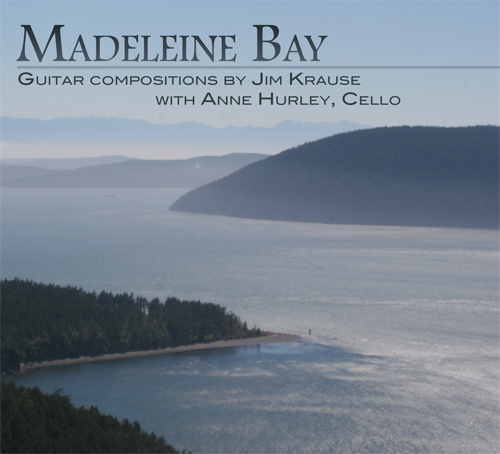
James Krause is a Senior Lecturer and Director of Media Arts & Production at The Media School, Indiana University, where he has been teaching since 1999. His expertise spans media production, visual design, documentary filmmaking, and music composition. Dr. Krause holds an M.S. in Instructional Systems Technology from IU School of Education, a B.A. in Telecommunications from Indiana University, and an A.S. in Audio Technology from IU School of Music. His teaching portfolio includes multi-camera TV studio production, video field and post-production, graphics and animation, and cinematography courses, with additional specialty areas in audio production, lighting, and motion graphics. His professional experience encompasses 30 years of video production and two years as an audio engineer. He directs Tabletop Productions, a digital project studio serving corporate, broadcast, and educational clients. His creative work demonstrates a strong commitment to documenting Indiana's cultural heritage through projects like The Indiana Theatre at 100 (2023), The Spirit of Brown County , and Elkinsville: Washed Away by Progress . Dr. Krause's recent output shows consistent productivity across documentary filmmaking, music composition, and educational media. His 2023 documentary on the historic Buskirk-Chumley Theatre represents the culmination of his expertise in historical documentation and public broadcasting, premiering on WTIU PBS. His work spans traditional documentaries, concert films, institutional promos, and artistic profiles, demonstrating versatility across media formats. Documentary filmmaking focusing on Indiana's cultural heritage Music composition blending classical, folk, and indigenous traditions 360-degree video production for educational and festival contexts Collaborative projects with artists across disciplines As a musician, Dr. Krause has released two acclaimed instrumental albums, Crossing the Inland Sea (2009) and Madeleine Bay (2010), featuring his guitar compositions paired with cellist Anne Hurley. These collections, inspired by travels under sail and by foot, have received praise for their "exceptional beauty and artistry." He recently formed the Longwood Trio with bassist Dave Bruker and is working on an upcoming project tentatively titled Ontario .