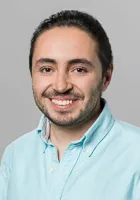
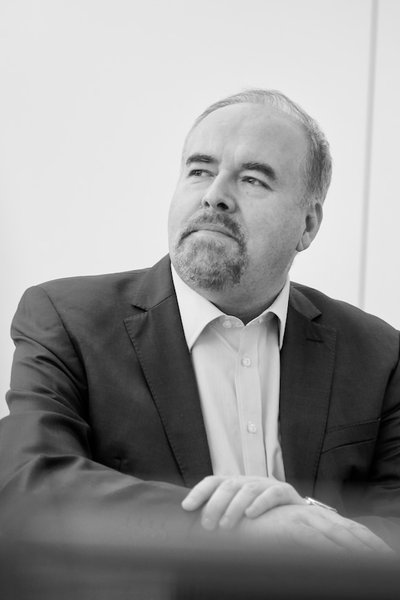
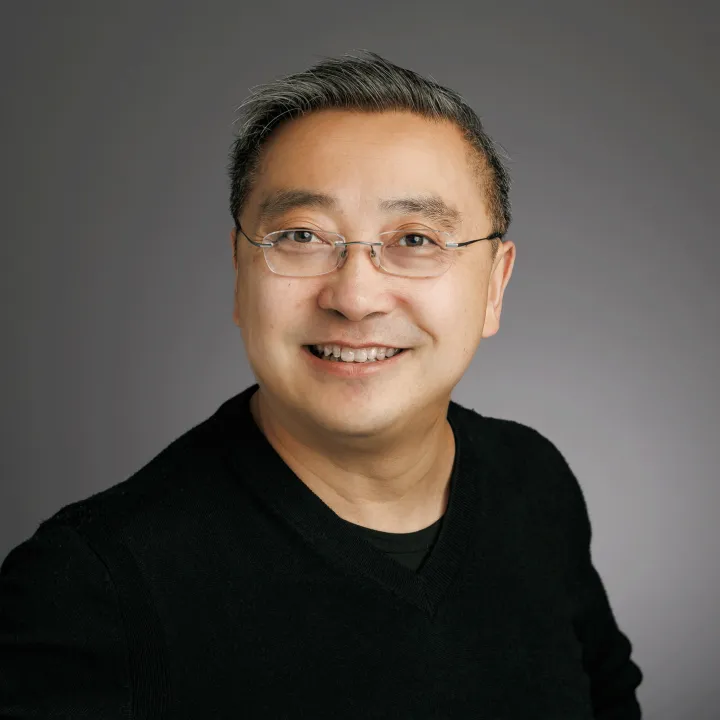
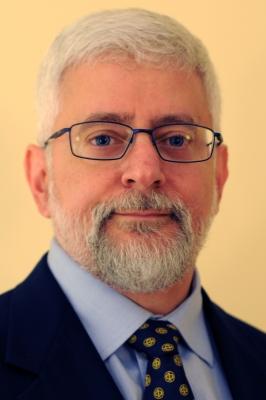
Ting He is a Professor in the Department of Computer Science and Engineering, specializing in interdisciplinary research at the intersection of network sciences, energy systems, and cybersecurity. Their work addresses critical challenges in network tomography, software-defined networking, and cyber-physical systems, with a strong emphasis on advancing edge computing and decentralized learning paradigms. NSF-funded research on Distributed Edge Intelligence (2024–2025) Collaborative projects on Overlay Networks and Adversarial Reconnaissance in SDN Recent publications analyze network topology inference, energy-efficient decentralized learning, and secure cloud file systems. Their research aligns with UN SDGs through contributions to sustainable energy systems and secure IT infrastructure. Key collaborations with Silvestri, La Porta, and Chaudhuri Active in Smart Grid resilience and cascading failure mitigation
Jüri Raud (born August 6, 1972) is an Associate Professor in Plasma Spectroscopy at the Institute of Physics, Faculty of Science and Technology, University of Tartu. He has been a dedicated researcher at the University of Tartu since 2000, progressing from Senior Engineer to Research Fellow, Senior Research Fellow, and currently Associate Professor since 2021. His academic career spans over two decades of research in plasma physics with significant contributions to plasma spectroscopy, plasma chemistry, and plasma medicine applications. His educational background includes: Doctoral Degree in Physics (2009), University of Tartu Master's Degree in Physics (2001), University of Tartu Undergraduate studies in Physics (1995-1999) and Geology (1990-1995), University of Tartu Raud's research focuses on plasma spectroscopy, plasma chemistry, and plasma medicine, with particular emphasis on plasma diagnostics, gas discharge physics, and medical applications of plasma. His work bridges fundamental plasma physics with practical applications in materials science and medicine, especially in understanding plasma-liquid interactions and their biomedical implications. He has made significant contributions to understanding ionization processes in various gas mixtures and their applications in plasma medicine. His recent publications (2022-2024) demonstrate a strong focus on plasma diagnostics, plasma medicine applications, and plasma-material interactions. The research trends show a clear progression toward medical applications of plasma, with numerous studies on plasma-activated water, reactive species production, and their effects on cancer cells. His work also maintains strong foundations in fundamental plasma physics, particularly in ionization coefficients and discharge characteristics across various gas mixtures. Raud has been actively involved in teaching physics at both the University of Tartu and Masaryk University, covering courses in computer hardware, electromagnetism, and laboratory physics. He serves as Chairman of the gas discharge physics seminar at the University of Tartu and as the EFDA JET Technical Contact Person for Remote Participation on fusion experiments in Estonia. His research group focuses on plasma spectroscopy techniques, plasma diagnostics, and the development of plasma applications in medicine and materials processing. The team collaborates extensively with international partners in the field of plasma physics and fusion research, contributing to both fundamental understanding and practical applications of low-temperature plasmas.
Farzan Banihashemi serves as a Research Fellow at the Chair of Energy Efficient and Sustainable Design and Building at the Technical University of Munich (TUM), maintaining this affiliation since 2019 while concurrently working as a Data Scientist at Climateflux GmbH since 2023. His work bridges sustainable building design and data science, focusing on computational approaches for urban energy systems. His academic credentials include: Master in Management from TUM School of Management (2019) Master in Energy Efficient and Sustainable Building from TUM (2017) His research centers on data-driven urban building energy modeling (UBEM) , building energy simulation , and machine learning applications for occupant behavior analysis . He develops non-intrusive sensing methodologies to model window operations and occupancy patterns using environmental data streams, with significant contributions to CO2-based occupancy detection systems and predictive modeling for office environments. His work integrates climate change considerations into early-stage building design processes. Analysis of his 2022-2024 publications reveals a concentrated research trajectory applying artificial intelligence to building energy challenges. Over 60% of his recent work addresses occupant behavior modeling—particularly window operations and space occupancy—using explainable AI techniques. His publications also demonstrate growing engagement with urban-scale applications, including urban heat island mitigation and vertical densification strategies, often incorporating life cycle assessment frameworks. No scientific awards were documented in the source materials. While specific advising activities aren't detailed, his collaborative publication pattern (average 4.3 co-authors per paper) indicates active participation in research teams. Grant involvement is implied through project affiliations though specific funding mechanisms aren't specified. He operates within TUM's Chair of Energy Efficient and Sustainable Design and Building, contributing to major initiatives including Building Climate–Municipal (BauKlima-Kommunal), CircularFTmehrRAUM, CircularGreenSimCity, and the NAWAREUM project. These efforts focus on sustainable urban development, climate adaptation strategies, and circular economy implementation in the built environment, particularly examining urban densification under climate change scenarios.
Dr. Bob Beitle Jr. is a Professor of Chemical Engineering and Senior Associate Vice Chancellor for Research and Innovation at the University of Arkansas. He joined the department in 1993, earned tenure in 1998, and was promoted to Full Professor in 2006. His research spans biochemical engineering , bioseparation , fermentation , and adaptive technology for the disabled , with significant work on protein purification, catalytic nanoparticles, and sustainable bioprocesses. Education: BS, MS, PhD in Chemical Engineering from the University of Pittsburgh (1987, 1991, 1993) Dr. Beitle's research combines experimental and computational approaches, focusing on peptide-directed nanoparticle synthesis and biocatalysis . His recent publications highlight advancements in MOF-based separations , CO2 capture materials , and viral detection platforms . He has secured grants like the CAREER Award and led projects in industrial partnerships and student development . Scientific contributions include multiple patents in bioseparation and software interfaces. Awards span decades: teaching honors (1988–2007) and mentorship recognition . He serves on the Cell and Molecular Biology Program Advisory Committee and the Executive Committee for the Biochemical Technology Division of ACS . Lab initiatives involve genomic data-driven affinity tail design and membrane-assisted fermentation systems .
Joseph Francois is a Professor of Economics and Director at the World Trade Institute (WTI) , affiliated with the Economic Institute at the University of Bern. He previously served as Deputy Director of the NCCR Trade Regulation (2015–2017) and held professorships at Johannes Kepler Universität Linz, Erasmus University Rotterdam, and other institutions. His research spans international economics, trade policy, globalization, environmental economics, and computable general equilibrium (CGE) modeling. Key focus areas include cross-border production chains, trade in services, open economy competition policy, financial market integration, and the interplay between trade agreements and sustainability goals. Scientific distinctions include a Fellowship at the Centre for Economic Policy Research (London). His methodological expertise includes CGE modeling, econometric estimation of large nonlinear systems, and policy analysis of trade disputes, carbon border adjustments, and non-tariff measures. Education: Ph.D. in Economics, University of Maryland BA in Economics and History, University of Virginia He has contributed extensively to policy briefs and technical reports, particularly in analyzing trade impacts on employment, economic development, and environmental outcomes.
Shih-Chii Liu holds the rank of Privatdozent (Associate Professor) in the Department of Information Technology and Electrical Engineering at ETH Zürich. He is affiliated with the Institute of Neuroinformatics , a joint institute between the University of Zurich and ETH Zurich. His research focuses on neuromorphic engineering, bio-inspired neural hardware, and edge computing systems, emphasizing energy-efficient algorithms and sensor technologies. Key research areas include neuromorphic sensors for real-time data processing, sparsity-aware neural networks, and adaptive computing architectures for edge devices. His work spans applications such as speech enhancement, wearable health monitoring, and bio-inspired keyword spotting systems. He leads the Sensors Research Group, which develops neuromorphic systems integrating novel sensors, spiking neural networks, and low-power hardware accelerators. Recent projects include the DeltaKWS low-power keyword spotting IC, EFLOP computational cost metrics for spiking networks, and NeuroBench benchmarking frameworks for neuromorphic systems. His contributions emphasize bridging biological neural principles with practical engineering solutions for IoT and embedded systems. Liu teaches courses such as Neuromorphic Engineering I and collaborates on cross-disciplinary projects involving neuroprosthetics, smart wearables, and multimodal sensor fusion. His work is characterized by hardware-software co-design approaches to tackle challenges in real-time, low-latency, and energy-constrained computing environments.
Lin Zhong is the Joseph C. Tsai Professor of Computer Science at Yale University, leading the Efficient Computing Lab. He holds a Ph.D. from Princeton University and M.S./B.S. degrees from Tsinghua University. Previously, he served at Rice University from 2005 to 2019. His research focuses on optimizing computing efficiency, quantum error correction, operating systems, and mobile systems. Education: Ph.D., Princeton University M.S., Tsinghua University B.S., Tsinghua University Research Interests: His work spans quantum computing (e.g., decoding algorithms for surface codes), operating systems (safety, correctness, and lightweight kernels), and mobile/networking systems (massive MIMO, energy-efficient designs). Recent trends include integrating large language models (LLMs) into robotics and securing cloud-based AI workflows. Awards: NSF CAREER Award ACM SIGMOBILE RockStar (2014) and Test of Time (2022) Fellowships from IEEE and ACM Best Paper Awards at ACM MobileHCI, IEEE PerCom, ACM MobiSys, and more Lab & Teams: His Efficient Computing Lab explores systems for quantum error correction (e.g., FPGA-based decoders), secure embedded systems, and LLM-driven robotics. Projects include TimelyLLM (real-time LLM serving) and Blindfold (confidential memory management).
Tom Conte is an academic leader with a joint appointment in the School of Electrical & Computer Engineering and School of Computer Science at Georgia Institute of Technology. As the founding director of the Center for Research into Novel Computing Hierarchies (CRNCH), he specializes in computer architecture and compiler optimization. His work focuses on manycore architectures, energy-efficient microprocessor design, and embedded system architectures. Prior to Georgia Tech, he directed the Center for Embedded Systems Research at North Carolina State University. He holds IEEE Fellow status and served as 2015 President of the IEEE Computer Society, co-leading the IEEE Rebooting Computing Initiative since 2011. Dr. Conte earned his bachelor’s degree in Electrical Engineering from the University of Delaware (1986), followed by M.S. and Ph.D. degrees in Electrical Engineering from the University of Illinois at Urbana-Champaign (1988 and 1992). His research has been recognized with prestigious awards including the IEEE Computer Society’s Golden Core Member award and the National Science Foundation’s CAREER Award (1996). His research interests span quantum computing, 3D chip architectures, energy-efficient processing, and post-Moore computing innovations. He has pioneered initiatives like the Superstrider architecture and CREEPY energy-efficient processing frameworks. Recent work includes advancements in quantum programming languages (e.g., Qwerty) and hybrid quantum-classical systems. Awards: IEEE Fellow, Young Alumni Achievement Award, CAREER Award Leadership: IEEE Computer Society President (2015), CRNCH Director Key Projects: Rebooting Computing Initiative, Superstrider Architecture His lab’s contributions include novel compiler optimizations for manycore systems, smart NIC offloading techniques, and thermodynamically inspired computing models. Conte’s work bridges academic research with industry needs through interdisciplinary collaborations and standardization efforts.
Sergey Gorbunov is an Associate Professor in the Department of Computer Science at the University of Waterloo . He holds a Ph.D. from MIT (2015), an M.Sc. and H.B.Sc. from the University of Toronto (2012 and 2011, respectively). His research focuses on Cryptography, Network Security, Blockchain Technology, Secure Protocols, and Privacy-Preserving Systems . He explores advanced cryptographic techniques for decentralized systems, privacy-enhancing technologies, and secure communication protocols. His work includes pioneering contributions to blockchain security (e.g., mitigating front-running attacks, enhancing transaction privacy) and foundational cryptographic tools like homomorphic encryption and multi-signature schemes. Recent publications emphasize resilient consensus mechanisms, anonymous payment channels, and efficient cryptographic primitives for distributed systems. Notable projects include Astrape (anonymous payment channels), Algorand Agreement (fast Byzantine consensus), and StealthDB (encrypted SQL databases). His research bridges theoretical cryptography with practical applications in secure computing and decentralized technologies.
Alaa Alameldeen is an Associate Professor in the School of Computing Science at Simon Fraser University (SFU), part of the Faculty of Applied Sciences. Previously, he worked as a Research Scientist at Intel Labs (2006–2020) and held an Adjunct Faculty position at Portland State University (2008–2018). He earned a PhD in Computer Sciences from the University of Wisconsin-Madison (2006), and earlier degrees from Alexandria University, Egypt. His research focuses on computer architecture, including memory systems (processing-in-memory, cache/memory compression, security), energy-efficient architectures, and hardware-software co-design for machine learning. He advises PhD and MSc students in these areas and teaches advanced computing science courses. Key contributions include innovations in memory hierarchies, cache compression techniques, and mitigating hardware vulnerabilities. His work has been published in top conferences (e.g., ISCA, MICRO, HPCA) and patented in areas like near-memory processing and error correction. Alameldeen currently leads a research group exploring secure and high-performance memory architectures. He has supervised multiple graduate students, with many progressing to roles at leading tech companies and academic institutions.
Mahadev Satyanarayanan is the Jaime Carbonell University Professor of Computer Science at Carnegie Mellon University. His multi-decade research focuses on performance, scalability, availability, and trust in distributed systems spanning cloud to mobile edge computing. He pioneered foundational concepts in mobile computing and Edge Computing through his seminal work on VM-based cloudlets. His current research explores cloudlet-based Edge Computing for latency-sensitive applications, wearable cognitive assistance systems integrating augmented reality, and edge-based machine learning frameworks for efficient training data discovery. He collaborates with Dan Siewiorek, Martial Hebert, and Bobby Klatzky on transformative applications. Dr. Satyanarayanan received his PhD from Carnegie Mellon University after completing Bachelor's and Master's degrees at the Indian Institute of Technology, Madras. His honors include ACM and IEEE Fellowships recognizing his contributions to distributed systems and mobile computing. ACM Fellow IEEE Fellow
Lincoln J. Lauhon is a Professor of Materials Science and Engineering at Northwestern University. His research focuses on nanoscale structure-property relationships in low-dimensional materials, emphasizing synthesis, characterization, and device applications. He leads the Lauhon Research Group, which explores nanowires, 2D semiconductors, and heterostructures for quantum computing, high-power electronics, and energy conversion. Lauhon holds significant recognition including the Camille Dreyfus Teacher-Scholar Award (2008) and National Science Foundation CAREER Award (2005). His work bridges fundamental materials science with practical technologies through advanced microscopy and modeling techniques. Education: Postdoc in Chemistry at Harvard University, Ph.D. in Physics from Cornell University, and B.S. in Physics (Honors) from the University of Michigan. Research interests span nanowire synthesis, 3D nanotomography, scanning probe microscopy, and computational modeling. Current projects include III-As-Sb nanowire networks for quantum computing, GaN diodes for power electronics, and ferroelectric 2D materials. Lauhon's lab emphasizes collaboration across disciplines, with contributions to high-impact journals like Science Advances and Nano Letters . Awards highlight his dual excellence in teaching and research, including the Teacher of the Year award (2006). Professional service includes leadership roles in the Materials Research Society and organizing conferences on electronic materials. His team's innovations include novel nanomaterial synthesis methods and device architectures, with applications in computing, energy, and optoelectronics. The group actively engages in graduate and undergraduate training, fostering future leaders in nanotechnology.
Yu Xiao is an Associate Professor at the Department of Information and Communications Engineering, Aalto University, specializing in edge computing, extended reality (XR), wearable computing, and crowdsensing. Their research contributes to the UN Sustainable Development Goals, particularly in education and technology innovation. Active in mobile cloud computing and decentralized systems Principal Investigator in EU-funded projects (EMIL, TUTL) Expert in 5G networks, autonomous systems, and human activity recognition Yu Xiao's work spans interdisciplinary domains, including healthcare (cardiovascular resuscitation devices) and urban mobility (autonomous vehicle interactions). They have received multiple awards, including Best Paper Awards and Nokia Foundation Scholarships. Focus on low-latency communication and multiagent reinforcement learning Developed frameworks like FediLive for decentralized social networks Contributed to 128+ publications and software tools Recent collaborations include institutions like Pontificia Universidad Católica de Chile and participation in IEEE committees. Their research integrates blockchain for secure IoT communication and advanced AR applications.
Professor Alan J Murphy is a leading academic in Maritime Engineering at the University of Southampton. He holds a First-Class BEng in Naval Architecture and a PhD in Experimental Hydrodynamics. His research focuses on decarbonizing maritime systems, emission reduction, and sustainable propulsion technologies. He has held leadership roles including Head of the Marine, Offshore and Subsea Technology Group at Newcastle University and is currently Editor-in-Chief of the International Journal of Maritime Engineering. Education: BEng Naval Architecture (Newcastle University), PhD Experimental Hydrodynamics (University of Southampton) Affiliations: Royal Institution of Naval Architects Fellow, Worshipful Company of Shipwrights Liveryman Research interests include net-zero maritime propulsion, energy efficiency, and policy/regulation for sustainable shipping. He has supervised numerous PhD students and contributed to major projects such as the establishment of Newcastle University’s Singapore campus. Publications span topics like electrified port systems, alternative marine fuels, and underwater vehicle navigation. Awards include the Stanley Grey Fellowship and Froude Scholarship.
Stefan Vandewalle is a full professor at the Department of Computer Science, Faculty of Engineering Sciences, KU Leuven. His research focuses on numerical analysis, applied mathematics, and computational methods for stochastic differential equations, wind energy modeling, and uncertainty quantification. Department Chair, KU Leuven Member, Subdivision Numerical Analysis and Applied Mathematics Member, iSi Health Institute Observer, Faculty Council of Sciences Chair, Department Council for Computer Science His recent work explores multiscale modeling, Monte Carlo methods, and data assimilation techniques. Projects include micro-macro Parareal algorithms, wind turbine aeroelasticity, and turbulent flow reconstruction for wind farms. He supervises PhD candidates and collaborates on interdisciplinary studies involving structural mechanics and renewable energy systems. Publications highlight advancements in parallel-in-time methods, stochastic optimization for tokamak reactors, and DNS-based control of turbulent flows. Key keywords: Multiscale numerical methods Uncertainty quantification Wind energy simulation Monte Carlo algorithms PDE-constrained optimization Stochastic differential equations He contributes to academic governance as a member of extended faculty boards and evaluation committees.