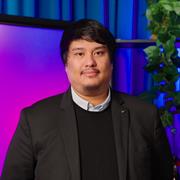
Sarah Bankins is an Associate Professor at Macquarie University's Department of Management. Her research focuses on AI's impact on work, organizational ethics, and human resource management. She holds editorial roles at The Australian Journal of Management and Group and Organization Management . Before academia, she worked in public sector HR and management consulting. Education: PhD from Queensland University of Technology, B. Business/B. Economics from University of Queensland, and a Graduate Certificate in Tertiary Teaching from University of Newcastle. Research Interests: AI ethics, future of work, workplace technology, and interdisciplinary collaboration with fields like computer science and philosophy. Recent articles explore AI's role in decision-making, workplace trust, and educational ethics. Key projects include studies on mining sector mental health and ethical AI applications. Awards include teaching excellence (2013) and research supervision (2017).
Professor Crystal Abidin is a prominent digital anthropologist and ethnographer specializing in influencer cultures, social media pop cultures, and internet fame dynamics. She holds a Professorship at Curtin University's School of Media, Creative Arts and Social Inquiry, alongside roles as Director of the Influencer Ethnography Research Lab and Deputy Director of the Korea Research Centre. Her research spans 100+ publications, 12 special issues, and 6 authored/edited books, with a focus on Asia Pacific contexts. Key roles include: ARC DECRA Fellow (2019-2024) Editor-in-Chief of Media International Australia Founder of TikTok Cultures Research Network Associate Investigator at the Centre of Excellence for the Digital Child Her research interests emphasize: Influencer labor and platform governance Cross-cultural digital practices Activism and identity expression online Children's media engagement Notable awards include WA Young Tall Poppy Science Award (2022), Forbes 30 Under 30 Asia (2018), and Pacific Standard's Top Thinkers Under 30 (2016). Her work frequently addresses: Ethical concerns in influencer marketing Platform-specific content creation Racial and gender dynamics in social media Global-local interplay in digital cultures Current initiatives include advancing TikTok cultures research and co-editing interdisciplinary volumes on influencer marketing and digital child safety.
Dr. Seyed Mohammad Sadegh Khaksar is a Senior Lecturer in Technology Management at La Trobe Business School, specializing in digital transformation, innovation, and healthcare technology. He holds a PhD in Management and teaches courses like Project Management. As Head of the Project Management major, he employs innovative pedagogies such as blended learning and peer review to enhance graduate employability. His research focuses on digital excellence strategies in firms, with notable projects including an AUD 96k IoMT platform for rural healthcare and AUD 40k studies on aged care supply chain resilience. He advises startups and organizations on digital strategies, particularly in healthcare, oil & gas, and professional services. Key research areas include social robots in education and care, IoT applications, and agile-lean methodologies. He has secured over $300k in grants and serves on editorial boards like Technological Forecasting and Social Change . Awards include the 2024 Student Experience Award and 2021 Early Career Researcher Award. Current PhD supervision spans digital responsibility in healthcare and banking sectors, and IoT-driven service innovations. He leads funded projects on smart cities and pandemic logistics, reflecting his interdisciplinary impact across technology, healthcare, and education.
Rico Piehler is a Senior Lecturer at the Department of Marketing within Macquarie Business School, Macquarie University, Sydney, Australia. His academic journey began at the University of Bremen, Germany, where he studied Business Studies and Economics before earning his Doctor of Economics and Social Sciences (summa cum laude) in 2010. Education: Doctor of Economics and Social Sciences (2010), University of Bremen Diplom-Ökonom (2005), University of Bremen Research Interests: Internal & Employer Branding Brand Communication & Social Media Marketing City Branding & Brand Competitiveness Academic-Practitioner Gap Rico's research focuses on developing robust branding frameworks with practical applications, particularly in measuring brand competitiveness and advancing internal branding strategies. His work spans academic-practitioner collaborations, with recent projects addressing the academic-practitioner gap in branding research. Rico's publications in journals like Journal of Product & Brand Management and European Journal of Marketing reflect his expertise in branding theory and practice. He emphasizes actionable insights through co-authored textbooks and practitioner-focused articles. Scientific awards include multiple Best Paper Awards at ANZMAC conferences (2018, 2021, 2023) and recognition as a Highly Commended Finalist in Macquarie University's 2023 Vice-Chancellor's Learning and Teaching Awards. He supervises PhD and Master of Research students in branding-related topics, applying a research-led teaching philosophy that combines enthusiasm with academic rigor. Rico actively contributes to academic leadership as Associate Editor for Journal of Product & Brand Management and through editorial board memberships. He collaborates with industry partners like Deutsche Post DHL and Deutsche Telekom, addressing strategic branding challenges such as brand positioning and identity development.
Kathleen Horton is a Senior Lecturer in the School of Design at Queensland University of Technology (QUT), Faculty of Creative Industries, Education & Social Justice. She is co-leader of TextileR, a research group focused on sustainability in the fashion industry, and has held leadership roles including Head of Discipline (Fashion) and Director of The Stitchery Collective. Her work bridges academic research, education, and community engagement in fashion, ethics, and sustainability. Master of Philosophy (Queensland University of Technology) Master of Arts (Research) (Queensland University of Technology) Bachelor of Arts (Honours) Visual Arts (Queensland University of Technology) Kathleen Horton's research is grounded in feminist and critical theory, focusing on the ethical and gendered dimensions of fashion production and consumption. Her work explores sustainable fashion, the cultural economy of independent design, fashion curation, and the role of creative practice in revaluing post-consumer textile waste. She emphasizes material methods and community-based research, often integrating artistic practice with academic inquiry. Her teaching includes DFB102 Fashion Communication, DFB206 Global Fashion Cultures, and DFB305 Critical Fashion Studies. Her recent publications reflect a strong trajectory in critiquing fast fashion, examining digital activism, and reimagining circular economies in textiles. Themes include the feminisation of ethical responsibility, symbolic value in craft, and Indigenous sustainable fashion. Her interdisciplinary approach connects fashion with art, social justice, and environmental sustainability. Kathleen has successfully supervised multiple doctoral and master’s students, with research topics spanning gender representation, fashion curation, and the cultural economy of fashion. She has secured grants from national and state funding bodies to support socially engaged fashion projects. Her leadership extends beyond the university through her role as Chair of The Nest Community, supporting a women-led circular textile economy, and her past service on the advisory board of the National Clothing Product Stewardship Scheme, which contributed to national policy development. Her research is deeply collaborative, often involving partnerships with artists, communities, and industry stakeholders. Through TextileR and The Stitchery Collective, she fosters interdisciplinary and socially responsive design practices. Her work consistently challenges dominant fashion paradigms and advocates for more ethical, inclusive, and sustainable futures in the industry.
Dr. Wei Shao is a Senior Lecturer in the Department of Tourism and Marketing at Griffith University, affiliated with the Griffith Asia Institute and Griffith Agribusiness. She holds a PhD in Marketing from Griffith University (2007) and a Bachelor of Business from Tianjin Foreign Studies University (1997). Her research bridges traditional marketing with emerging technologies like VR retailing and AI-enabled consumer engagement, focusing on digital marketing strategies, cross-cultural communication, and tourism in the Asia-Pacific region. She has secured grants totaling over $45,000, including projects on women’s empowerment in tourism and consumer choice behavior. Education: PhD in Marketing, Griffith University, 2007 Bachelor of Business, Tianjin Foreign Studies University, 1997 Research Interests: Dr. Shao explores technology-driven marketing innovations, including VR retail environments, AI applications in customer service, and the role of memes and social media in brand-building. Her work emphasizes inclusive marketing practices, intercultural dialogue, and leveraging digital media to amplify marginalized voices. Grants & Projects: "Empowering Sulawesi Women in Tourism: Innovation and Sustainable Business" ($35,000, 2025–2026) "Fun or Function: The Impact of Affect and Cognition on Consumer Choice" ($10,514, 2008–2010) Advising: Dr. Shao supervises doctoral research on topics including NFT marketing, AI chatbots in service recovery, and authentic brand experiences on social media. She has guided over 11 PhD candidates since 2009. Labs & Groups: Member of the Griffith Asia Institute and Griffith Institute for Tourism, focusing on collaborative research initiatives strengthening industry-academia ties in the Asia-Pacific region.
Dr. Alvedi Sabani is a Senior Lecturer and Program Manager at RMIT University's College of Business and Law, overseeing the Bachelor of Commerce program and leading the EdTech Project. He has held leadership roles including Program Manager for Graduate Certificates in Customer Success and Product Management, and Industry Engagement Director for MBA programs. His research focuses on digital transformation, inclusive technology adoption, and innovative pedagogy through gamification. He co-founded the RMIT GamifiED Hub, advancing learning technologies aligned with RMIT's strategic goals. His work bridges Information Systems and emerging technologies like AI, blockchain, and cloud computing, emphasizing multicultural inclusion in technology adoption. Research interests include AI applications, blockchain governance, and digital innovation leadership. He supervises projects on generative AI in education, digital healthcare transformation, and employer branding in the digital era. His teaching spans Executive MBA programs in areas such as Design Thinking and Technology Futures. He leads the Multicultural Inclusion theme at RMIT's Centre for Organisations and Social Change, addressing equitable technology integration. Key collaborations involve industry engagement for MBA programs and advisory roles. His work contributes to UN Sustainable Development Goals 8 (Economic Growth), 9 (Industry Innovation), 10 (Reduced Inequalities), and 17 (Partnerships). No formal awards are listed, but his contributions to EdTech and inclusive digital practices reflect impactful scholarly work.
Dr. Jacqueline Burgess is a Senior Lecturer in International Business at the University of the Sunshine Coast's School of Business and Creative Industries. As Australia's leading researcher in business and game studies, she directs research on narrative brands, digital media marketing, and creative industries. Her work bridges academic rigor and industry practice through collaborations with companies like Ubisoft. She holds a PhD in Marketing from the University of the Sunshine Coast, a BBus(Hons), and BArt/Bus. Her teaching focuses on marketing communication, brand management, and interdisciplinary approaches to business education. Research explores narrative brand management across media ecosystems, consumer attachments to fictional characters, marketing practices in publishing and game industries, and digital employability competencies. Recent publications demonstrate sustained examination of author marketing knowledge, video game brand authenticity, and creative industry business models. Awards: 2023 Finalist Regional Universities Network Learning and Teaching Awards 2022 Emerald Literati Award 2022 DASSH Award for Leadership and Excellence in Employability 2022 SBCI Award for Excellence in Learning Experience Design 2022 Commendation UniSC Vice-Chancellor and President's Awards 2019 Vice-Chancellor and President's Award for Excellence She actively supervises doctoral candidates researching digitalization impacts on B2B firms, intuitive VR interfaces, and YA literature censorship. Grant funding includes Endeavour Foundation VR Barista Project ($80,000) and Australian Small Business Ombudsman research. As Digital Games Research Association Australia board member, she mentors emerging researchers and leads industry-academic initiatives.
Dr. Marianne Sison is an Honorary University Fellow at RMIT University's School of Media & Communication. Her research focuses on public relations ethics, corporate social responsibility (CSR), cultural studies, and global communication strategies, with a particular emphasis on Southeast Asia. She has supervised projects on city branding through social media and disaster communication in isolated communities, reflecting her interest in stakeholder engagement and community-driven approaches. Teaching interests include advocacy communication, diversity and inclusion, and the strategic use of public relations in multinational contexts. Her work often bridges theory and practice, addressing contemporary challenges such as workplace well-being for female professionals, ICT access in marginalized communities, and the ethical dimensions of global PR. Key research outputs include studies on CSR implementation in multinational companies, gender dynamics in workplaces during pandemics, and the role of public sector communicators in fostering global citizenship. Her interdisciplinary approach integrates cultural studies, organizational behavior, and international development perspectives.
Dr. Stefan Jooss is a Senior Lecturer in Management at the UQ Business School, The University of Queensland. He previously held academic positions at University College Cork and Technological University Dublin, Ireland. His research focuses on Human Resource Management (HRM), particularly talent management, global mobility, and the future of work. His work has been published in journals like Human Resource Management , International Journal of Human Resource Management , and International Business Review . Key research areas include: talent pools in multinational corporations, algorithmic management in gig work, expatriate experiences, and the impact of digital transformation on HR practices. He has contributed to conceptual frameworks on coopetition in talent management for hospitality SMEs and explored the role of middle managers in navigating talent management paradoxes. His recent articles address topics such as inter-brand career mobility in hospitality, long-term expatriate typologies, and inclusive leadership during global crises. He actively engages with industry stakeholders to bridge research insights into organizational practices and policy design. Dr. Jooss has presented at leading conferences including the Academy of Management (AOM), European Academy of Management (EURAM), and International Human Resource Management Conferences. His research often intersects with societal challenges like sustainable talent attraction and managing algorithmic technologies in the workplace.
Donella Caspersz is Associate Professor in Management and Organisations at UWA Business School, researching family business sustainability, skilled migration employment relations, psychological contracts, and organizational justice. She directs UN PRME initiatives and convenes the AsiaPacific Family Business Symposium. Research examines: Family firm governance and leadership CEO resilience in crises Skilled migrant psychological contracts Refugee employment barriers Service-learning pedagogy Recent work analyzes family business adaptation to Industry 4.0, modern slavery in supply chains, and emotional intelligence in hospitality SMEs. Awards include Emerald Literati Award for Outstanding Article and Best Reviewer recognition. Serves on editorial boards for Family Business Review and Journal of Small Business Management. Teaches international management and employment relations, integrating service-learning approaches to social responsibility education.
Brian WEIR is an Assistant Professor in Business at the Canberra Business School, University of Canberra. His research focuses on sustainable development, particularly climate change adaptation in the tourism industry and regional development in the Canberra region. He holds a PhD in Policy responses to climate change in the Australian tourism industry (2019), a Master of Public Administration (1994), and prior degrees in Science and Legal Studies. His work bridges academic research with policy implementation, emphasizing climate resilience strategies for tourism businesses and regional planning. Education: PhD, Policy responses to climate change in the Australian tourism industry: The case of Canberra, ACT (2019) Master of Public Administration (1994) Graduate Diploma in Legal Studies (1986) Bachelor of Science (1977) Research Interests: Climate change adaptation in tourism and regional sectors Policy frameworks for sustainable development Interdisciplinary collaboration between academia and industry Educational pedagogy for tourism and HRM Notable Projects: "Tourism Industry Training and Information Analysis Needs Analysis" (2010–2011), exploring industry training gaps Contributions to the Climate Adaptation Sector Review (2014) and Coastal Urban Climate Futures (2013) reports Awards: No explicit scientific awards mentioned Advising & Grants: Supervised research projects on tourism governance and climate resilience strategies Collaborated with Canberra Urban and Regional Futures (CURF) on regional sustainability initiatives Labs/Teams: Active member of the Climate Change Adaptation Resilience and Recovery Network Contributor to CURF’s annual forums on sustainable urban development
Michael Polonsky is an Alfred Deakin Professor and Head of the Department of Marketing at Deakin Business School, Deakin University. He holds a PhD from Australian Catholic University and has taught at universities in Australia, New Zealand, South Africa, and the USA. His research focuses on environmental marketing, social marketing, migration settlement, and blood donation policies. He leads ARC Linkage projects on blood donation advocacy and governmental circular purchasing policies. Education: PhD, Australian Catholic University Master of Arts, Temple University Bachelor of Science, Towson University Research Interests: Environmental/Social Marketing, Blood Donation Strategies, Stakeholder Theory, Service Design, Migration Integration, and Circular Economy. Recent projects include studies on anti-food waste laws in China, migrant employment barriers, and IVF service encounters. Grants & Awards: Recipient of the Elsevier Distinguished Marketer Award (2010) and Fellow of the ANZ Academy of Marketing (2023). Active in 35+ grants, including projects on migrant settlement literacy and green procurement policies. Labs/Teams: Collaborates across disciplines on projects like the ‘Transformation of Reclaimed Waste into Engineered Materials’ (TREMS) initiative with industry partners.
Professor Vinh Lu (Lữ Nhật Vinh) is Director of the Research School of Management at the Australian National University (ANU)’s College of Business and Economics. Leading a team of 60 academic and professional staff, he oversees research and education initiatives across disciplines like Marketing, International Business, and Project Management. Previously, he held roles including Associate Dean (Advancement & Engagement) and Director of Employability at the College. Ph.D in Marketing (University of Adelaide) B.Commerce (Hons), B.Commerce (Marketing & International Business) Cert III Government and Dip. Market Research His research focuses on service delivery, relationship management, and career development, with recent trends exploring AI in service sectors, cultural intelligence during study abroad programs, and crisis management in branding. His work bridges Marketing, Organizational Behavior, and International Business. Vinh’s accolades include the 2025 Vice-Chancellor's Award for Educational Excellence, 2024 ACT NAIDOC Award, and 2024 Asia-Pacific Triple E Award. He also chairs the 2025 Vice-Chancellor's Education Awards. He has led university-wide initiatives in employability, global mobility, and externally engaged learning. His grants include funding from Wine Australia and SEARMS Community Housing Aboriginal Corporation. Vinh contributes to journals like the Australasian Marketing Journal and Journal of Service Theory and Practice .
Gloria Ge is an Associate Professor of International Business and Deputy Director of GBS Postgraduate Programs at Griffith University's Department of Management. She previously served as Director of the GBS Hong Kong Program (2011–2016) and Associate Director of the New Zealand Asia Institute at the University of Auckland. Her expertise spans international business, international marketing, and cross-cultural HRM strategies. Her research focuses on international business dynamics in Asia-Pacific, including institutional voids, multinational staffing, and technology's impact on aging populations. She has published in journals like Asia Pacific Journal of Management and Thunderbird International Business Review . Gloria is a member of Griffith Asia Institute and the Centre for Governance and Public Policy. She serves on the editorial board of the Asia Pacific Journal of Management and has held roles in professional organizations like the Hong Kong Association of University Women. Her teaching spans 20 years across three countries, emphasizing student engagement and graduate employability. Current research includes a doctoral project on female employee ratios and firm performance in South Korea.