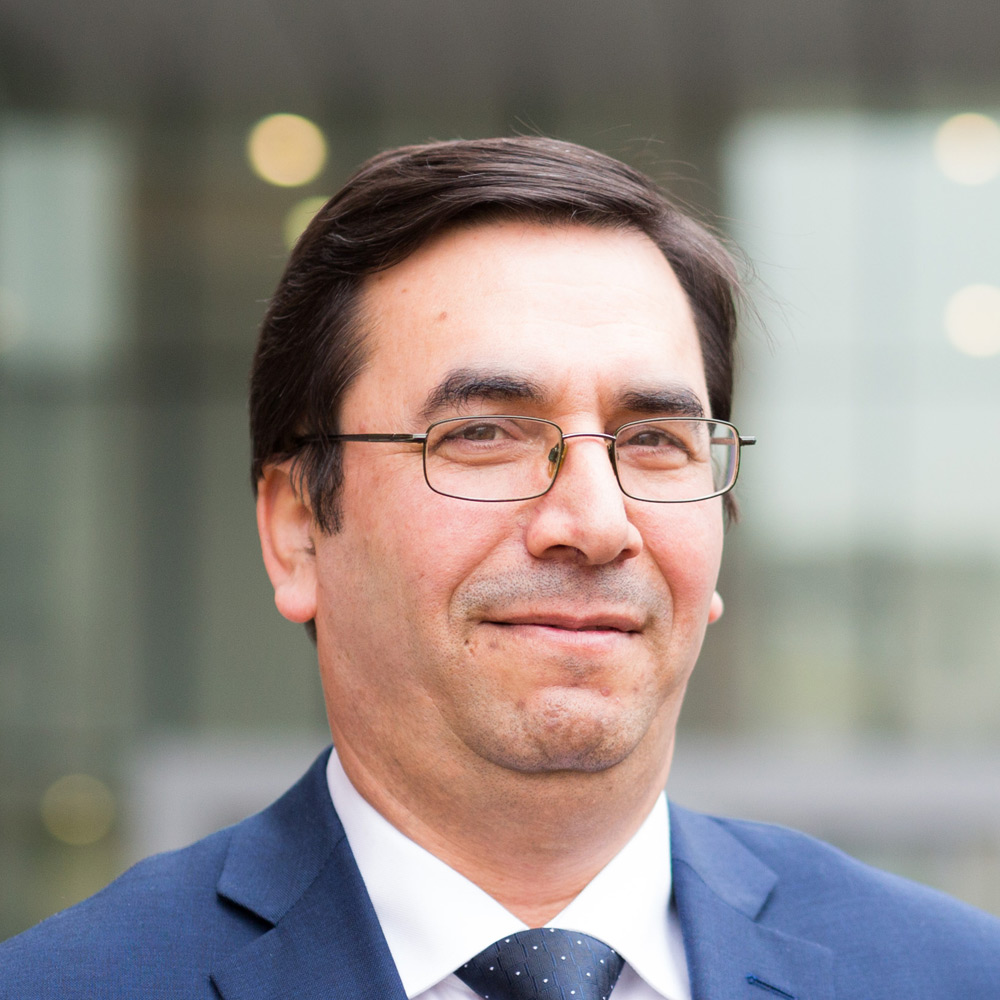
Fabian J. Sting is a Full Professor and Director of the Department of Supply Chain Management - Strategy and Innovation at the University of Cologne since 2016. He also holds a tenured Associate Professorship in Operations Management at the Rotterdam School of Management, Erasmus University since 2014. His academic journey includes a Ph.D. in Productions Management (summa cum laude) from WHU-Otto Beisheim School of Management in 2008 and postdoctoral work at INSEAD in 2008–2010. University of Cologne : Chair of Supply Chain Strategy and Innovation (2016–present) Rotterdam School of Management : Associate Professor (2014–present), Assistant Professor (2010–2014) Education : Ph.D. (2005–2008), M.Sc. in Applied Mathematics (2005–2007), Diploma in Management Science (2002–2005) Sting’s research bridges operations management, innovation strategy, and supply chain dynamics. Key areas include: Supply chain coordination under uncertainty Employee-driven process innovation and cognitive biases Strategic capacity planning and risk hedging Industry 4.0 implementation challenges Interdisciplinary integration of behavioral and technical elements in operations Recent publications focus on dual sourcing strategies, fairness in operational decisions, and employee mobility’s impact on innovation. He contributes to high-impact journals like Management Science and Production and Operations Management . Sting participates in institutional research initiatives such as: ECONtribute: Markets & Public Policy – a Cluster of Excellence addressing digital transformation, inequality, and market failures through interdisciplinary economics, political science, and law Excellent Research Support Programme (ERSP) – supporting collaborative projects like HPDnet (improving pediatric kidney disease care via health networks)
Andrew M. Carton is an Associate Professor of Management at The Wharton School, University of Pennsylvania. His research focuses on leadership, organizational behavior, and intergroup relations, particularly how leaders establish common purpose and manage conflict through psycholinguistic insights. BA from Rutgers University PhD from Duke University His research examines how organizations can unite individuals despite differences, addressing challenges like temporal and physical distance. Key areas include vision communication, leadership dynamics, and the impact of language on employee engagement. Selected recent publications include: 2025: The six dimensions of strong theory (Organization Science) 2024: Echoes from the past: Racial transference in leader selection (Academy of Management Journal) 2023: Balancing concreteness and scale in leadership communication (Academy of Management Journal) Scientific awards include: ASQ Award for Scholarly Contribution (2024) Multiple Wharton Teaching Excellence Awards (2020, 2017, 2016) Cialdini Award (2012) and Best Paper Awards at Academy of Management conferences He teaches courses on leadership, negotiations, team dynamics, and organizational behavior, including the Wharton Leadership Journey modules and advanced research methods for doctoral students.
William A Pasmore is a Professor of Practice in the Social-Organizational Psychology Department at Teachers College, Columbia University. With a unique background spanning academia and consulting, he focuses on complex organizational change, digital transformation, and leadership development. His work bridges theoretical rigor with practical application through roles at the Center for Creative Leadership, Oliver Wyman Delta consulting, and his own firm, Pasmore Advisors. Education: Ph.D. in Administrative Sciences (Purdue University, 1976), B.S. in Aeronautical Engineering/Industrial Management (Purdue University, 1973) His research spans organizational change, digital transformation, and future organizational models, with recent publications emphasizing networked organizations and continuous change frameworks. Collaborative action research and board effectiveness are recurring themes in his work with global corporations. Scientific Awards: European HRM association's HR Influential Thinker recognition Academy of Management co-recipient of collaborative research award Pasmore co-founded STARLabs - a consortium with Google, Microsoft, Shell, and other Fortune 500 companies studying digital transformation. He previously served as tenured professor at Case Western Reserve University (1976-1997) and visiting professor at INSEAD and Stanford.
Dr. Beatrice Piccoli is a Lecturer in Human Resource Management at the University of Essex's Essex Business School since September 2017. She holds a joint PhD in Work and Organizational Psychology from the Universities of Verona (Italy) and Leuven (Belgium). Her research focuses on job insecurity, employee well-being, leadership, and organizational behavior. She has been affiliated with KU Leuven's Research Group on Work, Organizational and Personnel Psychology since her postdoctoral role funded by the EU's Horizon 2020 Marie Skłodowska-Curie Grant (2015–2017). Additional affiliations include a visiting scholar position at St. John’s University (New York, 2016) through the COOPERINT grant and a researcher role at the University of Verona (2016). Educational Background: PhD in Work and Organizational Psychology (2015): Joint program between University of Verona and KU Leuven MSc in Management of Training Services (2011): University of Verona Postdoctoral Researcher at KU Leuven (2015–2017): Funded by EU Horizon 2020 Research Interests: Beatrice explores the impact of job insecurity on organizational outcomes (e.g., performance, discretionary behaviors), employee well-being, and household dynamics. She also investigates mindfulness in high-stress professions, proactive personality traits among older workers, and the role of leadership in change management. Her work integrates social exchange theory, psychological contract theory, and cross-cultural perspectives. Grants & Awards: Marie Skłodowska-Curie Individual Fellowship (EU Horizon 2020, 2015–2017) COOPERINT Internationalization Grant (University of Verona, 2016) Banco Popolare Funding for Aging & Well-being Research (2015) Teaching & Supervision: Dr. Piccoli teaches Human Resource Management modules at Essex Business School, focusing on organizational behavior and employee relations. She supports postgraduate research students in areas aligned with her expertise, such as job insecurity and workplace psychology. Labs & Collaborations: She collaborates with KU Leuven's Work and Organizational Psychology group and maintains ties with institutions in Italy and the U.S., emphasizing interdisciplinary research on workplace well-being and policy interventions.
Professor Mehmet Demirbag serves as Deputy Dean of Essex Business School and Professor of International Business at the University of Essex. Previously, he held significant leadership roles including Vice Dean (Internationalisation) and Head of Department of Strategy and Organisation at Strathclyde Business School, and Chair in International Business at the University of Sheffield Management School. His extensive academic career spans over a decade in UK higher education institutions with specialized expertise in international business strategy. Dr. Demirbag completed his Master's degree in Business Analysis at the University of Leicester and earned his PhD at the University of Bradford Management School. His educational background established the foundation for his research focus on international business phenomena, particularly regarding emerging economies and multinational enterprises. His research interests center around internationalisation of R&D activities, offshore R&D, FDI location choice, product and regional diversification strategies of MNEs, multinationals from emerging countries, international mergers and acquisitions, and reverse knowledge transfer by emerging country MNEs. These interconnected research streams examine how firms navigate global markets, particularly focusing on the strategic behavior of emerging market multinationals and their interactions with developed economies. Analysis of his recent publications reveals consistent thematic patterns across international business, strategic management, and human resource management domains. His work demonstrates particular emphasis on emerging market multinationals, cross-border knowledge transfer mechanisms, international strategic decision-making in uncertain environments, and the institutional contexts shaping multinational enterprise behavior. The interdisciplinary nature of his research bridges theoretical frameworks from international business, strategic management, and organizational studies. Professor Demirbag maintains active editorial roles as consulting editor of the Journal of International Management and advisory editor of Eurasian Business Review. He has co-guest edited special issues for numerous prestigious journals including British Journal of Management, Human Resource Management, Journal of World Business, and International Business Review, among others. His editorial contributions span research areas related to emerging market MNEs, MNEs in emerging markets, transitional periphery contexts, and human resource management in uncertain environments. As an educator, Professor Demirbag teaches International Business and International Strategic Management at undergraduate, postgraduate, and executive levels. His supervision portfolio includes doctoral candidates such as Selman Alisan Gemuhluoglu and previously guided Koushik Das Sarma to completion of their PhD in Business Administration. His research has received funding from various sources including the European Commission, and his work on FDI and SMEs has contributed to REF impact cases at both the University of Bradford and the University of Sheffield.
Dr. Ira Weiss is a Professor of Strategic Management at North Carolina State University, affiliated with the Department of Management Innovation & Entrepreneurship. His expertise spans Global/International Management, Corporate Strategy, Higher Education Management, and Business Accreditation. He holds a Ph.D. in Management from UCLA (1976). His research focuses on strategic frameworks, organizational systems, and accreditation processes, as evidenced by his thought leadership in AACSB articles advising institutions on accreditation strategies. His academic contributions include over four decades of publications on IT management, risk mitigation, and professional certification. Notable works address end-user computing strategies, cost control in software development, and auditability of systems. Though no specific grants or advising roles are detailed, his influence extends through academic discourse and institutional best practices. He remains active in North Carolina State’s initiatives related to management innovation and entrepreneurship.
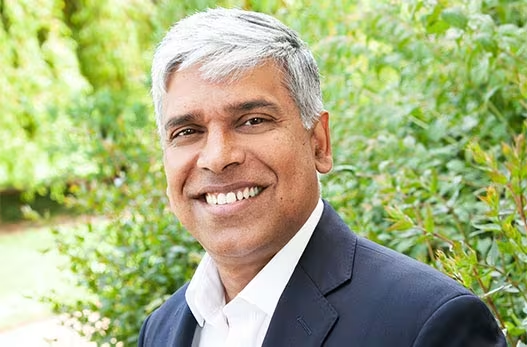
Sendil Ethiraj is a Professor of Strategy and Entrepreneurship at London Business School (LBS) and serves as Deputy Dean (Faculty). Originally from India, he earned his PhD in Management from The Wharton School at the University of Pennsylvania. Prior to joining LBS, he spent over a decade as faculty at the Ross School of Business, University of Michigan. His research focuses on strategic management, covering innovation processes, competitive strategy, organizational design, human capital management, and technology-driven industry transformation. He has extensively studied innovation in complex systems across sectors like oil and gas, mutual funds, and healthcare insurance. His work addresses organizational structures for capability development, employee goal alignment, and platform governance in digital ecosystems. At LBS, he contributes to academic leadership as a member of the Governing Body since 2022. His initiatives emphasize designing reward systems to attract global research faculty and advancing diversity, inclusion, and belonging through the LBS Advisory Board. He teaches core courses in LBS's Master's, Executive Education, and PhD programs. Key research areas: Innovation in unconventional industries Human capital dynamics Platform governance Strategic response to technological disruption Organizational design for complex systems Contact: sethiraj@london.edu
Dr. Asieh Hosseini Tabaghdehi is a Senior Lecturer in Strategy & Business Economy at Brunel Business School, Brunel University of London. She serves as Programme Lead for the BSc International Business Programme and Trade2Grow Executive Education Programme. Additionally, she is Impact Lead at the Brunel Centre for AI: Social and Digital Innovation, where she leads the capability area in the Future of Work. Dr. Tabaghdehi is also an economist and social impact advisor for the independent NGO, Social Innovation Movement. Dr. Tabaghdehi earned her PhD in Economics and Finance (2008) and MSc in International Money, Finance, and Investment (2015), both from Brunel University London. She also holds a BA in Theoretical Economics from University of Mazandaran. She completed the Postgraduate Certificate in Academic Practice and is a Fellow of the Higher Education Academy. Dr. Tabaghdehi is internationally recognized for her research on digital transformation, with particular expertise in the ethical integration of artificial intelligence and digital technologies. Her work focuses on how emerging technologies shape industries, labor markets, and society, with emphasis on enhancing SME growth through technological innovation. She explores applications across critical sectors including social care, supply chain management, and environmental sustainability. A central theme in her research is smart data governance, ensuring ethical, transparent, and responsible use of data in decision-making processes. Her research portfolio demonstrates a consistent focus on the intersection of technology, ethics, and business strategy. She has developed frameworks like the Digital Business Auditing Framework, which has been adopted internationally for smart city initiatives. Her work connects academic research with practical policy applications, as evidenced by her presentations as oral and written evidence to the House of Commons Select Committee. Her publications span AI ethics, digital footprint implications, fertility economics, and healthcare cost analysis, showing interdisciplinary breadth while maintaining thematic coherence around digital transformation's societal impact. Scientific Awards and Recognition Semi-finalist: Research Impact Award at Brunel University London, 2023 Staff Award: Exceptional in Collegiality and Supportive to Colleagues at Brunel University London, 2022 Exceptional Performance at Regents University London, 2018-19 Staff Award in Teaching, Learning and Assessment at Regents University London, 2016 Best Lecturer Award at London Brunel International College, 2014 Best Lecturer Award at London Brunel International College, 2013 Dr. Tabaghdehi actively supervises PhD students researching areas including Smart Data Governance, Ethical AI Governance, Digital Innovation Impact, Responsible AI Adoption Strategies, Sustainability, and Future of Labour Market. She has secured research funding from multiple sources including the Economic & Social Research Council (ESRC), Brunel University London, and Brunel Business School. Her current projects include research on AI Adoption and Governance, Youth digital addiction, Algorithm Reliability Framework, and SMEs digital footprints. She has also co-designed the "Digital Adoption" module for the UK Government's Help to Grow Management program, demonstrating the practical application of her research. As a member of multiple professional organizations, Dr. Tabaghdehi serves as an associate practitioner at Social Value International, associate member of the Big Innovation Centre, and member of the All-Party Parliamentary Group on AI. She is also a member of the ESRC Review College, British Academy of Management Review College, and Energy Institute UK, contributing to the broader academic and policy communities through these roles.
Teemu Malmi is a Professor in the Department of Accounting at the School of Business, Aalto University, Finland. He has been an influential figure in management accounting research, particularly in management control systems and performance measurement. His academic qualifications include a Doctoral degree (1997), Licentiate degree (1994), and Master's degree (1990), all in Business and Economics from the Helsinki School of Economics. His research interests span management control, performance measurement, digitalization in finance, public sector accounting, and organizational behavior. His work often integrates empirical analysis with case studies, including a notable investigation into Nokia’s management control challenges. He has published extensively in top-tier journals and contributed to major handbooks in accounting and information systems. The recent trend in his publications (2020–2025) reflects a growing emphasis on digital transformation, blockchain, data analytics, and the evolving role of finance functions. His research increasingly bridges traditional accounting with technology and public policy, especially in healthcare financing and sustainability. Scientific Awards: “Thirst for knowledge” (“Tiedon Jano”) award by JOKO Executive Education Oy (2001) Teemu Malmi has supervised at least five theses and led externally funded research projects, including the SOTE/Kaks project (2015–2016) on social and healthcare services. He has been actively involved in academic service, such as serving on editorial boards, hosting international scholars, presenting keynote lectures, and participating in funding organization committees. His media appearances demonstrate his engagement in public discourse on welfare policy and regional financing in Finland. There is no indication of part-time status, retirement, or former staff designation; he remains an active academic.
David Musto is the Ronald O. Perelman Professor in Finance at the University of Pennsylvania's Wharton School, where he has served on the faculty since 1995. He currently directs the Stevens Center for Innovation in Finance and teaches core finance courses including Capital Markets and Strategic Equity Finance across undergraduate, MBA, and executive programs. Education PhD, University of Chicago, 1995 BA, Yale University, 1987 Professor Musto's research centers on capital markets dynamics, consumer credit mechanisms, and financial intermediation structures. His work examines market liquidity during crises, predatory lending practices, and the contractual implementation of impact investing. He investigates how financial incentives interact with social goals and how market structures influence trading behavior, with particular focus on Treasury markets, short-selling constraints, and mortgage lending regulations. His publications from 2008-2021 reveal consistent empirical analysis of market microstructure and credit markets. Key contributions include identifying illiquidity feedback loops in Treasury markets during the financial crisis, demonstrating how impact funds contractually integrate social goals without direct compensation ties, and analyzing how failing to deliver stock affects options pricing. His research bridges theoretical models with high-resolution market data across diverse financial instruments. Scientific Awards No scientific awards were mentioned in the provided text. Advising and Grants Professor Musto supervises independent study projects (FNCE8990) for finance students but specific advisees and grant details are not provided. His teaching portfolio includes capstone projects evaluating student loan offers and strategic equity financing decisions, reflecting applied research supervision without explicit grant disclosures. Labs and Teams As Director of the Stevens Center for Innovation in Finance, Professor Musto leads initiatives connecting academic research with industry practice. The Center develops financial education tools including an app created by teens for teens, and runs leadership programs for underrepresented Philadelphia high school students, fostering practical finance innovation through academic-industry collaboration.
Nelson P. Repenning is the Faculty Director of the MIT Leadership Center and the School of Management Distinguished Professor of System Dynamics and Organization Studies at MIT Sloan School of Management. His research focuses on organizational effectiveness, knowledge work optimization, and dynamic management systems. He holds a BA in Economics from Colorado College and a PhD in Operations Management and System Dynamics from MIT. Repenning’s work addresses challenges in organizational capability development, safety practices, and strategic execution. He co-authored the forthcoming book *There Has Got to Be a Better Way* (2025) and is a partner at ShiftGear Work Design. His awards include the Jay Wright Forrester Award (2003) and the Jamieson Prize for Excellence in Teaching (2011). Key research trends in his articles include analyzing workflow bottlenecks in knowledge-intensive industries, linking daily operations to strategic goals, and exploring systemic drivers of organizational failure. His work spans healthcare, manufacturing, and innovation management, emphasizing practical frameworks for sustainable improvement. Repenning teaches executive courses on business process design and sustainability strategy, emphasizing dynamic work design principles. He has advised organizations globally on operational efficiency and leadership systems.
Dr. John Fiset is an Associate Professor and Department Chair in the Management Department at the Sobey School of Business, Saint Mary’s University. He specializes in leadership dynamics, multilingual workplace challenges, and experiential education. Previously, he taught at Memorial University and Concordia University’s John Molson School of Business. His research explores how leaders shape workplace environments, language-related misunderstandings in organizations, and effective management strategies. He holds a Ph.D. in Business Administration from Concordia University, alongside an MSc and BComm (Honours). Dr. Fiset has consulted on leadership and decision-making for various organizations. Educations: Ph.D. in Administration, John Molson School of Business, Concordia University MSc in Administration, John Molson School of Business, Concordia University BComm (Honours), Mount Allison University Research Interests: Dr. Fiset’s work focuses on leadership influence, multilingualism in organizations, and experiential learning methodologies. He investigates how workplace communication breakdowns affect employee behavior and organizational outcomes, emphasizing practical solutions for managers. Recent studies include analyses of abusive supervision, gender dynamics in leadership, and pandemic-era educational innovations. Teaching & Grants: Active in curriculum development for management education, particularly online and hybrid formats. No grant details explicitly stated in text.
Muhammad Shujaat Mubarik is an Associate Professor and Head of Research (Marketing & Operations Department) at Heriot-Watt University's Edinburgh Business School. His expertise spans logistics, supply chain management, operations management, and sustainability. He focuses on integrating digital technologies like blockchain and digital twins into supply chain frameworks, emphasizing intellectual capital's role in resilience and sustainability. His research methods include Structural Equation Modeling, Multi-Criteria Decision Making (AHP, ANP), and hybrid modeling. He holds leadership roles, including prior positions as Dean of the College of Business Management (IoBM) and Dean of the Faculty of Business Administration & Social Sciences (Mohammad Ali Jinnah University). He has secured grants from UKRI-EPSRC, NSERC, and HEC Pakistan, leading projects on supply chain resilience, logistics decarbonization, and SME internationalization strategies. His research collaborations span institutions like the University of Cambridge, Stanford University, and Copenhagen Business School. He teaches postgraduate courses in supply chain strategies, systems analysis, and green logistics. He actively engages in academic governance and industry partnerships, contributing to policy bridging. His work aligns with UN SDGs related to sustainable consumption, climate action, and responsible consumption. He has published over 100 papers, including 45 in high-impact journals, authored five books, and received the 2023 Best Researcher Award at the institute level. His funded projects address challenges like blockchain in oil and gas sectors and circular economy adoption barriers.
Steve Werner is a Professor and Chair of the Department of Management & Leadership at the C. T. Bauer College of Business , University of Houston. He holds a Ph.D. in Management from the University of Florida and has taught courses across compensation administration, international HRM, and organizational behavior at all academic levels. Ph.D., University of Florida M.B.A., San Jose State University B.A., San Jose State University His research focuses on compensation systems , incentive rewards , pay equity , and international HRM . Current work explores the relationship between discretionary benefits and performance, evidence-based HR decision-making, and cross-cultural management challenges. Recent publications highlight: Strategies for mitigating video meeting fatigue Strategic benefits design Impact of job embeddedness on performance Gender discrimination signals Improvisation in R&D teams He serves on editorial boards of major journals including Journal of Management and Human Resource Management Review . His practical expertise has informed consulting engagements with KPMG, Conoco, and the State of Texas.
Professor Alex Richter is a Professor of Information Systems at the School of Information Management, Victoria University of Wellington, where he also serves as Director of the Executive MBA program and PhD Director. He leads the Digital Work Lab and edits the Digital Work Diaries. With over 150 refereed publications cited more than 11,500 times, Professor Richter is a leading researcher in the field of Information Systems, recently ranked 285th globally among 18,561 researchers in the Information Systems sub-field on the Top 2% Scientists List. Professor Richter's research focuses on how digital technologies transform work to enhance innovation, productivity, and employee satisfaction. His primary areas of interest include Human-AI Collaboration , Digital Work and Innovation , Value-driven design , and The Future of Work . He explores practical applications of human-AI collaboration with global industry partners, identifying use cases, benefits, risks, and enablers of adoption. His conceptual work emphasizes value-driven, context-aware, and adaptive approaches to create meaningful sociotechnical systems. His recent publications demonstrate a strong trend toward understanding the evolving relationship between humans and AI in workplace settings. Professor Richter's work examines trust in generative AI across organizational departments, the transformation of innovation practices through human-AI collaboration, and the implementation challenges of emerging technologies like augmented reality. His research consistently bridges theoretical frameworks with practical applications, focusing on how organizations can effectively integrate AI while maintaining human-centered values. Top 2% Scientists List (2024), ranking 285th globally among 18,561 researchers in Information Systems 'Innovation in Teaching Award' from the Association for Information Systems (2024) Research Fellow (2022) Multiple best paper awards throughout his career Professor Richter actively supervises numerous PhD students working on human-AI collaboration topics, including Carlos Forero, Chloe Latto, Ghazaleh Moqadam, Hedi Bigham Sohanaki, Jingyu Zheng, Mina Sanabadi, Shafiqul Alam, and Yao Zhang. He has successfully led research projects funded by the European Union, national governments, and organizations across Germany, Switzerland, Denmark, Australia, and the USA. His engaged scholarship approach connects academic research with practical industry applications. As Director of the Digital Work Lab, Professor Richter leads a team exploring the future of work in the digital age. The lab investigates how digital technologies transform work practices, with particular focus on hybrid work environments, visibility in digital workplaces, and human-AI collaboration. Through the Digital Work Diaries initiative, the lab documents and analyzes real-world digital work transformations, providing practical insights for organizations navigating digital change.