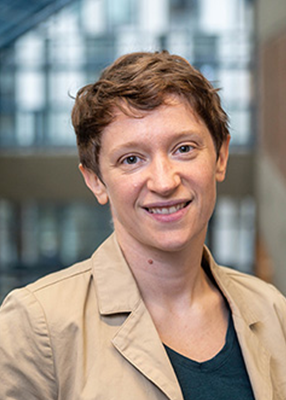
Lynn Wu is an Associate Professor at the Wharton School of the University of Pennsylvania, focusing on the intersection of artificial intelligence, analytics, and innovation. She teaches MBA, undergraduate, and doctoral courses on emerging technologies' transformative impact on business and society. Education: B.S. in Finance and Computer Science, MIT M.S. in Computer Science, MIT Ph.D. in Management Science, MIT Sloan Her research explores how AI and digital platforms reshape productivity, workforce dynamics, and innovation strategies, with applications in antitrust policy and startup ecosystems. Key trends in her publications include AI's role in post-IPO innovation, robotics' impact on managerial roles, and social media's ability to mitigate funding disparities. Scientific Awards: Kauffman Best Paper Award (2019) Sandy Slaughter Early Career Award (2019) AIS Early Career Award (2018) ISR Best Published Paper (2014) Best Paper Awards at ICIS (2009), HICSS (2013), etc. She has collaborated with IBM, Google, Meta, and advised the U.S. Department of Justice and World Bank, with her work cited by The New York Times , The Economist , and Harvard Business Review .
Professor Moses Acquaah is a Professor and Department Head of Management at the Bryan School of Business and Economics, University of North Carolina at Greensboro (UNCG). He serves as Director of the PhD Program in Business Administration. His research focuses on strategic management, emerging economies, family businesses, and sustainability in Africa. He holds a Ph.D. in Strategic Management from the University of Wisconsin-Milwaukee and multiple advanced degrees from institutions like Simon Fraser University and the University of Cambridge. Education: Ph.D. in Strategic Management and International Management, University of Wisconsin-Milwaukee M.B.A. in Accounting & Policy Analysis, Simon Fraser University M.A. in Economics (Monetary and International Economics), Simon Fraser University Graduate Diploma in Development Studies, University of Cambridge B.A. (Honors) in Social Sciences, University of Science and Technology, Ghana Research Interests: Social capital and networking in emerging economies Competitive strategy in sub-Saharan Africa Family business management and entrepreneurship Sustainability and green supply chain practices Leadership in Africa and the diaspora Global strategic alliances and institutional pressures His recent work examines pandemic impacts on African businesses, innovation strategy combinations, and leadership effectiveness. He has published extensively in journals like Journal of Cleaner Production , International Business Review , and Africa Journal of Management . Key Contributions: Pioneered studies on family businesses in sub-Saharan Africa Developed the Leadership Effectiveness in Africa and the Diaspora (LEAD) scale Edited special issues on pandemic management and sustainable development in Africa
Samuel Jean Bassetto is an Associate Professor in the Department of Mathematics and Industrial Engineering at Polytechnique Montréal. He serves as Director of the Continuous Improvement Laboratory (LABAC) and holds membership in multiple prestigious research groups including the Research Group on Globalisation and Management of Technology (GMT), Poly-Industries 4.0 Laboratory, Interuniversity Research Centre on Enterprise Networks, Logistics and Transportation (CIRRELT), and Institute for Data Valorization (IVADO). Dr. Bassetto's research spans multiple disciplines, focusing on continuous improvement through the integration of engineering, artificial intelligence, cognitive science, psychology, and design. His primary sphere of excellence is in New Frontiers in Information and Communication Technologies, with secondary expertise in Modeling and Artificial Intelligence and Human Health. He develops tools that place humans at the center of technology to enhance organizational performance while respecting human rhythms and cognitive limitations. His recent publication portfolio reveals a strong interdisciplinary approach, with research bridging industrial engineering, cognitive neuroscience, and AI ethics. His work addresses practical challenges in lean manufacturing assessment, racial bias in medical AI systems, cognitive data collection in natural environments, and condition monitoring for industrial machinery. The research consistently demonstrates a commitment to developing practical solutions that integrate human factors with technological innovation. NSERC Synergy Prize for Innovation recipient Principal investigator on multiple research grants from NSERC, FRQ, and MITACS Collaborations with over a dozen institutions across multiple countries Supervision of over 150 highly qualified personnel throughout his career Dr. Bassetto teaches specialized courses including CAP7011 (Creativity in Research), IND8444 (Continuous Improvement), IND8203 (Industrial Launch), and previously taught IND8178 (Production). His teaching philosophy emphasizes practical application, with courses featuring hands-on exercises, real-world scenarios, and gamification techniques to enhance learning. His supervision portfolio includes numerous Ph.D. and Master's students working on topics ranging from human-technology collaboration to reinforcement learning for production management. Through LABAC, Dr. Bassetto leads research initiatives focused on developing human-centered tools for continuous improvement in organizational settings. The laboratory conducts projects related to industrial IoT applications, cognitive aspects of process improvement, and the development of practical frameworks for organizations to enhance performance while maintaining respect for human rhythms and cognitive capabilities.
Kristin Laurin is a Professor of Psychology at the University of British Columbia (UBC), holding a PhD from the University of Waterloo (2012). Previously, she was a faculty member at Stanford Graduate School of Business and studied at McGill University. She is affiliated with the Department of Psychology within UBC’s Faculty of Arts, specializing in Social & Personality research streams. Her research explores how people’s goals and motivations interact with their beliefs and ideologies, addressing questions such as democratic support despite conflicting interests, moral rationalization after wrongdoing, and systemic social stratification. She has taught courses like PSYC 101/102 (Introduction to Psychology) and contributed to experimental studies on topics like system justification, religion’s role in societal structures, and corporate personhood perceptions. Key research areas include social inequality dynamics, moral psychology, and the psychological underpinnings of belief systems. Her work bridges experimental and theoretical frameworks to analyze how motivations drive ideological adherence and societal structures. Notable findings include the role of structure in promoting motivated action and the cultural evolutionary functions of religious beliefs. Dr. Laurin has received prestigious awards, including the Killam Faculty Research Fellowship (2019), SAGE Young Scholars Award (2018), and APS Rising Star Award (2017). She leads a lab focusing on social cognition, inequality, and moral psychology, with publications in top journals like Psychological Science and Journal of Personality and Social Psychology . Her research emphasizes the interplay between individual goals and societal systems, contributing to debates on social change and justice.
Anders Parment is a Lecturer in Business Administration at Stockholm University , affiliated with the Stockholm Business School and its Department of Business Administration . With a focus on Marketing , he contributes to research on sustainability, generational differences, and urban-rural market dynamics. PhD in Economics from Linköping University (2005) MSc in Economics from Linköping University and Lund University Degree in Competition Law from Örebro University His research bridges Marketing , Sustainability , and Generational Behavior , examining how urbanization, digitalization, and societal polarization influence consumption and labor markets. Current projects explore urbanization effects and marketization in the Swedish school system . Publications highlight trends in Generational Marketing , Sustainable Practices , and Consumer Behavior across diverse contexts like automotive branding, retail evolution, and public administration. Swedish Marketing Association's Marketing Book of the Year (2019, 2016, 2014, 2013) Educational awards for teaching excellence He teaches basic and advanced marketing courses, including eMBA and leadership programs, emphasizing critical perspectives on corporate sustainability and consumer empowerment.
Filippo Carlo Wezel is a Full Professor of Organization and Management at the Faculty of Economics of Università della Svizzera italiana (USI), where he also serves as Director of the Institute of Management and Organisation. He holds additional research affiliations as a Visiting Research Professor at emlyon Business School (France) and a Research Fellow at Judge Business School, University of Cambridge. He plays a significant editorial role as Senior Editor at Organization Studies and serves on the editorial review boards of Organization Science , Strategic Entrepreneurship Journal , Strategic Organization , and the Advisory Board of Research in the Sociology of Organizations . His educational background includes a PhD in Management from the University of Bologna. Prior to joining USI in 2009, he held academic positions at the University of Groningen (post-doctoral researcher) and Tilburg University (Assistant and Associate Professor). He has also been a visiting scholar at leading institutions including Wharton, MIT, Columbia, Duke, London Business School, LSE, and Hong Kong University. His research centers on organizational identity, managerial and inter-firm mobility, entrepreneurship, and institutional theory. His recent publications explore identity hybridization in political parties, category dynamics in creative industries, historical organizational practices in colonial firms, and stigma in emerging markets. He frequently employs longitudinal, historical, and experimental methodologies, often bridging sociology and management. The most recent articles (2020–2025) reflect a strong trajectory in the sociology of organizations, with recurring themes of identity, categorization, legitimacy, and mobility. He investigates how social evaluations, historical constraints, and institutional environments shape organizational behavior and strategic positioning. His work spans diverse contexts—from 18th-century Lyon silk traders to modern ICT firms and medical marijuana markets—demonstrating a broad empirical and theoretical reach. Scientific Honors and Editorial Roles: Senior Editor, Organization Studies Editorial Review Board, Organization Science Editorial Review Board, Strategic Entrepreneurship Journal Editorial Review Board, Strategic Organization Advisory Board, Research in the Sociology of Organizations He has extensive experience in teaching organizational theory and behavior at undergraduate, master’s, PhD, and executive levels. His research has been published in top-tier journals such as Administrative Science Quarterly , American Sociological Review , Academy of Management Journal , and Strategic Management Journal . He leads a vibrant research agenda at USI, supported by a broad international network, though specific grants and funded projects are not detailed in the provided text. He is also involved in mentoring students and shaping the next generation of organizational scholars, though a list of advisees is not available. Filippo Carlo Wezel is a key figure in the European organizational studies community, leading the Institute of Management and Organisation at USI and fostering interdisciplinary dialogue between organization theory and strategy. His work combines deep historical insight with contemporary theoretical innovation, contributing significantly to our understanding of how organizations and careers evolve under institutional and social pressures.
Prof. Fedde Scheele holds the position of Full Professor at the Academic Centre for Dentistry Amsterdam (ACTA), Faculty of Science's Athena Institute, and the Network Institute. His research focuses on healthcare workforce dynamics, medical education innovations, and global health leadership development. He has supervised 25 PhD theses, contributing significantly to academic mentorship. Key research interests include nurse power structures in healthcare, non-clinical staff engagement, physician leadership in rural Indonesia, and student learning patterns through e-learning platforms. His work aligns with UN Sustainable Development Goals related to quality education and good health. Recent studies explore qualitative insights into hospital hierarchies, comparative analysis of clinical/non-clinical worker resilience, and transformative pedagogical strategies in medical training. Scheele's interdisciplinary approach bridges healthcare management, medical education technology, and global health policy. Advising: 25 supervised PhD theses (e.g., leadership development models, healthcare workforce studies). Collaborations span institutions in Indonesia and the Netherlands. Active in Athena Institute's interdisciplinary research networks and the Network Institute's digital health initiatives.
Professor Anne Keegan is a Full Professor of International Human Resource Management at University College Dublin (UCD), leading the HRM and Employment Relations Group within the School of Business. She previously held roles at the Amsterdam Business School and Erasmus University Rotterdam, and completed her PhD at Trinity College Dublin. Her research focuses on HRM in online labor platforms, gig economies, project-based organizations, and institutional/paradox theories. Education: Bachelor of Arts (BA), Trinity College Dublin Doctor of Philosophy (DPhil), Trinity College Dublin Research Interests: HRM in digital labor platforms and gig economies Institutional complexity and paradox theory applications HR practices in project-based organizations Career dynamics in non-traditional work environments Awards: EGOS Award in Honour of Max Boisot (2014) Van der Schroeff Award for Best Lecturer (2013) Professional Activities: Editorial Board roles for International Journal of Human Resource Management and International Journal of Project Management Committee memberships: UCD Academic Council, Faculty Promotions Committee, Widening Participation initiatives Keynote speaker at NEON Annual Conference (2019) Grants: UCD School Funded Research Account (2024-2027) Labs/Teams: Leading research on algorithmic management, platform ecosystems, and gig economy ethics through collaborative international projects.
Overview Professor Mile Terziovski is a Professor of Entrepreneurship and Innovation at Swinburne University of Technology's School of Business, Law and Entrepreneurship. He previously held leadership roles including Dean of Curtin Graduate School of Business, Head of UniSA's International Graduate School of Business, and Director of the Masters of Entrepreneurship and Innovation program at Swinburne. His academic journey spans over 25 years across multiple Australian universities, alongside a 17-year industrial career at Rio Tinto Group. Education PhD in Quality and Innovation Management (Melbourne Business School, University of Melbourne) MBA (RMIT University) BEng and MEng (University of Wollongong) GAICD (Australian Institute of Company Directors) Research Focus Terziovski's research focuses on innovation strategy, SME innovation practices, quality management systems, and sustainable business practices. His work bridges theory and practice, addressing challenges in manufacturing, healthcare, and energy sectors. He has published 60+ peer-reviewed articles, including in Strategic Management Journal and Journal of Operations Management , and authored books on innovation capability development. Grants & Awards He has secured $3M+ in research grants, including ARC Discovery and Linkage grants. Recognitions include the 2023 Stanford Top 2% Cited Scientists award, two Best Paper Awards from the Academy of Management, and multiple teaching excellence awards. His leadership extends to advisory roles with ACEM, SEAANZ, and Macedonian community organizations. Professional Contributions Terziovski advises global corporations like Motorola, Dow Chemical, and Eurocopter. His visiting professorship at the University of Versailles highlights international academic engagement. He currently supervises doctoral research on AI in entrepreneurship education, leadership in emergency medicine, and cross-border entrepreneurial ecosystems.
Associate Professor Sunghoon Kim holds a position at the University of Sydney Business School's Discipline of Work and Organisational Studies. He previously taught at UNSW Business School, Cornell University, and Peking University. His PhD is from Cornell University, with MBA and BBA degrees from Seoul National University. His research focuses on strategic HRM, employment relations, and the impact of technological changes like AI on workplaces. He has edited major works including the Routledge Handbook of Human Resource Management in Asia and contributes to the APRU project on 21st-century work transformations. Kim serves as Associate Editor for journals like Human Resource Management and Asia Pacific Journal of Human Resources . His recent work addresses algorithmic management, employee well-being in AI contexts, and cross-border labor dynamics. He has advised students researching migrant worker choices and voice processes in organizations. Media engagements include commentary on workplace perks and work-life balance in South Korea. Teaching responsibilities include courses on performance management, strategic HRM, and international HR practices. His research highlights the intersection of technology, culture, and organizational sustainability.
Tara Reich is an Associate Professor in Organisational Behaviour and Human Resource Management at King's Business School, King's College London. She previously held positions at the London School of Economics (2011-2018) and the University of Surrey (2018-2019). Her research focuses on workplace relationships, particularly the psychological impacts of workplace mistreatment and observer reactions to such behaviors. She teaches core modules on the Human Resource Management & Organizational Analysis MSc and an elective on the Business Management BSc. Education: PhD in Organizational Behaviour, University of Manitoba, Canada (2011) Research Interests: Workplace mistreatment mechanisms and consequences Observer perspectives on workplace deviance Employee well-being and psychological safety Work-family interface dynamics Publications Trends: Her work consistently examines how workplace aggression, incivility, and harassment affect observers and targets, with notable contributions to understanding observer reactions to counterproductive work behavior. Recent studies explore ethical leadership's role in shaping moral identity and workplace ostracism dynamics. Advising & Grants: Currently accepting PhD students in organizational behavior and HRM. Active in securing research grants focused on workplace mistreatment and organizational psychology.
Prof. Dr. Katja Thoring is a Full Professor of Integrated Product Design at the Technical University of Munich (TUM School of Engineering and Design). She holds a doctorate in Design Research from Delft University of Technology and has previously served as Professor of Integrated Design at Anhalt University of Applied Sciences in Dessau from 2009–2022. Her research bridges product design, architectural space, and technology, focusing on how physical environments stimulate creativity and design processes across functional, emotional, and cognitive dimensions. Key areas include generative AI applications in design, innovative research methodologies, and creative workspace design. She developed methods like the 'Delphi Design Sprint' and contributed to frameworks such as the FOD (Future-Oriented Design) model. Thoring is a member of prominent design societies (DGTF, Design Society, DRS) and a founding member of the Academy of Design Innovation Management (ADIM). Notable awards include the 'Best Paper Award' at ADIM Conference (2017) and recognition as a top early-career researcher (2019). Her work integrates design education innovation, with studies on pedagogical spaces and cross-cultural design thinking. She has published extensively on design knowledge models, creative environments, and future-oriented design strategies.
Prof. Nicola Breugst is a Professor of Entrepreneurial Behavior at the TUM School of Management, Technical University of Munich. Her research focuses on the psychological dimensions of entrepreneurship, particularly the interplay between founders' thought processes, emotions, and their social/environmental contexts. She explores how entrepreneurial teams influence decision-making, employee motivation, and venture success. Her work challenges the 'lone entrepreneur' myth, emphasizing systemic interactions between founders and their ecosystems. Education: B.A. in Psychology from Ludwig Maximilian University of Munich; Ph.D. in Entrepreneurship from Friedrich Schiller University Jena. Professional Experience: Held academic roles at the University of Duisburg-Essen, Max Planck Institute for Economics, Indiana University Kelley School of Business, and National University of Singapore. Research Interests: Entrepreneurial cognition, team dynamics, equity distribution, founder relationships, and the socio-economic factors shaping new ventures. Notable contributions include studies on trust in teams, envy's role in performance, and pivoting strategies in uncertain markets. Awards: 2022 Teaching Excellence Award (TUM School of Management), 2020 Best Paper in Entrepreneurial Cognition (Academy of Management), and multiple recognitions for mentorship and scholarly contributions. Grants/Advising: Extensive supervision of doctoral students (2018 award), with research supported by international collaborations. Active in entrepreneurial education and cross-cultural studies.
Cristi A. Gleason is a Professor of Accounting at the Tippie College of Business, University of Iowa, holding the prestigious Carlson-KPMG Research Professorship. As Editor of The Accounting Review , she shapes scholarly discourse in the field. Her 20-year academic career spans roles at the University of Arizona and leadership as Department Executive Officer (2020-2024). PhD in Management, Cornell University MS in Business and Public Administration, Cornell University MAC in Accounting, Brigham Young University BS in Accounting, Brigham Young University Professor Gleason's research focuses on corporate financial reporting , particularly income tax disclosures , analyst forecasts , and corporate governance . Her work examines how firms strategize around unrecognized tax benefits , interim reporting , and the information environment created by analyst interactions. Over 20 publications in top journals explore these intersections, emphasizing regulatory impacts like FIN 48 and strategic board composition. Recent research trends include: Worker representation effects on corporate tax behavior Accuracy of tax expense estimation frameworks Contagion risks in accounting restatements Construct validity in accounting measurement Post-Reg FD selective disclosure mechanisms Political economy of accounting standard adoption Scientific Recognition : American Tax Association Manuscript Award (2007) Public Interest Section AAA Best Paper (2020) Recipient of multiple teaching honors, including the Gilbert P. Maynard Award (2013, 2017) and Dean's Teaching Award (2006), she mentors doctoral students through her PhD seminar while maintaining editorial service on Contemporary Accounting Research (2010-2021).
Professor Tamer Darwish is a leading academic in Human Resource Management (HRM) at the University of Gloucestershire, serving as Head of the HRM Research Centre within the Business School. He holds a PhD from Brunel University London and is an Academic Fellow of the Chartered Institute of Personnel and Development (CIPD) and a Fellow of the Higher Education Academy (FHEA). His research focuses on strategic HRM, international and comparative HR practices, and institutional complementarities in emerging markets such as the UAE, Jordan, India, and Brunei. Professor Darwish’s work emphasizes the interplay between HRM systems, organizational performance, and institutional environments. He has published extensively in top-tier journals like the Journal of Management Studies and European Management Review , with notable contributions on measurement invariance in HRM parameters, social exchange theory, and the impact of corporate governance. His awards include multiple 'Most Cited Paper' accolades and the Brunel University Research Excellence Award (2013). Research Interests: Cross-country HRM analysis, emerging market challenges, institutional frameworks, and workforce localization strategies. Editorial Roles: Associate Editor of the International Journal of Manpower , and editorial board member for International Journal of Human Resource Management and others. Key Contributions: Pioneered studies on HRM in resource-cursed economies and the role of HR directors in strategic alignment. His research often highlights the tension between global HRM practices and local institutional realities, advocating for context-sensitive approaches to enhance organizational effectiveness in developing economies.