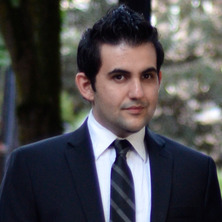
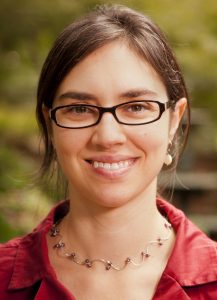
Matthew Lieberman is a Professor at the University of California, Los Angeles (UCLA), serving as Area Chair for Social and Affective Neuroscience. As a founder of social neuroscience, his research focuses on the neural mechanisms underlying real-world social interactions using functional near-infrared spectroscopy (fNIRS) to study face-to-face communication and team dynamics. Education: Ph.D. from Harvard University Research Interests: Lieberman's work centers on making social neuroscience more socially relevant through his CEEing Model, which explains pre-reflective subjective construal in visual, semantic, and psychological domains. His lab investigates friendship foundations, ideological conflict resolution, worldview formation, and team performance optimization. He has recently expanded this framework to explore consciousness and subjectivity in neural correlates of conscious experience, bridging cognitive and affective neuroscience with social behavior. Publication Trends: His recent publications (2010-2022) demonstrate consistent advancement in social cognitive neuroscience, with increasing focus on neural synchrony during interactions, consciousness studies, and real-world applications. Key methodological innovations include fNIRS for naturalistic social paradigms and electrocorticography for precise neural sequencing. Thematic evolution shows progression from basic self/other processing to complex team dynamics and theoretical frameworks for consciousness. Laboratory: Lieberman directs the UCLA Social Cognitive Neuroscience (SCN) Lab, which pioneers the use of fNIRS in ecologically valid social settings. The lab examines neural mechanisms of social connection, conflict resolution, and collective intelligence through interdisciplinary approaches combining psychology, neuroscience, and computational modeling.
Gregory A. Miller serves as a Distinguished Research Professor at the University of California, Los Angeles, where he co-directs the Laboratory of Clinical and Affective Psychophysiology. Holding a Ph.D. from the University of Wisconsin-Madison, his work bridges clinical psychology and behavioral neuroscience through advanced neuroimaging methodologies. Education: Ph.D. in Psychology, University of Wisconsin-Madison Research Focus: Dr. Miller investigates psychological and neural mechanisms underlying cognitive-emotional-physiological interactions in normal behavior and psychopathology, with emphasis on executive function, emotional dysregulation, and sensory processing. His lab employs multimodal techniques including fMRI, EEG, MEG, and EKG to study schizophrenia, depression, and anxiety disorders. Current projects examine brain connectivity during cognitive training, stress dynamics, and cross-cultural neural responses to social stimuli. Publication Trends: Recent work (2023-2025) reveals expanding focus on brain-body interactions in psychosis, cultural influences on neural processing, and machine learning applications for neuroimaging data. His schizophrenia research increasingly integrates autonomic measures with cortical activity, while depression/anxiety studies explore dimensional symptom structures through cross-cultural frameworks. Scientific Awards: No awards explicitly documented in current materials Advising & Grants: Dr. Miller has mentored graduate students historically but is not accepting new advisees for the upcoming academic year. His research is sustained through extensive multi-institutional collaborations rather than individually listed grants in current documentation. Laboratory & Collaborations: The UCLA Laboratory of Clinical and Affective Psychophysiology operates through partnerships with University of Konstanz (Germany), University of Zurich (Switzerland), University of Pennsylvania, Children's Hospital of Philadelphia, and University of Illinois Urbana-Champaign. Key collaborators include Profs. Yee-Bradbury, Karlsgodt, Nuechterlein, Rockstroh, Langer, Edgar, and Heller across schizophrenia, sensory processing, and mood disorder projects.
Dr. Jodi Halpern is a Professor of Bioethics and Medical Humanities at the University of California, Berkeley School of Public Health. She co-founded the Berkeley Group for the Ethics and Regulation of Innovative Technologies and serves as the Co-Director of the Kavli Center for Ethics, Science, and the Public at UC Berkeley. MD and PhD in Philosophy from Yale University Former Psychiatry Resident at UCLA Neuropsychiatric Institute Robert Wood Johnson Clinical Scholar Fellowship Her research focuses on the intersection of psychiatry, philosophy, and decision science to examine how innovative technologies transform human relationships and society. This includes AI psychotherapy, gene editing ethics, and virtual reality applications for empathy development. Her recent publications highlight concerns about AI replacing human empathy in healthcare, ethical implications of germline genome editing, and the importance of empathic curiosity in resolving conflicts. She has explored how emotional thought processes influence decision-making and how people adapt to health losses through psychological transformation. Guggenheim Fellowship in Health and Medicine (2022) Chancellor’s Chair at UC Berkeley (2019) Greenwall Faculty Scholars Fellowship Rockefeller Fellowship at Princeton University As a consultant and speaker, Halpern advises organizations like the Federal Reserve Bank of San Francisco, Kaiser Permanente, and the Los Angeles Mayor’s office on ethical technology implementation. Her work has been featured at the World Economic Forum in Davos and she maintains an active role in training the next generation of bioethics scholars.
Hassan Khosravi is an Associate Professor in Data Science and Learning Analytics at The University of Queensland with primary appointment in the School of Electrical Engineering & Computer Science. He additionally holds affiliate Associate Professor positions in the Faculty of Humanities, Arts and Social Sciences, specifically with the School of Education and Humanities and Social Sciences. His academic work bridges computer science with educational innovation, focusing on how artificial intelligence can transform learning experiences and enhance student outcomes. Dr. Khosravi earned his PhD from Simon Fraser University and has built an extensive teaching career across three leading institutions: Simon Fraser University, University of British Columbia in Canada, and The University of Queensland in Australia. He has coordinated 30 different course offerings across 10 distinct courses for approximately 7,000 students, with class sizes ranging from 50 to 700. His teaching portfolio spans introductory programming, data structures and algorithms, artificial intelligence, database management systems, and graduate-level data science courses. His research program focuses on the intersection of data science, learning analytics, and educational technologies. Dr. Khosravi draws on theoretical insights from learning sciences and techniques from human-centered AI to develop technological solutions that enhance student learning. Key research areas include: Educational Technologies and Learning Analytics Human-AI Interaction in educational contexts Explainable AI for educational applications Crowdsourcing approaches to educational system development Statistical-relational learning applications in education Peer assessment and feedback systems enhanced by AI Analysis of Dr. Khosravi's recent publications (2024-2025) reveals a significant shift toward practical applications of generative AI in educational settings. His work demonstrates increasing focus on large language models for feedback systems, peer assessment enhancement, and student content creation. His research shows expanding interdisciplinary reach, connecting computer science with chemistry education, cognitive psychology, and research ethics. The publications indicate a clear progression from foundational machine learning work toward applied educational technologies that address real classroom challenges. Dr. Khosravi has been recognized with a Senior Fellowship from the Higher Education Academy, awarded in recognition of his contributions to effective teaching approaches and his coordination, supervision, management, and mentoring of others in educational contexts. As a research supervisor, Dr. Khosravi currently advises four PhD students as principal or associate advisor, with research topics spanning dataset building, cyber safety education for seniors, complex problem-solving with GenAI, and learning analytics applications in chemistry education. He has successfully completed supervision of seven PhD students whose work focused on synergizing learning sciences with analytics, insightful action recommendations in dashboards, AI for peer review improvement, and language learning behaviors. His supervision approach emphasizes interdisciplinary collaboration, often working with co-advisors from education, psychology, and domain-specific fields. Dr. Khosravi is actively engaged in major research funding initiatives, currently as a key participant in the ARC Training Centre for Information Resilience (2021-2026). Previously, he contributed to an ARC Discovery Grant focused on data analytics tools for self-regulated learning (2022-2025) led by Monash University. His work is organized around developing practical educational technologies, particularly through the RiPPLE platform and other systems that leverage learnersourcing and adaptive learning approaches to create scalable educational solutions.
Lisa Aziz-Zadeh is a Professor at the University of Southern California with joint appointments in the Department of Psychology (USC Dornsife College), the Brain and Creativity Institute, and the Chan Division of Occupational Science and Occupational Therapy. Her research focuses on understanding how sensorimotor systems underpin higher cognitive functions like social cognition, empathy, and creativity, with a particular emphasis on autism spectrum disorder (ASD), developmental coordination disorder (DCD), and the gut-brain axis. She directs the USC Center for the Neuroscience of Embodied Cognition (CeNEC). Her current projects include investigating sensory-motor deficits in ASD, gut microbiome-brain interactions, and the neural basis of embodied semantics. She has secured funding from NIH, DoD, and other institutes. Key research themes involve neuroimaging techniques (MRI/fMRI) to explore motor and sensory processing deficits in neurodevelopmental disorders. Notable contributions include studies on mirror neuron system dysfunction post-stroke and the role of embodied cognition in language processing. Her work bridges clinical and basic science, addressing both typical and atypical neurodevelopmental pathways. She collaborates with institutions like UC Berkeley and Google to explore existential concepts like 'belonging' and 'otherness' through a neuroscience lens. Dr. Aziz-Zadeh’s lab (CeNEC) employs multi-method approaches including behavioral studies, neuroimaging, and computational modeling to advance understanding of embodied cognition. Her research has led to over 100 peer-reviewed publications in high-impact journals, focusing on translational neuroscience and neurorehabilitation strategies.
Dr. Julia Rose is an Associate Professor at the Department of Applied Economics within the Erasmus School of Economics at Erasmus University Rotterdam, and a Research Fellow at the Tinbergen Institute. Her research focuses on behavioral economics, particularly decision-making under stress, risk perception, and market dynamics. She actively contributes to replicability studies in social sciences and develops experimental methods for assessing time preferences and risk attitudes. Her work integrates insights from psychology, neuroscience, and economics to understand how emotions, stress, and social contexts influence financial decisions. Notable areas include anticipatory anxiety's impact on risk-taking, the role of client-advisor matching in finance, and the reproducibility of experimental results in management science. Dr. Rose is affiliated with leading institutes like the Tinbergen Institute and maintains a strong presence in academic networks through her research on experimental asset markets, bubbles in financial markets, and behavioral nudging strategies. Her methodological contributions include open-source tools for time preference studies, advancing replicability standards in behavioral economics research.
Dr. Nicola Johnstone is a Research Fellow in Psychology at the University of Surrey's School of Psychology, specializing in neuroimaging methods to investigate brain-behavior relationships in children and young people. Her current research examines how gut microbiota influences psychological well-being through the microbiome-gut-brain axis. Research focuses include: MRI/MRS and EEG applications in developmental psychology Psychobiotic interventions for anxiety Nutrition-neurodevelopment interactions Naturalistic experimental paradigms She collaborates with Dr. Kathrin Cohen Kadosh on the 'Project Fearless' clinical trials investigating prebiotic effects on emotional well-being in youth. Her publication record demonstrates consistent focus on translational neuroscience with particular emphasis on developmental periods and gender-specific effects.
Harriet Tenenbaum is Professor of Developmental and Social Psychology at the University of Surrey. Her research examines how children develop understandings of discrimination through social systems and everyday interactions, combining cognitive and socio-cultural frameworks. Research programs investigate: Childhood gender schemas and stereotypes Emotion communication patterns Educational interventions for bias reduction Current projects include studies on emotion regulation during COVID-19, civic engagement competencies, and cultural diversity's role in children's rights understanding. She directs the Social Development Lab and leads multiple international collaborations.
Khara Turnbull is a Research Assistant Professor in the Department of Education Leadership, Foundations & Policy at the University of Virginia's School of Education and Human Development. Her work focuses on children's language development, executive function, and school readiness, particularly in low-income populations. She investigates how classroom discourse, family routines, and sleep health influence early academic success. Education: Ph.D. from the University of Delaware; B.S. from Frostburg State University. Research Interests: Language semantics, syntax, and pragmatics in early childhood Role of classroom interactions in student outcomes Impact of sleep routines on school readiness Intergenerational effects of maternal education and self-regulation Cultural responsiveness in family-child interactions Featured Projects: Developing Effective Online Early Childhood Courses Through Innovative Partnerships Social Confounders for Health Outcomes Linked to Education (SCHOOL) Understanding the Power of Preschool for Kindergarten Success (P2K) Research Trends: Recent work emphasizes pandemic impacts on low-income families, community resource effects on breastfeeding, and classroom-level interventions to enhance behavioral engagement. Findings highlight the interconnectedness of sleep, language, and executive function in early development. Labs/Teams: Collaborates with the Center for Advanced Study of Teaching and Learning (CASTL) on large-scale educational projects.
Amanda P. Williford serves as the Batten Bicentennial Professor of Early Childhood Education and Associate Director for Early Childhood Education at the Center for Advanced Study of Teaching and Learning (CASTL) within the University of Virginia's School of Education and Human Development. She is also a licensed clinical psychologist specializing in early childhood mental health assessment and interventions for children with challenging behaviors. Her academic credentials include a Ph.D. and M.A. from the University of North Carolina at Greensboro (2003, 2000) and a B.A. from the University of Virginia (1996). Williford's research integrates educational, developmental, and clinical psychology to address critical gaps in early childhood education (birth through age eight). She focuses on developing evidence-based interventions for school readiness, analyzing classroom processes that foster children's adaptation, and translating research into scalable policy and practice. Her work emphasizes self-regulation skill development, classroom engagement dynamics, and teacher-child relationship quality, with particular attention to vulnerable populations in low-income settings. Analysis of her 2018-2025 publications reveals consistent themes in early childhood mental health consultation, executive functioning's role in school readiness, and implementation science for evidence-based practices. Key trends include the Banking Time intervention for strengthening teacher-student relationships, examination of racial discipline gaps in early education, and evaluation of statewide initiatives like Virginia's ECMHC pilot program. Her scientific recognition includes: Virginia Education Science Training (VEST) Fellow Williford mentors doctoral students in Clinical/School Psychology and Applied Developmental Science programs while engaging undergraduates and master's students in research. She secured nearly $$10$$ million from the Institute of Education Sciences and maintains active partnerships with the Virginia Department of Education to ensure research directly informs state policy decisions regarding early childhood systems. She leads multiple initiatives through CASTL including the STREAMin³ Curriculum Model, Virginia Early Childhood Mental Health Consultation Pilot, Learning to Objectively Observe Kids (LOOK) assessment system, and Banking Time intervention research, all designed to bridge scientific evidence with practical classroom applications.
Zhijun Yin is an Assistant Professor in the Department of Biomedical Informatics and Computer Science at Vanderbilt University's School of Engineering. His research focuses on developing machine learning and data mining techniques to analyze health behaviors through online data sources like social media and electronic health records (EHRs). He holds dual appointments in Biomedical Informatics and Computer Science, reflecting his interdisciplinary work in health informatics and computational methods. Yin earned a Ph.D. in Computer Science and an M.S. in Biostatistics from Vanderbilt University. His research spans ethical AI applications in healthcare, predictive modeling for disease recurrence, and understanding caregiver dynamics in online communities. He has published extensively on topics including AI ethics, health data privacy, and leveraging social media for medical insights. Notable areas of focus include optimizing word embeddings for small medical datasets, improving risk prediction models using EHR longitudinal data, and addressing algorithmic bias in healthcare AI systems. His work often bridges biomedical data analysis with computational methodologies, aiming to enhance patient care through technology-driven solutions.
Dr. Benjamin (Benjy) Li serves as Associate Professor and Assistant Chair for Undergraduate Studies at Nanyang Technological University's Wee Kim Wee School of Communication and Information (WKWSCI), where he leads research on communication technology's psychological impacts. His work bridges virtual reality applications and human behavior studies, with significant collaborations across healthcare and government sectors in Singapore. Li's research centers on two transformative domains: virtual/mixed reality as digital intervention tools for health, empathy, and environmental behavior; and technology-induced fatigue phenomena like videoconference and information overload. His methodology integrates experimental design with real-world applications, often employing VR/AR to create embodied experiences that drive behavioral change. Recent work expands into AI-human trust dynamics and cross-cultural validation of fatigue measurement tools. Analysis of his 15 most recent publications reveals a dominant focus on videoconference fatigue (60% of articles), establishing him as a leading authority in this emerging field. Concurrently, his VR intervention research demonstrates consistent application across health promotion and social cohesion contexts, with increasing interdisciplinary collaborations spanning computer science, psychology, and public health. Key recognitions include: 2021 Social Science and Humanities Research Fellowship from Singapore Social Science Research Council Inaugural Humanities, Arts and Social Sciences Postdoctoral Fellowship (2014) at Stanford University Nanyang Education Award (School) in 2024 for teaching excellence Li actively mentors four graduate students whose work extends his core themes into youth VR applications, organizational communication, and aging populations. His $9 million research portfolio features major projects like the Social Science and Humanities Research Fellowship ($877,552 as PI) on VR for intergenerational empathy and MOE grants addressing information fatigue. Strategic partnerships with Stanford Prevention Research Center, Singapore's Ministry of Health, and KK Women's Hospital enable real-world implementation of digital health interventions. His lab operates through the WKWSCI research ecosystem, leveraging NTU's Immersive Journalism Lab and collaborating with Singapore's Health Promotion Board on VR-based behavioral interventions. Current initiatives focus on strengthening societal cohesion through VR and developing fatigue-mitigation strategies for educational settings.
Nello Cristianini is a Professor in the Department of Computer Science at the University of Bath, specializing in Artificial Intelligence and Machine Learning. His research focuses on machine learning, data science, computational social science, philosophy of AI, and AI regulation. He has authored influential books such as The Shortcut: Why Intelligent Machines Do Not Think Like Us (2023) and Machina Sapiens: How Intelligent Machines Passed the Turing Test (2025). His work intersects technical AI advancements with societal impacts, including studies on public mood via social media analysis, gender bias in media, and algorithmic regulation. He contributes to UN Sustainable Development Goals through interdisciplinary research. Recent publications explore AI ethics, bias mitigation, and the social implications of intelligent systems. He actively engages in policy discussions, such as the EU’s AI regulation framework.
Dr. Misha Becker is a Professor and Chair in the Linguistics Department at the University of North Carolina at Chapel Hill. Her research focuses on syntactic theory, first language acquisition, bilingualism, and language revitalization. She has authored/co-authored influential textbooks such as *Language Acquisition and Development: A Generative Introduction* (MIT Press, 2020) and *The Acquisition of Syntactic Structure: Animacy and Thematic Alignment* (Cambridge, 2014). Her work explores how children acquire syntactic displacement structures, emotion adjectives, and abstract verbs through mechanisms involving animacy cues and linguistic context. Her recent collaborations include projects with the New Kituwah Academy for Cherokee language revitalization and studies on Basque language attitudes in Vitoria-Gasteiz, Spain. She teaches courses on language acquisition, bilingualism, and sociolinguistics. The UNC Language Development Lab, under her direction, investigates child language development through experimental methodologies. Key research themes include: syntactic learnability puzzles, language revitalization strategies, and interdisciplinary approaches to emotion word acquisition. Her work bridges formal syntax theory with empirical child language data, often employing computational models and cross-linguistic comparisons.
Dr. Margot Peeters is an Associate Professor at Utrecht University's Faculty of Social and Behavioural Sciences, specializing in the Department of Youth in Changing Cultural Contexts. She holds a Research Master's from Radboud University and a PhD (Cum Laude) from Utrecht University, focusing on adolescent substance use. Her research emphasizes adolescent development, addiction, mental health promotion, and digital media's role in youth behavior. She leads projects like the TRAILS study (longitudinal mental health research) and the Minding the Gap project (mental health in poverty-stricken youth). Peeters is also involved in education as the program coordinator for Youth Development and Social Change. Research Themes: Dynamics of Youth (DoY), Game Research, and Youth Got Talent. Her work bridges science and practice through participatory methods, aiming to improve youth mental health. She collaborates with organizations like the Trimbos Institute and advises the National Expertise Center Alcohol (TECA). Key projects include the DiYo project (gaming behavior analysis) and the Youth and Family Central Knowledge Center, focusing on school stress and attendance. Publications & Grants: Over 70 publications since 2010, including studies on problematic gaming, anxiety-drinking links, and socioeconomic impacts on health. She has received grants for co-creation approaches to academic stress and leads the 'Mental Capital' study on school-related stress. Her work is published in journals like Journal of Adolescent Health and Media Psychology . Awards & Recognition: PhD Cum Laude (2014) for research on alcohol use in at-risk youth. Her contributions to bridging academic and practical youth health interventions are widely recognized.