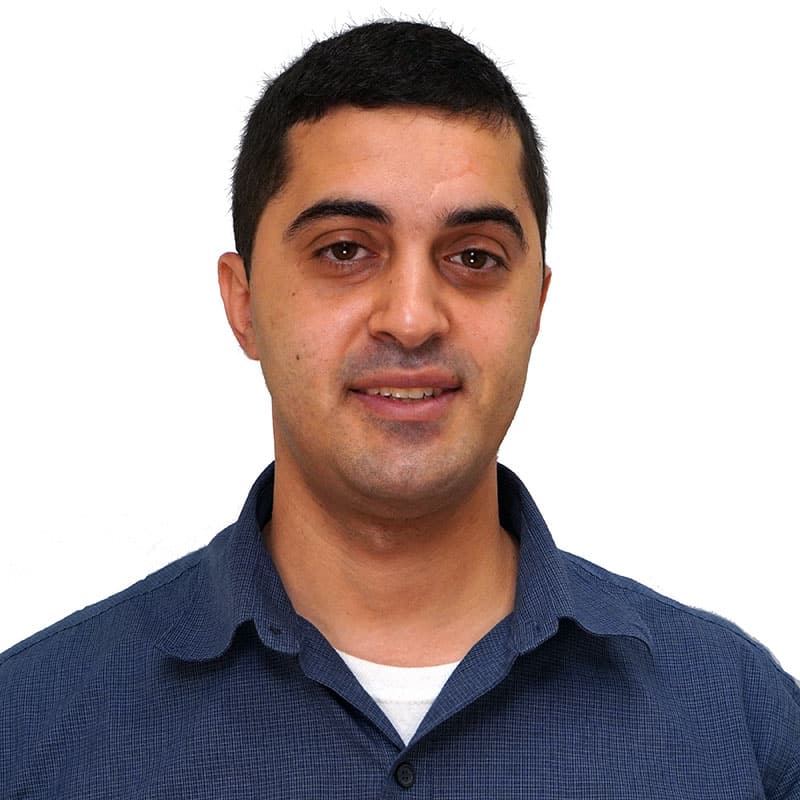
Loïc Guezou is a Researcher at the Paris-Saclay University's Mechanics Laboratory, focusing on interdisciplinary research spanning biomedical engineering and geopolitical studies. His work integrates computational mechanics with additive manufacturing for patient-specific anatomy modeling, while also addressing emerging cyber-geopolitical challenges. Key Research Areas: Biomedical Engineering: High-fidelity numerical models for 3D printing Computational Mechanics: Application to medical device development Geopolitical Studies: Cybersecurity and digital policy implications Recent conference communications highlight his collaborative approach, working with experts like Andrea Barbarulo, Bing Tie (biomedical projects), and Frédérick Douzet, Julien Nocetti (cyber-geopolitical research). Although no formal awards or student advisement details are currently documented in the available records, his publications reflect a dual focus on technological innovation and socio-political analysis.
Dr Rod Thornton is a Senior Lecturer in Russian Defence and Security Studies at King’s College London, affiliated with the Defence Studies Department and School of Security Studies. He specializes in the Russian military's kinetic and sub-threshold warfare, with a focus on cyber capabilities, space warfare, and UK homeland resilience. His research includes recent British Academy-funded work on UK civil defense capacity during the pandemic, advocating for dedicated civil defense organizations. He has published extensively on Russian military tactics in Ukraine, AI-cyber integration, and space-based deterrence. Russian military cyber operations Space warfare dynamics UK resilience capacity gaps Scientific awards include a British Academy grant (2020). His students focus on asymmetric warfare, AI, cyber, and regional security issues. He teaches at the UK Defence Academy and has collaborated with institutions in Finland, South Korea, and the Freeman Air and Space Institute.
Keir A. Lieber is a Professor at Georgetown University, holding dual appointments in the Edmund A. Walsh School of Foreign Service and the Department of Government. His research focuses on nuclear strategy, deterrence, technology’s role in warfare, and U.S. national security policy. He co-authored The Myth of the Nuclear Revolution and authored War and the Engineers , exploring how political decisions outweigh technological determinism. Lieber’s work appears in International Security , Foreign Affairs , and other leading journals. He has received major fellowships from institutions like the Brookings Institution and the Council on Foreign Relations. Education: Ph.D. and M.A. in Political Science from the University of Chicago; B.A. in Political Science and International Relations from the University of Wisconsin-Madison. A proud alumnus of D.C. public schools, Lieber emphasizes interdisciplinary approaches to security studies. His research interests span nuclear deterrence theory, the impact of emerging technologies on conflict, and the evolution of U.S. defense strategies. Recent work addresses nuclear tripolarity and the challenges of escalation control in modern conflicts. Awards include recognition for his contributions to international relations scholarship and policy analysis. Lieber’s academic contributions include co-editing volumes on realism and advising on national security policy. Grants and fellowships have supported his exploration of topics like cyber warfare and nuclear non-proliferation.
Dr. Herb Lin is the Hank J. Holland Fellow in Cyber Policy and Security at the Hoover Institution and Senior Research Scholar for Cyber Policy and Security at the Center for International Security and Cooperation (CISAC), both at Stanford University. He also serves as Chief Scientist, Emeritus for the Computer Science and Telecommunications Board of the National Academies, where he worked from 1990 to 2014, and as Adjunct Senior Research Scholar and Senior Fellow in Cybersecurity at Columbia University's Saltzman Institute for War and Peace Studies. Dr. Lin received his doctorate in physics from MIT, providing him with a strong technical foundation that informs his policy work at the intersection of technology and national security. His academic background bridges the gap between deep technical understanding and policy application in the cybersecurity domain. Dr. Lin's research focuses on the policy dimensions of cybersecurity and cyberspace, with particular emphasis on offensive cyber operations as instruments of national policy, information warfare, and influence operations affecting national security. His work addresses critical challenges at the intersection of emerging technologies like artificial intelligence, quantum computing, and their implications for nuclear security, election integrity, and democratic processes. He has been instrumental in analyzing how cyber capabilities are transforming traditional security paradigms and how policy frameworks must adapt to these changes. His extensive publication record reveals a consistent focus on the evolving relationship between cyber capabilities and national security strategy. Lin's work demonstrates increasing attention to the implications of artificial intelligence for warfare, the vulnerabilities created by quantum computing for current cryptographic systems, and the growing threat of cyber-enabled information warfare to democratic institutions. His research trajectory shows a progression from traditional cybersecurity issues toward the broader implications of digital technologies for national and international security. Member of Science and Security Board of Bulletin of the Atomic Scientists Served on President Obama's Commission on Enhancing National Cybersecurity (2016) Regular congressional testimony on cybersecurity matters Contributor to Stanford Emerging Technology Review As a mentor and collaborator, Dr. Lin works extensively with policymakers, military officials, and technology experts to translate complex cybersecurity concepts into actionable policy recommendations. His approach emphasizes practical solutions to emerging threats while recognizing the technical limitations and policy constraints that shape real-world security outcomes. Dr. Lin is associated with multiple research initiatives including Stanford's Center for International Security and Cooperation and the Stanford Emerging Technology Review, which aim to connect technological advances with policy considerations for national security decision-makers.
Dr. Marina Miron is a post-doctoral researcher at King’s College London’s Department of War Studies and Honorary Research Fellow at the Centre for Military Ethics. Her work focuses on military strategy, cybersecurity, and ethical education in conflict contexts. She holds a PhD from the University of New South Wales (Australian Defence Force Academy) and has taught at institutions like the NATO School and Colombian War College. Current projects include analyzing Russia/China’s information warfare strategies and developing country-specific military ethics programs for Colombia’s armed forces. She also advises on cyber defense, AI in military contexts, and drone technology impacts. Research interests span counterinsurgency, hybrid warfare, cyber operations, and ethical dilemmas in modern conflict. She co-leads a British Academy-funded project on Western countermeasures against information warfare and contributed to NATO’s counterterrorism training programs. Her work bridges technological advancements with ethical considerations, particularly in unmanned systems and medical ethics. Publications analyze Russian cyber capabilities, drone public perception, and historical conflict resolution cases like Peru. She frequently appears in media discussions on Ukraine and cybersecurity threats. Professional networks include King’s Cybersecurity Centre and Freeman Air & Space Institute.
Prof. Dr. Oliver Müller is a Professor at the Department of Philosophy, University of Freiburg, and serves as Vice Dean of the Faculty of Philosophy. His academic journey includes a doctorate from Humboldt University Berlin (2005) and a habilitation in Philosophy (2012). Müller leads research on Philosophical Anthropology, Philosophy of Technology, and Ethics, with a focus on human-machine interactions and Anthropocene ethics. He supervises doctoral and postdoctoral researchers across projects like livMatS and BrainLinks-BrainTools. Research interests span neuroethics, transhumanism, and socio-technological systems, emphasizing ethical frameworks for emerging technologies. Publications explore AI ethics, drone warfare, and phenomenological embodiment, reflecting interdisciplinary engagement with neuroscience and environmental philosophy. Honors include the MTZ Bioethics Award and Heisenberg Fellowship. Müller directs participatory discourse initiatives bridging art and science, fostering public engagement with technological ethics. His work advances critical dialogues on human enhancement and ecological responsibility in the digital age.
Zaklina Spalevic is a distinguished Professor at Singidunum University, specializing in the intersection of law, technology, and business. With a strong academic background in criminal law and extensive research in cyber law, artificial intelligence applications in legal systems, and tourism law, she has established herself as a leading scholar in digital legal frameworks. Her work spans multiple disciplines, connecting traditional legal principles with emerging technological challenges. Dr. Spalevic earned her doctoral degree in Criminal Law from the University of the Academy of Economics in Novi Sad (2008-2012), following basic studies in General Law at the University of Pristina (1996-2001). Her educational foundation in Science and Mathematics from First Pristina High School (1992-1996) provided the analytical basis for her interdisciplinary approach to legal scholarship. Her research interests focus on the evolving landscape of cyber law, particularly the legal implications of artificial intelligence in judicial systems, electronic governance, and tourism industry regulation. Dr. Spalevic has pioneered work on digital evidence processing, algorithmic justice, and the integration of green law principles into sustainable business practices. Her publications reveal a consistent pattern of addressing emerging legal challenges in the digital age, with increasing emphasis on AI applications across various legal domains. Analysis of her recent publications shows a clear trend toward interdisciplinary research that bridges law, technology, and business. Her work increasingly focuses on practical applications of legal frameworks for emerging technologies, particularly in tourism, agriculture, and judicial systems. The integration of technical solutions with legal regulation represents a distinctive feature of her scholarly contributions. Dr. Spalevic has authored numerous publications including three books: 'Fundamentals of Law with Special Reference to Business and Tourism Law' (2021, 2024 editions) and 'Legal Aspects of Cyberspace' (2018). Her extensive publication record includes over 100 journal articles and conference papers spanning cyber security, electronic governance, intellectual property in digital environments, and legal frameworks for emerging technologies. She actively contributes to academic discourse through conference presentations and collaborative research projects, particularly focusing on the legal implications of artificial intelligence across various sectors. Her work demonstrates a commitment to developing practical legal frameworks that address real-world technological challenges while maintaining foundational legal principles.
Dr. Gavin Mount is a researcher at UNSW Canberra , specializing in non-traditional security studies , ethnic conflict , and the sociopolitical implications of emerging technologies . His work bridges theoretical analysis with practical applications in conflict transformation and defense studies. Research Focus: Global politics of ethnic conflict, hybrid peace/war frameworks, and socio-political impacts of drone technology. Teaching: Courses like Ethnic Conflict in World Politics and Law, Force and Legitimacy , with a focus on military education and strategic studies. Publications: Recent work includes contributions to Thinking Swarms (2025) and Hybridity on the Ground in Peacebuilding and Development (2018). Grants: Leads the Curricula Integration of Student Wellbeing Resources project under HERDSA. Key Themes across his research include the intersection of technology and conflict, evolving defense paradigms, and pedagogical innovations in security studies.
Luciano Floridi is the Professor of Philosophy and Ethics of Information at the University of Oxford, directing the Digital Ethics Lab at the Oxford Internet Institute (OII). He holds multiple roles including Distinguished Research Fellow at the Uehiro Centre for Practical Ethics and Research Associate at the Department of Computer Science. Additionally, he is Faculty Fellow at the Alan Turing Institute and Adjunct Professor at the American University, Washington D.C. His research focuses on Digital Ethics, AI Ethics, Philosophy of Information, and Technology, with over 150 publications and influential books like *The Fourth Revolution* and *The Ethics of Information*. Floridi earned his laurea from Rome University La Sapienza (1988), followed by an MPhil and PhD from the University of Warwick (1989–1990). He has held positions at Oxford since 1990, including roles at Wolfson College, the Warburg Institute, and the University of Hertfordshire (2009–2014) where he held a UNESCO Chair in Information Ethics. His academic journey includes postdocs with Susan Haack and Michael Dummett, shaping his expertise in logic and epistemology. His research interests span Digital Ethics, AI ethics, and the Philosophy of Technology, with notable work on information warfare ethics and the governance of emerging technologies. He contributed to policy initiatives like the European Commission’s *Onlife Initiative* and advises bodies such as the EU’s Ethics Advisory Group and the UK’s House of Lords. Floridi is a leader in global digital ethics, influencing frameworks for AI governance and privacy. Floridi has received numerous awards, including the Barwise Prize (2009) and Weizenbaum Award (2013). He chairs the Alan Turing Institute’s Data Ethics Group and collaborates with institutions like Tencent and Google on ethical AI. His upcoming role as Founding Director of Yale’s Digital Ethics Center (2023) underscores his continued impact on global digital ethics discourse. Key achievements include pioneering the Philosophy of Information as a discipline and advocating for infraethics—the ethical foundations enabling moral systems. His work bridges academic theory and real-world policy, addressing challenges like data privacy, algorithmic accountability, and AI’s societal implications.
Dr. Brady D. Lund is an Assistant Professor at the University of North Texas, focusing on interdisciplinary research at the intersection of information science, artificial intelligence, and ethics. His work addresses AI adoption in libraries, data privacy, academic integrity, and international development. He holds a Ph.D., M.S., and B.S. from Emporia State University and Wichita State University. Education: Ph.D., Emporia State University M.S., Emporia State University B.S., Wichita State University Research Interests: Dr. Lund explores how AI impacts information seeking behaviors, data privacy literacy, and library services. His work emphasizes ethical AI deployment in academic and clinical settings, with a focus on marginalized communities. Key areas include AI-driven library systems, blockchain applications for academic integrity, and the societal implications of generative AI. Research Trends: Recent publications analyze AI's role in health information, cybersecurity threat intelligence, and library leadership in minority-serving institutions. He critiques AI authorship policies, evaluates large language models, and advocates for equitable AI access in developing countries. Labs & Teams: Leads the Computational Humanities and Information Literacy Lab and the CyberCrews initiative, focusing on AI ethics, digital literacy, and interdisciplinary collaboration.
Jonathan P. Wong is a Senior Policy Researcher at the RAND Corporation and Professor of Policy Analysis at the RAND School of Public Policy. His work bridges academic research and defense policy, focusing on military strategy, acquisition, force planning, and the integration of emerging technologies into military operations. Education: Ph.D. and M.Phil. in Policy Analysis (Pardee RAND Graduate School), M.A. in Security Studies (Georgetown University), B.A. in Political Science (UC San Diego) Professional Experience: U.S. Marine Corps infantry officer (2001–2011), Consultant at Boston Consulting Group, current RAND researcher and professor Wong’s research interests center on defense innovation, military logistics, artificial intelligence in warfare, space capabilities, and the human dimension of military operations. He has led studies on human-machine teaming, non-lethal weapons, defense acquisition reform, and U.S. military posture in the Indo-Pacific. His work emphasizes practical, policy-relevant insights grounded in operational experience. The trends in his recent publications reveal a deep engagement with modern defense challenges: integrating commercial technologies into military systems, improving acquisition agility, enhancing battlefield awareness, and ensuring that defense innovation serves warfighter needs. His research spans strategic, operational, and tactical levels, often focusing on the U.S. Army and Marine Corps. Wong has not received public recognition in the form of listed awards in the provided texts, but his leadership in congressionally mandated studies and high-impact policy research suggests significant influence in defense circles. Advising & Grants: Co-led major projects such as the Long Range Precision Fires study and research on integrating women into Marine Corps infantry. His work is frequently funded by the Department of Defense and other federal entities, though specific grant details are not listed. Wong is affiliated with RAND’s defense and national security research teams, contributing to strategic analysis and policy development. He is not associated with a formal lab but works within RAND’s collaborative research environment, often partnering with other veterans and defense experts to produce actionable insights for military leaders and policymakers.
Henri van Soest is a Professor of Policy Analysis at the RAND School of Public Policy and a Senior Analyst at RAND Europe. He is based at RAND, a global policy research organization, where he leads studies on energy security, artificial intelligence governance, critical infrastructure protection, and European Union policy. His work supports key institutions including the European Union, UK government, and Dutch government. His research focuses on the intersection of technology and policy, particularly in energy systems and AI. Key areas include: AI governance and trustworthy AI tools Energy security and digitalisation of the power grid Critical undersea infrastructure protection Cybersecurity in energy systems Space technology regulation Societal resilience and national security The trend in his recent publications shows a growing emphasis on the dual-use nature of AI in critical infrastructure, balancing innovation with security and resilience. His work combines technical analysis with policy recommendations, often using modeling and expert elicitation. Much of his research addresses transatlantic and European policy challenges, especially in energy and security domains. Scientific contributions and policy impact are evident through frequent publications and expert submissions to governmental bodies. Notable outputs include evidence submissions to the UK Parliament and reports for the U.S. Department of Energy. While no formal awards are listed, his influence is reflected in high-level policy engagement. He has advised on grants and policy studies involving global teams, particularly in energy transition, AI infrastructure, and resilience planning. His prior experience includes energy policy research at the University of Oslo, cleantech analysis, and corporate governance in banking. He holds a Ph.D. from the University of Cambridge and a joint LL.M. from KU Leuven and the University of Zurich. Henri van Soest leads research within RAND Europe’s multidisciplinary teams focusing on science, technology, and security policy. His work often involves collaboration across international experts and institutions, particularly on EU and NATO-related security issues. He contributes to projects involving horizon scanning, Delphi studies, and quantitative modeling in policy contexts.
Professor Mary Augusta Brazelton is a Professor at the University of Cambridge's Department of History and Philosophy of Science and a Fellow of Jesus College. She serves as Director of Studies in Natural Sciences (History and Philosophy of Science) at Jesus College (on leave 2024-2025). Her academic work focuses on the history of science and medicine in modern China, with particular attention to global health, transportation technologies, and the intersection of science and state power. Education: BA (Harvard), MPhil and PhD (Yale). Awards include the 2020 Student-led Teaching Award and the 2019 Zhu Kezhen Senior Award. She is also a Trustee and Research Fellow of the Needham Research Institute and a Council member of the American Association for the History of Medicine. Her research explores topics such as mass vaccination policies in 20th-century China, Sino-French scientific collaborations, and the history of penicillin development. Current projects include studies on the Sino-French Institute in Lyon and transnational histories of civil aviation. Publications include Mass Vaccination: Citizens' Bodies and State Power in Modern China (2019) and China in Global Health: Past and Present (2023). She actively contributes to academic discussions through media engagements and international conferences.
Amro Awad is an Associate Professor in the Department of Electrical and Computer Engineering (ECE) at North Carolina State University's College of Engineering. He previously served as an Assistant Professor at the University of Central Florida and as a Senior Member of Technical Staff at Sandia National Laboratories. Dr. Awad earned his Ph.D. and Master's in Computer Engineering from NC State and a Bachelor's from Jordan University of Science and Technology. Research Focus His research spans computer architecture and security, emphasizing secure hardware systems , memory security , and integration of emerging technologies . Key contributions include novel approaches to secure and efficient GPU memory management, FPGA resource scheduling, and DRAM simulation. Publications & Awards Dr. Awad's work appears in top-tier venues like ISCA, MICRO, ASPLOS, and HPCA. He holds six U.S. patents and received the prestigious R. Ray Bennett Faculty Fellow Award and recognition as a Goodnight Early Career Innovator . Funding & Collaborations His research group has been supported by DARPA , Sandia National Laboratories , NSF , Naval Surface Warfare Center , and Air Force Research Lab . Collaborations include AMD Research, Los Alamos National Lab, HP Labs, and Air Force Research Laboratory.
Daryl G. Press is a Professor of Government at Dartmouth College and the inaugural Faculty Director of the Davidson Institute for Global Security . He co-founded the Strategic Forces Boot Camp with Sandia National Laboratories and serves as a non-resident Senior Fellow at the Atlantic Council . Research Expertise U.S. National Security Policy Nuclear Deterrence Dynamics Technological Evolution in Warfare Strategic Stability Analysis Defense Department Consultancy Recent Publications (2023–2025) Examined U.S.-China military dynamics in East Asia Analyzed North Korean deterrence strategies Explored post-primacy U.S. foreign policy frameworks Investigated nuclear escalation risks Contact Information Email: daryl.g.press@dartmouth.edu Phone: (603) 646-1707 Office: Silsby Room 120, HB 6108