Yuri Pritykin is an Assistant Professor at Princeton University, affiliated with the Lewis-Sigler Institute for Integrative Genomics and the Department of Computer Science. He also holds cross-appointments in Molecular Biology, the Omenn-Darling Bioengineering Institute, and the Center for Statistics and Machine Learning. Pritykin earned his Ph.D. in Computer Science from Princeton University (2014), alongside MSc and Ph.D. in Mathematics from Lomonosov Moscow State University. His research lies at the intersection of applied statistics, machine learning, and functional genomics, focusing on integrative analysis of multi-dimensional biological data. Research Interests: Decoding regulatory genomics in immune cells, CRISPR tool development (GuideScan2), single-cell and spatial multi-omics for immunology and cancer, post-transcriptional regulation, and cell-cell interaction profiling (uLIPSTIC technology). Awards: NSF CAREER Award (2023) NIH New Innovator Award (2022) Recognized by Princeton Ludwig Institute, Rutgers Cancer Institute, and AACR Teaching: Courses in computational biology, genomics, and machine learning applications in life sciences. His lab actively collaborates with immunologists and genomicists, seeking interdisciplinary scientists at all career stages.
Dr. Sheng-Jian Ji is a Tenured Associate Professor at the School of Life Sciences, Department of Neuroscience at Southern University of Science and Technology (SUSTech) in Shenzhen, China. He also serves as the Academic Vice President of Shude Academy and was previously the first Deputy Director of Research and Graduate Affairs in the Department of Biology at SUSTech (2016-2018). As a leading neuroscientist specializing in RNA modification and neural development, Dr. Ji has established an internationally recognized research program. Dr. Ji's educational background includes: 2003-2007: Postdoctoral Fellow, Johns Hopkins University School of Medicine, Neurobiology 1998-2003: PhD in Biochemistry and Molecular Biology, Peking University School of Life Sciences 1994-1998: Bachelor's Degree in Biochemistry, Yantai University Department of Biochemistry Dr. Ji's research primarily focuses on developmental neurobiology, with particular emphasis on post-transcriptional regulation mechanisms including RNA modification and local translation of mRNA in axons. His laboratory is recognized as one of the leading international groups studying how mRNA modification (particularly m6A and m5C) regulates neural development and function. Through innovative approaches combining molecular biology, cell biology, and microfluidic technologies, his team has revealed important insights into axon growth, dendrite maintenance, cortical neurogenesis, and retinal development. His publication record shows a clear trajectory from fundamental mechanisms of RNA modification to applications in understanding neurological disorders and aging. Recent work has expanded into aging-related neural decline, cognitive functions, and potential therapeutic targets for neurological conditions. Dr. Ji has received numerous prestigious awards: 2020, 2016: SUSTech Excellent College Mentor 2020: SUSTech Biology Department Outstanding Service Award 2019: Guangdong Province Talent Youyue Card A 2017: Guangdong Provincial Professor of Neurobiology 2013: Jiangsu Distinguished Professor (Nanjing University) 2011: National Natural Science Award Second Prize (third contributor) As an educator, Dr. Ji teaches undergraduate Neurobiology and graduate Cellular and Molecular Neurobiology courses. He actively mentors students, with recent master's graduates including Yuan Jiaxin and Zhang Pingrui. His laboratory recruits postdoctoral fellows (with salaries of 335,000+ RMB annually), research assistants, and graduate students, providing comprehensive training in molecular techniques, neuronal cell culture, microfluidics, and omics approaches. Dr. Ji leads a vibrant research team that collaborates both within SUSTech and internationally. His work continues to advance understanding of RNA modification in neural development, function, and aging, with recent progress highlighted in June 2025.
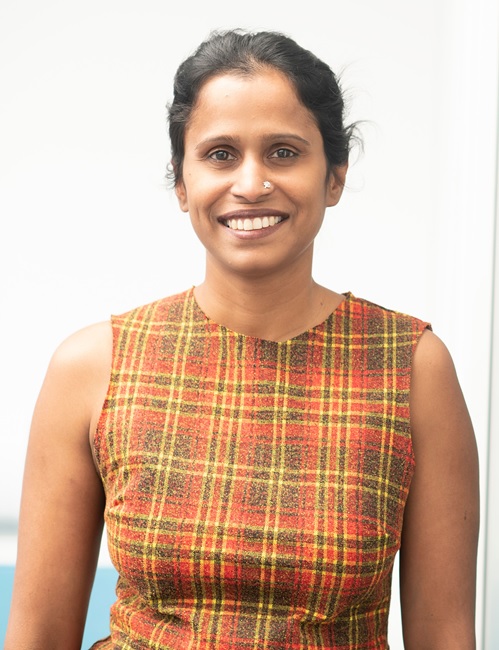
Aparna Ratheesh serves as an Associate Professor at the Centre for Mechanochemical Cell Biology at the University of Warwick, where she leads research in the Wellcome-Warwick Quantitative Biomedicine Programme. Her work bridges cell biology, developmental biology, and biophysics, focusing on the mechanical and biochemical interactions that govern cell migration in living organisms. Dr. Ratheesh's research centers on cell migration through complex tissue barriers, a process essential for embryonic development, immune homeostasis, and pathological conditions like cancer metastasis. Her lab utilizes Drosophila melanogaster macrophages during embryonic development as a model system, leveraging the genetic tractability of fruit flies combined with quantitative live imaging, biophysical tools, and mathematical modeling. Current research focuses on how macrophages sense tissue stiffness and alter their force-generating machinery for migration, and how macrophage-generated forces affect surrounding tissue mechanics, cell fate, and positioning. Analysis of her publication record reveals a consistent focus on cellular mechanobiology, with particular emphasis on cell migration, tissue mechanics, and immune cell behavior. Her work spans both fundamental cell biological mechanisms and their implications for understanding disease processes, particularly in inflammation and cancer. The publications demonstrate a progression from basic molecular mechanisms of cell adhesion to more complex tissue-level mechanical interactions. Dr. Ratheesh maintains an active research program investigating the mechanical dialogue between migrating cells and their environment. Her work combines advanced imaging techniques with genetic manipulation in the Drosophila model system to address fundamental questions about how cells navigate through complex tissues during development and disease processes.
Jose J. Muñoz is a Professor at the Universitat Politècnica de Catalunya (UPC), affiliated with the Department of Mathematics and the LACÀN research group. His work focuses on computational mechanics, mechanobiology, and inverse problems in biological systems. He holds a PhD in Aeronautics from Imperial College London (2004) and a dual degree in Mechanical Engineering from UPC and Civil Engineering from École Centrale Paris (1997). His research combines finite element methods, vertex models, and optimal control to study tissue morphogenesis, wound healing, and cancer mechanics. Current roles include leading the LACÀN research group and supervising PhD students in projects like optimal control of contractile systems and inverse mechanical analysis. Former students include Ashutosh Bijalwan and Cécilia Olivesi. He teaches Numerical Methods and Computational Mechanics at the UPC's Faculty of Mathematics and Statistics. His research interests span vertex and finite element modeling, cell rheology, and stability analysis of biological tissues. Notable contributions include models for epithelial wound healing, Drosophila embryo development, and mechanical oscillations in tissues. His work often integrates experimental data with computational frameworks to infer non-observable mechanical parameters.
Dr. Kenneth Jeffries is an Associate Professor in the Department of Biological Sciences at the University of Manitoba’s Faculty of Science. His research bridges comparative physiology, transcriptomics, and ecotoxicology to study environmental stress responses in aquatic ectotherms. Education: BSc (First Class Honours) - University of Calgary, MSc - University of Calgary, PhD - University of British Columbia, Postdoc - University of California, Davis Jeffries’ work focuses on defining sub-lethal thermal thresholds, contaminant effects in aquatic systems, and transcriptomic responses to environmental stressors. His lab specializes in non-lethal sampling techniques and high-throughput gene expression analysis using OpenArray™ technology for species like salmonids, sturgeons, and lampreys. Key projects include: Arctic ecosystem studies using truncate soft-shell clams as biomonitor species Development of stress transcriptional profiling (STP) chips for rapid biomarker assessment Thermal and contaminant stress interactions in freshwater fish populations Conservation genomics applications for invasive species management Recent article trends emphasize transcriptomic approaches to climate change impacts, thermal stress mechanisms, and contaminant flow in Arctic ecosystems. His collaborations include GEN-FISH, Fisheries and Oceans Canada, and the Great Lakes Fishery Commission. Scientific Awards: Mitacs Postdoctoral Fellowship NSERC Postdoctoral Fellowship Inside JEB feature (2016, 2023) Editor’s Choice (Journal of Experimental Biology, 2023) Jeffries supervises PhD, MSc, and Honours students while leading the Jeffries Lab, which maintains partnerships with the IISD–Experimental Lakes Area and other institutions. His lab also develops DNA metabarcoding resources for Arctic benthic monitoring.
Clifford W. Bogue, MD , is the Waldemar Von Zedtwitz Professor of Pediatrics, Chair of the Department of Pediatrics at Yale School of Medicine, and Chief of Pediatrics for the Yale New Haven Health System. He has been a faculty member at Yale since 1993 and has held numerous leadership roles, including Interim Chairman of Pediatrics, Chief Medical Officer of Yale-New Haven Children’s Hospital, and Director of Pediatric Critical Care programs. Education: BA and MD from the University of Virginia; Residency and Chief Residency at Vanderbilt University; Fellowship in Pediatric Critical Care at Yale. Dr. Bogue is a pediatric critical care specialist whose research centers on the molecular mechanisms of organ development, particularly the role of the Hhex gene in liver, cardiovascular, and lung organogenesis. His lab used mouse models to uncover critical genetic pathways in embryonic development, with implications for regenerative medicine. His recent work also extends into pediatric public health, critical care infrastructure, and health equity. An analysis of his recent publications reveals a sustained focus on developmental genetics, with increasing engagement in clinical and policy-oriented research in pediatrics. His work spans molecular biology, translational models, and national health initiatives, reflecting a broad scholarly impact. His scientific honors include: President of the American Pediatric Society (2024–2025) Norman J. Siegel Faculty Award Marna P. Borgstrom Lifetime Achievement Award Consistent recognition in Best Doctors in America since 2004 Honorary M.A. from Yale University Dr. Bogue has been deeply involved in training the next generation of physician-scientists, serving as PI of an NIH T32 program, Training Director of the Yale Child Health Research Center (K12), and mentor in the MD/PhD program. He has contributed to national pediatric research policy through roles in the American Academy of Pediatrics, NIH advisory committees, and the Charles H. Hood Foundation. He leads or has led significant research initiatives, including an NIH-funded program on cardiopulmonary development and the Bedside to Bench seminar for medical students. His leadership extends to national boards and editorial roles, including Section Editor for Current Opinion in Pediatrics .
Dana Pe'er is Chair of the Computational and Systems Biology Program at the Sloan Kettering Institute (SKI) and an Investigator at the Howard Hughes Medical Institute (HHMI). She holds the Alan and Sandra Gerry Endowed Chair and leads an interdisciplinary lab combining single-cell genomics, machine learning, and computational modeling to study cancer biology, immunity, and development. Pe'er earned her PhD at the Hebrew University in Jerusalem and focuses on cellular plasticity, epigenetic regulation, and tumor-immune interactions. Her lab develops tools like CellRank , Wishbone , and SEACells to analyze single-cell data and uncover mechanisms in cancer progression and immunotherapy. Key research areas: Computational Biology, Single-Cell Genomics, Cancer Systems Biology, Epigenetics, Immunotherapy Recent trends: Articles from 2025-2024 emphasize spatial transcriptomics, tumor microenvironment mapping, and regulatory network inference using machine learning. Scientific honors include the NIH Director’s Pioneer Award , AACR Academy Induction , and Packard Fellowship . Her work has direct clinical implications for precision medicine and cancer immunotherapy. Labs & Teams: Leads the Dana Pe'er Lab at SKI, directs the Single Cell Research Initiative (SCRI), and collaborates with the SAIL program.
Professor Ben Steventon is a faculty member at the University of Cambridge in the Department of Genetics . His research focuses on developmental biology, particularly the regulation of cell fate decisions during embryonic axis patterning in zebrafish and chick embryos. Key research themes include: Downward causation in multi-tissue interactions Pattern emergence through dynamic gene regulatory networks Multi-scale regulation of developmental timing His lab employs live quantitative imaging and single-cell transcriptomics to address these questions. Notable affiliations include: Theme Leader (Reproduction, Development and Lifelong Health) Open Research Representative (Cambridge DORA committee) Chair of Microscopy Steering Committee He has received the Wellcome Trust/Royal Society Sir Henry Dale Fellowship and actively mentors researchers such as: Postdoctoral Research Associates: Dr Qiyu Chen, Dr Imen Lassadi, Dr Guillermo Serrano-Najera, Alice Yuen Research Assistants: Oskar Batty, Apolline Delahaye Postgraduate Students: Alexandra Neaverson, Yuri Takahashi
Dr. Mandi de Mestre is a Professor in the Department of Biomedical Sciences at Cornell University's College of Veterinary Medicine. As Director of the Baker Institute for Animal Health and holder of the Dorothy Havemeyer McConville Professorship of Equine Medicine, her research focuses on equine pregnancy biology, placental development, and fetal health. Director, Baker Institute for Animal Health Dorothy Havemeyer McConville Professor of Equine Medicine Affiliated with Cornell's College of Veterinary Medicine Her laboratory investigates: Molecular mechanisms of placental development Genetic causes of early pregnancy loss Congenital musculoskeletal disorders in Thoroughbreds Non-invasive diagnostics for fetal health Comparative studies linking equine and human pregnancy pathologies Recent research trends show strong emphasis on genomic stability, immune interactions during implantation, and epidemiological factors affecting equine pregnancies. Collaborations with institutions like the University of Nottingham and Royal Veterinary College UK highlight her interdisciplinary approach. The Equine Pregnancy Laboratory employs molecular biology, immunology, and genetics to address critical gaps in placental biology, with implications for both veterinary and human medicine.
Leif Andersson is a Professor at Uppsala University's Department of Medical Biochemistry and Microbiology, leading a research group focused on functional genomics in domestic animals and fish. His work bridges genetics, ecology, and evolutionary biology to explore phenotypic variation and adaptation. His research includes comparative genomics of domesticated species, identifying mutations linked to traits like horse gaits , chicken comb morphology , and herring ecological adaptation . Recent studies highlight genetic mechanisms in species such as corn snakes , Grey horses , and Darwin's finches , emphasizing environmental interactions and molecular pathways. Key article trends include supergenes in herring adaptation, RNA-binding proteins in cancer and development, and mutation-discovery in domesticated animals. His group's work spans genetic variation , ecological pressures , and evolutionary genetics . Students in his group include Arianna Cocco Ryan Joseph Daniels Jake Goodall Zheng Li Cheng Ma Giulia Maestri Fahime Mohamadnejad Sangdehi Mats Pettersson Matteo Sebastianelli Leyi Su Dandan Wang His contact details include the email Leif.Andersson@imbim.uu.se and phone number 070-425 02 33 , with an office at BMC, Husargatan 3, Uppsala.
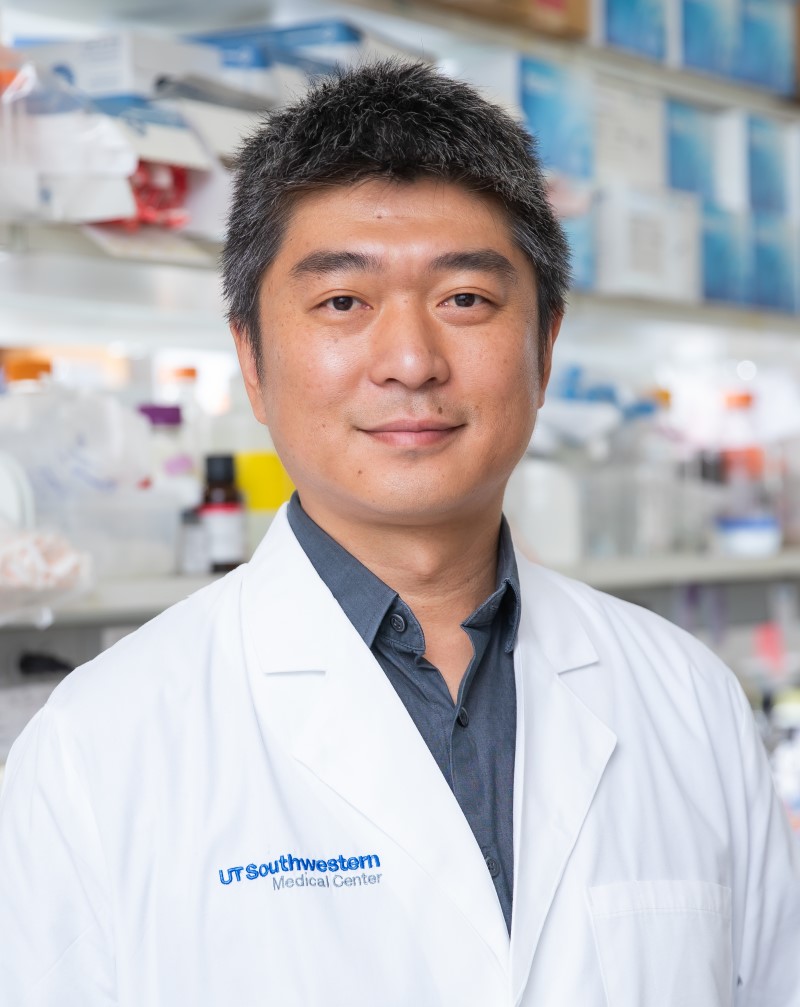
Dr. Jun Wu is an Assistant Professor in the Department of Molecular Biology at UT Southwestern Medical Center. He holds a PhD in Life Science from the University of Tennessee and completed postdoctoral training at the University of Southern California and the Salk Institute. His research focuses on stem cell biology, genome editing, and interspecies chimeras to advance regenerative medicine and developmental biology. Education: Bachelor of Medicine, Shandong University School of Medicine (China) PhD in Life Science, University of Tennessee (2013) Postdoctoral Fellowships: USC (2013-2015) and Salk Institute (2015-2017) Research Interests: Generation of pluripotent stem cells with distinct molecular/phenotypic features Development of interspecies blastocyst complementation systems Modeling peri-implantation human development using stem cell embryo models Study of species-specific developmental barriers and evolutionary biology Application of chimeras to study cancer resistance and organ size determination Lab Activities: The Wu Lab develops stem cell models to study mammalian development and create regenerative therapies. Key projects include: Creation of interspecies chimeras (human-monkey, rat-mouse) Development of blastoids and peri-gastruloids Analysis of species-specific cell competition mechanisms Engineering cross-species organogenesis systems Grant Activities: Focuses on NIH-funded projects related to stem cell biology, interspecies chimerism, and regenerative medicine applications. Collaborates with institutions like Salk Institute and University of California campuses. Lab Team: Includes postdoctoral researchers like Dr. Yi Ding and a multidisciplinary team of molecular biologists, bioengineers, and computational biologists.
Lionel Pochet is a Professor at the University of Namur, active in drug design, thrombosis research, and analytical chemistry. His work focuses on coagulation cascade inhibitors and fragment-based drug discovery. Namur Medicine & Drug Innovation Center Namur Thrombosis and Hemostasis Center Namur Research Institute for Life Sciences His research spans coumarin derivatives , FXIIa inhibition , and covalent probes for protein interactions. Recent projects include targeted covalent inhibitors for Mycobacterium tuberculosis and lactate dehydrogenase. Key publications highlight pharmacological evaluation , mass spectrometry , and structural chemistry applications in drug discovery. Awards and grants are not explicitly mentioned in the provided text.
Elvis Genbo Xu is an Associate Professor at the Department of Biology, University of Southern Denmark. His research focuses on environmental toxicology, particularly micro/nanoplastics and crude oil pollutants. He employs transcriptomics and bioinformatics to study marine ecosystems and embryonic model systems. University of Southern Denmark Department of Biology Active since at least 2018 Research Interests: Micro/Nanoplastics Crumb Rubber Marine Protected Areas Endocrine Disruptors Transcriptomics Bioinformatics Article Trends (2018-2019): Focus on nanoplastics and microplastics Environmental impact assessment Toxicity mechanisms in aquatic organisms Methodological innovations in plastic analysis Interdisciplinary approaches combining toxicology, materials science, and molecular biology Scientific Recognition: 2024 World's Top 2% Scientists 2023 Undervisningsprisen på Naturvidenskab 2021 Faculty Research Dissemination Prize 2020 Best ES&T Letters Paper Advising & Editorial Roles: Active PhD/Postdoc supervision Junior Editor at Journal of Hazardous Materials (2020) Editorial Board member for Environment International (2022)
Susanne Bornelöv is a Professor in the Department of Biochemistry at the University of Cambridge. Her research focuses on computational genomics and gene regulation, particularly exploring posttranscriptional mechanisms such as codon optimality-mediated mRNA decay and transposon silencing. She uses computational methods, ribosome profiling, and Drosophila models to study how codon usage, tRNA availability, and RNA modifications influence gene regulation and genome evolution. Her work integrates artificial intelligence (AI) and comparative genomics to model gene regulatory processes and design novel regulatory elements. Key research areas include piRNA clusters' roles in suppressing retroviruses, codon usage bias in pluripotent stem cells, and the interplay between mRNA methylation and protein synthesis. The Bornelöv Group collaborates widely, including with institutions like Cold Spring Harbor Laboratory, to advance understanding of fundamental gene expression principles. Publications highlight contributions to topics like deep learning in genomics, evolutionary conserved piRNA mechanisms, and transcriptional regulation. She leads a group open to interns, students, and researchers, fostering interdisciplinary approaches to address complex biological questions.
Carina Hanashima is a Professor at the Faculty of Education and Integrated Arts and Sciences , Waseda University, Japan. Her research focuses on neuroscience , developmental biology , and molecular mechanisms underlying cortical development . She has held academic positions at Kobe University (2014.04-2018.03), RIKEN (2008.10-2017.03), Osaka University (2012.04-2015.03), and Nara Women's University (2007.09-2014.11). Research Interests Neuronal specification and cortical circuit formation Role of transcription factors (e.g., Foxg1, Robo1) in brain development Gene regulatory networks in neurogenesis Evolutionary origins of the neocortex Recent Trends in Publications : Her work explores transcriptional repression , axon guidance signaling , and developmental clock mechanisms in mammalian and non-mammalian models (chicks, mice). Key themes include neurodevelopmental disorders (e.g., autism, schizophrenia), angiogenesis , and cell migration . Scientific Awards : Poster Award, Asia-Pacific Developmental Biology Conference APDBC (2012.10) Grants and Projects : Japan Society for the Promotion of Science Grants-in-Aid (2016.06-2021.03, 2021.04-2022.03) RIKEN Joint Retreat Organizer (2011-2017) Labs and Collaborations : She leads the Hanashima Lab at Waseda University, focusing on spatiotemporal control in neuronal identity and neurovascular coupling . Her lab employs genetic lineage tracing , in situ hybridization , and in utero electroporation techniques.

 grupp.webp)