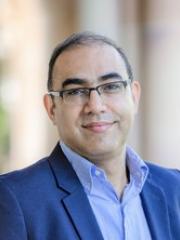
Professor Feng Xie is affiliated with the Department of Health Research Methods, Evidence, and Impact at McMaster University , focusing on health economics, cost-effectiveness analysis, and health-related quality of life (HRQoL) research. His work spans oncology, cardiology, geriatrics, and public health policy, with a strong emphasis on EQ-5D-5L utility value applications. Key research areas: Health economics, medical decision making, HRQoL, EQ-5D-5L, cardiovascular disease-specific measures Recent Trends : Analysis of economic evaluations in surgery, development of preference-based health measures for China, cost-effectiveness of novel therapies (e.g., deep brain stimulation, convalescent plasma), and methodological advancements in discrete choice experiments. Grants & Collaborations : Involved in multi-center trials (e.g., CONCOR-1, RAVAL) and implementation studies for critical care rehabilitation. Collaborates with international teams on health state utility assessments and GRADE guideline applications.
Professor Daniel Rigby specializes in environmental, food, and health economics at the University of Manchester, using discrete choice experiments and best-worst scaling methods to study preferences and values. He serves as an adjunct professor at University of Western Australia and contributes to UK food policy through the Food Standards Agency. Rigby's research examines economic aspects of food allergies, sensitivities, and foodborne illnesses, with recent projects funded by NIHR, ESRC, and FSA. His work quantifies quality-of-life impacts and willingness-to-pay for food safety interventions. Rigby's publications analyze risk perception heterogeneity, agricultural technology adoption, and environmental valuation. Current projects include FOODSENS (economic burden of food allergies) and studies of foodborne illness economic burdens with USDA and Resources for the Future.
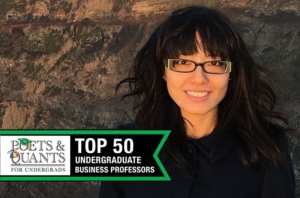
Juanjuan Zhang is the John D. C. Little Professor of Marketing at the MIT Sloan School of Management. An expert in quantitative modeling, she combines economic theory with computation to build scalable business solutions. Her research has been deployed to automate various business functions such as media planning, platform optimization, and sales force management. Dr. Zhang holds a B Econ from Tsinghua University and a PhD in business administration from the University of California, Berkeley. She joined MIT in 2006 and made tenure at age 34, which she considers her proudest professional achievement. She is currently teaching Marketing Innovation at MIT Sloan and has received the Jamieson Prize, MIT Sloan's highest teaching award. Zhang's research spans quantitative marketing modeling, consumer behavior analysis, and sales force management. Her work combines economic theory with computational approaches to solve practical business problems. She has made significant contributions to understanding how digital platforms can be optimized, how sales performance can be enhanced through data-driven approaches, and how consumer preferences can be effectively modeled and predicted. Her research on 'Genes and Sales' revealed that superior sales performers show genetic differences from others. Professor Zhang has served as a department editor of Management Science, associate editor of several other top journals, and VP of the INFORMS Society for Marketing Science. She has been instrumental in bridging the gap between theoretical marketing science and practical business applications. Frank Bass Award for the best marketing thesis John Little Award for the best INFORMS marketing paper INFORMS Society for Marketing Science Long Term Impact Award Gary Lilien Practice Prize for outstanding implementation of marketing science in practice Marketing Science Institute Scholar (2018) MIT d'Arbeloff Fund for Excellence in Education Jamieson Prize (MIT Sloan's highest teaching award) Top 50 Undergraduate Professor by Poets and Quants She has been involved in executive education programs including the AI Executive Academy, a collaboration between MIT Sloan and Schwarzman College of Computing. Zhang believes the biggest challenge facing business education is 'the need to teach skills to better communicate with other disciplines such as computer science' and envisions a future business school with 'much more lifelong mentoring of students' and 'much less stress from job placement.'
Alastair Young is a Professor and Chair in Statistics at Imperial College London's Department of Mathematics within the Faculty of Natural Sciences. His research focuses on advanced frequentist statistical methods, including bootstrap techniques, saddlepoint approximations, and spatial data inference. He has held prior roles as Reader in Methodological Statistics at the University of Cambridge (pre-2005). Key research areas include computer-intensive statistical methods, parametric and non-parametric inference, and approximation strategies for complex models. He is a Fellow of the Institute of Mathematical Statistics and previously served as Joint Editor of the Journal of the Royal Statistical Society, Series B. Alastair's work bridges theoretical developments (e.g., hybrid bootstrap methods, quantile estimation) with applications in econometrics, artificial intelligence, and bioinformatics. Recent publications emphasize causal inference in clinical trials, high-dimensional statistics, and principled data science methodologies. Awards: Fellow of the Institute of Mathematical Statistics Editorial Role: Former Joint Editor, JRSS Series B Key Themes: Bootstrap methodology, likelihood-based inference, spatial statistics
Dr. Stefanie Plage is a Research Fellow with the Life Course Centre at the School of Social Science, Faculty of Humanities, Arts and Social Sciences at The University of Queensland (UQ). Her multi-disciplinary work focuses on qualitative research methods including longitudinal and visual approaches to explore complex social issues related to health, disadvantage, and social care systems. Dr. Plage earned her Doctor of Philosophy from the Centre for Social Research in Health at The University of New South Wales, where she employed longitudinal qualitative interviews and visual elicitation methods to explore the lived experience of people with cancer. She also holds a Masters (Coursework) from the University of Essex. Her research interests span: Sociology of Health and Illness, particularly the lived experience of chronic illness and cancer Health and homelessness Educational inclusion, participation and outcomes of children with cancer Sociology of emotions and disadvantage Dr. Plage has published extensively across multiple formats including 46 journal articles, 4 book chapters, 10 conference papers, 20 research reports, 9 working papers, and 2 creative works. Her recent research examines housing instability, cancer survivorship, and the interactions of families experiencing social disadvantage with social and health care systems. She has developed expertise in participant-produced photography and narrative methods to explore complex health and social issues. Her research has been supported by funding from St Vincent de Paul Society Queensland, Queensland Mental Health Commission, Micah Projects Inc, Anglicare Southern Queensland, and the Commonwealth Department of Social Services. Dr. Plage serves as an Associate Advisor for multiple PhD candidates at UQ, supervising research on wellbeing in young cancer patients, online dating experiences of cancer survivors, digital health interventions, gender inequality, and climate change impacts. Her teaching experience includes introductory and advanced courses in sociology and medical sociology, research design, and qualitative inquiry, including the use of software for qualitative research (NVivo). She maintains extensive collaborations with researchers across multiple institutions, particularly with colleagues at UQ including Cameron Parsell, Rose-Marie Stambe, Ella Kuskoff, and Rebecca Olson. Her work bridges sociology, health studies, and social policy through interdisciplinary approaches.
Professor Haitham Tuffaha serves as Affiliate Professor of the School of Pharmacy and Pharmaceutical Sciences and Professorial Research Fellow at the Centre for the Business and Economics of Health (Faculty of Business, Economics and Law) at The University of Queensland. He also holds affiliations with the Centre for Innovation in Pain and Health Research. As lead of the Effective and Efficient Healthcare program and Health Technology Assessment division at CBHE, his work directly informs Australian healthcare policy through Pharmaceutical Benefits Scheme (PBS) and Medicare Benefits Schedule (MBS) evaluations. His research focuses on economic evaluation of health interventions , value-based healthcare implementation , and cancer economics , pioneering Value of Information analysis applications to optimize clinical trial efficiency. Key research areas include: Health Technology Assessment methodologies Genetic testing and targeted therapy economics Medication safety and utilization Exercise oncology cost-effectiveness Resource allocation frameworks for precision medicine Analysis of his 100+ publications reveals consistent emphasis on prostate cancer interventions , genetic testing cascade models , and implementation economics , with recent work expanding into gut-brain interaction disorders and telehealth rehabilitation. His methodological contributions center on Value of Information frameworks that bridge research investment decisions with clinical implementation. Professor Tuffaha chairs the ISPOR-Oncology Group and serves as Associate Editor for Value in Health , with editorial roles at Medical Decision Making and PharmacoEconomics-open . His leadership extends to co-developing the Australian Clinical Trials Alliance Research Prioritisation Framework. As chief investigator on over $45 million in Category 1 grants (NHMRC, MRFF, ARC), he directs projects for the Department of Health evaluating novel drugs and devices. His research has directly influenced allocation of nearly $1 billion in new health technologies in Australia over the past decade. His leadership spans the Centre for Business and Economics of Health, where he directs the Effective and Efficient Healthcare program, and collaborative networks including the Safe and Effective Medication Collaborative. Current initiatives focus on optimizing medicine information handover post-discharge and value-based implementation of precision oncology.
Jacob Steinhardt is an Assistant Professor in the Department of Statistics at UC Berkeley, where he is also part of BAIR (Berkeley Artificial Intelligence Research) and CLIMB. His research focuses on ensuring machine learning systems are understood by and aligned with humans, addressing critical challenges in AI safety and reliability. Dr. Steinhardt's research centers on three main directions: Robustness - developing models resilient to distributional shifts, adversaries, and model mis-specification; Reward specification and reward hacking - creating methods to infer complex value functions from data and prevent degenerate policies; and Scalable alignment - designing ML systems that conform to interpretable abstractions despite their large scale. His work rethinks both theoretical and empirical paradigms of machine learning to address these critical challenges to AI safety. An analysis of his recent publications reveals a consistent focus on understanding the internal mechanisms of neural networks, particularly large language models, to improve their alignment with human values. His research spans interpretability techniques, safety mechanisms, and evaluation frameworks, with significant contributions to understanding reward hacking, distributional shift, and model transparency. His work often combines theoretical insights with empirical validation through novel experimental frameworks. Dr. Steinhardt actively mentors a diverse group of PhD students including Ruiqi Zhong (co-advised with Dan Klein), Meena Jagadeesan (co-advised with Mike Jordan), Erik Jones (co-advised with Anca Dragan), and several others. His former students have gone on to positions at leading organizations including OpenAI, Genentech, and the Center for AI Safety. He is the Founder & CEO of Transluce, a non-profit research lab building open, scalable technology for understanding frontier AI systems. Through this initiative and his academic work, he contributes significantly to the growing field of AI safety research, bridging theoretical foundations with practical applications to make machine learning systems more reliable and beneficial.
Anne Mucha is a Postdoctoral Researcher at the University of Edinburgh, affiliated with the Linguistics and English Language department within the School of Philosophy, Psychology and Language Sciences. Her research focuses on modality, tense, aspect, and cross-linguistic semantic analysis, with a particular emphasis on African and Germanic languages. She employs experimental methods and fieldwork-based approaches in her investigations. Her work explores topics such as modal flavor distinctions in German necessity modals, cross-linguistic datasets of modal elements, and temporal interpretation in Hausa and Igbo. She has conducted extensive studies on non-canonical control structures, sequence of tense phenomena, and the interaction between negation and modality in languages like Hausa, Thai, and Kîîtharaka. Mucha’s research integrates formal semantics with empirical methods, including experimental syntax and corpus-driven analyses. Her publications span theoretical linguistics, typological studies, and applied fieldwork methodologies. She has contributed to volumes on multilingual elicitation techniques, language documentation, and the syntax-semantics interface. Her recent work emphasizes the decomposition of modal meanings and the cross-linguistic comparison of tense-aspect systems. Mucha holds a Master’s degree from the University of Potsdam (2011), where her thesis focused on the TAM system of Hausa. She has collaborated internationally, publishing in journals and conference proceedings such as TripleA and Semantics of African, Asian and Austronesian Languages .
Graeme Clark is a Professor at the University of Sydney, affiliated with the Sydney Environment Institute. His research focuses on marine ecology, climate change impacts, and biodiversity conservation. He advises PhD student Jakob Quade on ecosystem connectivity and marine habitats. Clark’s work integrates spatial modeling, citizen science, and environmental monitoring to address challenges like marine debris and Antarctic ecosystem vulnerability. His research spans topics like Antarctic benthic communities, desalination effects on marine life, and the interplay between human activities and coastal ecosystems. Notable projects include the Securing Antarctica's Environmental Future (SAEF) initiative and MyClimate informatics tool development. Clark has co-authored over 50 peer-reviewed articles since 2005, emphasizing interdisciplinary approaches to ecological conservation. Grants: MyClimate: personalising the climate crisis with informatics (2024) Securing Antarctica's Environmental Future (SAEF) (2021) Labs/Teams: Collaborates with interdisciplinary teams at the Sydney Environment Institute and Antarctic research networks.
Dr. Yu Han is a Lecturer in the Department of East Asian Studies at the University of Sheffield's School of Languages, Arts and Societies. She holds a B.A. from Henan University (China), an M.A. from the University of York, and a Ph.D. in Applied Linguistics from the University of Leeds. Her research focuses on second language acquisition, particularly in classroom vs. real-life listening from a sociolinguistic perspective, curriculum design, classroom interaction, learning strategies, and error analysis. She joined the School of East Asian Studies in 2011. Her academic work spans interdisciplinary health economics and technology assessment, with publications addressing real-world evidence integration, treatment sequencing models, and healthcare policy analysis. Recent contributions include studies on comparative effectiveness research using real-world data and the application of causal inference methods in economic evaluations. Dr. Han's work bridges applied linguistics and health systems research, reflecting her diverse academic interests. She is based in Jessop West on campus and can be contacted at yu.han@sheffield.ac.uk. Her research demonstrates a commitment to both language pedagogy and innovative approaches to health technology assessment, contributing to both educational methodologies and evidence-based healthcare decision-making frameworks.
Mark Himmelstein is an Assistant Professor at the School of Psychology, Georgia Institute of Technology. He holds a Ph.D. in Psychometrics and Quantitative Psychology from Fordham University (2023). His research focuses on decision-making under uncertainty, probabilistic reasoning, and belief revision. He collaborates with the Forecasting Research Institute to develop forecasting proficiency tests and studies how individuals update beliefs when presented with new information. His work bridges psychological and statistical methodologies, emphasizing the interplay between human judgment and statistical inference. Key research tracks include identifying skilled forecasters and analyzing advice-taking behaviors. He has published extensively in Journal of Experimental Psychology , Journal of Behavioral Decision Making , and Decision Analysis . Awards include the Decision Analysis Society Publication Award (2023) and the European Association for Decision Making de Finetti Prize (2021). His lab explores predictive analytics and judgmental forecasting dynamics, with a focus on hybrid human-algorithmic systems. Contact: mhimmelstein3@gatech.edu or visit his lab's website .
Professor Jeremy Oakley is the Head of School and Professor of Statistics at the School of Mathematical and Physical Sciences, University of Sheffield. He holds a BSc in Mathematics and Statistics from the University of Nottingham (1996) and a PhD in Statistics from the University of Sheffield (2000). His research focuses on Bayesian statistics, including uncertainty quantification for computer models, prior elicitation, and Bayesian methods in health economics. He has contributed to the development of the Sheffield Elicitation Framework (SHELF), a widely used tool for expert elicitation. His work spans applications in health economics, medical modeling, and engineering design. Education: BSc (Mathematics & Statistics), University of Nottingham, 1996 PhD (Statistics), University of Sheffield, 2000 Research interests include Bayesian methodology, uncertainty quantification, and expert elicitation. His publications address topics like cardiac electrophysiology modeling, clinical trial design, and probabilistic calibration of complex models. He has secured grants from EPSRC and MRC, focusing on managing uncertainty in models and improving healthcare decision-making. Oakley teaches statistics modules and supervises PhD students, contributing to interdisciplinary research collaborations. Recent articles highlight advancements in Bayesian calibration, expert elicitation frameworks, and applications in medical and engineering contexts. His work emphasizes bridging statistical theory with practical challenges in health economics and computational modeling.
Dr. Julia Rose is an Associate Professor at the Department of Applied Economics within the Erasmus School of Economics at Erasmus University Rotterdam, and a Research Fellow at the Tinbergen Institute. Her research focuses on behavioral economics, particularly decision-making under stress, risk perception, and market dynamics. She actively contributes to replicability studies in social sciences and develops experimental methods for assessing time preferences and risk attitudes. Her work integrates insights from psychology, neuroscience, and economics to understand how emotions, stress, and social contexts influence financial decisions. Notable areas include anticipatory anxiety's impact on risk-taking, the role of client-advisor matching in finance, and the reproducibility of experimental results in management science. Dr. Rose is affiliated with leading institutes like the Tinbergen Institute and maintains a strong presence in academic networks through her research on experimental asset markets, bubbles in financial markets, and behavioral nudging strategies. Her methodological contributions include open-source tools for time preference studies, advancing replicability standards in behavioral economics research.
Dr. Sophie van der Zee is an Assistant Professor at the Erasmus School of Economics (Erasmus University Rotterdam), specializing in interdisciplinary research at the intersection of behavioral economics, cybersecurity, and deception detection. She serves as academic director of the MSc Behavioural Economics program and participates in Sectorplan SSH-Breed initiatives. Her work combines psychology, computer science, and economics to address human behavior in security contexts, including deception prevention/detection, cybercrime victimization, and sustainable healthcare practices. Education: Multi-disciplinary background in psychology, economics, and computer science Research: Focuses on automated deception detection via motion capture (AMAB system), personalized models using social media analysis, and the human factors in cybersecurity. Also investigates sustainable behavior in healthcare through the ESCH-R consortium. Leadership: Founded the Deception Research Society organizing Decepticon conferences and 'Lies & Allies' webinars. Served as associate editor for Palgrave Communications . Awards: 2020 Klokhuis Science Prize nomination Media Engagement: Regularly featured in Dutch media discussing deception patterns, cybercrime, and behavioral economics (e.g., NTR Wetenschap, Editie-NL, Argos). Her research bridges academic and practical domains, with applications in law enforcement, cybersecurity policy, and organizational behavior. Current projects explore cyber awareness questionnaire efficacy and cross-cultural deception detection methods.
Dr Emma Isabella Williams is a Lecturer in Developmental Psychology at the University of Surrey's School of Psychology. Her research employs participatory arts-based approaches to explore identities and experiences of autistic children and adolescents, aiming to improve mental wellbeing. She serves as Co-Investigator on the AHRC-funded 'Playing A/Part' project and 'CREATE' initiative, examining autistic identities and adolescent mental health through arts-based methodologies. Williams' work integrates qualitative methods including photo elicitation and drawings, with expertise in observational techniques and mixed-methods research design. Her investigations extend to educational impacts on self-identity in autistic youth and early development of social play behaviors.