Massachusetts Institute of TechnologyUnited States
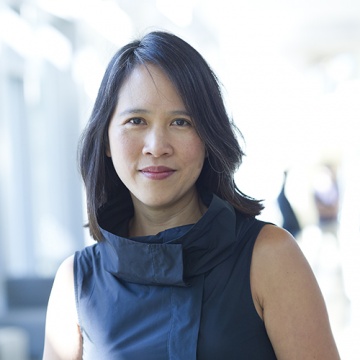
Lily L. Tsai is the Ford Professor of Political Science at the Massachusetts Institute of Technology (MIT) and founder/director of the MIT Governance Lab (MIT GOV/LAB). She previously chaired the MIT Faculty and focuses her research on governance, accountability, and political participation in developing contexts, particularly Asia and Africa. Her research explores how decentralization, democratic reforms, informal institutions, and economic development influence public goods provision. She also investigates the dual impacts of social capital and civil society on political outcomes, and analyzes political behavior in authoritarian and transitional systems through surveys, interviews, and field experiments. Recent publications span topics including collective governance, vaccine compliance in Uganda, anticorruption strategies in China, and the role of informal institutions in rural China. Tsai’s work appears in journals like American Political Science Review and World Development . Dogan Award for best book in comparative research (2007-08) She leads interdisciplinary projects such as the Compass Initiative (SHASS Education Innovation Fund) and The Science of Respect with MIT’s Brain and Cognitive Sciences department. MIT GOV/LAB, which she founded in 2014, emphasizes real-time empirical collaboration between researchers and practitioners to address governance challenges.
Heather Congdon Fors is a Senior Lecturer at the Department of Economics, University of Gothenburg. She holds a Ph.D. in Economics from the University of Gothenburg (2006), an M.A. in Economics from the University of Waterloo (1999), and a B.A. (Honours) in Economics from the University of Manitoba (1997). Her research focuses on development economics, education, child labor, and political economy. She has led the research project 'Child labor and school attendance in India' (2014–2018) and serves as a reviewer for journals such as the European Journal of Political Economy and Economic Inquiry. Her teaching expertise includes macroeconomics, statistics, institutional economics, and international economics. She has completed pedagogical training programs including HPE201 to HPE103. Her work explores topics such as the impact of globalization on education, land certification on schooling in Ethiopia, and the persistence of harmful cultural norms like female genital cutting in Africa. She has published extensively in peer-reviewed journals and authored reports on child labor policies, institutional change in post-colonial states, and gender biases in education. Fors has contributed to interdisciplinary projects, including analyses of bureaucrats' use of cost-benefit analysis in environmental policy and the long-term impacts of colonial missions on cultural practices. Her research bridges theoretical frameworks with empirical studies, addressing global challenges such as sustainable development goals and educational inequalities. She is based at Vasagatan 1, Gothenburg, and can be reached at heather.fors@economics.gu.se.
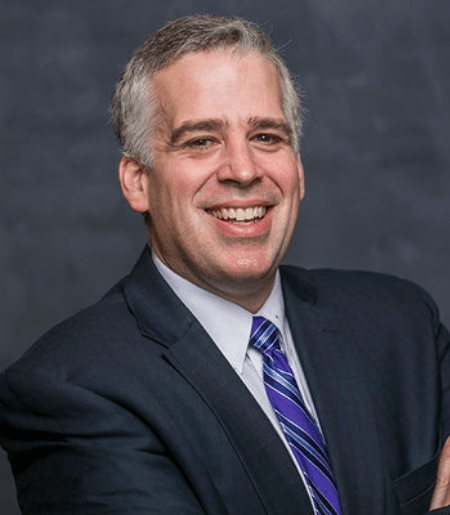
Eduardo Araral is an Associate Professor at the Lee Kuan Yew School of Public Policy, National University of Singapore. With over 30 years of experience in academia and government, he holds a PhD in Public Policy from Indiana University-Bloomington under Nobel Laureate Elinor Ostrom. His research focuses on collective action, institutions, and water governance, with publications in Nature Human Behaviour , Public Administration Review , and World Development . He has held fellowships at Stanford University and centers associated with Coase, Ostrom, and Stigler. Research Interests : Collective action, institutional analysis, water governance, digital technologies in public policy, political economy, and socio-ecological systems. Scientific Awards : Ostrom Prize for the Governance of the Commons, Fulbright PhD Scholarship, and Presidential Award for Outstanding Overseas Filipinos. Leadership Roles : Vice Dean for Research, Assistant Dean for Academic Affairs, and Co-Director of the Institute of Water Policy (2016-2022) at LKYSPP. Global Engagement : Advised 20+ international organizations including ADB, World Bank, UNDP, and Fortune 500 companies, while lecturing to 7,000+ government officials across 50+ countries.
Deval Desai serves as Reader in International Economic Law at the University of Edinburgh's Edinburgh Law School, a position he has held since 2020 after serving as Lecturer from 2020-2023. His academic career includes research positions at Harvard Law School and the Geneva Graduate Institute. Dr. Desai also brings extensive practical experience from a decade working with the World Bank on rule of law and governance in sub-Saharan Africa, as well as advising the United Nations on rule of law issues. Dr. Desai's educational background includes an MA in History and French Literature from Oxford University, followed by legal training at City University/BPP Law School (PGDipL and PGDipLP), and advanced law degrees (LLM and SJD) from Harvard Law School. At Harvard, he held prestigious fellowships including the Byse Fellowship, Program on Negotiation Next Generation Fellowship, and Institute for Global Law and Policy Fellowship. MA (Oxon), History and French Literature PGDipL, PGDipLP, City University/BPP Law School LLM, Harvard Law School SJD, Harvard Law School Dr. Desai's research centers on law and development, administrative law and regulation, theories of the state, and patterns of knowledge and authority across the Global North and South. His work examines institutional reform processes, particularly how expertise and knowledge operate within rule of law initiatives. His interdisciplinary approach draws from legal and social theory, development studies, international relations, and performance studies, as evidenced in his monograph Expert Ignorance (Cambridge University Press). His recent work focuses on fiscal sociology, administrative law in the Global South, and the politics of social welfare provision. Dr. Desai's publications span leading journals in law, political science, and development studies, revealing a consistent focus on the intersections between legal institutions, governance, and development. His work demonstrates increasing engagement with comparative methodologies and critical perspectives on knowledge production in global governance. Recent articles show particular attention to fiscal policy, welfare systems, and responses to global crises like the Covid-19 pandemic, with comparative studies between India and European contexts. Dame Muriel Spark Medal (2024, Royal Society of Edinburgh) Chancellor's 'Rising Star' Award (2023, University of Edinburgh) Member of the Young Academy of Scotland Fellow of the Royal Society of Arts Fellow of the Young Academy of Europe Dr. Desai has secured significant research funding from diverse international sources, including a £2.1 million Swiss National Science Foundation Sinergia grant titled 'Reversing the Gaze: Towards Post-Comparative Area Studies' where he serves as PI. He also leads projects funded by the British Academy, University of Edinburgh's Big Ideas Accelerator, Scottish Funding Council, and Foreign, Commonwealth, and Development Office. His commitment to mentoring is evident through his recognition with the Susan Manning Award for Inspiring Mentor and his leadership in establishing programs like the Global Scholars' Academy at the Geneva Graduate Institute and the Global Justice summer school at CEU. As editor-in-chief of the Cambridge University Press book series 'Elements in Legal Theory and the Global South' and serving on multiple editorial boards, Dr. Desai plays a significant role in shaping scholarly discourse. His current research projects examine 'loss' in legal institutions guiding transitional processes, constitutional implications of fiscal arrangements in fragile contexts, and social welfare provision in India and Italy.
Jie Bai is an Associate Professor of Public Policy at Harvard Kennedy School (HKS), focusing on firms and markets in developing economies. His research addresses barriers to firm growth, market frictions, and policy design for private sector development in regions like China, East Africa, and Southeast Asia. Methodologically, he combines randomized control trials, quasi-experiments, and structural modeling from industrial organization and international trade. He holds a Ph.D. in Economics from MIT (2016) and previously worked at Microsoft Research New England before joining HKS in 2017. His work emphasizes collaboration with governments and NGOs to evaluate industrial and trade policies. Key research themes include collective reputation in trade, environmental policy impacts, corruption dynamics, and child labor economics. His recent publications analyze China's dairy industry reputation, Vietnam's firm corruption patterns, and Zambia's product choice perceptions. He co-founded initiatives like the China Econ Lab and China and the Global Economy project to foster research on China's role in global economics. Teaching includes advanced microeconomic analysis and game theory. No grants or labs are explicitly listed in the provided texts.
London School of Economics and Political Science (LSE)United Kingdom
Elliott Green is a Professor of Development Studies at the London School of Economics (LSE), where he holds a joint appointment in the Department of International Development. He earned a BA from Princeton University and an MSc and PhD from LSE, focusing on nationalism, ethnicity, and African development. His research integrates political science, economics, and sociology, with a focus on ethnic politics, African development trajectories, and national identity formation. Key areas include the political demography of modern Africa, patronage systems, and the impact of industrialization on ethnic assimilation. Green is the author of Industrialization and Assimilation: Understanding Ethnic Change in the Modern World (Cambridge University Press, 2022), which explores how industrialization reshapes ethnic identities. His work has appeared in top journals like the British Journal of Political Science , World Development , and Journal of Development Studies . He currently co-directs the MSc Development Management program and teaches the course 'Democracy and Development' at LSE. His research spans Sub-Saharan Africa, with fieldwork in Uganda, Tanzania, and Botswana. Notable contributions include analyzing ethno-regional favoritism in public goods provision and the role of urbanization in identity transformation. Green serves on editorial boards of prestigious journals and is active in professional organizations like the American Political Science Association. His recent work emphasizes the intersection of demographic trends, political systems, and long-term development outcomes. In addition to academia, Green contributes to public discourse through op-eds and media commentary on issues like immigration, nationalism, and global development challenges. His interdisciplinary approach bridges theoretical scholarship with real-world policy implications, making him a leading voice in African studies and development research.
Dr. Margaret Elizabeth Kruk is a Professor of Health Systems at the Harvard T.H. Chan School of Public Health, part of Harvard University. She previously held roles as Associate Professor at Columbia University and Assistant Professor at the University of Michigan. Her research focuses on improving health system quality in low-income countries, using implementation science and econometric methods to evaluate large-scale reforms. She chairs the Lancet Global Health Commission on High Quality Health Systems in the SDG Era and directs the QuEST Network, a multi-country initiative to enhance health systems globally. Education: MD from McMaster University, MPH from Harvard University. Affiliations: Director of QuEST Centers and Network, former roles at UNDP and McKinsey & Company. Her research interests span healthcare quality measurement, maternal and newborn health, and policy solutions for systemic deficits. Key projects include the People’s Voice Survey on health system performance and mobile phone eCohorts for tracking care quality in LMICs. Publications highlight maternal health outcomes, vaccination decision-making, and health system confidence across countries. Grants include NIH funding for maternal-newborn health integration with HIV programs in Tanzania. Twitter: @mkruk
Dr. Kevin P. Gallagher is a Professor of Global Development Policy at Boston University (BU) and Director of the Global Development Policy Center (GDP Center). He focuses on economic development, trade/investment policy, international environmental policy, and Latin America. His research emphasizes global financial governance, climate resilience, and equitable development. Education includes a BA from Northeastern University, and MA and PhD from Tufts University. He has held visiting/adjunct roles at institutions like Johns Hopkins SAIS, Fletcher School, and Tsinghua University. Research interests center on reforming Bretton Woods institutions, China’s global development finance, and climate policy integration into IMF frameworks. He co-authored influential books such as The Case for a New Bretton Woods and The China Triangle . Recent work addresses debt sustainability in developing countries, climate transition risks, and innovative financing mechanisms like Sustainable Future Bonds. He advises global bodies like the UN Committee for Development Policy and chairs task forces on green transitions and China competition. Key contributions include advocating for IMF surcharge reforms, evaluating climate risks in energy projects, and analyzing China’s overseas development finance impacts on biodiversity and socio-ecological systems.
Ryan K. McBain is a Senior Policy Researcher at the RAND Corporation and an Adjunct Professor of Policy Analysis at the RAND School of Public Policy. His work focuses on designing and evaluating health policies targeting vulnerable populations, including those affected by mental health conditions, HIV/AIDS, homelessness, and poverty. He employs methodologies such as econometric analysis, cost-effectiveness modeling, and qualitative research. Internationally, he collaborates with organizations like the World Bank, WHO, and Partners In Health in sub-Saharan Africa and Haiti. McBain holds a D.Sc. and M.Sc. in Global Health (Health Economics & Policy Analysis) from Harvard University and a B.A. in Psychology from Gordon College and Oxford University. His research emphasizes telehealth trends, mental health crisis systems (e.g., 988 hotline preparedness), and the intersection of housing and healthcare access. He advocates for evidence-based solutions to address systemic inequities in healthcare delivery and advocates caution in leveraging AI for mental health interventions. Education: D.Sc. and M.Sc. in Global Health from Harvard University; B.A. in Psychology from Gordon College and Oxford University. Key Research Themes: Mental Health Policy, HIV/AIDS Programs, Telehealth Expansion, Homelessness Solutions. McBain’s recent work includes analyzing psychiatric bed shortages, evaluating permanent supportive housing programs, and assessing the competency of AI models in mental health contexts. He emphasizes interdisciplinary collaboration to bridge gaps between research and policy implementation.
Parfait Martial Eloundou-Enyegue is a Professor in the Department of Global Development at Cornell University and serves as Section Head and President of the Recruitment, Tenure and Promotion Committee at Institut National D'Etudes Démographiques (INED, France). He also holds appointments at Cornell's Brooks School of Public Policy and leads the Cornell Institute of African Studies. His work spans demography, sociology, and development economics with a focus on reconciling micro- and macro-level social change analysis. Education : Doctorate and Master's from Pennsylvania State University; Ingenieur Agroeconomiste from University of Dschang (Cameroon) Research Interests center on demographic transitions, global inequality, education-development linkages, fertility-schooling relationships, and decomposition methods for social change. His work examines how population dynamics affect economic development, poverty, and policy in sub-Saharan Africa. Recent Articles explore demographic dividends, micro-macro integration in sociology, and global child inequality trends. Awards include Pennsylvania State University's Distinguished Alumnus (2020), multiple Comparative International Education Society recognitions, and UN-related policy engagements. Scientific Awards : 2020 Pennsylvania State University Distinguished Alumnus, 2018 Cornell CALS Science & Policy Award, 2008 Marilyn Emmons Williams Undergraduate Research Advising Award Teaching includes courses on social indicators, education inequality, and development empirics. He has consulted for UN, World Bank, and USAID, and led large-scale demographic training initiatives across Francophone Africa.
David R. Just is a Professor and Director of Graduate Studies at the Charles H. Dyson School of Applied Economics and Management at Cornell University. He holds a Ph.D. (2001) and MS (1999) from the University of California, Berkeley, and a BA (1998) from Brigham Young University. His research focuses on behavioral economics, examining how environmental and psychological factors influence economic decisions, particularly in food choices and agricultural contexts. His work on school lunch programs and low-cost behavioral nudges has been widely recognized. He co-directs the Cornell Center for Behavioral Economics in Child Nutrition Programs. Key research interests include the application of behavioral insights to public health, consumer decision-making, and agricultural policy. His studies often combine field experiments with econometric analysis to address real-world challenges, such as improving food accessibility and sustainability. His work has been featured in prominent media outlets and has influenced policy initiatives in food systems and nutrition. Roles: Professor, Director of Graduate Studies, Co-Director of Cornell Center for Behavioral Economics in Child Nutrition Programs. Education: Ph.D. and MS in Agricultural and Resource Economics (UC Berkeley), BA in Economics (BYU). Research: Behavioral economics, food policy, agricultural decision-making, and sustainable practices. Affiliations: Cornell SC Johnson College of Business, College of Agriculture and Life Sciences.
Maria Navarro is a Teaching Professor at the University of Georgia's College of Agricultural & Environmental Sciences, specifically within the Department of Agricultural Leadership, Education & Communication. She holds a Ph.D. in Agricultural Education from Texas A&M University (2004) and a BS/MS equivalent in Agricultural Engineering from Universitat Politècnica de Catalunya, Spain (1992). Ph.D., Agricultural Education, Texas A&M University (2004) BS/MS, Agricultural Engineering, Universitat Politècnica de Catalunya (1992) Her research focuses on High-Impact Practices (HIPs), interdisciplinary education, and integrating STEM with social sciences to create globally conscious curricula. She has led transformative projects in curriculum operations, faculty development, and student equity, with recent work emphasizing sustainable food systems and biocultural diversity. 2018 Fellow, Association for International Agricultural and Extension Education 2017 D.W. Brooks Faculty Award for Excellence in Teaching 2016 Outstanding Graduate Faculty Mentor Award 2014 UGA Richard B. Russell Award for Excellence in Undergraduate Teaching Dr. Navarro has secured competitive grants totaling over $1.1 million from USDA-NIFA-HEP for projects like 'Interdisciplinary graduate research and education in sustainable food systems' and 'Integrating humanistic studies into engineering education.' Her teaching includes international study-abroad programs, graduate seminars, and first-year courses, with a focus on experiential learning and curriculum innovation.
Leila M. Harris is a Professor at the University of British Columbia (UBC), holding dual appointments in the Institute for Resources, Environment and Sustainability (IRES) and the Institute for Gender, Race, Sexuality and Social Justice (GRSJ). She co-directs UBC’s Program on Water Governance and is affiliated with the Department of Geography and the Peter Wall Institute for Advanced Studies. Her work focuses on environmental governance, water equity, and social justice, particularly in marginalized communities across Africa, South Asia, and Turkey. Harris’s research examines the intersection of environmental issues with inequality, gender, and ethnicity. Key projects include analyzing non-material dimensions of water insecurity (emotions, trust, belonging), water governance shifts in South Africa, Brazil, and Canada, and the socio-political impacts of emerging water testing technologies. She has led international research networks like the SSHRC-funded WaTERS program and contributed to policy briefs on water governance in Ghana, South Africa, and British Columbia. Her scholarship bridges feminist political ecology, critical development studies, and postcolonial theory. Recent work explores participatory methods, water justice in Indigenous contexts, and the human right to water. Harris has advised on water policy reforms in Canada and globally, emphasizing equity and marginalized community voices. Education: PhD (Geography), University of British Columbia (2002) Lab/Teams: Program on Water Governance, EDGES Collaborative
Tindara Addabbo is a Full Professor at the Department of Economics 'Marco Biagi' of the University of Modena and Reggio Emilia. Her academic roles include teaching and research in economic policy, labor economics, and gender equality. She coordinates courses such as 'Introduction to Macroeconomics,' 'Sustainability Report,' and 'Labour and Industrial Economics' at both undergraduate and master's levels. Her research focuses on gender wage gaps, LGBTQI+ workplace inequalities, gender budgeting, and inclusive teaching methodologies like Team-Based Learning (TBL). Her educational background aligns with her academic career, though specific details are not explicitly stated. She actively participates in institutional reforms to promote gender equality in academia, including the development of Gender Equality Plans (GEPs) and gender-auditing frameworks. Research interests span labor market dynamics, policy impacts on well-being, and sustainable development goals. Notable projects include analyzing gender disparities in wages and employment, the role of corporate policies in reducing inequality, and the effects of the green transition on work quality. Her publications emphasize evidence-based approaches to gender equality, academic inclusivity, and policy evaluation. She collaborates with international organizations and contributes to EU initiatives on social and economic policy.
Karen Mundy is a Professor of Educational Leadership and Policy at the University of Toronto's Ontario Institute for Studies in Education (OISE), cross-appointed to the Munk School of Global and Public Affairs. She holds the distinction of being a former Canada Research Chair (2002-2012) and has served as Associate Dean of Research and Innovation (2012-2014) and Director of the Comparative, International and Development Education Centre (CIDEC) at OISE (2002-2011). Dr. Mundy's research interests focus on education in the developing world , the global politics of 'education for all', educational policy and reform in Sub-Saharan Africa, and the role of civil society organizations in educational change. Her scholarly work bridges academic research with practical policy implementation, making significant contributions to both theoretical understanding and real-world educational challenges globally. Her recent publications demonstrate a strong focus on foundational learning challenges, particularly literacy and numeracy in low-income countries, as well as responses to educational disruptions like the COVID-19 pandemic. Her influential 2021 article 'Why Do We Keep Failing to Universalize Literacy?' critically examines global education architecture and challenges prominent actors like the Gates Foundation to rethink their approaches to educational reform. Two-time winner of the Bereday award for best article in the Comparative Education Review (1998, 2015) Named among Canada's 10 best educators by Time Magazine (2002) President of the Comparative and International Education Society (2014-2015) Dr. Mundy has supervised more than two dozen PhD students to completion and has received research funding from major organizations including the Gates Foundation. Her practical policy work includes serving as Chief Technical Officer at the Global Partnership for Education (2018-2022), where she led the development of strategic frameworks and built the Education Policy and Performance Team from one person to a group of 25 technical experts. She has advised numerous international organizations including the World Bank, UNESCO, UNICEF, and the Mastercard Foundation.