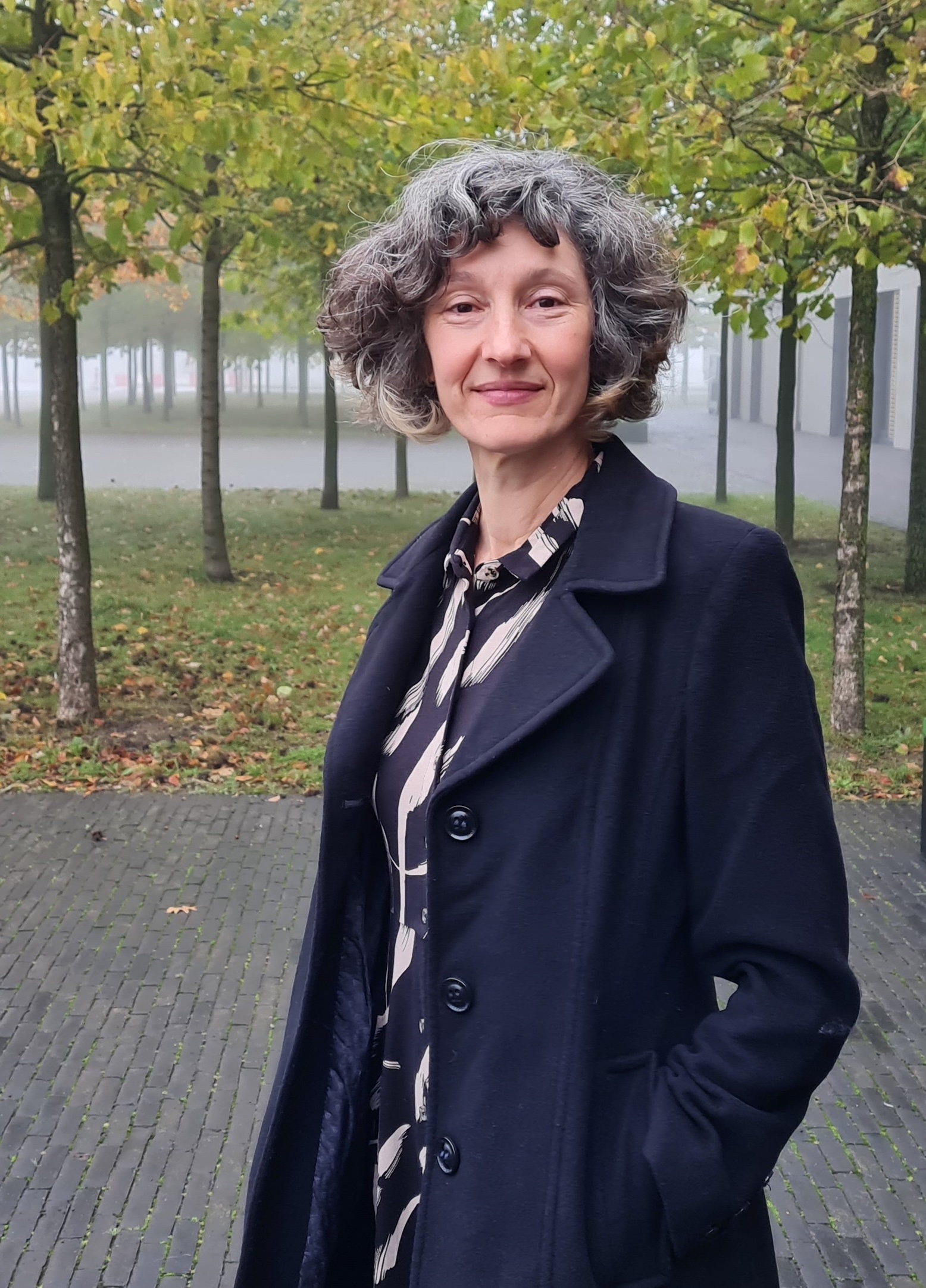
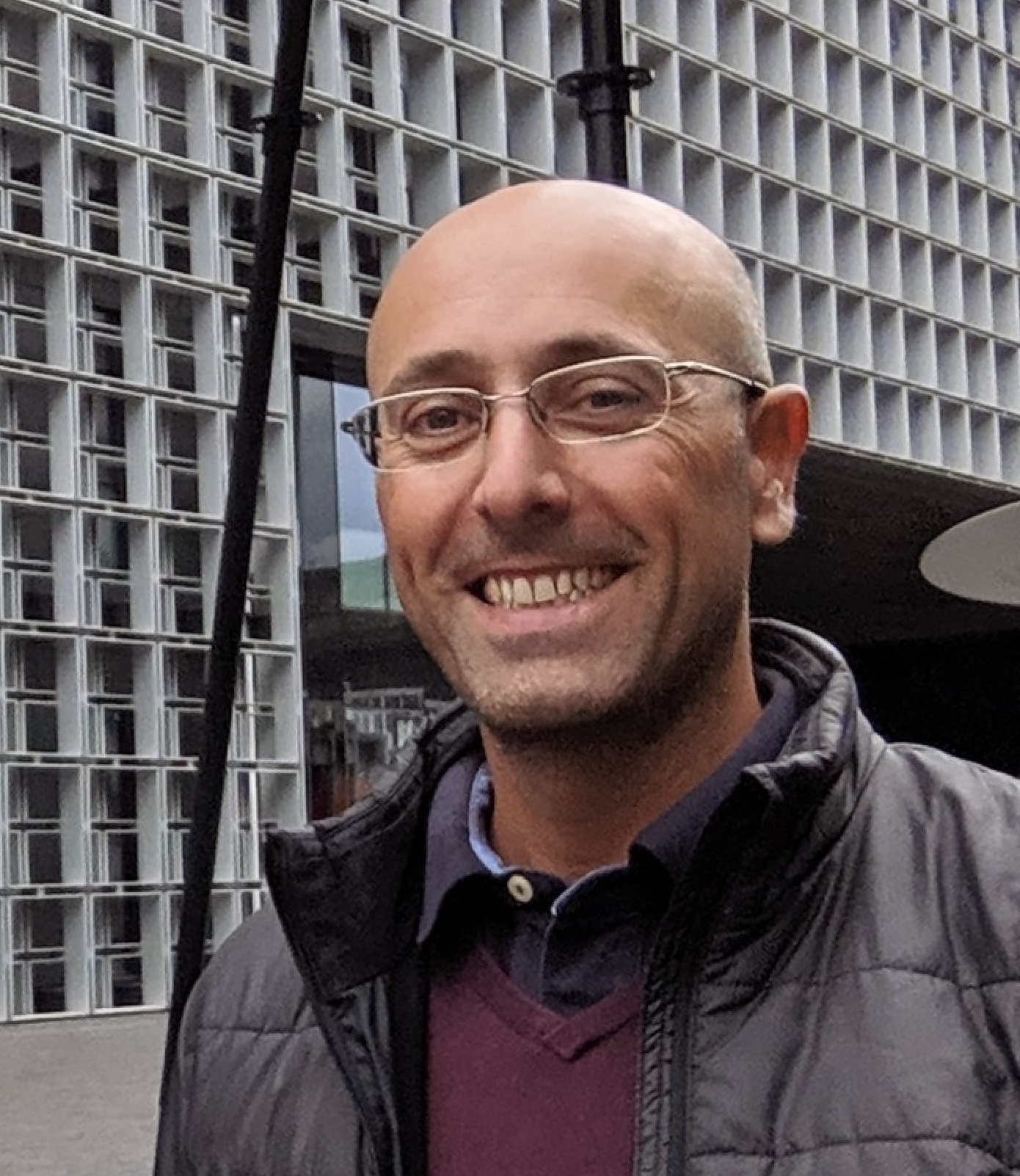
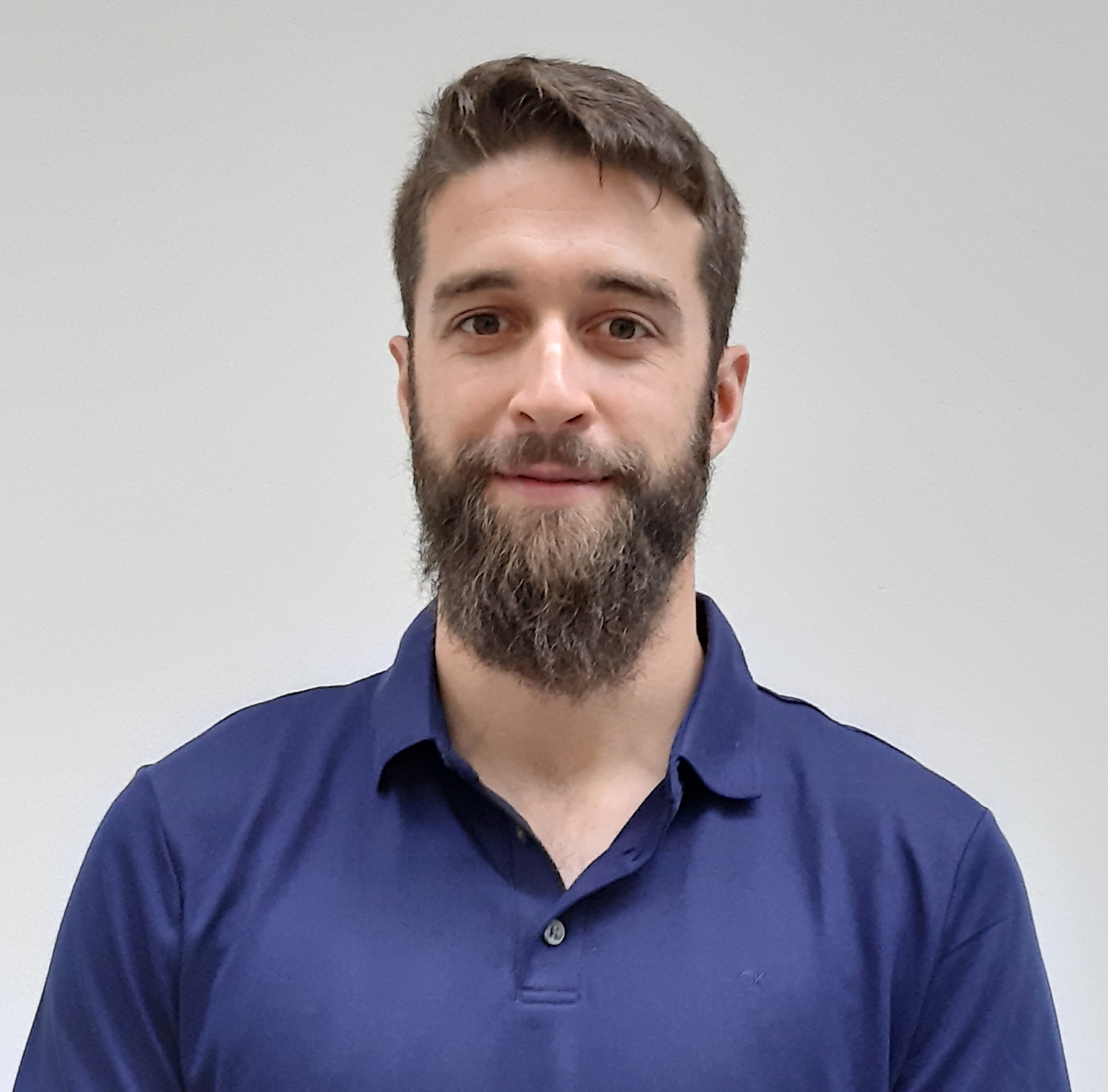
Marcela Gerardina Pozas Guajardo is a Full Professor in Educational Diversity Management at the University of Luxembourg's Faculty of Humanities, Education and Social Sciences. She is affiliated with the Department of Education and Social Work. Her contact details include marcela.pozas@uni.lu and (+352) 46 66 44 5419. Her research focuses on educational diversity management, inclusive education practices, and social work integration in educational systems. She explores policies and methodologies to enhance equity and accessibility in educational environments. No specific scientific awards or grants are listed in the provided information. Her professional activities are centered at the Belval Campus, specifically in the Maison Sciences Humaines building (MSH, E03 0335050 office).
Massimiliano Esposito is a Full Professor of Theoretical Physics at the University of Luxembourg, affiliated with the Faculty of Science, Technology and Medicine (FSTM) and the Department of Physics and Materials Science. His research focuses on statistical physics, complex systems, thermodynamics, chemical networks, and quantitative biology. He holds positions such as ERC Fellow (2016-2021) and Attract Fellow (2012-2017). Education includes a Ph.D. in Sciences (2004) and a degree in Chemistry (2000) from the Free University of Brussels (Belgium), alongside a European Baccalaureate (1996) from Luxembourg. His work bridges stochastic thermodynamics, quantum thermodynamics, and chemical reaction networks, with contributions to fluctuation theorems, energy transduction, and non-equilibrium systems. Key achievements include seminal papers on nonequilibrium fluctuation-response relations, quantum thermodynamics, and chemical reaction network theory. He has been a guest editor for journals like Physica A and Physical Review X, and serves on editorial boards such as Physical Review Letters. His lab explores emergent phenomena in complex systems, with applications in biology and nanotechnology.
Karin Melnick is a Full Professor in Mathematics at the University of Luxembourg, Faculty of Science, Technology and Medicine, Department of Mathematics. She heads the research group Group Actions, Geometric Structures, and Smooth Dynamics . Previously, she held positions at the University of Maryland (2009–2023), where she advanced from Assistant Professor to Professor and Associate Chair for Faculty Affairs, and at Yale University (2006–2009). Education: PhD and Master's degrees from the University of Chicago Research Interests: Her work spans differential-geometric rigidity, Lorentzian geometry, conformal pseudo-Riemannian structures, parabolic Cartan geometries, and smooth dynamical systems. She investigates symmetries of geometric structures, classification of manifolds with prescribed curvature properties, and dynamics of group actions on differentiable manifolds. Publications: Melnick's 15 most recent articles (2011–2025) predominantly explore rigidity phenomena in geometric structures, conformal/Lorentzian geometry, and dynamical systems. Key themes include automorphism groups of parabolic geometries, embedding theorems for tractor bundles, non-existence results for quasihomogeneous metrics, and applications of Frobenius-type theorems to Cartan geometries. Academic Leadership: She organizes major conferences including the upcoming BeNeLux Mathematical Congress (2026) and Lorentzian, Affine, and Hyperbolic Geometry: In Memory of Todd Drumm (2025). She frequently delivers invited talks at institutions like IHES Paris, Isaac Newton Institute, and Universität Hamburg. Teaching: Currently instructs Géométrie des courbes et des surfaces (Summer 2025).
Christian FISCH is an Associate Professor in Business Economics and Entrepreneurship at the University of Luxembourg's Interdisciplinary Centre for Security, Reliability and Trust (SnT). His research focuses on the intersection of entrepreneurship with digital technologies, venture finance, and socio-cultural influences. Key areas include blockchain-based financing mechanisms (e.g., ICOs), the psychological and digital identity aspects of entrepreneurs, and the impact of environmental/climate factors on entrepreneurial activity. He has published extensively in top journals, addressing topics such as B Corp certification signaling effects, venture capital decision-making, and the paradox of technology adoption among SMEs. His work spans both theoretical contributions (e.g., extending Schumpeterian frameworks) and applied analyses (e.g., post-pandemic entrepreneurial resilience). FISCH collaborates with global institutions, leveraging mixed-methods approaches including digital trace analysis from platforms like Twitter to study investor behavior and entrepreneurial traits. He has no listed awards but maintains active research agendas in decentralized finance, climate entrepreneurship, and cross-cultural entrepreneurial motivations. Professional activities include editorial roles in entrepreneurship journals and advising on innovation policy. His research often addresses emerging trends such as NFTs in creative industries, DAO governance structures, and the role of trademarks/patents in regional innovation ecosystems.
Prof. Tibor Neugebauer is a Full Professor of Finance at the University of Luxembourg’s Faculty of Law, Economics and Finance (FDEF), Department of Finance. He holds a Doctorate in Economics from the University of Valencia (2000) and professional qualifications from Hannover, with prior academic positions at institutions including York, Kiel, Hannover, and research stays at Lisbon, Bari, Valencia, and Rome. His research focuses on Experimental Finance and Economics, particularly behavioral finance, asset markets, auctions, and decision-making under uncertainty. He designs laboratory experiments to analyze markets, strategic interactions, and algorithm-human dynamics, with recent emphasis on algorithmic trading and market regulations. Education: Doctor of Economics, University of Valencia (2000) Master of Science in Economics, University of Alicante (1997) Bachelor’s in Economics, University of Bonn (1994) Professional Qualification in Economics, University of Hannover (2006) Research Interests: Prof. Neugebauer’s work examines institutional and informational structures’ impact on market outcomes, including fairness in co-determination, communication effects in asset markets, and algorithmic arbitrage. His experiments explore human behavior in complex environments, such as speculative asset trading and regulatory interventions. He has pioneered studies on algorithmic trading’s role in experimental markets, combining theoretical models with empirical behavioral insights. Key Contributions: His research addresses topics like margin trading regulations, Modigliani-Miller theorem validity in experimental settings, and the ‘greater fool’ phenomenon. Recent studies emphasize algorithmic-human interaction dynamics, market efficiency under varying mechanisms, and the implications of wash trading. Awards & Grants: No specific awards listed, but his extensive publication record reflects sustained recognition in experimental finance. Grants and collaborations likely relate to his research on market design and behavioral finance. Labs/Teams: Active in the FDEF’s finance research group, contributing to Luxembourg’s international reputation in experimental economics and finance. Collaborates with global institutions on algorithmic trading and market dynamics.
Grégoire DANOY is a Researcher at the University of Luxembourg's Interdisciplinary Centre for Security, Reliability, and Trust (SnT) and Head of the Parallel Computing and Optimization Group (PCOG). He specializes in artificial intelligence, with a focus on optimization algorithms, machine learning, and swarm intelligence. His work addresses challenges in cloud computing, high-performance computing, smart mobility, and unmanned autonomous systems like drone swarms. He has authored over 150 publications, including articles in IEEE Transactions and conferences like NeurIPS and GECCO. He currently leads major projects such as UltraBO (€1.019M), ADHOC (€1.291M), and SERENITY (€1.228M), collaborating with institutions in France and Poland. Education: PhD in Computer Science (2008) from École Nationale Supérieure des Mines de Saint-Étienne, Master’s in Computer Science (2004), and Industrial Engineering Degree (2003) from Luxembourg University of Applied Sciences. Research Interests: Developing novel AI techniques for solving large-scale optimization problems, with applications in distributed systems, autonomous robotics, and federated learning. He emphasizes scalable solutions for combinatorial challenges using parallel computing and swarm intelligence. Grants & Projects: Principal Investigator for EU-funded initiatives like ADARS (2021–2024) and FNR PoC/SIMMS (2019–2021). His work bridges academia and industry, with technology transfer projects in autonomous robot swarms. Awards: Recognitions include the Best Student Paper Nomination (2022), IEEE CybConf Best Paper Award (2017), and ACM GECCO nominations (2016, 2009). He serves on the editorial board of Engineering Applications of Artificial Intelligence (EAAI). Labs & Teams: Leads the Parallel Computing and Optimization Group (PCOG), focusing on interdisciplinary research in AI and distributed systems. He also contributes to outreach programs like FNR's Researchers at School.
Sabine EHRHART is an Associate Professor at the University of Luxembourg's Faculty of Humanities, Education and Social Sciences, within the Department of Humanities. Her research focuses on languages in contact (particularly in Luxembourg), plurilingual competences in educational contexts, and ethnolinguistics. She holds an office at the Maison des Sciences Humaines (MSH, E03 0315030) in Esch-sur-Alzette. Her work bridges sociolinguistics and educational practices, emphasizing multilingualism's role in Luxembourg's unique linguistic landscape. Publications can be accessed via ORBilu, though specific titles are not detailed here. No awards or grants are explicitly mentioned in the provided text.
Pascal BOUVRY is a full Professor of parallel computing and optimization techniques at the University of Luxembourg's Department of Computer Science , within the Faculty of Science, Technology and Medicine (FSTM) . He currently serves as the Dean of the FSTM and leads the Parallel Computing and Optimisation group . Additionally, he oversees the University's High Performance Computing (HPC) infrastructure. His research focuses on parallel computing, optimization algorithms, distributed systems, and their applications in bioinformatics and distributed environments. Prof. BOUVRY holds a Ph.D. in Computer Science from the University of Grenoble (France) and has extensive industry experience, including roles as CEO/CTO of tech firms and leadership in telecom and financial services sectors. He has pioneered initiatives like the Master in High-Performance Computing and Technopreneurship programs at the University of Luxembourg. His research interests span GPU programming paradigms , federated learning , distributed optimization , and trustworthy AI . Recent work includes advancements in HPC education frameworks, federated learning frameworks (e.g., FedPref), and quantum circuit optimization. He contributes to editorial boards of journals like IEEE Transactions on Sustainable Computing and IEEE Cloud Computing Magazine. Prof. BOUVRY has held international leadership roles, including as Honorary Chair of conferences and active participation in technical committees. His educational efforts emphasize bridging academic research with industrial applications, particularly in HPC and AI.
Pierre KELSEN is a Full Professor in the Department of Computer Science at the University of Luxembourg's Faculty of Science, Technology and Medicine (FSTM). His research focuses on Software Engineering, Formal Methods, Model-Driven Engineering, and Algorithmic Graph Theory. He leads the LASSY Laboratory for Advanced Software Systems, emphasizing model decomposition, regulatory compliance, and formal verification techniques. Education: PhD in Computer Science (1993, University of Illinois at Urbana-Champaign), M.Sc. (1989, UIUC), and Diploma (1986, University of Karlsruhe). Postdoctoral work at the University of British Columbia and Max-Planck-Institut für Informatik. Research Interests: - Development of formal modeling languages (e.g., VCL, F-Alloy) - Model transformation and validation frameworks - Algorithms for compliance and complexity challenges - Visual and modular design methodologies Funding: - ASINE (FNR Pearl, 2013–present): Architecture-based service innovation - MaRCo (FNR Core, 2010–2013): Business-centric regulatory compliance Publications span model-driven engineering, formal methods, and algorithmic foundations, with recent work exploring AI integration in domain modeling and compliance analysis. Labs/Teams: LASSY Laboratory, collaborating on tools like Lightning and Democles for executable modeling frameworks.
Alfredo Capozucca is a full permanent Researcher at the Department of Computer Science (DCS) within the Faculty of Science, Technology and Medicine (FSTM) at the University of Luxembourg. He holds a PhD in Computer Science from the University of Luxembourg (2010) and an M.S. from the National University of Rosario, Argentina (2003). His research focuses on modern software engineering methods, dependable systems, and computing education, with an emphasis on formal verification and sustainable computing practices. Capozucca has contributed to the design of courses at undergraduate and master's levels, including serving as Deputy Programme Director for the BSc in Computer Science from 2021-2024. His work bridges theoretical foundations with practical applications in education and industry. Research interests prominently include AI in education (e.g., ChatGPT's role in formal specification writing), formal verification techniques, and the integration of DevOps philosophies into academic curricula. He has authored numerous papers on topics ranging from security policy analysis to energy-efficient transactional models. Capozucca's contributions extend to open-source projects and tool development, such as the Messir UML requirements engineering tool. His teaching spans software engineering fundamentals, dependability, and modern DevOps practices, reflecting a commitment to aligning education with industry needs. Key professional roles include R&D engineer positions (2004-2006) and leadership in educational program design. His research infrastructure is based at the Maison du Nombre facility in Luxembourg. While no specific grants or awards are listed, his extensive publication record and teaching contributions highlight sustained academic engagement.
Dr. Jose Luis SANCHEZ LOPEZ is a Research Scientist at the Interdisciplinary Centre for Security, Reliability and Trust (SnT) of the University of Luxembourg, leading the Aerial Robotics Lab (AeRoLab) within the Automation & Robotics Research Group (ARG). He joined SnT in 2017 as a Postdoc Research Associate, promoted to Research Scientist in 2021. His research focuses on autonomous robotics, particularly aerial systems, emphasizing situational awareness, SLAM, and trajectory planning. Education: Ph.D. in Robotics (2017), M.Sc. in Automation & Robotics (2012), and Engineering degree in Industrial Engineering (2010), all from the Technical University of Madrid. Visiting Research: Arizona State University (2012), LAAS-CNRS (2014–2016). Research Interests: Multi-agent robotic systems, sensor fusion, localization/mapping, computer vision, machine learning, and trajectory control. He has authored over 56 peer-reviewed publications, with an h-index of 18. Projects: Leads projects like DEUS (PI), NEDA, ÄerdFly (PI), and RoboSAUR. Contributions span European, Luxembourg, and Spain-funded initiatives, focusing on autonomous systems, 5G integration, and construction-site robotics. Teaching: Lectured in MICS, BiCS, BING (Uni.lu) and GITI (UPM). Actively involved in academic service as a reviewer, editor, and competition participant (e.g., IMAV, IARC). Outreach: National Coordinator for Luxembourg’s Robotics European Week, promotes robotics education in schools and public events.
Miguel Angel Olivares Mendez is an Associate Professor and Researcher at the Interdisciplinary Centre for Security, Reliability and Trust (SnT) of the University of Luxembourg , where he leads mobile robotics research within the Automation & Robotics Research Group. He joined SnT in May 2013 as an Associate Researcher and was promoted to Research Scientist in December 2016. Education : Diploma in Computer Science Engineering (2006), University of Malaga M.Sc. in Robotics and Automation (2009), Technical University of Madrid Ph.D. in Robotics and Automation (2013), Technical University of Madrid His research focuses on unmanned aerial systems , computer vision , and robotics automation , with expertise in sensor fusion, vision-based control, and soft-computing techniques. He has supervised 7 research projects and published over 60 journal/book chapters and conference papers. Honors & Service : Best PhD Thesis Award (2013), European Society for Fuzzy Logic and Technology (EUSFLAT) Associate Editor, Journal of Intelligent & Robotic Systems (JINT) Reviewer Editor, Frontiers in Robotics and AI Organizing committee roles: BICS 2010 (Local Arrangement Chair), IEEE ETFA 2015 (Financial Chair) His work bridges theoretical and applied robotics, with active involvement in international academic conferencing and editorial leadership.
Claudio Cicotti is a Researcher at the University of Luxembourg, affiliated with the Department of Humanities within the Faculty of Humanities, Education and Social Sciences. He leads the Italian Studies section and directs the Continuing Education Program in Language, Culture, and Society of Italy (LCSI). He is also President of the International Center for Luxembourg-Italy Studies (CIELI) and collaborates with the Interdisciplinary Research Center on Italy at the University of Strasbourg. His research focuses on Italian literature across the 17th, 18th, and 20th centuries, philology, lexicography, and autobiographical writing. He has led significant interdisciplinary projects such as Presence, History, Memories of Italians in Luxembourg and the Greater Region (2004–2008), Textuality of Italians in the Greater Region and Integration (TIGRI 1–2, 2009–2014), Autobiography, Migration and (re)construction of Identity in Luxembourg (AMIL, 2015–2020), and the ongoing These Italies Breathing in Luxembourg and the Greater Region (since 2022). His work bridges academic research with cultural institutions, including the Italian Embassy, European agencies, and regional banks. His scholarly output reflects a strong trajectory in migration narratives, identity formation, and Italian cultural presence in transnational contexts. While specific publications are not listed, thematic consistency across projects indicates sustained contributions to autobiographical studies and intercultural dialogue in Luxembourg and beyond. President, International Center for Luxembourg-Italy Studies (CIELI) Member, Interdisciplinary Research Center on Italy, University of Strasbourg Director, Continuing Education in Language, Culture and Society of Italy (LCSI) He supervises PhD candidates and leads externally funded research initiatives focused on migration, memory, and cultural integration. His work is supported through institutional partnerships and interdisciplinary collaboration across Europe. He is actively engaged in knowledge transfer between academia, public institutions, and civil society. His research is conducted primarily from the Maison des Sciences Humaines (MSH) in Esch-sur-Alzette, where he is based at the University of Luxembourg.
Boris Traue is a Full Professor of Social Work and Social Pedagogy at the Department of Education and Social Work, Faculty of Humanities, Education and Social Sciences, University of Luxembourg. He joined the university in February 2020 and serves as Director of the Bachelor en sciences sociales et éducatives program. His educational background includes a degree in sociology, philosophy, and psychology from Freie Universität Berlin (2002), a doctorate (Dr. phil) from Technische Universität Berlin (2008), and venia legendi for sociology from the same institution (2018). Traue's research centers on relational social theories , subjectivation processes , and visual studies , examining how institutions, technologies, and collective action shape individual and group agency. His methodological innovations in interpretative subjectivation analysis and visual discourse analysis bridge sociology, social work, and interdisciplinary studies, with particular focus on psychosocial interventions and amateur practices. Analysis of his 15 most recent publications (2022-2025) reveals three dominant thematic clusters: subjectivation theory development, visual methodology applications, and disability inclusion research. His work consistently integrates German and Anglophone academic traditions while addressing contemporary social challenges through empirical subjectivation research. Traue has secured significant research funding from major institutions including the German Research Foundation (DFG) and Luxembourg's FNR. Current projects include: PATH_CH-LUX (2023-2025, 1.5 MEUR): Comparative study of labor market pathways for youth with disabilities in Switzerland and Luxembourg SEaSons (2024-2026, 750,000 EUR): Sustainability, Environmental Knowledge and Social Imaginations of Climate Futures As co-editor of the Springer book series Studies in Subjectivation and board member of the sociology of knowledge section in the German Sociological Association (since 2021), Traue actively shapes academic discourse through collaborative international networks and editorial leadership.
Ingrid DE SAINT-GEORGES is an Associate Professor in Educational Science at the University of Luxembourg's Faculty of Humanities, Education and Social Sciences, Department of Humanities. Her research focuses on multilingualism in education, professional communication, vocational training, and the intersection of language policies with cultural diversity. She holds a prominent role in shaping language strategies for academic and professional contexts, particularly in multilingual environments. Her work emphasizes ethnographic and multimodal methodologies, exploring how language and cultural practices influence learning in diverse settings such as culinary arts workshops in French Guiana and international higher education institutions. Key themes include the role of analogical discourse in vocational training, the dynamics of professional skill acquisition, and the challenges of implementing multilingual policies in educational frameworks. Notable contributions include designing language policies for academic conferences, analyzing workplace learning trajectories, and investigating the interplay between transversal competencies and employability. Her research often bridges theory and practice, aiming to enhance educational strategies through interdisciplinary collaboration and situated learning approaches. Dr. DE SAINT-GEORGES has published extensively on mediated discourse analysis, professional training interactions, and the sociocultural dimensions of education. Her work frequently addresses issues of linguistic diversity as both a challenge and a resource in educational and professional contexts, advocating for inclusive pedagogical frameworks.